Losing an Erection During Sex: Causes and Fixes
How Erections Work — and Why They Can Fade Mid-Sex
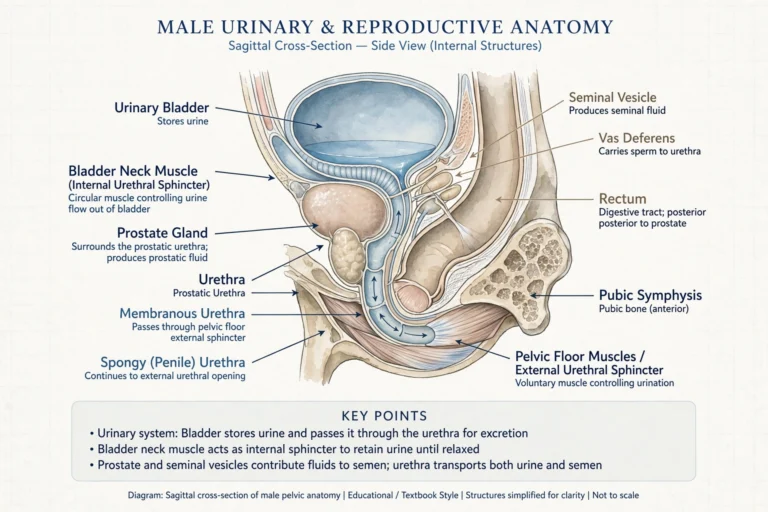
To understand losing an erection during sex, it helps to know what keeps an erection going in the first place. When you are aroused, your brain sends signals down the spinal cord to the nerves of the penis. These nerves trigger the release of nitric oxide, a chemical that relaxes the smooth muscle of the penile arteries, letting extra blood rush in. At the same time, the veins that would normally drain blood away get compressed against the outer tissue, trapping the blood and creating pressure — that is the erection.
Staying erect requires that inflow keeps outpacing outflow for the whole duration. Anything that reduces the incoming flow (poor circulation, adrenaline-driven vasoconstriction), allows premature drainage (a “venous leak”), or interrupts the brain’s arousal signal (distraction, anxiety, loss of stimulation) can break that balance — and the erection deflates, sometimes within seconds.
Understanding this is empowering rather than scary: most fixes for losing an erection during sex work precisely by restoring one side of that equation.
Because the chain has so many links, losing erection during sex can start with circulation, nerves, hormones, or the mind — which is why the fix has to match the cause.
Losing Erection During Sex: The Physical Causes
Physical factors tend to matter more when the problem is gradual, progressive, or persistent — for example, if erections have been getting softer over months, or if morning erections are also fading. These are the most common physical reasons.
Blood flow and heart health
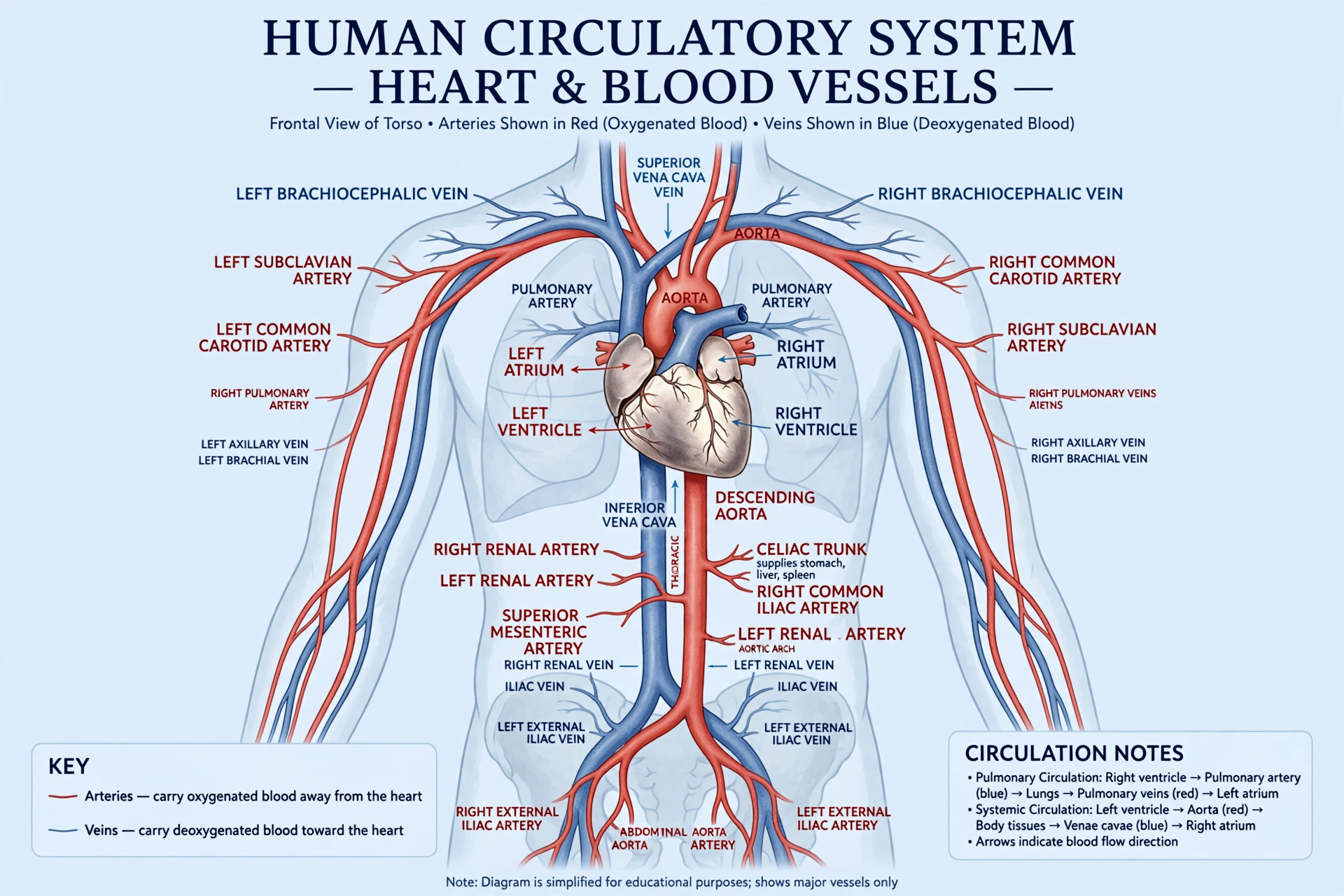
Because an erection is fundamentally a vascular event, conditions that damage blood vessels are the leading medical cause of persistent erection problems. High blood pressure, high cholesterol, and atherosclerosis (hardening and narrowing of the arteries) reduce the blood supply everywhere in the body, including the small arteries of the penis.
In fact, erectile difficulties can appear years before any other symptom of cardiovascular disease, which is why doctors treat new-onset, persistent ED as a reason to check heart health. If you have risk factors such as high blood pressure, diabetes, or a family history of heart disease, read our overview of erectile dysfunction causes for the full picture.
When losing erection during sex becomes a pattern rather than a one-off, this cardiovascular angle is the first thing worth ruling out with a doctor.
Diabetes
Diabetes damages both blood vessels and nerves over time, and men with diabetes develop erectile problems at higher rates and at younger ages than men without it. Well-controlled blood sugar slows this damage, which is one more reason diabetes management matters for sexual health.
Men who notice losing erection during sex creeping in alongside rising blood sugar should mention it at their next diabetes review — it can be an early warning sign.
Hormones, especially testosterone
Testosterone drives libido more than it drives the mechanical ability to get hard, but low levels are still linked to weaker, less reliable erections — particularly when combined with other risk factors like obesity or diabetes. Sleep deprivation is an underappreciated hormone disruptor: research has found that restricting sleep to around five hours per night for a week can reduce daytime testosterone levels by roughly 10 to 15 percent.
Chronic loud snoring, sleep apnea, and generally poor sleep quality are all worth mentioning to a doctor if erections are fading.
Nerve damage and injury
The arousal signals that maintain an erection travel through the pelvic nerves, so anything that damages them can cause problems. Causes include diabetes-related nerve damage, spinal cord injury, pelvic or genital trauma, and surgery in the pelvic region — most notably prostate surgery. Long-distance cycling with a poor saddle fit has also been studied as a contributor because of sustained pressure on the perineum.
Medications
Several common drug classes list erection problems as a side effect: certain antidepressants (especially SSRIs), some blood pressure drugs (thiazide diuretics and some beta-blockers more than others), medications for prostate enlargement, and some anti-anxiety drugs and opioids. If your erection trouble began soon after starting a new prescription, that timing is worth discussing with the prescribing doctor — they can often adjust the dose, change the timing, or switch to an alternative.
Never stop a prescribed medication on your own because of sexual side effects. See our guide to blood pressure medications and erectile dysfunction for which classes carry the most and least risk.
If you suspect a prescription is behind losing erection during sex for you, ask the prescribing doctor about dose timing or an alternative drug before assuming it is unavoidable.
Losing Erection During Sex: The Psychological Causes
Psychological factors are the leading explanation when erections are strong in some situations (for example, on your own, or on waking) but unreliable during partnered sex — and especially when the problem appeared suddenly.
Performance anxiety and the “anxiety spiral”
The most common psychological pattern behind losing an erection during sex is performance anxiety, and it works through a specific, self-reinforcing loop. It usually starts with one soft episode — a bad night, too much wine, tiredness.
The next time, part of your attention monitors the erection: Is it working? Is it fading? That self-monitoring — psychologists call it “spectatoring” — is the problem. Your brain interprets the monitoring as a threat, activates the sympathetic nervous system (the fight-or-flight system), and adrenaline narrows the arteries that supply the penis. Blood flow drops, the erection softens, the softening confirms the fear, and anxiety spikes further. Within a minute or two the loop completes itself.
Breaking the loop in the moment means getting out of the monitoring mindset: shift your attention fully onto physical sensation — breathing, warmth, touch — rather than onto the erection as an object you are grading. Slow, deep belly breathing helps because it directly nudges the nervous system back toward the calm, parasympathetic state where erections happen.
And naming what is happening calmly (“this is just anxiety, my body is fine”) deflates the panic that feeds the cycle. Most articles cover “reduce stress” in the abstract; understanding the spectatoring loop gives you something concrete to actually do while it is happening.
Men who master this shift often find that losing erection during sex stops being a recurring event and becomes an occasional, forgettable one.
Depression, stress, and relationship strain
Chronic stress keeps cortisol and adrenaline elevated, which works directly against the calm vascular state an erection needs. Depression both dampens desire and makes negative thought patterns — the fuel of performance anxiety — more likely; the link runs both ways, with research finding each condition raises the risk of the other. Unresolved conflict with a partner, resentment, or simply feeling emotionally disconnected can also quietly kill arousal. If the relationship is strained, the bedroom is usually where it shows up first.
When low mood or chronic stress is what drives losing erection during sex, treating the underlying mood problem often resolves the sexual symptoms as well.
Situational Causes Most Men Overlook
Sometimes the cause is not medical and not deeply psychological — it is simply the situation.
If losing erection during sex only happens in specific situations — late at night, after drinking, with a new partner — the cause is usually situational rather than medical.
- Loss of stimulation. Arousal requires continuous sexual input. A long pause — a bathroom break, an awkward position change, a phone ringing — lets the nitric-oxide signal fade, and the erection follows. Restarting stimulation usually restarts the erection, though it may take longer than the first time.
- Condom interruption. Pausing to find and unroll a condom breaks momentum, and for some men the reduced sensation and the worry about the condom itself combine into erection loss. Practicing with condoms outside of partnered sex, keeping them within reach so the pause is short, staying aroused while it goes on, and trying different fits and materials all help. Our guide on condoms and sexual pleasure covers how to keep sensation high.
- A new partner or new situation. Unfamiliar surroundings, fear of being overheard, or the pressure to impress someone new can create exactly the self-conscious monitoring described above. This is extremely common and almost always improves as comfort grows.
- Alcohol — and the timing of it. A drink or two can lower inhibitions, but alcohol is a central nervous system depressant: it dulls sensation, disrupts the brain-to-genital signaling, and dehydrates you. The heavier the drinking session, the more likely the erection is to check out early. See alcohol and sexual performance for where the line sits.
- Exhaustion. Sex at midnight after a punishing day is simply not the same as sex when rested. Fatigue blunts both desire and the body’s arousal response. If the pattern is always late-night, that is a clue, not a verdict.
When Losing an Erection During Sex Is Normal — and When to See a Doctor
Occasional erection loss is normal. Surveys and clinical reviews consistently find that most men experience it at some point, and one soft episode — or even a few during a stressful period — is not erectile dysfunction. ED is generally defined by persistence: difficulty getting or keeping an erection firm enough for satisfying sex, most of the time, for three months or more.
Two practical observations can help you decide whether to book an appointment. First, consider the pattern: is it getting worse over time (more physical) or is it tied to specific partners, situations, or anxious thoughts (more psychological)?
Second, note your morning erections. Healthy men typically have several during REM sleep. If you still wake with firm erections but lose them during partnered sex, the machinery is likely fine and the issue is situational or psychological. If morning erections have faded too — especially alongside new symptoms like low energy, reduced libido, or chest discomfort — that is a stronger signal to get checked. Seek prompt care if erection loss comes with pelvic pain, blood in urine or semen, sudden changes after an injury or new medication, or any chest pain or breathlessness during exertion.

How to Stop Losing an Erection During Sex: Fixes That Work
In-the-moment strategies
When the erection starts fading mid-act, panic is the fastest way to finish it off. Instead, pause the “mission” and change the activity: slow down, focus on kissing and touch, and bring attention back to sensation rather than performance. Try a slow, deep belly breath — in through the nose for four counts, out for six — to shift your nervous system back toward the calm state where erections live.
If stimulation had paused, restart it gently. And if it does not come back right away, say so plainly rather than apologizing in shame: “Give me a minute, I want to enjoy this” keeps the mood warm and stops the spiral of embarrassment. Many couples find that taking penetration off the table temporarily — spending the session on other kinds of intimacy — removes the pressure so completely that erections return on their own.
Having a plan matters: panic is what turns losing erection during sex from a momentary dip into a full stop.
Lifestyle changes that actually move the needle
Because erections are vascular, everything that helps your heart helps your erections: regular aerobic exercise (brisk walking, cycling, swimming — around 150 minutes a week is the standard target), a diet rich in vegetables, fruits, whole grains, and unsaturated fats, keeping a healthy weight, quitting smoking, and limiting alcohol. Quitting tobacco is particularly impactful, since smoking damages the exact blood vessels erections depend on.
These habits improve circulation everywhere in the body, which is exactly what stops losing erection during sex from becoming a pattern.
Two additions most guides underplay. First, pelvic floor exercises: the bulbocavernosus and ischiocavernosus muscles help trap blood in the penis during an erection, and research has found that structured pelvic floor training can improve erectile function in some men.
It is the male equivalent of Kegels — identify the muscles by stopping the flow of urine once (do not do it repeatedly), then practice contracting and releasing them in sets of 10, several times a day, without straining the abdomen. Second, sleep: aim for seven to nine hours, and get loud snoring or suspected sleep apnea evaluated, since both crush testosterone and cardiovascular health.
Talk to your partner — with actual words
Silence turns one soft episode into a couple’s problem. A short, honest conversation outside the bedroom works better than mid-sex apologies. Useful lines: “This happens sometimes and it is not about my attraction to you — I want us to handle it together.” Ask what they enjoy beyond penetration so you both have a playbook for nights when things do not cooperate. Framing it as a shared, normal bodily quirk rather than a personal failure usually brings relief on both sides — and that reduced pressure alone often breaks the anxiety loop.
Couples who can discuss losing erection during sex openly and without blame usually resolve it faster than those who avoid the topic.
Medical treatment options
If lifestyle measures and anxiety management are not enough, a clinician can help. The first step is usually a workup: blood pressure, blood sugar, cholesterol, hormone levels, a medication review, and questions about sleep and mood — because the best treatment targets the actual cause.
For many men, that means prescription oral medications that enhance the nitric-oxide pathway and support blood flow; these are taken before sex and still require arousal to work, and a doctor must confirm they are safe for you — notably, they must not be combined with nitrate drugs used for chest pain. For an authoritative clinical overview of symptoms, causes, and treatments, see the Mayo Clinic guide to erectile dysfunction. Other medically supervised options include counseling or sex therapy for performance anxiety, treatment of low testosterone when it is genuinely present, pelvic floor physiotherapy, and vacuum devices. What matters is matching the treatment to the cause rather than guessing at one.
Frequently Asked Questions
Is losing an erection during sex normal?
Yes — occasional episodes are normal and happen to most men at some point. Stress, tiredness, alcohol, a new partner, or a distracting moment are common triggers. It becomes a medical question when it happens most of the time for three months or longer, or when it is steadily getting worse.
Why do I lose my erection when I put on a condom?
The pause breaks your arousal momentum, and the change in sensation — plus worry about the condom itself — can tip the anxiety loop. Keeping condoms within reach so the interruption is short, staying physically close and aroused while it goes on, and trying different sizes, shapes, and materials (some men do better with ultra-thin or snugger fits) usually solves it.
Can anxiety alone cause losing an erection during sex?
Absolutely. Performance anxiety is one of the most common causes, especially in younger men. The mechanism is physiological, not “all in your head”: self-monitoring triggers the fight-or-flight system, adrenaline narrows the penile arteries, and the erection fades — which fuels more anxiety. Slow breathing, shifting attention to sensation, and honest communication with your partner are the core fixes.
Does alcohol cause erection loss?
Yes. A drink or two may feel relaxing, but alcohol is a central nervous system depressant that dulls sensation and disrupts the nerve signals an erection needs. Heavy drinking makes erection loss much more likely, and long-term heavy use is linked to persistent erectile dysfunction.
Will losing weight help me keep an erection?
In many cases, yes. Excess weight is linked to poorer circulation, lower testosterone, and higher rates of diabetes and high blood pressure — all of which undermine erections. Even modest, sustained weight loss combined with regular exercise can improve erectile function noticeably.
Do I have erectile dysfunction if it happened once?
No. One episode — or even a rough patch during a stressful time — does not meet the definition of erectile dysfunction. Doctors generally look for a persistent pattern over about three months before diagnosing ED. If it happened once, note the circumstances (tired? drinking? stressed?) and simply watch the pattern.
Can Kegel exercises help men stop losing erections?
They can help in some cases. The pelvic floor muscles assist in trapping blood in the penis during an erection, and research has found that structured pelvic floor training improves erectile function in some men. Contract and release the pelvic floor muscles (the ones that stop urine flow) in sets of 10, several times daily, without straining the abdomen. Results typically take several weeks.
When should I see a doctor about losing erections?
Book an appointment if the problem persists for three months or more, is getting worse, affects your relationship or wellbeing, or comes with warning signs: pelvic or genital pain, blood in urine or semen, sudden change after a new medication or injury, or loss of morning erections alongside low energy or reduced libido. Because erection trouble can precede cardiovascular disease, a checkup is worth it even if you feel otherwise fine. The NHS guide to erection problems also outlines when to seek advice and what to expect at a medical appointment.
Medical disclaimer: This article is for educational purposes only and is not medical advice. It cannot diagnose your condition or replace an evaluation by a qualified clinician. If you are concerned about erection problems, speak with a doctor or other qualified healthcare professional about your individual situation.
Losing an erection during sex is frustrating, but it is rarely a verdict on your body or your relationship. Most of the time it traces back to something fixable: blood flow that needs support through exercise and heart-healthy habits, an anxiety loop that needs interrupting, a medication that needs reviewing, or simply exhaustion that needs rest.
The men who resolve it fastest are usually the ones who do two things early — talk about it openly with their partner, and get checked by a clinician when the pattern persists. There is no shame in either step, and both tend to work.