At-Home Semen Tests: How Accurate Are They?
For decades, checking male fertility meant producing a sample in a clinic room on a schedule set by someone else, then waiting days for a lab report. It is not surprising that many men put it off: studies consistently find that male factors contribute to roughly half of all couples’ difficulty conceiving, yet male fertility testing has historically lagged behind. Home sperm test accuracy is now a serious question, because a new generation of home kits claims to deliver lab-comparable results from your phone or your mailbox. This guide looks at what these tests can really tell you, how their accuracy has been measured, and where their limits lie.
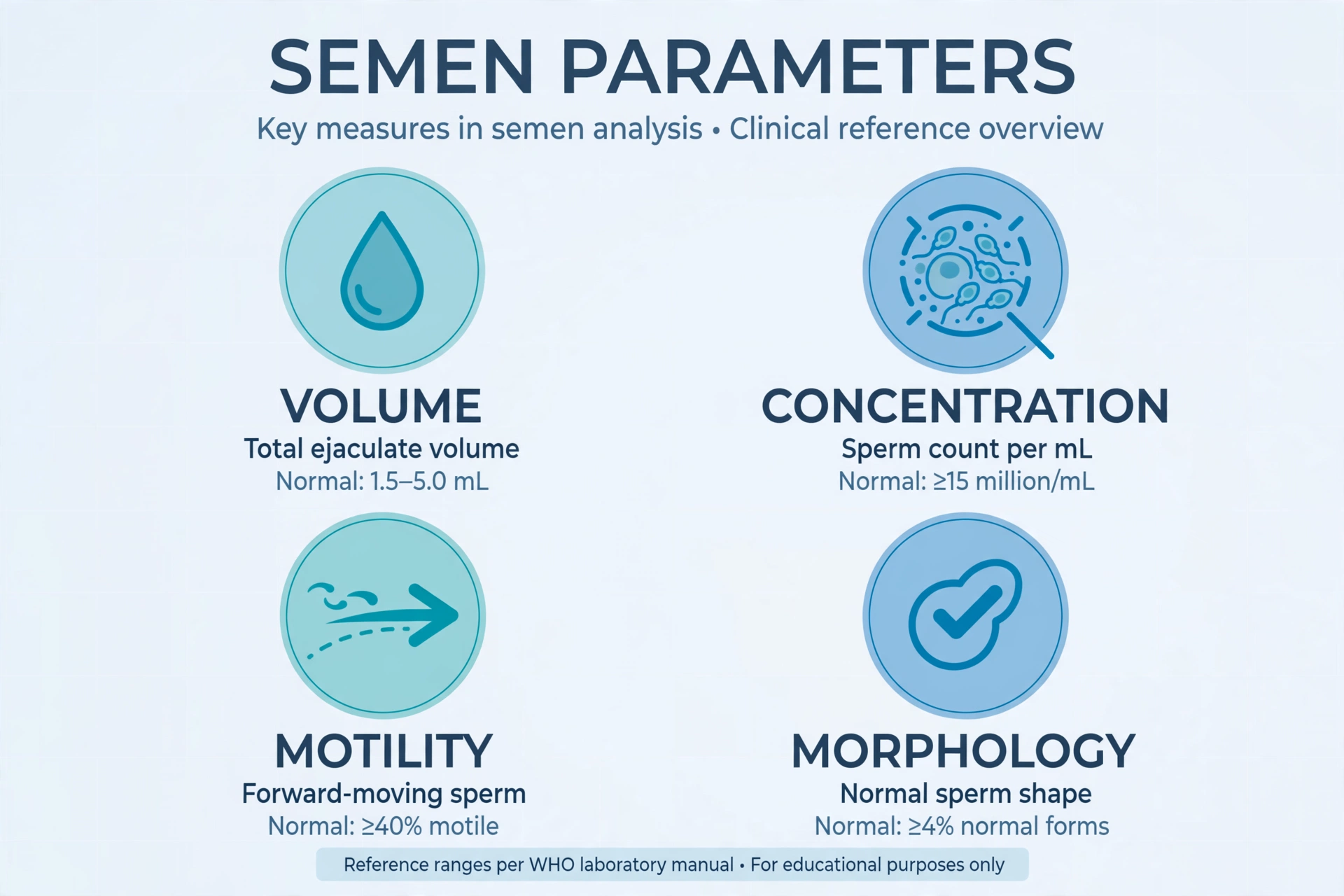
A semen analysis is the standard first investigation offered when a couple has trouble conceiving. It measures how much semen is produced, how many sperm it contains, how many of those sperm are moving, and what share are moving well. Clinicians judge the numbers against reference limits published in the World Health Organization’s laboratory manual for semen analysis. At-home kits aim to reproduce one or more of these measurements outside a laboratory, and at home semen analysis accuracy is the standard by which their results should be judged — with the evidence more encouraging than many people expect.
The Three Kinds of At-Home Semen Tests
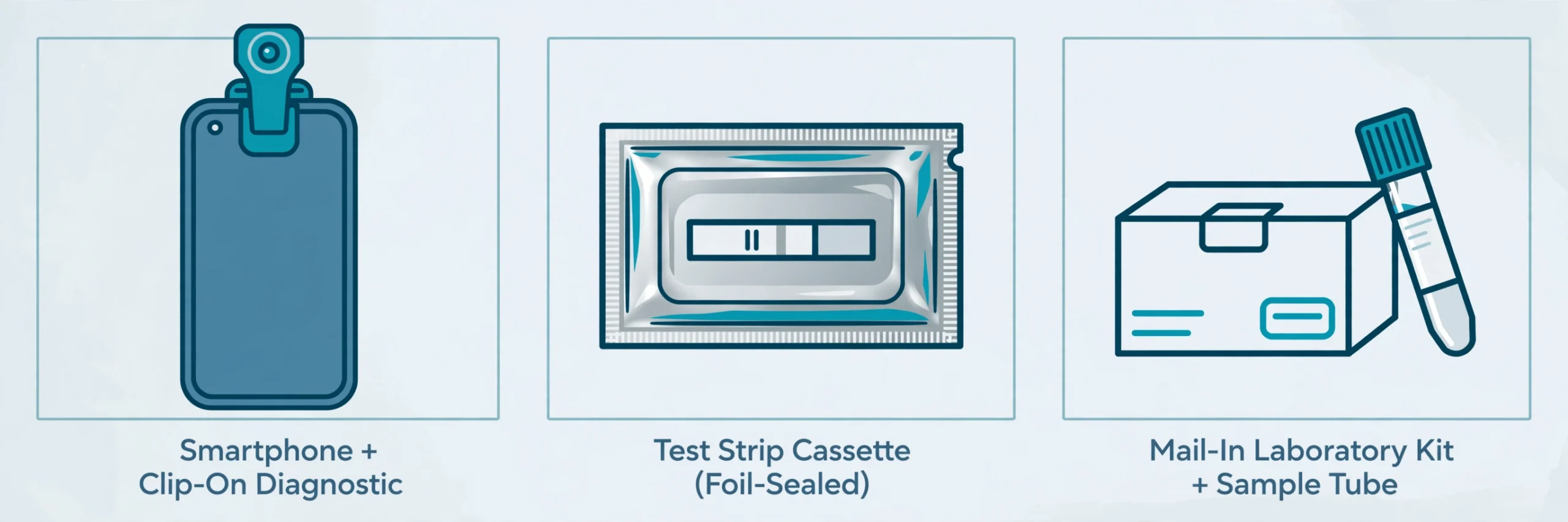
Not all home tests work the same way, and understanding the category matters more than any brand name when you are comparing at home semen analysis accuracy across formats. Three broad approaches exist:
- Smartphone-based analyzers: A clip-on optical attachment turns your phone camera into a microscope. The app records a short video of the sample and software counts the sperm and assesses how they move. These typically measure volume, concentration, total and progressive motility, and sometimes total motile sperm count (TMSC).
- Simple strip or cassette tests: These are the fertility equivalent of a home pregnancy test — a disposable strip or cassette that changes color or shows lines based on sperm concentration. Most give a pass/fail answer against the WHO threshold for concentration.
- Mail-in laboratory kits: You collect the sample at home into a provided container, add a preservation solution if the kit includes one, and mail it to a certified laboratory. A trained analyst performs a full or near-full semen analysis, and you receive the results online.
The table below summarizes how the categories compare:
| Test type | What it measures | Typical result time | Accuracy vs. lab |
|---|---|---|---|
| Smartphone analyzer | Volume, concentration, motility, TMSC | ~10–20 minutes | High (95%+ reported in validation studies for detecting abnormal samples) |
| Strip / cassette | Concentration only (pass/fail) | ~10–20 minutes | Very high for its single question (~99% agreement on concentration threshold) |
| Mail-in lab kit | Full or near-full profile | Days | Highest — a real lab analysis, with validated preservation for delayed testing |
Home Sperm Test Accuracy: What the Evidence Shows
The headline claim from leading manufacturers is that home sperm test accuracy reaches 95% or better compared with laboratory testing. It helps to look at where those numbers actually come from.
The most-cited validation work is a 2017 study published in Science Translational Medicine by researchers at Brigham and Women’s Hospital and Massachusetts General Hospital. Their smartphone-based analyzer — an optical attachment plus a disposable microchip slide, analyzed by algorithms built on WHO definitions of healthy sperm motility and concentration — was tested on 350 clinical samples. It identified abnormal semen samples with about 98% accuracy compared with standard laboratory testing, and untrained users achieved results comparable to trained technicians. The device delivered results in seconds from a one-second video of the sample.
Commercial smartphone kits built on similar technology have reported comparable figures. Independently verified performance data for leading devices has shown over 95% accuracy against clinical equipment for concentration and motility, with manufacturing under ISO 13485 medical-device quality standards and, in some cases, manual review of results by fertility professionals before they are released to the user.
Simple strip tests are narrower but, within their narrow job, strong. A well-known concentration-only test reports over 99% consistency with laboratory results at the WHO concentration threshold — it answers one question (“is concentration above or below the reference limit?”) and answers it reliably.
Mail-in kits have perhaps the most striking evidence. A study from the University of Southern California, published in the journal Fertility and Sterility, tested a mail-in kit that mixes the sample with a preservation solution controlling the rate of sperm degradation. Because the decline in quality follows a predictable pattern, an algorithm can back-calculate the sample’s original quality. In the validation arm, 104 samples received a traditional one-hour analysis, then were mixed with the preservation solution and re-analyzed four more times over 52 hours — exposed to temperature fluctuations mimicking postal transport.
The delayed analyses accurately reproduced the original results each time. The lead investigator concluded the mail-in system was a reliable option for routine clinical use. For at home semen analysis accuracy in a mail-in format, this study remains the benchmark.
What “Accuracy” Really Means — and What It Doesn’t
Accuracy figures need context to be useful. When a manufacturer says “95% accurate,” it usually means the test correctly classified samples as normal or abnormal relative to a reference laboratory — a measure called concordance. That is genuinely valuable for screening. It is not the same as saying every individual number the app reports matches the lab’s number exactly. This is why at home semen analysis accuracy should be judged by concordance with reference laboratories rather than by exact number-matching.
A second, underappreciated fact: even two laboratories do not always agree with each other. Manual semen analysis involves human technicians counting and judging sperm under a microscope, and inter-laboratory variability is a well-documented challenge in andrology. Computer-assisted analysis in clinics has improved consistency, but a meaningful degree of variation between labs remains normal. So “95% agreement with a lab” is about as strong a claim as the field’s own gold standard can support.
A third point: accuracy depends on which parameter you are asking about. Concentration is the easiest to automate and the most consistent across devices. Motility is harder — it depends on video quality, lighting, and how the sample has been handled in the minutes since collection. Morphology (the shape and structure of individual sperm) is the most subjective parameter even in expert hands, and virtually no instant home kit measures it. That does not make home kits unreliable; it means their reliability is parameter-specific.
What At-Home Tests Cannot Tell You
This is where the gap analysis matters most, because most competitor coverage glosses over it. An at-home test — even an excellent one — is a screening tool, not a complete fertility workup. Here is what a clinical laboratory semen analysis and a urologist’s evaluation can add:
- Morphology: The proportion of normally shaped sperm, judged under high magnification by a trained analyst. Some labs also report specific defects.
- Vitality: Whether non-moving sperm are alive or dead — important when motility is very low.
- pH, liquefaction, and agglutination: Clues to infection, obstruction, or antibody problems.
- Round cells and white blood cells: Possible indicators of inflammation or infection that need medical follow-up.
- Sperm DNA fragmentation: Damage to the genetic material carried by sperm, linked to difficulty conceiving and higher miscarriage risk. Home kits do not measure this.
- Hormone evaluation: Blood tests for testosterone, FSH, and LH can reveal treatable causes of low sperm production. Learn more in our guide to low testosterone symptoms and when to get tested.
- Physical causes: A varicocele (enlarged veins in the scrotum), infections, or prior surgery can all be diagnosed in clinic but not from a home kit. See our article on varicocele and fertility for one of the most common treatable causes.
A home test can tell you whether the main numbers look normal — this screening role is exactly what published at home semen analysis accuracy figures describe. It cannot tell you why they are abnormal. That second question belongs in a clinic.
Seven Mistakes That Can Quietly Ruin Your Result
Home kits are only as accurate as the sample they are given, and the published home sperm test accuracy figures assume these collection mistakes are avoided. These are the errors that most commonly produce misleading readings — all of them avoidable:
- Too short (or too long) abstinence. The WHO recommends 2–7 days of abstinence before a semen analysis. Less than two days can artificially lower the count; much longer than seven can lower motility as sperm age.
- Losing part of the sample. The first portion of the ejaculate is typically the most sperm-rich. An incomplete collection can meaningfully change the concentration reading.
- Using lubricant or a regular condom. Most lubricants impair sperm movement, and latex condoms contain spermicide-like agents. Collect directly into the sterile container provided.
- Letting the sample get too hot or too cold. Keep it at roughly body temperature — close to the body, not on a cold surface — and analyze or ship it promptly per the kit’s instructions.
- Waiting too long before testing. Sperm motility starts to decline within an hour of collection. Instant kits should be used immediately; mail-in kits rely on their preservation solution and should be posted the same day.
- Testing during or just after illness. A fever in the previous 2–3 months can temporarily suppress sperm production, since developing sperm are heat-sensitive. If you have been ill, wait a full cycle of sperm development (about 10–12 weeks) before testing.
- Testing once and drawing conclusions. Sperm parameters fluctuate naturally from week to week. Clinics routinely request two or more samples before confirming an abnormal result — your home testing should follow the same rule.
Getting the Most Reliable Result From Your Kit
Follow the manufacturer’s instructions exactly — they are calibrated to that device’s validation conditions, which is what the at home semen analysis accuracy figures quoted by manufacturers are based on. In addition:
- Test at a consistent time of day and under consistent conditions if you are tracking changes over time.
- Wash your hands and the genital area before collecting to avoid contaminating the sample with bacteria, soap, or lotion.
- Make sure the entire sample goes into the collection container.
- For smartphone kits, use good lighting and a steady surface so the video analysis has the clearest possible input.
- For mail-in kits, follow the preservation and posting steps precisely, and use tracked or express shipping where offered.
- Avoid alcohol, very hot baths or saunas, and recreational drugs in the days before testing if you want a representative baseline — all can temporarily affect results.
What to Do With Your Results
If your results are normal: That is reassuring, but remember that a normal semen analysis does not guarantee fertility — it is one piece of the picture. If pregnancy has not occurred after 12 months of regular unprotected intercourse (or 6 months if the female partner is over 35), both partners should still see a fertility specialist. Repeated testing under consistent conditions also builds a personal baseline, which is where at home semen analysis accuracy adds the most value over time.
If your results are abnormal or borderline: Do not panic, and do not self-diagnose. Repeat the test after 2–4 weeks under the correct conditions. If the abnormality persists, book an appointment with a urologist or fertility specialist, who can order a full laboratory analysis plus hormone testing and a physical examination to look for treatable causes. Many factors behind a low count are manageable — our guide to low sperm count causes and treatment and to increasing sperm count naturally cover the evidence-based options clinicians discuss.
If no sperm are detected: This result (azoospermia) always needs prompt medical evaluation. Some causes are correctable, and specialist referral is the right next step rather than repeated home testing.
One encouraging finding from the research: samples collected at home are sometimes of better quality than clinic-collected ones, because home collection reduces stress and embarrassment — factors that can genuinely affect the sample. Convenience is not just comfort; for some men it measurably improves the test itself. For a clinical overview of when male fertility evaluation is needed, see Mayo Clinic’s guide to male infertility.
Frequently Asked Questions
Are at-home semen tests as accurate as a lab test?
For home sperm test accuracy on the parameters they measure — mainly concentration and motility — validated devices agree with laboratory results in about 95–98% of cases, and mail-in kits analyzed by real laboratories are essentially lab tests performed on a home-collected sample. No home kit fully replaces a complete clinical workup, which includes morphology, vitality, and often hormone testing.
Can a home sperm test diagnose infertility?
No. Home tests are screening tools. They can flag likely-normal or likely-abnormal results, but diagnosing infertility requires repeat testing, a full laboratory analysis, and clinical evaluation of both partners. Never treat a single home result as a diagnosis.
How long should I abstain before an at-home semen test?
The WHO recommends 2–7 days of abstinence before any semen analysis, home or lab. Follow your specific kit’s instructions, which will fall within this range.
Can I improve my results before retesting?
Sperm production takes roughly 10–12 weeks, so lifestyle changes need about three months to show in results. Evidence supports maintaining a healthy weight, regular moderate exercise, a balanced diet rich in antioxidants, limiting alcohol, quitting smoking, avoiding excessive heat exposure, and getting adequate sleep. Track changes with repeat tests under consistent conditions, which also keeps your at home semen analysis accuracy comparable from one test to the next.
Do at-home tests measure sperm morphology?
Generally, no. Instant smartphone and strip tests do not assess morphology — the shape of individual sperm — which remains one of the most subjective parameters even in laboratories. Mail-in kits analyzed by a lab may include it.
What does “total motile sperm count” mean on my report?
Total motile sperm count (TMSC) combines volume, concentration, and motility into a single number: the total count of moving sperm in the sample. Many clinicians consider it the single most useful summary figure on a basic semen analysis.
When should I see a doctor instead of testing at home?
See a urologist or fertility specialist if repeated home tests are abnormal, if no sperm are detected, if you have a history of testicular injury, surgery, infection, or undescended testicles, or if pregnancy has not occurred after 12 months of trying (6 months if the female partner is over 35). Couples who are trying to conceive benefit from evaluation of both partners, not the man alone.
Is my home test data private?
Reputable kits state their data handling in their privacy policies. Smartphone apps may store videos and results on company servers, so check whether data is encrypted, whether you can delete it, and whether it is shared with third parties before you test.
Medical Disclaimer
This article is for educational purposes only and is not medical advice. At-home semen tests are screening tools; they cannot diagnose infertility or any medical condition. Do not start, stop, or change any medication or treatment based on a home test result. If you have concerns about fertility, discuss them with a qualified clinician such as a urologist or fertility specialist.
The Bottom Line
Home sperm test accuracy is genuinely high for what these tests are designed to do: validated smartphone devices detect abnormal samples with 95–98% concordance with laboratories, strip tests reliably answer the single question of concentration, and mail-in kits with preservation solutions reproduce lab results even after two days in the post.
Their limits are real — no morphology, no DNA fragmentation, no answers about causes — but as a private, low-stress first step, they are far more than a gimmick. Use a validated kit, collect the sample correctly, repeat any abnormal result, and bring persistent findings to a clinician. That is how a home test earns its place in the process.