Diaphragm Birth Control: Effectiveness and Use
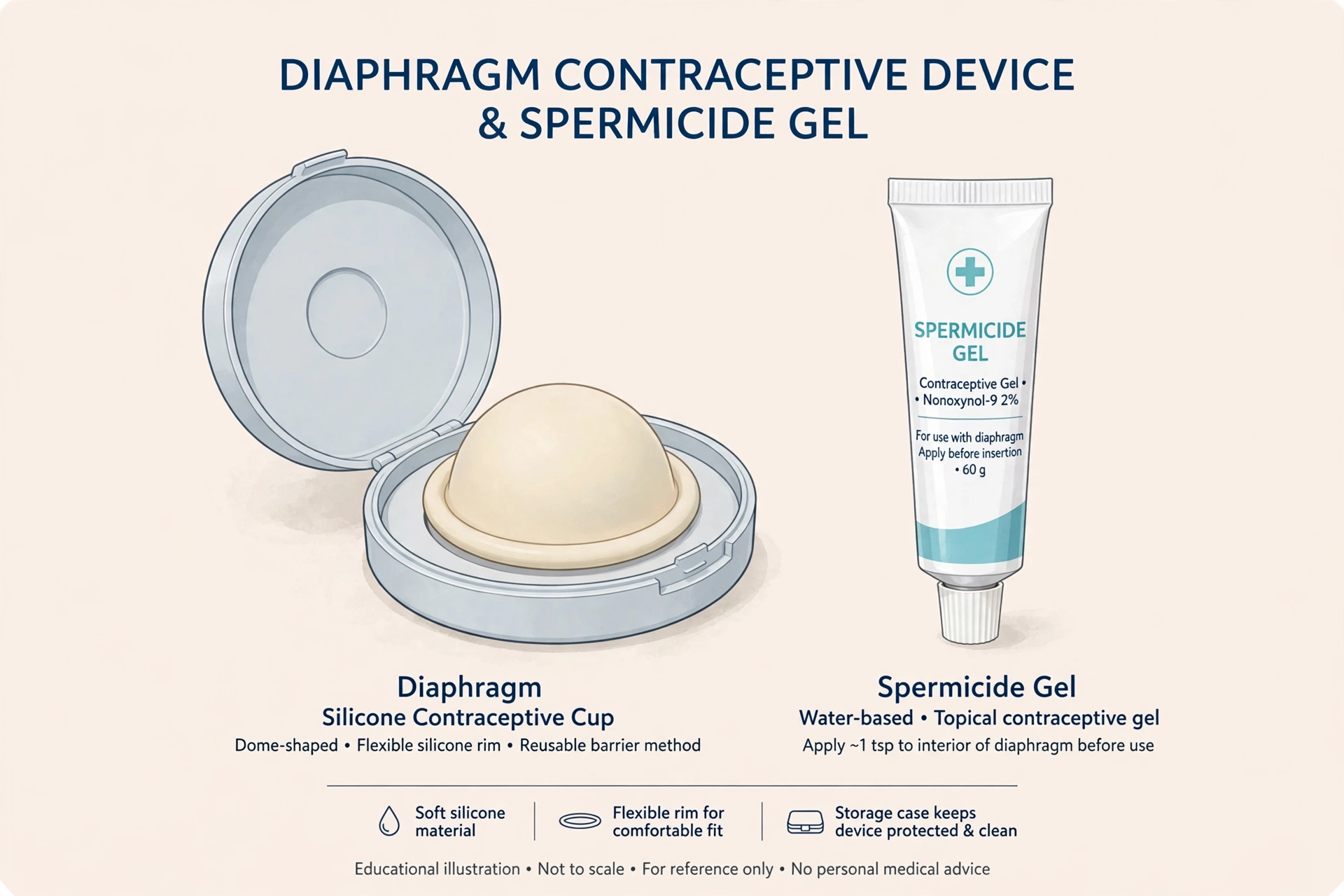
Understanding diaphragm birth control effectiveness is the first step to deciding whether this hormone-free, reusable barrier method is right for you. A diaphragm is a small, flexible dome-shaped cup made of silicone, latex, or rubber that is inserted into the vagina before sex to cover the cervix and block sperm from entering the uterus.
Used together with spermicide, it prevents pregnancy in up to 94% of cases with perfect use, but real-world effectiveness is lower — around 83% with typical use. In this guide, we break down exactly how effective diaphragms are, how to use one correctly, what the pros and cons are, who should (and should not) consider one, and how to get as close as possible to perfect-use effectiveness.
Why does diaphragm birth control effectiveness vary so much between perfect and typical use? The short answer is routine: because diaphragm birth control effectiveness hinges on spermicide, placement, and timing, small everyday mistakes create the gap between 94% and 83%. The rest of this guide shows how each habit raises or lowers diaphragm birth control effectiveness in practice.
What Is a Diaphragm and How Does It Work?
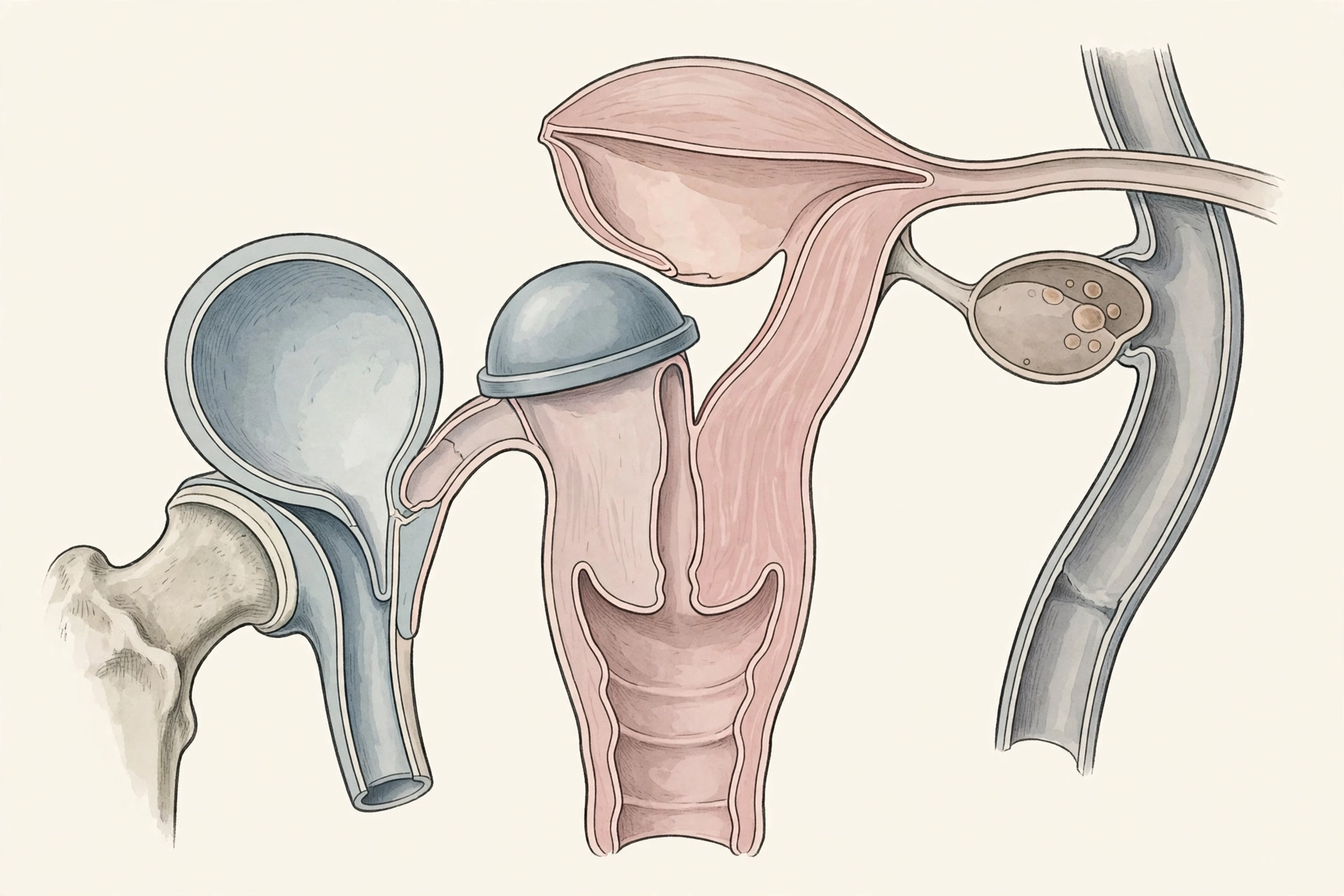
A diaphragm is a barrier method of contraception — it works physically, not hormonally. The device is a shallow, dome-shaped cup with a flexible rim. Before sex, it is inserted deep into the vagina and positioned so the dome covers the cervix (the opening to the uterus) while the front edge tucks behind the pubic bone.
The diaphragm works in two ways at once:
- Mechanical barrier: The dome covers the cervix so sperm cannot pass from the vagina into the uterus and fallopian tubes, where fertilization would occur.
- Spermicide reservoir: The diaphragm is always used together with spermicide — a cream or gel that slows or immobilizes sperm. The dome holds the spermicide close to the cervix, so any sperm that reach the barrier are neutralized.
A diaphragm is only effective with spermicide. Using the device without spermicide significantly reduces its ability to prevent pregnancy, which is one of the most common reasons for real-world failure. Traditional diaphragms require a prescription and a fitting appointment with a clinician, who checks that the size sits comfortably and completely covers the cervix. A newer one-size-fits-most option, the Caya diaphragm, is designed to fit most people without an individual fitting, though clinicians note it may be somewhat less reliable than a fitted diaphragm.
Diaphragm Birth Control Effectiveness: How Well Does It Work?
The headline numbers for diaphragm birth control effectiveness are widely reported by organizations such as Cleveland Clinic, WebMD, and Planned Parenthood:
- Perfect use: up to 94% effective. This means that if 100 people use a diaphragm perfectly for one year, about 6 will experience a pregnancy.
- Typical use: about 83% to 88% effective. With the inconsistencies of real life, roughly 12 to 17 out of 100 users will become pregnant within a year.
What do these numbers actually mean? “Perfect use” describes a laboratory-like scenario: the diaphragm is correctly fitted, spermicide is applied every single time, the device is inserted correctly and positioned over the cervix, and it stays in place throughout the encounter.
It also remains in the vagina for at least six hours after sex. “Typical use” reflects how people actually use the method — including the occasional skipped spermicide, imperfect insertion, dislodging during sex, or removing the device too early.
The size of the gap between 94% and 83% tells you something important: a diaphragm is a technique-sensitive method. Its effectiveness depends far more on the user than methods like an IUD or implant, which work continuously with no action required at the time of sex. For people who are comfortable with the routine and use it consistently, the diaphragm performs well. For people who want a method they never have to think about, the typical-use numbers are a signal to consider more forgiving options. You can see how the diaphragm stacks up against other choices in our birth control options compared guide.
Effectiveness Compared: Diaphragm vs. Other Contraceptive Methods
Comparing first-year pregnancy rates helps put the diaphragm’s effectiveness in context. The figures below reflect widely cited estimates from public health sources:
| Method | Typical use (pregnancies per 100 users per year) | How it works |
|---|---|---|
| IUD (hormonal or copper) | Less than 1 | Placed in the uterus by a clinician; lasts years |
| Implant | Less than 1 | Rod placed in the arm; lasts years |
| Birth control pill, patch, or ring | Around 7 to 9 | Hormonal; requires regular use |
| Diaphragm with spermicide | 12 to 17 | Barrier used at the time of sex |
| Male condom | About 13 to 18 | Barrier used at the time of sex |
| Contraceptive sponge | 12 to 27 (higher after childbirth) | Barrier used at the time of sex |
| Withdrawal | About 20 | Behavioral |
| No method | About 85 | — |
Several things stand out. First, the diaphragm is more effective than no method by a wide margin, and comparable to or slightly better than male condoms in typical use — though unlike condoms, it does not protect against sexually transmitted infections. Second, it is less effective than long-acting methods (IUD, implant) and hormonal methods (pill, patch, ring), which fail less often because they don’t depend on perfect technique in the moment. Third, the diaphragm occupies a specific niche: it is one of the most effective non-hormonal, user-controlled methods that can be used only when needed.
In short, the diaphragm’s appeal is diaphragm birth control effectiveness that is strong for a non-hormonal, on-demand method — as long as you use it carefully every time. Keeping that context in mind makes the checklists below worth following.
Why the Numbers Differ: The Typical-Use Gap
Most articles list the effectiveness numbers and move on. But understanding why real-world effectiveness drops is what actually lets you close the gap. The typical-use failures of diaphragm birth control cluster around a handful of predictable mistakes:
- Spermicide skipped or insufficient: The most common failure mode. Spermicide must be applied before every act of sex, including repeat acts with the same diaphragm insertion. Adding more with fingers or an applicator — without breaking the device’s seal — is required each time.
- Poor placement: If the dome does not fully cover the cervix, sperm have a path around it. Discomfort, rushing, or an incorrect size can all lead to incomplete coverage.
- Dislodging during sex: The diaphragm can shift out of position. People sometimes notice it has moved only afterward.
- Timing errors: Removing the diaphragm too soon after sex (before the six-hour minimum) can leave live sperm that the spermicide would otherwise have neutralized. Leaving it in beyond 24 hours raises the risk of infection and toxic shock syndrome without adding protection.
- Spermicide timing: Most spermicides work best when sex occurs within about an hour or two of application. Inserting the device hours ahead of time and then not reapplying spermicide is another quiet failure path.
- Damaged device: Tears, holes, or weakened latex reduce barrier integrity. Oil-based lubricants and oil-based vaginal products can degrade latex diaphragms rapidly.
None of these are failures of the device itself — they are failures of the routine. That is precisely why the checklist in the next section matters.
How to Use a Diaphragm Correctly
Getting fitted by a clinician is the starting point for good diaphragm birth control effectiveness. During the visit, the clinician determines the correct size, demonstrates insertion and removal, and confirms the device covers the cervix and feels comfortable. Then, each time you use it, the routine is as follows:
Preparing the diaphragm
- Wash your hands thoroughly with soap and water.
- Inspect the diaphragm for holes or tears by holding it up to a light and gently stretching the material, or by filling it with water and checking for leaks.
- Apply spermicide inside the dome of the cup (about a tablespoon, following your product’s instructions) and spread a little around the rim.
Inserting the diaphragm
- Get into a comfortable position — lying on your back, squatting, or standing with one leg raised all work.
- Squeeze the rim of the diaphragm into an oval or fold it in half.
- With your other hand, locate your vaginal opening and gently slide the diaphragm inside, aiming along the back wall toward your tailbone, pushing it as far back as it will go.
- Use a finger to nudge the front rim so it tucks behind your pubic bone, and confirm the dome covers your cervix. The cervix feels like a firm, rounded bump — you should be able to feel it through the dome.
- A correctly placed diaphragm should not be felt during walking, coughing, or sex. If you can feel it, or if it causes discomfort, it may be the wrong size or position — check with your clinician.
Timing rules
- Insert up to a few hours before sex — but aim for sex within about two hours of application so the spermicide is at full strength. If more than two hours pass, reapply spermicide into the vagina without removing the device.
- Reapply spermicide before every act of sex if you have sex more than once while the diaphragm is in.
- Keep it in for at least six hours after the last act of sex — never remove it sooner.
- Remove it within 24 hours of insertion. Leaving it longer increases the risk of bacterial infection and toxic shock syndrome (TSS), a rare but serious condition.
Removing and storing
- Wash your hands, then insert a finger to hook the rim, break any suction, and pull the device downward and out.
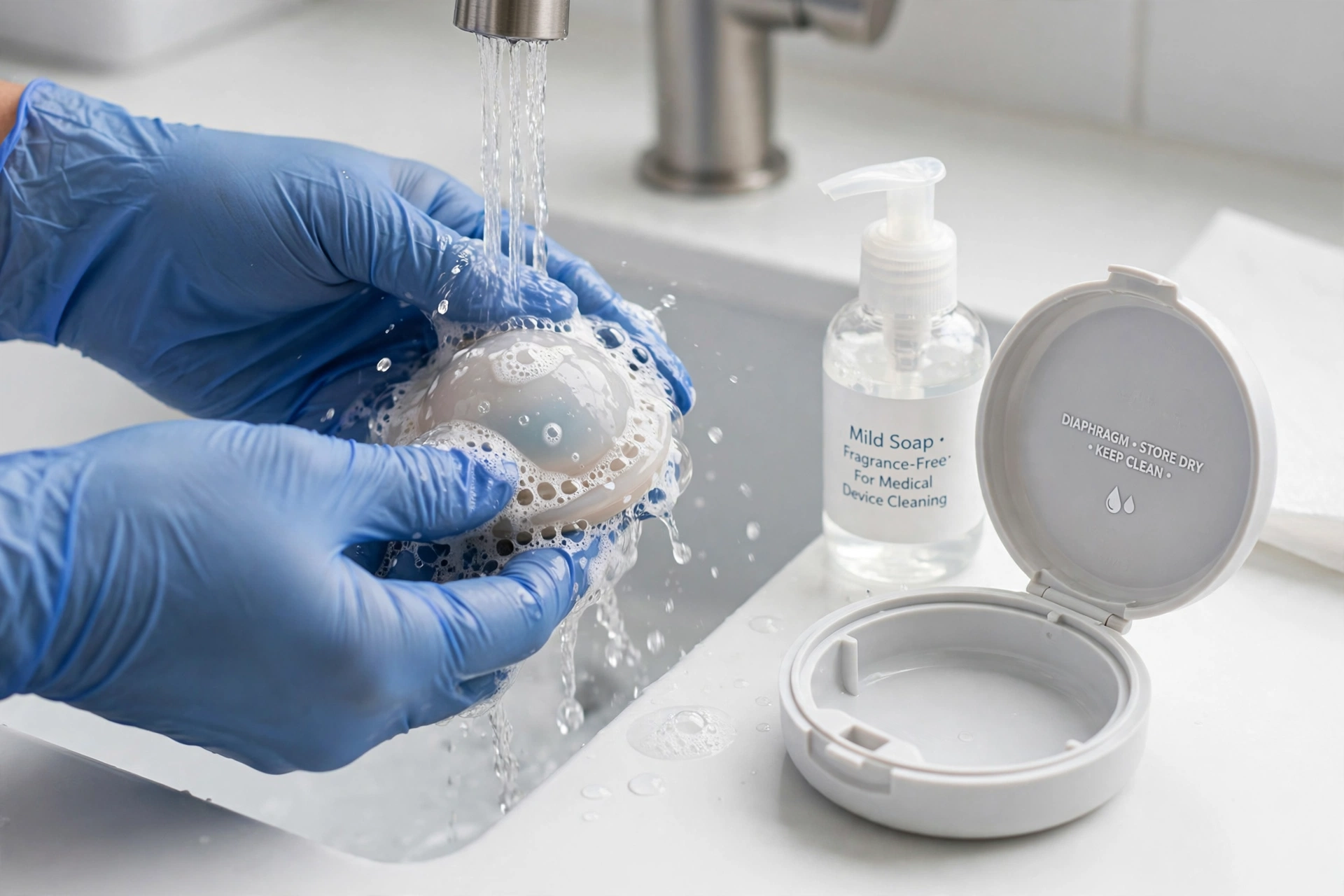
- Wash the diaphragm with mild soap and warm water, let it air-dry completely, and store it in its container in a cool, dry place away from sunlight.
- Avoid oil-based lubricants and oil-based vaginal medications with latex diaphragms, as oils break down the material. Use water-based or silicone-based lubricants.
The Perfect-Use Checklist: Getting Closer to 94%
If your goal is to push your personal diaphragm birth control effectiveness as close to the 94% perfect-use figure as possible, use this checklist every time:
- Confirm your diaphragm still fits — refitting is needed after childbirth or miscarriage, pelvic surgery, or significant weight gain or loss (around 10 pounds or more), or if the device slips or causes pain.
- Check for damage before every insertion — hold it to the light, stretch gently, and look for holes or thin spots.
- Use spermicide every time, in the amount your product recommends, and reapply before each repeat act.
- Confirm coverage — after insertion, feel for the cervix through the dome to make sure it is fully covered.
- Mind the clock — sex within a couple of hours of insertion, device left in for at least six hours after, and removed within 24 hours.
- After sex, urinate as you normally would — urinating after sex can help reduce the risk of urinary tract infections, which diaphragm users experience more often.
- Have a backup plan — know what to do if something goes wrong (see the next section), rather than improvising in the moment.
If Something Goes Wrong: Your Backup Plan
Even careful users have off days — and a single slip can dent your diaphragm birth control effectiveness. Decide your backup plan before you need it:
- You forgot the spermicide, or it slipped out of place during sex: Treat this as unprotected sex. Emergency contraception (such as a copper IUD or emergency contraceptive pills) can reduce the risk of pregnancy if used within the recommended time window — learn about your emergency contraception options in advance so you know the timing and availability near you.
- You removed the diaphragm too early: If it was in for less than six hours after sex, the protection window was cut short. Discuss backup steps with your clinician or pharmacist promptly.
- The diaphragm tore or you found a hole afterward: Replace the device and consider emergency contraception, since barrier integrity was compromised.
- You have symptoms of infection or TSS: High fever, weakness, vomiting, diarrhea, or a sunburn-like rash after use — or painful urination, unusual discharge, or persistent irritation — warrant prompt medical attention, not watchful waiting.
A practical safety net for diaphragm users is keeping emergency contraception information handy and knowing the nearest pharmacy or clinic. Spermicide and a spare check of your device’s condition before insertion remain your best day-to-day defenses.
Benefits of Diaphragm Birth Control
The benefits below help explain why many people accept the technique-sensitive nature of diaphragm birth control effectiveness:
- Hormone-free: It does not alter your natural hormones or menstrual cycle, making it an option for people who cannot or prefer not to use estrogen or progestin.
- On-demand: You only use it on days you have sex — no daily pill, weekly patch, or monthly routine to maintain.
- Reusable and low-waste: One device can be washed and reused for up to about two years, which also makes it economical over time.
- Immediately reversible: Fertility returns as soon as you stop using it — there is no waiting period.
- Discreet and partner-independent: It can be inserted hours before sex so it does not interrupt intimacy, and it can be used even if a partner is unwilling to use a condom.
- Breastfeeding-compatible: Because it is hormone-free, it can generally be used while breastfeeding (after the postpartum period — see the cautions below).
- No effect on future fertility: Long-term studies of barrier methods show no lasting impact on the ability to conceive later.
Risks, Side Effects, and Who Should Avoid Diaphragms
With correct use, diaphragms usually cause no side effects. But there are real risks and contraindications to take seriously — and while none of these risks reduce diaphragm birth control effectiveness itself, they matter for your overall experience:
- No STI protection: Diaphragms do not prevent HIV or other sexually transmitted infections. Anyone at risk should use condoms as well — read more in our guide to condoms and sexual pleasure, which covers combining barrier methods comfortably.
- Urinary tract infections: The rim can press against the urethra, and some users get UTIs more often. Urinating before and after sex and ensuring a good fit may help; frequent UTIs are a reason to discuss alternatives with your clinician.
- Irritation or allergic reaction: Latex, silicone, or spermicide ingredients can cause itching, burning, or irritation in either partner. Note that spermicide-related irritation may theoretically increase vulnerability to STIs, another reason to pair with condoms when STI risk exists.
- Bacterial vaginosis: Use may slightly increase the risk of BV in some people.
- Toxic shock syndrome (rare): Leaving a diaphragm in for more than 24 hours raises the risk of TSS, a serious bacterial infection. Always remove and clean the device within 24 hours.
You should not use a diaphragm if you have given birth or had a miscarriage within the last six weeks, are allergic to the device material or spermicide, have poor vaginal muscle tone or a vaginal shape that prevents a secure fit, have recurrent UTIs or an active vaginal infection, have previously had TSS, or are at high risk of HIV or other STIs without additional protection. A clinician can help assess whether these apply to you.
Care, Cleaning, and Replacement
Proper maintenance keeps the diaphragm effective and safe across its lifespan — and protects the diaphragm birth control effectiveness you worked to achieve:
- Wash with mild soap and warm water after every use, air-dry completely, and store in its case away from heat and sunlight.
- Inspect before each use for holes, tears, or thinning — replace the device if you find any.
- Expect to replace a diaphragm about every two years, or sooner if damaged; silicone devices may last longer depending on the product, so follow the manufacturer’s guidance.
- Schedule a refitting check if you have given birth or had a miscarriage, had pelvic surgery, gained or lost significant weight, notice slipping or discomfort, or develop frequent UTIs.
- Never use talcum or baby powder on the device, and keep oil-based products away from latex models.
Cost and Getting a Diaphragm
In many countries, a traditional diaphragm requires a prescription and a fitting visit. The total upfront cost typically includes the clinician appointment (pelvic exam and fitting) plus the device itself and a supply of spermicide.
Health insurance often covers contraceptive devices and the fitting visit, but coverage varies — check your plan before the appointment. Spermicide is an ongoing cost, purchased over the counter in most places. The one-size-fits-most Caya diaphragm may be available with fewer fitting requirements depending on your country, though it is generally considered somewhat less reliable than an individually fitted diaphragm. Because the device is reusable for up to about two years, the per-year cost is usually low compared with monthly methods, especially once the fitting is done. Good news for your budget: improving your diaphragm birth control effectiveness costs nothing extra, since the same consistent routine that protects you also keeps diaphragm birth control effectiveness close to its perfect-use level.
If cost is a barrier, family planning clinics and public health programs often provide diaphragms, fittings, and spermicide at reduced or no cost — a clinician or local health department can point you to options.
Frequently Asked Questions
How effective is a diaphragm at preventing pregnancy?
With perfect use — correct fit, spermicide every time, proper insertion and timing — a diaphragm is about 94% effective, meaning roughly 6 in 100 users become pregnant in a year. With typical use, effectiveness is about 83% to 88%, or roughly 12 to 17 pregnancies per 100 users per year. The gap exists because the method is technique-sensitive: skipping spermicide, poor placement, or timing mistakes reduce protection — and these are exactly the factors that determine your personal diaphragm birth control effectiveness.
Do you need a prescription for a diaphragm?
In most countries, yes. A traditional diaphragm requires a prescription and a fitting appointment so a clinician can confirm the size covers your cervix comfortably — and a proper fitting supports better diaphragm birth control effectiveness. The one-size-fits-most Caya diaphragm was designed to reduce or eliminate the need for individual fitting, but availability and prescription requirements vary by country, and it is considered somewhat less reliable than a fitted diaphragm.
Can you have sex more than once while wearing a diaphragm?
Yes — but you must apply additional spermicide into the vagina (not into the dome, so you don’t break the device’s seal) before each additional act. The diaphragm itself can stay in place for the whole session, as long as it remains correctly positioned over the cervix and is removed within 24 hours of insertion.
How long can you leave a diaphragm in?
Leave it in for at least six hours after the last act of sex, and remove it within 24 hours of insertion. Removing it too early can reduce effectiveness, while leaving it in too long increases the risk of bacterial infection and toxic shock syndrome. If you want to use it again the next day, wash it and reinsert it with fresh spermicide.
Does a diaphragm protect against STIs?
No. A diaphragm provides no meaningful protection against HIV or other sexually transmitted infections. If STI protection matters in your situation, use condoms alongside the diaphragm — the two methods can be combined safely.
Can you use a diaphragm while breastfeeding?
Generally yes, because the diaphragm is hormone-free and does not affect milk supply or the baby. However, you should wait until at least six weeks after giving birth before using one, and you will likely need a refitting since childbirth can change vaginal size and shape. Discuss timing with your clinician at your postpartum checkup.
Can you use a diaphragm during your period?
Physically, yes — the diaphragm can be worn during menstruation and will even catch some menstrual flow. However, some clinicians advise extra caution because wearing a barrier device during menstruation may slightly raise infection risk, so remove and clean it promptly after sex and do not exceed the 24-hour limit.
What should you do if the diaphragm slips out of place during sex?
If you notice it has shifted or fallen out, treat the encounter as unprotected. Reinsert the diaphragm with fresh spermicide if you continue, and consider emergency contraception afterward, since sperm may have reached the cervix while the barrier was displaced. If slippage happens repeatedly, the size or fit is probably wrong — see your clinician for a refitting.
A Note on Medical Information
This article is for educational purposes only and is not medical advice. Contraceptive needs differ from person to person, and only a qualified clinician who knows your medical history can help you choose a safe, suitable method.
Do not start, stop, or change any contraceptive method based solely on what you read here — discuss your options, risks, and any symptoms with a doctor, nurse practitioner, or family planning provider. For authoritative guidance, see the Planned Parenthood diaphragm guide and the CDC contraception resources.