Does Cycling Cause Erectile Dysfunction?
If you cycle regularly — commuting, weekend rides, or long-distance training — you may have wondered: does cycling cause erectile dysfunction? The worry is understandable. A narrow bike saddle sits directly beneath the most sensitive nerves and arteries in the male body, and stories of riders losing sensation have circulated for decades.
The good news is that modern research paints a far more reassuring picture than the old headlines suggest. Most men can ride for years without any impact on erectile function, provided their equipment and riding habits respect the body’s anatomy. This article breaks down what studies actually show, which riders face real risk, and the concrete steps that protect you in the saddle.
Does Cycling Cause Erectile Dysfunction? The Short Answer
For the vast majority of riders, the answer is no — cycling does not cause erectile dysfunction. The largest and most rigorous study on the topic, which followed nearly 5,300 male cyclists, found no association between cycling and erectile difficulties or infertility, even among men riding more than eight hours per week. In fact, because regular cycling improves cardiovascular fitness, weight control, and blood sugar regulation — all of which defend against erectile dysfunction — moderate cycling is more likely to protect erectile function than harm it.
So, does cycling cause erectile dysfunction for the average commuter or weekend rider? According to the best available evidence, it does not.
That said, the risk is not zero. A specific combination of factors — a narrow or poorly positioned saddle, an aggressive forward-leaning posture, and long uninterrupted hours in the saddle — can compress the pudendal nerve and the pudendal artery, which supply sensation and blood flow to the penis. This can produce genital numbness and, in persistent cases, temporary erectile difficulties. The key word is modifiable: almost every risk factor is fixable with better equipment and technique.
How a Bicycle Seat Can Affect Erectile Function
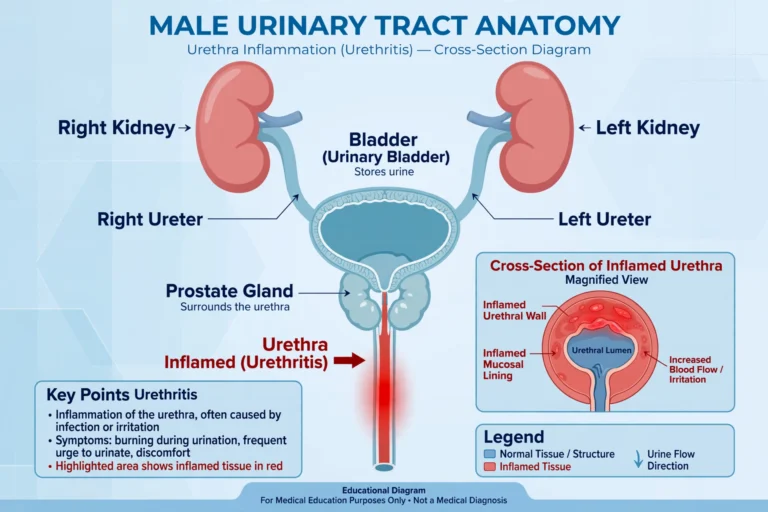
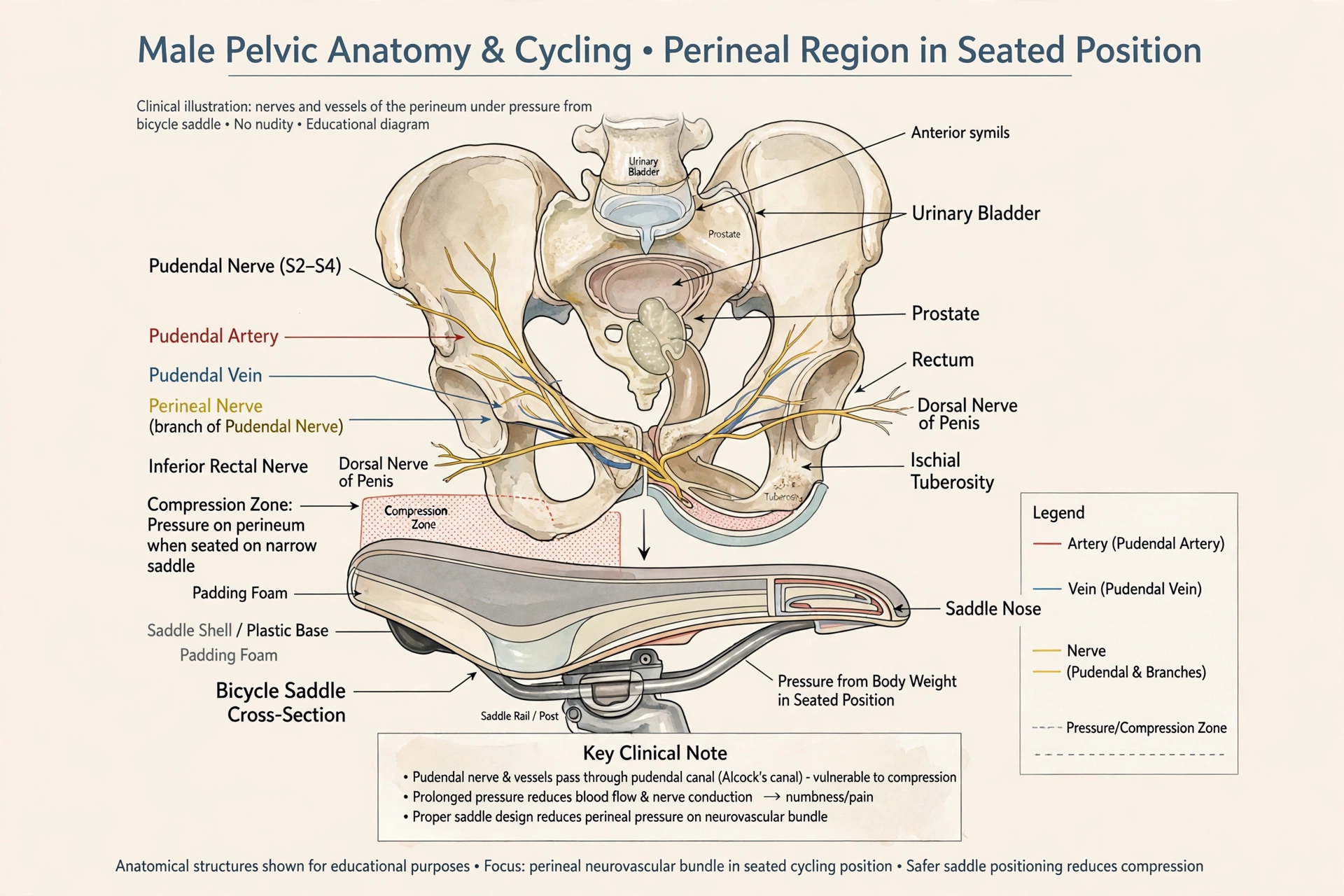
When you sit in a chair, your weight rests on the ischial tuberosities — the two bony “sit bones” of the pelvis. A bicycle saddle, by contrast, is narrow, and a meaningful share of the rider’s weight ends up pressing on the perineum, the region between the scrotum and the anus. Two critical structures pass through this zone:
- The pudendal artery, a branch of which carries blood into the penis. Saddle pressure can reduce penile blood flow — research has measured reductions of up to two-thirds with narrow racing saddles compared to standing.
- The pudendal nerve, which carries sensation from the penis and plays a role in the reflexes involved in erection. Sustained compression produces the tingling and numbness many cyclists recognize.
Brief compression during a ride is usually harmless; blood flow rebounds the moment you stand on the pedals. Problems arise when compression is prolonged, repeated daily, and ignored — particularly when numbness becomes a regular occurrence rather than a rare surprise. Understanding the common causes of erectile dysfunction helps put this mechanical risk in context: cycling is only one of many potential contributors, and far less common than vascular disease, diabetes, or certain medications.
This mechanical pathway is exactly why the question “does cycling cause erectile dysfunction” keeps resurfacing — and why the answer has more to do with setup than with the sport itself.
What the Research Actually Shows
Several well-known studies frame the debate, and they are worth understanding in full rather than through headlines. Each approaches the question “does cycling cause erectile dysfunction” from a different angle:
- The Massachusetts Male Aging Study (MMAS): An early landmark finding linked cycling to erectile difficulties, with the highest risk among men cycling more than three hours per week. This 2003-era result drove most of the original concern.
- The Norwegian bike tour study: Among 160 men who completed a 324-mile tour, roughly one in five reported penile numbness and about 13% reported erectile difficulties lasting more than a week. Notably, these were extreme, multi-day endurance events, not ordinary riding.
- NIOSH police patrol studies: Bicycle-mounted officers averaging 5.5 hours in the saddle per workday showed clear dose-dependent patterns — the more hours ridden and the more pressure exerted on the saddle, the greater the symptoms. Crucially, a follow-up found that switching to noseless saddles dramatically reduced genital numbness.
- The 2017 University College London study: In the largest study to date (nearly 5,300 male cyclists surveyed internationally), researchers found no positive association between cycling and erectile dysfunction, nor between cycling volume and infertility — even among men riding 8.5+ hours per week. This study is newer and far larger than the studies that created the original scare.
- The German penile-oxygenation research: Presented at urology conferences, this work measured drops in penile oxygenation during vigorous cycling and demonstrated that saddle choice and riding position strongly influenced the result — reinforcing that how you ride matters more than whether you ride.
How should a rider asking “does cycling cause erectile dysfunction” interpret all this? The older, smaller studies identified a real but specific phenomenon: extreme volumes plus poor saddle setup can cause temporary problems. The largest modern study says ordinary and even enthusiastic cycling, done sensibly, carries no measurable erectile risk. Both can be true at once.
Indoor Cycling and Spin Classes: A Modern Twist
Most of the classic research studied outdoor riding, but stationary bikes and spin classes deserve their own consideration — and they are an angle the old articles largely missed:
Riders new to spin classes often ask, “does cycling cause erectile dysfunction” more on a stationary bike? The honest answer is that the risk is manageable with the same precautions.
- No coasting, no standing: On an indoor bike, many riders never stand on the pedals or shift position the way outdoor riders do at traffic lights or downhill stretches. Continuous seated pressure for 45–60 minutes is the norm in a spin class.
- Fixed handlebars, aggressive posture: Many stationary bikes are set up with low handlebars relative to the saddle, pushing the rider’s weight forward onto the perineum.
- High-frequency cadence sessions: High-intensity interval classes keep riders seated and driving hard for long intervals — exactly the pattern associated with the most compression.
The fixes are the same ones that work outdoors: stand for 15–30 seconds every 10–15 minutes, raise the handlebars so your torso is more upright, confirm the saddle is not tilted upward, and swap the stock saddle for one with a pressure-relief channel or noseless design if numbness appears. If you ride a stationary bike at home, you have one advantage over outdoor riders: you can experiment with saddle position between sessions with zero embarrassment.
The bottom line: if your main question is “does cycling cause erectile dysfunction on a spin bike specifically,” the answer is that the same mechanical rules apply — stand often, sit upright, and fix the saddle.
Warning Signs Every Cyclist Should Watch
The earliest and most common signal is genital numbness or tingling during or after a ride. Occasional, brief numbness that fades within minutes of dismounting is common and usually benign. It becomes a warning sign when:
Noticing these signals early is what keeps a passing worry — “does cycling cause erectile dysfunction?” — from becoming a real problem.
- Numbness persists for hours after a ride, or occurs even on short, easy rides
- You notice reduced sensation that does not fully return between rides
- Morning erections become noticeably less frequent than your personal baseline
- You experience difficulty achieving or maintaining erections that tracks with heavy riding weeks and improves when you rest
Morning erections deserve a specific mention because they serve as a natural, free self-monitoring tool. They largely reflect nighttime vascular and neurological health. If your riding is heavy and morning erections fade in parallel, but return after a week of reduced riding, the pattern points strongly at a cycling-related mechanical cause rather than an unrelated problem.
That kind of before-and-after comparison is one of the most practical ways to answer “does cycling cause erectile dysfunction” for your own body. To learn what is typical at different life stages, see our guide to morning erections and what they say about erectile health.
If symptoms persist despite equipment changes and a proper rest period, the same symptom pattern can also signal broader vascular concerns — erectile difficulty is a recognized early marker of cardiovascular disease, as explained in our article on the link between erectile dysfunction and heart disease. In that case, a medical evaluation is the right next step regardless of the cycling connection.
Choosing a Saddle That Protects You
Saddle science has advanced considerably, and the evidence now favors specific designs. Here is how the main options compare:
| Saddle type | How it works | Evidence | Best for |
|---|---|---|---|
| Narrow racing saddle (long nose) | Concentrates pressure along the center; supports aggressive aero posture | Associated with the largest drops in penile blood flow | Competitive racers who accept the trade-off and manage it with frequent position changes |
| Saddle with central cutout | Opening in the middle relieves direct perineal pressure | Mixed results in studies; helps many riders, not all | Road and touring riders wanting a middle ground |
| Saddle with pressure-relief channel | Groove (not a full opening) along the centerline redistributes load to the sit bones | Generally favorable; wider adoption in recent designs | Commuters, gravel and mountain riders |
| Noseless / split-nose saddle | Removes the nose entirely; weight rests on the sit bones and buttocks | Strongest evidence for reducing perineal pressure and numbness (NIOSH follow-up) | Commuters, recreational riders, anyone with recurring numbness |
| Wide, well-padded saddle | Spreads load across a broader area; gel or foam cushioning | Better than narrow racing saddles; very wide saddles can cause chafing on long rides | Upright city bikes, e-bikes, casual riders |
A few principles matter more than the brand: the saddle must be wide enough to support your sit bones (many shops measure sit-bone width and match the saddle), it should sit level or tilted very slightly downward — never angled upward into the perineum — and it should be at a height that does not force you to rock your hips side to side at the bottom of the pedal stroke. Many specialist shops offer pressure-mapping sessions that show exactly where your weight lands; for a rider with recurring symptoms, this is money well spent.
For riders whose main question is “does cycling cause erectile dysfunction” on their current setup, the saddle is the single most impactful variable to change.
Bike Fit and Riding Habits That Lower the Risk
Beyond the saddle itself, these evidence-backed habits protect the nerves and blood vessels involved:
Together with the right saddle, these habits answer the practical side of “does cycling cause erectile dysfunction” — how to keep riding without worry.
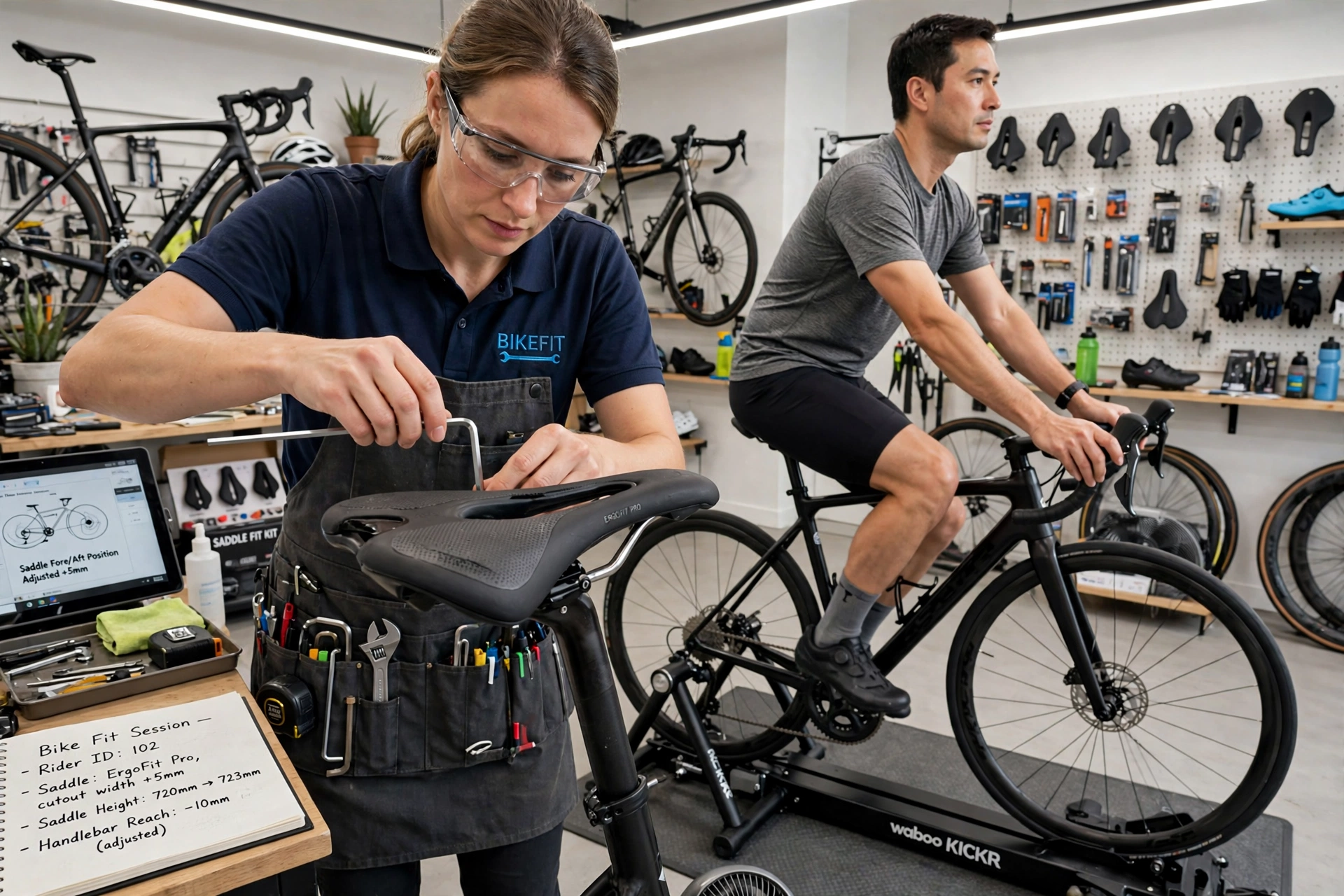
- Get a professional bike fit. Saddle height, fore-aft position, and handlebar reach jointly determine how much weight falls on the perineum. Handlebars positioned below the saddle push you into the aggressive forward lean most associated with compression.
- Stand on the pedals regularly. Even 15–30 seconds of standing every 10–15 minutes fully restores blood flow. Make it a habit on every ride, not just long ones.
- Wear quality padded cycling shorts. A good chamois adds cushioning and reduces friction; it is not a substitute for a proper saddle, but it helps.
- Raise the handlebars. A more upright torso shifts weight backward onto the sit bones and away from the perineum.
- Build volume gradually. Sudden jumps in weekly riding hours give tissues no time to adapt. Increase duration progressively.
- Take rest days and cross-train. Swimming, running, and strength training maintain fitness while giving the perineum complete recovery time. Regular exercise in varied forms supports overall sexual health without concentrating all load in one position.
- Consider a recumbent bike or e-bike. Research showed that recumbent bicycles, with their reclined seats and back support, did not cause the drop in penile oxygenation seen with conventional saddles. E-bikes, ridden upright at moderate effort, also reduce perineal loading while preserving most cardiovascular benefits.
If Problems Appear: A Recovery Plan
When numbness or erectile difficulty follows your rides, do not simply push through. A structured response resolves most cases:
Think of it as a personal experiment that answers “does cycling cause erectile dysfunction” for your own body.
- Week 1: Stop riding entirely. Numbness that is purely mechanical typically fades within days once compression is removed.
- Meanwhile: Change the setup before the next ride — saddle type, saddle angle, handlebar height, or all three. Change one variable at a time so you can tell what helped.
- Return gradually: Resume with short, easy rides (20–30 minutes), standing frequently. Extend duration only while symptom-free.
- Reassess at 2–4 weeks: If function has returned to your personal baseline, the cause was almost certainly mechanical and you have fixed it. If difficulties persist despite the new setup and adequate rest, or if they occur independently of riding, book a medical appointment.
If you are working through the question “does cycling cause erectile dysfunction” because symptoms appeared during a heavy training block, this recovery plan doubles as a diagnostic test.
See a clinician promptly if you experience persistent genital numbness at rest, erectile difficulty that does not improve with the recovery plan, pain during erections, or erectile problems accompanied by chest pain, breathlessness, or leg pain during exertion. A clinician will review cycling habits alongside other common contributors — medications, blood pressure, blood sugar, hormones, sleep, stress, and psychological factors — because erectile difficulty is rarely investigated as a single-cause problem.
Why Cycling’s Cardiovascular Benefits Still Win
It would be a mistake to abandon the bike over this concern. Cardiovascular disease, diabetes, obesity, and metabolic syndrome are among the strongest known drivers of erectile dysfunction, and cycling is one of the most effective tools against all of them. The men in the large UCL study who rode the most had no excess erectile risk — consistent with the idea that the heart-health benefits of cycling outweigh the mechanical risks for riders who manage their setup sensibly. Men who ask “does cycling cause erectile dysfunction” and quit riding over the fear may trade a small, manageable mechanical risk for the much larger, well-proven erectile risks of inactivity.
The balanced approach is simple: keep riding, but ride smart. Treat genital numbness the way you would treat knee pain — as useful feedback from your body, not as something to endure. Adjust the saddle, adjust the fit, vary your position, and cross-train. For anyone still asking, “does cycling cause erectile dysfunction,” the balanced answer is no — not when you ride with a sensible setup. Your cardiovascular system and your sexual health will both thank you.
The final answer to “does cycling cause erectile dysfunction” is reassuring: ride smart, and the bike remains one of the best things you can do for your health.
Frequently Asked Questions
Here are the questions riders ask most often when they wonder, “does cycling cause erectile dysfunction?”
Can cycling permanently damage erectile function?
Permanent damage from cycling is extremely rare. The documented cases involve prolonged, repeated perineal compression that was ignored over long periods. Temporary numbness and erectile difficulty almost always resolve with rest and equipment changes. Acting on early warning signs — rather than riding through numbness — is what keeps the problem temporary.
How many hours of cycling per week is safe for erectile health?
There is no universal threshold. The old MMAS data flagged risk above roughly three hours per week, but the much larger 2017 UCL study found no increased risk even above 8.5 hours per week among riders with sensible setups. Volume matters less than saddle design, bike fit, posture, and whether you take breaks and rest days.
Are noseless saddles really better?
They have the strongest research support for reducing perineal pressure. The NIOSH follow-up study found that officers using noseless saddles reported far less penile numbness than those on standard saddles. Some riders need an adjustment period for the different feel, but for anyone with recurring numbness, a noseless or split-nose design is the first change worth trying.
Does indoor cycling carry the same risk as outdoor riding?
It can carry slightly more, because indoor riders tend to stay seated continuously without the natural standing breaks of outdoor riding (traffic lights, hills, coasting). Deliberately standing on the pedals every 10–15 minutes and setting the handlebars higher closes most of that gap.
Is numbness after every ride normal?
Mild, brief numbness that fades within minutes of dismounting is common, especially on longer rides. Numbness that lasts for hours, recurs on short rides, or is accompanied by erectile difficulty is not normal and should prompt equipment changes and, if it persists, a medical evaluation.
Should I stop cycling if I have erectile dysfunction?
Usually not. Most men with erectile dysfunction benefit from continuing to exercise, since cardiovascular fitness is protective. If you arrived at this article asking “does cycling cause erectile dysfunction” because you already notice symptoms, start with the recovery plan above — then get evaluated. The right move is to optimize your setup (saddle, fit, posture, breaks) and have the erectile difficulty itself evaluated by a clinician, since it can reflect causes — such as blood pressure, blood sugar, or medication effects — that deserve attention on their own. The NHS guidance on erectile dysfunction is a reliable starting point for understanding the full range of causes and treatments.
Can a recumbent bike solve the problem completely?
For riders with persistent symptoms on conventional saddles, a recumbent bike is an excellent alternative — research showed it did not produce the drop in penile oxygenation seen with standard saddles. It preserves cardiovascular exercise while removing perineal pressure almost entirely.
Medical disclaimer: This article is for educational purposes only and is not medical advice. It does not diagnose any condition. If you experience persistent erectile difficulties, genital numbness, or other concerning symptoms, please consult a qualified clinician for evaluation and personalized guidance. For a clinical overview of the condition, see the Cleveland Clinic’s overview of erectile dysfunction.