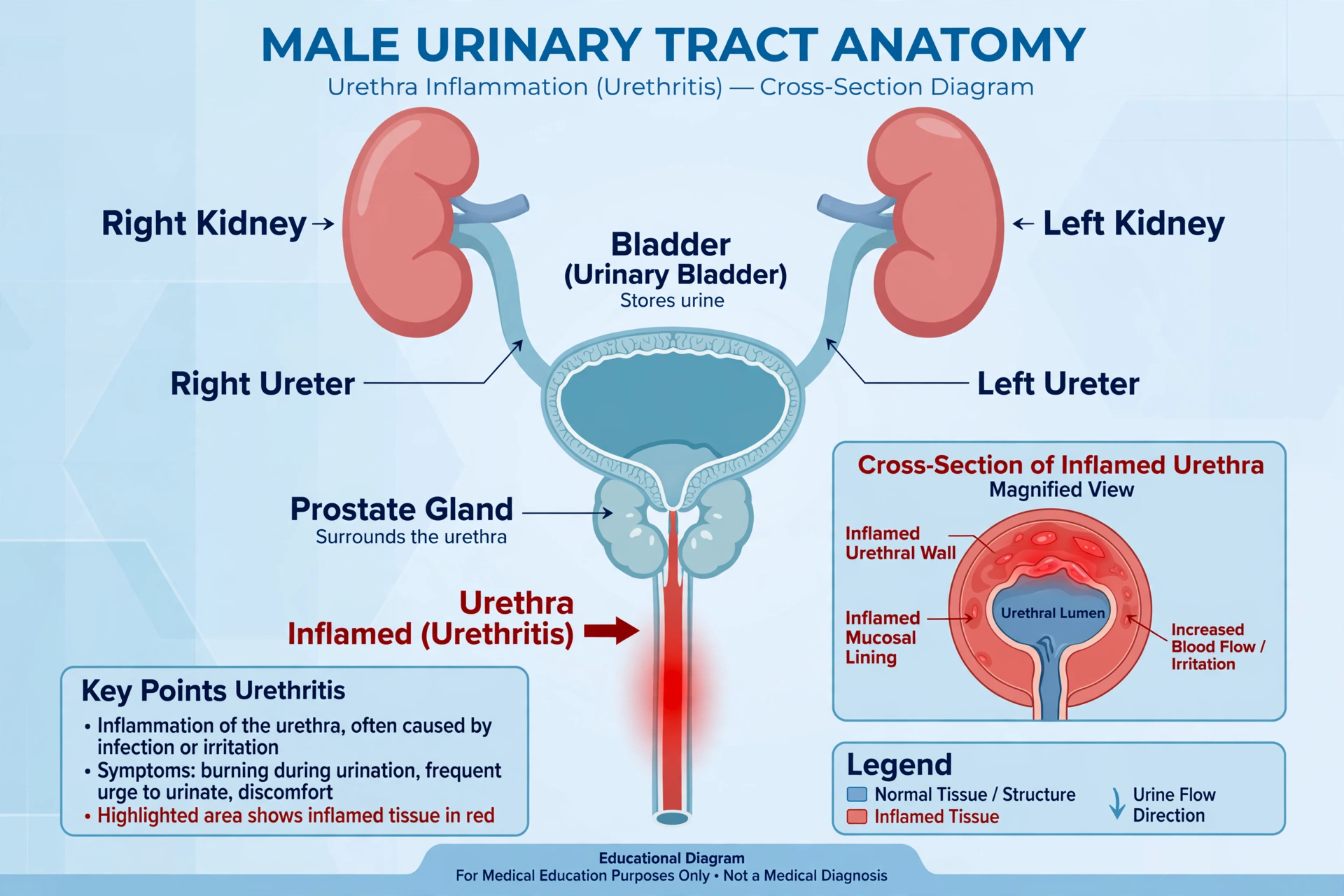
Urethritis in Men: Causes, Symptoms, Treatment
A burning sensation when you urinate, an unusual discharge, an itch that will not go away: these are classic urethritis in men symptoms, and they deserve prompt medical attention. Urethritis is inflammation of the urethra — the narrow tube that carries urine from the bladder out through the penis — and it is one of the most common reasons men visit sexual health clinics. Because most cases are caused by treatable infections, recognizing the symptoms early makes a genuine difference to how quickly and fully you recover.
This guide explains what urethritis is, the full range of symptoms men can experience, when symptoms typically appear after exposure, the causes behind them, how doctors diagnose the condition, and how it is treated according to current medical guidelines. It also covers complications, prevention, and how to talk to a partner about it.
What Is Urethritis?
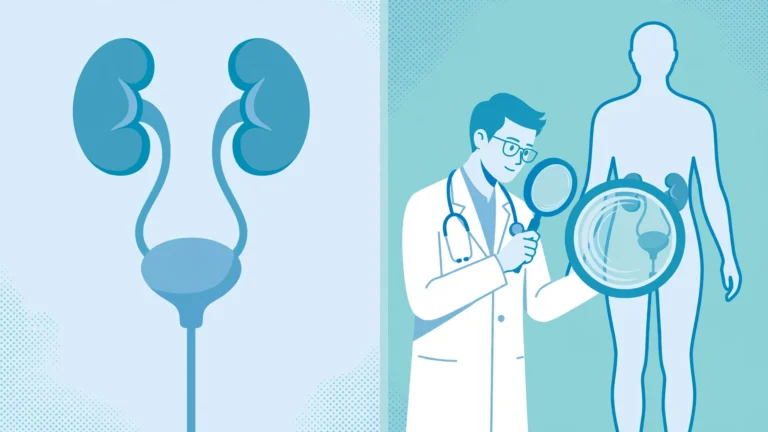
Urethritis simply means inflammation of the urethra. The urethral lining can become swollen and irritated when bacteria, viruses, or chemical irritants reach it, and in men — whose urethra runs the length of the penis — the symptoms are usually noticeable. Urethritis is not exactly the same as a urinary tract infection (UTI): a UTI is an infection of the urinary tract itself (usually the bladder), while urethritis is inflammation of the urethral tube. The two conditions can feel similar — burning, urgency, discomfort — but they require different diagnostic tests and treatment approaches.
Doctors divide urethritis into two broad categories based on its cause. Gonococcal urethritis is caused by the bacterium Neisseria gonorrhoeae (the organism behind gonorrhea). Nongonococcal urethritis (NGU) is everything else — most often chlamydia, but also several other organisms. NGU is the more common of the two: an estimated 80 percent of urethritis cases are nongonococcal, and roughly 4 million Americans experience urethritis each year. Men aged 20 to 24 are the age group most likely to develop it, and people with multiple or new sexual partners face a higher risk.
Urethritis in Men Symptoms: The Full Picture
The urethritis in men symptoms most people notice first are urinary and discharge-related, but the condition can produce a wider range of signs. Some men have every symptom on the list; others have only one mild one. Knowing the full picture helps you decide when to seek care rather than waiting and hoping it passes.
The Most Common Symptoms
- Burning or pain during urination (dysuria). This is the single most frequently reported symptom — a stinging or burning feeling as urine passes through the inflamed urethra.
- Urethral discharge. Fluid leaking from the tip of the penis that is not urine or semen. It can be clear, white, yellow, or green, and it may be most noticeable first thing in the morning — many men describe the opening “sticking” shut before their first urination of the day.
- Itching, tingling, or irritation inside the penis or around the urinary opening (meatus), sometimes with redness or soreness at the tip.
- Needing to urinate more often or feeling a persistent urge to urinate even when little comes out.
Less Common but Important Signs
- Blood in the urine or semen — alarming but a recognized symptom of urethral inflammation.
- Pain during ejaculation or intercourse, since semen also travels through the urethra.
- Swelling or tenderness of the penis, or tender, swollen lymph nodes in the groin.
- Fever — uncommon in urethritis, but a fever can signal that the infection is spreading and warrants prompt care.
When There Are No Symptoms at All
Up to a quarter of men with urethritis have no noticeable symptoms, particularly when the cause is chlamydia. Asymptomatic infection is one of the main reasons urethritis keeps spreading: a person can pass the infection to a partner without realizing anything is wrong. This is why testing after unprotected sex with a new partner matters even when you feel completely fine — and why, if a partner is diagnosed, you should be evaluated even in the absence of symptoms.

When Do Urethritis Symptoms Appear? The Onset Timeline
One detail most overview articles skip is that symptoms do not start immediately after exposure. The incubation period — the gap between exposure and the first symptom — varies by cause, and knowing it can help you and your clinician identify the likely culprit:
| Cause | Typical symptom onset |
|---|---|
| Gonococcal urethritis (N. gonorrhoeae) | Usually 2–8 days after exposure; tends to come on quickly and intensely |
| Chlamydial urethritis (C. trachomatis) | Usually 1–3 weeks after exposure; often milder at first |
| Mycoplasma genitalium | Often 2–6 weeks or longer; can be very gradual |
| Trichomoniasis (T. vaginalis) | Days to weeks, or no symptoms at all |
| Non-infectious (chemical irritation, trauma, catheter) | Usually within a few days of the irritant or injury |
Because symptoms can take weeks to appear, a common point of confusion is assuming a current partner could not be the source — or, conversely, blaming a new partner for an infection acquired earlier. Symptom timing is a clue, not proof: only laboratory testing can identify the organism involved. As the UK’s NHS notes, it can take days or weeks for symptoms to show after unprotected sex, which is why clinicians ask about recent partners rather than only the most recent encounter.
Two Types: Gonococcal vs Nongonococcal Urethritis
Clinicians treat the two types differently because the organisms involved respond to different antibiotics and carry different risks, so it is worth understanding the distinction:
| Feature | Gonococcal urethritis | Nongonococcal urethritis (NGU) |
|---|---|---|
| Causing organism | Neisseria gonorrhoeae | Most often Chlamydia trachomatis; also Mycoplasma genitalium, trichomoniasis, and others |
| Share of cases | Roughly 20 percent | Roughly 80 percent |
| Onset | Fast (days) | Slower (weeks), and sometimes silent |
| Discharge | Often profuse and pus-like (yellow-green) | Often scant, clear, or white — sometimes barely noticeable |
| Treatment approach | Injectable antibiotic plus coverage for possible co-infection | Oral antibiotics, chosen per current guidelines |
It is possible to have both types at once, which is why clinicians test for gonorrhea and chlamydia together whenever urethritis is suspected. If you want a deeper comparison of the two infections behind most cases, see our guide to chlamydia vs gonorrhea symptoms.
Causes of Urethritis in Men
Infectious Causes
- Chlamydia (Chlamydia trachomatis) — the single most common cause of NGU, responsible for roughly a quarter of cases.
- Gonorrhea (Neisseria gonorrhoeae) — the cause of all gonococcal urethritis.
- Mycoplasma genitalium (M. genitalium) — found in 10–25 percent of NGU cases and increasingly noted for resistance to some antibiotics.
- Trichomoniasis (Trichomonas vaginalis) — a parasitic STI that can cause urethritis in men, often with mild or no symptoms.
- Other organisms — including the bacteria behind ordinary urinary tract infections, herpes simplex virus, and adenovirus in some cases.
Non-Infectious Causes
- Chemical irritation from spermicides, contraceptive foams or jellies, harsh soaps, or lotions used on the genitals.
- Physical trauma or friction — vigorous intercourse, masturbation, cycling, or horseback riding can inflame the urethra.
- Urinary catheters or urological procedures that irritate the urethral lining.
Key risk factors include unprotected vaginal, anal, or oral sex; multiple or new sexual partners; and being in the 20–24 age group. Men who have sex with men face additional risk through specific exposure routes, which is why clinicians ask about sexual practices openly and without judgment — accurate answers lead to accurate tests.
How Urethritis Is Diagnosed
Diagnosis starts with a conversation and a physical examination. A clinician will examine the genital area for discharge, redness, tenderness, or sores, and ask about symptoms, recent sexual activity, and any new soaps, lubricants, or medications. From there, laboratory testing confirms urethritis and identifies the cause:
- First-void urine test. A urine sample taken from the first part of the stream (not midstream) is analyzed for white blood cells and tested with highly sensitive nucleic acid amplification tests (NAAT) that detect chlamydia, gonorrhea, and other organisms.
- Urethral swab. A slim swab collects a sample from inside the urethra for culture or NAAT. It can be briefly uncomfortable but takes only seconds.
- Leukocyte esterase or microscopy tests that detect inflammation even before organism results return.
- Blood tests may be added to screen for other STIs such as syphilis or HIV when risk factors suggest it.
Accurate results depend partly on preparation — a practical detail rarely spelled out. Clinicians typically ask you not to urinate for at least one to two hours before giving a urine sample (the NHS recommends two hours), because urinating too recently can wash away the organisms the test is looking for. A first-morning sample is ideal. If you are unsure about timing or test types, our STI testing window guide explains when each infection becomes detectable. The NHS urethritis page at nhs.uk/conditions/urethritis also describes exactly what happens at a sexual health clinic appointment, which many men find reassuring before their first visit.
Treatment for Urethritis in Men
Treatment targets the underlying cause, and for infectious urethritis that means antibiotics prescribed by a clinician — ideally chosen once test results identify the organism, or started presumptively at diagnosis when results are pending.
One important development that older articles often miss: the U.S. Centers for Disease Control and Prevention updated its STI treatment guidance so that doxycycline is now the recommended regimen for nongonococcal urethritis, replacing the older practice of favoring a single dose of azithromycin. The change followed evidence of rising azithromycin treatment failures in chlamydia and rapidly increasing macrolide resistance in M. genitalium. For confirmed gonococcal urethritis, current guidelines recommend an injectable antibiotic together with coverage for possible chlamydia co-infection. You can read the current recommendations in the CDC STI Treatment Guidelines for urethritis.
Beyond the prescription itself, proper treatment includes several steps clinicians emphasize:
- Finish the entire course. Symptoms often improve within a few days, but stopping early can leave the infection partially treated and encourage resistance.
- Treat sexual partners too. Every recent partner should be tested and treated if necessary — otherwise reinfection is almost guaranteed, and the infection continues to spread.
- Abstain from sex until treatment is complete. Guidelines advise waiting until at least 7 days after therapy is finished, symptoms have resolved, and partners have been adequately treated before resuming sexual activity.
- Return for follow-up if symptoms persist. The NHS advises a check-up appointment 1–2 weeks after treatment to confirm the infection has cleared.
Over-the-counter pain relievers such as NSAIDs can ease discomfort while treatment takes effect, and drinking plenty of water helps keep urine flowing through the urethra. Neither substitutes for treating the infection itself. A clinician — not internet research — should decide which medication fits your case, and you should never take leftover antibiotics or a partner’s prescription.
Persistent or Recurrent Urethritis: When Symptoms Don’t Go Away
Sometimes symptoms linger or return after treatment, and this is where many patients feel lost. Clinicians distinguish two patterns:
- Persistent urethritis — symptoms and signs of inflammation never fully cleared after the first treatment.
- Recurrent urethritis — symptoms resolved, then came back weeks later.
The most common explanations are reinfection from a partner who was not treated, not completing the prescribed course, or an organism that needs a different antibiotic — notably M. genitalium, for which clinicians may order a specific resistance test, or trichomoniasis, which can be overlooked in initial testing. Less commonly, ongoing irritation from a non-infectious cause keeps symptoms alive after the infection is gone.
What to do: go back to the clinic rather than self-treating. The clinician will re-examine you, repeat testing (including specific tests for M. genitalium and trichomoniasis where appropriate), and adjust treatment based on results. One caution from the guidelines: symptoms alone, without documented signs of urethral inflammation, are not by themselves a sufficient basis for repeated antibiotic courses — which is exactly why follow-up testing matters rather than simply requesting another prescription.
Possible Complications of Untreated Urethritis
Most men recover fully with proper treatment, but untreated infection can spread and cause lasting problems:
| Complication | What it is |
|---|---|
| Epididymitis | Infection spreads to the coiled tube behind the testicle, causing testicular pain and swelling — one of the most common complications |
| Prostatitis | Inflammation of the prostate gland, which can cause pelvic pain and urinary problems |
| Urethral stricture | Scarring narrows the urethra, leading to difficult or painful urination that may need surgical correction |
| Reactive arthritis | An immune reaction causing a classic triad: urethritis, joint inflammation, and eye inflammation (conjunctivitis) |
| Fertility problems | Chronic or repeated infection can affect sperm transport and, in severe cases, fertility |
| Periurethral abscess | A pocket of infection in the tissues around the urethra — rare but potentially serious |
If testicular pain and swelling develop, read our guide to epididymitis symptoms and treatment and seek care promptly — early treatment of epididymitis protects fertility and relieves pain faster.
When to Seek Medical Care Promptly
See a clinician or sexual health clinic if you notice any urethritis symptoms — burning, discharge, itching, or pain. Seek care urgently if you develop any of the following red flags:
- Fever, chills, or a general feeling of illness alongside urinary symptoms
- Pain or swelling in one or both testicles
- Difficulty urinating, inability to urinate, or severe pelvic pain
- Blood in the urine or semen
- Symptoms that persist or return after finishing prescribed treatment
Sexual health clinics typically offer confidential testing without requiring a referral, and in many places you do not need to give your real name for an initial screening. Do not let embarrassment delay care — clinicians see these cases every day.
Preventing Urethritis
Most cases of urethritis are preventable with straightforward habits:
- Use condoms consistently — for vaginal and anal sex, and on the penis during oral sex. Condoms are the single most effective prevention step.
- Get tested regularly if you have new or multiple partners, and before stopping condom use in a new relationship.
- Inform partners promptly if you are diagnosed, so they can be tested and treated.
- Avoid known irritants — spermicides and harsh genital products if you know they bother you; choose gentle, fragrance-free hygiene products.
- Don’t share sex toys, or wash them and cover them with a fresh condom between users.
- Drink plenty of fluids and urinate after sex, which helps flush the urethra.

Talking to Your Partner About Urethritis
Telling a partner about a urethritis diagnosis is awkward for almost everyone, but it is also one of the most important parts of treatment. A partner who is not treated will likely reinfect you, and they may carry complications of their own without knowing it.
A simple, direct approach works best: explain that you were diagnosed with urethritis, that it is treatable, that they should get tested and treated even if they feel fine, and that you will both pause sexual activity until treatment is complete. Many sexual health clinics offer confidential partner notification — they can contact partners on your behalf without naming you. In some settings, clinicians can also provide treatment for a partner directly (expedited partner therapy). For practical scripts and approaches, see our STI partner notification tips.
Frequently Asked Questions
Can urethritis in men go away on its own?
Sometimes mild symptoms ease temporarily without treatment, but the underlying infection usually remains — and it can still be passed to partners and cause complications. Infectious urethritis needs proper diagnosis and prescribed treatment. Waiting it out is not a safe strategy.
How long does it take for urethritis symptoms to appear after sex?
It depends on the cause. Gonococcal urethritis typically appears within 2–8 days; chlamydial urethritis within 1–3 weeks; and M. genitalium infections can take 2–6 weeks or longer. Non-infectious irritation usually causes symptoms within a few days of the irritant or injury.
Is urethritis always caused by an STI?
No. While most cases in sexually active men are caused by sexually transmitted organisms, urethritis can also result from chemical irritation (spermicides, harsh soaps), physical trauma, or urinary catheters. Testing is the only way to determine the cause.
How is urethritis different from a UTI?
Urethritis is inflammation of the urethra itself, while a UTI is an infection of the urinary tract (usually the bladder). Symptoms overlap — burning, urgency, discomfort — but they are diagnosed with different tests and treated differently. Discharge from the penis points more toward urethritis than a bladder infection.
Can I have sex while being treated for urethritis?
No — abstain from all sexual activity (including oral sex) until you have finished treatment, your symptoms have fully resolved, and your partner has also been treated. Current guidelines advise waiting at least 7 days after therapy is complete before resuming sex.
Why do my symptoms persist after finishing antibiotics?
Possible reasons include reinfection from an untreated partner, not completing the full course, or an organism that needs different treatment — such as M. genitalium or trichomoniasis. Return to your clinician for re-examination and further testing rather than taking more antibiotics on your own.
Can urethritis cause fertility problems?
If left untreated, the infection can spread to the epididymis, prostate, or cause urethral scarring — all of which can affect fertility. With prompt, complete treatment, most men recover without any lasting effect on fertility, which is another reason not to delay care.
Medical disclaimer: This article is for educational purposes only and is not medical advice. It cannot diagnose your condition or replace evaluation by a qualified clinician. If you have symptoms of urethritis, see a doctor or sexual health clinic for proper testing and treatment.