Anemia and Low Libido: The Fatigue Connection
When your desire for intimacy quietly fades, the culprit is not always stress, relationship trouble, or getting older. Sometimes the explanation is sitting in your blood. The anemia and sex drive connection is real — and it runs largely through one powerful mediator: fatigue. If you are constantly exhausted, short of breath climbing stairs, and have noticed your interest in sex draining away at the same time, low iron may be the missing piece your doctor should check. Below, we explain exactly how iron deficiency steals energy and desire, who is most at risk, how testing works, and what safely restores both.
Iron deficiency, anemia, and low ferritin: what is the difference?
These three terms get used interchangeably, but they describe different stages of the same problem:
- Iron deficiency means your body’s iron supply is running low. Iron is the raw material your bone marrow needs to build hemoglobin — the oxygen-carrying protein inside red blood cells.
- Low ferritin means the storage form of iron is depleted. You can have low ferritin (subclinical iron deficiency) while your hemoglobin still looks normal — and still feel exhausted, foggy, and uninterested in sex.
- Iron deficiency anemia means the shortage has gone far enough that hemoglobin itself has dropped and your tissues are not getting enough oxygen.
This distinction matters for your sex life because many people wait for a formal anemia diagnosis before taking fatigue seriously. The fatigue — and the drop in desire that comes with it — can begin well before hemoglobin falls below the laboratory cutoff. That is why the anemia and low libido connection is so often missed in its early stages. If your blood tests are “normal” but you feel drained, asking specifically about your ferritin level is a conversation worth having with your clinician.
The anemia and sex drive connection: five pathways
Iron does far more than carry oxygen. When it runs low, several systems that feed sexual desire weaken at once. Understanding these pathways explains the anemia and sex drive connection — and why the two so often travel together.
1. Profound fatigue steals desire first
Fatigue is the hallmark symptom of iron deficiency, and it is also one of the most common libido killers. Sexual desire needs surplus energy — physical stamina, mental presence, and motivation. When your body is rationing oxygen to keep your heart and brain working, intimacy simply falls off the priority list. Research has linked chronic fatigue with sexual difficulties, and anyone who has tried to be intimate after an exhausting day knows the feeling. For more on this mechanism, see our guide to how fatigue affects libido.
2. Low iron disrupts dopamine, the motivation chemical
Iron is a required cofactor for the enzyme that produces dopamine, a neurotransmitter central to motivation, reward, and sexual desire. When iron stores fall, dopamine signaling can falter — showing up as brain fog, low motivation, restless legs at night, and a flat, “meh” feeling toward things that used to excite you, including sex. This is one reason iron deficiency can dim desire even before overt anemia appears.
3. Mood slides: anxiety and low mood
Iron deficiency is associated with anxiety, irritability, and depressive symptoms — all of which suppress libido. Restless sleep from restless legs syndrome (a classic iron-deficiency symptom) compounds the problem, since poor sleep further erodes desire. Low mood and low desire then feed each other: less intimacy can strain a relationship, and relationship strain lowers mood further. If mood changes are part of the picture, our article on depression and low sex drive explores this cycle in depth.
4. Physical capacity drops
Shortness of breath, a racing heart, dizziness, and heavy limbs are not exactly an invitation to intimacy. Anemia reduces exercise tolerance and makes physical exertion — including sex — feel disproportionately hard. Many people with anemia unconsciously start avoiding physical activity altogether, which removes one of the most reliable natural boosters of desire and body confidence.
5. Hormones and circulation are affected
Severe or prolonged iron imbalance can disturb hormonal balance and blood flow, both of which matter for arousal. Notably, the problem cuts both ways: while low iron drains energy and desire, chronically high iron (as in the iron-overload condition hemochromatosis) has been linked to lower testosterone, sexual dysfunction, and fertility problems. Iron is a Goldilocks mineral — your libido suffers at either extreme.
What the research actually shows
Most of the strong evidence connects iron status to sexual function through the fatigue pathway rather than a direct hormonal one — the anemia and sex drive link is an energy story first — but the findings are striking:
- A peer-reviewed study of reproductive-aged women found that those with iron deficiency anemia scored significantly lower than healthy women on every measured aspect of sexual function — desire, arousal, lubrication, orgasm, and overall satisfaction — and reported more pain during intimacy. You can read the study on PubMed Central.
- Research on men has found that red cell distribution width (RDW) — a blood marker that rises in iron deficiency — tends to be higher in men with erectile difficulties than in those without, supporting the idea that disordered iron metabolism and sexual problems share common ground.
- Sleep research reinforces the fatigue link: one study found that each additional hour of sleep was associated with a meaningful increase in the likelihood of partnered sexual activity the next day.
Taken together, the evidence paints a consistent picture: iron keeps your energy, mood, and motivation systems running, and those systems are the foundation desire is built on.
Signs your low libido might be linked to low iron
Low desire alone does not prove an iron problem, and it does not by itself confirm an anemia and sex drive connection — libido is multifactorial. But consider asking your doctor about iron testing if your fading interest in sex comes bundled with:
- Exhaustion that sleep does not fix
- Shortness of breath or a pounding heart with mild exertion
- Pale skin, or pale inner eyelids, gums, or nail beds
- Dizziness or lightheadedness when standing
- Cold hands and feet
- Headaches or difficulty concentrating
- Brittle nails, hair shedding, or a sore tongue
- Restless legs, especially in the evening
- Unusual cravings for ice, dirt, or starch
- Heavy menstrual periods (a leading cause of iron loss in women)
The Mayo Clinic’s overview of iron deficiency anemia lists these symptoms in detail and notes that early deficiency can be so mild you barely notice it — until the fatigue, and sometimes the fading desire, accumulate.
Who is most at risk?
Iron deficiency is one of the most common nutritional deficiencies in the world, and certain groups should be especially alert to the fatigue-libido connection:
- Women of childbearing age — monthly menstrual blood loss is the single most common cause of iron deficiency in women; heavy periods multiply the risk.
- Pregnant and breastfeeding women — iron demands rise sharply.
- Endurance athletes — foot-strike red blood cell breakdown, sweat losses, and high training loads deplete iron.
- Vegetarians and vegans — plant-based (non-heme) iron is absorbed less efficiently than iron from meat.
- Frequent blood donors — each donation removes a meaningful amount of iron.
- People with digestive conditions — celiac disease, inflammatory bowel disease, or prior gut surgery can impair absorption; slow internal blood loss can also be the hidden cause.
- Older adults — poorer intake, absorption issues, and chronic conditions converge.
- Men — iron deficiency is less common in men, which is exactly why it gets missed; unexplained fatigue plus low desire in a man deserves an iron panel too.
How low iron is diagnosed
Diagnosing iron-related fatigue is straightforward — a simple blood draw — but the panel matters. Ask your clinician about:
- Complete blood count (CBC) — hemoglobin, hematocrit, and red blood cell measures that reveal anemia.
- Ferritin — your iron storage level; the key test for catching deficiency before anemia develops.
- Serum iron and total iron-binding capacity (TIBC) — how much iron is circulating and how hard your body is working to find more.
- RDW (red cell distribution width) — often rises early in iron deficiency.
If deficiency is found, your doctor should also look for why — heavy periods, gut blood loss, or absorption problems — rather than only treating the number. Treating iron without finding the cause is like refilling a leaking bucket.
Restoring iron — and desire: what actually works
The good news: unlike many causes of low libido, iron deficiency is highly treatable, and when anemia and sex drive both suffer, desire often returns as energy does. Work with your clinician on a plan; do not self-prescribe.
Eat with absorption in mind
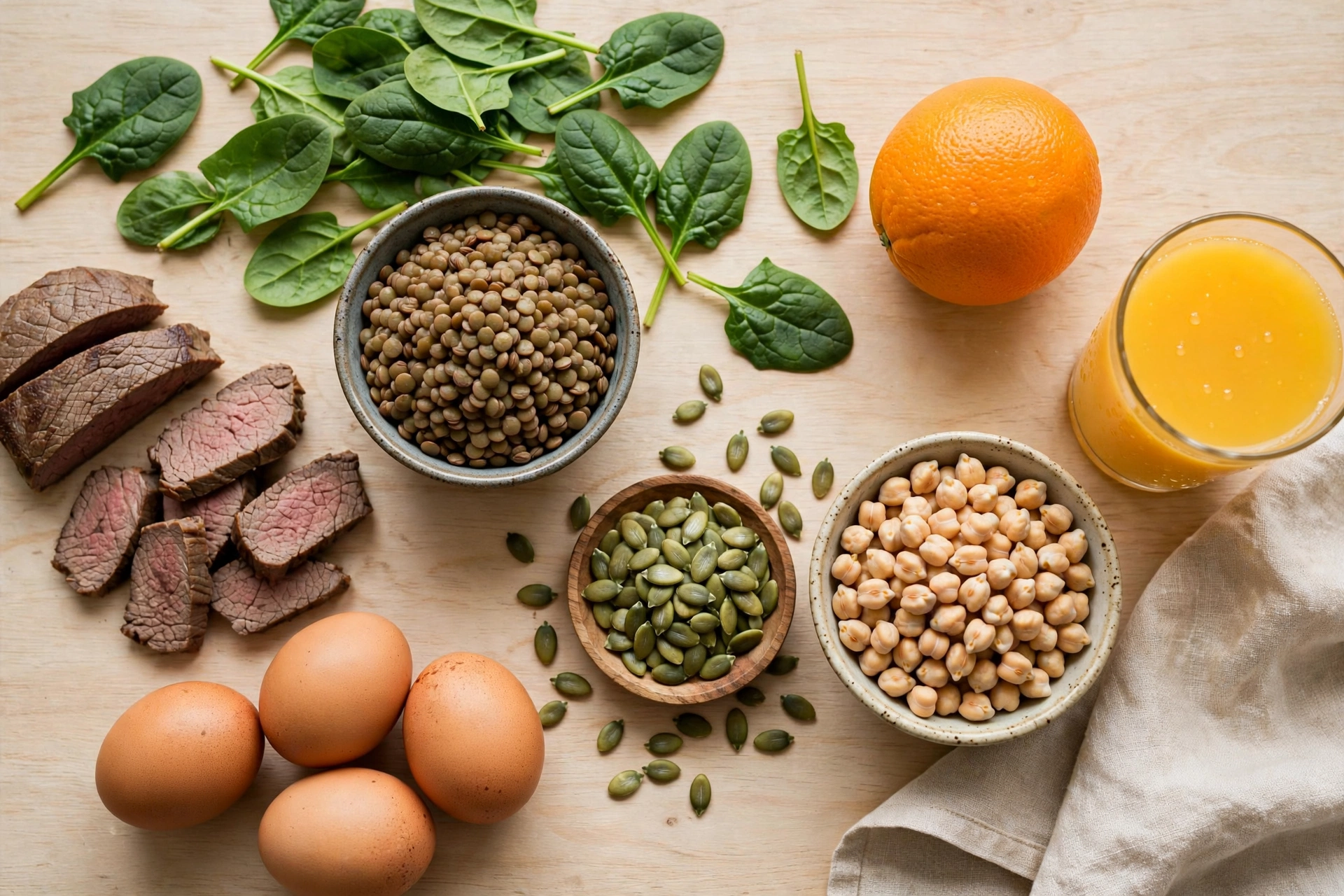
Dietary iron comes in two forms. Heme iron (red meat, poultry, fish) is absorbed efficiently. Non-heme iron (lentils, beans, chickpeas, spinach, pumpkin seeds, eggs, fortified cereals) is valuable too, but its absorption jumps when paired with vitamin C — think lentils with lemon, or spinach with orange juice — and drops when consumed with tea, coffee, or calcium-rich foods at the same meal. Small timing tweaks, like drinking your tea between meals rather than with them, can make a real difference. Explore more in our guide to diet and libido.
Supplements only under medical guidance
Iron supplements are the standard treatment for deficiency, but the type, timing, and duration should be set by your clinician based on your labs — and rechecked with follow-up blood work. Iron is one supplement you should never take blindly: too much damages the liver and other organs, and excess iron can harm sexual function just as deficiency does.
Give it time — and track both energy and desire
Fatigue often starts lifting within weeks of correcting deficiency, while full recovery can take a few months as stores rebuild. Libido typically follows the same curve — most people notice desire returning as their energy, mood, and sleep improve. Keep a simple weekly note of your energy (1–10) and interest in intimacy; it is motivating to watch both climb together, and it gives your doctor useful feedback.
Support desire while you recover
Do not wait for perfect labs to tend to your intimate life. Protecting sleep, gentle regular movement, and stress management all support desire directly — our article on sleep and sex drive covers why rest matters so much. And talk to your partner: explaining that your low desire has a medical, fixable cause (“my iron is low and it’s draining my energy”) removes blame and buys patience while you recover.
A word of caution: too much iron harms desire too
More is not better. Chronic iron overload — whether from a genetic condition like hemochromatosis or from unsupervised supplement use — can suppress testosterone, impair sexual function, and damage the liver, heart, and pancreas. This is why testing before supplementing is non-negotiable, and why follow-up labs matter. If someone suggests “just take iron” for low libido without a blood test, that is a red flag, not advice.
When to see a doctor promptly
Book a medical appointment soon if low desire comes with:
- Severe fatigue that limits daily life, fainting, or chest pain
- Shortness of breath at rest or a racing heartbeat that will not settle
- Very heavy periods, or any unexplained bleeding (including black or bloody stools)
- Rapid, unexplained weight loss alongside fatigue
- Symptoms that do not improve after iron levels normalize — another cause of low libido may need attention
Low libido is a legitimate medical symptom, not a character flaw. Bringing it up with your doctor — alongside your fatigue — can lead straight to a simple, fixable answer.
Frequently Asked Questions
Can anemia directly cause low libido?
There is no strong evidence that anemia directly switches off desire through a single hormonal mechanism. The anemia and sex drive connection is indirect but powerful: anemia causes deep fatigue, low mood, brain fog, and reduced physical capacity — and those reliably suppress sexual desire. Correcting the iron problem usually restores the energy and motivation that desire depends on.
Can low iron lower libido even without anemia?
Yes. Low ferritin (depleted iron stores) with still-normal hemoglobin — sometimes called subclinical iron deficiency — can cause fatigue, restless legs, poor concentration, and low mood, all of which drag down libido. This is one of the most commonly missed causes, because a basic hemoglobin check looks fine. A ferritin test catches it.
How long after treating iron deficiency does libido return?
There is no fixed timeline, but most people feel energy improving within weeks of starting proper treatment, with desire following as fatigue, mood, and sleep recover. Full iron-store replenishment typically takes a few months. Tracking energy and desire weekly helps you and your doctor see the trend.
Does anemia affect libido in men too?
Yes. Although iron deficiency is less common in men, the fatigue pathway is the same: exhaustion, reduced stamina, low mood, and poor sleep suppress desire regardless of sex. Men with unexplained fatigue and fading interest in sex should have iron checked alongside the usual hormonal workup.
Can iron supplements improve my sex drive?
Only if low iron — or the broader anemia and sex drive pattern — is actually the problem. If blood tests confirm deficiency, clinician-guided iron treatment often improves energy and, with it, desire. If your iron levels are already normal, supplements will not boost libido — and excess iron can harm your health and your sexual function. Test first, supplement only on medical advice.
Which foods help iron levels and energy most?
Heme-iron foods (lean red meat, poultry, fish) are absorbed best. Plant sources — lentils, beans, chickpeas, spinach, pumpkin seeds, fortified cereals — work well when paired with vitamin C (citrus, peppers, tomatoes), which multiplies absorption. Avoid tea, coffee, and high-dose calcium at iron-rich meals, since they inhibit uptake. Diet supports treatment; it rarely replaces it when deficiency is significant.
Should I get tested if my partner thinks my low desire is “just stress”?
Stress absolutely affects libido — but so does iron deficiency, and the two often coexist. A simple blood panel (CBC plus ferritin) is inexpensive and rules a fixable cause in or out. If your fatigue is persistent and sleep does not fix it, testing is the rational next step regardless of what anyone assumes the cause to be.
This article is for educational purposes only and is not medical advice. Low libido and fatigue can have many causes, and iron needs vary by individual. Do not start or stop supplements based on this article — consult a qualified healthcare professional for testing, diagnosis, and treatment.