Blood in Semen: Causes and When to Worry
Seeing blood in your semen is the kind of surprise that stops you cold. The first question most men ask is what the blood in semen causes might be — and the second is whether it means something dangerous. Doctors call this symptom hematospermia, and here is the reassuring part first: in most cases, especially in men under 40 with a single episode and no other symptoms, it is not caused by anything serious and it goes away on its own within days or weeks.
“Usually harmless” is not the same as “always harmless.” Recurrent episodes, blood paired with pain or fever, or the symptom appearing after age 40 deserves a proper medical evaluation. Understanding blood in semen causes is the first step toward knowing which episodes are harmless and which ones need a doctor’s visit. This guide covers the common causes, warning signs, tests, treatment, and the questions men and their partners are often too embarrassed to ask.
What Does Blood in Semen Look Like?
Before exploring blood in semen causes in detail, it helps to describe exactly what you saw. Blood in semen does not always look dramatic. It may appear as:
- Pink-tinged semen — a small amount of blood diluted in the ejaculate.
- Bright red streaks or flecks — suggesting recent, fresh bleeding.
- Brown or rust-colored semen — older blood that sat in the reproductive tract for a while before ejaculation.
- Small dark clots — occasionally mixed in when bleeding is a bit heavier.
One useful distinction: make sure the blood is actually in your semen and not your urine. Blood in urine (hematuria) can mix with semen in the urethra and discolor the ejaculate — a simple urine test sorts this out. Also worth ruling out: the blood may have come from a partner (for example, menstrual bleeding). Doctors sometimes suggest a “condom test” — ejaculating with a condom on — to confirm the blood is truly in the semen.
Common Blood in Semen Causes
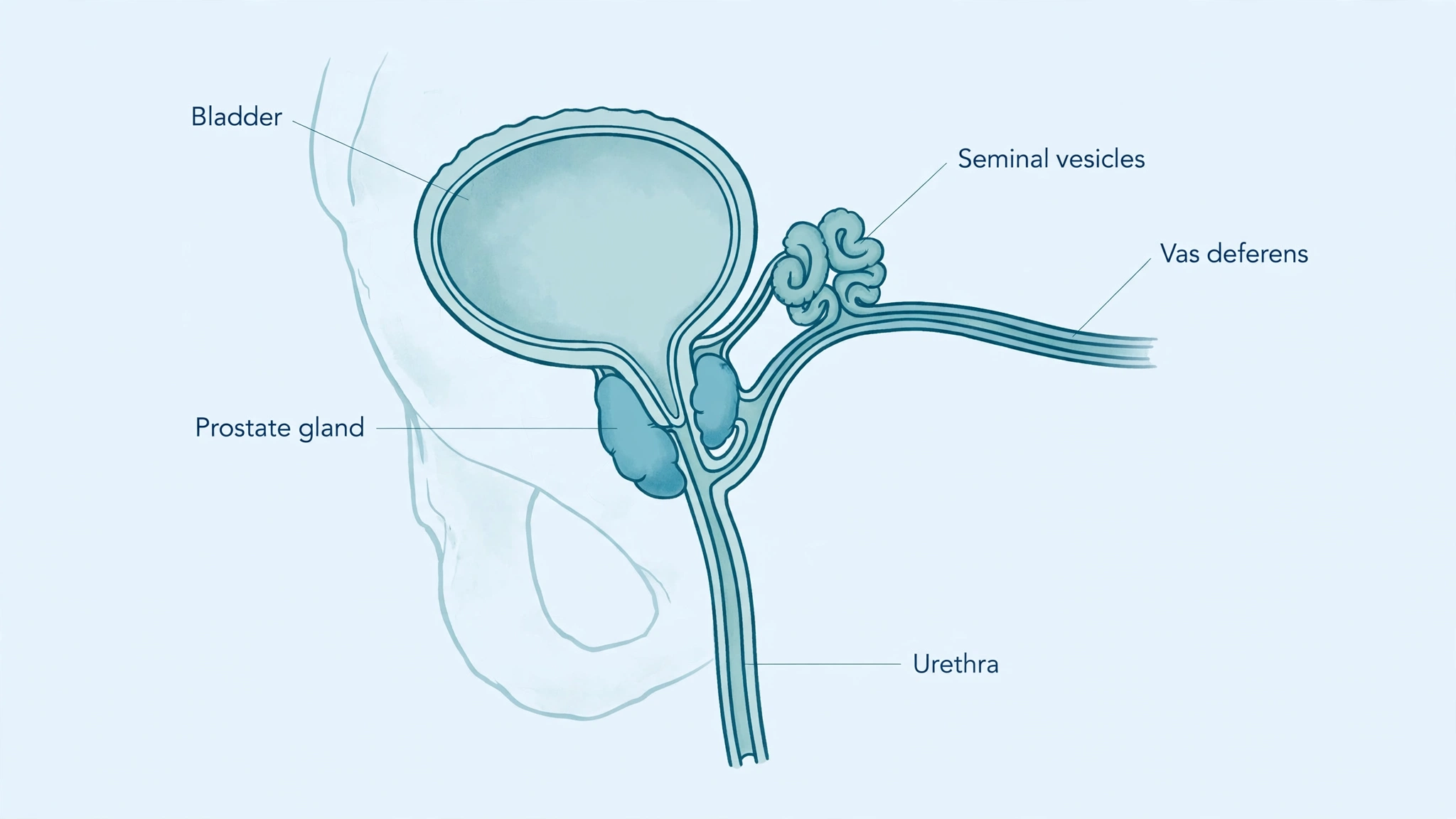
Semen is produced and transported by a chain of organs and ducts: the testicles, epididymis, vas deferens, seminal vesicles, prostate gland, and urethra. Bleeding can originate at any point along that pathway. The main categories of blood in semen causes are below, roughly in order of frequency.
Infection and Inflammation
This is the single most common explanation. Infection or inflammation anywhere along the semen pathway — the prostate (prostatitis), the seminal vesicles, the urethra, the epididymis, or the testicles — can let small amounts of blood mix into the ejaculate.
Medical sources estimate that infection and inflammation account for nearly four out of every ten cases of blood in semen, making them the leading blood in semen causes.
Sexually transmitted infections such as chlamydia and gonorrhea can also be responsible, particularly when there is urethral discharge, burning during urination, or recent unprotected sexual contact.
If STI symptoms sound familiar, our guide on prostatitis symptoms and treatment and the comparison of UTI vs. STI symptoms can help you sort out what fits — but only a clinician’s test can confirm it.
Medical Procedures and Physical Trauma
Blood in semen is a well-known, expected after-effect of several urological procedures. As many as four out of five men temporarily notice it after a prostate biopsy, and it can persist for several weeks, gradually changing from red to brown as the bleeding clears. Cystoscopy (bladder scope), vasectomy, transurethral prostate surgery, pelvic radiation therapy, and even hemorrhoid injections can cause similar temporary bleeding. If you are recovering from one of these procedures, read sex after a prostate biopsy for realistic timelines on bleeding, healing, and when intimacy can resume.
Physical trauma counts too: a blow to the testicles or pelvis during sports, a pelvic fracture, and — more commonly — vigorous sexual activity or very frequent ejaculation can irritate or break tiny blood vessels along the tract. Oddly enough, the opposite can also trigger it: a long period of abstinence followed by ejaculation sometimes produces a one-off episode.
Blockages and an Enlarged Prostate
The reproductive tract is a network of very narrow tubes and ducts. When one becomes blocked — by a small stone in the prostate or seminal vesicles, a cyst, or scar tissue — nearby blood vessels can stretch and break, releasing small amounts of blood.
An enlarged prostate (benign prostatic hyperplasia, or BPH) can also pinch the urethra and is linked to blood in semen. Obstruction-related blood in semen causes become more common with age. If urinary symptoms like a weak stream or frequent nighttime urination are part of the picture, our article on BPH and sexual function explains how prostate enlargement affects both urinary and sexual health.
Growths, Polyps, and Cancer
Benign polyps — small, harmless growths in the reproductive tract — can occasionally bleed into semen. Malignant tumors are the cause men fear most, and the numbers offer genuine perspective: in one review of more than 900 patients with blood in semen, only about 3.5% turned out to have a tumor, most often in the prostate.
That does not mean cancer can be ignored — it is linked to cancers of the prostate, testicles, bladder, and other urinary or reproductive organs — but it is an uncommon cause, especially in younger men. Men with risk factors (age over 40, family history of prostate cancer, persistent or recurrent episodes) should be evaluated rather than reassured by statistics alone. For a broader look at how prostate disease intersects with intimacy, see prostate cancer and your sex life.
Blood Vessel Irregularities
Every structure involved in ejaculation is laced with delicate blood vessels. Vascular malformations (tangled clusters of blood vessels), small cysts, or simply fragile vessels that rupture under the pressure of ejaculation can produce blood in semen with no underlying disease at all. This is one reason doctors sometimes find no cause — and why “no cause found” often still ends with the symptom resolving on its own.
Medications and Whole-Body Conditions
This is the category competitors’ articles often rush past, and it matters because it is fixable. Medicines that affect blood clotting — warfarin, other anticoagulants, antiplatelet drugs, and even regular aspirin use — can make bleeding anywhere in the body more likely, including in the reproductive tract.
Never stop a prescribed blood thinner on your own; if you notice blood in semen while taking one, tell both your prescribing doctor and your urologist so they can weigh the bleeding against the protection the drug provides (against stroke, heart attack, or clots).
Systemic conditions linked to blood in semen include markedly high blood pressure, liver disease, bleeding disorders such as hemophilia, leukemia, and HIV — uncommon explanations, but one reason a doctor may order blood tests even when the symptom seems minor.
Why Age Changes the Conversation
Almost every urology guideline treats age as the key fork in the road when evaluating blood in semen causes, and understanding why can save you both panic and delay.
Under 40: A single episode with no other symptoms is very often benign and self-limiting. Doctors typically take a history, examine you, and recommend watchful waiting — most cases resolve within a few weeks without treatment. Extensive testing is reserved for red-flag cases.
Over 40: The same symptom warrants a closer look. Prostate enlargement, prostate cancer risk, and vascular changes all rise with age, so recurrent episodes usually trigger a prostate evaluation — including a digital rectal exam and, in selected cases, PSA blood testing. This is not because cancer is likely; it is because ruling it out is the fastest route to genuine reassurance.
The honest summary: the younger you are and the fewer symptoms you have, the more likely this resolves on its own. The older you are and the more it recurs, the more thorough the evaluation should be.
Red Flags: When Blood in Semen Needs Prompt Care
Most episodes are not emergencies, but get medical advice promptly — and treat it as urgent if severe — when blood in semen comes with any of the following:
- Repeated or persistent episodes over several weeks
- Pain during ejaculation or a burning sensation when urinating
- Blood in your urine as well
- Fever, chills, or flu-like symptoms
- Urethral discharge or swelling/tenderness of the testicles or scrotum
- Difficulty urinating or a feeling of incomplete emptying
- Pelvic, abdominal, or lower-back pain
- Unexplained weight loss or a family history of prostate cancer
- Heavy bleeding or feeling seriously unwell
The NHS guidance on blood in semen puts it simply: it is not usually caused by something serious, but you should get it checked by a doctor just in case. That is the right posture — calm, not dismissive.
How Your Doctor Finds the Cause
A typical evaluation starts with questions: when did you first notice it, how many times has it happened, is there pain, fever, or urinary symptoms, have you had any recent procedures or injuries, what medications do you take, and what is your sexual history. An honest answer about new or multiple partners, unprotected sex, or urethral discharge helps the doctor choose the right tests and is treated as confidential medical information. Clear answers to these questions help your doctor narrow down the likely blood in semen causes quickly.
The physical exam usually includes checking the external genitals and testicles for lumps or swelling, and often a digital rectal exam to assess the prostate for swelling, tenderness, or irregularity. Depending on age, symptoms, and findings, tests may include:
- Urinalysis and urine culture — to detect blood, infection, or inflammation in the urinary tract.
- Semen analysis or semen culture — in persistent or infection-related cases.
- STI testing — when urethritis or sexual exposure is possible.
- Blood tests — such as a complete blood count, clotting tests, or PSA in selected men.
- Imaging — transrectal or scrotal ultrasound, MRI, CT, or cystoscopy to examine the prostate, seminal vesicles, or urethra. These are used selectively, not for every isolated episode.
The Mayo Clinic’s overview of blood in semen causes notes that in many cases no cause is found at all — and that many of those unexplained cases still resolve on their own.
Keep a Symptom Log Before Your Visit
Few articles suggest this, but it genuinely shortens the path to answers. For a week or two before your appointment, note:
- The color of the semen (bright red, pink, brown/rust) — older, browner blood often means the bleeding happened days earlier
- How many episodes occurred and whether every ejaculation is affected
- Timing relative to sex, masturbation, exercise, injury, or medical procedures
- Any pain (ejaculation, urination, pelvic, testicular), fever, or urinary changes
- Any blood in urine, and whether your partner could be menstruating
- All medications and supplements, especially blood thinners, aspirin, and high-dose fish oil or vitamin E
This record lets your doctor skip guesswork and go straight to the most likely cause.
Can You Still Have Sex? Questions Partners Ask
This is the question almost every couple has and few articles answer directly. The practical guidance:
- If there is no pain and no sign of infection, sex is generally not dangerous — but many doctors suggest waiting until you have been evaluated, simply because you do not yet know the cause.
- If infection is suspected (burning, discharge, fever, recent unprotected exposure), pause sexual activity and use condoms until you have been tested and treated. If an STI is confirmed, your partner needs testing and treatment too — reinfection between untreated partners is one of the most common reasons symptoms return.
- After a procedure like a prostate biopsy, follow your doctor’s specific timeline for resuming sex; the bleeding itself is expected and not a sign you did something wrong.
- If your partner is anxious, that is normal and worth addressing directly (see below) rather than avoiding the topic.

Coping With the Worry: The Emotional Side
Blood in semen causes real distress — anxiety, embarrassment, fear of cancer, and avoidance of sex, sometimes for months after a single harmless episode. A few things help keep the worry in proportion:
- Name what you are afraid of. Most men fear cancer or having “broken” something. Saying the fear out loud to your doctor lets a professional address it with facts instead of letting it loop.
- Talk to your partner early. Silence reads as distance. Try: “I noticed something that worried me, I am getting it checked, and the doctor says this is usually not serious.” Partners respond to honesty far better than to unexplained withdrawal.
- Avoid 2 a.m. forum spirals. Online forums skew toward the scariest cases because people with one harmless episode rarely post. Stick to reputable medical sources and your own doctor’s assessment.
- Watch for anxiety outlasting the symptom. If the bleeding stopped weeks ago but you are still avoiding sex or ruminating, mention it to your doctor — health anxiety after a scare is common and treatable.
How Treatment Works
Treatment for blood in semen causes targets the cause, not the symptom — which is why diagnosis comes first:
- Infections are treated with antibiotics matched to the organism or test results; finish the full course even if symptoms fade early.
- STIs require treatment of both partners to prevent reinfection.
- Inflammation without infection may be managed with anti-inflammatory medication, warm baths, hydration, and temporarily avoiding activities that worsen discomfort — only as directed by a clinician.
- Post-procedure bleeding usually needs no treatment at all; it fades over days to weeks as tissues heal.
- Stones, cysts, obstruction, or significant prostate enlargement may need targeted urological treatment if they are causing ongoing problems.
- Medication-related bleeding is handled by the prescribing doctor, balancing bleeding symptoms against the drug’s protective benefits.
And when blood in semen happens once in a younger man with no other symptoms and no risk factors, the most common “treatment” is observation: the body clears it, and follow-up confirms it stayed clear.
Frequently Asked Questions
Is blood in semen a sign of cancer?
Rarely. Among all blood in semen causes, cancer is one of the least common: in a large review of over 900 patients, only about 3.5% had a tumor. Persistent or recurrent episodes — especially in men over 40 or with a family history of prostate cancer — should be evaluated, but a single episode in a younger man is almost never cancer.
How long does blood in semen last?
How long blood in semen lasts depends on the underlying cause. A one-off episode from vigorous sex or minor irritation often clears within a few days. After a prostate biopsy, discoloration commonly lasts several weeks, shifting from red to brown as it fades. If episodes keep recurring over a month or more, or the amount seems to be increasing, that is a reason to see a doctor rather than keep waiting.
Can prostatitis cause blood in semen?
Yes. Inflammation of the prostate (prostatitis), whether bacterial or non-bacterial, is one of the most common blood in semen causes. It may also bring pelvic discomfort, painful ejaculation, burning during urination, urinary frequency, or flu-like symptoms if infection is present.
Should I stop having sex if I notice blood in semen?
Not necessarily, but it is sensible to pause until you know which of the blood in semen causes is behind the episode — particularly if there is pain, discharge, burning, or fever, which can signal infection. If an STI is diagnosed, both partners need treatment before resuming unprotected sex. After procedures like a prostate biopsy, follow your doctor’s specific guidance on when to resume.
Does blood in semen affect fertility?
The blood itself does not damage sperm, but some underlying causes — untreated infections or blockages in the reproductive tract — can affect fertility. If you are trying to conceive, mention it to your doctor so any treatable cause is addressed promptly.
Could the blood be coming from my partner instead?
It is possible. Blood from a partner’s menstrual cycle or vaginal bleeding can mix with semen and look like blood in the ejaculate. Doctors sometimes recommend a “condom test” — ejaculating while wearing a condom — to confirm whether the blood is truly in the semen before ordering further tests.
This article is for educational purposes only and is not medical advice. Blood in semen is usually not serious, but only a qualified healthcare professional who examines you can determine the cause in your case. If you notice blood in your semen — especially repeatedly, with pain, fever, or urinary symptoms, or after age 40 — please consult your doctor or a urologist. Do not start, stop, or change any prescribed medication without medical guidance.