Fournier Gangrene: Symptoms and Emergency Care
Fournier gangrene symptoms can begin with nothing more alarming than a patch of redness or a vague ache in the genital or anal area — and within hours, the same condition can threaten a person’s life. Fournier gangrene is a rare but extremely aggressive form of necrotizing fasciitis (the “flesh-eating” bacterial infection) that attacks the perineum, genitals, or area around the anus. Understanding its early signs and knowing exactly what to do is one of the few things that genuinely changes outcomes: studies consistently show that the faster treatment begins, the better the chances of survival.
This guide walks you through what Fournier gangrene is, how its symptoms develop in stages, what happens during emergency care, and when to call emergency services without hesitation. It is written for general education and is not a substitute for medical advice.
What Is Fournier Gangrene?
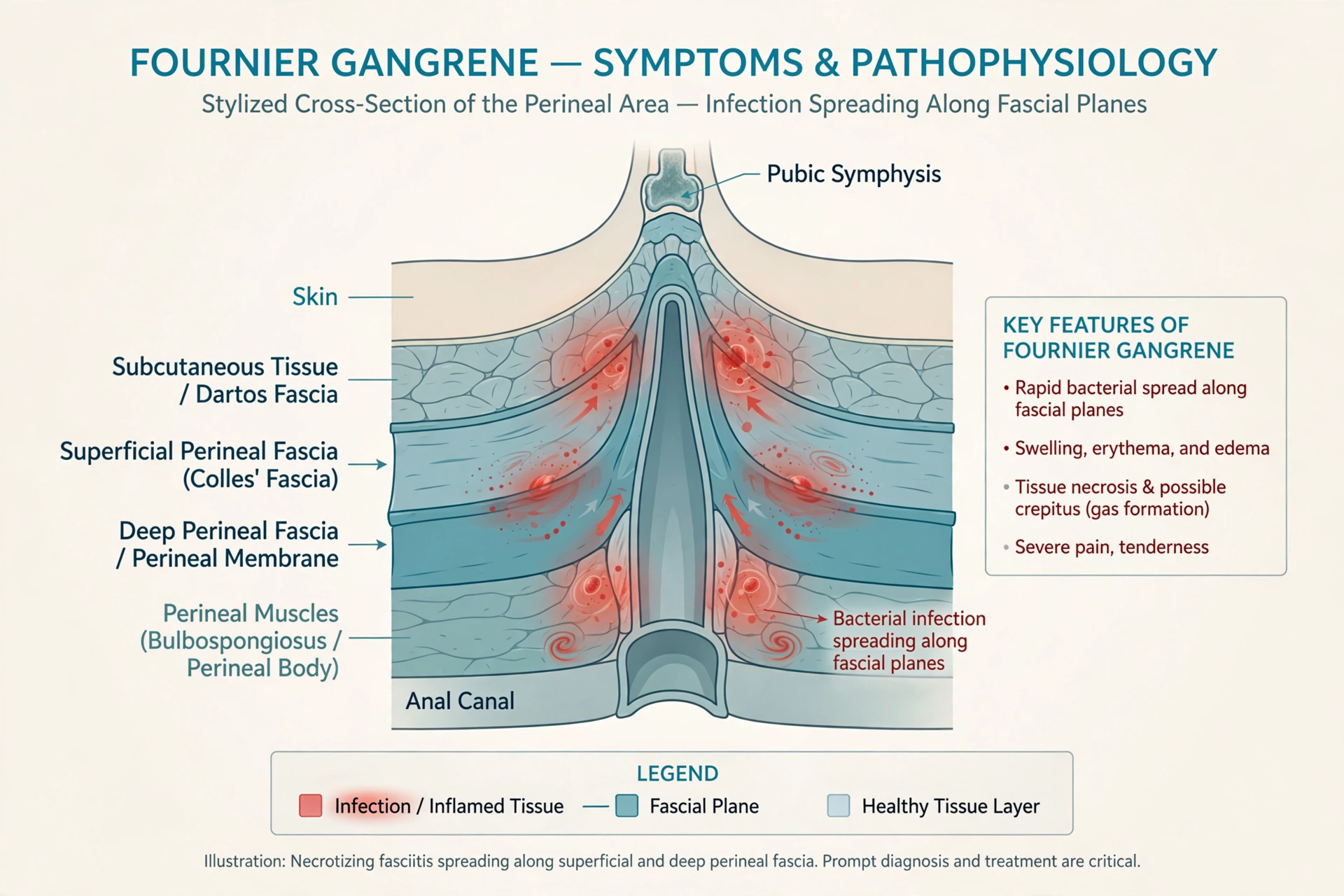
Fournier gangrene is an infection in which bacteria — usually a mix of oxygen-loving (aerobic) and oxygen-hating (anaerobic) species such as Group A streptococci, Staphylococcus aureus, Escherichia coli, Bacteroides, and Pseudomonas aeruginosa — enter the soft tissue beneath the skin of the perineum or genitals and spread rapidly along the body’s fascial planes. The bacteria release enzymes that clot off local blood vessels, starving tissue of oxygen. Dead and dying tissue then fuels further bacterial growth, creating a vicious cycle that can spread from the scrotum, penis, labia, or perianal area toward the thighs, abdomen, and even the chest wall.
The condition affects roughly 1.6 per 100,000 men per year in the United States, and far fewer women and children. Men aged 50 to 60 are at the highest risk, and males are affected about 40 times more often than females. Between 20% and 70% of people who develop it have diabetes, and risk is also higher for people who are immunocompromised, have alcohol use problems, liver or kidney disease, obesity, or heart disease — as well as people over 50, smokers, and those on chemotherapy or steroid drugs. In children, it has occasionally followed circumcision.
Although rare, it is always a surgical emergency. There are no home treatments — if the symptoms described below sound familiar, go to the emergency room immediately.
Early Fournier Gangrene Symptoms You Should Never Ignore
The earliest fournier gangrene symptoms are easy to dismiss, and that is precisely what makes them dangerous. The first thing many people notice is sudden pain or tenderness in the genitals or in the perineum — the area between the genitals and the anus. This is followed by:
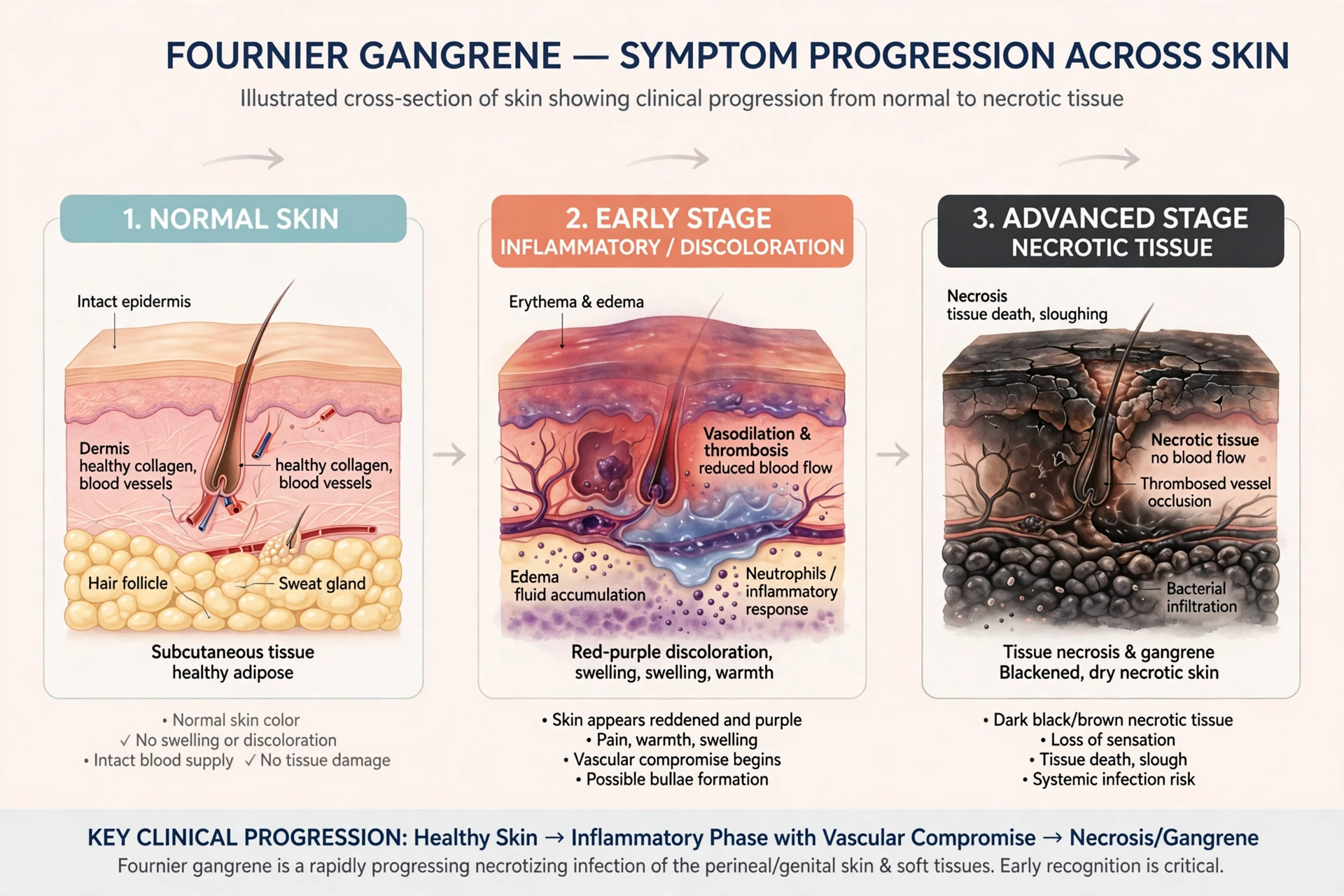
- Redness or purple discoloration of the skin on the penis, vulva, scrotum, or perineum. (On darker skin tones, these changes can be harder to see, so pay attention to pain and swelling too.)
- Swelling in the affected area.
- Tenderness that feels disproportionate to what you can see — pain extending beyond the visibly red area is a classic warning sign.
At this point, systemic (whole-body) symptoms may already be starting: feeling generally unwell, low energy, fever of at least 100.4°F (38°C), chills, and nausea. If you have diabetes, your blood sugar may run high even if you have taken your medication as prescribed.
If you notice these early fournier gangrene symptoms, call your doctor right away — do not wait to see whether things get worse. Every hour matters.
Later and Advanced Symptoms
As the infection progresses, the signs become harder to mistake for anything ordinary. Later fournier gangrene symptoms include:
- Worsening pain around the genitals or anus, and sometimes pain in the abdomen.
- Skin color changes progressing from red/purple to bluish-gray and finally black.
- A foul or putrid smell from the affected area.
- Crepitus — a crackling or popping sensation when you press the skin, caused by gas produced by bacteria trapped beneath the surface.
- Blisters (bullae) filled with fluid, or open sores.
- Itching or a shiny, taut feeling of the skin.
- Fever and chills, a fast heart rate, and low blood pressure.
- Confusion or altered mental status, nausea and vomiting, and profound fatigue.
In the most advanced stage, the body can go into septic shock — a life-threatening response to infection that causes blood pressure to collapse — and multiple organs (kidneys, heart, lungs) can begin to fail. Blood clots may form in arteries and veins. This is why Fournier gangrene is treated as an emergency from the moment it is suspected: once the infection reaches the bloodstream, a few hours can mean the difference between life and death.
The Symptom Timeline: How Fast Things Can Change
Most patient-facing articles describe symptoms as a list, but the timeline is what patients and families actually need to understand. Here is how the stages typically unfold:
| Timeframe | What you may notice | What is happening inside |
|---|---|---|
| Hours 0–12 | Sudden genital/perineal pain, redness, swelling, tenderness, maybe a mild fever. | Bacteria are spreading along fascial planes beneath the skin; blood vessels are beginning to clot. |
| Hours 12–48 | Spreading discoloration, worsening pain, foul smell, blisters, crackling skin, rising fever, chills, fast heartbeat. | Tissue is dying as its blood supply is cut off; bacterial gases accumulate; toxins enter the bloodstream. |
| 48 hours and beyond | Blackened skin, confusion, very low blood pressure, vomiting, extreme weakness. | Systemic infection (sepsis); risk of septic shock and organ failure rises sharply. |
This timeline is approximate — progression can be even faster — but it explains the golden rule: seek emergency care at the first red-flag symptom, not the last. Doctors often say that by the time the skin visibly changes, the damage beneath it is already extensive.
Fournier Gangrene Symptoms in Women and Children
Most Fournier gangrene articles focus on men, because the condition is about 40 times more common in males. But women, children, and infants can develop it too, and their presentation has some important differences.
In women, the infection usually involves the labia rather than the scrotum, and it most often begins from an abscess near the anus or on the vulva, or after injury from surgery or radiation treatment. Because vaginal drainage can help secretions escape, the infection may be less common — but when it does occur, women often become sicker: they tend to spend more days in hospital and are more likely to need intensive care support such as breathing machines.
In children and infants, cases are rare and have been linked to sources such as circumcision wounds or skin injuries. In a child, watch for sudden genital swelling or redness with fever and inconsolable irritability — the same “act fast” logic applies, and parents should go to the emergency room rather than wait for a routine appointment.
One common question is whether Fournier gangrene is a sexually transmitted infection. It is not — it cannot be caught from another person or passed to a partner. Sexual activity can only play a role if it causes skin breaks in an area where an infection is already developing. Other genital infections like balanitis are also not sexually transmitted in most cases, though they share some early visible signs — which is exactly why a clinician should evaluate any concerning change.
How Doctors Confirm the Diagnosis
Fournier gangrene is usually diagnosed clinically — meaning an experienced doctor recognizes it from the symptoms and a physical exam. But confirming how far it has spread and how severe it is involves several tests:
- Blood tests: a complete blood count (looking for very high white blood cells), C-reactive protein (an inflammation marker), blood sugar, lactate, and kidney and liver function tests.
- CT scan: helps pinpoint where the infection started and how far it has spread, and can reveal gas trapped in the tissues.
- Ultrasound: useful for ruling out other conditions that cause similar scrotal or genital symptoms, such as epididymitis, and can show fluid collections around the testicles.
- X-ray: may show gas beneath the skin surface.
- Wound and blood cultures: identify the specific bacteria so antibiotics can be targeted.
- Exploratory surgery: in many cases the diagnosis is confirmed in the operating room, and surgery begins even while test results are still pending — treatment is never delayed for imaging.
Clinicians also use a scoring tool called the LRINEC score (Laboratory Risk Indicator for Necrotizing Fasciitis), which combines six blood-test values to flag how likely necrotizing fasciitis is. A high score strengthens the case for immediate surgery. Patients rarely need to know their number, but knowing that doctors weigh multiple lab values — not just what the skin looks like — explains why blood is drawn so urgently.

Emergency Care: What to Expect at the Hospital
Knowing what happens after you reach the hospital can make the experience less frightening and helps families ask the right questions. Here is the typical sequence:
- Immediate assessment. The emergency team examines the area, draws blood for labs and cultures, and starts IV fluids. If the doctor suspects Fournier gangrene, there is no waiting period — diagnosis and treatment run in parallel.
- Imaging (fast). A CT scan or ultrasound is often done quickly to map the extent of infection, but treatment is never held up for it.
- Broad-spectrum IV antibiotics. Antibiotics that target many kinds of bacteria at once are started immediately through an IV, so the medicine reaches the bloodstream fast. They are later adjusted based on culture results. If sepsis is present, blood thinners may be added to reduce the risk of blood clots.
- Emergency surgery (debridement). This is the core of treatment: a surgeon cuts away all dead and infected tissue to stop the infection from spreading. Patients often need more than one operation, and daily or twice-daily wound dressing changes follow. Only rarely — when destruction is extensive — does the surgeon need to remove the entire penis, scrotum, or labia.
- Supportive measures. You may need a temporary colostomy (diverting stool away from the wound) or a suprapubic catheter (diverting urine) so the healing area stays clean. ICU monitoring is common.
- Reconstruction. Once the infection is fully controlled and the wound is clean, reconstructive surgery — skin grafts or flaps — restores the appearance and function of the affected area. Hospital stays of three to six weeks are typical.
- Hyperbaric oxygen therapy (HBOT). Some hospitals offer sessions in a pressurized chamber filled with 100% oxygen, which helps damaged tissue heal and inhibits bacterial growth. It is an add-on to surgery, not a replacement.
Recovery is gradual, and the aftermath can include lingering issues such as sexual function changes, urinary problems, ongoing pain, or depression — which is why follow-up care with urology, wound-care, and mental-health specialists matters.
Red-Flag Checklist: When to Call Emergency Services
Do not try to diagnose yourself at home — but do use this checklist to decide when to act. Call emergency services or go to the ER immediately if you have:
- Sudden, worsening pain or tenderness in the genitals or perineum.
- Red, purple, blue-gray, or black discoloration, or swelling of the genitals or perineum.
- A foul smell from the area, blisters, or a crackling feeling under the skin.
- Fever of 100.4°F (38°C) or higher, chills, rapid heartbeat, or confusion.
- Nausea, vomiting, or abdominal pain alongside any of the above.
What to tell the dispatcher or triage nurse: say “I have sudden severe genital/perineal pain with swelling and discoloration and a fever — I am worried about a serious infection called Fournier gangrene.” Naming it explicitly helps the triage team prioritize you. Bring a list of your medications — especially diabetes drugs and any SGLT2 inhibitors such as canagliflozin, dapagliflozin, empagliflozin, or ertugliflozin, which the FDA has linked in rare cases to Fournier gangrene — and tell the team about recent surgeries, wounds, abscesses, or piercings in the area.
Questions to ask the ER doctor: How far has the infection spread? Do I need emergency surgery tonight? What antibiotics will I receive, and will I need intensive care? These questions come straight from guidance by Cleveland Clinic and the patient resources at NORD (National Organization for Rare Disorders).
Lowering Your Risk: Practical Prevention
There is no way to eliminate the risk entirely, but people at higher risk — especially those with diabetes — can take concrete steps:
- Check regularly. If you have diabetes, inspect your genitals and perineum routinely for cuts, redness, or swelling, and treat even small wounds in the area seriously: wash with soap and water, keep them dry and clean until healed.
- Control blood sugar. Keep glucose at healthy levels and stay consistent with prescribed medications — diabetes affects intimate health in many ways, and good control lowers infection risk.
- Maintain weight and quit smoking. Obesity and tobacco use both raise risk; ask your doctor about the best strategies for you.
- Keep the area clean and dry. Good hygiene does not cause or cure the condition, but it lowers the chance that a minor wound becomes infected.
- Tell your doctor about SGLT2 inhibitors. If you take these diabetes drugs, discuss the rare FDA-reported association and ask what warning signs to watch for.
Frequently Asked Questions
Is Fournier gangrene contagious?
No. You cannot catch it from another person or give it to a partner. It develops when bacteria that normally live on or in the body enter deep tissue through a wound, abscess, urinary tract infection, or other portal of entry.
What does Fournier gangrene feel like at the start?
Most people first notice sudden pain or tenderness in the genitals or the area between the genitals and the anus, followed by redness and swelling and a general feeling of being unwell — fatigue, fever, or nausea. The pain is often worse than the visible changes would suggest.
How quickly does Fournier gangrene progress?
Very quickly — often within hours. Early redness and swelling can advance to tissue death, foul-smelling discharge, and systemic symptoms (fever, fast heartbeat, low blood pressure, confusion) within a day or two. That is why emergency care cannot wait for a scheduled appointment.
Can women get Fournier gangrene?
Yes, although it is about 40 times less common in women than in men. In women it usually involves the labia and often starts from an abscess near the anus or vulva, or after surgery or radiation. Women who develop it tend to have more severe courses, including longer hospital and ICU stays.
What is the survival rate for Fournier gangrene?
Most people survive with prompt treatment. Large, recent studies report mortality rates of roughly 7.5% to 16%, while smaller or older studies found 20% to 40%. Because the condition is rare, exact numbers vary — but the evidence is consistent that faster treatment means better survival.
Do you always need surgery for Fournier gangrene?
Yes, in practice. Antibiotics alone cannot stop it — surgical removal of dead and infected tissue (debridement) is the essential treatment, often requiring multiple operations. Antibiotics, IV fluids, and sometimes hyperbaric oxygen therapy support the surgery; they do not replace it.
Can diabetes medication cause Fournier gangrene?
The FDA has reported rare cases linked to SGLT2 inhibitor diabetes drugs (canagliflozin, dapagliflozin, empagliflozin, ertugliflozin). The mechanism is not fully understood — possibly through an increased risk of urinary tract infections. Most people on these drugs will never develop the condition, but patients should know the warning signs and tell their doctor about any genital or perineal symptoms promptly.
What happens after recovery?
After the infection is cleared and reconstructive surgery is complete, some people have lingering effects: changes in sexual sensation or function, urinary or digestive problems, ongoing pain, or depression. Follow-up with urology, wound-care, and mental-health professionals helps most people return to a good quality of life.
Medical Disclaimer
This article is for educational purposes only and is not medical advice. Fournier gangrene is a medical emergency — if you are experiencing symptoms like sudden genital or perineal pain, swelling, discoloration, or fever, seek emergency medical care immediately rather than relying on information from any article. Always consult a qualified clinician for diagnosis and treatment of any health condition, and never delay seeking care because of something you have read here. No medication dosages are provided here intentionally; antibiotic and surgical decisions must be made by your treating medical team.