Testicular Atrophy: Causes and What to Do
Testicular atrophy — the shrinking of one or both testicles — is a symptom with many possible explanations, and understanding testicular atrophy causes is the first step toward getting the right care. It is different from the normal, temporary tightening of the scrotum in cold weather. True atrophy means the testicles themselves have lost size and, in many cases, function: the ability to produce testosterone and sperm. Because the range of causes stretches from harmless age-related change to emergencies that need same-day surgery, noticeable shrinkage deserves a medical evaluation rather than watchful waiting.
This guide covers the full spectrum of testicular atrophy causes — the common ones most men encounter, the less obvious conditions doctors rule out, how the underlying cause is diagnosed, and what to do in each scenario.
What Is Testicular Atrophy?
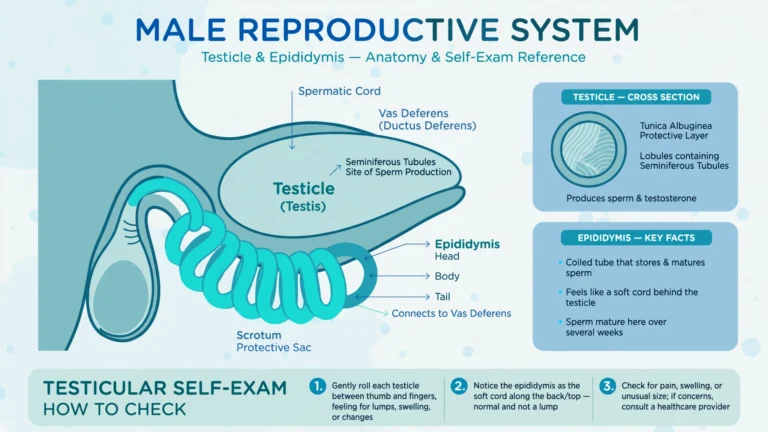
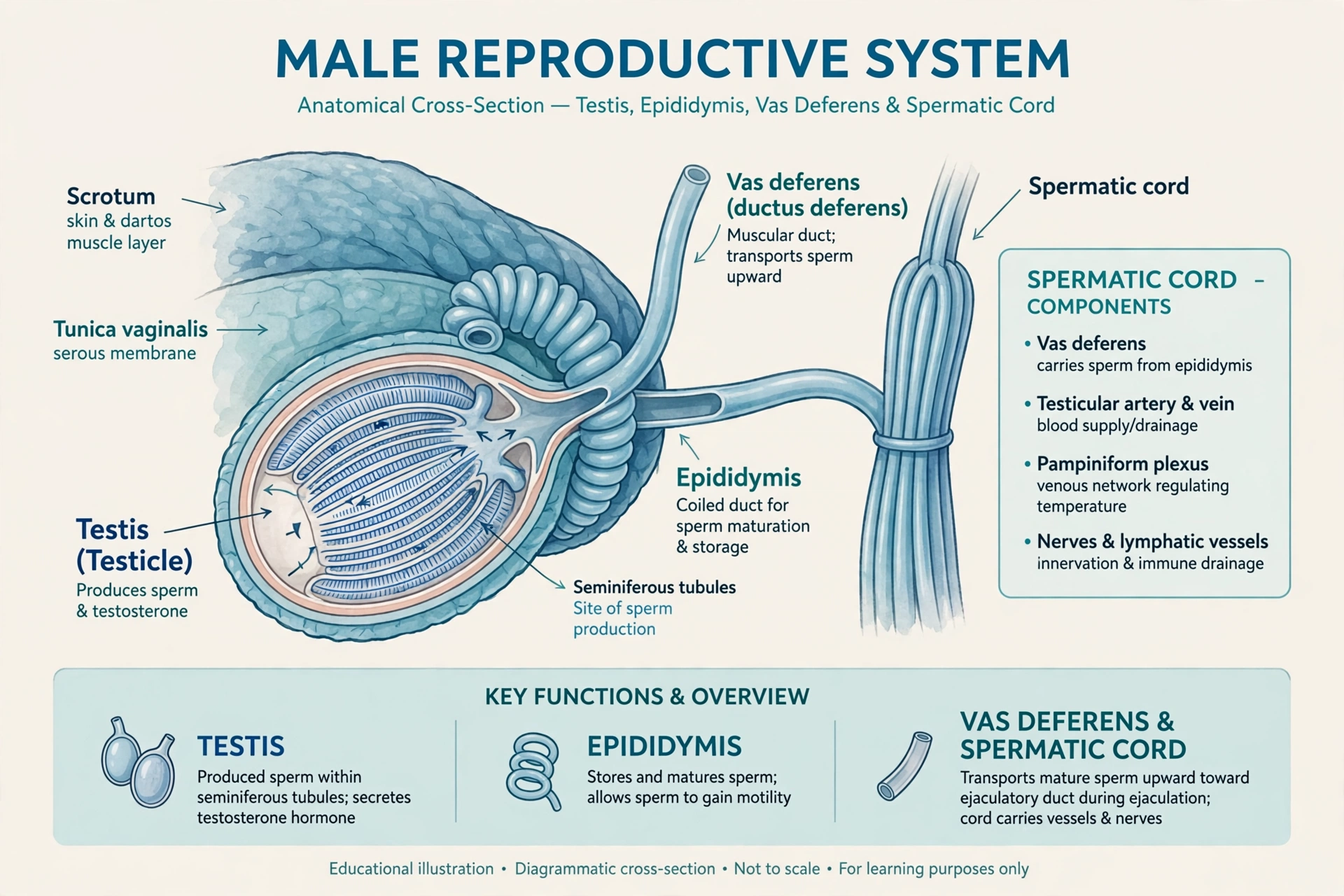
Testicular atrophy is a medical term for a measurable decrease in testicular size, usually accompanied by a softer texture and reduced function. The testicles have two jobs: producing testosterone (in cells called Leydig cells) and producing sperm (in the seminiferous tubules). When disease, injury, hormones, or blood-flow problems damage these tissues, the organ can shrink — and testosterone or sperm production often drops along with the size.
Doctors consider a testicular volume below about 12 milliliters on ultrasound to indicate atrophy, and a loss of more than half of the prior volume is clinically significant. But most men first notice it themselves: one or both testicles look or feel smaller, sometimes softer than before. In boys who have not finished puberty, atrophy can show up differently — as stalled development of facial or body hair and a slower growth of the genitals. After puberty, it more often comes with symptoms of low testosterone: lower sex drive, reduced muscle mass, less body hair, and difficulty conceiving.
One important distinction: the scrotum naturally contracts in cold conditions and relaxes in warmth, which can make testicles seem bigger or smaller day to day. Atrophy is different — it is a persistent, measurable reduction in the actual testicular tissue, not a temperature response.
Common Testicular Atrophy Causes
Most cases of testicular atrophy trace back to one of the following causes. If you notice persistent shrinkage, your doctor will work through this list first.
1. Orchitis (infection and inflammation)
Orchitis — inflammation of the testicle — is one of the classic testicular atrophy causes. It often begins with pain, swelling, nausea, or fever, and can be caused by viruses or bacteria. The mumps virus is the best-known viral trigger: up to one-third of men who catch mumps after puberty develop orchitis within a few days. Bacterial orchitis frequently comes from sexually transmitted infections such as gonorrhea or chlamydia, or from urinary tract infections, especially after catheterization. While the swelling may initially make the testicle look larger, the inflammation can damage tissue and leave one or both testicles smaller once it resolves.
2. Varicocele
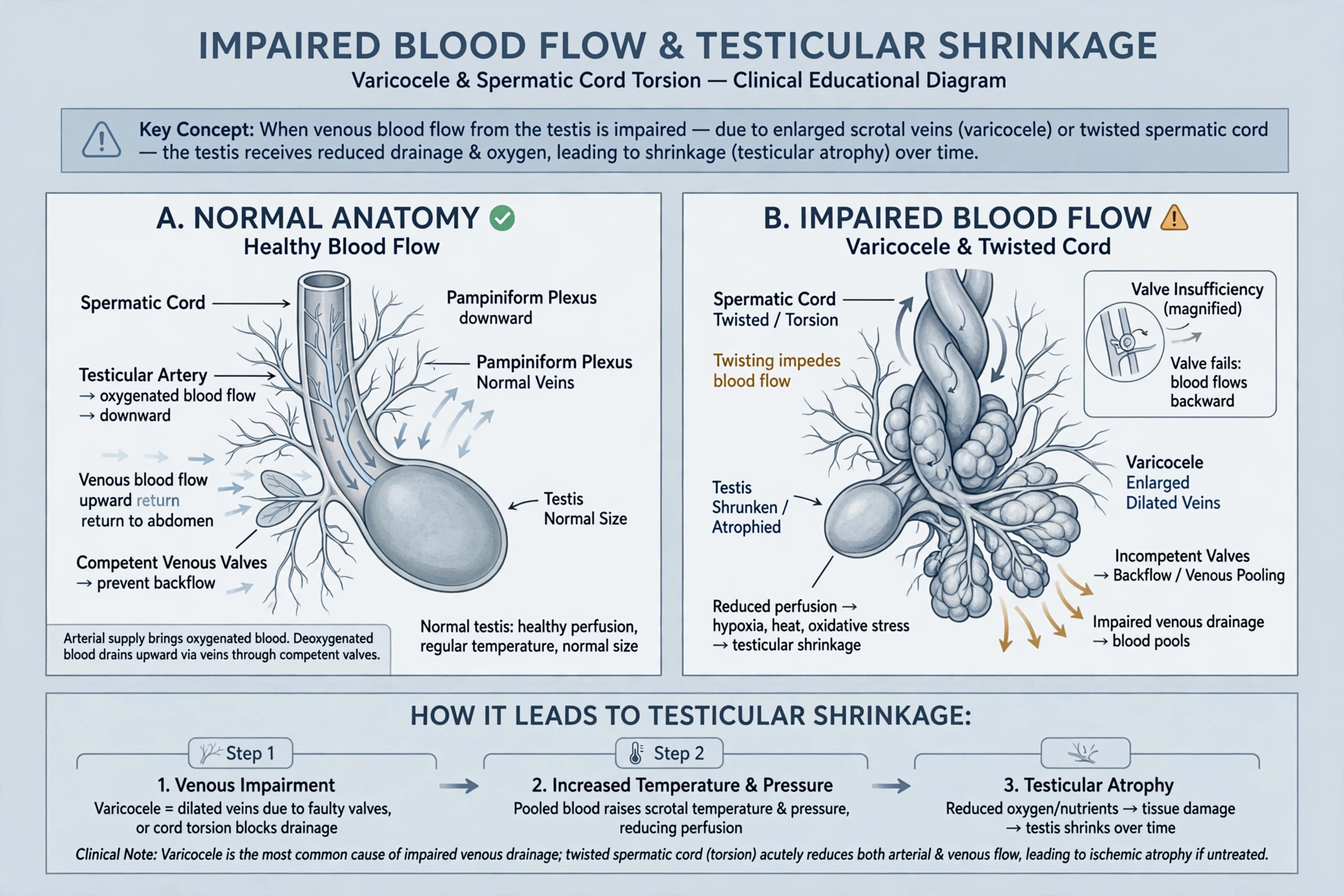
A varicocele is an enlargement of the veins within the scrotum — similar to varicose veins in the legs — and it most often affects the left side. Varicoceles are common, occurring in roughly 15% of men, and pooled blood around the testicle can raise its temperature and damage the sperm-producing tubules, gradually shrinking the affected testicle. Not every varicocele needs treatment, but when there is a clear size difference between the testicles, pain, or abnormal semen results, assessment is important. Read our in-depth guide on varicocele and fertility: causes, symptoms, and treatment for more detail on when repair is recommended.
3. Testicular torsion
Testicular torsion happens when a testicle rotates inside the scrotum and twists the spermatic cord, cutting off its blood supply. It causes sudden, severe pain and is a medical emergency — treatment within a few hours can save the testicle, while delays of more than six to eight hours greatly increase the risk of permanent atrophy even if the organ is “saved.” Any sudden testicular pain deserves immediate emergency care. Our guide on testicular torsion symptoms explains exactly which warning signs to act on.
4. Testosterone replacement therapy (TRT)
Men on prescribed testosterone therapy sometimes develop atrophy as a side effect. The mechanism is a feedback loop: external testosterone signals the brain to stop releasing gonadotropin-releasing hormone (GnRH), so the pituitary stops making luteinizing hormone (LH), and without LH the testicles stop producing their own testosterone — leading to shrinkage. This does not mean TRT is automatically unsafe, but it is why testosterone therapy should always be supervised by a clinician with regular monitoring.
5. Anabolic steroids and estrogen therapy
Non-prescribed anabolic steroids suppress the same hormonal signaling as TRT, and research shows recovery of testicular volume and sperm production after stopping can take months to years — and is not always complete. Estrogen therapy can also lead to testicular atrophy through suppression of gonadotropins. Both underline why hormonal treatments belong under medical supervision.
6. Heavy alcohol use
Chronic heavy drinking lowers testosterone both by directly damaging the testosterone-producing Leydig cells and by disrupting the hormonal signals that instruct them to work. Testicular atrophy is a well-documented feature of alcohol use disorder, and the effect is worsened when liver disease (alcoholic cirrhosis) develops, since a damaged liver further disturbs hormone balance. For more on how drinking affects male sexual function, see our article on alcohol and sexual performance.
7. Aging
Gradual decline in reproductive function with advanced age is normal, and some loss of testicular volume over the decades is part of that process. But rapid or pronounced shrinkage should not be written off as “just aging” — it still warrants a checkup, since treatable causes are common at every age.
Less Obvious Testicular Atrophy Causes Your Doctor Will Rule Out
Competitor articles on this topic tend to stop at the list above. In practice, urologists and endocrinologists also consider these less common but important causes:
Genetic and developmental conditions
Klinefelter syndrome (47,XXY) is one of the most frequent genetic causes of small testicles and is often undiagnosed until adulthood. An undescended testicle (cryptorchidism) — especially when correction surgery happens late — leaves the testicle smaller with impaired sperm production even after repair. Y-chromosome microdeletions can also cause underdeveloped testes and infertility.
Medical treatments
Chemotherapy and pelvic radiation can damage the sperm-producing cells of the testicles; sperm production sometimes recovers one to four years after treatment, but not always. Some immunosuppressive drugs list testicular atrophy as a side effect. Even surgery near the groin — such as hernia repair or orchiopexy — can rarely cause ischemic atrophy if blood vessels are injured.
Chronic systemic diseases
Liver disease (as noted above) and kidney failure can both disrupt the hormone balance that keeps testicles healthy. Iron-overload disorders such as hemochromatosis can deposit iron in the pituitary gland and impair the signals that drive testosterone production. Emerging research also links severe COVID-19 to hormonal disruption of the hypothalamic-pituitary-testicular axis, potentially affecting testosterone and fertility — one more reason doctors may ask about recent serious illnesses.
Pituitary and hypothalamic disorders
Conditions affecting the brain’s control centers — pituitary tumors, Kallmann syndrome, or high prolactin levels — reduce the hormonal signals the testicles need to function. The testicles shrink not because of local damage but because the “instructions” from above have gone quiet. These cases are managed by an endocrinologist rather than a urologist alone.
Trauma
Blunt injury to the scrotum can cause atrophy in roughly half of significant cases, with shrinkage sometimes appearing months or years after the injury. This is one reason any severe scrotal trauma should be followed up even after the initial pain fades.
Symptoms That Often Accompany Atrophy
Shrinkage rarely travels alone. Depending on the cause and your age, you may also notice reduced sex drive, softer testicles, tenderness, decreased muscle mass, thinning body or facial hair, breast tissue enlargement, fatigue, or trouble conceiving. Because many of these overlap with low testosterone, a persistent change in testicle size is a sensible reason to ask about low testosterone symptoms in men and when to get tested.
How Doctors Diagnose the Cause
Finding the cause of testicular atrophy usually follows a structured workup:
- History: your clinician will ask about infections, injuries, surgeries, medications (including steroids and supplements), alcohol use, sexual history, and the timeline of the shrinkage.
- Physical examination: the testicles are checked for size, shape, firmness, and texture — sometimes compared against a set of sizing beads called an orchidometer.
- Ultrasound: the key imaging test. It measures exact testicular volume (below about 12 mL suggests atrophy), checks blood flow, and looks for varicoceles, tumors, or signs of past torsion.
- Blood tests: a hormone panel typically includes total and free testosterone, luteinizing hormone (LH), follicle-stimulating hormone (FSH), and prolactin. The pattern of results tells the doctor whether the problem is in the testicles themselves or in the brain signals controlling them.
- Semen analysis: if fertility is a concern, a semen test shows whether sperm production is impaired and by how much.
- Genetic testing: when the exam suggests a developmental or genetic cause (very small firm testicles, gynecomastia, tall stature), a karyotype test may be offered.
If you want to get familiar with what to check between appointments, our testicular self-exam guide walks through the proper technique step by step.

What to Do: Treatment Depends on the Cause
There is no single cure for testicular atrophy — what to do depends entirely on what is causing it. This is why diagnosis comes first, and self-treatment is a bad idea.
- Testicular torsion: go to the emergency department immediately. Surgery to untwist the cord within hours gives the best chance of preserving the testicle.
- Infection (orchitis): bacterial causes are treated with antibiotics; supportive care (rest, elevation, anti-inflammatories) helps viral cases. Treating the infection promptly limits the damage.
- Varicocele: if it is causing atrophy, pain, or fertility problems, surgical repair (varicocelectomy) or embolization can restore healthier conditions for the testicle.
- Hormonal causes (TRT, steroids): never stop prescribed testosterone abruptly or quit steroids without medical guidance — both can crash your hormone levels. A clinician can adjust dosing, add supportive medications, or plan a supervised transition.
- Alcohol use: reducing or stopping heavy drinking is one of the most effective steps; counseling, support programs, and medical treatment for withdrawal may be appropriate.
- Undescended testicle or genetic causes: surgical correction in childhood gives the best results; in adults with genetic causes, care focuses on hormone replacement and fertility planning rather than restoring size.
- Systemic disease: managing the underlying condition — liver disease, kidney disease, pituitary disorder — is the priority, coordinated with the relevant specialist.
- Aging-related change: mild, symmetrical, symptom-free shrinkage with normal hormone levels often needs only monitoring, but the diagnosis of “normal aging” should come from a doctor, not self-reassurance.
Early treatment makes a real difference: atrophy caused by torsion or infection is far more likely to be reversible when treated within hours to days. In contrast, long-standing damage from years of steroid use or delayed surgery may only be partially reversible.
Can Testicular Atrophy Be Reversed?
Reversibility depends on the cause and how quickly it was addressed:
| Cause | Reversibility outlook |
|---|---|
| Torsion treated within hours | Good — early surgery can preserve size and function |
| Infection treated promptly | Often good — depends on severity of tissue damage |
| Varicocele repaired | Moderate — testicle may stabilize or partially recover; fertility often improves |
| TRT or steroid use stopped | Variable — months to years for recovery; not always complete |
| Alcohol use stopped | Partial — hormone levels often improve, size may not fully return |
| Genetic or developmental causes | Usually permanent — treatment focuses on hormones and fertility |
| Age-related change | Not reversible — monitoring is the appropriate strategy |
There is no proven natural remedy — diet, supplements, or exercise alone cannot reverse true atrophy. Healthy habits (limiting alcohol, avoiding tobacco and recreational drugs, maintaining a healthy weight) support hormone health and may prevent further decline, but they do not restore already-damaged tissue.
Red Flags — See a Doctor Urgently
Seek prompt medical attention if you notice sudden severe testicular pain, rapid swelling, fever with scrotal pain, a lump or hard mass on a testicle, blood in the semen, or trauma followed by persistent pain or shrinking. These can signal emergencies such as torsion, severe infection, or testicular cancer.
Frequently Asked Questions
What are the most common testicular atrophy causes?
The most common causes are infection (orchitis from mumps or sexually transmitted infections), varicocele, testicular torsion, testosterone replacement therapy, anabolic steroid use, heavy alcohol use, and natural aging. Less common causes include genetic conditions like Klinefelter syndrome, chemotherapy, radiation, prior groin surgery, and pituitary disorders.
Is testicular atrophy the same as a shrinking scrotum?
No. The scrotum naturally tightens in cold weather and relaxes in warmth, which changes how things look day to day. Testicular atrophy means the testicles themselves have persistently lost size and tissue, which an ultrasound can measure — a volume below about 12 mL is considered atrophic.
Can testicular atrophy be reversed?
Sometimes. Early treatment of torsion or infection gives the best chance of recovery. Stopping steroids or adjusting TRT under medical supervision often allows partial recovery over months to years. Genetic, developmental, and long-standing causes are usually permanent, though hormone therapy can address the low-testosterone effects.
Does testicular atrophy always mean infertility?
No. Atrophy raises the risk of reduced sperm production, but fertility depends on the cause, severity, and whether one or both testicles are affected. A semen analysis is the way to know. Many men with mild or one-sided atrophy conceive without difficulty, while others may need fertility treatment.
Can TRT cause testicular atrophy, and what should I do about it?
Yes — prescribed testosterone can suppress the brain signals that keep the testicles active, causing them to shrink. Do not stop TRT on your own, as that can crash your hormone levels. Talk to your prescribing clinician about monitoring, dose adjustment, or supportive options.
When should I see a doctor about testicular shrinkage?
Any persistent, noticeable change in testicle size deserves an evaluation — especially if it comes with pain, swelling, lumps, tenderness, or symptoms of low testosterone such as reduced libido, fatigue, or loss of muscle mass. Sudden severe pain is an emergency.
How is testicular atrophy diagnosed?
Diagnosis typically involves a physical exam, scrotal ultrasound to measure volume and blood flow, and blood tests for testosterone, LH, FSH, and prolactin. Depending on findings, semen analysis or genetic testing may follow.
Is one smaller testicle normal?
A slight size difference between the two testicles is common and usually not a concern. What matters is a new or progressive change — one testicle shrinking over time, or a large and growing difference — which should be evaluated.
Medical Disclaimer
This article is for educational purposes only and is not medical advice. Testicular atrophy has many possible causes, and only a qualified clinician who examines you and orders appropriate tests can determine what applies in your case. Do not start, stop, or change any medication or hormone therapy based on this information. If you notice persistent testicular shrinkage, pain, swelling, or lumps, consult a urologist or your primary care clinician promptly. For reliable general information, see the Mayo Clinic’s overview of orchitis and the CDC’s fact sheet on gonorrhea, a common infectious cause of testicular inflammation.