Lichen Sclerosus: Symptoms and Treatment
Lichen sclerosus symptoms often begin quietly — a patch of pale skin, an itch that comes and goes — and are easy to dismiss. Yet this chronic inflammatory skin condition can, if left untreated, lead to scarring, painful intimacy, and urinary problems. Recognizing lichen sclerosus symptoms early and starting treatment promptly is the single most important step toward preventing lasting damage.
This guide explains exactly what lichen sclerosus looks and feels like at every stage, how it differs from look-alike conditions, how doctors diagnose it, and what modern treatment involves — including the practical day-to-day measures that most overview articles skip.
What Is Lichen Sclerosus?
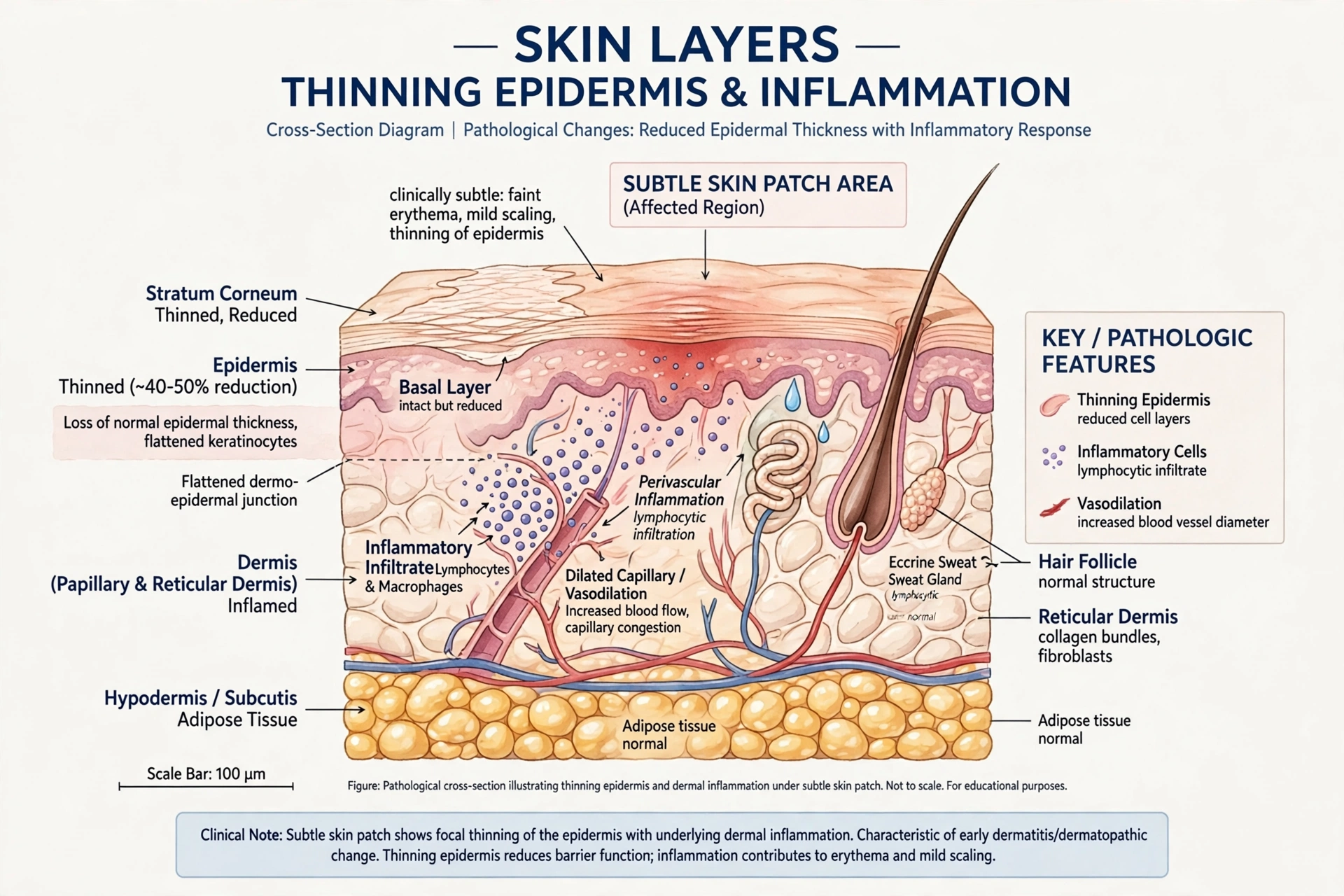
Lichen sclerosus is a long-term inflammatory skin condition that creates patches of thin, discolored skin — most often in the genital and anal regions. It can affect anyone, but it is most common in postmenopausal women, with a second peak in children under age 10. Men can develop it too, most often on the foreskin or tip of the penis.
The exact cause is not known. Researchers believe it arises from a combination of factors: an overactive immune response, genetic susceptibility, and prior skin damage or irritation. Hormonal changes appear to play a role as well. Importantly, lichen sclerosus is not contagious and cannot be spread through sexual contact — a fact that brings real relief to many newly diagnosed people.
The condition is considered autoimmune-linked because it is found more often in people who have another autoimmune disease, such as thyroid disorders (including low thyroid function). Having a family history of lichen sclerosus or autoimmune illness may also raise the risk slightly.
Lichen Sclerosus Symptoms: What to Watch For
Lichen sclerosus symptoms vary widely. Some people have such mild disease that they notice nothing at all beyond subtle skin changes; others experience significant itching and soreness. Understanding the full symptom spectrum helps you recognize the condition and seek care sooner rather than later.
Early symptoms
The earliest lichen sclerosus symptoms tend to be subtle:
- Itching — ranging from mild to severe, often worse at night. Itching is the most commonly reported symptom, especially in women.
- Pale or white patches — smooth, discolored areas of skin that may be slightly raised or shiny.
- Soreness or a burning feeling — a general discomfort in the affected area.
Visible skin changes as the condition progresses
Over time, the affected skin typically develops a distinctive appearance:
- Ivory-white or porcelain-white patches that may coalesce into larger plaques.
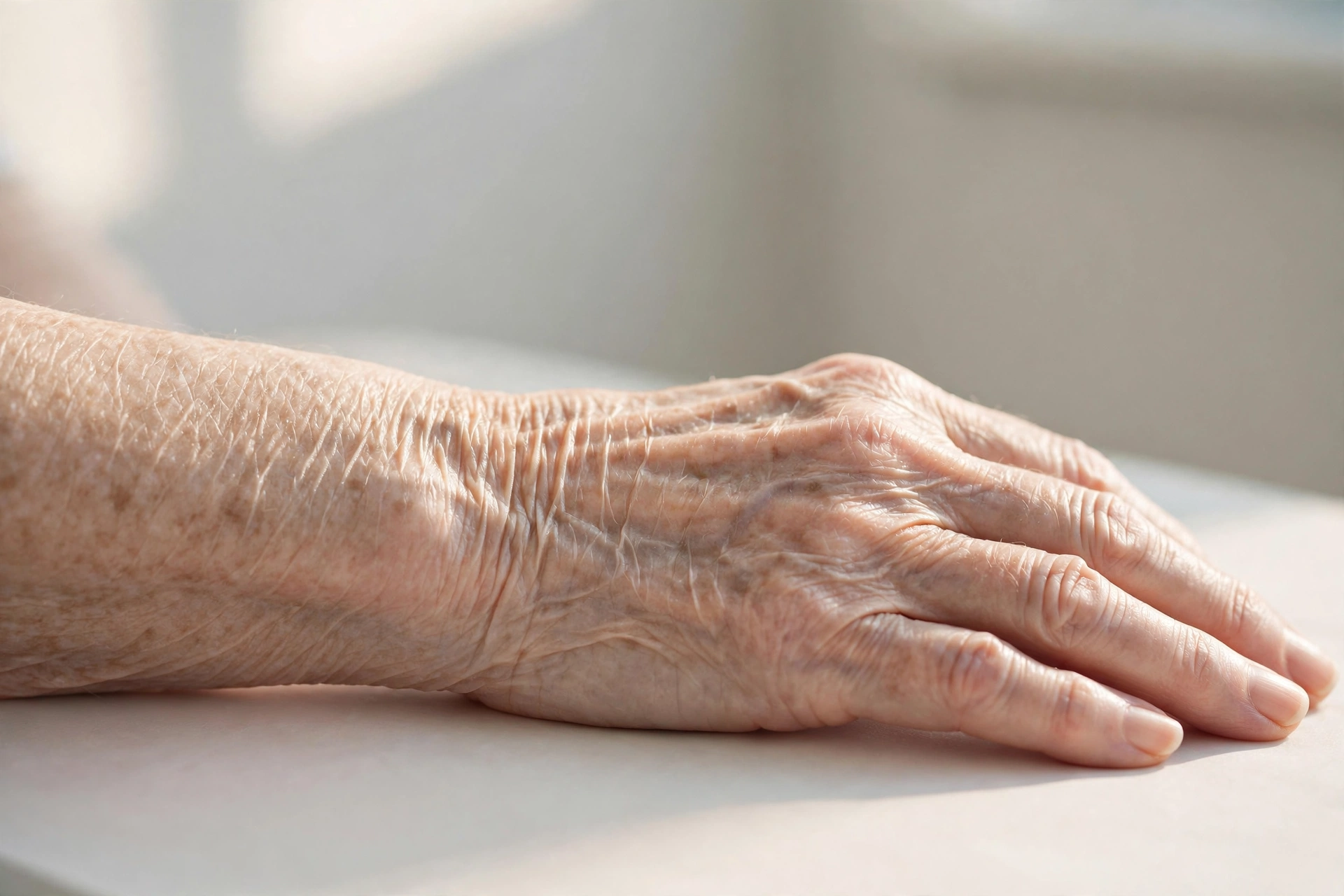
- Blotchy, wrinkled, “tissue-paper” or cellophane-like skin — a crinkled appearance described in dermatology texts as classic for the condition.
- Easy bruising — the thinned skin bruises readily, sometimes after nothing more than tight clothing or sitting down.
- Fragile skin — tearing, cracking, and peeling after minimal friction.
- Bleeding, blistering, or open sores — in more severe cases, small wounds may form and heal slowly.
- Fissures — small cracks, often around the anal area or at skin folds.
- Flecks of darker pigmentation — areas of post-inflammatory darkening can sit within or beside the pale patches.
Lichen sclerosus symptoms in women
In women, the condition most commonly affects the vulva and the skin around the anus, often in the “figure-of-eight” pattern that wraps around both areas. Beyond itching and the classic white patches, women may notice:
- Pain during sexual intercourse (dyspareunia), particularly as scarring tightens the vaginal opening.
- Burning with urination (dysuria).
- With longstanding disease, scarring can distort or partially absorb normal vulvar anatomy — including covering of the clitoris and changes to the labia minora. This is why early treatment matters: the changes are largely preventable when the disease is controlled.
Vulvar itching and discomfort deserve prompt medical evaluation because several vulvar conditions share these symptoms. If you are unsure whether your symptoms match this pattern, it can help to learn how other vulvar conditions present — see our guide on balanitis causes and treatment for a comparison of how genital inflammation can look different in men, and bleeding after sex: causes for when fragile or easily torn tissue is the main concern.
Lichen sclerosus symptoms in men
In men, lichen sclerosus most often affects the foreskin and the tip of the penis (the glans), and it is more common in men who are uncircumcised. Male-specific lichen sclerosus symptoms include:
- Tightening of the foreskin and difficulty pulling it back (phimosis), sometimes forming a pale, firm ring of tissue.
- Difficulty with urination — a weak stream, spraying, or trouble starting — when scarring narrows the urethral opening (meatal stenosis).
- Penile discharge not related to infection.
- Painful erections when scarring reduces the skin’s elasticity.
- In an acute presentation, a retracted foreskin can become stuck behind the glans (paraphimosis), which requires urgent medical attention.
Lichen sclerosus symptoms in children
Children who have not yet gone through puberty can develop the condition, most often girls. In children, the appearance can be mistaken by non-specialists for injury, which is one reason a clinician’s evaluation matters. Girls commonly experience:
- Itching in the genital and anal area.
- Constipation and painful bowel movements (dyschezia), as children may avoid defecating because passing stool is uncomfortable.
The reassuring news: lichen sclerosus in childhood often improves — and sometimes disappears entirely — around puberty. Still, children should be followed by a clinician because relapses can occur in adulthood.
Extragenital lichen sclerosus
In roughly 6 to 20 percent of people, lichen sclerosus also appears outside the genital area — on the shoulders, upper arms, back, chest, breasts, neck, or wrists. Extragenital patches are usually asymptomatic (they rarely itch) and, importantly, are not associated with an increased cancer risk. Many people notice them only because they see the pale patches.
How Lichen Sclerosus Symptoms Progress Over Time
Lichen sclerosus is a relapsing condition — symptoms may flare and settle over years. Without treatment, the typical trajectory is:
- Early phase: mild itching, subtle pale patches, occasional fragility.
- Established phase: more noticeable whitening and wrinkling, frequent tearing or bruising, fissures, pain with sex or urination.
- Longstanding untreated phase: scarring and distortion of anatomy (fusion of tissues, narrowing of the vaginal or urethral opening in severe cases).
The good news is that this progression is not inevitable. With consistent treatment, the inflammation quiets, symptoms improve, and the risk of scarring falls dramatically. Even when symptoms clear completely, however, flare-ups can return — which is why long-term follow-up care is part of the standard plan.
Complications of Untreated Lichen Sclerosus
When the condition is left to run its course, possible complications include:
- Scarring and loss of normal anatomy — fusion of the labia, burying of the clitoris in women; inability to retract the foreskin in men.
- Painful sexual intercourse and avoidance of intimacy.
- Urinary problems — narrowing of the urethral opening causing a weak or spraying stream.
- Chronic wounds and secondary infection — open sores in the genital and anal region can be hard to keep clean and may become infected.
- Increased cancer risk — people with vulvar lichen sclerosus have an increased risk of vulvar squamous cell carcinoma, estimated at roughly 4–5 percent over time. The risk appears lower when the disease is well controlled with treatment, which is another strong reason to stay on a management plan and attend follow-up visits.
- In children — chronic constipation can develop when defecation is painful.
Because scarring is the main long-term threat, dermatologists and gynecologists emphasize one point consistently: early, continuous treatment prevents the most feared outcomes of lichen sclerosus.
Lichen Sclerosus vs. Look-Alike Conditions
Several conditions can mimic lichen sclerosus symptoms, which is why a clinician’s examination (and sometimes a biopsy) is needed. This comparison covers the most common look-alikes — an angle most basic overviews omit:
| Condition | Key distinguishing features | How it differs from lichen sclerosus |
|---|---|---|
| Vulvar lichen planus | Shiny red or purplish lesions with lacy white lines (Wickham striae); erosions common | More erosive and red/purple rather than white and parchment-like; can affect the mouth too |
| Vitiligo | Smooth white patches, no itching, no thinning | No itching, no fragile skin, no wrinkling — purely a pigment-loss condition |
| Contact dermatitis / irritant vulvitis | Redness, burning, and itching linked to soaps, wipes, or detergents; improves when the trigger is removed | Acute, red rather than white; resolves once the irritant is avoided |
| Yeast infection (candidiasis) | Intense itching with thick white discharge and redness | Vaginal discharge and redness dominate; no permanent skin thinning or scarring |
| Balanitis (in men) | Inflammation of the glans, often from infection or irritants | Usually acute and treatable; lichen sclerosus causes chronic whitening and tightening |
If symptoms fit more than one row of this table, only a clinician can settle the question — and the investigation is simple, as described below.
How Doctors Diagnose Lichen Sclerosus
Diagnosis usually begins with a conversation about your symptom history, followed by a visual examination of the affected areas. In many cases, an experienced clinician can diagnose lichen sclerosus by appearance alone, thanks to the distinctive white, wrinkled patches.
When the picture is less clear, a skin biopsy provides a definitive answer. The procedure is straightforward: the area is numbed with a local anesthetic, and a small sample of skin is removed and sent to a laboratory. Results typically confirm the diagnosis within days to a couple of weeks.
Expect your first appointment to include questions about itching severity, sexual pain, urinary changes, autoimmune conditions in you or your family, and medications you use. If you have already been diagnosed, guidelines advise follow-up visits every 6 to 12 months so the clinician can check for skin changes and review how the treatment is working.
Lichen Sclerosus Treatment Options
Lichen sclerosus cannot be cured in adults (childhood cases sometimes resolve at puberty), but it can be managed very effectively. The goals of lichen sclerosus treatment are to relieve symptoms, restore the skin toward its usual appearance, and — most importantly — prevent scarring and reduce the risk of complications.
First-line treatment: topical corticosteroids
The mainstay of treatment is a potent topical corticosteroid ointment, applied to the affected skin as directed by the prescribing clinician. This calms the underlying inflammation, usually easing itching within days to weeks and gradually improving the skin’s appearance over months. Once the disease is under control, many people step down to a maintenance schedule (for example, a couple of applications per week) rather than stopping entirely — long-term low-level maintenance is what keeps scarring and cancer risk down.
Other medical treatments
When corticosteroids are not suitable or not enough, clinicians may consider:
- Topical immune-modulating medications such as pimecrolimus — an alternative for sensitive areas or long-term use.
- Oral medications such as corticosteroids or retinoids for severe or resistant disease.
- Ultraviolet (UV) light therapy — reserved for extragenital patches, never used on genital skin.
- Vaginal dilators, water-based lubricants, or a numbing ointment to make sexual activity comfortable again when scarring has caused tightness.
Surgical options
Surgery is not first-line, but it has a defined role:
- Circumcision can be curative for men whose disease is limited to the foreskin.
- Procedures to widen a narrowed urethral opening or release scar tissue when urinary flow or anatomy is significantly affected.
Surgery addresses the damage rather than the underlying inflammation, so it is usually combined with ongoing medical management.
Daily self-care that protects the skin
Self-care does not replace prescribed treatment, but it meaningfully reduces flare-ups and injury:
- Wash the affected area daily with a gentle, non-soap cleanser; avoid harsh or scented soaps, wipes, and chemical irritants.
- Pat dry gently rather than rubbing; keep the area clean and dry after urinating.
- Apply a bland moisturizer to create a protective barrier and ease dryness and itching.
- Wear breathable cotton underwear and avoid tight clothing that rubs the area.
- Avoid activities that cause friction or pressure — such as cycling or horseback riding — during flares.
- Do not scratch, even when itching is intense; cool compresses can help instead.
- Monitor the skin regularly for any new lump, persistent ulcer, or thickened red area, and report it promptly — these are the changes clinicians watch for during follow-up.
Follow-Up: Keeping Lichen Sclerosus Under Control
Because symptoms tend to return if treatment stops, lichen sclerosus is managed as a long-term condition rather than a one-time problem. A realistic timeline looks like this:
- First weeks: itching usually improves noticeably once treatment begins.
- First months: skin texture and color gradually improve; tearing and fissures become less frequent.
- Ongoing: a maintenance routine keeps inflammation quiet; scheduled reviews every 6–12 months catch any skin changes early.
Red flags between appointments — a new persistent sore, a raised red lump, a crusted area that does not heal, or worsening pain — should be reported to your clinician promptly rather than waiting for the next scheduled visit.
Living With Lichen Sclerosus: Intimacy and Emotional Well-Being
A genital skin condition can weigh on confidence and relationships even when it is medically under control. Pain during sex, visible skin changes, and the sheer need to talk about an intimate-area condition can make people withdraw. These reactions are normal — and they are manageable.
Practical steps that help: treat the underlying inflammation first (comfort often returns as the disease settles), use generous water-based lubrication, choose positions that avoid stretching scarred tissue, and communicate openly with your partner about what feels comfortable. If pain persists despite treatment, a clinician can suggest additional options such as dilators or pelvic floor physiotherapy.
If the emotional side is taking a toll, support matters as much as ointment. Counseling, a support group, or simply an honest conversation with your clinician can make a real difference. Rebuilding comfort with your body after a chronic genital condition is a gradual process — be patient with yourself. For a broader look at protecting your sexual self-image during health challenges, see body image and sexual confidence; and for couples navigating intimacy through ongoing pain, intimacy with chronic pelvic pain offers practical strategies that apply here as well.
Frequently Asked Questions
What are the first signs of lichen sclerosus?
The earliest lichen sclerosus symptoms are usually mild itching and small patches of pale or white skin, most often in the genital or anal area. Because these changes are subtle and easy to miss, many people only seek care when itching intensifies or the skin becomes fragile and tears easily.
Is lichen sclerosus contagious or sexually transmitted?
No. Lichen sclerosus is not contagious and cannot be spread through sexual contact, skin contact, or shared towels. It is believed to involve immune and genetic factors, not infection.
Can lichen sclerosus turn into cancer?
Vulvar lichen sclerosus carries an increased risk of squamous cell carcinoma — estimated at around 4–5 percent over time. The risk appears lower when the disease is well controlled with treatment, and regular follow-up visits allow clinicians to detect suspicious changes early, when they are most treatable.
Can lichen sclerosus be cured?
In adults, lichen sclerosus cannot be cured, but it can be controlled very effectively with treatment — many people become symptom-free and stay that way with a maintenance routine. In children, the condition sometimes resolves around puberty, though follow-up is still advised.
How long does treatment take to work?
Itching often improves within days to weeks of starting a prescribed topical treatment. Visible changes to the skin — color and texture — typically take several months to improve, and preventing new scarring requires staying on maintenance therapy even after symptoms settle.
What happens if lichen sclerosus is left untreated?
Untreated disease tends to progress from itching and white patches to fragile, easily torn skin, fissures, scarring, and distortion of normal anatomy — which can cause painful sex, urinary difficulties, and, in women, an increased risk of vulvar cancer. Early treatment prevents most of these outcomes.
Does lichen sclerosus affect fertility or pregnancy?
Lichen sclerosus does not affect fertility itself. During pregnancy, some women notice their symptoms change, and severe scarring can theoretically complicate vaginal delivery — which is worth discussing with an obstetrician if you are affected. Treatment plans may be adjusted during pregnancy under medical supervision.
When should I see a doctor?
See a clinician if you notice persistent itching, white patches, or fragile skin in the genital or anal area. If you have already been diagnosed, keep your scheduled 6–12 month reviews, and seek care sooner if you develop a new sore that does not heal, a lump, bleeding, or worsening pain.
Medical Disclaimer
This article is for educational purposes only and is not a substitute for professional medical advice, diagnosis, or treatment. The information presented here is based on guidance from authoritative medical sources, including the Mayo Clinic’s overview of lichen sclerosus symptoms and causes and the Cleveland Clinic’s guide to lichen sclerosus, but individual cases vary. Always consult a qualified clinician — such as a dermatologist, gynecologist, or urologist — about any symptoms or concerns. Do not start, stop, or change any treatment based on this article alone.