Postpartum Depression in Men: Signs, Causes, and Getting Help
Postpartum Depression in Men: Signs, Causes, and Getting Help
When a baby arrives, every spotlight swings to the mother — her recovery, her mood, her bonding. And somewhere just outside that spotlight stands the father: exhausted, overwhelmed, quietly falling apart, and convinced he's not allowed to say so.
Postpartum depression in men is real, well-documented, and far more common than most people think. Research suggests around 1 in 10 new fathers experiences it — yet it remains underdiagnosed and undertreated, partly because it doesn't always look like the depression we expect. This guide covers the signs (including the ones that don't look like sadness), the causes, and — most importantly — how to get help.
Yes, Dads Get Postpartum Depression Too
Postpartum depression isn't caused by giving birth. It's caused by the earthquake that a new baby sets off: crushing sleep deprivation, hormonal shifts, identity upheaval, financial pressure, and relationship change. Fathers live through all of that.
Researchers sometimes call it paternal postpartum depression (PPND). Studies have found:
- About 8–10% of new fathers develop depressive symptoms in the first year — roughly 1 in 10.
- Rates climb higher — up to 1 in 4 — when the mother is also depressed. Depression in one parent significantly raises the risk in the other.
- Symptoms often peak around 3 to 6 months after birth, later than many expect.
- A 2017 study found over 13% of men had depressive symptoms during their partner's third trimester — it can start before the baby even arrives.
This isn't "just stress" or "the baby blues." It's a diagnosable, treatable medical condition — and it deserves the same seriousness regardless of which parent experiences it.
How Postpartum Depression in Men Looks Different
Here's the critical thing most articles miss: depression in new fathers often doesn't look like sadness. While mothers more commonly show tearfulness and withdrawal, fathers more often show:
- Irritability and anger — snapping over small things, a short fuse that wasn't there before
- Frustration and agitation — feeling constantly on edge
- Withdrawal — emotionally checking out, spending more time at work, on screens, or out of the house
- Escape behaviors — overworking, drinking more, gambling, or other impulsive habits
- Loss of interest in things that used to matter, including the baby and the relationship
- Physical complaints — headaches, digestive issues, aches with no clear medical cause
- Risky or reckless behavior that's out of character
Classic symptoms appear too: persistent low mood, emptiness, worthlessness, guilt ("I'm a terrible father"), difficulty concentrating, changes in sleep and appetite beyond what the baby explains, and — in serious cases — thoughts of harming yourself.
The danger is that anger and withdrawal get misread — by the dad himself and everyone around him — as a character problem rather than a health problem. "He's just being distant." "He's always angry lately." WebMD's expert Q&A on postpartum depression in fathers makes the same point: the root is usually the same as maternal depression, even when the symptoms look different. Recognizing these as possible signs is the first step toward getting help.
Causes: Why New Fathers Become Depressed
There's rarely a single cause. It's usually a pile-up:
- Sleep deprivation. This one is massive. Researchers note that a month of seriously disrupted sleep can produce clinical signs of depression in otherwise healthy adults — and new parents live this for months.
- Hormonal shifts. Men's testosterone can dip after becoming fathers, while cortisol (the stress hormone) rises. The hormonal story isn't as dramatic as the mother's, but it's real.
- Identity upheaval. Overnight, you're someone's father — with all the responsibility and none of the practice. Men who feel unprepared or fear they're failing at the role are especially vulnerable.
- Relationship change. The partnership you knew is suddenly triangulated around a newborn. Less couple time, less intimacy, more logistics, more conflict — grief for the old relationship is common and rarely discussed. Our guide on sex after baby addresses one part of this transition honestly.
- Financial pressure. A new dependent plus (often) reduced household income is a potent stressor.
- Lack of support. Many fathers return to work quickly, have few peers to talk to honestly, and absorb the cultural message that their job is to support, not to struggle.
- Personal or family history of depression or anxiety.
- A depressed partner. The single strongest predictor — when mum is depressed, dad's risk rises sharply.
The Impact on the Whole Family
Untreated paternal depression doesn't stay contained. Research consistently shows it affects:
- Bonding with the baby. Depressed fathers tend to be less engaged, less responsive, and more irritable with their infants.
- Child development. Studies link paternal depression to more behavioral and emotional difficulties in children — which is a reason to get help, not a reason for guilt.
- The couple relationship. Withdrawal and irritability corrode connection at exactly the moment you need each other most. Low desire is also common when depression is present — our article on depression and low sex drive explains the link.
- The mother's recovery. A struggling father can't support a struggling mother well, and vice versa — the household spirals together.
None of this is meant to frighten you. It's meant to reframe getting help as something you do for your family, not just yourself.
Getting Help: What Actually Works
The single biggest problem with postpartum depression in men isn't the depression — it's that too many men try to go it alone. Here's what effective help looks like:
1. Talk to a Doctor
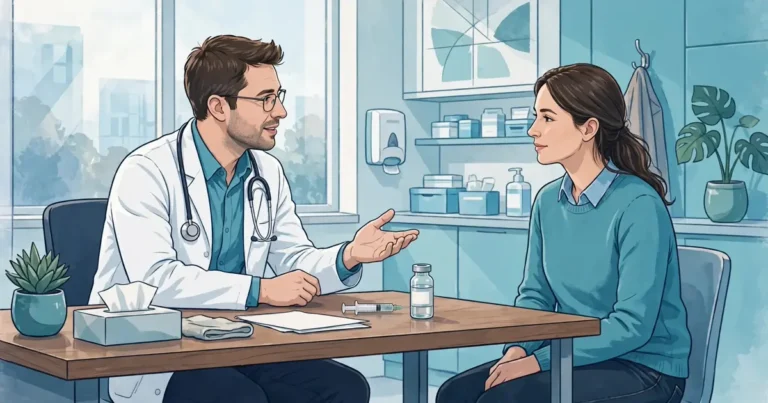
Start with your primary care doctor — and say the key sentence: "I've had a baby recently and I'm not feeling like myself." That context changes everything about how a doctor hears your symptoms. Screening tools like the Edinburgh Postnatal Depression Scale, though designed for mothers, are widely used for fathers too.
2. Therapy
Talk therapy works as well for paternal postpartum depression as for any depression:
- Cognitive behavioral therapy (CBT) helps identify and change the thought patterns feeding the depression.
- Interpersonal therapy (IPT) focuses on role transitions and relationship strains — often a natural fit for new parenthood.
- Couples or family therapy can address the relationship dynamics the baby has disrupted.
Many therapists now offer telehealth, which matters when leaving the house with a newborn feels impossible.
3. Medication
Antidepressants (most commonly SSRIs) are effective and are prescribed to fathers the same way as to anyone with depression. There's no "dad-specific" drug — standard depression treatment applies. Discuss benefits, side effects, and timelines honestly with your doctor.
4. Support Groups
Groups specifically for new fathers — in person or online — break the isolation that feeds this condition. Hearing another dad say "me too" can do what months of silent struggling cannot.
5. The Fundamentals (They Matter More Than You Think)
- Sleep. Protect it fiercely. Take shifts with your partner so each of you gets at least one unbroken block. Sleep deprivation alone can sustain depression.
- Movement. Even a 20-minute walk changes brain chemistry. Don't wait until you "feel like it."
- Honest conversation. Tell your partner what's happening — not as a confession of failure, but as information you both need.
- Lower the bar. The house, the career momentum, the social life — some things can wait. Survival mode is a legitimate season.
For Partners: How to Help Him Get Help
If you're reading this because you're worried about the father of your baby:
- Name what you see gently. "You've seemed really flat and angry lately, and I'm worried about you" lands better than "you need therapy."
- Normalize it. "1 in 10 dads goes through this" is a powerful sentence — it moves him from broken to human.
- Offer to make the appointment or go with him. The logistics of seeking help can feel insurmountable to a depressed person.
- Don't frame it as criticism of his fathering. He's likely already drowning in guilt about that.
- Take care of yourself too. You can't pour from an empty cup, and maternal mental health matters just as much.
When to Act Urgently
Get help immediately — today, not next week — if:
- Symptoms have lasted more than 2 weeks and aren't lifting
- You're having thoughts of harming yourself, your baby, or anyone else
- You're experiencing hallucinations, paranoia, or feeling out of touch with reality
- You're unable to care for yourself or the baby
- You're turning to alcohol or drugs to cope
In the US, call or text 988 for the Suicide and Crisis Lifeline. In the UK, call Samaritans at 116 123. Wherever you are, your doctor, local emergency services, or a crisis helpline can help right now.
FAQ
How common is postpartum depression in men?
About 1 in 10 new fathers experiences it within the first year — and rates are higher when the mother is also depressed. It's significantly underdiagnosed because men are less likely to seek help and their symptoms (anger, withdrawal) are less readily recognized as depression.
How is postpartum depression in men different from women's?
The underlying condition is the same, but the presentation often differs. Fathers more commonly show irritability, anger, withdrawal, and escape behaviors (overwork, drinking) rather than tearfulness and sadness — which makes it harder to spot.
When does postpartum depression in men usually start?
It can begin during the pregnancy, but symptoms most commonly emerge in the first few months after birth and often peak around 3 to 6 months — later than many families expect.
Can postpartum depression in men go away on its own?
Mild cases sometimes ease as sleep improves and routines settle, but clinical depression typically doesn't resolve without help — and waiting it out costs months of bonding and wellbeing. Treatment (therapy, medication, or both) is effective, so there's no reason to white-knuckle it.
The Bottom Line
Postpartum depression in men is real, common (about 1 in 10 dads), and treatable — but it hides behind anger, withdrawal, and the cultural script that fathers should just cope. If you're a new father who feels persistently irritable, empty, disconnected, or overwhelmed, that's not failure and it's not just tiredness. It's a medical condition with effective treatments.
Getting help isn't weakness. It's the most fatherly thing you can do — for your baby, your partner, and yourself. Start with one honest conversation: with your partner, your doctor, or a helpline. You don't have to earn the right to struggle, and you don't have to get through it alone.