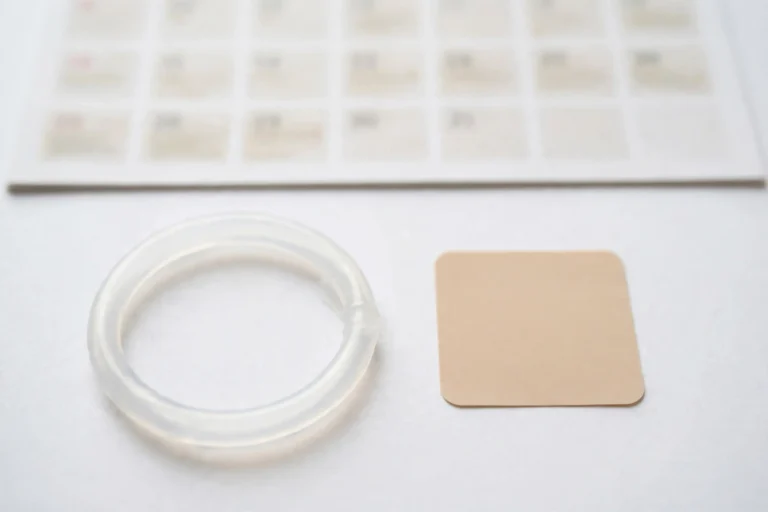
Can STIs Spread Through Sex Toys?
Looking for clear, honest information about the sti risk sex toys carry is a sensible step — intimate products have become mainstream, but the hygiene questions around them rarely get the detailed treatment they deserve. The short answer is yes: sexually transmitted infections can spread through shared sex toys that move between people without proper cleaning or a barrier. The longer, more useful answer is that the real-world risk is highly structured. It depends on which infection is involved, what the toy is made of, how quickly it passes between users, and what was done between uses. This article walks through the evidence calmly, infection by infection, and lays out practical, clinically grounded steps that bring the risk close to zero.
Before diving in, it helps to name the problem plainly: the sti risk sex toys carry is not one single risk but a bundle of them — different infections, different materials, different habits. Untangling that bundle is what the rest of this guide does.
The STI Risk Sex Toys Carry: How Transmission Happens
A sex toy does not generate an infection on its own. Clinicians describe it as a vector or fomite — an object that can ferry pathogens from one person’s body to another’s. For transmission to occur, three conditions must line up: a person with an infection must use the toy (or their bodily fluids must contact it), the pathogen must survive on the toy’s surface until the next contact, and the toy must then touch another person’s mucous membranes or broken skin.
Those three conditions explain why the sti risk sex toys present is so uneven: break any link in the chain — clean the toy, add a barrier, or allow enough drying time — and transmission fails.
Most STIs spread in one of two ways, and both can travel via a toy. Fluid-borne infections such as chlamydia, gonorrhea, and trichomoniasis move in semen, pre-ejaculate, vaginal secretions, rectal secretions, or blood. If any of these fluids remain on a toy and the toy then contacts another person’s genital or anal mucous membranes, transmission is possible. Skin-to-skin infections such as herpes and HPV move through contact with infected skin or shedding from skin and mucous membranes; a toy that has pressed against an active lesion or shedding skin can carry viable virus to the next user, particularly when used vaginally or anally without cleaning or a barrier.
It helps to keep perspective. A shared toy is riskier than a shared towel because toys touch mucous membranes directly, often inside the body, and many are made of materials that are difficult to fully sanitize. But a shared toy is generally less risky than direct sexual contact, because the time gap between users gives fragile pathogens a chance to die off, and a simple barrier — a fresh condom on the toy — interrupts nearly every transmission pathway. Guidance from public health bodies such as the CDC’s STI information pages and the NHS treats shared intimate objects as a plausible transmission route worth addressing, not a hidden epidemic worth panicking about.
Which STIs Can Spread Through Shared Toys?
Not every infection survives equally well on a toy’s surface. Some pathogens are remarkably hardy; others die within minutes of exposure to air and drying. Here is a practical breakdown, ordered from the strongest to the weakest evidence for toy-mediated transmission, so you can see exactly where the sti risk sex toys carry is concentrated:
HPV (human papillomavirus) — highest risk
HPV is the clearest documented case. Its tough protein outer shell tolerates drying and ordinary soap-and-water cleaning far better than most enveloped viruses, and studies have detected viable high-risk HPV on intimate products many hours after use — with incomplete removal even from toys that were washed. Because HPV is also extremely common among sexually active adults, the chance that a partner is shedding HPV at any given time is not trivial. Vaccination against the cancer-associated strains remains the single most meaningful protection; a fresh condom on the toy is the most effective barrier short of not sharing.
Herpes simplex virus (HSV-1 and HSV-2) — moderate risk
Herpes transmits primarily through direct contact with active lesions or asymptomatic shedding from skin and mucous membranes. The virus can survive on moist surfaces for a few hours, so a toy used during an outbreak — or during a period of asymptomatic shedding — can carry enough viable virus to infect the next user, especially with vaginal or anal use without a barrier. The reassuring part: HSV is an enveloped virus, so soap, drying, and alcohol destroy it quickly. Cleaning between users is highly protective.
Trichomoniasis — moderate risk
The parasite Trichomonas vaginalis can survive briefly on damp surfaces — tens of minutes rather than hours — and toy-mediated transmission is documented in clinical literature, particularly when toys move between users without cleaning or a barrier. It is the most common curable non-viral STI worldwide, and many carriers have no symptoms, which is why screening matters.
Chlamydia and gonorrhea — lower but real risk
Both are bacteria that prefer the warm, moist environment of a mucous membrane and lose viability outside the body within minutes to a couple of hours depending on humidity. Transmission via a toy is less efficient than direct contact but real, especially when a toy moves quickly between users with no cleaning. Both infections are asymptomatic in roughly half of carriers, so absence of symptoms tells you nothing about infectiousness.
Hepatitis B — conditional risk
Hepatitis B is bloodborne and present in semen and vaginal fluids, and the virus is unusually hardy on surfaces — it can remain infectious for days, longer than most other sexually transmitted viruses. Toy-mediated risk concentrates in scenarios involving blood: use during menstruation, vigorous use that causes small mucosal tears, or a toy contaminated with blood. Vaccination effectively removes this concern; fully vaccinated partners face no meaningful HBV risk from sharing.
HIV and syphilis — very low, largely theoretical
HIV is fragile outside the body. Drying and air exposure inactivate it within minutes to hours, and the volumes of fluid involved on a toy surface are typically far below transmission thresholds. The CDC does not list shared toys as a recognized HIV transmission route, and the one scenario that elevates the theoretical risk — rapid handoff between users with visible blood involved — is precisely what a fresh condom addresses. Syphilis requires direct contact with an active lesion, and its bacterium dies quickly on dry surfaces, making toy-mediated transmission rare in practice.
| Infection | Toy-mediated risk | Why |
|---|---|---|
| HPV | Highest | Tough viral capsid; survives drying; standard cleaning incomplete on porous toys |
| Herpes (HSV-1, HSV-2) | Moderate | Active lesions or asymptomatic shedding; killed by soap and drying |
| Trichomoniasis | Moderate | Parasite survives briefly on damp surfaces, on the order of tens of minutes |
| Chlamydia | Lower | Bacterial; minutes to hours of viability outside the body |
| Gonorrhea | Lower | Bacterial; similar viability profile to chlamydia |
| Hepatitis B | Conditional | Bloodborne; environmentally persistent; risk requires blood contact |
| HIV | Very low | Fragile outside the body; not a recognized toy-transmission route |
| Syphilis | Very low | Requires direct contact with an active lesion; dies quickly on dry surfaces |
Beyond STIs: bacterial vaginosis, yeast, and UTIs
Bacterial vaginosis and yeast infections are not classical STIs, but both routinely travel via shared toys without cleaning — BV in particular has been documented moving between sexual partners with vaginas. Even when only one person uses the toy, moving it between the anus and the vagina (or between partners) can transfer intestinal bacteria that trigger urinary tract infections or throw off vaginal pH. The cleaning rules below prevent these just as effectively as they prevent STIs.
Toy Material Matters More Than Most People Realize
The single most overlooked variable in toy-related infection risk is what the toy is made of. Materials fall into two categories:
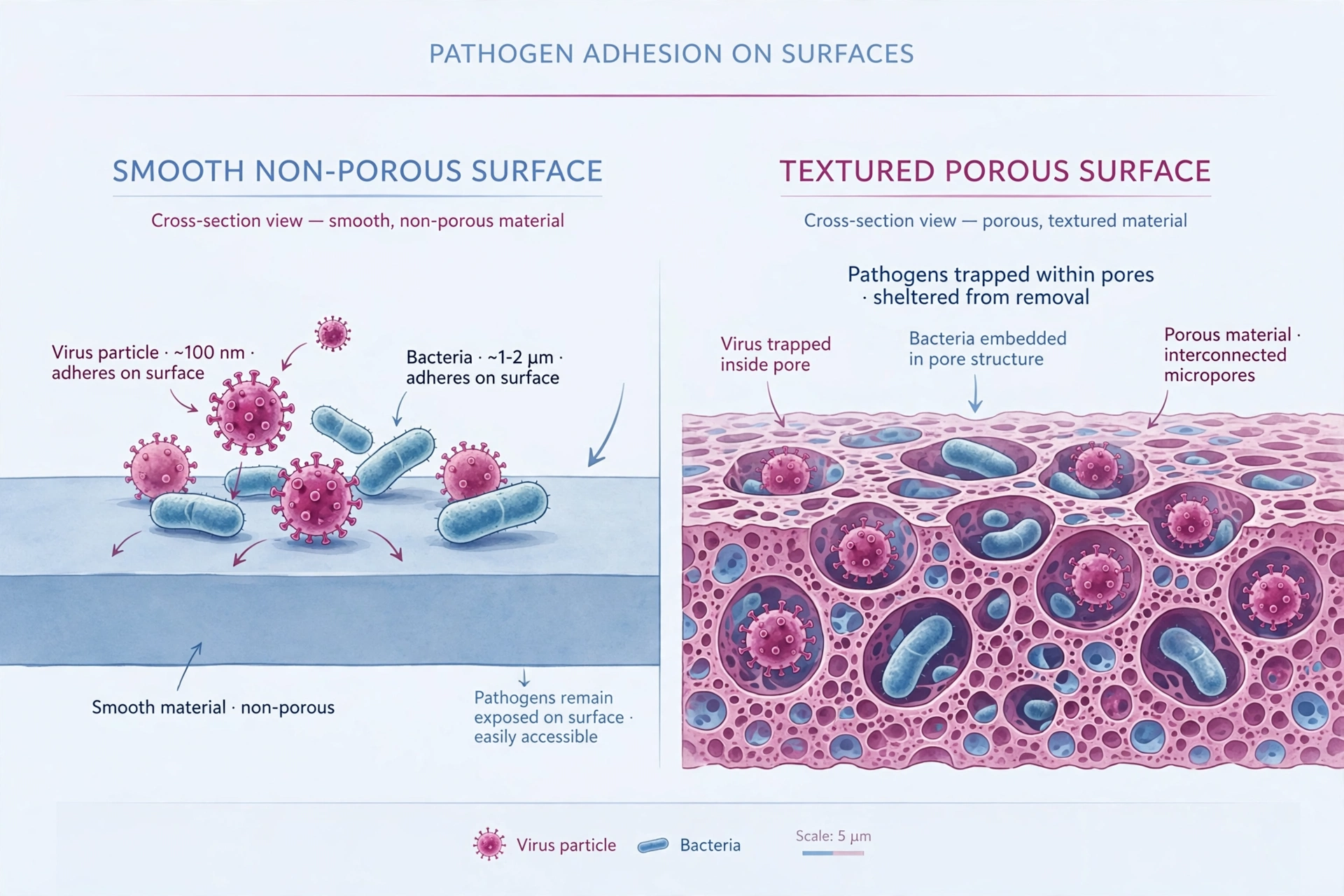
Non-porous materials — medical-grade silicone (100%), borosilicate glass, stainless steel, and hard ABS plastic with a sealed surface — have effectively no microscopic pores. Pathogens sit on the surface, where soap and water can reach and remove them. With proper cleaning, the risk of pathogen carry-over between users is very low. This is why the sti risk sex toys made of non-porous materials carry is so much easier to control than the risk from porous ones.
Porous materials — TPE and TPR rubber, PVC, “jelly” rubber, latex, and soft realistic blends such as cyberskin — have microscopic surface texture that traps bacteria, viruses, and yeast below the surface, where soap and water cannot reliably reach. These toys cannot be fully sterilized, and public-health guidance consistently recommends not sharing them between partners at all. In other words, the sti risk sex toys made of porous materials carry can never be cleaned away completely — which is why a barrier is non-negotiable for them.
Material is one of the two biggest levers on the sti risk sex toys carry; cleaning is the other. Get both right and sharing becomes dramatically safer.
A practical rule of thumb: if you do not know what your toy is made of, treat it as porous and use a barrier. Reputable manufacturers label silicone clearly because it is a premium feature; the absence of “100% silicone” or “borosilicate glass” on the packaging usually means it is not. For a full primer on materials and cleaning routines, see our sex toy hygiene and cleaning guide.
Cleaning Methods That Actually Remove Pathogens
Cleaning is the first of the two preventive measures that bring the sti risk sex toys carry close to zero. The right method depends on the material:
- Non-motorized silicone, glass, stainless steel: boil for 5 to 10 minutes, or run through a dishwasher on a hot cycle without detergent. This is reliable sterilization for HPV, HSV, bacterial STIs, and HIV.
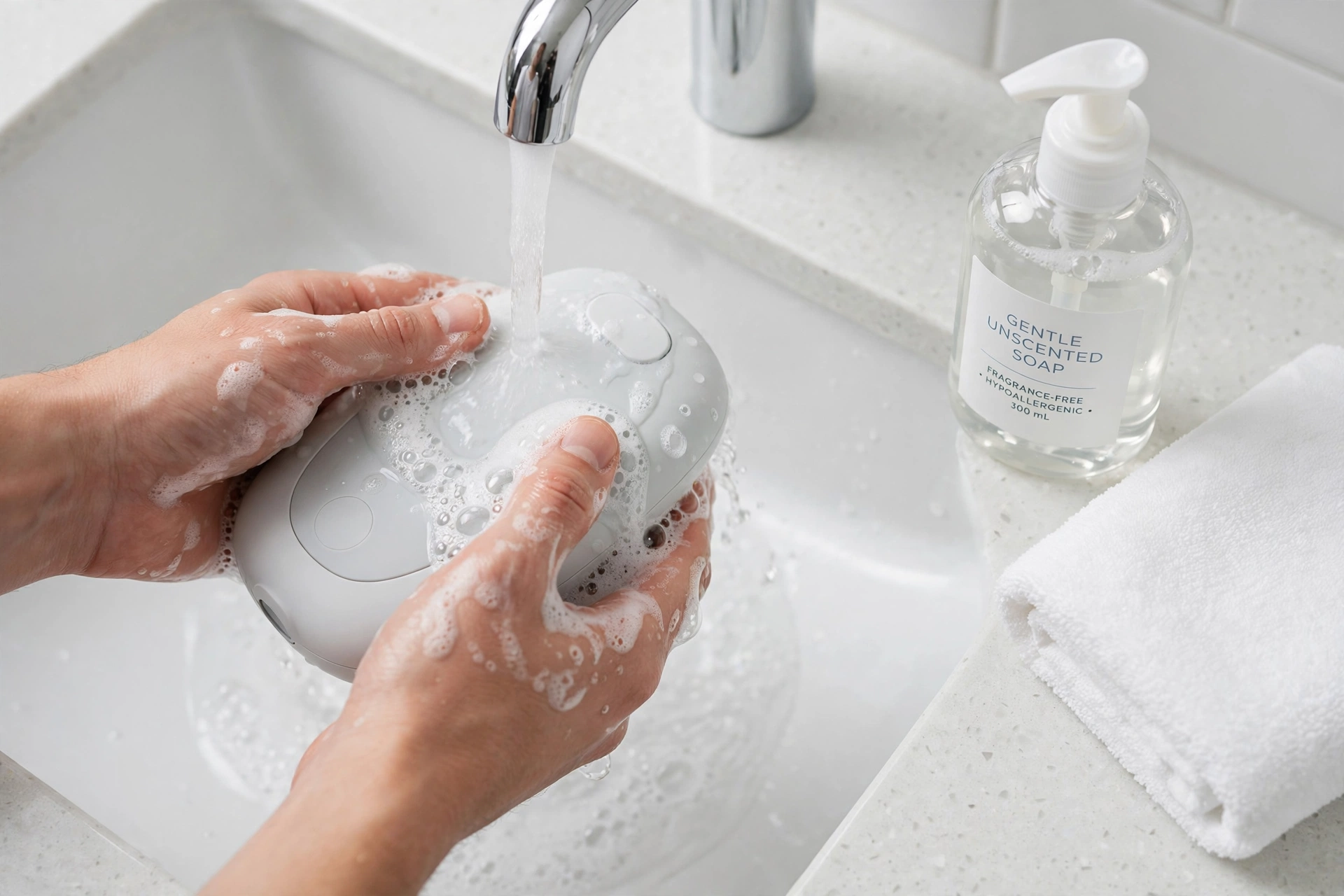
- Motorized silicone vibrators: wash with warm water and unscented antibacterial soap for at least 30 seconds, scrubbing seams, ridges, and textured areas. Rinse thoroughly and air-dry on a clean towel. A 70% isopropyl alcohol wipe-down before the soap step adds a margin against HSV and bacterial pathogens — but never boil or submerge a battery-operated toy.
- Porous materials (TPE, jelly, latex, cyberskin): soap and warm water every time. Understand this is partial cleaning, not sterilization — a fresh condom on the toy is the real protective layer.
- Non-waterproof toys: damp cloth with mild soap on the exterior only; never submerge. These are the hardest to clean fully, which is another reason to default to a barrier when sharing.
Equally important is what does not work: a quick rinse under the tap between users, wiping with a tissue, or relying on toy-cleaner spray alone without water and friction are all insufficient — especially on porous toys. And always wash both before and after use. A toy that was cleaned last week and sat in a drawer has collected dust and lint in the meantime; a fresh wash before playtime takes a minute and closes that gap. Get cleaning right and the sti risk sex toys pose drops sharply for every pathogen on the list.
The Fresh-Condom Rule: The Single Most Reliable Barrier
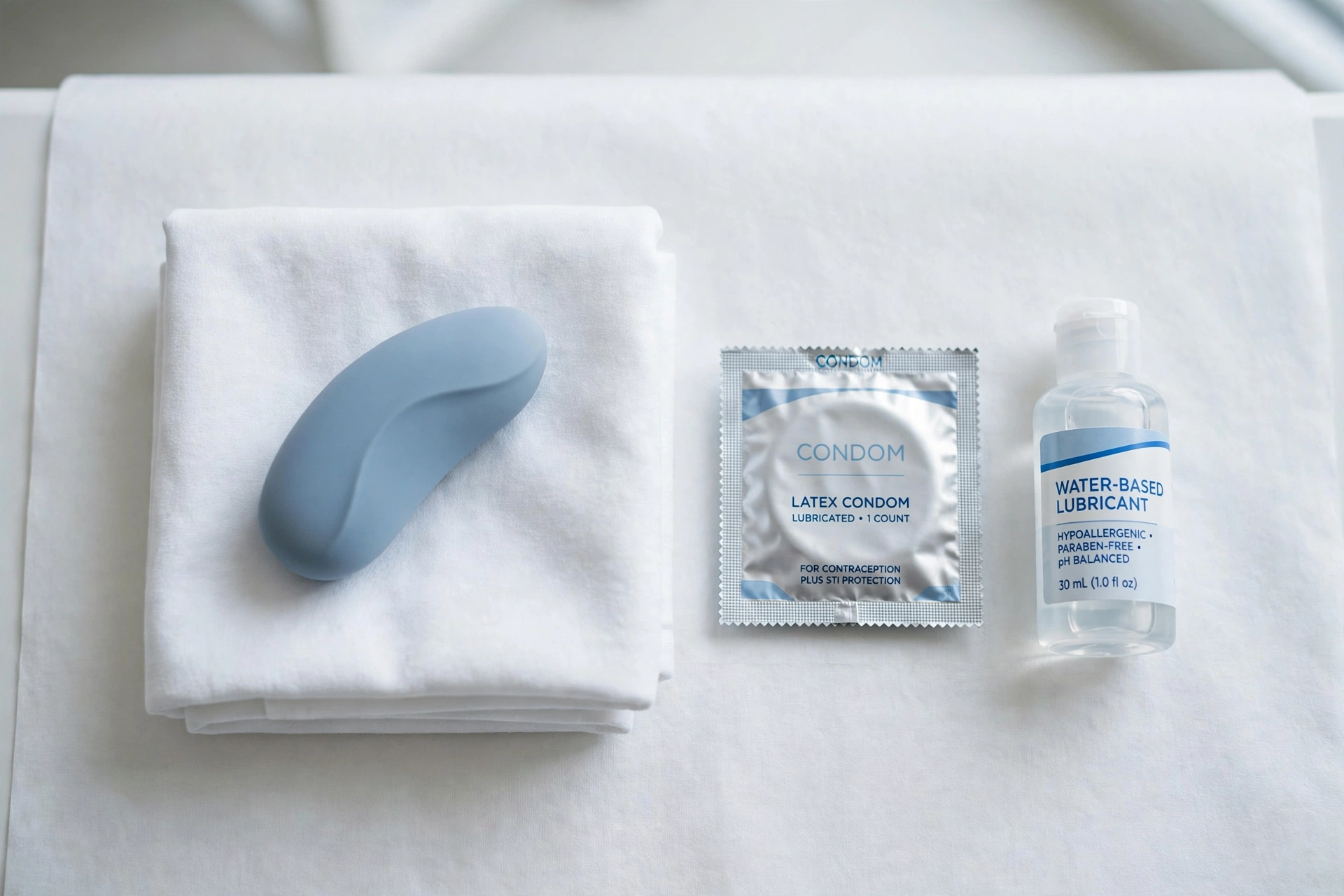
A fresh external condom on the toy, changed every time the toy switches users or moves between body openings — vaginal to anal, anal to vaginal, anal to oral — is the single most reliable preventive measure besides not sharing. It protects against essentially every STI on the list above, and it sidesteps the porous-material problem entirely. The rules mirror condom use on the body: fresh for each user, fresh when moving between openings, never reused after removal. No other single habit cuts the sti risk sex toys present as reliably.
Match your lubricant to the toy’s material — silicone-based lubricants can degrade silicone toys, so use water-based lubricants with them (more on lubricants below). For toys that are not phallic-shaped, fitting a condom can be awkward; a snug latex or nitrile glove, or non-microwave cling film, can serve as an improvised barrier in a pinch. One exception deserves mention: penis-strokers and similar masturbation sleeves are usually made of porous soft rubber and fit too snugly for condoms, so the cleanest approach is one toy per person.
Between trusted, STI-tested partners with no other current sexual partners, the calculus shifts: sharing without barriers is roughly as risky as unprotected sex with each other — the toy is not meaningfully changing the risk profile. The between-openings rule still applies, because moving bacteria from the rectum to the vagina can cause UTIs and BV regardless of STI status. Our anal sex safety guide covers that side of the equation in more detail.
Lubricants and the STI Risk They Can Quietly Influence
Most articles about toy-related STI risk skip lubricants entirely, yet your choice of lubricant touches the risk chain in three ways worth knowing — each one quietly nudging the sti risk sex toys carry up or down.
First, friction injuries. A dry or under-lubricated toy creates more friction against delicate mucous membranes, and the resulting micro-tears give pathogens a direct doorway into the bloodstream or tissue. Adequate lubrication reduces that mechanical injury — and with it, one route of entry for bloodborne and fluid-borne infections.
Second, condom compatibility. Oil-based lubricants — including coconut oil, body oils, and petroleum jelly — degrade latex condoms within minutes, creating microscopic holes that defeat the barrier you placed on the toy. If you use a condom on a latex toy barrier, pair it with a water-based or silicone-based lubricant (silicone-based only if the toy is not silicone). This is one of the most common ways people undermine an otherwise solid prevention plan.
Third, lubricant chemistry. Some lubricants are hyperosmolar — they draw water out of mucosal cells — and studies on rectal and vaginal epithelial models suggest this can cause cellular damage that theoretically raises susceptibility to infection. Glycerin-heavy formulas can also feed yeast in people prone to yeast infections. The practical takeaway: choose a body-safe, pH-balanced, water-based lubricant for toy use, especially with a condom barrier. Spermicidal lubricants deserve a special note — the spermicide nonoxynol-9 does not protect against STIs and can irritate mucous membranes with frequent use, which may increase susceptibility; it is not a substitute for any of the measures above.
When to Retire a Toy: Lifespan Is a Safety Factor
Here is a gap in nearly all the advice published on this topic: toys do not stay safe forever, even well-cleaned ones. Material degradation is itself a risk factor, and it deserves a place in any honest STI-risk discussion.
In other words, an aging toy quietly raises the sti risk sex toys present even when your cleaning habits have not changed — degradation itself is a risk factor.
Silicone toys are the most durable — quality medical-grade silicone can last years — but even silicone develops micro-cracks, torn seams, and degrading charging ports over time. Those imperfections create harborage points where pathogens survive cleaning. Porous toys degrade faster: TPE and jelly materials become sticky, discolored, or develop an off smell as plasticizers break down, and a sticky surface is a stickier trap for bacteria and yeast. Inspect every toy regularly; retire any that has visible cracks, deep scratches, permanently tacky texture, discoloration that does not wash off, or a motorized seal that no longer closes.
As a rough guide: porous soft-rubber toys used regularly should be replaced within roughly a year, silicone toys can last several years with proper care but should be retired at the first sign of surface damage, and glass or steel toys last indefinitely unless chipped or cracked (a chipped glass toy must be discarded immediately — it is both an injury and infection hazard). Think of replacement the way you think of replacing a toothbrush: the cost of a fresh, non-porous toy is small compared with the infections a degraded one can harbor.
Storage, Solo Use, and Reinfection After Treatment
Two more under-discussed risk channels round out the picture.
Storage hygiene. A clean toy stored damp in a closed container is a petri dish: warm moisture breeds bacterial colonies and mold. Always dry toys thoroughly — air-drying is best, since towel lint clings to soft materials — and store them in a breathable pouch or clean cotton bag, not an airtight plastic bag.
Most toys now ship with satin or fabric storage pouches; use them. They keep dust, pet hair, and debris off the surface between uses. If the toy shares a drawer with a porous, degrading toy, store them separately — melting porous plastics can contaminate neighboring toys. Dry, breathable storage is a small habit that keeps the sti risk sex toys carry low between sessions.
Self-reinfection after treatment. This is the scenario almost nobody warns about: you are diagnosed with a bacterial STI, complete your antibiotics, and feel better — then use your own toy, which was never sterilized, and reintroduce the same pathogen to yourself. The same applies to recurrent BV and yeast infections, where clinical experience shows uncleaned toys are a plausible driver of the “keeps coming back” cycle.
The protocol is simple: when you are diagnosed, sterilize (boil) or replace every toy that contacted the infected area, and abstain from using them until treatment is complete and a clinician confirms you are clear. If you use a toy solo during recovery, use a fresh condom on it each time. Whatever the sti risk sex toys carry after treatment, a fresh condom on the toy neutralizes it.
After a Risky Shared-Toy Encounter: What to Do Next
If you have already shared a toy without cleaning or a barrier and you do not know the other person’s STI status, do not panic — but do act. The single most useful step is testing at the right time, because most STIs have a window period between exposure and detectability.
As a practical summary: bacterial STI tests (chlamydia, gonorrhea) become reliable around two weeks after exposure; HIV fourth-generation laboratory tests detect most infections by four to six weeks; syphilis and HSV antibody tests reach reliable sensitivity between eight and twelve weeks; and one comprehensive panel at the twelve-week mark covers nearly every infection of concern from a single exposure in one visit — whatever the sti risk sex toys involved happened to be.
If you develop symptoms in the meantime — unusual discharge, sores, burning during urination, pelvic pain — see a clinician promptly rather than waiting out a window period, since symptomatic infections can be diagnosed and treated regardless of timing. Tell the clinician exactly what the exposure was; “I shared a sex toy without a barrier a week ago” is information they use to choose the right tests, and there is nothing to be embarrassed about. For a full breakdown of when and how often to test in general, see our STI testing schedule guide, and the NHS guidance on STIs is a solid overview of symptoms and testing pathways.
Frequently Asked Questions
Can you get HIV from sharing a sex toy?
This corner of the sti risk sex toys picture is the most reassuring: HIV transmission through a shared sex toy is theoretically possible but extremely rare in the published literature. HIV is fragile outside the body — drying and air exposure inactivate it within minutes to hours — and the fluid volumes on a toy surface are typically far below transmission thresholds. The CDC does not list toy sharing as a recognized HIV transmission route. Cleaning between uses, or a fresh condom on the toy, makes the already tiny risk effectively zero.
How long can STIs survive on a sex toy?
It varies widely by pathogen. HIV and syphilis lose viability within minutes to hours on dry surfaces. Chlamydia and gonorrhea bacteria survive minutes to a couple of hours depending on humidity. Trichomoniasis survives tens of minutes on damp surfaces. Herpes can persist for a few hours on moist surfaces. HPV is the hardiest, with viable virus detected many hours after exposure. Hepatitis B can remain infectious on surfaces for days. The practical point: the longer the gap between users, the safer — but never rely on time alone to manage the sti risk sex toys present; clean and use a barrier.
Is a quick rinse enough between partners?
No. A rinse under the tap removes visible residue but does not reliably remove or kill pathogens, especially on porous materials. The minimum for non-porous toys is soap, warm water, and at least 30 seconds of scrubbing of every surface including seams; the gold standard for non-motorized silicone, glass, and steel is boiling for 5 to 10 minutes. Between partners, a fresh condom on the toy is the most reliable single step — the sti risk sex toys carry demands more than water alone.
Do condoms on toys really prevent STIs?
Yes — a fresh external condom changed every time the toy switches users or moves between body openings is the single most reliable preventive measure besides not sharing. It blocks essentially every STI transmission pathway discussed in this article and neutralizes the porous-material problem. The main failure modes are reusing a condom, pairing it with an oil-based lubricant on latex, and continuing to use a condom that has slipped or torn. That is what makes the fresh-condom habit the centerpiece of managing the sti risk sex toys pose.
Can I reinfect myself with my own toy after STI treatment?
Yes, this is a real and under-appreciated risk. A toy used before or during treatment can harbor the same pathogen and reintroduce it after your antibiotics have worked. When diagnosed with a bacterial STI, sterilize (boil) or replace every toy that contacted the infected area, and do not use them again until treatment is complete. The same logic applies to recurrent bacterial vaginosis and yeast infections.
Are body-safe, non-porous materials worth the extra cost?
From an infection-risk perspective, yes. Medical-grade silicone, borosilicate glass, and stainless steel can be genuinely sterilized by boiling, which removes the pathogen carry-over risk that porous materials (TPE, jelly, PVC) can never fully eliminate. The price difference is modest compared with the cost — financial and otherwise — of an infection, and non-porous toys also last longer, which compounds the value. For anyone weighing the sti risk sex toys carry against the price tag, the math is clear.
What should I do if I already shared a toy without protection?
Stay calm and test at the right time: bacterial STI tests are reliable from about two weeks after exposure, and a comprehensive panel at twelve weeks covers nearly every infection of concern in one visit. See a clinician promptly if any symptoms appear. Going forward, adopt the two habits that make this a non-issue: a fresh condom on the toy for each user and proper cleaning between sessions. Those two habits keep the sti risk sex toys carry at effectively zero going forward.
This article is for educational purposes only and is not medical advice. It cannot diagnose infections or replace the judgment of a qualified clinician. If you have symptoms, a known exposure, or concerns about your sexual health, please consult a doctor, sexual health clinic, or other licensed healthcare provider. Treatment decisions — including whether and when to test — should be made with a professional who knows your individual situation.
The bottom line on the sti risk sex toys carry is reassuring once you understand its structure: yes, STIs can spread through shared toys, but the risk is concentrated in a few preventable circumstances — uncleaned porous toys, rapid sharing without barriers, and fluids or blood contacting mucous membranes. Choose non-porous materials, clean properly between every use, put a fresh condom on the toy for each user, use a compatible lubricant, retire degraded toys, and store everything dry. With those habits in place, the practical risk approaches zero for nearly every infection on the list.