Phimosis in Adults: Treatment Options That Work
Phimosis — a foreskin that cannot be fully retracted to expose the head of the penis — affects roughly 1 to 2 percent of uncircumcised adult men, yet most delay seeking care for years. When it comes to phimosis treatment in adults, the honest truth is that one option does not fit everyone: mild cases often respond to simple creams and gentle stretching, while severe scarring usually calls for a surgical solution. The good news is that modern urology offers a full spectrum of treatments, and embarrassment is the only real barrier between most men and a comfortable outcome. The sections below explain every phimosis treatment adults need to know about, in plain language.
This guide walks you through every proven treatment for adult phimosis — what each involves, who it suits, recovery, and the questions to ask your doctor.
What Is Phimosis in Adults?
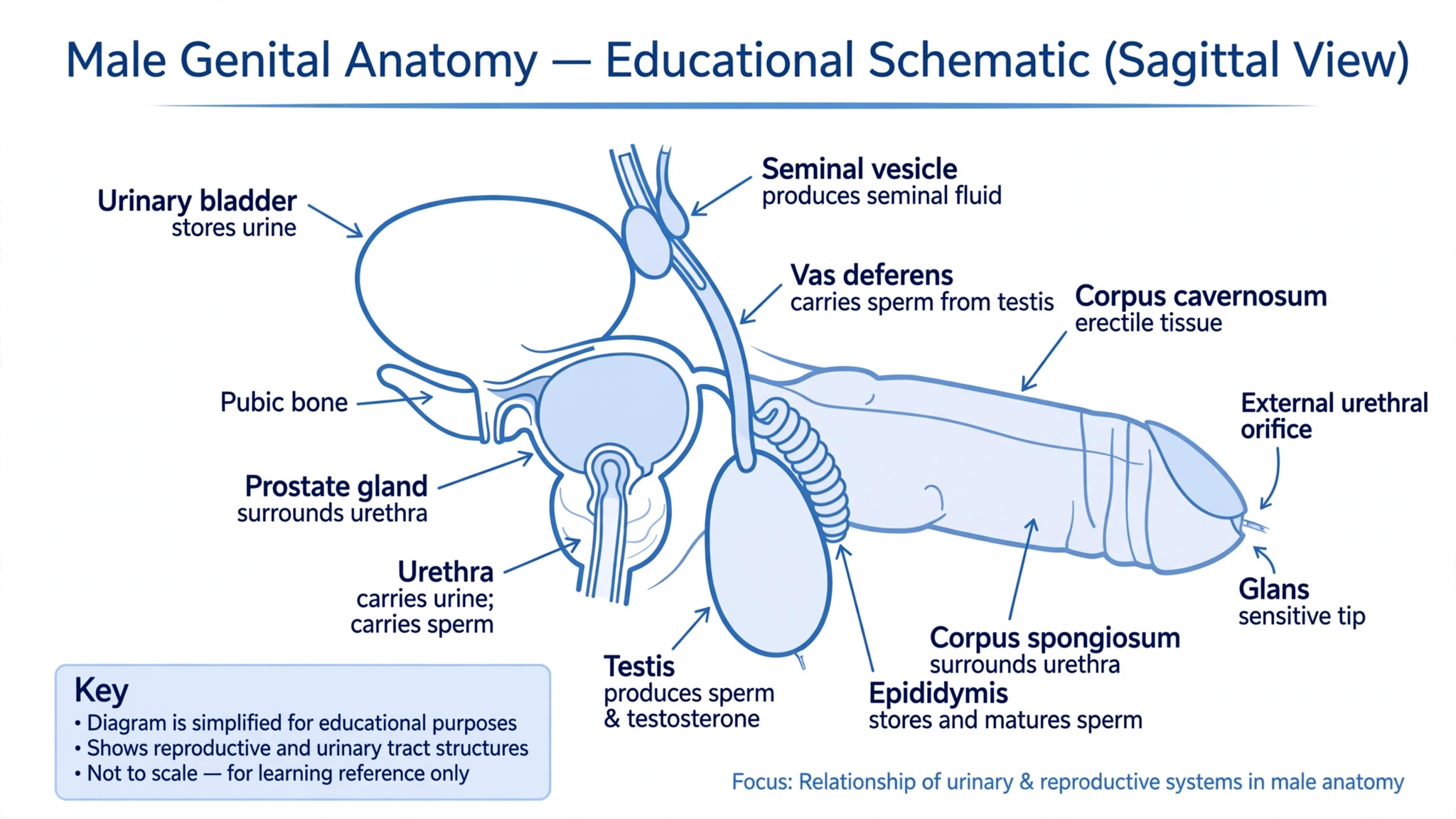
Phimosis is the inability to retract the foreskin completely over the glans (the head of the penis). In children, this is usually physiological — a normal developmental stage that resolves on its own. In adults, however, it is almost always pathological (also called secondary phimosis), meaning something has caused the foreskin to tighten or scar.
Common causes of adult phimosis include:
- Recurrent infections — repeated episodes of balanitis (inflammation of the glans) or balanoposthitis (inflammation of both glans and foreskin) create cycles of inflammation and scarring.
- Diabetes — poorly controlled blood sugar increases the risk of fungal infections and chronic inflammation of the foreskin. Men with diabetes develop phimosis far more often than the general population (see our guide to diabetes and erectile dysfunction for why blood sugar affects male sexual health so broadly).
- Lichen sclerosus (BXO) — an inflammatory skin condition that causes whitish, hardened patches on the foreskin, progressively tightening it. This is one of the most common reasons adult men need circumcision.
- Forceful retraction or injury — trying to forcibly pull back a tight foreskin can tear the tissue, and the resulting scar is less elastic than the original skin.
- Poor hygiene or chronic irritation — long-term buildup of debris or irritation under the foreskin keeps inflammation simmering.
Typical symptoms include difficulty or inability to retract the foreskin, pain during erections or sexual activity, a weak or spraying urine stream, swelling and redness, and recurrent infections with discharge or an unpleasant odor. Left untreated, severe phimosis raises the risk of urinary tract infections and is strongly associated with chronic inflammation — which is why Mayo Clinic’s overview of penis health lists it among the conditions that warrant medical evaluation rather than embarrassment-fueled silence.
How Urologists Grade Phimosis Severity
Most patient-facing articles skip this, but urologists use a simple grading system — the Kikiros scale — to decide which treatment fits. Knowing where you fall helps you understand why your doctor recommends one route over another:
- Grade 0: Full retraction is possible, with only mild tightness behind the glans.
- Grade 1: Full retraction is possible but the foreskin is tight behind the glans.
- Grade 2: Partial exposure of the glans is possible.
- Grade 3: Only partial retraction is possible — the opening (meatus) is just visible.
- Grade 4: Slight retraction is possible, but the glans stays covered.
- Grade 5: No retraction at all, even when flaccid.
Grades 0 to 2 generally respond well to conservative treatment — creams and stretching. Grades 3 to 5, especially with visible scarring or lichen sclerosus, usually need a procedure. This is the first thing a urologist assesses during your exam, and it explains why two men with “tight foreskin” can receive very different recommendations.
Phimosis Treatment Adults: Non-Surgical Options
Conservative treatment is always worth attempting first when the phimosis is mild and there is no significant scarring. These options preserve the foreskin and involve little to no downtime.
Topical Steroid Creams
The first-line non-surgical treatment is a topical corticosteroid (such as betamethasone or mometasone), prescribed by a doctor and applied to the tight band of foreskin for several weeks. Steroids work by calming the local inflammatory response and gradually thinning and softening the skin, making the foreskin more pliable.
Clinical reviews report meaningful improvement — partial or complete resolution — in a large proportion of men, though results are best for mild, unscarred phimosis. In short, creams are the best-studied phimosis treatment adults can try before considering surgery.
Honest expectations: creams cannot reverse established scarring. If the foreskin has thickened into a white, fibrous ring (especially from lichen sclerosus), steroids are unlikely to work, and continuing them for months delays the treatment that actually will. A reasonable rule: if a few weeks of consistent use bring no improvement, it is time to discuss next steps rather than more cream.
Gentle Stretching and Dilation Devices
Manual stretching — gently pulling the foreskin back as far as it goes without pain, holding briefly, and repeating — is often combined with steroid creams. The key word is gentle: stretching that causes tearing creates scar tissue and makes the problem worse.
For men who find manual stretching awkward, certified medical silicone dilation devices exist. These consist of a series of gradually sized rings placed over the glans that apply steady, gentle pressure to the tight ring of foreskin over several weeks. A prospective study of one such device found that over half of the men who had been scheduled for circumcision no longer needed surgery after about two months of use, with most maintaining their results at two-year follow-up. Side effects were limited mostly to temporary discomfort as sizes increased.
Stretching is the simplest home-based phimosis treatment adults can start today, and it suits grades 0–2 without scarring. It requires daily commitment for weeks, and patience — but it is painless, inexpensive, and carries essentially no medical risk.
Surgical Options When Conservative Care Is Not Enough
When the conservative phimosis treatment adults usually try first has failed — or when phimosis is moderate to severe, scarred, or recurrent — surgery is the definitive answer. Modern techniques are far less intimidating than most men imagine, and most are day procedures under local anesthesia.
Preputioplasty: The Foreskin-Preserving Option
Preputioplasty is a minor procedure in which the surgeon makes small longitudinal incisions in the tight band of foreskin, then closes them sideways to widen the opening — preserving the foreskin itself. It is quick, causes minimal bleeding, and is chosen mainly by men who strongly wish to avoid circumcision for personal or aesthetic reasons. It is not ideal for heavily scarred foreskins or lichen sclerosus, where the diseased tissue is better removed.
Laser-Assisted Circumcision
Laser circumcision uses a precision laser instead of a scalpel to release the tight foreskin. Because the laser seals small blood vessels as it cuts, bleeding is minimal, stitches are often unnecessary, and recovery tends to be faster than with conventional surgery. Reviews comparing laser to traditional circumcision report shorter operative times and fewer postoperative complications. Many men resume desk work within two to three days, with complete healing in two to three weeks. The main limitation is availability and cost — not every clinic offers it, and it may be priced higher than conventional surgery.
Conventional Circumcision: The Gold Standard
Adult circumcision — complete surgical removal of the foreskin — remains the most definitive phimosis treatment adults with severe scarring can choose, with recurrence rates below 5 percent. In adults, surgeons usually perform a “sleeve” technique, and modern closures may use barbed sutures, tissue glue, or staples alongside traditional stitches. The overall complication risk is around 3.8 percent, and most complications are minor (bleeding, wound infection, or swelling). Recovery typically takes one to two weeks, with sexual activity advised after four to six weeks.
Circumcision is the recommended option for severe scarring, recurrent infections despite treatment, and lichen sclerosus that has not responded to steroids — note that lichen sclerosus carries an association with penile cancer risk if left unmanaged, which is a genuine medical reason to treat it decisively. If you are weighing this decision, our detailed look at how circumcision affects sexual function covers what the research says about sensation and satisfaction afterward.
Dorsal Slit and Stapler Devices
A dorsal slit — a single incision along the top of the foreskin to relieve tightness — is usually reserved for emergency situations or as a first stage before full circumcision, since the cosmetic result is less refined. Newer stapler and “in situ” devices crush the foreskin while creating hemostasis, reducing operative time and postoperative pain in the first 24 hours; these are increasingly popular options, particularly for older patients who benefit from shorter procedures.
Cleveland Clinic’s overview of penile disorder treatments confirms the same treatment ladder: gentle stretching and medications first, with surgery — including circumcision — when conservative measures are insufficient.
The One Situation That Is a True Emergency
This section matters more than any other, because most articles bury it. Paraphimosis is different from phimosis: it happens when the foreskin has been pulled back behind the glans and cannot be returned to its normal position. The trapped foreskin acts like a tourniquet, swelling builds rapidly, and blood flow to the glans becomes impaired.
Warning signs of paraphimosis:
- The foreskin is stuck behind the head of the penis and will not slide back forward.
- Rapid, painful swelling of the glans.
- The glans looks dusky, bluish, or dark — a sign of impaired circulation.
This is a medical emergency. Go to an emergency department immediately. Doctors can usually reduce the swelling with pressure, ice, or medication, and may make small releasing cuts or perform a circumcision to save the tissue. Do not wait to see if it resolves on its own — delayed treatment risks tissue damage. Paraphimosis is also the main reason doctors advise always returning the foreskin to its normal position after retraction.
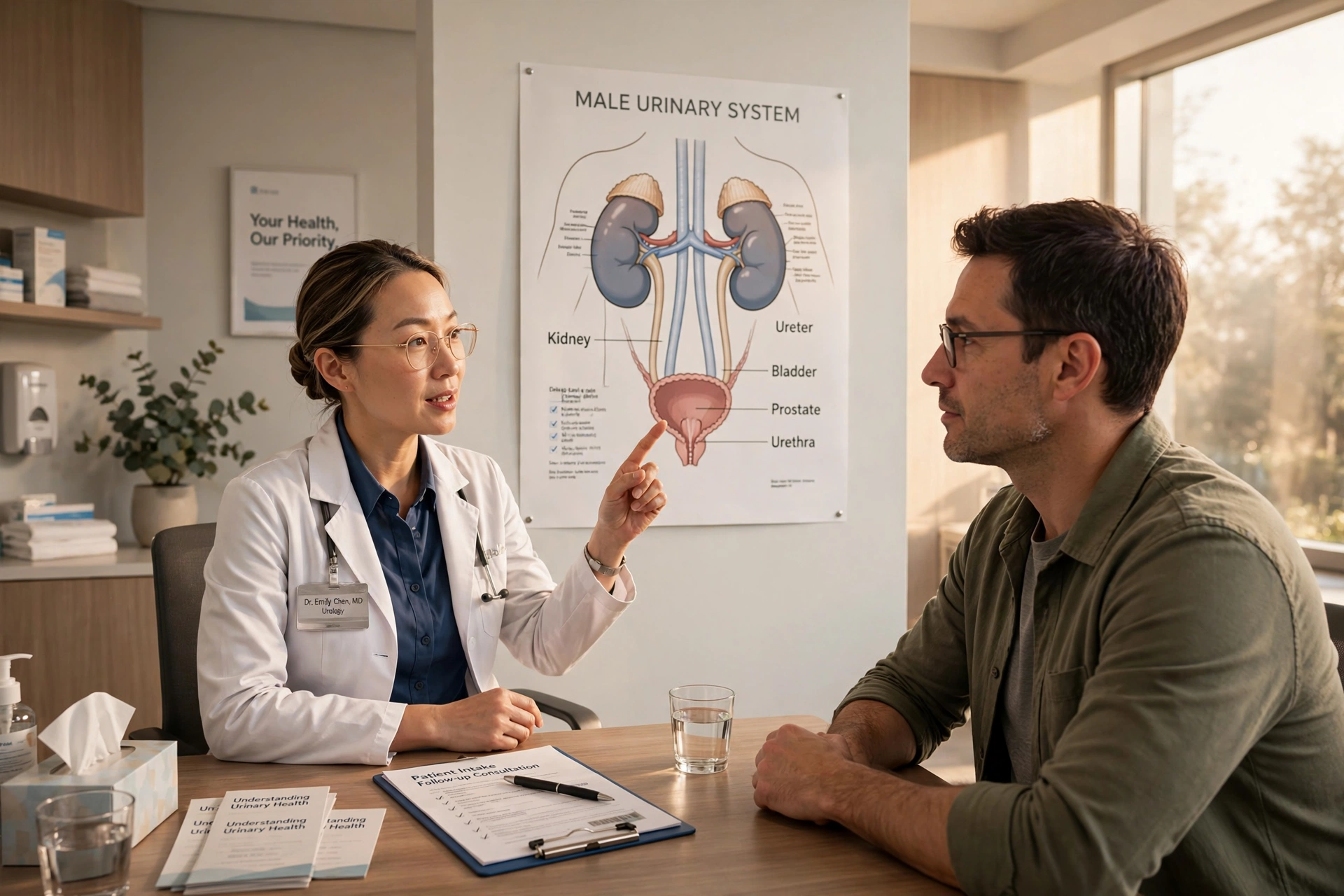
What to Expect at Your Urology Appointment
Many men delay care because they dread the appointment. In reality, it is brief, professional, and routine for the doctor. Here is what typically happens:
- History: The urologist asks when the tightness started, whether there is pain with erections or urination, any infections or discharge, and about diabetes or skin conditions.
- Examination: A quick visual and physical examination to grade the phimosis and check for scarring, inflammation, or lichen sclerosus. This takes a few minutes.
- Tests (sometimes): A urine test or swab if infection is suspected; blood sugar testing if diabetes is a possible driver.
Useful questions to ask: What grade is my phimosis? Is there scarring or lichen sclerosus? Am I a candidate for creams and stretching first? Which surgical option would you recommend, and why? What is the expected recovery time?
Recovery: Getting Back to Normal Life
Recovery expectations are a major source of anxiety, so here is the honest picture for each treatment tier:
- Creams and stretching: No downtime. You continue normal life throughout; improvement, when it comes, builds over weeks.
- Dilation devices: Mild, temporary discomfort as you size up. No time off work.
- Preputioplasty: A few days of soreness and swelling; back to desk work almost immediately.
- Laser circumcision: Return to work in two to three days; complete healing in two to three weeks.
- Conventional circumcision: Recovery in about one to two weeks; avoid sexual activity for four to six weeks or until your surgeon clears you.
After any surgical procedure, keep the area clean and dry, wear supportive underwear to reduce swelling, and expect nocturnal erections to be uncomfortable for the first week or two — this is normal and passes. Contact your doctor if you notice heavy bleeding, spreading redness, fever, or foul-smelling discharge.
On the question of sexual function: men often worry that treatment — especially circumcision — will harm their sex life. In practice, men treated for painful phimosis typically report improved sexual comfort, because sex without pain replaces sex with pain. Erection difficulties that persist after treatment are worth evaluating separately, since they often have independent causes of erectile dysfunction such as vascular disease or medication effects.

Cost and Insurance: Will Treatment Be Covered?
Few articles address this, but it decides treatment for many men. When phimosis causes symptoms — pain, infections, urinary difficulty — treatment is medically necessary, and most insurance plans cover the urology consultation, prescription creams, and surgical procedures including circumcision. What plans often do not cover is treatment done purely for preference (for example, choosing laser over conventional surgery for cosmetic reasons), so ask your clinic for an itemized estimate beforehand.
Practical steps: get the diagnosis documented as symptomatic phimosis in your medical record, confirm pre-authorization requirements with your insurer, ask the surgeon’s office about payment plans for any uncovered portion, and ask which phimosis treatment adults on your plan typically get approved without hassle.
Choosing the Right Treatment for You
Here is a simple decision framework matching each phimosis treatment adults choose to the severity it suits, based on what the clinical evidence supports:
- Mild tightness, no scarring, no pain (grades 0–2): Start with prescribed steroid cream plus gentle stretching. Reassess in four to six weeks.
- Moderate tightness with mild scarring, or cream failure: Consider a dilation device or preputioplasty if you want to preserve the foreskin.
- Severe scarring, lichen sclerosus, recurrent infections, or repeated treatment failures (grades 3–5): Circumcision — conventional or laser — is the definitive fix. Do not fear it; most men who delayed it for years say their only regret is waiting.
- Foreskin stuck behind the glans with swelling: Emergency department, immediately — this is paraphimosis, not a treatment decision.
Whatever phimosis treatment adults ultimately choose, the single most important step is the first one: booking the appointment. Urologists treat phimosis every week, the examination is brief, and the range of effective options is wider than it has ever been.
Frequently Asked Questions
Can phimosis be cured without surgery?
Often, yes — when it is mild and unscarred. Prescription steroid creams combined with gentle stretching resolve a large share of mild cases, and medical dilation devices offer another non-surgical route. However, creams cannot reverse established scarring or lichen sclerosus, and severe grades typically need a procedure.
How long does steroid cream take to work for phimosis?
Most doctors prescribe a course of several weeks, with stretching added after the first couple of weeks. If you see no meaningful improvement within four to six weeks of consistent use, return to your doctor rather than continuing indefinitely — persistent lack of progress usually means the tissue is scarred and a different approach is needed.
Does treating phimosis hurt?
Non-surgical treatments are essentially painless when done correctly — never force the foreskin, as tearing causes pain and scarring. Surgical options are performed under local (sometimes general) anesthesia, so the procedure itself is painless; expect manageable soreness for several days afterward, controlled with standard pain relief.
Will circumcision for phimosis affect my fertility or sex life?
Circumcision does not affect fertility — sperm production is entirely separate from the foreskin. Regarding sex life, men treated for painful phimosis generally report better sexual comfort afterward, since the pain that previously limited them is gone. Discuss any specific concerns with your urologist before deciding.
Is it normal to feel embarrassed about seeing a doctor for phimosis?
Completely normal — and completely unnecessary. Urologists evaluate genital conditions all day, every day; to them, phimosis is as routine as a dermatologist seeing acne. Most men are surprised at how brief and matter-of-fact the appointment is, and many wish they had gone years earlier.
Can phimosis come back after treatment?
Recurrence after circumcision is rare (under 5 percent). After cream-and-stretching treatment, some men experience gradual re-tightening if they stop maintenance stretching — which is why doctors recommend periodic gentle retraction even after symptoms resolve. Treating underlying drivers like diabetes and recurrent infections also reduces the chance of return. Your urologist can tailor follow-up so the phimosis treatment adults receive stays effective long term.
This article is for educational purposes only and is not medical advice. Phimosis treatment decisions should be made with a qualified healthcare professional who can examine you and recommend care suited to your situation. If you experience a foreskin stuck behind the glans with swelling or discoloration, seek emergency care immediately.