Sex After Prostate Biopsy: How Soon Is Safe and What Doctors Advise
If your urologist has scheduled you for a prostate biopsy, one of the questions you may feel awkward asking is also one of the most common: how soon is sex after prostate biopsy safe? You are far from alone in wondering. Clinicians report that intimacy concerns come up in a large share of biopsy consultations, yet discharge instructions often devote just one line to the subject — and different clinics sometimes give different answers.
This guide brings together what urologists actually advise, explains why the recommended wait varies, and walks you through the things nobody told you: the blood-in-semen timeline, how ejaculation affects PSA testing, and the red flags that mean you should call your doctor.
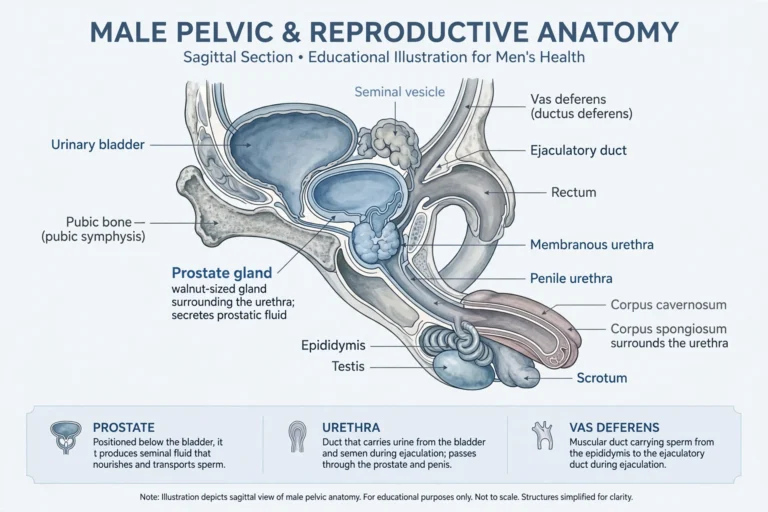
What a Prostate Biopsy Actually Involves
A prostate biopsy is the only test that can confirm a prostate cancer diagnosis. During the procedure, your urologist collects small samples of prostate tissue — usually 10 to 14 needle cores — which a pathologist examines under a microscope for cancer cells. The whole thing typically takes 10 to 20 minutes and is done as an outpatient procedure, often with local anesthetic.
There are two main ways the needle reaches the prostate, and the distinction matters for your recovery timeline:
- Transrectal biopsy: An ultrasound probe goes into the rectum, and the needle passes through the rectal wall into the prostate. This is the long-established approach.
- Transperineal biopsy: The needle passes through the perineum — the skin between the scrotum and the anus — guided by ultrasound. This approach has become increasingly preferred in many centers because it avoids the rectal wall.
Some centers use MRI-fusion guidance to target suspicious areas; recovery advice follows the access route used. Knowing which method you had is the single most useful piece of information when deciding when to resume intimacy. Understanding the procedure also helps you make sense of the sex after prostate biopsy recovery timeline your clinic provides.
Sex After Prostate Biopsy: The Timeline Doctors Recommend
Here is where the advice can look contradictory, so let us lay it out plainly. Most urologists recommend waiting at least 48 hours before any sexual activity, and many discharge instructions say to wait 3 to 7 days. Cleveland Clinic advises that there are no strict restrictions for uncomplicated biopsies beyond feeling well enough — while many urology clinics hand out post-procedure sheets that say “avoid sexual activity for 48 hours.” Both are consistent in practice: the first two days are the non-negotiable rest window, and the rest depends on how you feel and which biopsy type you had.
The table below summarizes the timelines most urologists use:
| Biopsy type | Minimum wait before sex or masturbation | Receptive anal sex |
|---|---|---|
| Transrectal | 48 hours to 1 week (follow your clinic’s instructions) | Wait 2 weeks, until fully healed |
| Transperineal | 48 hours to 1 week (often on the shorter end) | Wait 1 week, until bruising settles |
The simplest rule of thumb: if you feel well and have no active bleeding, pain, or fever, you can resume when you feel ready — usually within a week. If any symptoms are present, wait and check in with your urologist. Masturbation follows exactly the same timeline as partnered sex.
Why the two biopsy types differ
The sex after prostate biopsy timeline difference comes down to infection risk and tissue trauma. In a transrectal biopsy, the needle passes through the rectal wall, which carries bowel bacteria — a small but real risk of infection or sepsis exists, which is why you are usually given preventive antibiotics. The transperineal route avoids the rectum entirely, so the infection risk is dramatically lower (large NHS audits put serious infection after transperineal biopsy at roughly 1 in 500 men or fewer). The perineal skin punctures heal quickly, which is why the wait for receptive anal sex is shorter — one week versus two.
Why Conflicting Advice Exists (And Which to Follow)
If your friend was told 48 hours and your clinic says a week, neither is wrong. When men compare notes on sex after prostate biopsy, timelines differ because discharge instructions are deliberately conservative: they are written for the average patient, including those on blood thinners or with larger prostates. A urologist who knows your individual case may clear you sooner. The right move is simple — follow the written instructions your own clinic gave you, and if they seem unclear, call and ask. This is one of the most common phone queries urology nurses receive, so do not be embarrassed.
One reassuring data point: in the large ProtecT trial, about one third of men simply were not sexually active in the 35 days after biopsy, and most reported symptoms — including bleeding — as no problem or a minor one. Recovery is usually far less dramatic than the anxiety beforehand.
Blood in Semen After Biopsy: The Color Timeline Nobody Explains
Seeing blood in your ejaculate after a biopsy — a condition doctors call hemospermia — is expected and almost never dangerous. It is the surprise symptom of sex after prostate biopsy that catches most men off guard, simply because nobody warned them. But it can be alarming, and the color changes week to week in ways that confuse men. Most concerns about sex after prostate biopsy center on this very symptom, so knowing what each stage looks like brings real peace of mind. Here is what to expect:
- Days 1-7: Bright red or pink-tinged semen. This looks dramatic and can be a genuine shock the first time. It simply reflects fresh bleeding from the needle tracks in the gland.
- Weeks 2-4: Rusty brown or dark reddish-brown color. The blood is stale — aging blood changes color as iron oxidizes, exactly like a fading bruise. This is a sign of healing, not a new problem.
- Weeks 4-6 (sometimes up to 3 months): Faint brownish tint, gradually clearing. Some men notice it comes and goes, especially after more vigorous activity.
Importantly, blood in the semen is not harmful to your partner — urologists are explicit about this. That said, many couples prefer to use a condom until the bleeding stops, purely for comfort and cleanliness. If bleeding worsens instead of fading, or persists beyond about two to three months, contact your urologist rather than waiting it out.
A practical tip urologists confirm: regular, gentle ejaculation after the initial rest period may help clear old blood faster, since each ejaculation flushes stale blood from the gland.
Ejaculation and Your PSA Test: The Timing Most Men Miss
This is the gap almost no competitor article mentions, and it matters. Ejaculation can temporarily raise your PSA level. Most urologists advise avoiding ejaculation for about 48 hours before a PSA blood test, because a recently elevated reading can muddy the picture — and PSA accuracy is the whole reason you are in this process.
Why does this matter for sex after prostate biopsy? Because many men have follow-up PSA checks or repeat testing in the weeks after a biopsy, and some clinics schedule the biopsy itself based on a PSA reading. If you had sex in the day or two before a follow-up PSA draw, mention it to your doctor so the result is interpreted in context. Likewise, if your biopsy came back negative but your PSA remains a concern, your urologist may order repeat PSA testing — keep the 48-hour abstinence window in mind for those draws.
The biopsy-result waiting period itself (usually 1 to 3 days, sometimes up to a week) is worth planning for emotionally. Studies show this waiting window is one of the most stressful parts of the whole process. Being intimate with your partner during that time is not medically prohibited once you are past the initial rest period — but if anxiety is high, that is completely normal, and many couples find closeness without sex more comforting at this stage.

Erection Problems After a Prostate Biopsy: What’s Normal, What’s Not
Can a prostate biopsy cause erectile dysfunction? It is one of the most common fears about sex after prostate biopsy, so here is the honest, evidence-based answer: permanent ED from an uncomplicated biopsy is rare. NHS patient information for transperineal biopsy notes temporary erection difficulty in fewer than 1 in 100 men, and it typically resolves on its own. The nerve bundles controlling erections sit close to the prostate, but a diagnostic biopsy does not remove tissue near them the way surgery does.
That said, many men notice weaker erections or difficulty performing in the first days to weeks afterward. In the vast majority of cases, the cause is not the needle — it is anxiety, soreness, and the psychological weight of waiting for cancer results. Performance anxiety after a cancer scare is extremely common and very treatable.
If erection problems persist beyond a few weeks, or if you had significant pain or swelling during recovery, talk to your urologist — do not just assume it is permanent. Low mood and anxiety around this time can also quietly drain libido; if that sounds familiar, our guide on low libido and the common causes worth ruling out first walks through the medical and psychological factors step by step.
How to Handle Intimacy While You Wait
Recovery is not just physical. Returning to sex after prostate biopsy goes more smoothly for couples who plan the waiting period together:
- Talk about it directly. Saying “I need about a week before we resume, and there may be some blood at first” removes the mystery. Partners consistently say they would rather hear the facts than sense avoidance.
- Keep condoms handy. Not because the blood is dangerous — it is not — but because it keeps things comfortable and stress-free for both of you.
- Stay close without pressure. Cuddling, massage, and affectionate touch maintain connection without demanding performance. Many couples report this period actually improved their communication about intimacy — a theme we explore in our piece on mismatched libidos in marriage.
- Ease back in. When you do resume, gentler is better for the first week or two. If something hurts, stop and try again in a few days.
- Skip the alcohol. Most clinics advise avoiding alcohol for at least 48 hours after biopsy because it can dehydrate you and worsen urinary bleeding.
Warning Signs: When to Call Your Urologist
A prostate biopsy is a safe procedure, but complications — while uncommon — need prompt attention. Most men resume sex after prostate biopsy without ever seeing these issues, but knowing the warning signs protects you. Contact your urologist or seek urgent care if you experience any of the following:
- Fever above 101°F (38°C), shaking chills, or feeling generally unwell a few days after the procedure — possible infection, which needs prompt treatment.
- Heavy or increasing blood in the urine, large clots, or urine the color of red wine.
- Inability to urinate at all — about 1 in 100 men develop swelling that blocks urine flow and may need a temporary catheter.
- Rectal bleeding that will not stop, or severe pelvic or rectal pain that is getting worse rather than better.
- Burning when you urinate lasting more than five days.
When in doubt, call. Urology teams would always rather hear from you early than treat a complication late.
FAQs
These are the questions men ask most often about sex after prostate biopsy — answered the way your urologist would.
How long should I wait before having sex after a prostate biopsy?
Most urologists advise waiting at least 48 hours, and many recommend 3 to 7 days before resuming sex or masturbation. If you had a transrectal biopsy, wait two weeks before receptive anal sex; after a transperineal biopsy, one week is usually enough. Always follow your own clinic’s written discharge instructions, and wait longer if you still have bleeding, pain, or fever. Questions about sex after prostate biopsy are so common that urology nurses answer them daily — never hesitate to call.
Is blood in my semen dangerous for my partner?
No. Blood in semen after a biopsy is expected, very common, and not harmful to you or your partner, according to urologists. It is one of the most-searched topics around sex after prostate biopsy, and the medical consensus is reassuring. It looks bright red in the first week and rusty brown as it fades over 4 to 6 weeks. Many couples use a condom until it clears. See your urologist if bleeding worsens or lasts beyond two to three months.
Can I masturbate after a prostate biopsy?
Yes, on exactly the same timeline as partnered sex — when it comes to sex after prostate biopsy, your body does not distinguish. Wait at least 48 hours, ideally until you feel well with no bleeding or fever. Some urologists note that regular ejaculation after the rest period may help clear old blood from the gland faster.
Will a prostate biopsy cause erectile dysfunction?
Permanent ED from an uncomplicated biopsy is rare — NHS data puts temporary erection difficulty at fewer than 1 in 100 men for transperineal biopsy, usually resolving on its own. Worries about lasting impotence are a top concern for men reading about sex after prostate biopsy, but the evidence is firmly reassuring. Short-term problems are far more often caused by anxiety and the stress of waiting for results. If issues persist beyond a few weeks, talk to your urologist.
Does ejaculation affect PSA test results?
Yes, temporarily. Ejaculation can raise PSA levels for up to 48 hours, which is why urologists ask you to abstain before a PSA blood draw. This matters after a biopsy too: if you have follow-up PSA testing scheduled, keep the 48-hour window in mind and tell your doctor about any recent sexual activity so the result is interpreted correctly.
When should I call my doctor after a prostate biopsy?
Call promptly for fever over 101°F, shaking chills, heavy or increasing blood in the urine, large clots, inability to urinate, rectal bleeding that will not stop, or worsening pelvic pain. These can signal infection or other complications that need quick treatment. Routine bleeding in urine, stool, or semen that is light and gradually fading is normal and does not require a call. And once any red flags are ruled out, sex after prostate biopsy can resume on the normal timeline your clinic advised.
The bottom line: sex after prostate biopsy is safe far sooner than most men fear — usually within a week, sometimes within days — as long as you are healing normally and follow your clinic’s guidance. The blood in your semen will clear, temporary erection wobbles almost always settle, and open communication with your partner makes recovery easier. If anything feels off, call your urologist: when to see a doctor is always sooner rather than later.
This article is for educational purposes only and is not medical advice. It does not replace professional diagnosis or treatment. Always consult a qualified healthcare professional — such as your urologist or primary care doctor — about your individual situation, especially before resuming sexual activity after any medical procedure.