Granuloma Inguinale: A Rare STI Explained
Granuloma inguinale symptoms are easy to miss at first — the infection begins as a small, painless bump that many people dismiss as an ingrown hair or minor irritation. But this rare sexually transmitted infection, also known as donovanosis, progresses slowly and relentlessly if left untreated, destroying genital tissue over weeks and months. Because it is uncommon in most of the world today, many people — and even some clinicians — have never encountered it. This guide explains what granuloma inguinale is, how granuloma inguinale symptoms develop, how the infection is diagnosed and treated, and what to do if you or a partner may have been exposed.
What Is Granuloma Inguinale?
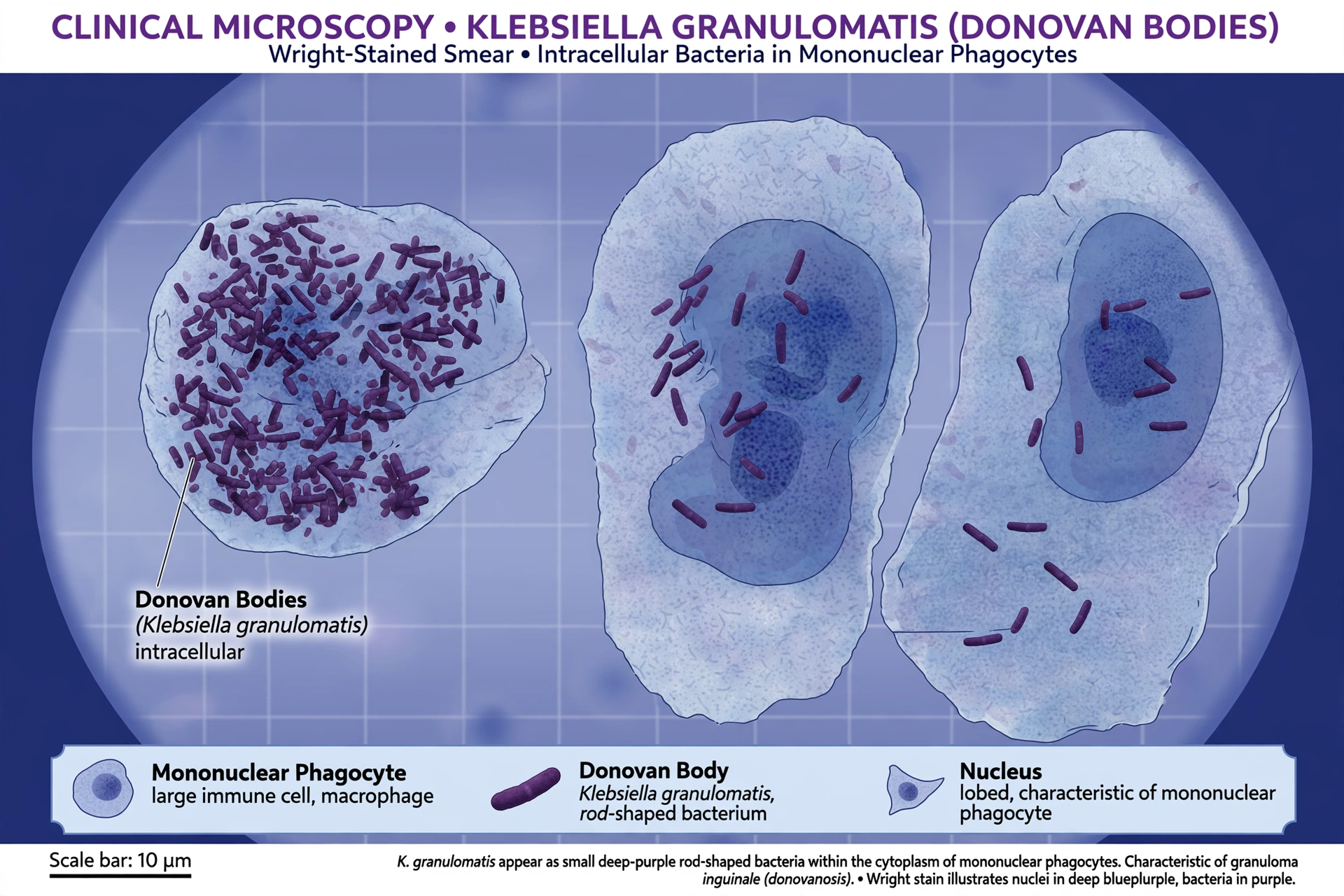
Granuloma inguinale, called donovanosis after the Donovan bodies seen under the microscope, is a chronic bacterial infection of the genital and groin region caused by the bacterium Klebsiella granulomatis (formerly classified as Calymmatobacterium granulomatis). It spreads through sexual contact — most often vaginal or anal intercourse with an infected partner — and is considered a sexually transmitted infection.
The infection is endemic in certain tropical and subtropical regions, including parts of India, South Africa, New Guinea, Indonesia, the Caribbean, and Guyana. In the United States and most of Europe, it is rare — roughly 100 cases are reported per year in the U.S., typically in people who have recently traveled to or arrived from endemic regions. The condition most often affects sexually active adults between the ages of 20 and 40, and it is reported more frequently in men than in women.
Granuloma Inguinale Symptoms: How They Develop
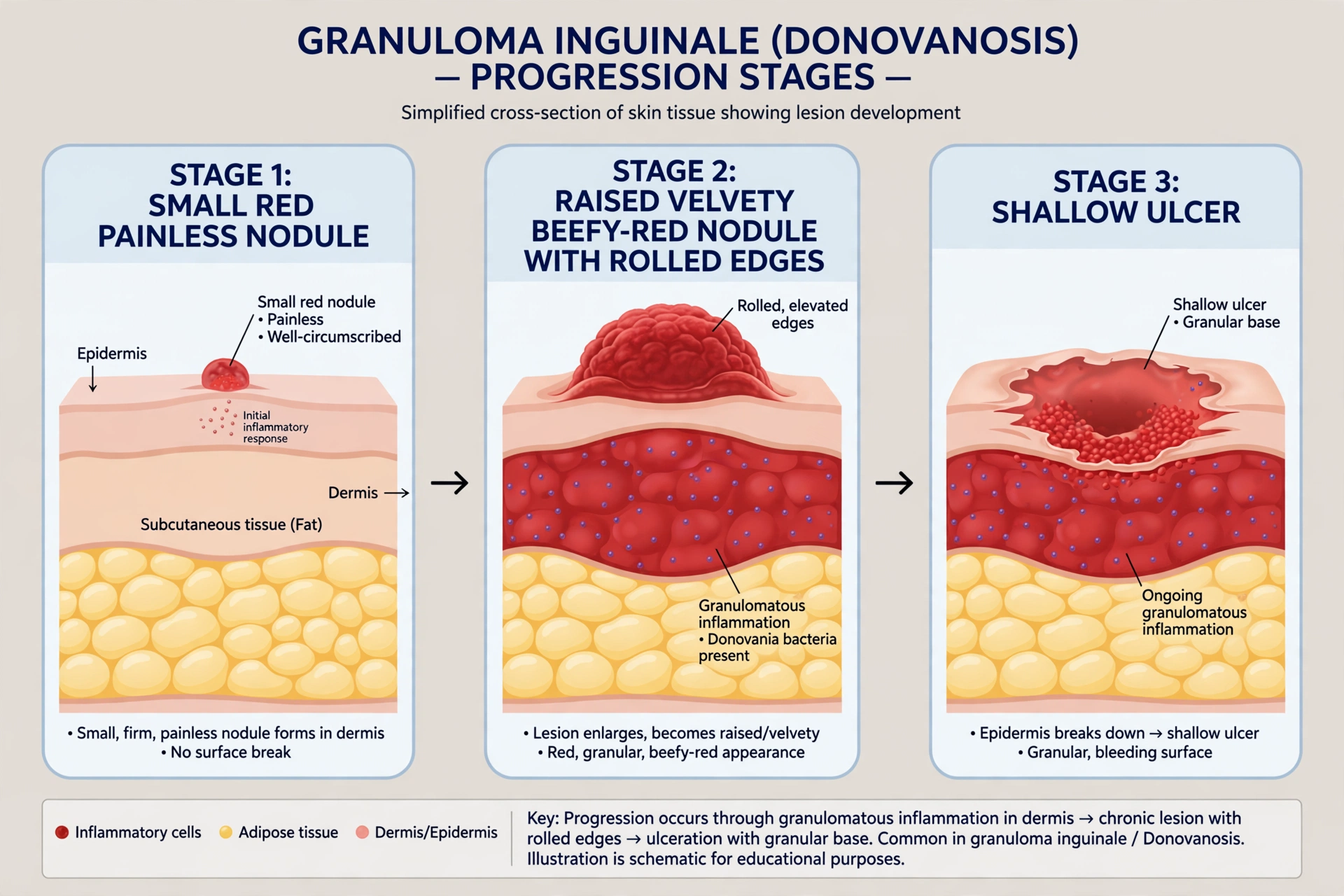
Granuloma inguinale symptoms usually appear between one and twelve weeks after exposure, although in some cases the incubation period can stretch as long as a year. The onset is gradual, which is one reason the infection can be overlooked. The disease progresses through recognizable phases:
Phase 1: Painless nodules
The first sign is one or more small, painless red bumps or nodules on or near the genitals — commonly on the shaft of the penis, the labia, the perineum, or the groin folds. These nodules feel soft and slightly velvety and may bleed very easily if touched or bumped. Because they do not hurt, many people do not seek care at this stage.
Phase 2: Growing, eroding lesions
The nodules slowly enlarge, turn pink to beefy-red, and begin to erode. They break down into shallow ulcers with a characteristic appearance: a raw, friable, beefy-red base with rolled or raised edges of firm granulation tissue. The ulcers may develop a foul-smelling discharge, and a secondary bacterial infection can set in, which is often when the area becomes painful. Lesions spread outward by direct contact (autoinoculation) and can extend from the genitals to the lower abdomen and thighs.
Phase 3: Deep tissue damage and scarring
Without treatment, the ulcers continue to expand and destroy surrounding tissue. Extensive scarring forms, lymphatic channels can become blocked, and complications such as genital swelling (genital elephantiasis) or narrowing of the vagina, anus, or urethra may develop. The sores will not heal on their own — the infection persists and worsens until treated with antibiotics.
Lesions can also appear in extragenital locations. Sores may develop around the anus after anal intercourse or around the mouth after oral contact with an infected partner. Rarely, the infection spreads through the pelvis to involve the uterus or cervix, and in very rare cases bacteria reach distant sites such as bone or liver through the bloodstream.
The Four Lesion Types Doctors Recognize
Clinicians classify granuloma inguinale lesions into four morphological types, which helps explain why granuloma inguinale symptoms can look different from person to person:
- Ulcerovegetative: the most common form — beefy-red, bleeding ulcers with rolled edges.
- Hypertrophic (verrucous): raised, wart-like, irregular masses that can be mistaken for other growths.
- Necrotic: destructive, foul-smelling ulcers with dead tissue, often accompanied by secondary infection.
- Cicatricial (sclerotic): dry, scarred lesions with fibrotic tissue, sometimes with narrowing of adjacent passages.
Knowing these variants matters because granuloma inguinale is frequently misdiagnosed — painless genital ulcers are often assumed to be syphilis, especially in regions where the infection is uncommon.
Pseudobubo: A Telltale Sign
Among granuloma inguinale symptoms, one of the most distinctive features is the pseudobubo — a swelling in the groin that looks like the swollen lymph nodes (buboes) seen in other STIs but is actually formed by a subcutaneous granuloma spreading beneath the skin. True inguinal lymph node swelling is typically mild or absent, which helps clinicians distinguish granuloma inguinale from infections like chancroid or lymphogranuloma venereum, where genuine buboes are common.
How Granuloma Inguinale Differs From Other Genital-Ulcer STIs
Several STIs cause genital sores, and telling them apart matters for getting the right treatment. Here is how granuloma inguinale symptoms compare with the other main ulcer-causing STIs:
| Feature | Granuloma inguinale | Syphilis (chancre) | Chancroid | Genital herpes |
|---|---|---|---|---|
| Cause | Klebsiella granulomatis | Treponema pallidum | Haemophilus ducreyi | HSV-1 or HSV-2 |
| Pain | Usually painless (painful if secondarily infected) | Painless | Usually painful and soft | Painful blisters |
| Ulcer appearance | Beefy-red, rolled edges, bleeds easily | Clean, firm, punched-out edge | Ragged, soft, undercut edges | Clusters of small blisters that ulcerate |
| Lymph nodes | Mild or absent (pseudobubo possible) | Firm, painless swelling | Painful, soft buboes | Tender nodes during first outbreak |
| Incubation | 1–12 weeks (up to a year) | ~3 weeks | 3–7 days | 2–12 days |
Because these infections can look similar, laboratory testing — not appearance alone — is essential for a correct diagnosis. Chancroid, another genital-ulcer STI, is one of the main conditions a clinician will rule out.
Causes and Risk Factors
Granuloma inguinale symptoms are caused by infection with Klebsiella granulomatis, which spreads through direct contact with open sores — almost always during sexual activity. In rare cases, transmission can occur through oral sex, non-sexual skin-to-skin contact, or from mother to baby during childbirth.
Risk factors include:
- Sexual contact with a partner who lives in or has recently traveled to an endemic region.
- Being aged 20–40 and sexually active (the age group most commonly affected).
- Multiple recent sexual partners or unprotected sexual activity.
- A weakened immune system, such as with HIV — donovanosis is also a recognized risk factor for acquiring HIV, because open sores provide an entry point for the virus.
- Delayed medical care, which allows lesions to spread by autoinoculation.
How Granuloma Inguinale Is Diagnosed
Diagnosis starts with a sexual history and a physical examination of the lesions. Because the appearance overlaps with syphilis and other ulcerative STIs, a clinician will typically confirm the diagnosis with laboratory testing:
- Tissue scraping or biopsy: a sample from the ulcer is examined under a microscope. The hallmark finding is Donovan bodies — large immune cells (mononuclear phagocytes) whose cytoplasm contains rod-shaped bacteria that stain deep purple with Wright or Giemsa stain.
- Blood tests: to rule out syphilis, HIV, and other co-existing STIs, which commonly occur alongside donovanosis.
- Travel and exposure history: recent travel to or partners from endemic regions raises clinical suspicion.
The presence of Donovan bodies in a tissue sample confirms the diagnosis.

Treatment and Recovery: What to Expect
Granuloma inguinale symptoms usually clear with antibiotics — the infection is curable with antibiotic therapy. Treatment guidance, as summarized in Cleveland Clinic’s clinical overview of granuloma inguinale, recommends antibiotic therapy for at least three weeks and until all lesions have completely healed — the duration matters because the infection is slow-growing and relapses if treatment stops too early. Commonly used antibiotics include azithromycin, doxycycline, trimethoprim-sulfamethoxazole, erythromycin, and ciprofloxacin; your clinician will choose the regimen that fits your situation, as exact drugs and doses are a medical decision, not a self-treatment choice.
Signs that treatment is working usually appear within about a week — the ulcers stop expanding and begin to fill in. However, follow-up matters: clinicians typically schedule check-ins for around six months after the sores heal, because granuloma inguinale can relapse even after apparent cure. If lesions do not improve as expected, further testing is warranted to rule out an underlying problem or a misdiagnosis.
Advanced or extensive cases may leave permanent scarring, loss of skin pigmentation, or tissue damage, which is why early treatment gives the best outcome. In rare cases with severe destruction or fistulas that do not respond to medication, surgical repair may be considered after the infection itself is cured.
Partner Management: An Often-Missed Step
One gap in many discussions of granuloma inguinale is what happens after diagnosis — and partner care is essential. Sexual partners from the preceding months should be examined by a clinician, counseled on safer sex, and offered testing and treatment if needed, even if they have no symptoms. Because granuloma inguinale symptoms can take months to appear, a partner who appears unaffected may still be infected. Abstaining from sexual activity until both partners have completed treatment and all lesions have healed prevents reinfection. If disclosing an STI diagnosis feels difficult, practical guidance on how to disclose an STI diagnosis to a partner can help you have that conversation calmly and honestly.
Prevention
The only certain way to prevent granuloma inguinale is to avoid sexual contact, but consistent safer-sex practices substantially reduce risk:
- Use condoms correctly for the entire duration of every sexual activity — vaginal, anal, and oral.
- Limit the number of sexual partners and consider STI screening before beginning a new sexual relationship.
- Avoid sexual contact with anyone who has visible genital sores, and seek prompt medical evaluation if sores appear after travel to endemic regions.
- Talk with a clinician about post-exposure prevention options and regular STI screening if you are at higher risk.
Frequently Asked Questions
Is granuloma inguinale curable?
Yes. Granuloma inguinale is curable with antibiotics, usually given for at least three weeks and until all lesions have fully healed. The earlier treatment starts, the better the outcome and the less scarring. However, relapse is possible, so clinicians typically recommend follow-up visits for about six months after the sores resolve.
How long do granuloma inguinale symptoms take to appear?
Symptoms generally appear between one and twelve weeks after exposure to the bacteria, though researchers note the true incubation period is not fully established and symptoms can occasionally take up to a year to show up.
Does granuloma inguinale hurt?
The nodules and early ulcers — the earliest granuloma inguinale symptoms — are characteristically painless, which is why the infection is often ignored in its early stages. Pain usually develops only if a secondary bacterial infection sets in or when the disease is advanced.
Can granuloma inguinale be mistaken for syphilis?
Yes — this is a well-known diagnostic pitfall. Both cause painless genital ulcers, and in regions where donovanosis is rare, clinicians may initially suspect syphilis. Laboratory testing that identifies Donovan bodies in a tissue sample confirms granuloma inguinale, and blood tests help distinguish between the two.
Can you get granuloma inguinale from oral sex?
In rare cases, yes. Lesions can appear around the mouth after oral contact with an infected partner, just as sores can appear around the anus after anal intercourse. Vaginal and anal intercourse remain the most common routes of transmission.
Is granuloma inguinale related to HIV?
Granuloma inguinale is a recognized risk factor for HIV transmission, because the open, bleeding ulcers provide an easy entry point for the virus. People with weakened immune systems, including those living with HIV, may also experience more severe or prolonged disease. Clinicians routinely test for HIV when donovanosis is diagnosed.
Why is granuloma inguinale so rare now?
The infection responds well to antibiotics, so it has declined sharply in countries with good access to medical care — only about 100 cases per year are reported in the United States. It persists mainly in tropical and subtropical regions with limited healthcare access, and most cases seen in non-endemic countries involve recent travel to those areas.
When to See a Doctor
Seek prompt medical care if you notice granuloma inguinale symptoms such as a painless bump or sore on or near your genitals, groin, or anus that does not heal within a couple of weeks — especially if you or a partner have recently traveled to tropical or subtropical regions. Bring up any recent travel or new partners, because that history helps clinicians consider infections they rarely see. Early evaluation leads to earlier treatment, less tissue damage, and a lower chance of passing the infection on.
Medical Disclaimer
This article is for educational purposes only and is not medical advice. It cannot diagnose any condition or replace the judgment of a qualified clinician. If you have symptoms or concerns about a sexually transmitted infection, please see a healthcare professional for proper evaluation and testing. Never start, stop, or change medication based on information in this article.