Nighttime Erections: What They Mean
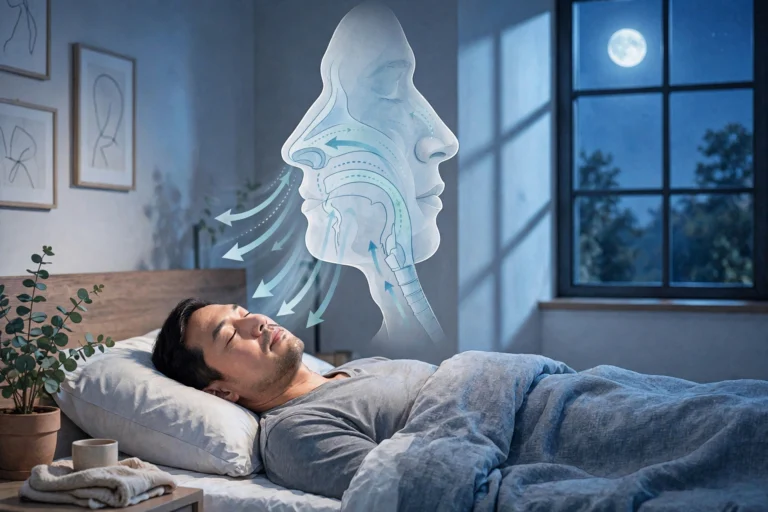
Waking up with an erection is one of the most common — and most misunderstood — experiences in male health. Understanding nocturnal erections can tell you a great deal about your vascular system, your nerves, your hormones, and the quality of your sleep. Doctors call these episodes nocturnal penile tumescence (NPT), and they are a normal, involuntary part of male physiology that happens every night, in boys and men of nearly all ages.
Most men notice only the final episode — the one that is still present when the alarm goes off, casually called “morning wood.” But that single morning erection is just the tip of the iceberg. Beneath it lies a nightly rhythm of 3 to 5 erections that serve as a built-in health check performed by your body while you sleep. This article explains what nocturnal erections mean, the science behind why they happen, what changes in their pattern can signal, and when a change is worth discussing with a clinician.
What Are Nocturnal Erections?
Nocturnal erections are spontaneous, involuntary erections that occur during sleep. Medically known as nocturnal penile tumescence (NPT) — and sometimes called sleep-related erections — they are not a response to erotic thoughts, dreams, or stimulation. They are a physiological function of the male reproductive system, driven by the brain, the nervous system, blood vessels, and hormones working in concert while you rest.
During a typical night, a healthy adult man experiences 3 to 5 episodes, each lasting roughly 20 to 35 minutes. Because they coincide with REM (rapid eye movement) sleep, and because people most often wake from or shortly after a REM period, the last episode of the night is the one you notice in the morning. You may have had several more during the night without ever waking up for them.
Nocturnal erections begin remarkably early in life — ultrasound studies have observed them in male fetuses, and they are documented in infants, children, and teenagers, not just adults. They remain common through middle age and beyond, though frequency and firmness tend to change gradually with age.
The nocturnal erections: Why They Happen
To understand the meaning of nocturnal erections, it helps to know what causes them. Researchers have identified several overlapping mechanisms, and no single one explains every episode. Together, they paint a picture of a healthy system cycling through its checks overnight.
1. REM sleep and the norepinephrine drop
The strongest association is with REM sleep, the dream-rich stage when the brain is highly active but the body is deeply relaxed. During waking hours, the neurotransmitter norepinephrine helps keep penile blood vessels constricted, which prevents erections. When the brain enters REM sleep, norepinephrine levels fall sharply, and the “brake” on blood flow releases. Blood flows into the erectile tissue, producing an erection without any conscious input. When you wake up during or just after a REM phase — which is common in the early morning — you catch the episode in progress. That is morning wood.
2. The parasympathetic nervous system takes over
Erections are primarily a parasympathetic (“rest and digest”) function. During sleep — and especially during REM — the parasympathetic nervous system dominates, while the sympathetic (“fight or flight”) system quiets down. This autonomic shift is one reason the body is primed for erections at night and why performance anxiety, which revs up the sympathetic system, can interfere with erections during waking hours but not with nocturnal ones. That distinction is clinically useful, as we will see below.
3. The testosterone peak
Testosterone secretion follows a daily rhythm, rising during sleep and typically peaking in the early morning. Higher overnight testosterone supports both the occurrence and the firmness of nocturnal erections. Men with low testosterone symptoms often report fewer or weaker morning erections, and research has shown that testosterone therapy in men with hypogonadism can restore NPT frequency.
4. The sacral reflex arc
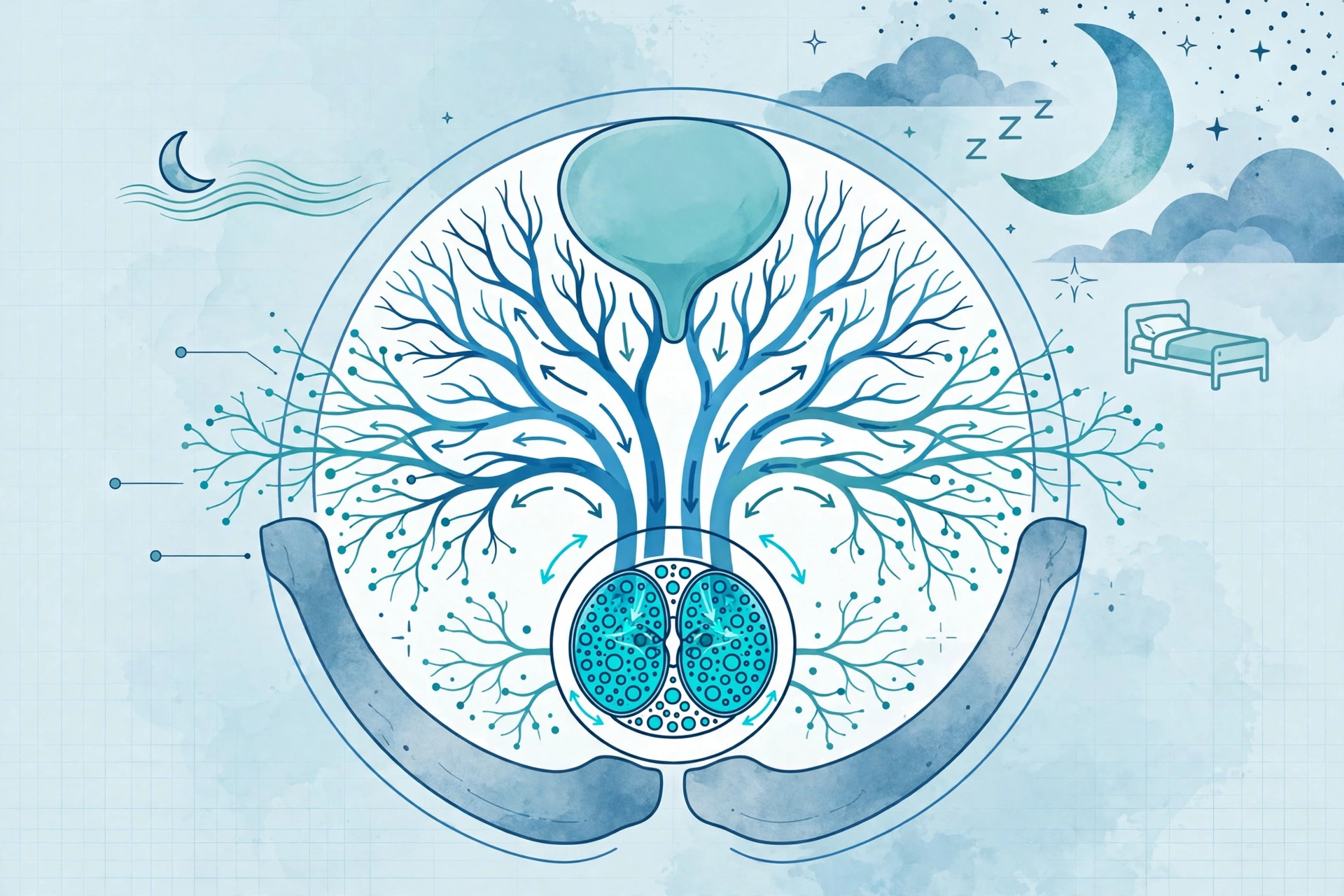
A full bladder can contribute to morning erections. The bladder and the erectile response share nerve pathways in the sacral spinal cord (the S2–S4 segments). Pressure from a full bladder can stimulate these shared pathways, producing what urologists sometimes call a reflex erection. This is one reason the morning episode, after a night of urine accumulation, tends to be the most noticeable. Rolling over in sleep or incidental friction can add to the effect, but these are minor contributors compared to the REM-driven mechanism.
5. The oxygenation theory: overnight maintenance
One of the most interesting hypotheses in urology — and one most popular articles skip — is that nocturnal erections serve a maintenance function. The erectile tissue of the penis is normally in a relatively low-oxygen state. Regular episodes of erection flood the tissue with oxygenated arterial blood, which may keep the smooth muscle and blood vessels healthy and prevent fibrosis (scarring) of the tissue. In this view, your body runs a nightly “system test” that keeps the machinery in working order — and the absence of that test, over time, may itself contribute to erectile problems.
What Nocturnal Erections Tell You About Your Health
So what is the practical meaning of nocturnal erections? For clinicians, they are one of the simplest windows into erectile health:
- Regular nocturnal erections generally indicate that the blood vessels, nerves, and hormonal systems involved in erections are functioning well. Their presence is reassuring.
- A gradual decline with age is normal. Testosterone falls slowly from the 40s onward, and NPT episodes typically become fewer and softer over the decades — a gradual slope, not a cliff.
- A sudden disappearance — especially in a younger man — deserves attention. Because nocturnal erections are involuntary, they are not affected by performance anxiety or stress in the moment the way waking erections can be. A man who gets reliable nocturnal erections but struggles during partnered sex likely has a psychological or situational component to his erectile dysfunction causes; a man who has lost both may have an underlying physical cause such as vascular disease, nerve damage, a hormonal problem, or a sleep disorder.
This logic is so well established that urologists formalized it into nocturnal penile tumescence testing (NPT testing). In a sleep-lab or at-home version of the test, a device (historically the Rigiscan) records the number, duration, and rigidity of erections across the night. Robust nocturnal erections during the test point toward a psychological cause of ED; absent or weak ones point toward an organic cause. It remains one of the classic tools for sorting out “is it in the body or in the mind” — a nuance most online articles never mention.
Nocturnal Erections Across the Lifespan
Expectations change by decade. Here is what is typical:
| Life stage | Typical pattern |
|---|---|
| Infancy and childhood | Nocturnal erections occur and are completely normal; they are a reflex, not a sign of anything concerning. |
| Puberty through the 30s | Peak frequency — often nightly and firm, driven by high testosterone and abundant REM sleep. |
| 40s and 50s | Gradual decline in frequency and firmness as testosterone eases downward; still regularly present in healthy men. |
| 60s and beyond | Less frequent and softer, but many healthy older men still experience them; persistence is a good sign of vascular health. |
The key word is gradual. A slow fade across years is physiology. A sudden stop over weeks or months is a signal to talk to a doctor — particularly because ED in younger men can be an early marker of cardiovascular issues such as high blood pressure or diabetes.
What Can Reduce or Stop Nocturnal Erections
Several factors can dampen the nightly rhythm. Most are modifiable:
- Poor sleep quality. Nocturnal erections depend on reaching REM sleep. Sleep fragmentation — from insomnia, shift work, late-night screen use, or alcohol (which suppresses REM in the first half of the night) — directly reduces NPT. Men with sleep apnea and erectile dysfunction frequently have fewer nocturnal erections, and studies show that treating apnea with CPAP can restore them.
- Low testosterone. Hypogonadism and age-related hormonal decline reduce frequency and rigidity.
- Medications. Several drug classes can suppress NPT, including certain antidepressants (especially SSRIs), some blood pressure medications, antihistamines, hormonal treatments, and some chemotherapy drugs. Never stop a prescribed medication because of this — discuss alternatives with your doctor if you notice a change.
- Chronic stress, anxiety, and depression. These disrupt both sleep architecture and hormonal balance, and morning erections and ED are closely linked through these pathways.
- Vascular and metabolic disease. Diabetes, atherosclerosis, and hypertension damage the same blood vessels that nocturnal erections depend on.
- Smoking and heavy alcohol use. Both impair vascular function and sleep quality.

How to Support Healthy Nocturnal Erections
You cannot will yourself to have nocturnal erections — they are involuntary — but you can protect the conditions that produce them:
- Protect your REM sleep. Keep a consistent sleep schedule, aim for 7–9 hours, limit alcohol in the evening (it fragments REM), and address snoring or suspected sleep apnea. Better sleep is the single highest-yield lever.
- Exercise regularly. Aerobic exercise improves vascular health and sleep quality, both of which support NPT. Our guide to exercise and sexual health covers the evidence in detail.
- Manage blood pressure, blood sugar, and cholesterol. The vessels involved are small and show damage early — nocturnal erections are, in a sense, a nightly vascular stress test.
- Review medications with your doctor if you notice a change after starting a new prescription.
- Do not smoke. Smoking is one of the most consistent vascular risk factors for erectile problems of all kinds.
Myths About Nocturnal Erections — Debunked
| Myth | Reality |
|---|---|
| They mean you were having a sexual dream. | Most nocturnal erections occur without any erotic dream content; they are driven by sleep physiology, not fantasy. |
| They mean you are aroused and want sex. | They are involuntary and unrelated to conscious desire. A partner should not read them as a signal. |
| Only young men get them. | They occur across the lifespan, from infancy into old age, though frequency changes with age. |
| Losing them for a few days means something is wrong. | Occasional absence is completely normal — illness, a bad night’s sleep, or stress can pause them temporarily. |
| You can (or should) try to stop them. | There is no way to prevent them, and no reason to try; they are a sign of a healthy system. |
When to See a Doctor
Most variation in nocturnal erections is normal. Seek medical advice if you notice any of the following:
- A sudden, persistent loss of morning erections over weeks, especially if accompanied by difficulty with erections during sexual activity.
- Nocturnal or morning erections that are painful.
- An erection that lasts more than 4 hours — this is priapism, a medical emergency that can damage penile tissue.
- Loss of NPT following the start of a new medication.
- Associated symptoms such as low energy, reduced libido, or signs of sleep apnea (loud snoring, daytime sleepiness).
A clinician will typically ask about your sleep, medications, mood, and general health, and may check testosterone levels or refer you to a urologist or sleep specialist. Authoritative overviews of the topic are available from sources such as the Mayo Clinic’s guide to erectile dysfunction and the National Institute of Diabetes and Digestive and Kidney Diseases.
Frequently Asked Questions
What is the meaning of nocturnal erections?
The meaning of nocturnal erections is straightforward: they are involuntary erections during sleep, medically called nocturnal penile tumescence (NPT), that signal healthy blood flow, nerve function, and hormonal balance. Most men have 3 to 5 episodes per night, mainly during REM sleep, and only notice the last one on waking.
Are nocturnal erections a sign of good health?
Yes. Regular nocturnal erections generally indicate that the vascular, neurological, and hormonal systems involved in erections are working properly. Their sudden disappearance — rather than their presence — is what usually warrants attention.
Why do I get erections at night but not during sex?
Because nocturnal erections are involuntary, they bypass performance anxiety, stress, and other psychological factors that can interfere with erections during waking sexual activity. This pattern often suggests a psychological or situational component, and it is one reason urologists use overnight erection testing to help distinguish psychological from physical causes of ED.
Is it normal to stop getting morning erections?
A gradual decline with age is normal and expected. Occasional absence — after a poor night’s sleep, during illness, or under stress — is also normal. What is not typical is a sudden, persistent loss, especially in younger men; that is worth discussing with a doctor.
Do women experience anything similar?
Yes. People with a clitoris can experience nocturnal clitoral tumescence — increased blood flow to the clitoris during REM sleep — the female counterpart of the same physiological process.
Can poor sleep cause fewer nocturnal erections?
Absolutely. Nocturnal erections depend on reaching REM sleep, so anything that fragments sleep — insomnia, sleep apnea, shift work, alcohol, or certain medications — can reduce them. Treating the underlying sleep problem often restores the normal pattern.
Should I track my nocturnal erections?
Casual awareness is enough for most men — simply noticing whether morning erections are still a regular occurrence. Formal overnight monitoring exists (urologists have used devices that record nighttime erections to evaluate ED), but it is a clinical test ordered by a doctor, not something to rig up at home. If you are concerned, the useful step is a medical appointment, not self-testing.
When is a nighttime erection a medical emergency?
If an erection lasts longer than 4 hours, with or without stimulation, seek emergency care immediately. This condition, priapism, can cause lasting tissue damage. Painful nocturnal erections should also be evaluated by a clinician.
Medical disclaimer: This article is for educational purposes only and is not medical advice. Nocturnal erections are a normal physiological function, but this content cannot diagnose any condition in any individual. If you have concerns about changes in your erections, sleep, or sexual health, please consult a qualified clinician for personalized evaluation and care.