New Dads Lose Their Sex Drive Too: Causes, Science, and Recovery
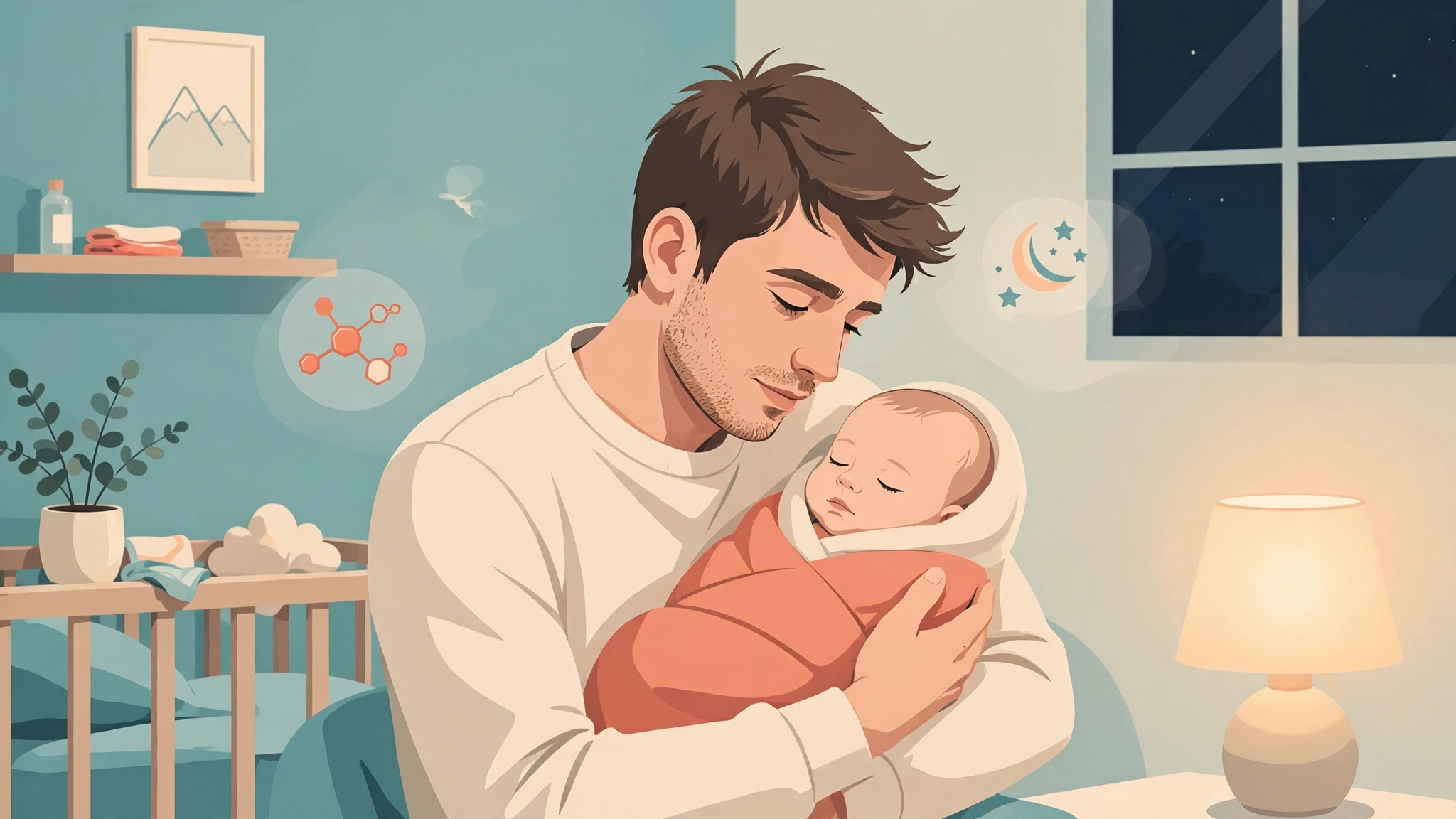
If you have just become a father and your interest in sex has quietly disappeared, you are far from alone. While low desire after childbirth is usually framed as a mother’s experience, new dads low sex drive is real, measurable, and far more common than most men expect. Research tracking hundreds of new fathers has found that men’s testosterone falls by roughly a quarter to a third within the first years of fatherhood — and desire falls right along with it.
This is not a character flaw, a sign your marriage is failing, or proof that you are less of a man. For most fathers, a fading libido after a baby arrives is the body’s expected response to a radical new job: protecting and bonding with a newborn. This article helps you distinguish the normal, temporary dip most new fathers experience from a low sex drive worth discussing with a doctor — because new dads low sex drive sits at the intersection of biology and circumstance, and knowing which factors are driving yours points at the right recovery steps.
Why New Dads Low Sex Drive Is More Common Than You Think
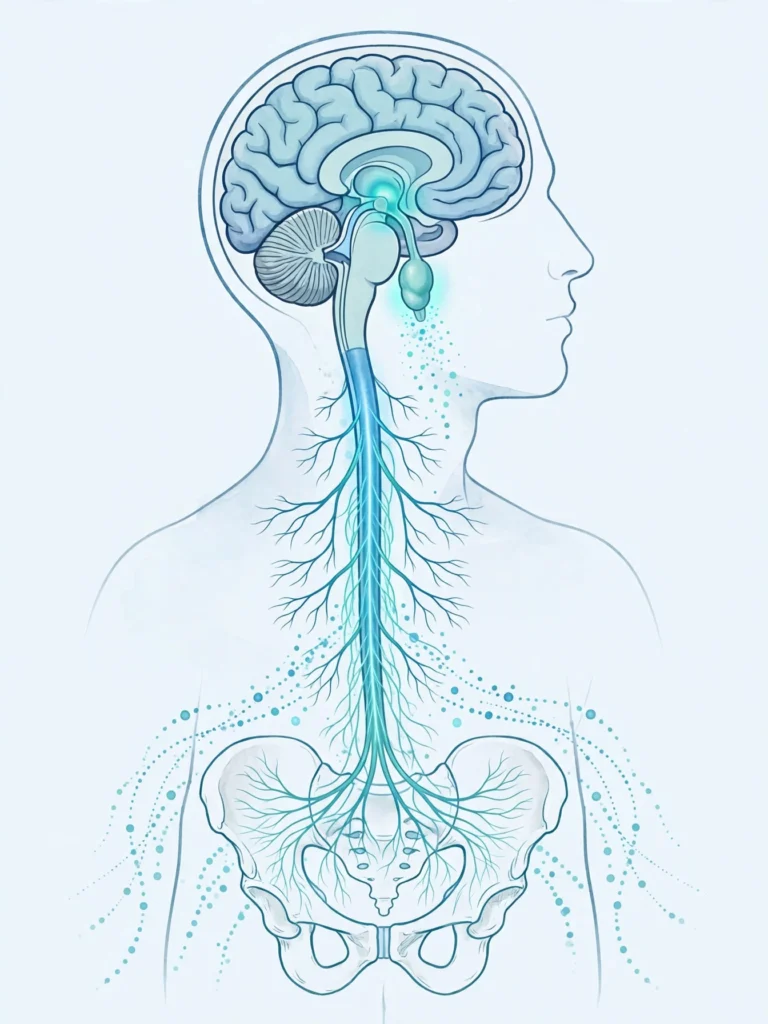
Conversations about desire after birth usually center on the mother — and for good reason: pregnancy, childbirth, and breastfeeding are enormous physiological events. But fathers undergo their own biological transition, described by researchers as one of the most dramatic hormonal shifts of adult male life.
The strongest evidence comes from a long-running study in Cebu, Philippines, published in the Proceedings of the National Academy of Sciences. Researchers led by Lee Gettler measured testosterone in 624 young men at about age 21, then followed them for 4.5 years.
Men who became fathers saw morning testosterone fall by a median of 26% and evening levels by 34%, while men who stayed single and childless showed only the small age-related dip expected in any population.
Crucially, this was not because low-testosterone men are more likely to become fathers — the opposite was true. The men who started with the highest testosterone were the most likely to become dads; fatherhood itself pulled the hormone down.
The fall tracked timing and involvement: fathers of newborns one month old or younger showed the largest declines, and dads who spent three or more hours a day on hands-on childcare ended up lower than uninvolved dads. Scientists read this as a biological trade at the root of new dads low sex drive — the body dials down the chemistry of mating competition and dials up the chemistry of caregiving.
The Hormonal Science Behind New Dads Low Sex Drive
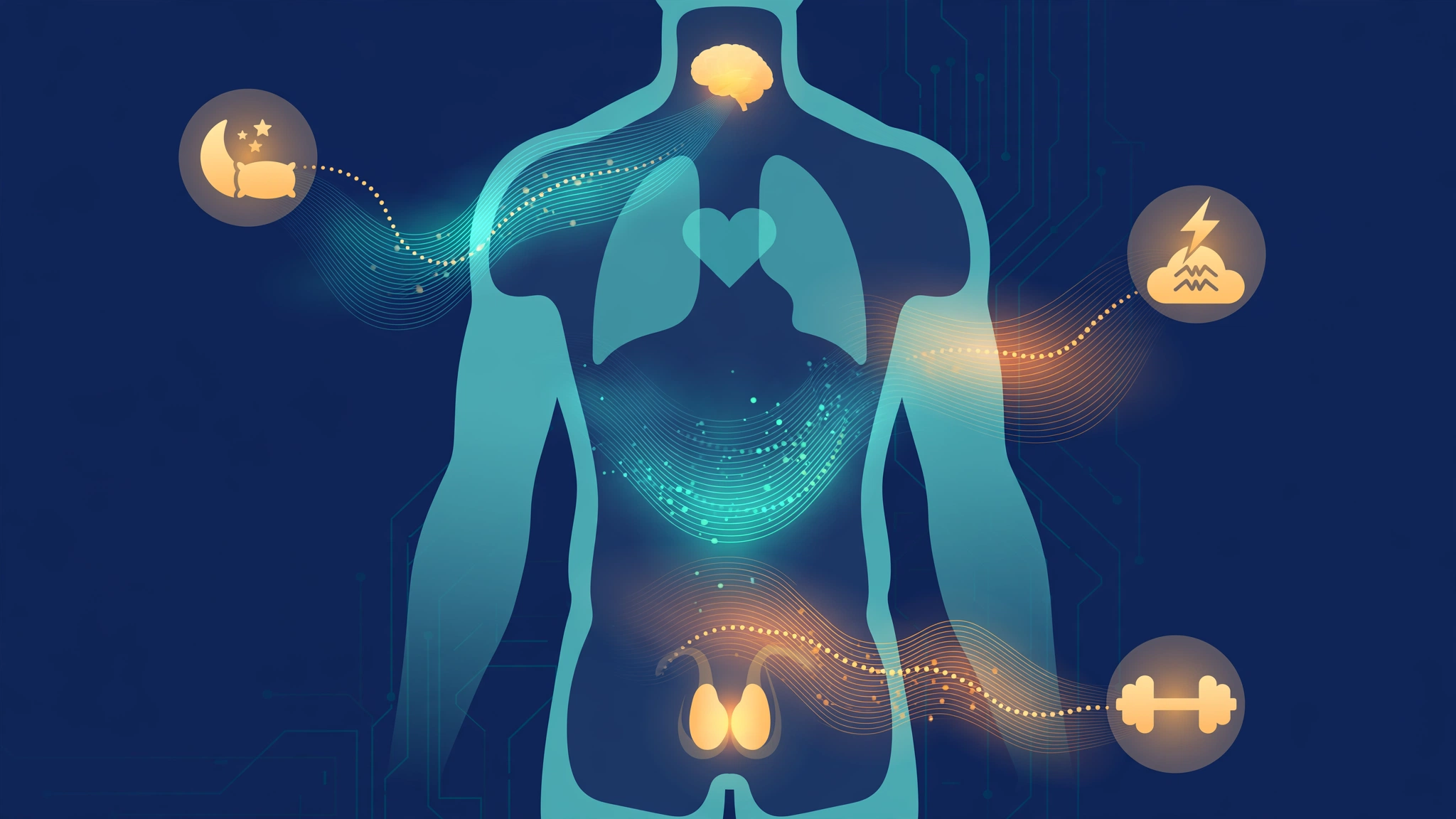
When researchers talk about new dads low sex drive, they describe a layered hormonal shift rather than a single cause. Each layer points to a different part of the recovery plan.
Testosterone falls — and desire follows
Testosterone is the primary hormone behind male sexual desire. A 26–34% drop is significant on its own, but combined with the normal 1–2% annual decline men experience from their late 30s onward, a new father in his mid-30s can be dealing with two downward trends at once. The biggest immediate dip arrives right after the newborn comes home, which matches exactly when couples report the steepest loss of desire. For most men, this form of new dads low sex drive is a temporary adaptation that gradually rebounds as the child grows — not a permanent deficiency.
Prolactin rises, sharpening sensitivity to the baby
New fathers show elevated prolactin, the hormone most famous for its role in breastfeeding. This does not mean fathers start lactating. Rather, higher prolactin appears linked to stronger emotional responsiveness to infant cues — fathers with higher levels respond more quickly when a baby cries. In evolutionary terms, that is the point of the whole rearrangement: less testosterone for mating, more prolactin for caregiving. This trade-off is one more engine of new dads low sex drive: a brain tuned to a crying infant rather than to sexual cues.
Sleep deprivation compounds the hormonal dip
Apart from parenting hormones, simple sleep loss is one of the most potent libido killers a new father faces. In a University of Chicago study published in JAMA, ten healthy young men who slept fewer than five hours a night for eight nights saw their daytime testosterone fall by 10–15% — the hormonal cost of roughly ten to fifteen years of aging — with mood and vigor falling further each additional short night.
Most new parents do not sleep five hours for eight nights; they sleep five fragmented hours for months. Add chronically high cortisol from the unrelenting stress of early parenthood, and it is no mystery why desire switches off.
Beyond Hormones: The Psychological Drivers New Dads Rarely Talk About
Hormones explain part of the picture behind new dads low sex drive, but many fathers with normal testosterone still lose desire. The psychological load of new fatherhood is heavier than culture admits.
Paternal depression and low mood
Postpartum depression is not exclusive to mothers. A 2010 review of 43 studies in JAMA found about 10% of fathers showed signs of depression between their partner’s pregnancy and the baby’s first birthday, peaking around three to six months after birth. Paternal depression often looks like irritability, emotional withdrawal, overworking, and a flat loss of interest in things that used to matter — including sex. If new dads low sex drive arrives alongside persistent low mood, numbness, or irritability, treat it as a possible medical issue and ask your doctor to screen you.
Your partner’s stress affects your desire too
Researchers at Pennsylvania State University followed 169 expectant couples and found that when mothers were highly stressed after birth, both partners’ sexual satisfaction fell — but fathers’ own parenting stress had no such effect. You can feel personally fine and still lose desire because the emotional climate of your household has shifted. Supporting your partner’s stress — taking on mental-load tasks explicitly and protecting her rest — can do as much for your shared desire as anything aimed directly at you.
Identity disruption and anxiety around sex
Becoming a father is a profound identity shift. Men who built their self-image around competence and control can feel suddenly incompetent and trapped, and many describe feeling like “the third wheel” orbiting a mother-infant bond that seems complete without them. Some also develop specific anxieties — fear of hurting their partner, worry about another pregnancy, or intrusive memories of a difficult birth — a common thread in new dads low sex drive that typically fades; if these anxieties persist, they deserve a clinician’s ear, not silence.
New Dads Low Sex Drive Recovery Timeline: When Desire Comes Back
The question partners ask most often is simple: when does new dads low sex drive end? Recovery is usually nonlinear, but the research and clinical experience point to a recognizable pattern.
The first three months: the deepest dip
The hormonal low point arrives early — fathers of one-month-olds showed the largest declines, and sleep deprivation peaks in the first twelve weeks. During this window, when new dads low sex drive is at its deepest, a near-total loss of interest is normal.
Three to twelve months: the gradual, flickering return
As the baby’s sleep consolidates, the hormonal picture shifts. Many fathers notice desire returning in fits and starts — a good week followed by a flat one — rather than a single switch flipping back on. Once the baby sleeps through most nights and you regularly get seven or more hours yourself, new dads low sex drive that has not begun to flicker back deserves attention.
The second child and beyond: know when patience stops being the answer
The hormonal adaptation is per-child and cumulative: a second newborn arrives before the first child’s sleep has fully normalized, so fathers of two under two manage overlapping dips. For most fathers, meaningful desire is back by the end of the first year. If it has not returned at all after twelve months of reasonable sleep, the normal fatherhood dip stops being a sufficient explanation and a medical workup is warranted.

How to Tell a Normal Dip From Something That Needs a Doctor
The dividing line for new dads low sex drive is between a situational, time-limited dip and a persistent medical symptom. The list below summarizes what clinicians look for.
- Timing: a dip that follows the baby’s arrival and is worst in the first months is normal; one with no link to the birth, or unchanged after 12+ months, needs a checkup.
- Sleep link: desire that tracks sleep — better on rested weeks — is normal; desire still absent once you sleep 7+ hours regularly is not.
- Morning erections: still occurring most mornings is reassuring; rare or absent for months is a key warning sign.
- Mood and energy: tired-but-okay is expected; persistent low mood, numbness, irritability, or exhaustion that sleep does not fix needs a doctor.
- Body changes: muscle loss with belly-fat gain despite unchanged habits deserves an evaluation.
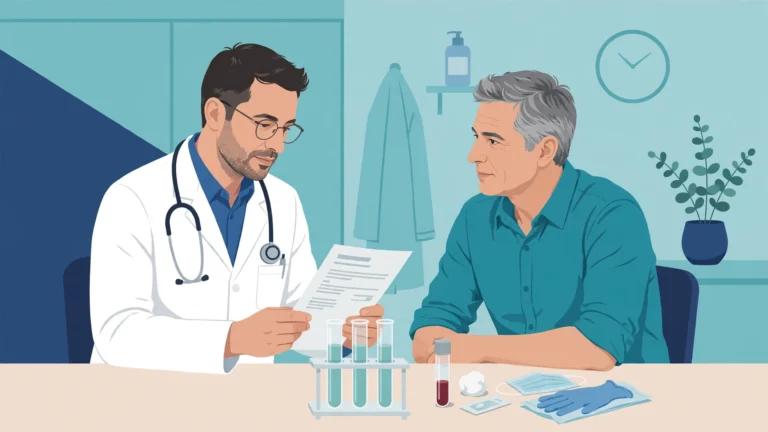
Doctors diagnose low testosterone using both symptoms and lab values: the American Urological Association uses a total testosterone below 300 ng/dL, confirmed on two separate early-morning blood tests, plus symptoms.
What Doctors Recommend: Proven Recovery Steps for New Dads
You do not need to wait a year to start recovering. The factors behind new dads low sex drive respond to deliberate action — start with the modifiable ones first.
Protect sleep like it is medicine
Sleep is the single highest-leverage intervention for new dads low sex drive. Trade night feeds in shifts so each of you gets one unbroken stretch — one four-to-five-hour block does more hormonal repair than eight fragmented hours.
Move and lift, even in short sessions
The CDC recommends muscle-strengthening activity on two or more days a week. Resistance training supports healthy testosterone, counters the belly fat that suppresses it, helps lift new dads low sex drive, and reliably improves mood.
Watch weight, alcohol, and medications
A 2013 review of 24 studies found that weight loss raised testosterone, with larger losses tied to larger gains. Alcohol is a direct libido suppressor, and medications matter: many common antidepressants and some blood-pressure drugs reduce desire. If low desire began around the time you started a new prescription, bring it up with your prescribing doctor. Our guide to antidepressants and sex drive covers this trade-off in detail.
Eat to support desire, not against it
Heavy, high-sugar eating patterns — common with a newborn — worsen energy, mood, and metabolic health, all of which feed low desire. Shifting toward whole foods and adequate protein helps counter new dads low sex drive; our guide to diet and libido walks through which foods actually matter.
Talk to your partner before talking to a doctor
The most underrated recovery step is a direct conversation. Desire mismatches create a shame spiral — the lower-desire partner withdraws, the higher-desire partner feels rejected, and physical contact dries up. Naming the biology of new dads low sex drive takes blame out of it; couples who keep non-sexual affection alive recover faster.
A Word on Testosterone Therapy Before You Consider It
Some fathers who learn the science behind new dads low sex drive wonder whether testosterone therapy could speed things up. Doctors urge caution: Mayo Clinic notes real risks — reduced sperm production, testicle shrinkage, worsened sleep apnea, and increased red blood cell production — and treating a normal, temporary decline is not an approved use. Most importantly, therapy can suppress fertility: outside testosterone tells the brain to turn down the signals that drive sperm and testosterone production. The American Urological Association advises against prescribing it to men trying to conceive — tell your provider about your family plans at the first visit, and read Mayo Clinic’s overview of testosterone therapy’s benefits and risks alongside the Cleveland Clinic’s guide to low testosterone symptoms and diagnosis before you decide.
FAQs
Is new dads low sex drive permanent?
No. For most fathers, the hormonal and sleep-driven dip of the first year resolves as sleep consolidates and caregiving demands ease. Meaningful desire usually returns within the first year. If it has not begun to return after twelve months of reasonable sleep, get a medical checkup.
Can low testosterone from fatherhood be fixed naturally?
Often, yes. The fatherhood dip is an adaptation, not a disease. The main levers are sleep protection, resistance exercise two or more days a week, gradual weight loss if you carry excess weight, and limiting alcohol. If lifestyle recovery does not move symptoms after several months, two morning blood tests can clarify whether you qualify for treatment.
Why does my husband have no interest in sex after our baby?
Fatherhood lowers testosterone by roughly a quarter to a third in the first years, while sleep loss, chronic stress, and elevated prolactin all suppress desire. About one in ten fathers also develops depressive symptoms. Research also shows a mother’s stress affects both partners’ sexual satisfaction, so supporting her rest may matter as much as anything aimed at him.
How long after birth does a man’s sex drive come back?
The typical new dads low sex drive pattern: the deepest dip in the first three months, gradual and flickering recovery from three to twelve months as the baby’s sleep improves, and meaningful recovery by the end of the first year. Fathers of a second baby close after the first often face a longer, overlapping dip.
Does lack of sleep really lower testosterone in men?
Yes, and the effect is large. In a JAMA-published University of Chicago study, eight nights of fewer than five hours of sleep lowered daytime testosterone by 10-15% in healthy young men – the hormonal equivalent of aging ten to fifteen years. Protecting even one unbroken stretch of sleep each night is the most effective first recovery step.
Should I ask my doctor to test my testosterone?
If low desire persists after your sleep has recovered – or comes with warning signs like loss of morning erections, fatigue that sleep does not fix, muscle loss with belly-fat gain, or persistent low mood – yes. Doctors use two early-morning blood tests plus symptoms to diagnose low testosterone, alongside medication review and depression screening.
Becoming a father rewrites your hormones, your sleep, and your days — and desire temporarily changes along the way. Most cases of new dads low sex drive resolve without medical treatment as the newborn season eases — a sign of an engaged, caregiving body, not a broken one. What matters is protecting the foundations desire grows from — sleep, health, an honest partnership, and a doctor’s eyes on anything that does not lift.
Medical disclaimer: This article is for educational purposes only and is not medical advice. It is not a substitute for professional diagnosis or treatment. Hormonal and sexual health concerns vary from person to person. If you are experiencing persistent low libido, mood changes, or other symptoms, please consult a qualified healthcare professional for personalized guidance.