Hydrocele: Symptoms and Treatment Options
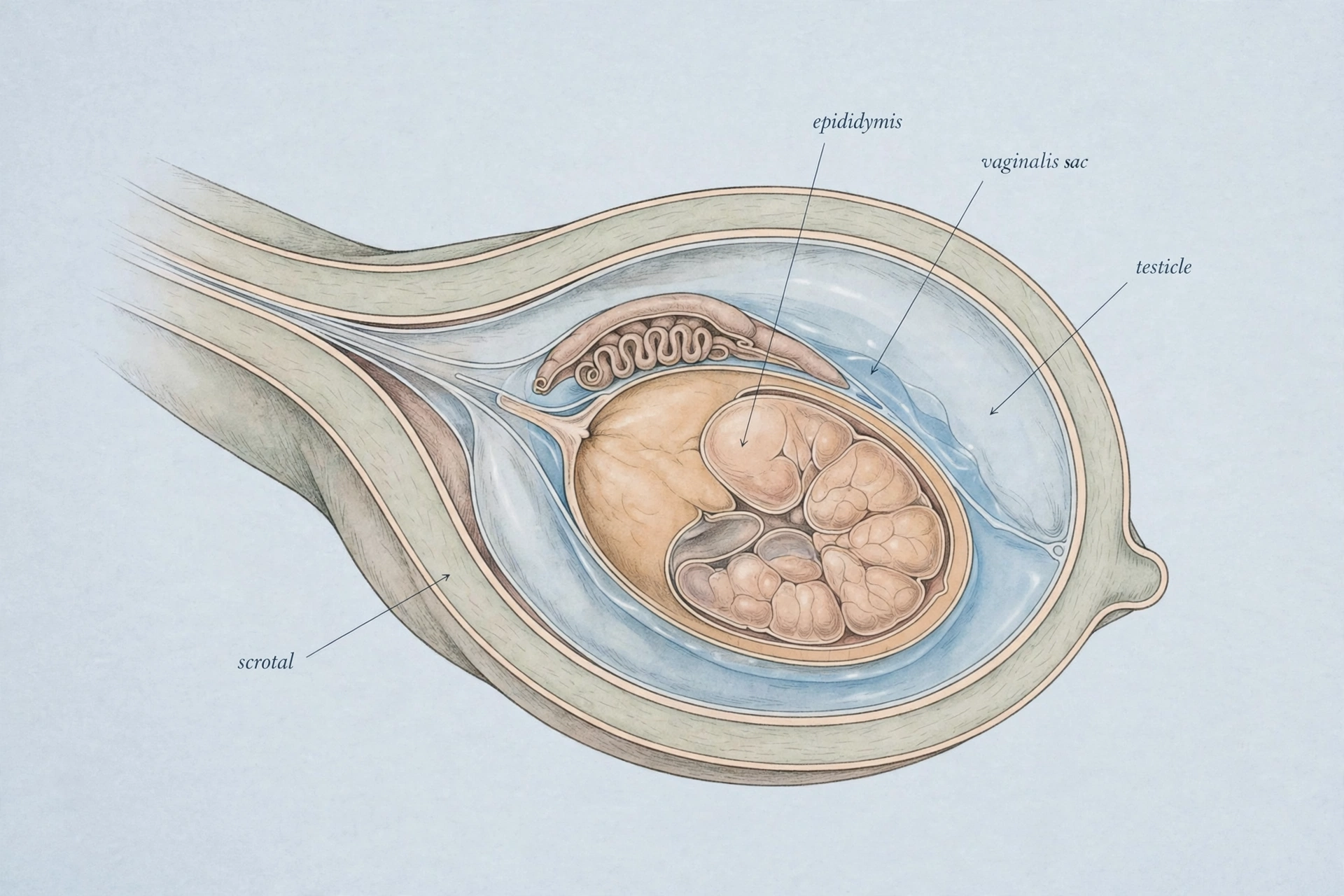
Noticing swelling in the scrotum can be worrying, and it is natural to have questions about hydrocele symptoms treatment. A hydrocele is a collection of fluid inside the scrotum, the pouch of skin that holds the testicles. The fluid gathers in the thin sac (the tunica vaginalis) that surrounds each testicle. It is one of the most common causes of scrotal swelling, affecting newborn boys as well as adult men, and it is usually harmless. This guide explains what a hydrocele feels like, why it develops, how doctors confirm the diagnosis, and which treatment options are appropriate for different situations.
Understanding Hydrocele Symptoms and Treatment Options
A hydrocele forms when fluid builds up where only a small amount of lubricating fluid should be. Hydroceles are very common in newborn boys: before birth, each testicle descends from the abdomen into the scrotum through a narrow passage, and some fluid can travel down with it. In most infants, this fluid is absorbed naturally during the first year of life. In adults, a hydrocele can develop at any age, though it is seen more often in men over 40. Adult hydroceles may appear gradually without any clear cause, or they may follow an injury, an infection, or inflammation in the scrotal area.
The reassuring fact for most people researching hydrocele symptoms treatment is that a simple hydrocele is usually painless and is not cancer. It does not normally damage the testicle or affect fertility. Because other conditions can also cause scrotal swelling, however, any new swelling should be examined by a clinician rather than assumed to be a hydrocele.
Common Hydrocele Symptoms
The hallmark sign of a hydrocele is painless swelling of one or both sides of the scrotum. The swelling is usually smooth to the touch and may feel like a small, fluid-filled balloon. Hydroceles tend to grow slowly, and a small one may go unnoticed for a long time.
Common symptoms include:
- Visible enlargement of one or both sides of the scrotum.
- A feeling of heaviness or fullness in the scrotum, especially as the swelling grows.
- Swelling that changes size during the day in some cases, often smaller in the morning and larger by evening or after physical activity.
- Little or no pain in most uncomplicated hydroceles.
- Discomfort when walking, sitting, or wearing tight clothing if the hydrocele becomes large.
In babies, parents may notice that one side of the scrotum looks larger, particularly when the baby cries or strains. In adults, a large hydrocele can cause a dragging sensation, interfere with physical activity, and create embarrassment or anxiety even when it is not painful. Men comparing hydrocele symptoms treatment options often wonder whether swelling alone is enough to require surgery. Pain, redness, or tenderness are not typical hydrocele symptoms and suggest a different or additional problem, such as an infection or injury, which needs prompt evaluation.
Types of Hydrocele
Doctors usually describe three patterns of hydrocele. Knowing which type is present helps determine whether treatment is needed and which approach is best.
Non-communicating hydrocele
In this type, the sac around the testicle is closed, and fluid stays trapped inside. The swelling tends to remain fairly constant in size or changes only slowly over time. This is the more common type in adults and is sometimes called idiopathic, meaning no specific cause is found.
Communicating hydrocele
Here a small opening remains between the abdomen and the scrotum, allowing fluid to flow back and forth. The swelling may look smaller after lying down overnight and larger after standing or activity during the day. This type is more common in infants and is closely related to an inguinal hernia, in which abdominal tissue pushes through a weak spot in the groin. Communicating hydroceles are more likely to need surgical repair because the open passage can allow a hernia to develop.
Reactive hydrocele
A reactive hydrocele develops as a response to something else: an injury to the scrotum, inflammation of the tube behind the testicle (epididymitis), infection of the testicle (orchitis), or previous groin or scrotal surgery. These often improve once the underlying problem settles, which is why a period of observation is common before deciding on surgery.
A related but separate condition is a hydrocele of the spermatic cord (cord hydrocele), where fluid collects along the cord above the testicle rather than around it. It is less common and is usually found in infants.
Causes and Risk Factors
The causes of a hydrocele differ between infants and adults.
In babies: before birth, each testicle develops inside the abdomen and descends into the scrotum through a canal, bringing a sleeve of the abdominal lining with it. Normally this sleeve closes on its own. If it stays open, or if fluid remains trapped after it closes, a hydrocele forms. Premature babies have a higher chance of being born with one because there is less time for this passage to close.
In older children and adults, a hydrocele may develop slowly without any identifiable cause. When a cause can be identified, it may include:
- Injury to the scrotum, including sports injuries or accidents.
- Infection or inflammation, such as epididymitis or orchitis.
- Previous surgery in the groin or scrotal area, after which fluid can sometimes accumulate.
- Filariasis, a parasitic infection spread by mosquitoes that is a common cause of large hydroceles in some tropical regions.
- Rarely, a testicular tumor, which can be accompanied by fluid around the testicle — one reason clinicians examine any scrotal swelling carefully.
Risk factors include premature birth, older age, a history of scrotal injury or infection, and living in or traveling to regions where filariasis occurs. Many hydroceles, however, occur in people with none of these risk factors.
How Doctors Diagnose a Hydrocele
When you see a doctor about hydrocele symptoms treatment, diagnosis usually begins with a physical examination. The clinician gently examines the scrotum to assess the size, location, and feel of the swelling, and to check whether the testicle can be felt separately from the fluid. The abdomen and groin may also be examined to look for a hernia.
Common confirming steps include:
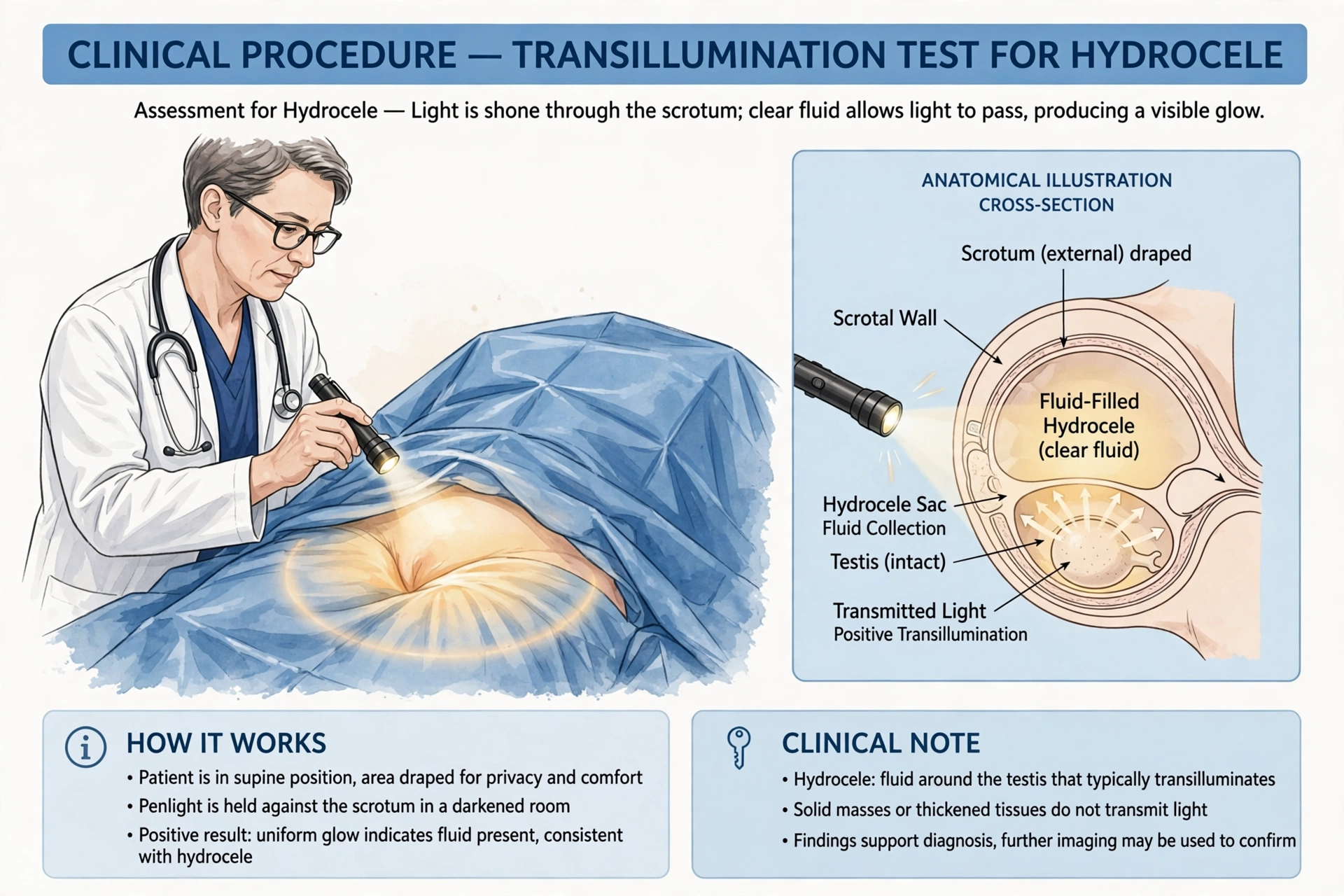
- Transillumination: the clinician shines a bright light through the scrotum in a darkened room. Because a hydrocele is filled with clear fluid, the light typically glows through it, while solid masses do not transmit light in the same way. This simple test supports the diagnosis but is not enough on its own to rule out other conditions.
- Scrotal ultrasound: this is the key imaging test. Ultrasound uses sound waves to create a picture of the scrotum and its contents. It confirms that the swelling is fluid, shows the condition of the testicle behind the fluid, and helps exclude other causes such as a hernia, a tumor, or a collection of blood. It is painless and does not use radiation.
- Urine and blood tests: if infection is suspected, tests may be ordered to look for signs of infection or inflammation.
An important goal of diagnosis is to make sure the swelling is truly a hydrocele and not something else. Conditions that can look or feel similar include an inguinal hernia, an epididymal cyst, varicocele (enlarged veins in the scrotum), and, rarely, testicular cancer. Self-diagnosis is not appropriate, and professional evaluation — usually including ultrasound — is recommended for any new scrotal swelling.
Hydrocele Treatment Options
Choosing among hydrocele symptoms treatment options depends on the patient’s age, the size of the hydrocele, the symptoms it causes, and whether there is an associated hernia or other underlying condition. The main options are:
Watchful waiting
In newborns and infants, most hydroceles resolve on their own as the body absorbs the fluid, often within the first 12 months. Doctors usually recommend simple observation during this period, with regular check-ups. If the hydrocele persists beyond roughly one to two years of age, grows, or is associated with a hernia, surgical repair is generally considered.
In adults, small hydroceles that cause no discomfort often need no treatment at all. Some resolve on their own, particularly those that follow an infection or minor injury once the underlying cause settles. The clinician may simply monitor the hydrocele over time with periodic re-examination.
Medication
There is no medication that shrinks or cures a hydrocele itself. However, if the hydrocele is related to an infection such as epididymitis, antibiotics prescribed for that infection may reduce the fluid as inflammation resolves. Pain relievers may be suggested for short-term discomfort, but they do not treat the fluid collection.
Aspiration (needle drainage)
Aspiration means draining the fluid with a needle. While it can temporarily reduce the swelling, the fluid frequently returns because the sac that produced it remains in place, and the procedure carries a risk of infection. For these reasons, aspiration is generally not the preferred long-term treatment, although it may be considered for patients who cannot safely undergo surgery. Sometimes aspiration is combined with sclerotherapy, in which a medication is injected into the sac to encourage it to close; recurrence is still possible.
Surgery (hydrocelectomy)
Surgical repair, called hydrocelectomy, is the standard definitive treatment when a hydrocele is large, uncomfortable, growing, or persistent. It is usually an outpatient procedure under general or regional anesthesia. In adults, the surgeon typically makes a small incision in the scrotum, drains the fluid, and removes or repositions part of the sac so fluid cannot re-accumulate. In children with a communicating hydrocele, the surgeon usually operates through a small groin incision and closes the open passage between the abdomen and the scrotum, which also addresses any associated hernia.
Hydrocelectomy is generally considered routine, with most patients going home the same day. As with any operation, there are potential risks, including bleeding, infection, swelling, blood clot formation in the scrotum (hematoma), injury to nearby structures, and recurrence. The surgical team can discuss how these risks apply in each individual situation.
What to Expect From Hydrocele Surgery and Recovery
When planning hydrocele symptoms treatment, knowing the typical recovery timeline helps patients plan time off work and set realistic expectations. Timelines vary, so the surgical team’s specific instructions always take priority.
| Timeframe | What is typical |
|---|---|
| Day of surgery | Outpatient procedure, often under an hour. A bulky bandage or supportive dressing is applied; mild grogginess from anesthesia wears off within hours. |
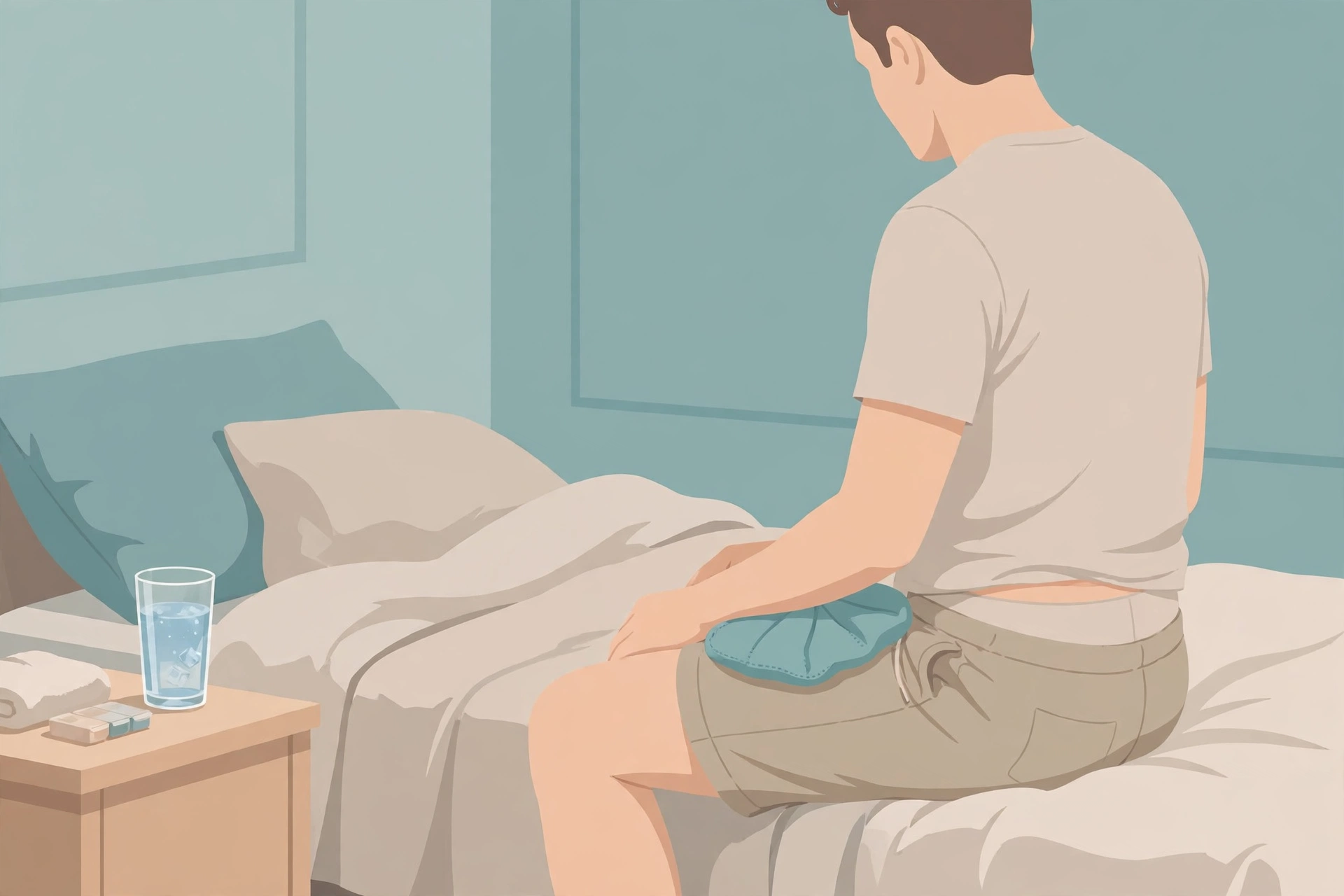
| First 48 hours | Rest at home, apply cold packs (wrapped in cloth) for short intervals, and keep the area clean and dry. Swelling and bruising of the scrotum are normal. |
| Week 1 | Wear snug supportive underwear or a scrotal support to reduce swelling. Light walking is encouraged; avoid lifting, straining, and strenuous activity. Many people return to desk work within a few days. |
| Weeks 2–4 | Bruising fades and swelling gradually decreases. Sutures dissolve or are checked at a follow-up visit. Heavy lifting, sports, and cycling are usually still off-limits. |
| Weeks 4–6 | Most people are cleared to resume exercise, manual work, and sexual activity, depending on how healing has progressed. |
Some swelling can linger for several weeks before settling fully. A firm ridge along the incision is common and softens over time. Follow-up appointments allow the clinician to confirm that healing is on track and to watch for complications such as infection (increasing redness, warmth, or fever) or a collection of blood.
Living With an Untreated Hydrocele: Practical Tips
Many small, painless hydroceles are simply monitored, and everyday life can continue normally. These practical measures can make living with one more comfortable:
- Wear supportive underwear or a scrotal support during the day to ease the feeling of heaviness, especially when standing or walking for long periods.
- Adjust activities sensibly: there is no need to avoid exercise entirely, but contact sports and activities with repeated groin impact (such as rugby or aggressive cycling) deserve protective equipment and medical guidance.
- Track changes: note whether the swelling is stable, growing, or changing with position or time of day. This record is genuinely useful at follow-up appointments.
- Keep follow-up visits: routine re-examination confirms the swelling remains a simple hydrocele and has not changed in a concerning way.
- Address anxiety: embarrassment about the swelling is common and understandable. Remember that hydroceles are a routine urological finding, and clinicians discuss them every day.
Red Flags: When to Seek Urgent Care
A simple hydrocele is usually calm and painless, but certain changes need prompt medical attention:
- Sudden, severe scrotal pain or swelling — this can indicate testicular torsion (a twisted testicle cutting off its blood supply), which needs treatment within hours to save the testicle.
- Pain after a recent injury to the scrotum with swelling that starts within hours.
- Redness, warmth, tenderness, or fever — possible signs of infection.
- A firm, hard lump that can be felt separately from the fluid.
- Rapid enlargement of a previously stable hydrocele.
When in doubt, it is always safer to be evaluated the same day than to wait and see.
Fertility, Sex, and Intimacy
Questions about hydrocele and sexual health are common and deserve straightforward answers. A simple hydrocele does not usually damage the testicle and does not typically affect sperm production or fertility. It is not an infection, so it cannot be transmitted to a partner.
That said, a large hydrocele can interfere with comfort during intimacy, and some men feel self-conscious about the visible swelling. Open communication with a partner helps, and treating a bothersome hydrocele often resolves these concerns. After hydrocelectomy, most men are advised to wait until healing is well underway — commonly four to six weeks — before resuming sexual activity, following their surgeon’s specific guidance.
Anyone with broader concerns about fertility can read our guide on when couples should see a fertility specialist, and those dealing with scrotal-area infections should also know about prostatitis symptoms and treatment, another common men’s health topic.
Common Myths About Hydrocele
Myth: A hydrocele will turn into cancer. A hydrocele is a fluid collection, not a tumor. While a tumor can occasionally sit alongside a hydrocele — which is why doctors examine swelling carefully — the hydrocele itself does not become cancer.
Myth: A hydrocele means you are infertile. Simple hydroceles do not normally harm sperm production. Persistent fertility worries should be discussed with a clinician, not assumed from the swelling.
Myth: Draining it once fixes it permanently. Needle aspiration often brings temporary relief, but the fluid commonly returns because the sac remains. Definitive repair usually requires surgery.
Myth: Surgery is major and risky. Hydrocelectomy is generally a routine outpatient procedure with a high success rate, though every operation carries some risk that the surgical team will explain.
Myth: You should just live with the pain. Pain is not a normal feature of a simple hydrocele. Painful swelling deserves evaluation because it may signal infection, injury, or another condition.
Frequently Asked Questions
Can a hydrocele go away on its own?
Often, yes, especially in babies — many infant hydroceles are absorbed naturally within the first year. In adults, small hydroceles sometimes resolve on their own, particularly those following an infection or minor injury once the underlying cause settles. Hydroceles that persist, grow, or cause discomfort usually do not disappear without treatment.
Is a hydrocele dangerous?
A simple hydrocele is generally not dangerous. It is not cancer and does not usually damage the testicle. The main concerns are discomfort from a large hydrocele and the possibility that the swelling has another cause, such as a hernia, infection, or rarely a tumor — which is why medical evaluation, usually including ultrasound, is important.
Does hydrocele treatment always require surgery?
No. Many hydroceles, especially in infants and adults with small symptom-free swellings, are simply monitored. Your clinician can help you choose the hydrocele symptoms treatment plan that fits your situation. Surgery (hydrocelectomy) is usually reserved for hydroceles that are large, uncomfortable, growing, or persistent, or for children whose hydrocele has not resolved by about one to two years of age.
How long does hydrocele surgery take, and what is recovery like?
Hydrocelectomy is usually an outpatient procedure lasting under an hour. Most people rest for a few days, wear supportive underwear, and avoid heavy lifting for several weeks. Desk work can often resume within days, with a return to exercise and sexual activity typically at four to six weeks, guided by the surgical team.
Will a hydrocele come back after treatment?
After surgical repair, most hydroceles do not return, although recurrence is possible in a minority of cases. After needle aspiration alone, recurrence is common because the sac remains. Any swelling that returns after treatment should be evaluated again rather than assumed to be the same problem.
Can a hydrocele burst or rupture?
This is a common worry, but a hydrocele does not burst like a balloon under normal circumstances. Trauma to the scrotum can injure the area, which is why protective equipment is sensible in contact sports, but spontaneous rupture of a simple hydrocele is not a typical concern.
Can I exercise with a hydrocele?
Most people with a small, painless hydrocele can exercise normally. Supportive underwear helps with comfort during activity. Contact sports and high-impact activities should be discussed with a clinician, and exercise should be paused after surgery until the surgical team gives clearance.
Getting Started With Hydrocele Symptoms Treatment
The best hydrocele symptoms treatment plan is one tailored to your age, symptoms, and medical history. For many men, careful observation and routine follow-up visits are all that is needed. If the swelling grows, causes discomfort, or creates anxiety, a urologist can walk you through the hydrocele symptoms treatment options that offer a lasting solution.
When to Talk to a Doctor
Any new scrotal swelling deserves a professional evaluation to confirm it is a hydrocele and to rule out other causes. See a clinician if the swelling is painful, red, or tender, if it grows quickly, if a firm lump can be felt, or if you simply feel unsure. Reputable resources such as Mayo Clinic’s overview of hydrocele symptoms and causes and the Drugs.com hydrocele patient guide offer further reliable reading.
Medical disclaimer: This article is for educational purposes only and is not medical advice. It does not diagnose or treat any condition, and no medication dosages are given. Scrotal swelling can have many causes, some of which need urgent care. If you notice swelling, pain, or any concerning change, consult a qualified clinician or urologist for an individual evaluation.