Retrograde Ejaculation: Causes and What It Means
An orgasm with little or no fluid released — often called a dry orgasm — can be confusing and worrying the first time it happens. In many cases, the explanation is retrograde ejaculation, a condition in which semen travels backward into the bladder instead of exiting through the penis. The retrograde ejaculation causes behind this are almost always physical rather than psychological, ranging from the side effects of common medications to complications of prostate surgery and nerve damage from long-standing illness. Understanding what triggers it, how doctors confirm it, and what it means for fertility is the first step toward deciding whether it needs treatment at all.
What Is Retrograde Ejaculation?
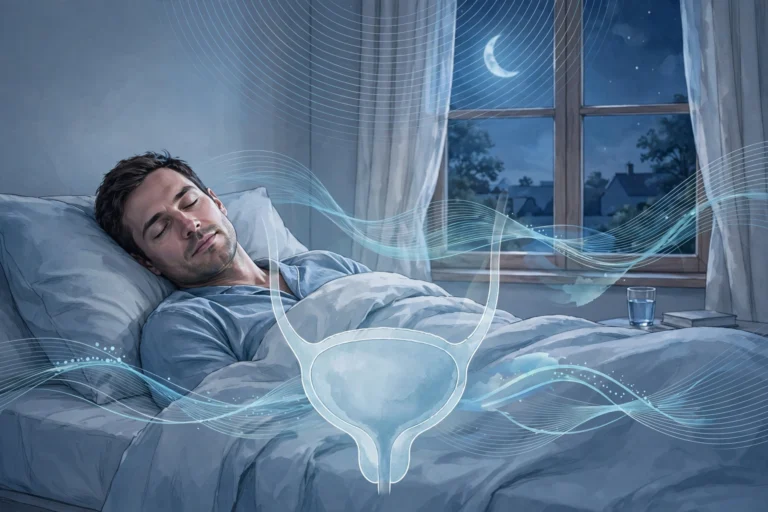
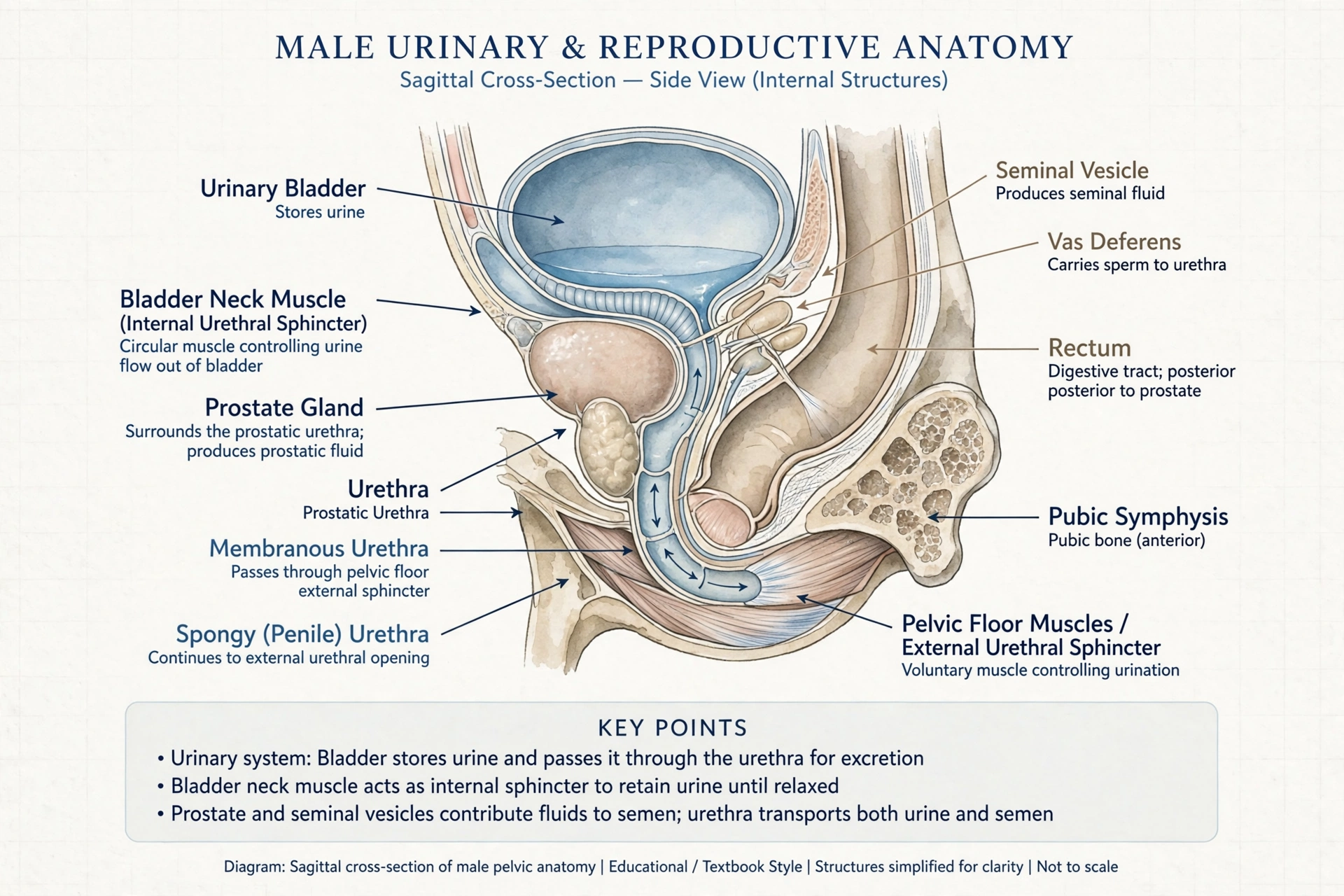
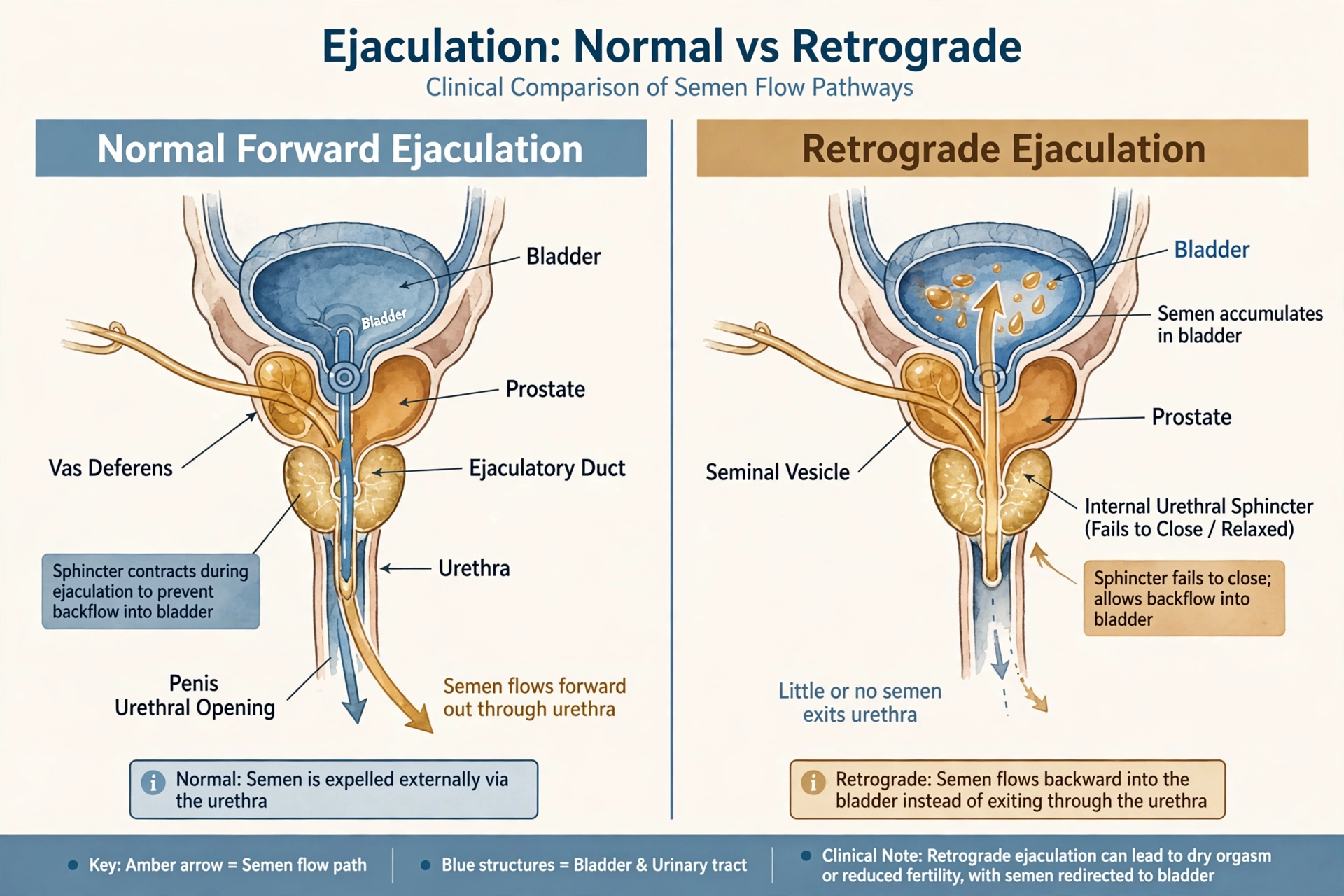
During a typical male orgasm, semen is propelled forward through the urethra and out the tip of the penis. A small ring of muscle at the opening of the bladder — called the bladder neck muscle or internal urinary sphincter — tightens at the same time, sealing the bladder shut so semen cannot enter it. In retrograde ejaculation, that muscle fails to close properly. As a result, some or all of the semen is diverted backward (retrograde) into the bladder, where it is later flushed out harmlessly with urine.
The defining sign is a dry orgasm: the sensation of orgasm is usually normal, but little or no semen emerges. Many men also notice cloudy urine after sexual activity, caused by semen mixing with urine in the bladder. The condition is not painful and does not typically damage the body — but it can reduce or eliminate fertility, and it sometimes signals an underlying medical issue worth investigating. Learning the retrograde ejaculation causes that apply to you can also make the conversation with your doctor far more productive.
How Ejaculation Normally Works — and Where It Can Go Wrong
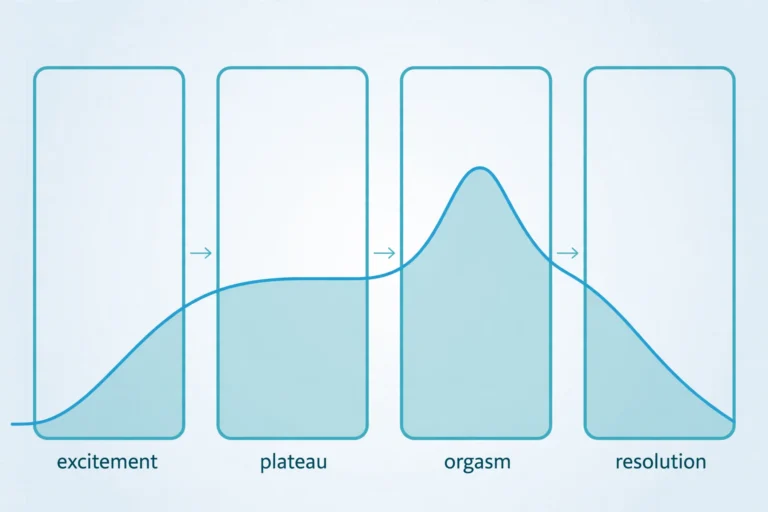
Ejaculation is a two-stage reflex controlled by the nervous system. First, in the emission phase, sperm travel from the vas deferens into the prostate, where they mix with fluids from the seminal vesicles and prostate gland to form semen. This fluid collects in the prostatic urethra. Second, in the expulsion phase, rhythmic muscular contractions push the semen forward and out — while the bladder neck muscle clamps shut to keep the path closed behind it.
Retrograde ejaculation is a failure of the second stage’s gatekeeping. Anything that weakens, damages, or chemically relaxes the bladder neck muscle — or disrupts the nerves that command it — can let semen slip backward. That is why the causes are so varied: a surgical incision, a blood pressure tablet, or decades of poorly controlled blood sugar can all end up affecting the same tiny muscle. Each of the known retrograde ejaculation causes ultimately interferes with this small muscle’s ability to close on time.
Common Retrograde Ejaculation Causes
Clinicians generally group retrograde ejaculation causes into three broad categories: surgery, medications, and nerve damage from medical conditions. Here is a closer look at each. Researchers who study retrograde ejaculation causes keep refining these groups as new drugs and surgical techniques appear.
1. Prostate and Bladder Surgery
Surgery is the most common cause overall. Procedures that alter the anatomy around the bladder neck or disrupt the nerves serving it include: because these operations sit so close to the bladder neck, they account for a large share of all retrograde ejaculation causes seen in clinics.
- Transurethral resection of the prostate (TURP): tissue removal through the urethra for benign prostate enlargement frequently damages the bladder neck valve. Retrograde ejaculation is one of the most common long-term side effects of this procedure.
- Radical prostatectomy: removal of the entire prostate gland (usually for cancer) can injure both the bladder neck muscle and nearby nerves, making retrograde ejaculation highly likely.
- Bladder neck surgery and certain bladder procedures that reshape or scar the internal sphincter.
- Extensive pelvic or abdominal surgery, including operations for prostate, testicular, colon, or rectal cancer, and retroperitoneal lymph node dissection for testicular cancer.
- Lower spinal surgery, which can damage nerves that control the bladder neck.
Men scheduled for prostate or bladder procedures should discuss ejaculation changes as part of the informed-consent conversation. Reading about recovery after prostate surgery can help set realistic expectations about sexual side effects more broadly.
2. Medications That Affect the Bladder Neck
Several classes of prescription drugs can relax or paralyze the bladder neck muscle as a side effect. The most commonly implicated include:
- Alpha-blockers (such as tamsulosin), prescribed for benign prostate enlargement — these are specifically designed to relax smooth muscle in the prostate and bladder neck, which is also why they are among the most frequent medication causes.
- Certain blood pressure medications, including some alpha-blockers used for hypertension.
- Antidepressants, particularly some SSRIs and tricyclic antidepressants, which can interfere with the nerve signals that coordinate ejaculation.
- Antipsychotic medications and some drugs used for mood disorders.
- Decongestants in rare cases, since they act on the same sympathetic nerve pathways.
Medication-related retrograde ejaculation is often reversible: when the drug is stopped or changed under medical supervision, normal function may return. This is one reason doctors always review a patient’s full medication list when investigating dry orgasms. If you are curious about the wider picture, learn more about blood pressure medications and sexual side effects. Never stop a prescribed medication on your own to test this — abrupt changes to blood pressure or psychiatric medications can be dangerous. When medication-related retrograde ejaculation causes are suspected, doctors typically review the full prescription history before making changes.
3. Nerve Damage From Diabetes and Other Conditions
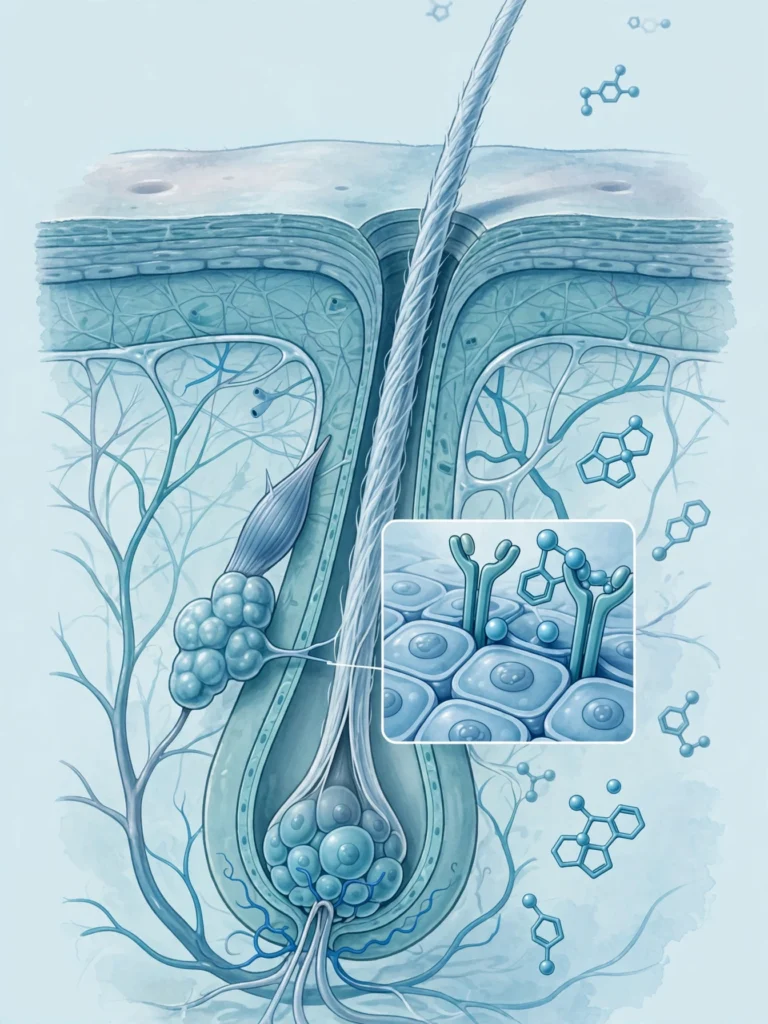
The nerves controlling the bladder neck can be damaged by chronic illness — a process called autonomic neuropathy. The leading conditions include:
- Diabetes, especially long-term or poorly controlled diabetes: high blood sugar over years damages small nerve fibers throughout the body, including those governing the bladder neck. Diabetic men with neuropathy symptoms elsewhere (numb feet, digestive issues) are at higher risk. For more on the connection between blood sugar and sexual health, see this guide to how diabetes can affect male sexual function.
- Multiple sclerosis, which disrupts nerve signaling in the spinal cord and brain.
- Parkinson’s disease, which affects autonomic nervous system control.
- Spinal cord injury, depending on the level and completeness of the injury.
When nerve damage is the cause, the retrograde ejaculation is often part of a broader pattern of nerve symptoms, which is why a thorough neurological history matters during diagnosis.
4. Other Medical Causes
Less common contributors include pelvic radiation therapy (which can scar the bladder neck region), congenital abnormalities of the bladder neck, urethral strictures, and, rarely, structural problems present since birth. In some cases no clear cause is found, and clinicians describe the condition as idiopathic.
| Category | Examples | Reversible? |
|---|---|---|
| Surgery | TURP, prostatectomy, bladder neck procedures, pelvic cancer surgery | Usually not |
| Medications | Alpha-blockers, some antidepressants, antipsychotics, certain blood pressure drugs | Often yes, after medical review |
| Nerve damage | Diabetic neuropathy, multiple sclerosis, Parkinson’s, spinal cord injury | Rarely; management focuses on fertility |
| Other | Pelvic radiation, congenital anomalies, urethral stricture | Depends on the cause |
Signs and Symptoms
The hallmark symptom is a dry orgasm — orgasm with little or no visible semen. Related signs include:
- Noticeably reduced semen volume over time (not just once)
- Cloudy or milky urine shortly after orgasm
- Difficulty conceiving with a partner despite regular unprotected sex
Importantly, orgasm itself usually feels the same. Retrograde ejaculation does not typically cause pain, erection problems, or changes in desire — though it is natural to feel anxious or embarrassed about the change, and that anxiety can secondarily affect performance. If these signs persist, identifying the retrograde ejaculation causes at work is the logical next step before assuming the worst.
Retrograde Ejaculation vs. Other Causes of Dry Orgasm
A dry orgasm does not automatically mean retrograde ejaculation. Several other conditions can produce little or no ejaculate, and distinguishing them matters because the implications differ:
- After prostatectomy or cystectomy: men who have had the prostate or bladder removed surgically produce no semen at all — this is a complete absence of ejaculate, not semen going backward.
- Pelvic radiation therapy: can damage the glands that produce seminal fluid, reducing volume without necessarily involving the bladder neck.
- Anejaculation: the complete failure to ejaculate, often with spinal cord injuries or severe nerve damage, in which no orgasmic release occurs at all.
- Low semen volume with age: a gradual decline in ejaculate volume is a normal part of aging and is not the same as semen entering the bladder.
- Blockages in the ejaculatory ducts, which can mimic retrograde ejaculation.
The distinguishing test is simple: in retrograde ejaculation, sperm and semen are found in the urine collected right after orgasm. If the urine is clear of semen, another explanation is more likely.
How Doctors Diagnose It
Diagnosis usually starts with a conversation: when the dry orgasms began, how often they occur, what medications you take, and what surgeries or chronic conditions you have. A physical examination checks for anatomical clues. The confirmatory test is a post-orgasm urine analysis — you provide a urine sample shortly after orgasm, and the laboratory checks it for the presence of semen. Large amounts of sperm in the urine confirm retrograde ejaculation, which then lets the clinician narrow down the retrograde ejaculation causes in the patient’s case.
Your doctor may also order basic tests to rule out other causes, such as a urine culture for infection or hormone checks if there are additional symptoms. Being open about sexual symptoms helps; clinicians hear about these issues routinely, and the information directly shapes the diagnosis. If you feel awkward bringing it up, this guide on how to talk to your doctor about sex offers practical tips.

What Retrograde Ejaculation Means for Fertility
This is the consequence most couples care about. Because semen ends up in the bladder instead of the vagina, sperm cannot reach the egg through intercourse, and natural conception becomes difficult or impossible. However, the sperm themselves are usually perfectly healthy — the problem is delivery, not production.
When a couple wants to conceive, several medically established paths exist. Sperm can sometimes be recovered from post-orgasm urine samples in a laboratory and prepared for assisted reproduction. In other cases, sperm is retrieved directly from the reproductive tract through minor procedures. A fertility specialist (urologist with andrology training or a reproductive endocrinologist) can explain which option fits the specific cause — surgical cases and nerve-damage cases tend to need different approaches than medication-related ones. Couples uncertain about the next step can read about when couples should see a fertility specialist.
Treatment Options
Treatment is only necessary if the condition bothers the man or the couple — for instance, if fertility is affected. Management depends entirely on the underlying cause. Because the retrograde ejaculation causes differ from man to man, no single treatment suits everyone.
- Medication review: if a drug is the likely cause, the prescribing doctor may adjust the dose, switch to an alternative, or time the medication differently. This should always be done under medical supervision.
- Prescription medications: certain drugs that tighten the bladder neck muscle (such as some decongestants or antidepressants used off-label for this purpose) can help in select cases, particularly when nerve damage is involved. They carry their own side effects — including effects on blood pressure and heart rate — so they are only used when appropriate and monitored by a clinician.
- Fertility-focused approaches: when conception is the goal, treatment shifts to sperm recovery and assisted reproduction rather than fixing the ejaculation itself.
- Underlying disease management: for diabetes-related cases, improving blood sugar control protects nerves generally, though it rarely reverses established neuropathy.
No treatment can restore the anatomy altered by prostate removal, so men facing prostate surgery should discuss fertility preservation (such as sperm banking) beforehand if having children later matters to them.
When to See a Doctor
Retrograde ejaculation is not dangerous in itself — semen in the bladder is harmless and flushes out with urine. Still, it is worth booking an appointment if you notice persistent dry orgasms, cloudy urine after sex, or difficulty conceiving. The visit is also important because dry orgasms can occasionally signal a condition that does need attention, such as worsening diabetic neuropathy, an undiagnosed neurological disorder, or a medication interaction. Bring a complete list of your medications, supplements, and surgical history — that information often points straight to the cause. Pinpointing the retrograde ejaculation causes is also how a clinician decides whether further evaluation is needed.
Frequently Asked Questions
Is retrograde ejaculation harmful to my health?
No. Semen entering the bladder is harmless — it mixes with urine and leaves the body during urination. The condition causes no pain, no organ damage, and no increased cancer risk. Its main significance is for fertility and, for some men, the emotional impact of the change.
Can retrograde ejaculation go away on its own?
It depends on the cause. When a medication is responsible, function often returns after the drug is changed or stopped under a doctor’s guidance. When surgery or permanent nerve damage is the cause, the condition is usually long-term, and management focuses on fertility options rather than reversal.
Does it affect how orgasm feels?
For most men, orgasm feels essentially the same — the muscular contractions and pleasurable sensations are unchanged. What differs is only the visible ejaculate. Some men report that the psychological awareness of the change dulls enjoyment, which is a normal emotional response, not a physical one.
Why is my urine cloudy after sex?
Cloudy urine shortly after orgasm is a classic sign: semen that entered the bladder mixes with urine. While cloudy urine can have other causes (infection, dehydration), the timing — consistently after ejaculation — points toward retrograde ejaculation, and a post-orgasm urine test can confirm it.
Can I still father a child naturally?
Usually not through intercourse alone, because the sperm do not reach the vagina. However, because sperm production is typically normal, fertility specialists can often recover sperm from urine or directly from the reproductive tract for use in assisted reproduction. A consultation with a fertility specialist is the best next step for couples trying to conceive.
Which medications are most likely to cause it?
Among medication-related retrograde ejaculation causes, alpha-blockers such as tamsulosin (used for prostate enlargement) are the most commonly implicated, followed by certain blood pressure drugs, some antidepressants, and antipsychotics. If you started a new medication around the time dry orgasms began, tell your doctor — but do not stop the medication without medical advice.
Is it the same as erectile dysfunction?
No. Erectile dysfunction is difficulty getting or keeping an erection; retrograde ejaculation involves normal erections and normal-feeling orgasms with reduced or absent ejaculate. The two can coexist — for example, after prostate surgery — but they are separate conditions with different treatments.
Should I be embarrassed to bring this up with my doctor?
There is no need. Urologists and primary care clinicians discuss ejaculation issues every day, and a few straightforward questions usually identify the cause. The information you share stays confidential and directly determines whether anything needs to be done.
Medical Disclaimer
This article is for educational purposes only and is not medical advice. It does not diagnose any condition or replace evaluation by a qualified clinician. If you are experiencing persistent changes in ejaculation, difficulty conceiving, or related symptoms, please consult a qualified healthcare professional for personalized assessment and guidance.
Retrograde ejaculation is best understood as a plumbing problem rather than a personal failing: a small muscle that should close does not, and semen takes the wrong exit. Whether the retrograde ejaculation causes in your case trace back to a prescription, a past surgery, or a nerve-related condition, a clear diagnosis opens the door to reassurance, fertility options, and — when appropriate — targeted treatment. Once you know which retrograde ejaculation causes are behind your symptoms, you and your clinician can choose the right path forward. For authoritative background, see the Mayo Clinic overview of retrograde ejaculation and the Harvard Health explanation of the condition.