Testosterone and Hair Loss: The DHT Connection
If you search for answers about testosterone hair loss dht, you will find a familiar story: high testosterone equals baldness, and going bald means you are somehow more masculine. It is a persistent myth, and it is wrong in a way that matters. Blaming testosterone itself leads men toward the wrong tests, the wrong supplements, and the wrong treatments.
The real relationship is more specific. Testosterone is the raw material; dihydrotestosterone (DHT), a far more potent hormone your body makes from testosterone, is the molecule that actually damages vulnerable scalp follicles. And the deciding factor is not how much testosterone you have — it is how sensitive your hair follicles are to DHT. This article explains the full mechanism in plain language, clears up the common myths, and walks through what the evidence says can actually help.
Testosterone Hair Loss DHT: The Short Answer
Testosterone itself does not cause scalp hair loss. Decades of clinical research show that men with male-pattern hair loss have, on average, total testosterone levels very similar to men with full hair. The hormone that causes pattern hair loss is DHT — a derivative produced when an enzyme called 5-alpha reductase converts free testosterone in target tissues such as the scalp, skin, and prostate.
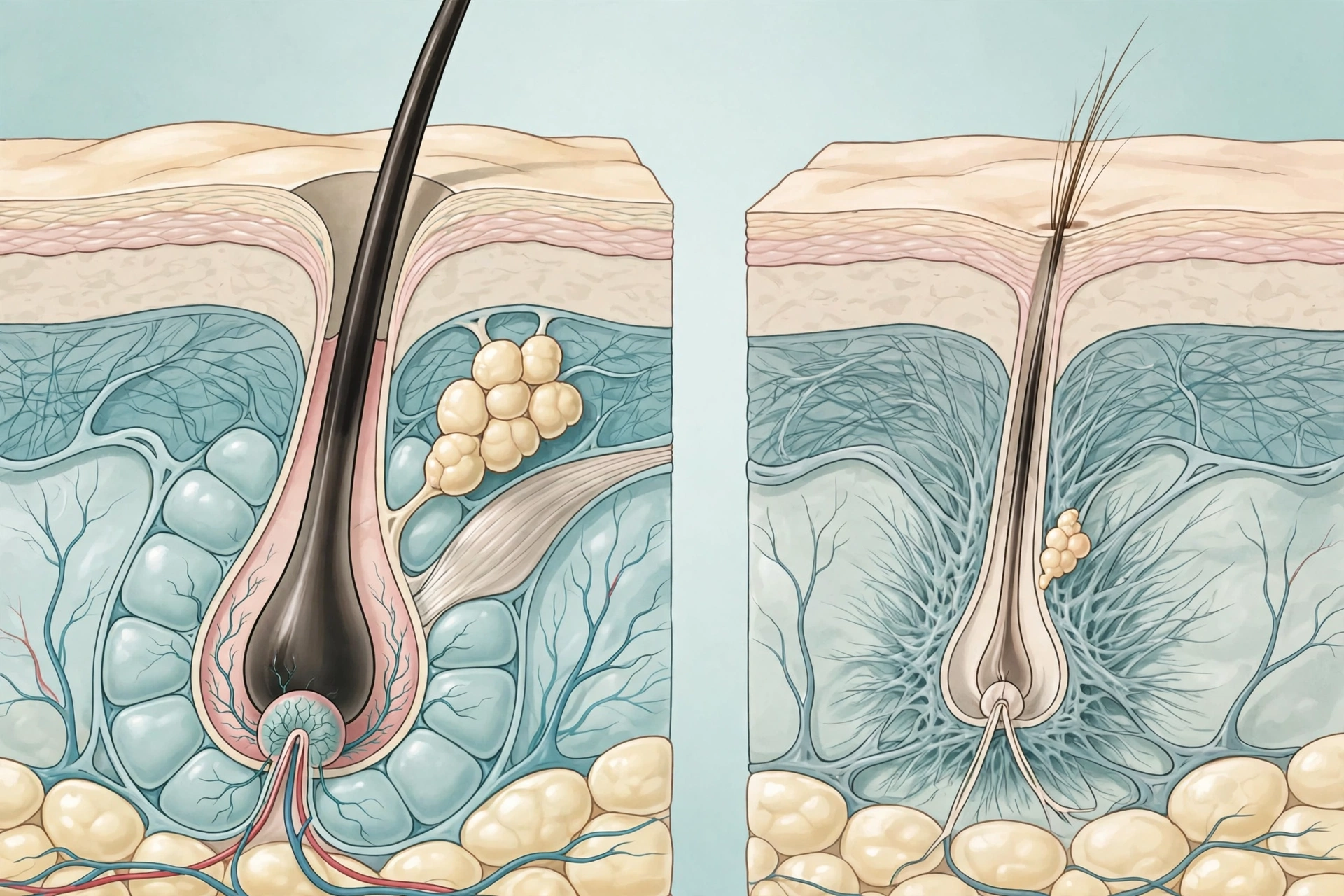
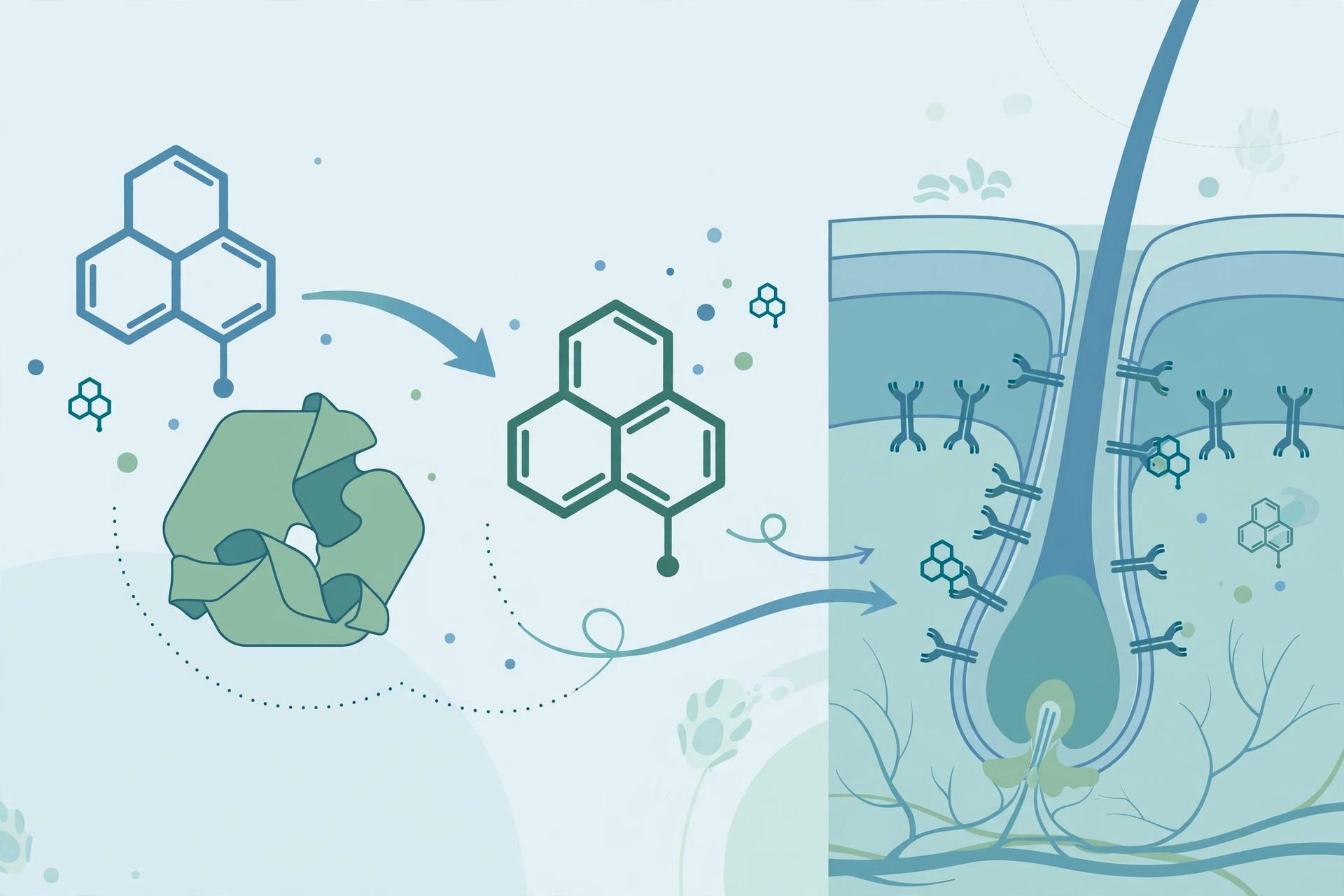
Once created, DHT binds to androgen receptors in scalp hair follicles. In people with an inherited sensitivity, this binding triggers follicular miniaturisation: the follicle gradually shrinks, each new hair grows back thinner and shorter, the growth phase of the hair cycle shortens, and eventually the follicle stops producing visible hair. This is the mechanism behind androgenetic alopecia, the medical name for male- and female-pattern hair loss, which is the most common form of hair loss in adults. The authoritative StatPearls review of androgenetic alopecia describes exactly this DHT-driven, genetically determined process.
How Testosterone Becomes DHT: The 5-Alpha Reductase Step
Understanding the conversion step is the key to the whole topic. Testosterone circulates in the blood mostly bound to proteins — chiefly sex hormone-binding globulin (SHBG). Only the unbound, or “free,” fraction is biologically active and available for conversion.
In the scalp, the enzyme 5-alpha reductase converts this free testosterone into DHT. DHT is several times more potent than testosterone at the androgen receptor. There are two main forms of the enzyme, and both are active in scalp tissue. This conversion is a rate-limiting step: it is the amount of DHT being produced inside the scalp tissue, rather than the amount of testosterone in the bloodstream, that determines how much hormonal pressure a follicle is under.
That is why this step is also the main target of the most effective medical treatment for pattern hair loss: drugs that inhibit 5-alpha reductase reduce the local production of DHT. Nothing in this process requires unusually high testosterone — normal testosterone levels provide plenty of raw material for DHT production in a susceptible person.
Why Follicle Sensitivity Matters More Than Hormone Levels
Here is the finding that surprises most people: two men of the same age can have identical testosterone levels, and one will lose his hair while the other keeps a full head of hair. What differs is the follicle, not the blood.
Follicle sensitivity to DHT is largely genetic. The androgen receptor gene, located on the X chromosome, controls how strongly a follicle responds to DHT once it arrives. Variants of this gene are among the strongest single genetic predictors of male-pattern baldness. Because men inherit their X chromosome from their mothers, there is a real grain of truth in the old saying about the maternal grandfather — although pattern hair loss is polygenic, meaning several genes from both sides of the family contribute.
The Historical Clue: No Androgens, No Pattern Baldness
One of the oldest clinical observations in this field is striking: men who never go through male puberty — whether due to a medical condition or, historically, castration before puberty — do not develop male-pattern baldness. Conversely, when androgen exposure begins, genetically susceptible follicles start their slow miniaturisation. This observation, recorded in medical literature long before modern hormone assays existed, is strong evidence that androgens are necessary but not sufficient: you need both the hormone and susceptible follicles.
The Scalp–Body Paradox: DHT Shrinks Scalp Hair but Grows Beard Hair
One of the most confusing aspects of this topic — and one most articles skip — is the paradox. The same hormone, DHT, causes hair follicles on the scalp to shrink while causing follicles on the face, chest, and body to grow thicker hair. How can one hormone do opposite things?
The answer is that the effect of DHT depends on the location of the follicle, because different follicle populations are programmed to respond differently to androgens. Scalp follicles in the front and crown carry androgen receptors that, in susceptible people, trigger miniaturisation. Beard, chest, armpit, and pubic follicles respond to the same DHT signal by growing thicker, longer hair. That is why a man can have a heavy beard, thick body hair, and a thinning crown at the same time — it is not a contradiction, it is follicle-specific biology.
This also explains a related observation: men with genuinely low testosterone tend to notice thinner facial and body hair first, not scalp thinning, because body hair depends on androgen stimulation while scalp loss depends on DHT sensitivity. Treating low testosterone will not fix pattern hair loss, and lowering testosterone will not fix it either. If you want to understand what low testosterone actually looks like, read our guide to the signs of low testosterone and when to get tested.
Why a Blood Test for DHT Can Mislead
Another point competitors rarely explain: a blood test for DHT or testosterone tells you very little about what is happening in your scalp. Research has found that men with androgenetic alopecia can have far more DHT concentrated inside their affected follicles than men without hair loss — even when their blood levels of both hormones are essentially the same. What matters is local conversion and local sensitivity, and a blood draw cannot measure either.
That does not make blood tests useless. They are valuable for ruling out other causes of hair loss — thyroid problems, iron deficiency, or broader hormonal imbalances. But ordering a “DHT blood test” and expecting it to explain your hairline is likely to disappoint, because serum DHT is a poor proxy for scalp-tissue DHT. The action is local; the blood is just the delivery route.
Does Testosterone Therapy Cause Hair Loss?
This is one of the most common questions from men considering testosterone replacement therapy (TRT). The honest answer is nuanced: TRT does not create pattern hair loss out of nothing, but it can accelerate it in men who are already genetically susceptible.
The logic is straightforward. Exogenous testosterone raises free testosterone, which provides more raw material for 5-alpha reductase to convert into DHT in the scalp. In a man with DHT-sensitive follicles, that can speed up a miniaturisation process that was going to happen eventually anyway. In a man without that genetic sensitivity, TRT does not cause baldness. The effect also varies considerably between individuals, and many men on TRT report no noticeable change in their scalp hair.
The practical takeaway: before starting TRT, discuss your family history of hair loss with the prescribing clinician. Treating low testosterone and managing hair loss are two separate clinical issues, and each should be evaluated on its own terms. For a broader look at the trade-offs, see our overview of testosterone therapy risks.
Factors That Can Shift the DHT Balance
Genetics sets the ceiling, but several everyday factors influence how much free testosterone is available for DHT conversion — and most articles on this keyword never mention them.
- Body weight and insulin resistance. Excess weight and insulin resistance tend to lower SHBG, the protein that binds testosterone. Less SHBG means more free testosterone, which means more substrate available for conversion to DHT. This is one plausible link between metabolic health and accelerated thinning.
- Age. The prevalence of androgenetic alopecia rises steadily with age — by age 70, the majority of men show some degree of pattern hair loss. Susceptible follicles accumulate DHT-driven damage over decades; the process is slow but cumulative.
- Medications. Some drugs alter hormone balance or SHBG levels and can shift shedding patterns. Any sudden, rapid, or patchy hair loss deserves a medical review rather than an assumption that it is ordinary pattern thinning.
- Chronic stress and illness. Severe physical or emotional stress can push large numbers of follicles into the shedding phase at once — a reversible condition called telogen effluvium — which can overlap with, and be mistaken for, pattern hair loss.
None of these factors override genetics. Losing weight or managing blood sugar is good medicine for many reasons, but it will not reverse established pattern baldness on its own. Think of metabolic health as turning the volume slightly down on a process your genes turned up.
The Prostate Connection: The Same Hormone, a Different Organ
There is a related androgen story worth knowing. The same 5-alpha reductase enzyme that converts testosterone to DHT in the scalp does the same job in the prostate, where DHT stimulates prostate growth. That is why benign prostatic enlargement (BPH) and pattern hair loss often travel together in aging men — they share a hormonal driver.
It is also why some prostate medications, which block 5-alpha reductase, were noticed to affect hair: the enzyme is the same, and reducing DHT helps both conditions through the same mechanism. This shared biology is explained in more detail in our guide to testosterone and prostate health.
Treatments That Target the DHT Pathway (and What Does Not Work)
Once you understand the mechanism, the treatment landscape becomes much clearer. Anything that does not address DHT in the scalp, or the follicle’s response to it, is unlikely to help pattern hair loss — no matter how confidently it is marketed.
| Approach | How it relates to DHT | What the evidence shows |
|---|---|---|
| 5-alpha reductase inhibitors (e.g., finasteride, dutasteride) | Block the enzyme that converts testosterone to DHT, lowering scalp DHT substantially | The most evidence-based medical treatment for male-pattern hair loss; slows or halts progression in most users while continued. Prescription only, with known potential sexual side effects — read our breakdown of finasteride sexual side effects before deciding. |
| Topical minoxidil | Does not affect DHT directly; stimulates follicles and lengthens the growth phase | Can partially offset DHT-driven miniaturisation; available without a prescription in many countries. Must be used consistently to maintain results. |
| Hair transplant surgery | Bypasses the problem: donor follicles from the back and sides of the scalp are genetically resistant to DHT | The transplanted follicles keep their DHT resistance in the new location, so the result is durable. No medical treatment regrows hair from fully dormant follicles. |
| Lowering total testosterone | Misdirected target | Does not restore hair, and would cause obvious harm (fatigue, muscle loss, bone loss). Never a legitimate hair-loss strategy. |
| Most “hair growth” supplements | Weak or no DHT effect | Biotin helps only true biotin deficiency; saw palmetto has weak enzyme-inhibiting activity in lab studies but no clinical equivalence to prescription treatment. Marketing routinely outruns evidence. |
A note the Mayo Clinic’s hair loss treatment overview emphasises: the realistic goal of medical treatment is to stop or slow the loss and preserve what you have. Significant regrowth of long-dormant follicles is uncommon, which is why starting earlier — when follicles are thinning but still alive — matters so much.
Tests Worth Discussing With Your Doctor
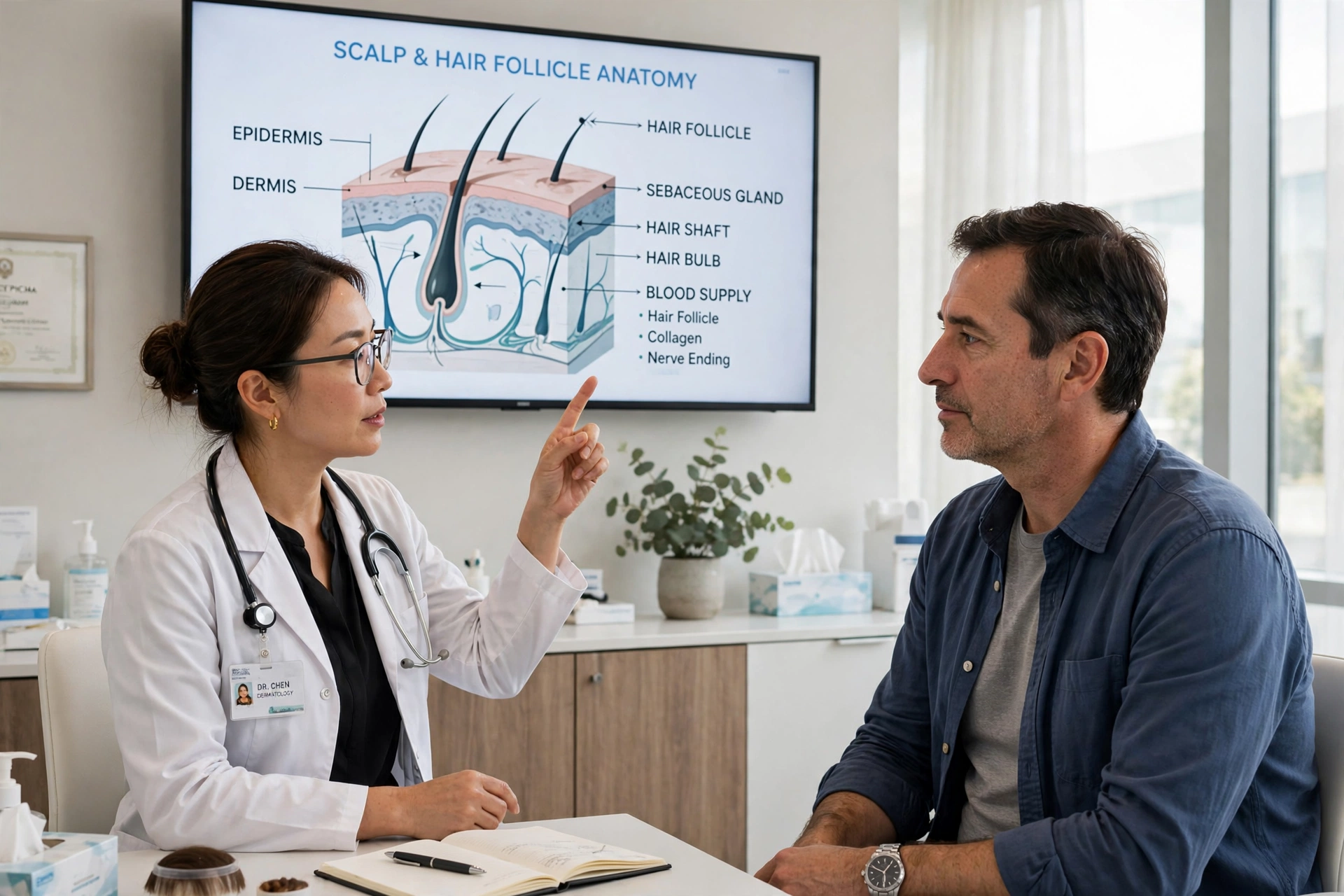
Since blood tests cannot measure scalp DHT directly, a sensible workup focuses on ruling out other causes and characterising your hormonal picture. Useful tests to discuss with a clinician include total testosterone, free testosterone, SHBG, thyroid-stimulating hormone (TSH), ferritin (iron stores), and vitamin D. In women, prolactin and ovarian-function markers may be relevant. A dermatologist may also recommend a scalp examination or trichoscopy to confirm the pattern before any treatment decision.
See your doctor promptly if hair loss is sudden or rapid, patchy rather than patterned, accompanied by scalp pain, inflammation, or scarring, or if it comes with other symptoms suggesting thyroid disease or hormonal imbalance.
Frequently Asked Questions
Does high testosterone cause hair loss?
No. On average, men with pattern hair loss do not have higher total testosterone than men without it. The cause is DHT acting on genetically sensitive scalp follicles, not the amount of testosterone in the bloodstream.
Does low testosterone cause hair loss?
Low testosterone does not directly cause scalp hair loss. Men with low testosterone more often notice thinner facial and body hair, because body hair depends on androgen stimulation while scalp thinning depends on DHT sensitivity. Sudden or unusual shedding still deserves a medical workup, since thyroid problems and deficiencies can coexist with low testosterone.
Will testosterone therapy make me go bald?
TRT can accelerate pattern hair loss in men who are genetically susceptible, because more testosterone means more substrate for DHT conversion in the scalp. It does not cause baldness in men without that genetic sensitivity. Discuss your family history with your prescriber before starting.
Can I test my DHT level to predict hair loss?
A blood DHT test is of limited value for this purpose. What matters is the amount of DHT inside the scalp tissue and how sensitive your follicles are — neither of which a blood test can measure. Family history and a dermatologist’s scalp assessment are more informative.
Is the baldness gene really inherited from the mother’s side?
Partially. The androgen receptor gene sits on the X chromosome, which men inherit from their mothers, and its variants strongly predict baldness. But pattern hair loss is polygenic — genes from both parents contribute — so the maternal grandfather’s hairline is a hint, not a destiny.
Do DHT-blocking shampoos or natural supplements work?
There is no strong clinical evidence that shampoos or over-the-counter supplements meaningfully reduce scalp DHT or regrow pattern hair loss. Some ingredients show weak enzyme-inhibiting activity in laboratory studies, but none has demonstrated results comparable to prescription 5-alpha reductase inhibitors in clinical trials.
Once a follicle is gone, can any treatment bring it back?
No medical treatment reliably regrows hair from follicles that have fully miniaturised and gone dormant. Medications work best on follicles that are thinning but still active, which is why early treatment preserves more hair. For established bald areas, hair transplantation using DHT-resistant donor follicles is the proven option.
Medical disclaimer: This article is for educational purposes only and is not medical advice. It does not diagnose any condition or recommend any specific treatment. Hair loss can have many causes, and medications that affect hormones carry real risks and benefits. Please consult a qualified clinician — such as your doctor or a dermatologist — before making decisions about testing or treatment.
The Bottom Line
Testosterone gets the blame, but DHT does the damage — and your genes decide how much damage it can do. That three-part chain (testosterone → 5-alpha reductase → DHT → sensitive follicles) explains why blood testosterone levels do not predict baldness, why beard growth and scalp loss coexist, and why only treatments that address the DHT pathway show real results. If you are noticing thinning, the most useful steps are the least dramatic ones: confirm the pattern with a clinician, rule out other causes, and act early while your follicles are still in the fight.