Sleep Apnea and ED: What’s the Connection
When men develop erectile dysfunction (ED), most look first at stress, age, or cardiovascular health. Few consider their sleep. Yet research increasingly shows that sleep apnea and erectile dysfunction travel together more often than chance would explain — and that treating the breathing disorder can sometimes improve erectile function. If you snore heavily, wake up exhausted, and have noticed changes in your erectile function, the two problems may share a single root cause.
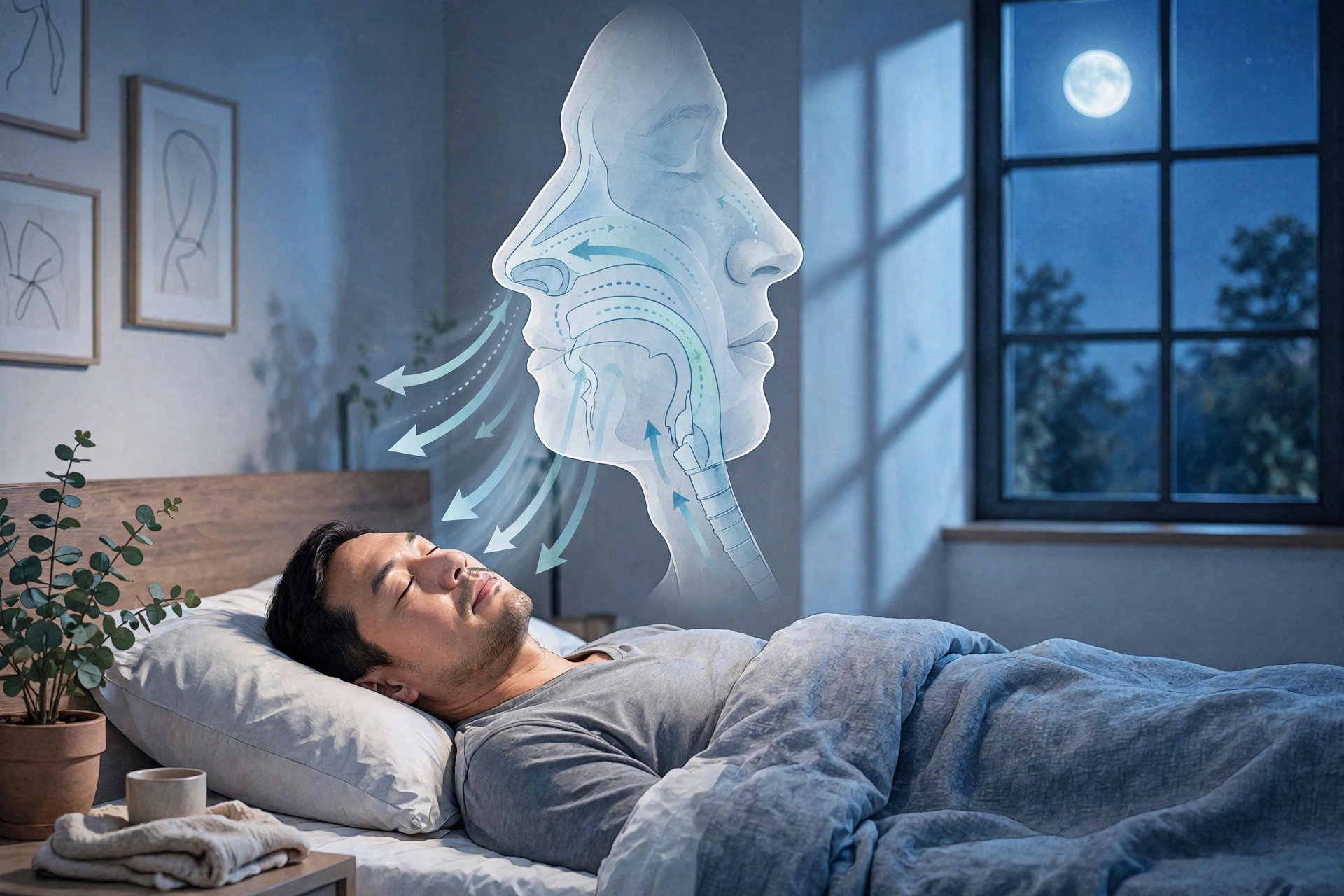
Obstructive sleep apnea (OSA) is the most common form of the condition. During sleep, the muscles at the back of the throat relax and the airway narrows or closes, causing breathing to pause repeatedly — sometimes dozens of times per hour. Each pause drops blood oxygen levels and briefly rouses the brain, fragmenting sleep without the person ever fully waking. (The Mayo Clinic’s overview of obstructive sleep apnea describes these symptoms and causes in detail.) Over months and years, this nightly strain damages blood vessels, disrupts hormones, and strains the nervous system — the same systems an erection depends on.
How Common Is ED in Men With Sleep Apnea?
Across multiple studies and reviews, roughly 41% to 82% of men with obstructive sleep apnea also have some degree of erectile dysfunction. One study found that nearly two-thirds of people with OSA had ED, rising to almost three-quarters among those with severe apnea.
The link also runs in the other direction. In one widely cited study, researchers evaluated men who came to a clinic primarily for erectile dysfunction — and found that more than 90% of them had undiagnosed sleep-disordered breathing. That finding is one of the strongest hints that sleep apnea is a frequently overlooked contributor to ED.
That said, erectile dysfunction almost always has more than one cause: age, weight, blood pressure, diabetes, medications, smoking, alcohol, and psychological factors all play roles. Sleep apnea may be the missing piece in a man who has addressed the obvious factors and still struggles.

Why Sleep Apnea and Erectile Dysfunction Are Connected
An erection is a team effort. It requires healthy blood vessels that can widen on demand, balanced hormones — especially testosterone — a responsive nervous system, and adequate blood oxygen. Sleep apnea can interfere with every one of these systems. Researchers have identified several overlapping pathways:
1. Damaged blood vessels and low oxygen
Each apnea episode starves the body of oxygen for seconds at a time, then floods it back when breathing resumes. This repeated cycle creates oxidative stress and chronic low-grade inflammation, which damage the delicate inner lining of blood vessels. It also reduces levels of nitric oxide, the molecule that tells blood vessels to relax and widen — the exact signal needed for an erection. Over time, researchers believe this process prematurely ages blood vessels, making them stiffer and narrower. Since erectile function depends on precisely controlled blood flow, the penis is often one of the first places vascular damage shows up.
2. Disrupted testosterone production
Most testosterone is produced during sleep, particularly during the deeper stages and REM (rapid eye movement) sleep. Because sleep apnea fragments the night with constant micro-awakenings, men with OSA spend less time in these restorative stages. Studies consistently link sleep disorders — including apnea — with lower morning testosterone levels and a higher likelihood of testosterone deficiency. Lower testosterone, in turn, is associated with reduced libido and can contribute to erectile difficulties. For more on the warning signs, see our guide to low testosterone symptoms and when testing makes sense.
3. An overworked nervous system
Every time breathing stops, the body jolts into fight-or-flight mode to restart it. Men with severe apnea can experience this surge dozens of times per hour, all night, every night. That chronic sympathetic nervous system activation works directly against the calm, parasympathetic state an erection requires. Some research also suggests that repeated oxygen dips may impair the nerves that carry signals between the brain and the pelvic region, further disrupting the communication an erection depends on.
4. Shared risk factors that multiply the damage
Sleep apnea and ED share many of the same risk factors: excess weight, high blood pressure, type 2 diabetes, older age, and smoking. Having several of these at once does not just add risk — it multiplies it. This is one reason doctors treat ED as a window into overall health rather than an isolated problem. Our overview of the common causes of erectile dysfunction explains how these factors interact.
The Reverse Direction: When ED Is the First Warning Sign
Most articles on this topic focus on men who know they have sleep apnea. But the more useful question for many readers is the opposite one: could erectile dysfunction be the first noticeable symptom of undiagnosed sleep apnea?
The evidence suggests it can. The finding that the vast majority of men seeking help for ED also showed signs of sleep-disordered breathing means that urologists and primary care doctors are increasingly encouraged to ask about snoring, daytime sleepiness, and witnessed breathing pauses when a man reports erectile problems — especially when standard ED treatments are not working as expected.
This matters because ED is often an early warning sign of vascular trouble. The arteries supplying the penis are narrower than coronary arteries, so they tend to show the effects of vessel damage years before the heart does. A man whose erectile function declines in his 40s may be seeing the first visible sign of the same process that, left unchecked, raises the risk of hypertension, heart disease, and stroke — all conditions sleep apnea also promotes.
Morning Erections: A Window Into Nighttime Health
Here is something most coverage of this topic misses: healthy men typically have several erections during the night, mostly during REM sleep. These nocturnal erections are thought to keep penile tissue oxygenated and healthy. A man who regularly wakes with a morning erection is demonstrating that the plumbing — blood vessels and nerves — is working during sleep.
When sleep apnea fragments REM sleep, nocturnal erections become fewer and weaker, and morning erections may disappear. Clinicians have long used this as a rough diagnostic clue: ED with a complete loss of morning erections leans toward a physical cause, while ED with preserved morning erections leans more toward psychological factors such as anxiety or stress. (It is only a clue, not a diagnosis — age and medications also affect morning erections.)
The practical takeaway is simple: if your morning erections have gradually faded at the same time your snoring got worse and your daytime energy dropped, mention all three changes to your doctor together. The pattern tells a clearer story than any single symptom.
The Fatigue–Mood–Relationship Cycle
Sleep apnea does not only attack blood vessels and hormones. It also sets off a psychological chain reaction that can make ED worse — and that chain reaction is rarely discussed in medical overviews of the topic.
It starts with exhaustion. A man who stops breathing dozens of times a night wakes up unrefreshed no matter how long he stays in bed. Chronic fatigue drains libido directly: desire is hard to sustain when simply staying awake through the day feels like work. Our article on how sleep affects sex drive covers this connection in more depth.
Fatigue then feeds irritability, low mood, and in some men, depression — all established contributors to erectile dysfunction. Performance anxiety can enter next: worry about the next attempt interferes with the relaxed state an erection needs, making the cycle self-reinforcing.
Loud, chronic snoring disrupts a partner’s sleep too. Separate bedrooms, resentment over lost sleep, and reduced closeness can strain intimacy in ways that have nothing to do with blood vessels — yet still affect a couple’s sex life. Treating apnea often improves the partner’s sleep as well, which is one more reason to include them in the conversation about treatment.

Treating Sleep Apnea: What It Can (and Can’t) Do for Erectile Function
The most encouraging part of the research is that treating sleep apnea appears to help erectile function in many men — though the details matter, and honest expectations are important.
CPAP therapy
Continuous positive airway pressure (CPAP) is the first-line treatment for moderate to severe obstructive sleep apnea. A machine delivers gently pressurized air through a mask, keeping the airway open through the night. Studies have linked consistent CPAP use with improved erectile function scores, better nocturnal erections, and improved overall sexual satisfaction. Researchers believe the benefit comes from restored oxygen levels, less fragmented sleep, and reduced strain on blood vessels and nerves.
However, CPAP is not a standalone ED treatment: research suggests it improves some aspects of erectile function more than others, and the gains depend heavily on consistent, nightly use. Many men do best combining CPAP with standard ED care — lifestyle changes and, when appropriate, prescription medications — under a doctor’s guidance.
Oral appliances and other devices
For mild to moderate apnea — or for people who cannot tolerate CPAP — custom-fitted oral appliances that reposition the jaw or tongue can keep the airway open. Auto-adjusting PAP machines and nasal pressure devices are other options; any treatment that meaningfully reduces apnea episodes may help the downstream effects on erectile function.
Surgery
Several surgical procedures can treat obstructive sleep apnea by removing or repositioning tissue that blocks the airway. Studies of procedures such as uvulopalatopharyngoplasty (UPPP) and newer techniques like transoral robotic surgery have reported improvements in erectile function scores after surgery. Interestingly, in some studies the erectile improvement did not track perfectly with the degree of apnea improvement — suggesting that changes in oxygenation, hormones, or nerve function play independent roles. Surgery is generally considered when other treatments have not worked or are not suitable.
Lifestyle changes
Weight loss is one of the most powerful interventions for both conditions: losing a meaningful amount of excess weight can reduce apnea severity and improve erectile function at the same time. Regular exercise, quitting smoking, limiting alcohol (especially before bed), and avoiding back-sleeping can all reduce apnea episodes. These same habits improve vascular health, which benefits erectile function directly.
Setting realistic expectations
Improvement is usually gradual, not overnight. Blood vessels and hormone rhythms need weeks to months of consistently better sleep to recover, so expect a slow upward trend rather than an immediate transformation. If erectile function has not improved after several months of effective, nightly apnea treatment, that is useful information for the doctor — it suggests other contributors deserve attention, from medications to cardiovascular risk factors to psychological components.
Sleep Apnea and Erectile Dysfunction: A Checklist to Bring to Your Doctor
If you have ED and suspect sleep might be part of the story, these questions can help you have a productive conversation with your healthcare provider. They are not a diagnosis — only a sleep study can diagnose sleep apnea — but answering “yes” to several is a good reason to ask about screening:
- Do you snore loudly enough to be heard through a closed door, or has anyone observed you stop breathing during sleep?
- Do you often wake up with a dry mouth, sore throat, or morning headaches?
- Do you feel excessively sleepy during the day, even after a full night in bed?
- Do you have high blood pressure that is difficult to control?
- Have your morning erections become noticeably less frequent than they used to be?
- Has your libido declined alongside your energy levels?
- Do you fall asleep easily while reading, watching television, or driving?
Bring notes on your sleep patterns, your medications, and when the erectile changes began. If sleep apnea seems likely, the usual next step is a referral for a sleep study — either at a sleep center or, for many people, a simplified home-based test.
When to See a Doctor
Make an appointment with your healthcare provider if you experience ongoing erectile difficulties, especially if they are accompanied by loud snoring, witnessed breathing pauses, gasping during sleep, or persistent daytime tiredness. Mention every symptom, even ones that seem unrelated — doctors evaluating ED routinely look for underlying conditions, and the full picture helps them choose the right tests.
Seek prompt medical attention if erectile problems appear alongside chest pain, shortness of breath, or other signs of cardiovascular trouble, since ED can be an early marker of heart and vessel disease.
Frequently Asked Questions
Can sleep apnea cause erectile dysfunction?
Sleep apnea does not guarantee ED, but research shows a strong association: between roughly 40% and 80% of men with obstructive sleep apnea have some degree of erectile dysfunction, with higher rates in severe cases. The proposed mechanisms include repeated drops in blood oxygen that damage blood vessels, fragmented sleep that lowers testosterone production, and chronic activation of the stress response. Because ED usually has multiple causes, sleep apnea is best understood as an important — and often treatable — contributor rather than the sole cause.
Will treating my sleep apnea fix my ED?
It may improve it, but it is not a guaranteed cure. Studies show that effective apnea treatment — particularly consistent CPAP use — is associated with better erectile function scores and improved nocturnal erections in many men. However, experts recommend combining apnea treatment with standard ED care, such as lifestyle changes and, when appropriate, prescription ED medications. The more contributors a man’s ED has (diabetes, hypertension, medications, anxiety), the more likely he is to need a combined approach.
How long does it take for erectile function to improve after starting sleep apnea treatment?
Improvement is typically gradual. Most studies measure changes over weeks to months of consistent treatment. Blood vessels, hormone rhythms, and sleep architecture need sustained recovery time, so men should not expect immediate results in the first days of CPAP or other therapy. If there is no improvement after several months of effective, nightly treatment, follow up with your doctor to reassess other possible contributors.
Does CPAP increase testosterone?
CPAP does not directly raise testosterone the way hormone therapy does. However, by restoring uninterrupted sleep — including the deep and REM stages when most testosterone is produced — consistent CPAP use may allow the body’s natural testosterone production to recover. The effect varies between individuals, and men with significant testosterone deficiency may still need separate evaluation and treatment for that condition.
Can sleep apnea lower my sex drive even without ED?
Yes. Decreased libido is considered one of the symptoms of sleep apnea. Chronic exhaustion, fragmented sleep, lower testosterone, and the low mood that often accompanies poor sleep can all reduce sexual desire independently of erectile mechanics. Some men notice their interest in sex returning before their erectile function fully recovers once sleep improves.
Should I get tested for sleep apnea if I have ED but don’t snore?
It is worth discussing with your doctor. Not everyone with sleep apnea snores loudly — and some people sleep alone, so nobody has observed their snoring or breathing pauses. Daytime sleepiness, morning headaches, unrefreshing sleep, resistant high blood pressure, and a fading pattern of morning erections can all be clues even in the absence of obvious snoring. A sleep study is the only way to confirm or rule out the diagnosis.
This article is for educational purposes only and is not medical advice. It does not diagnose any condition or replace evaluation by a qualified healthcare professional. If you are experiencing symptoms of sleep apnea or erectile dysfunction, speak with your doctor about appropriate testing and treatment. Do not start, stop, or change any medication or treatment without medical guidance.