Decreasing Semen Volume With Age: What’s Normal
Noticing a change in your ejaculate as the years go by is something many men observe quietly — and rarely ask about. If you’ve been looking for clear answers about low semen volume, you’re not alone. The pattern of semen volume decrease with age is one of the most consistent findings in men’s health research: semen volume declines gradually as men get older, and for most men this is a natural part of aging, not a sign that something is wrong.
But “normal” has a range, and the details matter. A gradual reduction over decades is expected; a sudden or dramatic drop is not. In this guide, we break down what the research shows about semen volume by decade, why it happens, the common myths men believe about it, the lifestyle factors that genuinely influence it, and — just as importantly — the red flags that mean you should see a doctor.
What Counts as “Normal” Semen Volume?
Before asking whether your volume is “too low,” it helps to know the benchmarks clinicians use. The World Health Organization sets the lower reference limit for semen volume at 1.5 milliliters — roughly a third of a teaspoon. Volumes at or above that level are generally considered within the normal range for fertility testing purposes.
Cleveland Clinic’s reference ranges describe typical ejaculate volume as 1.5 to 7.6 mL, with most men falling somewhere around 3 mL on average. That is a wide range, and it is wide for a reason: volume varies enormously from man to man and even from day to day in the same man. Where you fall in that range depends on genetics, age, how recently you last ejaculated, hydration, medications, and overall health.
The key takeaway is that being on the lower end of the normal range is not a diagnosis of anything. Normal is a spectrum, and a 55-year-old man with 2.0 mL and a 28-year-old man with 3.5 mL can both be perfectly healthy. If you’re comparing your own numbers while reading about semen volume decrease age, keep that spectrum in mind.
Low Semen Volume: What the Research Shows by Decade
The link between low semen volume and age is one of the most consistent findings in male reproductive research. Several large studies have measured it directly:
- A study published in the Journal of Urology analyzed semen samples from more than 9,000 men and found a steady decline in volume with age. Men aged 30–35 had a median volume of about 3.7 mL, while men aged 50–55 averaged around 2.6 mL.
- A study in the International Journal of Andrology involving more than 1,500 men across age groups found average volumes of roughly 3.4 mL in men aged 30–35, falling to about 2.1 mL in men aged 60 and older.
- A well-known analysis of 97 healthy men aged 22 to 80 found that volume declines by approximately 0.03 mL per year, continuously across the entire lifespan — with no sudden cliff or threshold age.
- A 2016 review in the Asian Journal of Andrology concluded that the decline is gradual but becomes more noticeable after age 40.
Putting it together, a rough picture by decade looks like this:
- 20s: about 3.0–3.6 mL — near lifetime peak
- 30s: about 3.2–3.5 mL — the peak years for most men
- 40s: about 2.6–3.0 mL — the gradual decline becomes noticeable
- 50s and beyond: about 2.2–2.6 mL — continuing gradual reduction
These semen volume decrease age figures are population averages, not personal targets. A man in his 50s with 2.5 mL is sitting right in the expected range — and still well above the 1.5 mL clinical reference limit. The important pattern is the rate of change: slow, steady, and measured in decades, not weeks.
Why It Happens: The Glands Behind the Fluid
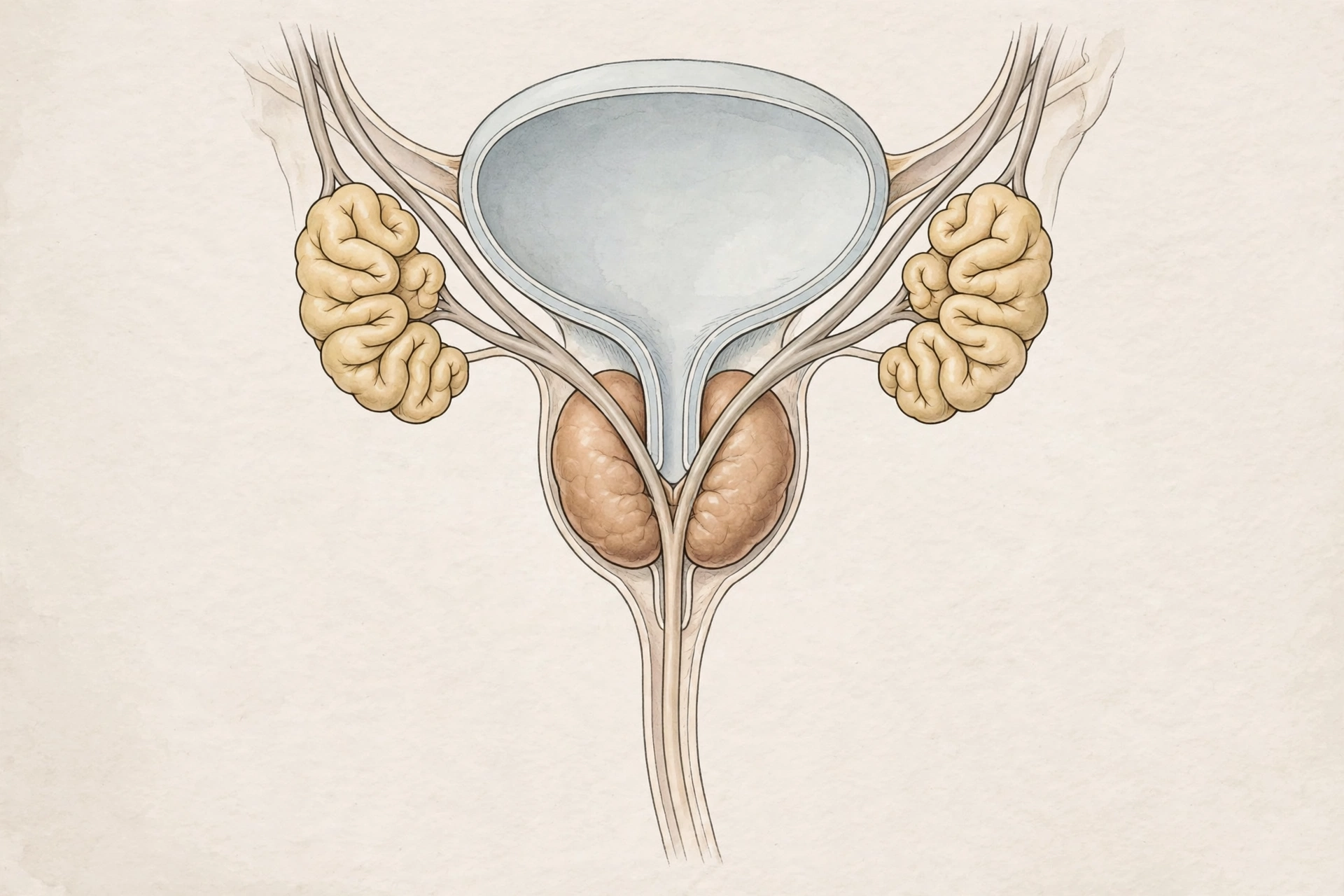
To understand low semen volume patterns, it helps to know what semen actually is. Only a small fraction of the ejaculate — typically under 10% — comes from the testicles and carries the sperm. The overwhelming majority of the fluid is produced by the accessory sex glands:
- Seminal vesicles contribute roughly 60–70% of the volume — a fructose-rich fluid that nourishes sperm.
- The prostate contributes roughly 20–30% — a thin, milky fluid that helps sperm move and protects them in the vagina.
- The bulbourethral (Cowper’s) glands add a small amount of pre-ejaculatory lubricating fluid.
With age, these glands gradually change. Prostate tissue naturally enlarges and its secretory output shifts; seminal vesicle function declines; and the smooth-muscle contractions that expel the ejaculate can weaken slightly. Declining androgen levels over time — testosterone falls gradually from the mid-30s onward — also reduce glandular output, since these glands depend on male hormones to function at full capacity.
In other words, the decline is mostly about the fluid factories slowing down, not about the testicles failing. That distinction matters, as we will see next. If you want a deeper look at how male hormones and the prostate interact over the decades, see our guide: testosterone and prostate health.
Volume vs. Count vs. Virility: What Men Get Wrong
One of the biggest sources of anxiety around low semen volume is a simple confusion between three different things:
- Semen volume is the total amount of fluid — what you notice.
- Sperm count is the number of sperm in that fluid — what actually matters for fertility.
- Virility is a cultural concept — and it is not measured in milliliters.
A smaller volume does not automatically mean fewer sperm. Many older men have normal sperm concentrations in a smaller volume — and total sperm output, while it does decline with age, declines more slowly than most men assume. Conversely, a large volume with a very low sperm count is entirely possible.
Likewise, semen volume says essentially nothing about sexual performance, erection quality, or “manhood.” Erectile function and ejaculate volume are governed by overlapping but distinct systems. Men who tie their sense of virility to how much fluid they produce are measuring something that has no bearing on their masculinity — a misunderstanding that causes a great deal of unnecessary distress. This confusion is one of the most common reasons men worry about semen volume decrease age.
The Abstinence Factor: Why Today’s Volume May Mislead You
Here is something most articles about semen volume decrease age fail to mention: the single biggest day-to-day influence on semen volume is how recently you last ejaculated.
Clinical testing standards require 2 to 7 days of abstinence before a semen sample is considered valid — precisely because frequency changes everything. A man who ejaculates daily will almost always produce less fluid per ejaculation than the same man after five days of abstinence. That is physiology, not pathology.
So if you have noticed a smaller volume lately, ask yourself: has anything about your frequency changed? A man who has become sexually more active — with a partner or alone — will naturally see less per occasion. This is also why comparing your current volume to your teenage or early-20s experience is misleading: frequency of ejaculation in those years was often different too.
The practical rule: judge trends, not single events. A gradually declining average over years is aging. A sudden change after a recent shift in routine is usually just routine.
Lifestyle Factors That Genuinely Influence Semen Volume
Aging is the dominant factor, but it is not the only one. Research on semen volume decrease age has identified several modifiable factors that affect semen volume and overall semen quality:
- Hydration: Semen is mostly water. Chronic dehydration will not drop you below the clinical threshold on its own, but adequate fluid intake supports normal glandular function.
- Smoking: Tobacco use is consistently linked to poorer semen parameters, including lower volume. Quitting is one of the highest-impact changes a man can make for reproductive health.
- Alcohol: Heavy or chronic alcohol use is associated with reduced semen quality and hormonal disruption.
- Exercise and body weight: Regular moderate exercise supports healthy testosterone levels; obesity is linked to lower semen quality through hormonal disruption.
- Sleep: Testosterone production follows the sleep cycle, with most daily release occurring during sleep. Chronic sleep deprivation suppresses testosterone, which affects glandular function.
- Heat exposure: Frequent prolonged high heat — hot tubs, saunas — impairs sperm production. Its effect on volume specifically is smaller, but it matters for overall reproductive health.
- Stress: Chronic stress disrupts the hormonal axis that regulates reproduction, and men under sustained high stress often show measurable changes in semen parameters.
Be skeptical of supplements marketed specifically to “increase semen volume.” Most have little to no clinical evidence behind them, and some interfere with medications or mask symptoms that deserve medical attention. The fundamentals — sleep, hydration, not smoking, moderate alcohol, regular exercise — carry more evidence than any pill on the shelf.

Red Flags: When a Drop in Semen Volume Is Not Normal
Normal semen volume decrease age is slow and gradual. The following patterns are not normal aging and deserve a medical evaluation:
- A sudden, marked drop — going from your usual volume to almost nothing within weeks or months. Aging does not work like that.
- Dry or nearly dry orgasm — orgasm with little or no fluid, sometimes with cloudy urine afterward. This can indicate retrograde ejaculation, where semen flows backward into the bladder instead of forward. It is commonly associated with diabetes, certain prostate or bladder surgeries, and some medications.
- Volume consistently below 1.5 mL — below the WHO reference limit, especially if you are also having fertility difficulties. This can signal blocked or underperforming seminal vesicles, or ejaculatory duct obstruction.
- Pain, burning, or blood in the semen — pain during ejaculation or reddish/brown discoloration is never normal aging and should be evaluated promptly.
- New medications with timing that matches the change — certain drugs are known to reduce ejaculate volume. Common culprits include 5-alpha reductase inhibitors (finasteride, dutasteride) used for prostate enlargement, alpha-blockers (tamsulosin and similar) used for urinary symptoms, some antidepressants, and certain blood pressure medications. Never stop a prescribed medication on your own — but do tell your doctor about the timing.
The difference between aging and a medical problem usually comes down to speed. Decades-long drift is aging; an abrupt change is a symptom.
What a Semen Analysis Can Actually Tell You
If low semen volume has you concerned — about fertility, or simply about whether your numbers are where they should be — a semen analysis is the definitive test. It is a simple laboratory test, usually involving one or two samples collected after 2 to 7 days of abstinence, that measures volume, sperm count, motility (movement), morphology (shape), pH, and other parameters.
Cleveland Clinic notes that results are typically compared against established reference ranges, and more than one test is often recommended because parameters vary from day to day. A single low result is not a verdict — clinics usually confirm with a repeat test before drawing conclusions. You can learn what each number on your results actually means in our guide: semen analysis results explained.
A semen analysis is also the right step if you and a partner have been trying to conceive for 12 months (or 6 months if the female partner is over 35) without success — earlier if you have noticed red flags like those listed above. See when couples should see a fertility specialist for more on timing.
Evidence-Based Ways to Support Healthy Semen Volume
You cannot stop aging, but you can support the systems behind semen volume — the most practical response to semen volume decrease age. The evidence points to a short, realistic list:
- Stay well hydrated every day — not just on the days you are thinking about it.
- Do not smoke, and if you do, quitting is the single most impactful change.
- Keep alcohol moderate; avoid chronic heavy use.
- Exercise regularly and maintain a healthy weight — both support the testosterone levels your glands depend on.
- Protect your sleep: 7–9 hours consistently matters more than most men realize for hormonal health.
- Review your medications with your doctor if you noticed a change after starting something new.
- Manage chronic conditions — especially diabetes and high blood pressure — which are among the most common medical causes of ejaculatory changes in older men.
Mayo Clinic notes that while men can father children well into their later years, fertility does decline gradually after 40 — and general health, medications, and lifestyle influence reproductive function at every age. Read more: Mayo Clinic on paternal age and fertility.
The bottom line on low semen volume is reassuring: a slow decline in volume across your 40s, 50s, and beyond is one of the most predictable features of male aging. It does not mean your body is failing, it does not measure your masculinity, and on its own it does not mean you cannot father children.
Frequently Asked Questions
At what age does semen volume start to decrease?
Research on semen volume decrease age shows a gradual decline with no sharp starting point. Measurable decreases begin as early as the mid-30s in some studies, with volume falling about 0.03 mL per year continuously from the 20s through the 80s. Most men first notice the change in their 40s, and the decline becomes more pronounced after 40. There is no sudden “cliff” age.
Is less semen a sign of low testosterone?
Not necessarily. While testosterone supports the glands that produce seminal fluid, low volume alone is a poor indicator of low testosterone. Many men with normal testosterone have below-average volume, and vice versa. Symptoms like low libido, fatigue, reduced muscle mass, and mood changes are far more suggestive of low testosterone than ejaculate volume. A blood test is the only reliable way to know your levels.
Does less semen mean I am less fertile?
Not directly. Fertility depends far more on total motile sperm count — the number of moving, healthy sperm — than on fluid volume. A smaller volume with a healthy sperm count can be more fertile than a large volume with few moving sperm. If conception is the goal, a semen analysis measuring all parameters is far more informative than volume alone.
Can I increase my semen volume?
There is no proven way to reverse age-related decline, and most marketed supplements lack credible evidence. What you can do is avoid the factors that suppress volume: stay hydrated, don’t smoke, limit alcohol, exercise, sleep well, and review medications with your doctor. Adequate abstinence time (a few days) will also raise per-ejaculation volume temporarily — that is normal physiology.
Why is there suddenly much less semen than before?
A gradual decrease over years is normal aging. A sudden, significant drop is not — and it has different causes, including new medications (especially prostate and blood pressure drugs), retrograde ejaculation, uncontrolled diabetes, or a blockage in the reproductive tract. If your volume changed abruptly, see a urologist rather than assuming it is age.
Does a vasectomy reduce semen volume?
Very little. Studies comparing men before and after vasectomy found only a slight decrease — around 0.3 to 0.4 mL, similar to the change seen in non-vasectomized men over a comparable period. Vasectomy removes sperm from the fluid but leaves the fluid-producing glands intact, so volume is largely preserved.
When should I see a doctor about decreasing semen volume?
See a doctor if your volume dropped suddenly, if you have orgasms with little or no fluid, if your volume is consistently below 1.5 mL, if you notice pain, burning, or blood in the semen, or if you have been trying to conceive for 12 months without success (6 months if your partner is over 35). A urologist or fertility specialist can evaluate you with a semen analysis and a medical history.
When to See a Doctor
Most men never need medical attention for semen volume decrease age — it is expected and harmless. But do not ignore the red flags described above. A urologist can usually identify the cause of an abnormal drop quickly, often with a semen analysis and a review of your medications and medical history. Many causes, from medication side effects to retrograde ejaculation, are treatable once identified.
This article is for educational purposes only and is not medical advice. If you are concerned about changes in your reproductive health, please consult a qualified healthcare professional such as a urologist or your primary care doctor.