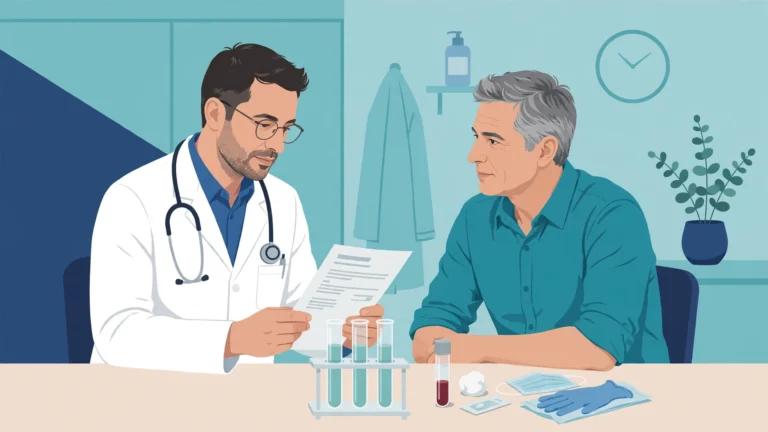
Penis Size Anxiety: What Research Shows
When it comes to average penis size, almost half of all men believe they fall short — and for the vast majority, the measurements say otherwise. Average penis size figures from peer-reviewed research paint a picture that is equal parts reassuring and troubling: the average man sits comfortably inside the normal range, yet his confidence about that keeps shrinking. This article gathers what scientists have actually measured, why worry so rarely matches reality, what partners truly say about size, and the evidence-based steps that help men move past the anxiety.
Average Penis Size: What the Research Shows
Start with the numbers, because they are the single most powerful antidote to size worry. For most readers, learning the real average penis size is the moment the worry starts to fade. In 2015, a team led by psychiatrist David Veale at King’s College London pooled 17 studies in which health professionals — not the men themselves — had measured penises using a standardized procedure, covering up to 15,521 men. Their nomograms (the charts doctors use as reference ranges) found:
- Flaccid length: average penis size is 9.16 cm (about 3.6 inches)
- Stretched length: average penis size is 13.24 cm (about 5.2 inches)
- Erect length: average penis size is 13.12 cm (about 5.17 inches)
- Flaccid girth: average penis size is 9.31 cm (about 3.7 inches)
- Erect girth: average penis size is 11.66 cm (about 4.6 inches)
A 2024 systematic review and meta-analysis pooling 33 studies and 36,883 men reached broadly similar averages across World Health Organization regions. The takeaway is consistent: most men who worry about being small are, on objective measurement, squarely average. In counselling settings, doctors routinely use exactly these charts to show anxious men where they fall — and most discover they were worried about nothing. If you take one number from this article, make it the average penis size above — the reality check most men never get.
The clinical bar for a genuinely small penis is far lower than most men imagine. A widely cited Journal of Urology analysis concluded that only men with a flaccid length under 4 cm (1.6 inches) or an erect or stretched length under 7.5 cm (3 inches) should even be considered candidates for penile lengthening. A separate rare condition, micropenis — caused by hormonal or developmental factors and usually identified in infancy — affects roughly 1.5 in 10,000 newborns.
Why Worry Rarely Matches Reality
If most men sit near the average penis size, why are so many convinced they are not? Research points to a handful of perception traps that distort how men see themselves.
The vantage-point effect. You see your own body from above, and that angle foreshortens what you see. Other people in a locker room or changing room appear larger simply because you are viewing them from the front, not from above. It is a trick of perspective, not a measurement. What feels small from above is usually a perfectly normal average penis size.
Pornography is a rigged comparison. Adult performers are selected precisely because they are anatomical outliers, filmed with flattering camera angles and lighting designed to exaggerate. Comparing yourself to performers is like comparing your height to professional basketball players. A qualitative study of men who had undergone penile augmentation found that pornography, peer comparison, and mass-media portrayals were the main drivers of their dissatisfaction — notably, none of them had ever received a negative comment about their size from a partner.
Anxiety does not track actual size. In a King’s College London study of 173 men, researchers had a urologist measure each participant and then assessed their beliefs about size. Anxiety about size did not correlate with actual size at all — even men who were objectively above average reported shame and fear of rejection. Only about 35 percent of men surveyed said they were satisfied with their penis size, while 30 percent were dissatisfied. The worry was highest among gay and bisexual men and older men. Knowing the actual average penis size rarely calms this on its own — the worry is emotional, not mathematical.
This pattern is so common it has a name. Researchers use the term small penis anxiety to describe persistent worry about size in men whose anatomy is within the normal range — and note that it overlaps with the older label “small penis syndrome.” It is not about the body; it is about the brain’s comparison machinery. The label matters less than the fix: learning the real average penis size and how perception distorts it.

What Partners Actually Say About Size
Here is the data point that surprises anxious men the most. In a large UCLA survey of more than 25,000 heterosexual men and women, 84 percent of women said they were satisfied with their partner’s penis size — while only 55 percent of men were satisfied with their own. The “size problem” largely exists in men’s heads, not in their partners’ experience. For most couples, the average penis size is already more than enough.
There is anatomy behind that gap in perception. Most of the nerve endings involved in vaginal pleasure sit in the first third of the vagina, which is why length plays a smaller role than many men assume. Surveys that ask women what determines a satisfying sex life consistently rank size far below emotional connection, communication, foreplay, and attentiveness.
The honest version of “does size matter?” is therefore this: extreme outliers aside, it matters far less than the man worrying about it believes, and far less than the things he can actually change — presence, communication, and skill. In practice, the average penis size is more than enough for most couples.
Why Flaccid Size Tells You Almost Nothing
Many men judge themselves by how they look in the shower or the locker room, which is the worst possible reference point. Clinical measurements show that flaccid length is a poor predictor of erect length. Some men with a modest flaccid size experience substantial expansion during erection, while some with a larger flaccid size show comparatively little change — the well-known “grower versus shower” difference. Anxious men are disproportionately likely to be “growers,” meaning the state they compare themselves in is the one least representative of the state that matters. A flaccid look in the mirror says nothing about the average penis size where it counts.
Temporary factors also shift flaccid appearance: cold water, stress, and anxiety itself can reduce apparent flaccid size through normal blood-vessel constriction. And most published averages use “bone-pressed” length — a ruler pressed to the pubic bone to the tip — because it removes the variable of the pubic fat pad. Measure correctly before concluding anything: on the top side, pubic bone to tip, mid-shaft for girth.
How Size Anxiety Damages Sex and Mental Health
The cruelest irony of penis size anxiety is that worry about the average penis size causes the very problems men fear. Research links negative genital self-image with a cascade of real consequences:
- Erectile dysfunction and premature ejaculation. The link between a worried mind and sexual performance is well established. In a clinical cohort of 90 men, those with penis-focused body dysmorphic concerns were significantly more likely to report erectile dysfunction and lower intercourse satisfaction than men without such concerns — while their libido remained intact. Anxiety diverts attention away from arousal and into self-monitoring, which is physiologically incompatible with relaxed sexual function. This is one reason size worry and performance anxiety so often travel together.
- Depression and anxiety. A 2024 study using the State-Trait Anxiety Inventory and the Beck Depression Inventory found a moderate-to-strong association between negative genital self-image and higher anxiety and depressive symptom scores. In a nationally representative U.S. sample, around 20 percent of men reported dissatisfaction with their genital size — and lower scores on genital self-image tracked with poorer erectile function.
- Avoidance. Some men delay dating, avoid new relationships, keep the lights off, or avoid being seen naked — behaviours that protect against a feared judgment while quietly eroding intimacy and body image and sexual confidence.
- Risky spending. Desperation makes men vulnerable. Reviews warn that men with size concerns are particularly exposed to non-evidence-based and potentially harmful enhancement products — more on that below.
The pattern researchers describe is a feedback loop: worry → self-monitoring and avoidance → worse sexual experience → more worry. Breaking the loop means addressing the anxiety, not the anatomy — because the anatomy was almost always fine. Learning the true average penis size — and seeing where you actually fall — is often the fastest way to break it.
When Worry Becomes a Disorder: Small Penis Anxiety vs. Body Dysmorphic Disorder
Most size worry is ordinary insecurity. But at the severe end, it can meet the criteria for penile dysmorphic disorder (PDD), a penis-focused subtype of body dysmorphic disorder. The difference between small penis anxiety and PDD is measured by how much time the preoccupation consumes, how distressing it is, and how much it impairs daily life — not by anatomy.
Warning signs that worry has crossed into disorder territory include spending an hour or more a day thinking about size, compulsive measuring or checking, repeated reassurance-seeking, avoiding dating or intimacy, and feeling unable to function at work or socially because of the preoccupation. The Mayo Clinic’s overview of body dysmorphic disorder describes the general pattern: extreme preoccupation with a perceived flaw, compulsive comparison, and belief that others notice the flaw negatively.
Clinicians can distinguish the two with validated screening tools such as the Cosmetic Procedures Screening Scale for Penile Dysmorphic Disorder (COPS-P). Why the distinction matters: men with PDD respond best to psychological treatment — structured counselling, cognitive behavioural therapy, and sometimes medication for underlying anxiety or depression — and cosmetic or surgical intervention in this group is considered unethical outside clinical trials, because it rarely resolves the distress.
The Enlargement Scam Industry: What to Know Before You Spend a Cent
A billion-dollar industry exists to monetize worry about the average penis size, and knowing what the evidence says about its products is one of the most practical takeaways of all.
- Pills, supplements, and creams. There is no credible evidence that any oral supplement or topical cream permanently increases penis size. Regulatory agencies in several countries have warned that many of these products contain undisclosed prescription drug ingredients or contaminants.
- Vacuum pumps. These create temporary swelling that fades within hours; aggressive use can damage blood vessels and nerves.
- Surgery. Procedures carry risks of scarring, infection, sensation loss, and erectile problems. A 2020 systematic review concluded the evidence was scant, that structured counselling alone convinced the majority of men they were normal, and that surgery in anatomically normal men should remain a last option — with a 2024 review adding concerns about complication rates.
Red flags for scams: before-and-after photos, “doctors don’t want you to know” language, countdown timers, fake reviews, and any product claiming permanent gains with zero risk. Legitimate urologists do not sell enlargement through Instagram ads.
Evidence-Based Steps That Actually Help
If worry about the average penis size is affecting your mood, your relationships, or your sex life, these are the steps supported by clinical guidance — none of them involves changing your anatomy.
1. Get real numbers, properly measured. Measure once, correctly (bone-pressed, erect), and compare against the Veale nomograms, not against porn or locker-room glances. For most men, this single step resolves the question permanently. If you are genuinely at or near the clinical thresholds described above, a urologist can evaluate you — read Cleveland Clinic’s guide to micropenis to understand how the condition is actually diagnosed.
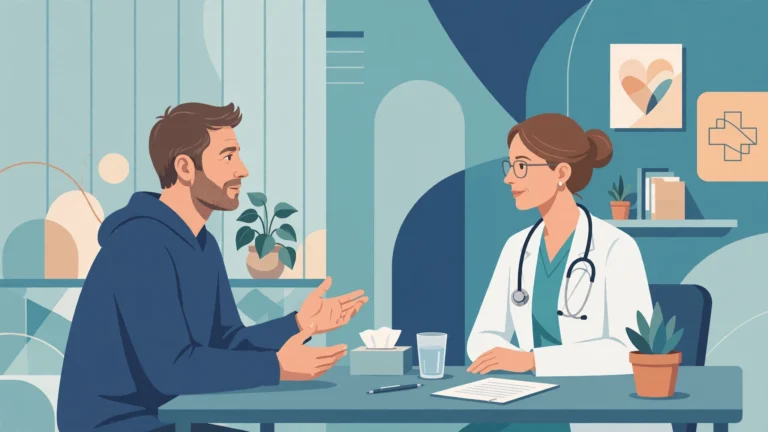
2. Talk to a doctor without embarrassment. Urologists and sexual-health clinicians hear this concern weekly. A straightforward appointment gives you a professional assessment, rules out anything medical, and — research shows — the counselling conversation alone reassures the majority of men, most of whom learn they match the average penis size. This is also the right move if anxiety is paired with erectile difficulties, since ED can have physical causes worth checking.
3. Address the anxiety directly. Cognitive behavioural therapy (CBT) is the best-supported treatment for body-image-related distress. Its techniques map neatly onto size anxiety: catching catastrophic thoughts (“she will reject me”) and testing them against evidence, cutting compulsive checking and reassurance-seeking, and gradually facing avoided situations (dating, undressing with the lights on) rather than dodging them. Many therapists now offer this work specifically for sexual and genital body-image concerns. It helps men accept the average penis size — and their place within it — instead of fighting reality.
4. Talk to your partner — with a script. Most men never learn their partner’s actual view because they never ask. A simple opener works: “I carry some insecurity about my body — I’d love to know what actually matters to you in bed.” Partners almost always name connection and attentiveness, and hearing it directly dissolves what no statistic can. Our guide on how stress and anxiety affect intimacy covers keeping these conversations productive.
5. Fix what actually affects performance. Sleep, exercise, cardiovascular health, alcohol moderation, and stress management all measurably improve erectile function — which is what partners actually experience. Pelvic floor (Kegel) exercises have shown benefit for erectile function in clinical studies. Chasing these improvements pays off; chasing millimetres does not.
6. Curate your inputs. If porn is your reference library, it is lying to you. Reducing porn use and unfollowing comparison-driven accounts lowers appearance anxiety in studies of both men and women.
Frequently Asked Questions
What is the average penis size according to research?
The largest standardized dataset (Veale et al., 2015, up to 15,521 men measured by health professionals) puts the average penis size at 13.12 cm (5.17 inches) erect length and 11.66 cm (4.6 inches) erect girth. A 2024 meta-analysis of 33 studies and 36,883 men confirmed similar averages worldwide. About 45 percent of men believe they are below the average penis size — statistically impossible, which tells you the worry is perceptual, not anatomical.
Is my penis too small?
Medically, “too small” has a strict definition: an erect or stretched length under 7.5 cm (3 inches), or a formal micropenis diagnosis (more than 2.5 standard deviations below average, usually identified in infancy) — far below the average penis size. The overwhelming majority of men who ask this question fall well within the normal range. If you have never measured correctly — bone-pressed ruler, erect, top side — do that before concluding anything.
Do women care about penis size?
Far less than men assume. In a UCLA survey of over 25,000 people, 84 percent of women were satisfied with their partner’s size, versus only 55 percent of men satisfied with their own. Women consistently rank emotional connection, communication, foreplay, and attentiveness far above size. Some surveys find girth slightly more relevant than length to some women — but neither comes close to how you treat your partner. Most partners care far more about connection than about the average penis size.
Can penis size anxiety cause erectile dysfunction?
Yes — indirectly. The anxiety itself, not the size, is the problem. Worry triggers self-monitoring during sex (“am I big enough? is she satisfied?”), which pulls attention away from arousal and toward threat detection. That mental state is physiologically hostile to erections. Studies of men with penis-focused body-image concerns show higher rates of erectile dysfunction and lower intercourse satisfaction than controls, even though their libido is normal. Treating the anxiety typically improves function.
Do penis enlargement pills, pumps, or exercises work?
No product has credible evidence of safe, permanent enlargement. Pills and creams have no proven effect and some contain undisclosed drug ingredients. Pumps produce temporary swelling only and can injure blood vessels with aggressive use. Surgery carries risks of scarring, infection, sensation loss, and erectile problems, and systematic reviews conclude it should be a last resort — structured counselling alone reassures most men. If a product promises permanent gains with zero risk, it is a scam.
How do I talk to my partner about size anxiety?
Name the insecurity plainly and ask what actually matters to them — most partners will tell you it is connection and attentiveness, not centimetres. Avoid fishing for compliments (“tell me I’m big enough”), which puts pressure on them; instead share the feeling and invite honesty. If the conversation feels impossible, a few sessions with a sex therapist can give you both a framework. Many couples report that the conversation itself deepens intimacy.
When should I see a doctor about penis size anxiety?
See a urologist or your GP if the worry consumes an hour or more of your day, drives compulsive measuring, makes you avoid dating or intimacy, is paired with depression or erectile problems, or persists after you have seen where you fall on the clinical averages. If the preoccupation is severely impairing your life, ask about referral for cognitive behavioural therapy — the best-supported treatment for this pattern. A clinician can also confirm in minutes that you match the average penis size.
This article is for educational purposes only and is not medical advice. Penis size anxiety facts and statistics are drawn from published research, but individual concerns deserve individual attention. If persistent worry about your body is affecting your mental health, relationships, or daily life, please consult a qualified healthcare professional such as a urologist, GP, or licensed therapist.