Vaginal Ring vs Patch: Contraception Compared
If you are weighing the vaginal ring vs patch, you are choosing between two of the most convenient forms of combination hormonal contraception. Both free you from taking a daily pill, both use the same two-hormone recipe — estrogen plus progestin — and both run on a familiar three-weeks-on, one-week-off rhythm. But the way the hormones enter your body is very different: one is absorbed through the vaginal wall, the other through the skin.
That difference shapes everything from side effects to how much estrogen your body actually absorbs, to what happens when something goes wrong. This vaginal ring vs patch guide compares the vaginal ring and the birth control patch across effectiveness, hormone exposure, side effects, bleeding patterns, cost, and everyday lifestyle fit — so you can walk into your clinician’s office ready for a genuinely informed conversation.
Vaginal Ring vs Patch: Key Differences at a Glance
Here is the side-by-side overview most comparison articles bury several paragraphs deep. When weighing the vaginal ring vs patch at a glance, these are the differences that matter most. Read this first, then dive into the details that matter to you.
| Feature | Vaginal Ring | Contraceptive Patch |
|---|---|---|
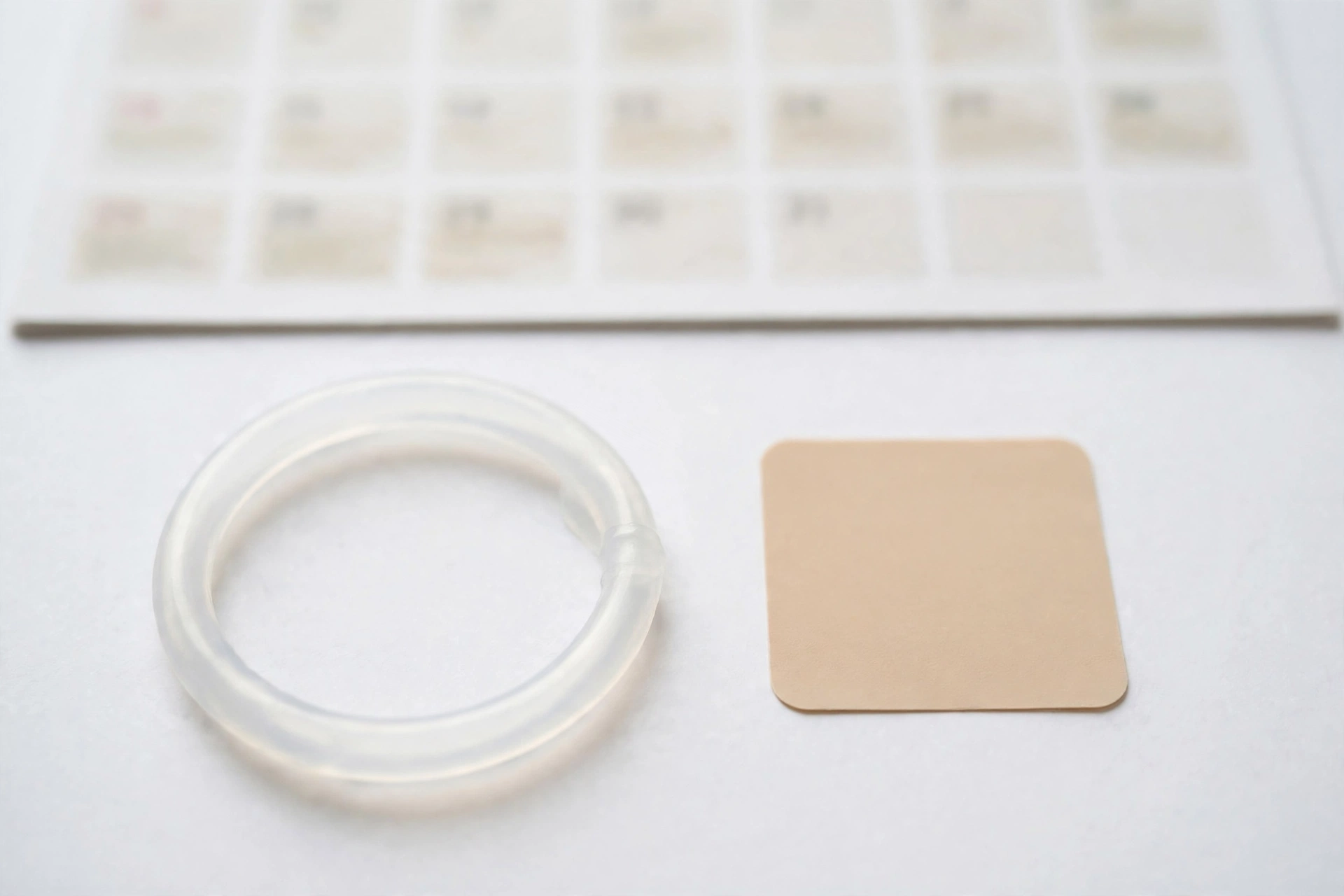
| What it is | A flexible, transparent plastic ring (about 5 cm across) inserted into the vagina | A thin, beige adhesive square worn on the skin |
| Brand examples | NuvaRing (monthly, disposable); Annovera (reusable for one year) | Xulane, Zafemy and generics (weekly, disposable) |
| Hormones | Estrogen + progestin, absorbed through the vaginal wall | Estrogen + progestin, absorbed through the skin |
| Schedule | Inserted for 3 weeks, removed for 1 ring-free week | New patch each week for 3 weeks, then 1 patch-free week |
| Typical-use effectiveness | About 91% (roughly 9 in 100 users become pregnant in the first year) | About 91% (roughly 9 in 100 users become pregnant in the first year) |
| Perfect-use failure rate | Around 0.3% per year | Around 0.3% per year |
| Systemic estrogen exposure | Significantly lower than the patch | Higher — the patch historically carried an FDA warning about greater estrogen exposure |
| Visibility | Invisible once inserted | Visible on the skin where applied |
| Clinic visit needed? | No — self-inserted at home | No — self-applied at home |
Neither method protects against sexually transmitted infections. If STI protection matters to you, condoms need to be part of the picture regardless of which hormonal method you choose.
How Each Method Works and How to Use It
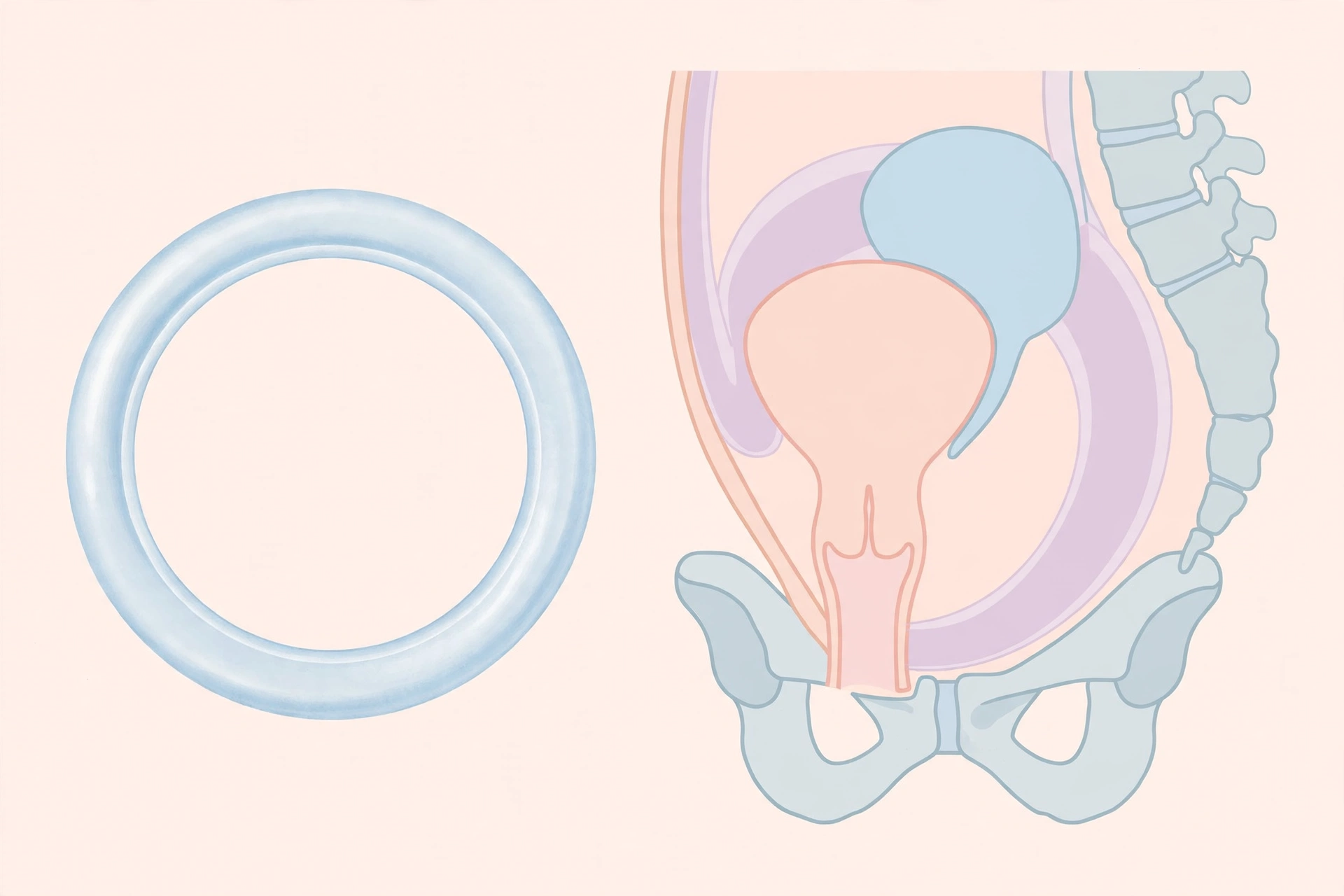
Both methods are “combined” contraceptives, meaning they release both estrogen and progestin. These hormones work together to prevent ovulation, thicken cervical mucus so sperm cannot reach an egg, and thin the uterine lining. In the vaginal ring vs patch debate, the delivery route is what sets them apart.
The vaginal ring
The ring is a soft, flexible circle you compress and insert into the vagina yourself — similar in concept to inserting a tampon, though it sits higher and does not need to be in an exact position to work. You leave it in place for three weeks, then remove it for one ring-free week, during which you will usually have a withdrawal bleed. At the end of that week you insert a new ring, even if bleeding has not finished.
There are two versions worth knowing about, because most ring-vs-patch articles only mention one. The monthly ring (NuvaRing and generics) is discarded after each cycle. The other, Annovera, is a reusable silicone ring: you use one ring for an entire year, washing and storing it in its case during each ring-free week. If you like the idea of the ring but dislike monthly pharmacy trips and recurring costs, the year-long option is a genuine differentiator the patch has no equivalent for.
The contraceptive patch
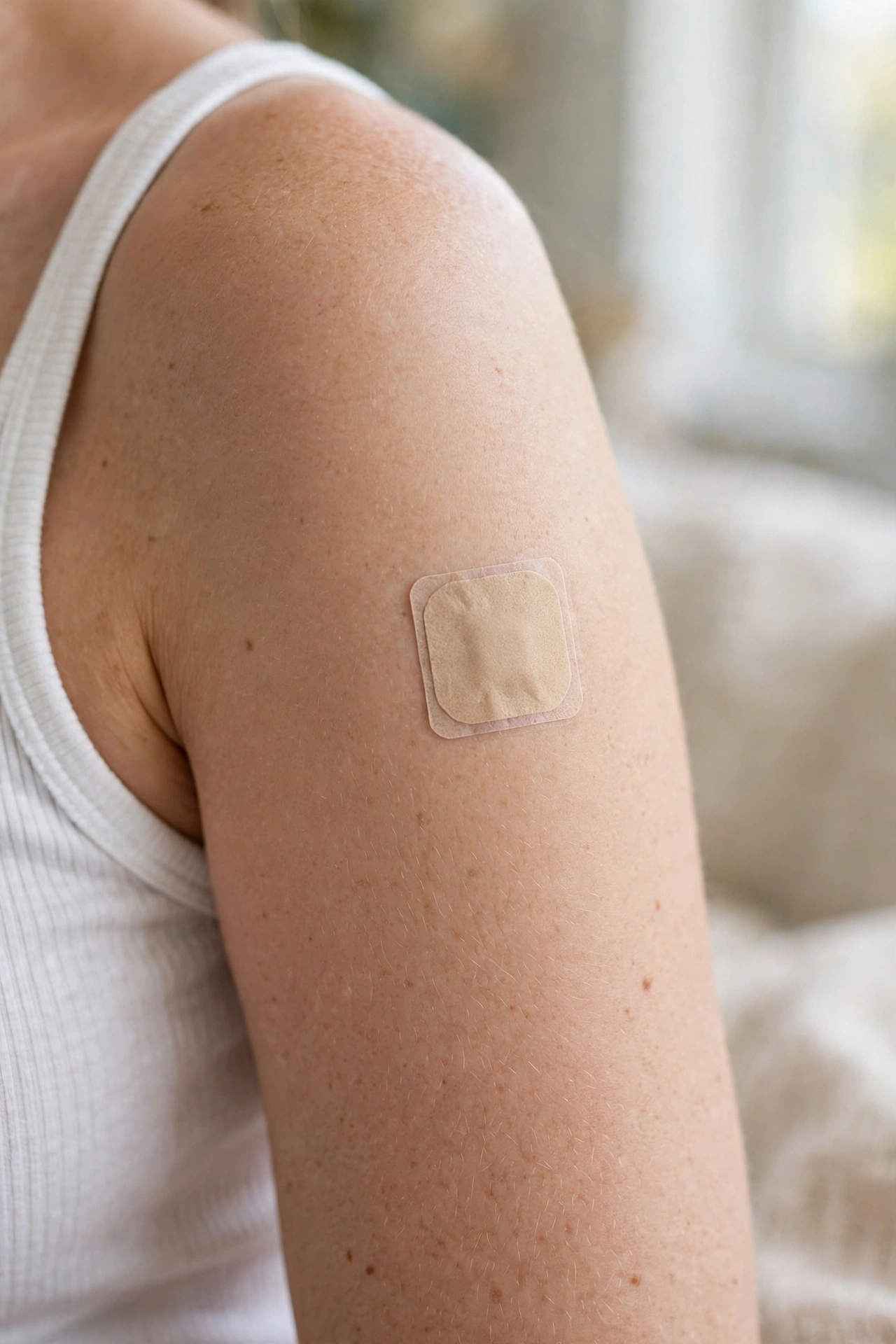
The patch is a thin adhesive square you stick onto clean, dry skin — on the buttock, abdomen, upper arm, or upper back (not on the breasts). You wear each patch for exactly one week, then replace it with a fresh one on a different spot of skin, for three weeks in a row. Week four is patch-free, which is when the withdrawal bleed typically occurs. After the patch-free week, you start a new cycle on schedule whether or not bleeding has stopped.
The patch’s biggest practical advantage is visibility: you can glance at it and confirm it is still there and working. Its biggest practical vulnerability is the same thing — adhesive can loosen with sweat, humidity, or friction from clothing.
Effectiveness Compared
Head to head, the vaginal ring vs patch comparison is evenly matched on pregnancy prevention. With typical use — the way real people actually use them, including the occasional late change or forgotten week — both are about 91% effective, which translates to roughly 9 pregnancies per 100 users over the first year. With perfect use, the failure rate for both drops to around 0.3%, according to the Cochrane review summarized by the American Academy of Family Physicians.
It is worth knowing that no large, high-quality trial has directly randomized users to the ring versus the patch; the evidence comes from trials comparing each method against combined oral contraceptives. Those trials found effectiveness similar across the board. Where the two methods diverge is not in how well they prevent pregnancy when used correctly, but in how consistently people manage to use them correctly — and in how often side effects drive people to quit.
Trial data shows a split personality for the patch: users who stick with it report better adherence than pill users, but a meaningfully higher share discontinue the patch early because of side effects. Ring users, by contrast, discontinue at roughly the same rate as pill users and report higher overall satisfaction with their method. For a broader look at how these stack up against pills, IUDs, and other options, see our broader guide to birth control options.
Estrogen Exposure: The Ring Delivers Significantly Less
This is the comparison point most vaginal ring vs patch articles gloss over, yet it may be the single most important medical difference between the two methods. Because the ring releases hormones directly through the vaginal wall, it achieves contraceptive blood levels with far less total estrogen circulating in the body. A pharmacokinetic study comparing the three combined methods found that systemic estrogen exposure with the monthly ring was roughly one-third that of the patch, and about half that of the combined pill — with much steadier day-to-day levels and fewer peaks and valleys.
Why does that matter? Estrogen is the hormone behind the most serious risk of combined contraception: venous thromboembolism (blood clots in the legs or lungs). The patch has historically carried an FDA boxed warning noting that users are exposed to higher estrogen levels than pill users, with a correspondingly higher observed risk of blood clots.
That does not make the patch dangerous for most healthy users — the absolute risk remains low — but it does mean the estrogen-exposure gap is real and clinically relevant, especially for anyone with borderline risk factors. Both methods share the same contraindications, which we cover below, but the ring’s lower estrogen load is a legitimate point in its favor. The Mayo Clinic’s overview of the vaginal ring is a good authoritative starting point for understanding how the method works.
Side Effects and Risks Compared
Both methods in the vaginal ring vs patch comparison cause the familiar roster of combined-hormone side effects — headache, breast tenderness, nausea, mood changes, and irregular spotting, especially in the first two to three months. But each has its own signature complaints:
- More common with the patch: breast discomfort, nausea and vomiting, and skin irritation, redness, or itching where the adhesive sits. Patch users in trials also reported more menstrual cramp-type pain (dysmenorrhea) than pill users.
- More common with the ring: increased vaginal discharge and vaginal irritation or infection (vaginitis). Some users also notice the ring during sex or find that it slips out.
- Shared serious risk: blood clots (deep vein thrombosis, pulmonary embolism), stroke, and heart attack — rare, but the reason both methods carry the same list of people who should not use them.
You should generally avoid both the ring and the patch if you are over 35 and smoke, have severe high blood pressure, experience migraines with aura, or have a history of blood clots, stroke, heart attack, or certain hormone-sensitive cancers. Hormonal methods can also influence mood for some users — our guide on hormonal birth control and mood explains what to watch for and when to speak up. If any of the risk factors above apply to you, a progestin-only or non-hormonal method is usually the safer conversation to have with your clinician, and our article on how to talk to your doctor about sex can help you prepare for that appointment.
What to Do When Something Goes Wrong
This is the section most vaginal ring vs patch articles skip, and it is the one you will actually need. Both methods have clear “rescue rules” — and the rules differ.
- The ring slips out or falls out. If it has been out for less than three hours, rinse it with cool or lukewarm water (not hot) and reinsert it — you are still protected. If it has been out longer than three hours, reinsert a new ring as soon as possible and use backup contraception, such as condoms, for the next seven days. If unprotected sex happened while the ring was out, talk to your clinician or pharmacist promptly about emergency contraception.
- The ring breaks. This is rare. Discard the broken ring and insert a new one; the cycle timing does not change.
- The patch loosens or falls off. If it has been off for less than 48 hours (or you are unsure but it was likely brief), apply a new patch right away — no backup method needed, and keep your original patch-change day. If it has been off for more than 48 hours, or you cannot say how long, apply a new patch immediately, use backup contraception for seven days, and start a brand-new four-week cycle from that day.
- You forget to start a new cycle on time. If your patch-free or ring-free week stretches beyond seven days, treat it like the “more than 48 hours” scenario above: restart the method and use backup contraception for a week.
Keep your method’s patient leaflet somewhere you can find it — the exact timing rules are printed there, and they are worth re-reading rather than guessing from memory.
Bleeding Patterns, Skin, and Non-Contraceptive Benefits
Both methods tend to make withdrawal bleeds lighter, shorter, and more predictable than natural periods, and both commonly cause spotting or breakthrough bleeding during the first two to three months as your body adjusts. That early spotting is usually not a sign that the method is failing — our guide to spotting on birth control explains what is normal and which patterns deserve a call to your clinician.
Beyond pregnancy prevention, the two methods share several bonus effects: relief from menstrual cramps, more predictable cycles, and often clearer skin, since the estrogen component tends to calm hormonal acne. If acne is a major motivation for you, our article on birth control for acne compares which hormonal methods dermatologists reach for first. Both the ring and the patch can also be used in an extended or continuous pattern — skipping the hormone-free week to skip the bleed — but only under a clinician’s guidance, since the schedule, rescue rules, and spotting expectations all change.
Cost, Privacy, and Lifestyle Factors
Effectiveness and side effects only tell half the story in the vaginal ring vs patch decision. The other half is your actual life:
- Discretion: The ring is invisible once inserted — no one needs to know it is there. The patch is visible on the skin, which bothers some users at the gym, the beach, or during intimate moments (though many users simply do not care).
- Maintenance rhythm: The ring asks something of you once a month (or once a year with Annovera). The patch asks something of you every single week, on the same day — easier to notice, harder to forget entirely.
- Comfort with your body: The ring requires vaginal insertion and removal, which some people dislike. The patch requires nothing more than sticking something to your skin, but the adhesive can irritate sensitive skin.
- Sex: Most partners do not feel the ring during intercourse; if it is noticeable or uncomfortable, it can be removed for a short time (within the three-hour window) and reinserted afterward. The patch does not interfere with sex at all, though it is visible.
- Water and sweat: The ring is unaffected by swimming, bathing, or exercise. The patch is designed to stay on through showers, swimming, and workouts, but heavy sweating, saunas, and tight friction can loosen it — check the edges regularly in hot weather.
- Travel and storage: The ring needs no special storage and travels easily; Annovera means one device for a full year. The patch needs a fresh supply each month and should be stored at room temperature away from excessive heat.
- Cost: Prices vary widely by country and insurance. In the United States, generic monthly rings and generic patches have brought costs down substantially, while Annovera’s year-long design can work out cheaper per month of use. Check your specific plan — contraceptive coverage rules differ.
Which Should You Choose? A Simple Decision Guide
There is no universally “better” method in the vaginal ring vs patch lineup — only the better fit for your body and your habits. Use these rules of thumb as a starting point for your clinician conversation:
- Lean toward the ring if you want the lowest-maintenance schedule, the lowest systemic estrogen exposure, complete invisibility, or you are sensitive to nausea and breast tenderness (which trials link more strongly to the patch).
- Lean toward the patch if you are uncomfortable with vaginal insertion, want a visible daily reminder that your contraception is in place, or have a history of vaginal irritation or recurrent infections that a ring might aggravate.
- Look beyond both if you smoke and are over 35, have migraine with aura, hypertension, or a clot history — the estrogen in both methods is the problem, and a progestin-only or hormone-free method deserves the discussion instead. Our birth control options compared guide lays out the full landscape.
- Ask about Annovera specifically if the ring appeals to you but monthly refills and monthly costs do not — it is the only year-long option in this comparison and is frequently left out of ring-vs-patch articles entirely.
If you have missed doses or had a method mishap before, it is also worth reading what to do if you miss birth control — the backup-contraception principles overlap heavily with the rescue rules above. The Mayo Clinic’s birth control patch overview covers the patch’s risks and proper use in clinical detail.
Frequently Asked Questions
Can my partner feel the vaginal ring during sex?
Most of the time, no. The ring sits high in the vagina, and the majority of users and their partners report not noticing it during intercourse. If it is felt or causes discomfort, you can remove it briefly — as long as it is out for less than three hours, protection continues. Rinse it with cool or lukewarm water before reinserting.
Will the patch fall off when I swim, shower, or exercise?
It is designed not to. The adhesive is waterproof and made to survive bathing, swimming, and workouts. That said, real-world detachment happens in a small percentage of users — heat, heavy sweating, and friction from tight clothing are the usual culprits. Make it a habit to check that the edges are still sealed, especially after exercise or a hot day.
Can I skip my period with the ring or the patch?
Possibly, yes. Both methods can be used in an extended or continuous schedule that skips the hormone-free week and therefore skips the withdrawal bleed. This should only be done under a clinician’s guidance, because the timing rules, spotting expectations, and rescue instructions change when you alter the standard cycle.
Which is better for acne — the ring or the patch?
Both contain estrogen, which is the component that typically improves hormonal acne, so both can help. Neither is FDA-approved specifically as an acne treatment the way some combined pills are. If acne is your primary concern rather than contraception alone, discuss it directly with your clinician or dermatologist, since some combined pills have stronger evidence for acne specifically.
Do the ring or the patch protect against STIs?
No. Neither method offers any protection against sexually transmitted infections, including HIV. Only barrier methods such as external and internal condoms reduce STI transmission. If you are sexually active with new or multiple partners, combining your hormonal method with condoms is the responsible approach.
How quickly does fertility return after stopping the ring or patch?
Quickly. Both methods are fully reversible, and ovulation typically resumes within one to three months of stopping — many people conceive within the first few cycles after discontinuation. There is no evidence that either method causes lasting infertility. If pregnancy is not desired yet, start your next contraceptive method before stopping the current one, with your clinician’s guidance on timing.
Can I switch directly from the patch to the ring (or vice versa)?
Yes, switching between the two is straightforward because both are combined-hormone methods, but the timing matters. The standard approach is to start the new method the day you would have started the next cycle of the old one — no gap, no overlap confusion. If there is any gap or uncertainty in timing, use backup contraception for the first seven days of the new method. Confirm the exact switch plan with your clinician or pharmacist rather than improvising.
What is the biggest difference between the vaginal ring vs patch?
In the vaginal ring vs patch decision, the biggest difference is estrogen exposure and maintenance: the ring delivers significantly less systemic estrogen and needs attention once a month (or once a year with Annovera), while the patch requires a weekly change and carries higher estrogen exposure. Both are equally effective with perfect use, so the right choice usually comes down to your medical history, lifestyle, and personal preference.
Medical disclaimer: This article is for educational purposes only and is not medical advice. Contraception affects everyone differently, and the right method depends on your personal and family medical history. Always discuss your options — including risks, contraindications, and what to do if something goes wrong — with a qualified clinician before starting, stopping, or switching any contraceptive method. If you experience warning signs such as severe headache, vision changes, chest pain, leg swelling or pain, or sudden shortness of breath while using a combined hormonal method, seek medical care promptly.