Testicular Pain: Causes, Red Flags, and When to See a Urologist
Testicular pain causes range from minor injuries and infections to genuine urologic emergencies — and knowing which category your pain falls into matters more than most men realize. Any testicular pain that is sudden, severe, or lasts longer than an hour deserves medical attention, according to guidance from the Cleveland Clinic and the NHS. This guide walks through the most common testicular pain causes, the emergency red flags that mean “go now,” the conditions often mistaken for testicular pain, and exactly what to expect when you see a urologist.
Emergency Red Flags: When Testicular Pain Means “Go Now”
Before the full breakdown, one scenario deserves top billing. Testicular torsion — the twisting of the spermatic cord that cuts off blood flow to the testicle — is a surgical emergency, and the most time-sensitive of all testicular pain causes. If blood flow is not restored within roughly six hours, the testicle can die and may need to be removed. Seek emergency care immediately if you experience:
- Sudden, intense pain in one or both testicles that arrives out of nowhere
- Severe swelling of the scrotum, especially if one side suddenly looks or feels different
- Nausea and vomiting alongside the pain, a classic torsion accompaniment
- Abdominal pain that accompanies the testicular pain
- Pain that does not ease after an hour of rest or that keeps getting worse
- Fever with testicular pain, which suggests an acute infection
- Blood in the urine or semen together with testicular pain
- Abnormal scrotal color — red, purple, or dark discoloration
It can strike during sleep, exercise, or sitting at a desk, and it is most common between the ages of 12 and 25. For a deeper look at this single emergency, see our dedicated guide linked below.
Testicular Pain Causes: The Full Breakdown
Clinicians divide these causes into acute (sudden-onset) and chronic (lasting more than three months) categories: injuries, infections, vascular problems, and referred pain from elsewhere in the abdomen or pelvis. Here is what doctors see most often.
1. Trauma and Injury
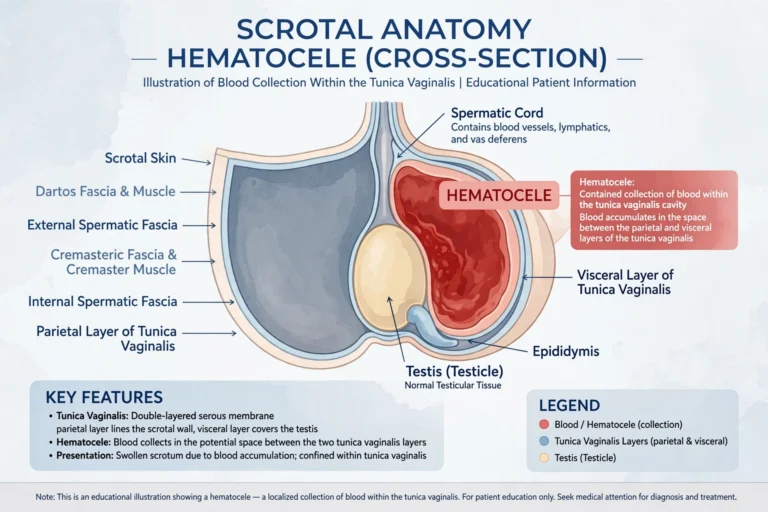
A direct blow during sports, an awkward fall, or even prolonged pressure — sitting for hours with crossed legs or cycling long distances — can bruise the testicle. Injury is the simplest of the testicular pain causes to explain, because you usually remember exactly when it happened. Mild injury pain usually settles within an hour; pain or swelling that persists beyond that needs evaluation to rule out the more serious testicular pain causes that can follow trauma, including testicular rupture or a hematocele (blood collecting around the testicle).
2. Epididymitis
Epididymitis — inflammation of the coiled tube at the back of the testicle — is the most common of the infection-related testicular pain causes in adults. It typically develops gradually over hours or days, producing a dull ache that worsens, swelling, warmth, and sometimes urinary symptoms such as burning or frequency. In sexually active men under 35, the usual triggers are sexually transmitted infections such as chlamydia or gonorrhea; in older men, urinary tract infections and prostate issues are more common culprits. We have a full companion article on this condition: Epididymitis: Symptoms, Causes, and When to See a Doctor.
3. Orchitis
Orchitis rounds out the infection-related testicular pain causes: it is inflammation of the testicle itself, often arriving together with epididymitis (called epididymo-orchitis). It can be caused by bacterial infections or viruses — mumps orchitis is the classic example. Typical signs include significant swelling, tenderness, fever, and a heavy, aching feeling.
4. Testicular Torsion
Covered above as an emergency, torsion deserves a full mention on any list of testicular pain causes because it is the one that cannot wait. The testicle rotates, twisting the spermatic cord and cutting off its own blood supply. Hallmarks include sudden, excruciating one-sided pain, a testicle that sits higher than usual, and vomiting. Treatment is surgical untwisting, ideally within six hours. If you suspect it, do not try to “wait it out” — go to the emergency department.
5. Varicocele
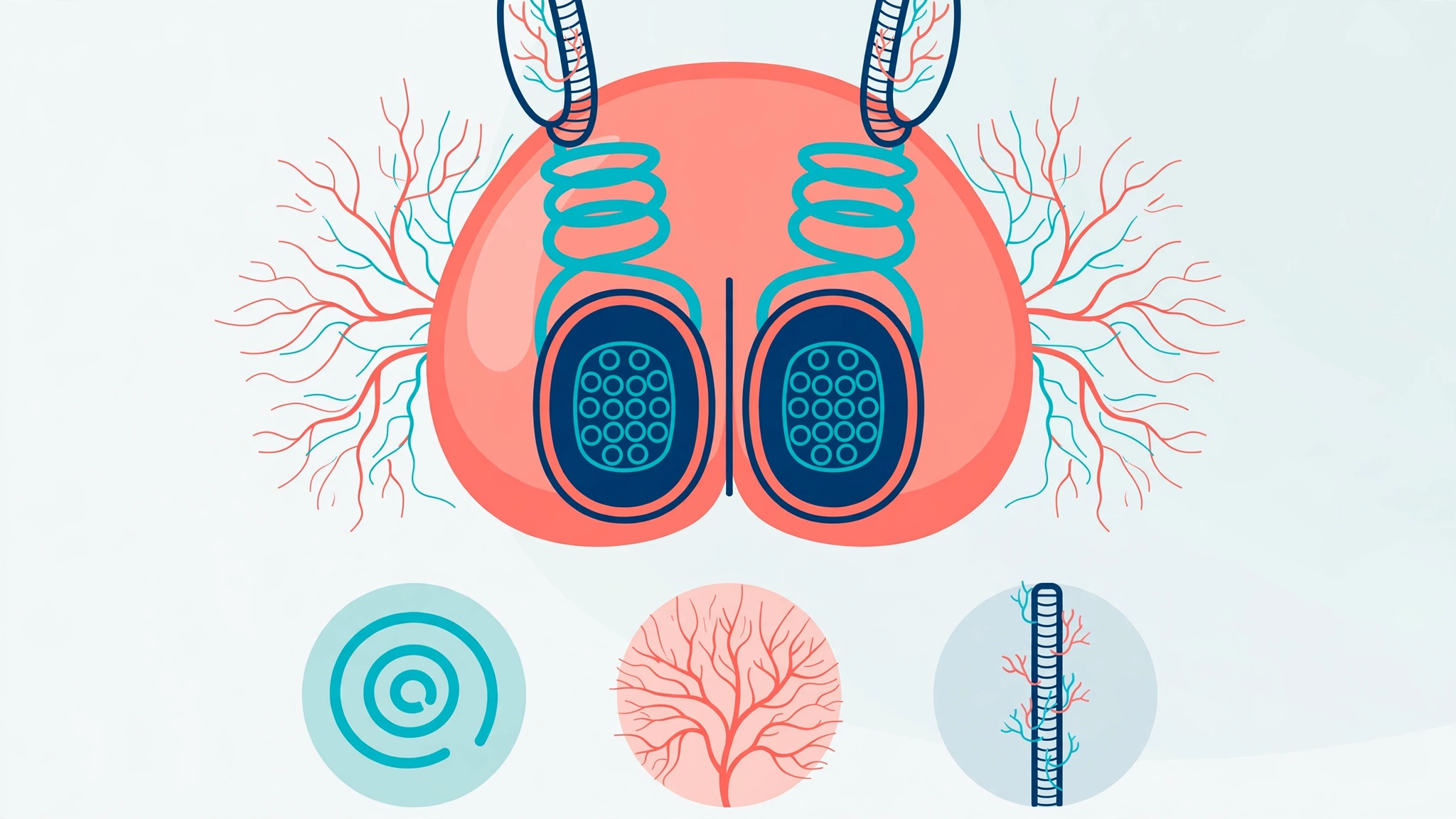
A varicocele is a cluster of enlarged veins inside the scrotum — essentially varicose veins of the testicle — and it ranks among the most common testicular pain causes in teenagers and young adults. It is especially frequent on the left side, and usually produces a dull, dragging ache or heaviness that worsens after standing or exercise and eases when lying down. Most need no treatment, but doctors investigate when pain is significant or a couple is having difficulty conceiving.
6. Inguinal Hernia
When part of the intestine bulges through a weak spot in the abdominal wall near the groin, the resulting inguinal hernia — one of the frequently overlooked testicular pain causes — can send pain radiating into the scrotum. Men often notice a bulge that appears when standing or coughing and disappears when lying down, plus a groin ache that intensifies with lifting or straining. Hernias do not heal on their own, and a surgeon typically repairs them — sometimes urgently if the trapped tissue loses blood flow.
7. Kidney Stones and Urinary Problems
Sometimes the true testicular pain causes are not in the testicle at all. A kidney stone traveling down the ureter can refer pain to the testicle, groin, and back at the same time; urinary tract infections can produce a similar pattern with burning urination and frequency. Prostatitis — inflammation of the prostate gland — is another well-known source of groin and testicular aching, particularly after ejaculation. Our guide to prostate health and intimacy covers how these issues interact: BPH and Sexual Function: A Couples Guide.
8. Spermatocele and Hydrocele
A spermatocele is a benign fluid-filled cyst in the epididymis; a hydrocele is fluid collecting around the testicle itself. Both are usually painless and discovered as a soft lump, but larger ones can produce heaviness and discomfort. Doctors distinguish them from more serious testicular pain causes with a physical exam and ultrasound.
9. Post-Vasectomy Pain and Other Procedure-Related Pain
A small percentage of men develop chronic scrotal aching after vasectomy — post-vasectomy pain syndrome — thought to relate to pressure changes or nerve irritation in the vas deferens. Similar lingering pain can occasionally follow hernia repair or other pelvic surgery. It is uncommon but real, and like other chronic testicular pain causes, there are treatment pathways from watchful waiting through surgical options.
10. Testicular Cancer
Cancer is one of the less common testicular pain causes — it typically presents as a painless lump — but any new lump, firmness, or change in testicle size deserves a prompt medical visit. Testicular cancer is the most common cancer in men aged 15 to 35, and it is highly treatable when caught early, which is exactly why doctors encourage monthly self-exams.
The Differential Table: Torsion vs. Infection vs. Vein vs. Hernia
Most overviews of testicular pain causes skip a clear side-by-side comparison. Doctors narrow the possibilities using five features — how the pain started, what it feels like, what accompanies it, and how urgent it is. This table gives you the same clinical framework:
| Condition | Onset | Pain Character | Key Clues | Urgency |
|---|---|---|---|---|
| Testicular torsion | Sudden, often at rest or during sleep | Severe, sharp, one-sided | Nausea/vomiting, high-riding testicle, no relief with rest | Emergency — ER within hours |
| Epididymitis | Gradual, over hours to days | Dull ache that intensifies | Swelling, warmth, urinary symptoms; pain eases when lying down | Urgent — see a doctor within a day |
| Orchitis | Gradual, often with fever | Heavy, aching, tender to touch | Fever, systemic illness (e.g., mumps exposure), significant swelling | Urgent — same day |
| Varicocele | Gradual, over months | Dull ache or heaviness | Worse standing or after exercise, better lying down; “bag of worms” feel | Routine — schedule a visit |
| Inguinal hernia | Gradual, may follow straining | Groin ache radiating to scrotum | Bulge appears with coughing/standing, disappears lying down | Routine unless sudden severe pain — then emergency |
| Kidney stone (referred) | Sudden, waves | Cramping flank pain radiating to groin/testicle | Back pain, blood in urine, urinary urgency | Urgent — same day |
Chronic Testicular Pain: When the Ache Won’t Leave
Pain lasting longer than three months — called chronic orchialgia or chronic scrotal pain — is among the least discussed testicular pain causes, yet urology clinics see it regularly. Common contributors include:
- Chronic epididymitis that never fully settled after an infection
- Varicocele causing persistent dull heaviness
- Pelvic floor muscle dysfunction, where tight pelvic muscles refer pain to the scrotum
- Nerve irritation (neuralgia) of the ilioinguinal or genitofemoral nerves, sometimes after surgery
- Chronic pelvic pain syndrome, often overlapping with prostatitis
Diagnosis typically involves ruling out infection and structural problems with ultrasound and urine tests, then looking at musculoskeletal and nerve contributors. Treatment approaches doctors use include pelvic floor physical therapy, anti-inflammatory strategies, nerve-targeted medications, and — only when everything else has failed — procedures such as spermatic cord denervation or, very rarely, removal of the epididymis or testicle. If you have lived with this kind of pain for months, know that it is a recognized medical condition with real treatment pathways, not something you should quietly endure.
How to Do a Testicular Self-Exam (Step by Step)
A monthly self-exam helps you catch new lumps early. Doctors recommend doing it after a warm shower, when the scrotal skin is relaxed:
- Stand and warm up. A warm shower relaxes the scrotal muscles, making the exam easier and more accurate.
- Support and feel one testicle at a time. Hold the scrotum gently and roll one testicle between your thumb and fingers with light pressure.
- Learn what’s normal. Each testicle should feel smooth and firm; the soft tube along the back (the epididymis) is normal anatomy, not a lump.
- Note what’s new. Report hard lumps, new size changes, firmness, swelling, or pain on light pressure.
- Check both sides. Repeat on the other testicle, and note that it is normal for one to hang slightly lower or be slightly larger.
If you find a lump — painful or painless — book a medical visit promptly. Among all testicular pain causes, a new lump is the one doctors most want to see early — which is the entire point of the exercise.
What a Urology Visit Actually Involves
Many men put off getting help because they are unsure what the appointment entails. Here is the standard workup a doctor or urologist performs when you present with testicular pain — whatever testicular pain causes they suspect:
- History: When did the pain start — suddenly or gradually? One side or both? Any injury, recent illness, urinary symptoms, discharge, fever, or new lump? Any recent sexual activity or procedures?
- Physical exam: A gentle examination of the scrotum and testicles, checking position, size, tenderness, and whether lifting the scrotum eases the pain (a clue that can point toward epididymitis).
- Doppler ultrasound: A painless imaging test that visualizes blood flow inside the testicle — the key test for ruling out torsion, and excellent for identifying cysts, hydroceles, and masses.
- Urine tests: A urinalysis and urine culture look for infection; a first-void sample can be tested for chlamydia and gonorrhea when epididymitis is suspected.
- Blood tests: Markers of infection or inflammation when the picture is unclear.
Depending on the findings, treatment ranges from reassurance and home measures through antibiotics to surgery for torsion or hernia. The visit is straightforward and non-judgmental.
Treatment and Prevention: What Doctors Recommend
Because the testicular pain causes vary so widely, there is no single treatment — but the general principles doctors follow are consistent:
- For infections: antibiotics when bacteria are confirmed, plus rest, scrotal support, and time.
- For inflammation without infection: ice or warmth, over-the-counter pain relief, and activity modification.
- For torsion and incarcerated hernia: prompt surgery.
- For varicocele, hydrocele, spermatocele: usually watchful waiting; treatment if pain persists or fertility is affected.
- For kidney stones and UTI: hydration, medical management, and procedures only when needed.
Prevention follows common sense: wear an athletic supporter during contact sports and heavy lifting, practice safer sex and get tested regularly to reduce infection-related causes, lift with good technique, treat urinary infections promptly, and keep up the monthly self-exam habit. Knowing the common testicular pain causes helps you act faster when something feels wrong. Men with diabetes should keep blood sugar well controlled, since diabetic neuropathy is a recognized cause of chronic genital-area pain. Guidance consistent with the Cleveland Clinic’s testicular pain overview and WebMD’s causes guide reinforces these same steps.
FAQs
When should I worry about testicular pain?
Worry — and act — when the pain is sudden and severe, comes with nausea or vomiting, includes visible swelling or discoloration, or does not improve within an hour of rest. These red flags can signal testicular torsion, which can permanently damage the testicle within hours.
What are the most common testicular pain causes with no injury?
Without any injury, the leading testicular pain causes are epididymitis (infection of the tube behind the testicle), varicocele (enlarged scrotal veins), inguinal hernia, kidney stones referring pain downward, and prostatitis. In younger men, infections — including STIs — are the usual suspects; in older men, urinary and prostate issues take over. A simple urine test and ultrasound usually sort this out quickly.
What does a urologist do for testicular pain?
A urologist takes a symptom history, performs a gentle physical exam, and typically orders a Doppler ultrasound to check blood flow plus urine tests to detect infection. Treatment follows the diagnosis: antibiotics for infection, surgery for torsion or hernia, and watchful waiting for mild varicocele or hydrocele.
What conditions are mistaken for testicular pain?
Several problems produce pain that feels like it comes from the testicle but originates elsewhere: inguinal hernia, kidney stones, urinary tract infections, prostatitis, lower back issues, and pelvic floor muscle dysfunction. This is why doctors evaluate the abdomen, back, and urinary system whenever the testicular pain causes are unclear — and why describing exactly where the pain started helps them diagnose it faster.
Can sperm buildup cause testicular pain?
A blocked tube can allow sperm to accumulate into a fluid-filled cyst called a spermatocele, which can ache as it grows — but these cysts are usually painless and discovered incidentally. The temporary ache after prolonged arousal without release is harmless and resolves on its own. Persistent aching still deserves a doctor’s check.
How can I relieve mild testicular pain at home?
For mild pain with no red flags, doctors suggest resting with the scrotum supported (a folded towel while lying down), applying a wrapped ice pack, soaking in a warm bath, and using over-the-counter pain relievers. If pain persists beyond an hour, worsens, or any red flag appears, seek medical care.
Talk to your doctor if any part of this guide to testicular pain causes sounds like your experience — testicular pain is common and treatable. For more men’s health knowledge, explore our guides on epididymitis and prostate health and sexual function.
Medical disclaimer: This article is for educational purposes only and does not constitute medical advice. These testicular pain causes range from minor to life-threatening, and only a qualified healthcare professional can diagnose your situation. If you are experiencing testicular pain, seek care from your doctor or a urologist promptly, and call emergency services for sudden, severe pain. Never delay seeking medical attention because of something you read here.