Can You Get an STI After Menopause? Why Protection Still Matters
Can you get an STI after menopause? Yes — absolutely. Menopause ends your periods and your fertility, but it does not end your susceptibility to sexually transmitted infections. In fact, the link between stis and menopause is not only real — infections are rising faster in adults over 50 than in almost any other age group. Yet protection habits often fade right when the biology of stis and menopause makes them more important. This guide explains how stis and menopause connect, which infections are most common in midlife, how to get screened, and how to protect yourself.
Yes, You Can Get an STI After Menopause
There is a widespread belief that menopause closes the book on sexual health worries. With no pregnancy risk, many women — and their partners — quietly stop using condoms and stop thinking about infections. Clinicians call this the false sense of safety, and it is one of the main drivers of the modern rise in stis and menopause cases. Seeing through that illusion is the first step to lowering stis and menopause risk.
The logic feels reasonable, but condoms were never only about pregnancy. They are a barrier against bacteria, viruses, and parasites, and that job becomes more important — not less — when postmenopausal biology changes how your body defends itself. The Office on Women’s Health states it plainly: after menopause you cannot get pregnant, but you can still get a sexually transmitted infection, and condoms remain the best way to prevent them. This applies to every kind of sexual activity — vaginal, oral, and anal sex can all transmit infections — whether you are dating someone new, reconnecting with a long-term partner, or re-entering the dating world after divorce or widowhood.
The Numbers: STIs Are Rising Fastest in Adults Over 50
The data on stis and menopause is striking, according to recent CDC surveillance:
- Among U.S. adults aged 65 and older, reported cases of chlamydia rose about threefold, gonorrhea about fivefold, and syphilis about sevenfold between 2010 and 2023.
- Among U.S. women aged 55 and older, gonorrhea cases climbed from 443 in 2010 to 2,684 in 2022, chlamydia from 2,155 to 5,852, and syphilis from 41 to 578.
- Older adults are also being diagnosed with HIV later — and more often at advanced stages of infection — than younger adults.
Keep perspective: absolute numbers in the 50-plus group remain far lower than among adults aged 15 to 24, who account for roughly half of all new STIs. But the rate of growth is steep and surveillance in older age groups is less complete, so real infections are likely undercounted. As the American Medical Association notes, neither many older adults nor some of their doctors consider this group at risk, so testing happens less often and infections circulate longer. In short, the link between stis and menopause is growing exactly where it is least expected.
Social shifts compound the biology. People are living longer and staying sexually active later, divorce and widowhood return many women to dating after decades of monogamy, and app-based dating has shortened the timeline to new partners. Even retirement communities can function as active sexual networks where infections spread quickly if nobody tests. These social trends make stis and menopause an increasingly important public-health conversation.
The Biology of STIs and Menopause: Why Risk Actually Increases
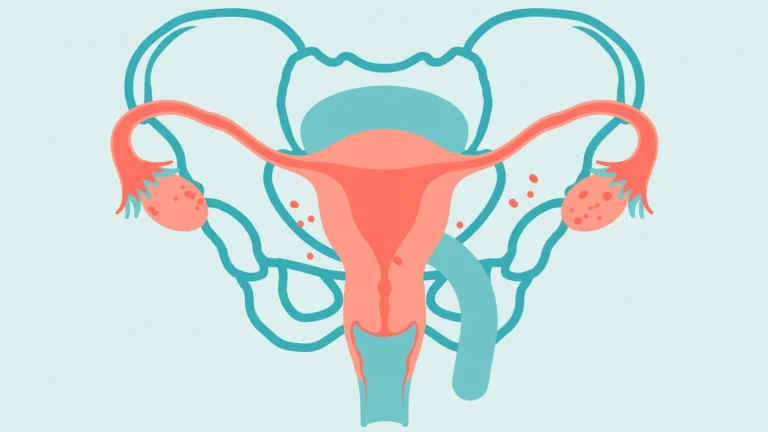
Research increasingly shows that menopause itself — not just behavior — raises stis and menopause risk. The key mechanism is genitourinary syndrome of menopause (GSM), what happens when genital and urinary tissues lose estrogen — the Mayo Clinic reports it affects roughly half of postmenopausal women. Here is what changes:
- Thinning vaginal tissue. The vaginal lining becomes thinner, less elastic, and more easily injured. Microabrasions and tiny tears during sex create direct entry points for bacteria and viruses, including chlamydia, gonorrhea, herpes, and HIV.
- Less lubrication. Estrogen drives vaginal moisture and blood flow. Less natural lubrication means more friction and more micro-tears. A compatible lubricant reduces this damage but cannot block pathogens like a barrier can.
- Higher vaginal pH. A healthy premenopausal vagina is acidic (pH 3.8–4.5). After menopause, lactobacilli decline and pH shifts toward neutral — an environment where pathogens survive longer.
- Weaker local immunity. Age-related immune changes slow mucosal antibody production, and estrogen itself supports the tissue’s ability to fight infection.
- Reactivation of dormant infections. Herpes and HPV can lie quiet for years. As immune control loosens with age, old infections can reactivate — a first outbreak at 60 does not necessarily mean a recent exposure.
None of this means sex after menopause is dangerous. It means the math has changed — and your habits should change to meet the stis and menopause challenge head-on. If you are noticing changes in desire or comfort along the way, our guide on menopause and sex drive covers what helps.
Which STIs Are Most Common After 50?
The same infections that top younger adult statistics also lead for older adults, and understanding stis and menopause means knowing what to watch for:
- Chlamydia. Often symptom-free; symptoms include unusual discharge, spotting after sex, and pelvic pain. The most commonly reported STI in women over 55.
- Gonorrhea. Similar symptoms to chlamydia; rising antibiotic resistance makes prompt, correct treatment important.
- Trichomoniasis. The most common non-viral STI worldwide — discharge, itching, and irritation easily confused with yeast or atrophy.
- Syphilis. Rising sharply in older adults; starts with a painless sore, later causes rashes and flu-like signs, and can damage the heart and brain if untreated. Detected by a simple blood test.
- Genital herpes (HSV). May reactivate in midlife after decades of silence, causing painful blisters.
- HPV. Persistent high-risk strains cause nearly all cervical cancers; women 55 to 64 largely missed HPV vaccination.
- HIV. More older adults are being diagnosed, often late; thinning vaginal tissue is specifically linked to easier transmission during vaginal sex.
- Hepatitis B and C. Both are sexually transmitted and frequently forgotten; hepatitis C is now curable in most cases — but only if detected.
Knowing this lineup is half the battle: most concerns around stis and menopause come from infections that are common, testable, and treatable.
When Menopause Symptoms and STI Symptoms Overlap
This is where most missed diagnoses happen. Dryness, spotting, discharge, itching, and painful sex appear on both lists, and a rushed visit often defaults to menopause. Watch for: postcoital spotting, which signals atrophy but also gonorrhea, chlamydia, and HPV-related cervical changes; and recurring discharge that ignores antifungals — the answer is a swab, not another over-the-counter product.
| Symptom | Typical menopause cause | Possible STI cause |
|---|---|---|
| Vaginal dryness | Low estrogen, thinning tissue | Chlamydia, trichomoniasis, early herpes |
| Bleeding after sex | Atrophic vaginitis | Gonorrhea, HPV cervical change, chlamydia |
| Painful intercourse | Atrophy, low lubrication | Active herpes, pelvic inflammatory disease |
| Unusual discharge | pH shift, bacterial vaginosis | Trichomoniasis, gonorrhea, chlamydia |
| Itching or burning | Atrophy, yeast | Herpes, trichomoniasis |
| Pelvic discomfort | Hormonal changes | Pelvic inflammatory disease |
Any vaginal symptom that does not resolve within two to four weeks of treatment for atrophy or yeast deserves a full STI workup — one diagnosis does not exclude the other. Taking both possibilities seriously is how you stay ahead when it comes to stis and menopause. For more on the pain side of this picture, see our guide to painful intercourse after menopause.
Screening Guidance for Older Adults: What the Evidence Recommends
One of the clearest gaps in current care is that routine well-woman visits after menopause often drop STI screening entirely. Here is what evidence-based guidance recommends for reducing stis and menopause risk — and note that none of it has an upper age cutoff:
- HIV. The CDC recommends everyone aged 13–64 be tested at least once; anyone with a new sexual partner should be screened regardless of age.
- Hepatitis B and C. One-time hepatitis C screening for adults 18–79 and hepatitis B screening for adults 18–59 — frequently missed in midlife.
- Syphilis. A simple blood test whenever there has been condomless exposure or a new partner.
- Chlamydia and gonorrhea. Swab or urine tests (NAAT) for any new-partner scenario — clinicians may also need to test the throat and rectum.
- Cervical screening. Pap and/or HPV co-testing through age 65; HPV vaccination is approved through age 45 under shared clinical decision-making.
- Trichomoniasis and herpes. Tested when symptoms or exposure history suggest them.
A practical rule: any new partner means a new baseline panel for both of you — before unprotected sex, not after. It is the single most effective habit for cutting stis and menopause risk. If a clinic visit is difficult, at-home rapid panels can be a low-barrier screening step, with positives confirmed by lab testing.
HIV, PrEP, and the Late-Diagnosis Problem After 50
HIV deserves its own spotlight: the stis and menopause conversation usually skips it, which is part of why older adults are diagnosed late. Because neither patients nor clinicians expect HIV in a 60-year-old woman, warning signs get attributed to aging or menopause, and infections are found at more advanced stages. Two modern tools are underused in this age group: PrEP (pre-exposure prophylaxis), a medicine that dramatically reduces HIV risk — few midlife women have heard of it, since campaigns have targeted younger adults — and PEP (post-exposure prophylaxis), an emergency course started within 72 hours of a possible exposure.
If you have any condomless exposure with a partner whose HIV status you do not know, ask your doctor about testing windows and whether PEP is appropriate. And if you are dating and your partner is a man who has also had sex with men, be especially deliberate about testing and protection. Our full HIV testing guide walks through what each test involves and when results are reliable.

Protection That Still Matters: Condoms, Lubricants, and Hormones
Protection that addresses stis and menopause uses the same toolkit as at any age — and the biological case for it is now stronger:
- Use condoms with any new or non-monogamous partner. Test while using condoms, and only consider dropping them when both partners have confirmed negative results and confirmed monogamy. “Test first, then decide” replaces guesswork with data.
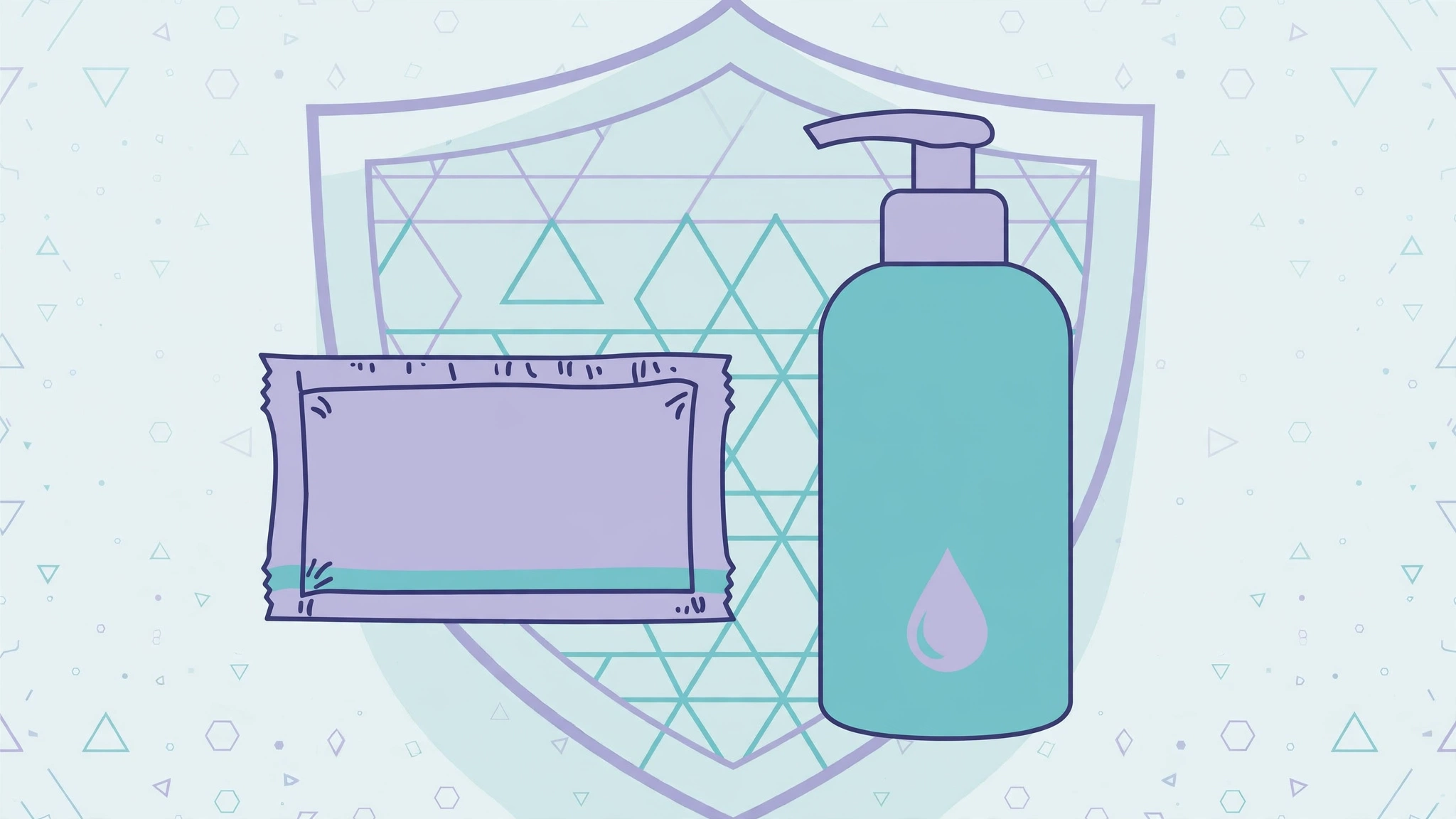
- Use plenty of compatible lubricant. Water-based and silicone-based lubricants are safe with latex and polyisoprene condoms; generous lubrication reduces the friction microabrasions that let pathogens in. Oil-based products — coconut oil, mineral oil, petroleum jelly — degrade latex and can break the barrier. See our body-safe lubricant guide for product-level detail.
- Ask about vaginal estrogen. Local estrogen or DHEA treatments restore tissue thickness and lubrication — clinicians note that women on hormones have less fragile tissue, which is harder to injure during sex. Discuss benefits and risks with your doctor.
- Stay current on vaccines and screening. HPV vaccination through age 45, hepatitis B vaccination if never immunized, and cervical screening through 65 all reduce downstream risk.
- Barrier protection for oral sex too. STIs transmit through oral sex, a route often forgotten in midlife. Dental dams and condoms apply there as well.
How to Talk to Your Doctor — and Your Partner
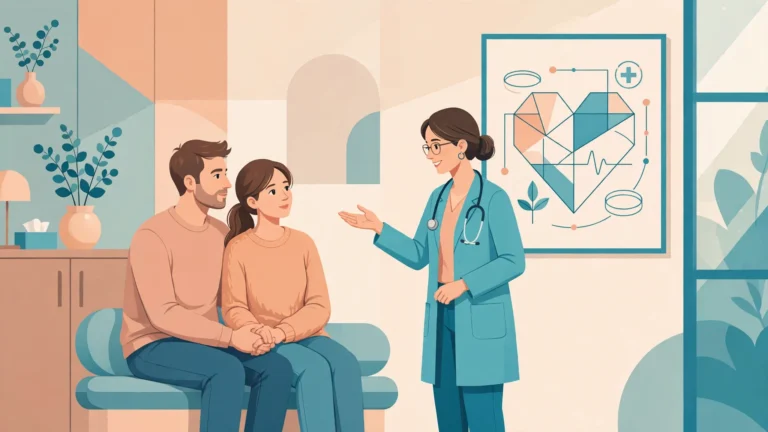
Midlife adds a specific hurdle to the testing conversation: some clinicians simply do not bring it up. Younger providers may unconsciously assume a woman their parents’ age is not sexually active, so they never ask. Bring it up yourself, plainly:
- With your doctor: “I have a new partner. I’d like a full STI panel — chlamydia, gonorrhea, syphilis, HIV, and hepatitis screening. Can we add that today?” Or: “My symptoms haven’t resolved with atrophy treatment. Can we rule out infection with a swab and blood work?”
- With a partner: “I was tested recently — here are my results. Have you been tested? Let’s both get a panel before we stop using condoms.”
- If your partner resists testing: keep using condoms. A partner who refuses testing is giving you information about the relationship, not just about their health.
Dating after a long monogamy can mean decades since your last screening — if your last partner was your spouse of 25 years, you may never have been tested at all. Treat a new chapter as a fresh baseline. That is not distrust; it is healthcare. It is also a practical answer to stis and menopause.
FAQs
Can you get an STI after menopause?
Yes. When it comes to stis and menopause, the key fact is simple: menopause ends fertility, not infection risk. Postmenopausal changes — thinner vaginal tissue, less lubrication, higher vaginal pH, and a weaker local immune response — can actually make transmission easier. Vaginal, oral, and anal sex can all transmit STIs at any age, and routine screening with any new partner is recommended regardless of age, because stis and menopause never take a break.
Why are STIs increasing in older adults?
Looking at stis and menopause together, several forces converge: reduced condom use once pregnancy is no longer a concern, tissue changes that favor transmission, more new partnerships after divorce or widowhood, faster app-based dating timelines, and a perception gap in which neither older adults nor some clinicians consider this group at risk — so infections are tested for later and circulate longer.
Do I still need condoms after menopause?
Yes, with any new or non-monogamous partner. Condoms remain the best protection against STIs at any age, and the biological case for them is arguably stronger after menopause, when thinner, drier tissue tears more easily. Many clinicians recommend testing while using condoms, then reconsidering only after both partners confirm negative results and monogamy.
Can menopause symptoms hide an STI?
Yes — this overlap is a common cause of missed diagnoses with stis and menopause. Dryness, spotting after sex, discharge, itching, and painful intercourse appear on both lists. If symptoms persist beyond two to four weeks of atrophy or yeast treatment, or keep recurring, ask your doctor for an STI workup with a swab and blood panel before assuming it is “just menopause.”
Can you get HPV or HIV after menopause?
Yes. HPV is still transmissible after menopause, and women 55 to 64 largely missed HPV vaccination, which arrived too late for their generation — so cervical screening through age 65 matters. For HIV, women over 50 appear to face elevated transmission risk because thinning vaginal tissue tears more easily; older adults are also diagnosed later, often at more advanced stages.
Should I get tested for STIs in my 50s or 60s?
If you have a new partner, multiple partners, or unresolved genital symptoms, yes — there is no upper age cutoff for STI screening. A reasonable baseline panel includes chlamydia, gonorrhea, syphilis, HIV, and hepatitis B and C. One-time hepatitis B and C screening is frequently missed in midlife, so mention it even if you feel fine.
The bottom line: menopause changes your body, not your right to a healthy, active sex life. Understanding stis and menopause and acting on it — condoms with new partners, compatible lubricant, a baseline panel, and an honest conversation with your doctor — keeps sex safer at every age. Protection is not a young person’s precaution; it is a lifelong habit, and when it comes to stis and menopause, the biology after 50 gives you more reasons for it, not fewer.
Talk to your doctor about your own screening needs, and explore our related guides on menopause and sexual health to keep the conversation going.
Medical disclaimer: This article is for educational purposes only and is not medical advice. It does not establish a doctor-patient relationship and should not replace professional diagnosis or treatment. STI symptoms vary, and only testing can confirm or rule out an infection. If you have symptoms, a new partner, or concerns about your sexual health, consult a qualified healthcare professional for personalized guidance.