Painful Periods After 40: When Cramps Worsen
If you sailed through your 20s and 30s with manageable periods, it can feel like a betrayal when your 40s arrive with cramps that are suddenly much worse. Yet painful periods after 40 are more common than most women realize. For many, this is the decade when period pain changes character — arriving earlier in the cycle, lasting longer, pairing up with heavier bleeding, or appearing after years of relatively easy periods. Sometimes this shift is simply the result of changing hormones as the body edges toward menopause. But new or significantly worsening cramps in your 40s can also be the first noticeable sign of a treatable gynecological condition, which is why gynecologists take this symptom seriously.
This guide explains why cramps tend to worsen in your 40s, which conditions are the most likely culprits, how to tell the difference between hormonal turbulence and something that needs investigation, what your doctor will actually do at the appointment, and which treatment options work best for women in this age group. It is written for information and clarity — never as a substitute for a clinician who can evaluate your individual situation.
Why painful periods after 40 can feel so different
Menstrual pain (doctors call it dysmenorrhea) comes in two broad categories, and the distinction matters more after 40 than at any earlier point in life:
| Feature | Primary dysmenorrhea | Secondary dysmenorrhea |
|---|---|---|
| Typical onset | Teens and 20s, shortly after periods begin | 30s and 40s, often after years of mild periods |
| Root cause | High levels of prostaglandins — the hormone-like chemicals that make the uterus contract | An underlying condition such as fibroids, adenomyosis, or endometriosis |
| Timing of pain | Starts with bleeding or just before; usually eases within 1–2 days | Often starts before the period, worsens through it, and can linger after bleeding stops |
| Trend over time | Often improves with age and after childbirth | Typically gets worse over time without treatment |
| Response to pain relievers | Usually responds well to standard pain relief | May respond poorly; pain can feel deeper or harder to reach |
In your 20s, painful periods were most likely primary dysmenorrhea — the prostaglandin-driven kind. By your 40s, the balance shifts: secondary dysmenorrhea becomes the more common pattern. Decades of menstrual cycles, pregnancies, and hormonal changes give structural conditions time to develop, and the symptoms that seemed like “just bad cramps” may actually have an addressable cause.
The perimenopause connection: hormones in flux
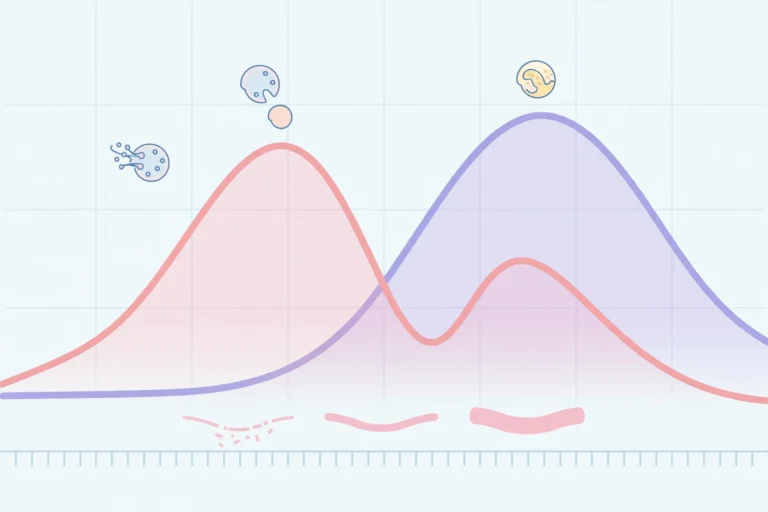
Perimenopause — the transition years leading up to menopause — typically begins in the early to mid-40s and can last several years. During this window, estrogen and progesterone fluctuate unpredictably rather than following their old, orderly rhythm. That fluctuation alone can make periods more painful, even without any new disease.
Here is what is happening inside the body:
- Anovulatory cycles become common. As ovarian reserve declines, some cycles pass without ovulation. Without ovulation there is no progesterone surge to balance estrogen, so the uterine lining can grow thicker than usual. Shedding a thicker lining requires stronger, more sustained uterine contractions — which you feel as more intense cramps and heavier flow.
- Prostaglandin sensitivity can increase. Prostaglandins are the chemicals that trigger uterine contractions, and their levels are highest during the first days of bleeding. Perimenopausal hormonal swings can amplify how the uterus responds to them, producing sharper, longer-lasting cramping.
- Cycles become irregular. Periods may arrive closer together (every 21–24 days), stretch further apart, or vary from month to month. Irregular shedding can itself be more painful than a steady, predictable rhythm.
- Other perimenopausal symptoms overlap with period pain. Sleep disruption, heightened stress, joint aches, and breast tenderness can all lower your pain tolerance around the same time cramps hit, making the whole experience feel worse.
The perimenopausal explanation is reassuring — but it is also a diagnosis of exclusion. Because the same decade brings fibroids, adenomyosis, and polyps into their peak prevalence, clinicians recommend investigating worsening pain rather than simply blaming hormones. If you want to understand the wider hormonal picture, read our guide to signs of perimenopause in your 40s alongside this article.
Common medical causes of worsening cramps in your 40s
When cramps worsen after years of mild periods, gynecologists consider several conditions first. All are common, all are benign (non-cancerous), and all are treatable — but they need to be identified before they can be addressed.
Adenomyosis
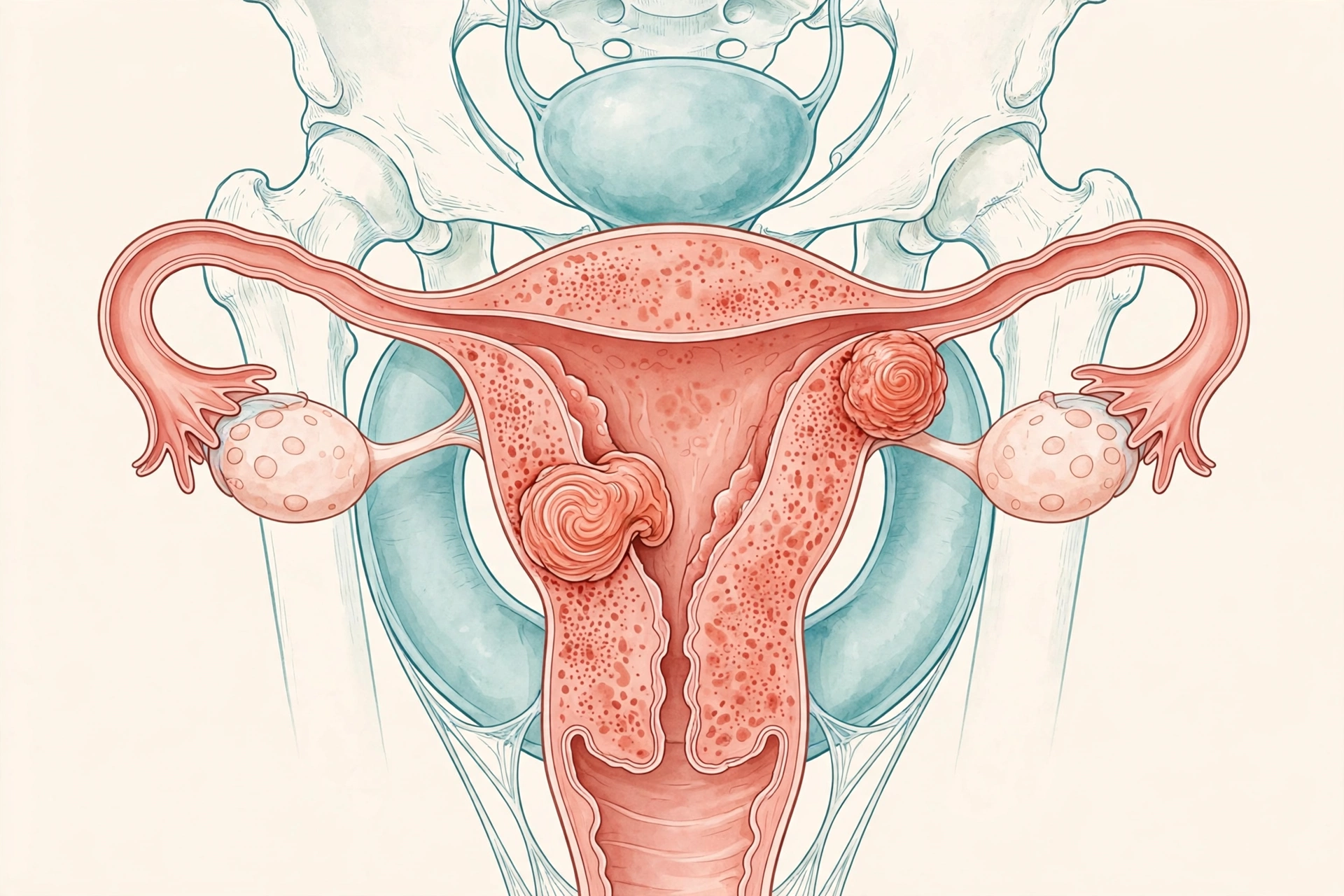
Adenomyosis occurs when tissue similar to the uterine lining grows into the muscular wall of the uterus itself. Each month this embedded tissue swells and bleeds internally, causing the uterus to become enlarged, tender, and prone to heavy, painful periods. It is one of the leading causes of painful periods after 40, particularly in women who have had pregnancies or prior uterine procedures such as cesarean sections. The pain of adenomyosis often begins before the period, intensifies throughout, and may persist for days after flow ends. Learn more about how it feels in our article on adenomyosis symptoms.
Uterine fibroids
Fibroids are non-cancerous growths in or around the uterus that become more common with age — by their late 40s, a majority of women have at least one. Many fibroids cause no symptoms at all, but those that distort the uterine cavity can produce heavy bleeding, prolonged periods, pelvic pressure, and cramping pain. Fibroids typically shrink after menopause as estrogen levels fall, which is one reason they become less troublesome in the 50s. For a deeper look at how they affect daily life, see our guide to fibroids and pelvic pain.
Endometriosis
Endometriosis — tissue similar to the uterine lining growing outside the uterus — is often thought of as a young woman’s condition, but it can persist and even be diagnosed for the first time in the 40s. It causes inflammation in the pelvic cavity, and the pain is typically progressive: worse each year, present before and during periods, and sometimes accompanied by pain between cycles. Diagnosis is frequently delayed, which is one reason a new escalation of pain in midlife deserves attention.
Endometrial or uterine polyps
Polyps are small, benign growths on the inner wall of the uterus. They become more common as women approach menopause and are a frequent cause of heavier bleeding and new cramping. Polyps are easily seen on ultrasound and can usually be removed in a simple office or day-case procedure.
Pelvic inflammatory disease (PID)
PID is an infection of the reproductive organs, most often resulting from untreated sexually transmitted infections. It can cause severe lower abdominal pain during menstruation, along with fever, pain during urination, and unusual vaginal discharge. Unlike the other conditions on this list, PID needs prompt antibiotic treatment, so these symptoms should never be ignored.
Copper IUD
If you use a copper intrauterine device for contraception, be aware that copper IUDs are known to make cramps and bleeding heavier, particularly in the first months after insertion. If your pain worsened shortly after getting the device, discuss alternatives with your clinician — a hormonal IUD, for instance, often does the opposite and reduces period pain.
Cervical stenosis and thyroid disorders
Narrowing of the cervix (cervical stenosis), sometimes following a cone biopsy or other cervical procedure, can trap menstrual blood and intensify cramping. Less obviously, an underactive or overactive thyroid can disrupt the menstrual cycle and worsen period pain — a blood test is all it takes to check, and it is one of the simplest things to rule out.
Painful periods after 40 and heavy bleeding: the anaemia link
Worsening cramps in the 40s rarely travel alone — heavier bleeding is the frequent companion. When you routinely soak through a pad or tampon every hour or two, pass large clots, bleed for more than a week, or bleed through clothing and bedding, clinicians describe it as heavy menstrual bleeding. The NHS notes that heavy periods become more common as women approach menopause, and lists fibroids, adenomyosis, polyps, and hormonal imbalance among the usual causes (NHS heavy periods guidance).
The connection to pain matters because heavy bleeding drains iron. Women in their 40s with heavy, painful periods are at real risk of iron-deficiency anaemia, whose symptoms — crushing fatigue, shortness of breath on mild exertion, pale skin, brittle nails, restless legs — are easily mistaken for “just getting older” or blamed on busy lives. If your periods are both heavy and painful, ask your doctor for a ferritin and haemoglobin check alongside the gynecological workup. Treating the anaemia often dramatically improves how manageable the painful days feel, even before the underlying cause is resolved.
Red flags: when to book an appointment — and when to seek urgent care
Not every change in your 40s is an emergency, but some symptoms should move you to the front of the queue. Use this table to triage:
| Symptom | What to do |
|---|---|
| Period pain that is new, much worse than before, or getting worse over several cycles | Book a GP or gynecologist appointment soon |
| Heavy bleeding (changing protection hourly, large clots, bleeding beyond 7 days) | Book an appointment soon; mention it when booking |
| Pain between periods, or pelvic pain that never fully goes away | Book an appointment soon |
| Bleeding between periods, after sex, or after menopause has begun | Book an appointment promptly |
| Severe one-sided pelvic pain, fever, or foul-smelling discharge with pain | Seek urgent care |
| Fainting, dizziness, or severe weakness during a period | Seek urgent care |
| Bleeding through a pad or tampon every hour for several hours with dizziness or a racing pulse | Seek urgent care — this can be an emergency |
Queensland Health’s guidance on dysmenorrhea makes the same core point: severe period pain is not something to simply endure, and pain that affects daily life, worsens, or changes suddenly warrants a medical conversation (Queensland Health: painful periods). If you have ever been dismissed with “cramps are normal,” a changed pain pattern in your 40s is reason enough to ask for a second look.
How your doctor will investigate: what to expect
Many women delay the appointment because they dread the unknown. Knowing what the evaluation typically involves makes it far less intimidating:
- A detailed history. Your doctor will ask when the pain started, how it has changed, how many days it lasts, what helps, what bleeding is like, and whether anything else changed at the same time (new contraception, weight changes, new medications).
- A symptom diary. The single most useful thing you can bring is 2–3 months of tracked data: period start and end dates, a daily pain score out of 10, bleeding heaviness, clots, and any associated symptoms like nausea or back pain. A phone app or simple notebook works. This turns a vague “it’s worse” into evidence your clinician can act on.
- Physical and pelvic examination. This helps assess the size, shape, and tenderness of the uterus — an enlarged, “boggy,” uniformly tender uterus, for example, points toward adenomyosis.
- Blood tests. A full blood count checks for anaemia; thyroid function tests rule out thyroid disorders; and infection screening may be offered if PID is a possibility.
- Transvaginal ultrasound. This is the workhorse investigation. It can reveal fibroids, polyps, ovarian cysts, and the thickened uterine walls suggestive of adenomyosis. It is quick, widely available, and painless for most women.
- Further imaging or procedures if needed. MRI can map fibroids or adenomyosis in detail; a hysteroscopy (a small camera passed through the cervix) visualizes the uterine cavity directly; and laparoscopy — keyhole surgery — remains the definitive way to diagnose endometriosis.
In some cases no structural cause is found, which can feel frustrating. That does not mean the pain is imaginary — prostaglandin-driven pain amplified by perimenopausal hormone swings is real, and it is treatable. Your doctor can still help you manage it.
Treatment options that work after 40
Treatment has two tracks: easing the pain now and addressing whatever is causing it. Your clinician will tailor the plan to the findings, your medical history, and whether contraception is also needed.
Medication approaches
Anti-inflammatory pain relievers that reduce prostaglandin production are usually the first line, and they work best when taken at the first sign of cramps — or just before the period starts if your cycles are predictable. When pain does not respond, hormonal options are commonly discussed: combined hormonal contraceptives, the hormonal IUD, or other progestin-based methods can thin the uterine lining, reduce prostaglandin levels, and dramatically lighten bleeding. Near menopause, a hormonal IUD is often an especially attractive option because it delivers a low, local hormone dose while providing excellent period control — our article on IUDs for heavy periods explains how it works. Because cardiovascular risk factors change with age, your doctor will weigh the benefits and risks of each hormonal method against your blood pressure, smoking status, and migraine history.
Non-drug strategies with real evidence
These are not consolation prizes — several have meaningful evidence behind them, and they stack well with medication:
- Heat. A hot water bottle or heating pad on the lower abdomen or back remains one of the most effective non-drug measures, comparable in some studies to over-the-counter pain relief for primary cramps.
- Regular exercise. Moderate aerobic activity and stretching are consistently associated with less severe period pain, likely through endorphin release and reduced inflammatory signaling.
- TENS machines. Transcutaneous electrical nerve stimulation devices, applied to the lower abdomen, can blunt cramp pain for some women and are drug-free.
- Pelvic physiotherapy. Pelvic floor physical therapy can help when chronic pelvic pain and cramping overlap — particularly relevant in the 40s, when pelvic floor changes from childbirth or age are common.
- Sleep and stress management. Poor sleep lowers pain thresholds, and stress increases inflammatory chemicals that can intensify cramps. Protecting sleep and building in genuine rest during the painful days is a legitimate part of the treatment picture.
Procedural and surgical options
When medication is not enough or is not appropriate, cause-specific procedures enter the picture: hysteroscopic polyp removal, myomectomy (fibroid removal preserving the uterus), uterine artery embolization for fibroids, endometrial ablation for heavy bleeding in women who have completed childbearing, and — as a last resort for severe adenomyosis or fibroids unresponsive to other treatment — hysterectomy. Each carries its own benefit-and-risk profile, and none should be rushed into without a clear diagnosis and a full discussion of alternatives.
Frequently Asked Questions
Are painful periods after 40 normal?
Mild, stable cramps can simply reflect the hormonal turbulence of perimenopause, and many women experience some change in their 40s. But period pain that is new, much worse than it used to be, or steadily worsening is not something to dismiss as normal aging — it deserves a medical evaluation, because conditions like fibroids and adenomyosis peak in this decade.
Why would cramps get worse after years of easy periods?
The most common reasons are structural changes that develop over time: fibroids growing, adenomyosis progressing, polyps forming, or endometriosis advancing. Perimenopausal hormone fluctuations also make cycles irregular and the uterine lining thicker, requiring stronger contractions. A clinician can usually identify which factor is dominant with an ultrasound and a good history.
Can perimenopause itself cause worse period pain?
Yes. The fluctuating estrogen and progesterone of perimenopause frequently cause anovulatory cycles, a thicker uterine lining, and irregular, heavier periods — all of which can intensify cramping even when no disease is present. That said, perimenopause is a diagnosis of exclusion: other causes should be ruled out first.
Should I be worried that worsening cramps mean cancer?
Worsening cramps in the 40s are overwhelmingly caused by benign conditions — fibroids, adenomyosis, polyps, and hormonal changes. Cancer of the uterus is rare, but postmenopausal bleeding (any bleeding after 12 months without periods) should always be evaluated promptly. Do not let cancer anxiety stop you from seeking care, and do not let reassurance about rarity stop you from getting checked.
What can I do at home when painful periods after 40 strike?
Heat on the lower abdomen, rest, gentle movement, and hydration help many women. Anti-inflammatory pain relievers work best when taken at the very first sign of pain rather than after it peaks. Tracking your symptoms for a few cycles gives your doctor far more to work with. Avoid starting hormonal treatments or supplements for this purpose without medical guidance.
Do painful periods after 40 go away on their own?
Hormone-driven pain often settles after menopause, when periods stop entirely — fibroids, in particular, usually shrink as estrogen falls. But the perimenopausal transition can last years, and structural conditions like adenomyosis or large fibroids rarely improve without treatment in the meantime. If pain is disrupting your life, waiting it out is not your only option.
Can a copper IUD cause my cramps to worsen in my 40s?
Yes — copper IUDs are well known to increase cramping and bleeding, especially in the first months after insertion. If your pain timeline matches getting the device, raise it with your clinician. Many women in their 40s switch to a hormonal IUD, which typically reduces both pain and bleeding.
How do I prepare for a doctor’s appointment about worsening period pain?
Bring 2–3 months of tracked data: cycle dates, daily pain scores out of 10, bleeding heaviness, clots, and associated symptoms. Note what you have already tried for relief, list your medications, and write down your questions in advance. This preparation makes the appointment far more productive and often shortens the path to answers.
Medical disclaimer
This article is for educational and informational purposes only and is not medical advice. It does not establish a doctor–patient relationship and cannot replace personalized evaluation by a qualified clinician. Menstrual health varies widely between individuals, and only a healthcare professional who examines you can diagnose the cause of your symptoms or recommend treatment. If you are experiencing severe, worsening, or worrying symptoms, please consult your doctor, gynecologist, or local health service promptly. Never delay seeking care because of something you have read online.
Worsening cramps in your 40s are your body’s way of asking for attention, not a sentence to be endured. Between the hormonal shifts of perimenopause and the peak years for treatable conditions like fibroids and adenomyosis, this decade of painful periods after 40 is exactly when a good workup pays off the most. Track your symptoms, book the appointment, and go in informed — effective relief, tailored to your body and your stage of life, is well within reach.