PMDD and Libido: How Severe PMS Affects Desire
If your sex drive seems to vanish on a predictable monthly schedule — present one week, gone the next — you are not imagining it, and it is almost certainly not a relationship problem. For many women, PMDD and low libido arrive together, driven by the same hormonal and neurochemical shifts. Understanding why severe premenstrual symptoms drain desire is the first step toward getting it back.
Premenstrual dysphoric disorder (PMDD) is a severe form of premenstrual syndrome that affects roughly 3 to 8 percent of women of reproductive age. It is officially recognized as a depressive disorder in the DSM-5, and “decreased interest in usual activities” — which explicitly includes sexual activity — is one of its diagnostic criteria. In other words, losing your desire in the one to two weeks before your period is not a side note of PMDD. It is part of the condition itself.
What Is PMDD, Exactly?
PMDD is to ordinary PMS what a storm is to rain: the same weather system, vastly more intense. Where typical premenstrual syndrome brings mild moodiness, bloating, and breast tenderness that resolve quickly when bleeding starts, PMDD brings severe, disabling symptoms that significantly interfere with work, school, and relationships. A diagnosis requires at least five of the following symptoms, occurring in the final week before menses, improving within a few days after menstruation begins, and absent in the week after:
- Marked depressed mood, hopelessness, or self-deprecating thoughts
- Marked anxiety, tension, or feeling “on edge”
- Marked affective lability (sudden tearfulness, mood swings)
- Marked irritability, anger, or increased interpersonal conflicts
- Decreased interest in usual activities, including sexual activity
- Difficulty concentrating
- Lethargy, easy fatigability, or marked lack of energy
- Marked change in appetite, overeating, or food cravings
- Hypersomnia or insomnia
- A sense of being overwhelmed or out of control
- Physical symptoms such as breast tenderness, joint or muscle pain, bloating, or weight gain
The cause is not fully understood, but researchers believe it is an abnormal brain response to the normal hormonal fluctuations of the menstrual cycle — particularly altered sensitivity to progesterone and its metabolites, and their effects on the neurotransmitter serotonin. If you are still untangling the difference between the two conditions, our guide to PMDD vs. PMS differences walks through the diagnostic lines in detail.
Why PMDD and Low Libido Go Together
Desire is not a single switch. It is the output of an entire system — hormones, neurotransmitters, energy, mood, pain, sleep, and emotional safety — and PMDD disrupts nearly every part of that system at once. Here is how the pieces connect:
1. The serotonin-dopamine crash
The prevailing model of PMDD holds that vulnerable individuals have an abnormal serotonin response to the rise and fall of estrogen and progesterone in the luteal phase (the roughly two weeks between ovulation and menstruation). Serotonin regulates mood, impulse control, and satiety — but it also interacts closely with dopamine, the brain’s anticipation-and-reward chemical that drives sexual motivation. When serotonin signaling falters, dopamine-driven “wanting” often goes quiet with it. That is why low mood and low desire so frequently arrive as a pair.
2. Progesterone sensitivity and sedation
Progesterone and its metabolite allopregnanolone act on GABA receptors in the brain — the same calming system targeted by anti-anxiety medications. In PMDD, this interaction appears to go wrong: instead of calm, many women experience irritability, anxiety, or a flattened, sedated feeling. A body that feels emotionally numb or heavily sedated is not a body primed for arousal, which requires a calm but engaged nervous system.
3. Fatigue, pain, and the energy budget
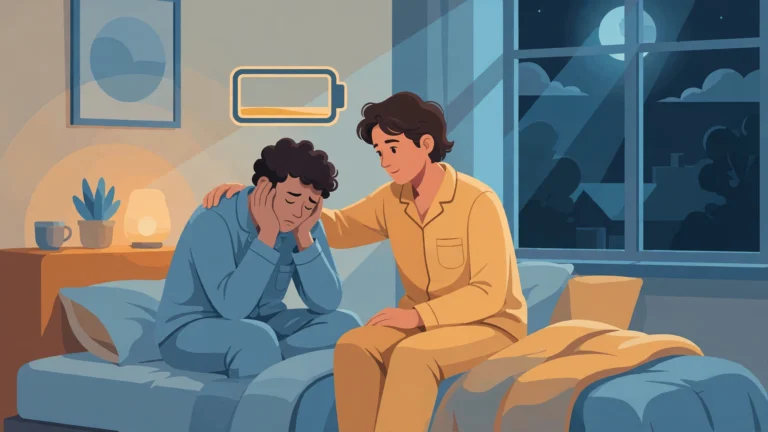
Severe fatigue is one of the most common PMDD symptoms. Add breast tenderness, cramps, bloating, headaches, and disrupted sleep, and the arithmetic becomes simple: by the evening of a luteal-phase day, the energy budget for intimacy is empty. Desire is biologically expensive — the body deprioritizes it when resources are depleted. This is not a motivation problem; it is physiology.
4. Mood, irritability, and emotional distance
PMDD often brings intense irritability and a sense of disconnection — feeling withdrawn, wanting to be alone, or snapping at a partner. Intimacy requires emotional closeness, and emotional closeness is hard to access when you feel raw, overwhelmed, or unlike yourself. Many women describe feeling “numb” toward their partner during the luteal phase, then feeling like themselves again within days of their period starting. That predictable on-off pattern is a hallmark of the condition.
Understanding this wider hormonal picture helps. Our guide to hormones and female libido explains how estrogen, progesterone, and testosterone interact to shape desire across the month — and beyond.
The “Desire Cliff”: How Libido Normally Moves Across the Cycle
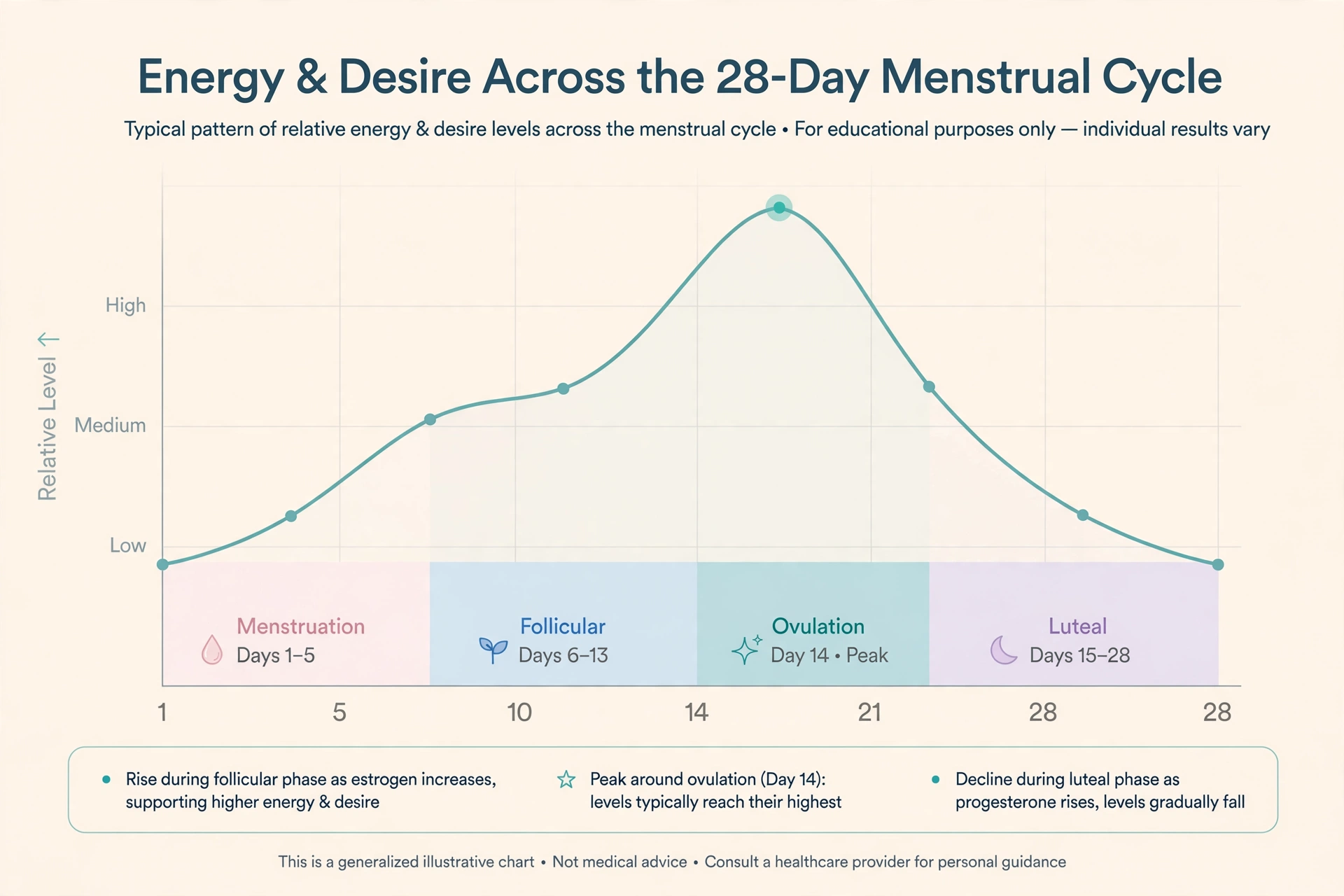
One reason PMDD-related low libido feels so jarring is that it is a sudden drop from a high. In a typical cycle, desire follows a recognizable curve:
- Menstruation (days 1–5): desire is often at its lowest, suppressed by bleeding, cramps, and low energy.
- Follicular phase (days 6–13): as estrogen rises, energy, mood, and desire typically climb.
- Ovulation (around day 14): many women experience a distinct peak in sexual desire — the cycle’s high point, biologically linked to fertility.
- Luteal phase (days 15–28): progesterone dominates; desire gradually declines. In PMDD, this decline is not gradual — it is a cliff.
This curve matters for two reasons. First, it reframes the experience: your desire is not “broken.” It is responding exactly the way desire responds to these hormonal phases — just far more extremely than average. Second, the pattern itself is diagnostic gold. A sex drive that predictably peaks mid-cycle and collapses before your period points toward a cyclical cause; a sex drive that stays flat all month points elsewhere. Clinicians rely on this distinction, and as you will see below, you can gather the evidence yourself before an appointment.
When PMDD Treatment Itself Affects Desire
Here is the nuance almost no general article on this topic addresses: the treatments used for PMDD can both help and hurt libido, and knowing which is which prevents a lot of discouragement.
SSRIs: mood up, desire sometimes down
Selective serotonin reuptake inhibitors (SSRIs) are a first-line treatment for PMDD — sometimes taken daily, sometimes only during the luteal phase. By stabilizing serotonin, they often lift the mood symptoms dramatically, which can indirectly restore desire. However, SSRIs are also well known for sexual side effects, including reduced libido, difficulty reaching orgasm, and delayed arousal. If your mood improves on an SSRI but your desire stays low or worsens, that is a recognized medication effect, not a treatment failure — and it is something clinicians have strategies for, such as adjusting the dosing schedule or switching medications. Our detailed piece on antidepressants and sex drive covers how these effects work and what options patients typically discuss with their doctors.
Hormonal contraceptives: stabilizing the cycle, changing the signals
Combined oral contraceptives (and some other hormonal methods) are also used to treat PMDD, particularly continuous or extended-cycle regimens that reduce the number of hormonal swings per year. For many women, flattening the cycle also flattens the monthly libido crash. But hormonal contraception alters testosterone and estrogen signaling too, and some women experience lower desire on the pill than off it. The effect is highly individual — some women feel their desire return once the luteal crash is gone, others notice a new, flatter pattern. Either way, it is worth tracking and reporting, not suffering through silently.
GnRH analogues and surgical options
In severe, treatment-resistant cases, clinicians may use GnRH analogues to suppress ovulation entirely (creating a temporary menopause-like state), sometimes with add-back hormone therapy. These medications typically reduce libido as part of lowering overall sex-hormone levels — an expected effect that clinicians weigh against symptom relief. Understanding this trade-off in advance makes it an informed choice rather than an unpleasant surprise.
The key takeaway: if you started PMDD treatment and your desire changed — in either direction — tell your clinician. These effects are among the most common reasons patients adjust or abandon treatment, and clinicians expect the conversation.
Cyclical vs. Persistent Low Libido: How to Tell the Difference
Not all low libido in women with PMDD is caused by PMDD. Separating the two changes the treatment plan entirely, so this step matters.
The two-cycle tracking protocol
Clinicians diagnose PMDD by prospectively tracking symptoms across at least two menstrual cycles. You can apply the same method to desire specifically:
- Each evening, rate your sexual desire from 1 to 10 and note the cycle day.
- Also note mood, energy, pain, and sleep — the context around the number.
- After two full cycles, look at the pattern. A desire score that drops by several points in the luteal phase and rebounds after menstruation is cyclical. A score that stays low all month is persistent.
A cyclical pattern points to PMDD or cycle-related causes. A persistent pattern — or one that never fully rebounds — suggests looking further. If you are working through the broader landscape of causes, our overview of low libido in women maps the full territory, from medical to relational factors.
Conditions that can mimic or compound the picture
- Depression and anxiety disorders: unlike PMDD, these do not lift with menstruation. If low mood and low desire persist through the follicular phase too, a broader mood disorder may be present — the two can coexist.
- Thyroid disorders: hypothyroidism causes fatigue, low mood, and reduced libido in a non-cyclical pattern. A simple blood test rules it out.
- Perimenopause: in the 40s, fluctuating estrogen can produce PMDD-like mood symptoms alongside declining desire. The overlap is significant and often missed.
- Hypoactive sexual desire disorder (HSDD): a distinct diagnosis defined by persistent, distressing low desire. It can coexist with PMDD, and treating one may unmask the other.
- Relationship distress and chronic stress: these suppress desire independently of the cycle and deserve their own attention.
Evidence-Based Ways to Support Desire With PMDD
There is no single fix, but several strategies have real evidence behind them. Note the honest framing: most of these are proven to help PMDD mood symptoms, and desire often follows mood — direct evidence on libido specifically is thinner, and you deserve to know that.
- Cognitive behavioral therapy (CBT): CBT adapted for PMDD has shown meaningful benefits for mood symptoms in clinical trials, including coping strategies for the luteal phase. Improved mood regulation and reduced catastrophic thinking about symptoms can lower the emotional barriers to intimacy.
- Aerobic exercise: regular moderate exercise is one of the most consistently supported lifestyle interventions for premenstrual symptoms. It improves mood, sleep, and energy — all upstream of desire. Even a brisk 30-minute walk most days shows benefit.
- Sleep protection: PMDD commonly disrupts sleep, and poor sleep independently suppresses libido. Guarding a consistent sleep schedule, especially in the luteal phase, is a high-leverage move.
- Stress management: chronic stress elevates cortisol, which suppresses the sex hormones that drive desire. Mindfulness practices, breathing exercises, and scheduled downtime are not luxuries here — they are part of treatment.
- Calcium and vitamin B6: these are among the few supplements with modest clinical evidence for premenstrual symptoms. Discuss any supplement with your clinician before starting, particularly if you take other medications.
- Reducing alcohol and caffeine: both can worsen anxiety, sleep disruption, and mood instability in the luteal phase — and alcohol is a direct depressant of sexual response.
What these strategies share: they treat the whole system rather than chasing desire directly. Desire rarely responds to pressure; it responds to the conditions being right.
Talking to Your Partner: Keeping Intimacy Alive in the Luteal Phase
PMDD and low libido strain relationships not because of the desire dip itself, but because of the silence around it. Partners often interpret withdrawal as rejection. A few deliberate practices can prevent that:
- Name the pattern together, once. A single calm conversation — “in the week before my period, my desire drops sharply because of a hormonal condition; it is not about you, and it comes back” — gives your partner a framework instead of a mystery.
- Agree on a luteal-phase intimacy menu. Intimacy is wider than intercourse: extended cuddling, massage, warm baths together, slow kissing, or simply falling asleep holding each other. Having a pre-agreed menu removes the pressure of in-the-moment negotiation when you are already depleted.
- Schedule connection, not just sex. A phone-free walk, cooking together, or a shared show can maintain closeness on days when desire is absent — and closeness is what desire grows back from.
- Let your partner in on the tracking. Sharing your cycle calendar (many couples use a shared app or a simple note on the fridge) turns the luteal phase into a team project: extra patience, lighter schedules, more gentleness — planned in advance, not demanded in crisis.

When to See a Clinician
Consider booking an appointment if your premenstrual symptoms — including the desire crash — significantly interfere with your work, relationships, or quality of life; if symptoms do not lift after menstruation begins; or if you ever experience thoughts of harming yourself. PMDD is a treatable medical condition, not a character flaw, and effective treatments exist.
What to expect: the clinician will likely ask about the timing of your symptoms relative to your cycle and may ask you to complete prospective symptom tracking over two cycles before confirming a diagnosis. Bring your desire-tracking notes — they are genuinely useful clinical data. Expect questions about mood disorders, thyroid function, medications, contraception, and perimenopausal symptoms, since these shape the treatment plan. Useful questions to ask include: which treatment options fit my situation, how might each affect my sex drive, and what should I do if desire does not improve as mood improves?
If cost or access is a barrier, many communities offer sliding-scale clinics, and organizations such as the International Association for Premenstrual Disorders maintain provider directories and self-screening tools. The American College of Obstetricians and Gynecologists’ PMDD FAQ and the Mayo Clinic’s PMDD overview are reliable places to continue reading.
Frequently Asked Questions
Is low libido before my period normal, or is it PMDD?
Some dip in desire during the luteal phase is common — desire naturally follows the hormonal curve of the cycle. It points toward PMDD when the drop is severe, comes with at least four other significant symptoms (such as marked mood changes, severe fatigue, or feeling overwhelmed), disrupts your daily life or relationships, and reliably lifts within a few days of menstruation starting. Tracking desire scores across two cycles is the clearest way to see which pattern you have.
Why does my sex drive disappear completely in the week before my period?
The luteal phase brings a sharp shift in estrogen and progesterone that, in sensitive individuals, disrupts serotonin and dopamine signaling — the neurochemicals governing mood and motivation, including sexual motivation. Combined with PMDD-related fatigue, pain, irritability, and emotional withdrawal, the conditions for desire simply are not there. It is a physiological response, not a loss of attraction.
Can treating PMDD bring my libido back?
Often, yes — when treatment lifts the mood symptoms, fatigue, and pain that were suppressing desire, desire frequently rebounds. However, some first-line treatments, particularly SSRIs and certain hormonal contraceptives, can themselves reduce libido. If your mood improves but desire does not, report it to your clinician; adjustments to the treatment plan are common and expected.
Do SSRIs for PMDD cause low libido?
They can. Reduced libido and difficulty with arousal or orgasm are well-documented side effects of SSRIs, including when used for PMDD — whether taken daily or only during the luteal phase. Luteal-phase-only dosing may carry a lower burden of sexual side effects for some women. Never start, stop, or adjust these medications without medical guidance; discuss any sexual side effects openly with your prescriber.
Does birth control help or hurt libido in PMDD?
Both outcomes occur. By stabilizing hormonal fluctuations, hormonal contraception can eliminate the monthly desire crash for some women. For others, the contraception itself modestly lowers desire by altering estrogen and testosterone signaling. The response is individual — track your experience and discuss it with your clinician rather than assuming either outcome.
How is PMDD-related low libido different from HSDD?
The key difference is timing. PMDD-related low libido is cyclical: it drops in the luteal phase and rebounds after menstruation. Hypoactive sexual desire disorder (HSDD) is defined by persistent low desire that is present most of the time and causes distress, regardless of cycle phase. The two can coexist, and a clinician can help distinguish them using your tracking data.
What can my partner and I do during the low-desire weeks?
Shift the definition of intimacy for those weeks: prioritize non-sexual closeness (cuddling, massage, shared activities), communicate the pattern in advance so withdrawal is not misread as rejection, and lighten schedules where possible. Many couples find that protecting closeness during the luteal phase makes desire return more easily once the phase passes.
Medical disclaimer: This article is for educational purposes only and is not medical advice. PMDD and sexual health concerns should be evaluated by a qualified clinician. Do not start, stop, or change any medication or treatment based on this article — discuss your symptoms and options with your doctor or another licensed healthcare professional.
PMDD and low libido are deeply connected, but the connection is not a life sentence. The same cyclical pattern that makes the desire crash so predictable also makes it treatable: once you and your clinician can see the pattern, you can plan around it, treat it, and protect the parts of your intimate life that matter most.