Emergency Contraception: Options and How They Work
When regular birth control fails — a condom breaks, a pill is missed, or no method was used — knowing your emergency contraception options can make all the difference. Emergency contraception (EC) refers to methods that can prevent pregnancy after unprotected intercourse, but not every option works the same way, works for the same length of time, or suits every person. Understanding how each emergency contraception option works, how effective it is, and when to use it helps you act quickly and confidently.
This guide explains the main emergency contraception options available today, compares their effectiveness, and answers the questions people ask most — in clear, clinical, evidence-based language. It covers both the medical facts and the practical decisions couples face in the moment.
What Emergency Contraception Is — and What It Isn’t
Emergency contraception is backup contraception. It is used after unprotected sex or a contraceptive failure to reduce the chance of pregnancy. Common situations where doctors say emergency contraception is appropriate include a broken or slipped condom, missed birth control pills, a dislodged vaginal ring or patch, failed withdrawal, or sexual assault when no effective contraception was in place.
All of these are situations the various emergency contraception options are designed for — backup protection for the moments when the primary plan failed or was never in place.
What emergency contraception is not is equally important. According to the World Health Organization and the Mayo Clinic, emergency contraceptive pills work mainly by delaying or preventing ovulation — the release of an egg from the ovary. They do not end an established pregnancy and cannot harm a developing embryo. They are completely different from abortion pills (such as mifepristone), which are designed to terminate an early pregnancy. This distinction is one of the most widespread misconceptions about emergency contraception options, and clinicians say clearing it up matters because the confusion stops some people from seeking timely care.
Emergency contraception also offers no protection against sexually transmitted infections. If STI exposure is a concern, talk to your doctor about testing — our guide on when and how often to get tested for STIs walks through the timing in detail.
The Main Emergency Contraception Options
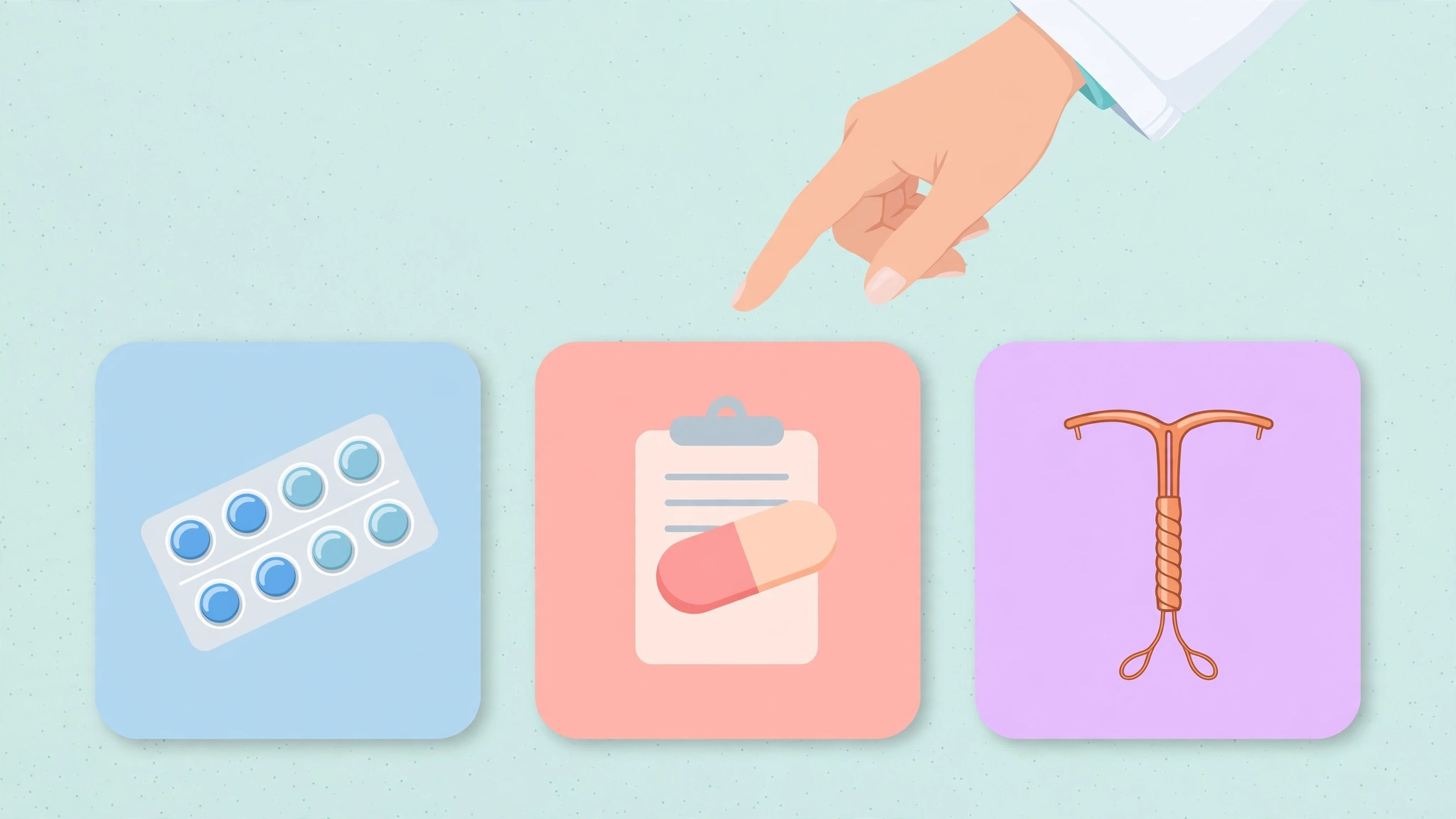
Doctors generally describe four emergency contraception options. Three are in common use, and a fourth is used only under medical supervision. Each emergency contraception option works on a different timeline and has different access requirements, which is why comparing them matters. Choosing among emergency contraception options comes down to three questions: how much time has passed, how you can access the method, and which option fits your health profile.
Levonorgestrel Pills (Plan B and Generics)
The most widely known emergency contraception option is the levonorgestrel pill, sold under brand names such as Plan B One-Step and several generics (Aftera, My Way, Take Action, and others). It is a single-dose pill available over the counter with no age restriction and no prescription needed in most places. It works best when taken as soon as possible after unprotected sex, and it remains an approved option for up to 72 hours (three days). The sooner it is taken, the more effective it is — effectiveness is highest within the first 24 hours and declines steadily afterward. Its main action is to delay or prevent ovulation; if ovulation has already occurred, it is unlikely to help.
Ulipristal Acetate (ella)
The second pill-based emergency contraception option contains ulipristal acetate, sold under the brand name ella. Unlike levonorgestrel, it requires a prescription. Its key advantage is a longer window: it remains effective for up to five days (120 hours) after unprotected sex, and studies show its effectiveness holds steadier across that window than levonorgestrel’s does. It also appears to work better for people with higher body weight (more on that below). Ulipristal delays ovulation even closer to the point of egg release than levonorgestrel can. Because it interacts with hormonal birth control, doctors give specific instructions about when to restart regular contraception after taking it.
The Copper IUD
The most effective emergency contraception option of all is the copper intrauterine device (IUD), inserted by a clinician within five days of unprotected sex. It is more than 99 percent effective — the highest effectiveness of any emergency method. The copper creates an environment in the uterus that is toxic to sperm, preventing fertilization. Its standout advantage is that once inserted, it doubles as outstanding long-acting contraception that can stay in place for up to a decade. Some evidence also supports certain hormonal IUDs for emergency use, though the copper IUD remains the standard doctors recommend among emergency contraception options for this purpose.
Combined Oral Contraceptive Pills (Doctor-Directed Only)
A fourth method, sometimes called the Yuzpe regimen, uses specific doses of combined estrogen-progestin birth control pills taken in two doses 12 hours apart. The World Health Organization still lists it as an acceptable option, but most clinicians no longer recommend it because it causes more nausea and vomiting than the dedicated emergency pills and is less effective. It should only ever be done under a doctor’s direct instruction — never by guessing at doses on your own.
Comparing Your Emergency Contraception Options: Effectiveness and Timing
Putting the emergency contraception options side by side makes the trade-offs clear. Time is the single biggest factor: every one of these emergency contraception options works best the sooner it is used, and every method has a hard cutoff after which it should not be relied upon.
- Levonorgestrel pill: effective up to 72 hours; best within 24 hours. No prescription needed. Pregnancy rates in studies range roughly from 1 to 2 percent when used correctly and promptly.
- Ulipristal acetate (ella): effective up to 120 hours with steadier effectiveness across the full five-day window. Prescription required. Pregnancy rate around 1.2 percent in clinical trials — lower than levonorgestrel, especially on days 3 to 5.
- Copper IUD: effective up to 120 hours at over 99 percent effectiveness, and effectiveness does not fade across the window. Requires a clinic visit for insertion, but then provides up to 10 years of ongoing contraception.
- Combined-pill method: up to 72 hours under medical direction; least effective and most side effects of the options.
The practical takeaway doctors emphasize when comparing emergency contraception options: if you can get to a pharmacy within a day, a levonorgestrel pill taken immediately is a strong choice. If more time has passed — or you weigh more — ella or a copper IUD is the better recommendation. If you want the most effective method available and ongoing contraception in one step, the copper IUD is unmatched.
Body Weight and Emergency Contraception Effectiveness
One gap in most guides to emergency contraception options is honest guidance about body weight — yet it meaningfully changes which option to choose. Research, including analyses of WHO trial data, found that levonorgestrel emergency pills are less effective in people with a body mass index (BMI) of 30 or higher, with reduced effectiveness also suggested from around 165 pounds upward. Mayo Clinic’s guidance notes that BMI is much less of a concern with ulipristal, and that the copper IUD’s effectiveness is not affected by body weight at all.
What should you do with this information when weighing emergency contraception options? Doctors generally suggest this decision path:
- BMI under 26 / lower body weight: any emergency contraception option works well; choose by timing and access.
- BMI 26–30 or weight above ~165 pounds: ask your doctor about ella, which holds up better in this range.
- BMI above 30: the copper IUD is the most reliable choice since weight does not affect it; ella is the next-best pill option.
Importantly, higher weight is never a reason to skip emergency contraception — some protection is far better than none, and there are no safety concerns with using these pills at higher body weight. When in doubt, call your doctor or pharmacist the same day.
Side Effects and Safety
Emergency contraceptive pills are considered safe by every major medical authority, and no emergency contraception option on this list has absolute medical contraindications to its use. Side effects are usually mild and short-lived, similar to those of regular birth control pills: nausea, headache, fatigue, dizziness, breast tenderness, and some spotting or changes to the timing of your next period. Your next period may come a few days early or late — that alone is not a sign the method failed.
A few practical safety notes clinicians share:
- If you vomit within a couple of hours of taking an emergency pill, call your doctor or pharmacist promptly — the dose may need to be repeated.
- Emergency contraception does not affect future fertility. There is no delay in return to fertility afterward, which is exactly why planning ongoing contraception right away matters.
- Repeated use poses no known serious health risks, but frequent use can cause irregular bleeding — a sign to talk with your doctor about a more reliable regular method.
- The copper IUD carries small procedure-related risks (cramping at insertion, rare expulsion or perforation) that your clinician will discuss with you before placement.

What to Do After Using Emergency Contraception
Using one of these emergency contraception options is step one, not the whole plan. Doctors recommend a clear follow-up routine that most online explainers skip over:
- Restart or start regular contraception correctly. After levonorgestrel, you can resume or begin most regular methods — including starting a new method — right away. After ulipristal, wait until the sixth day after taking it before starting or resuming methods that contain progestin, and use backup protection in the meantime. Your doctor can confirm the exact timing for your method.
- Take a pregnancy test in three weeks. Even with perfect use, no method is 100 percent effective. If your period is more than a week late, or three weeks have passed since unprotected sex, take a home pregnancy test or see your doctor.
- Consider STI testing. Emergency contraception prevents pregnancy, not infections. If there was any risk of STI exposure, ask your clinician about testing timelines.
- Plan ahead next time. Doctors can provide an advance supply of levonorgestrel pills so you have them on hand if you ever need them urgently — having them in the drawer removes the race against the clock. For longer-term peace of mind, compare ongoing methods in our guide to birth control options compared.
Myths vs. Facts
Misinformation about emergency contraception options is widespread — surveys have found that most people hold at least one major misconception. Here is what clinicians want you to know:
- Myth: Emergency contraception causes abortion. Fact: emergency pills prevent ovulation and cannot end an established pregnancy. They are not abortion pills and work through an entirely different mechanism.
- Myth: It will make you infertile. Fact: there is no evidence of any effect on future fertility, and fertility returns immediately.
- Myth: You can only use it once in your life. Fact: it can be used more than once, though repeated need is a signal to find a better regular method with your doctor.
- Myth: It protects against STIs. Fact: it offers zero STI protection — condoms remain the method that does.
- Myth: The morning-after pill works the morning after, but not later. Fact: the name is misleading. Levonorgestrel works up to 72 hours, ella and the copper IUD up to five days — but sooner is always better.
When to See a Doctor
Call your doctor or visit a clinic promptly if any of the following apply while considering your emergency contraception options: more than five days have passed since unprotected sex; you have severe abdominal pain or heavy bleeding after using emergency contraception; you vomited soon after taking the pill; your period is over a week late; you take medications such as certain seizure, tuberculosis, or HIV drugs, or St. John’s wort, which can interact with emergency pills; or you want a copper IUD placed. Sexual assault survivors should seek care immediately — emergency departments can provide emergency contraception along with STI prevention and support services.
FAQs
How soon do I need to take emergency contraception after unprotected sex?
Act as soon as possible with whichever of the emergency contraception options you choose — effectiveness is highest in the first 24 hours and declines with every passing day. Levonorgestrel pills are approved up to 72 hours, while ella and the copper IUD work up to 120 hours (five days). Do not wait to see if your period arrives; by then the window has closed.
Is the morning-after pill the same as the abortion pill?
No. Morning-after pills (levonorgestrel or ulipristal) delay or prevent ovulation and cannot end an established pregnancy. Abortion pills such as mifepristone are a different treatment designed to end an early pregnancy. Major medical authorities, including the WHO and Mayo Clinic, confirm this distinction clearly.
Which emergency contraception option works best if I weigh more than 165 pounds?
Research suggests levonorgestrel pills lose effectiveness at higher body weight, particularly above a BMI of 30. Ella performs better in this range, and the copper IUD — over 99 percent effective — is unaffected by weight entirely. Talk to your doctor or pharmacist the same day to pick the best option for you.
Can I use emergency contraception while breastfeeding?
Levonorgestrel is generally considered compatible with breastfeeding, and the copper IUD is also a safe option. Guidance on ulipristal during breastfeeding is more cautious — some authorities advise pausing breastfeeding for a period after taking it. Check with your doctor for current recommendations before choosing among these emergency contraception options.
Can I use emergency contraception as my regular birth control?
Doctors advise against it. Emergency methods are less effective than regular contraception, offer no STI protection, and frequent use causes irregular bleeding. They are designed as backup for occasional use. If you need emergency contraception often, that is a clear signal to discuss a reliable ongoing method with your doctor.
How will I know if emergency contraception worked?
Your next period may arrive a few days early or late, which is normal and not by itself a sign of failure. Take a home pregnancy test if your period is more than a week late, or three weeks after unprotected sex, whichever comes first. If the test is positive or you have concerning symptoms, see your doctor promptly.
Talk to your doctor or a trusted clinician about which of these emergency contraception options fits your situation — and explore our related guides to build a contraception plan that works for the long term.
Medical disclaimer: Decisions about emergency contraception options depend on individual health factors, timing, and medication interactions. This article is for educational purposes only and is not medical advice. Always consult a qualified healthcare professional for guidance about your specific situation.