Ovulation Explained: How to Track Your Fertile Window
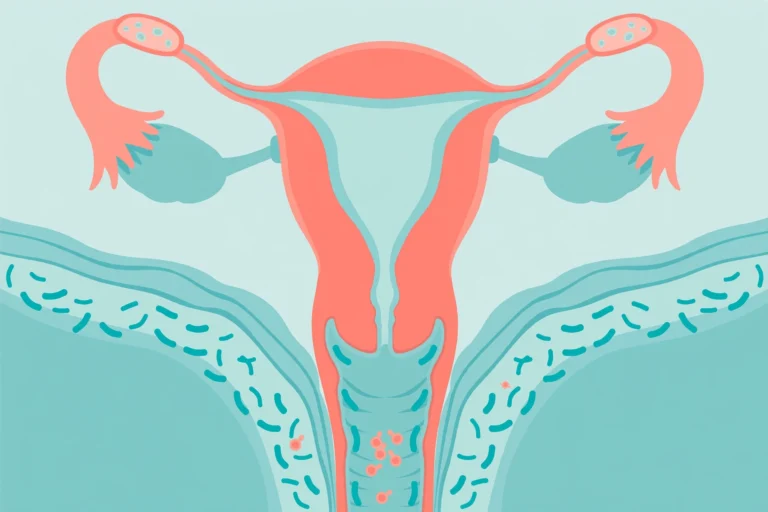
If you want to track fertile window ovulation accurately, the first thing doctors want you to know is that no single method tells the whole story. Ovulation — the release of a mature egg from the ovary — happens roughly once per cycle, but the day shifts with cycle length, age, stress, illness, and hormonal conditions. Combining methods is what separates a rough guess from a reliable pattern. This guide walks you through six clinically recognized ways to track fertile window ovulation, how to combine them, and the warning signs that deserve a doctor’s attention.
Track Fertile Window Ovulation: What the Window Actually Is
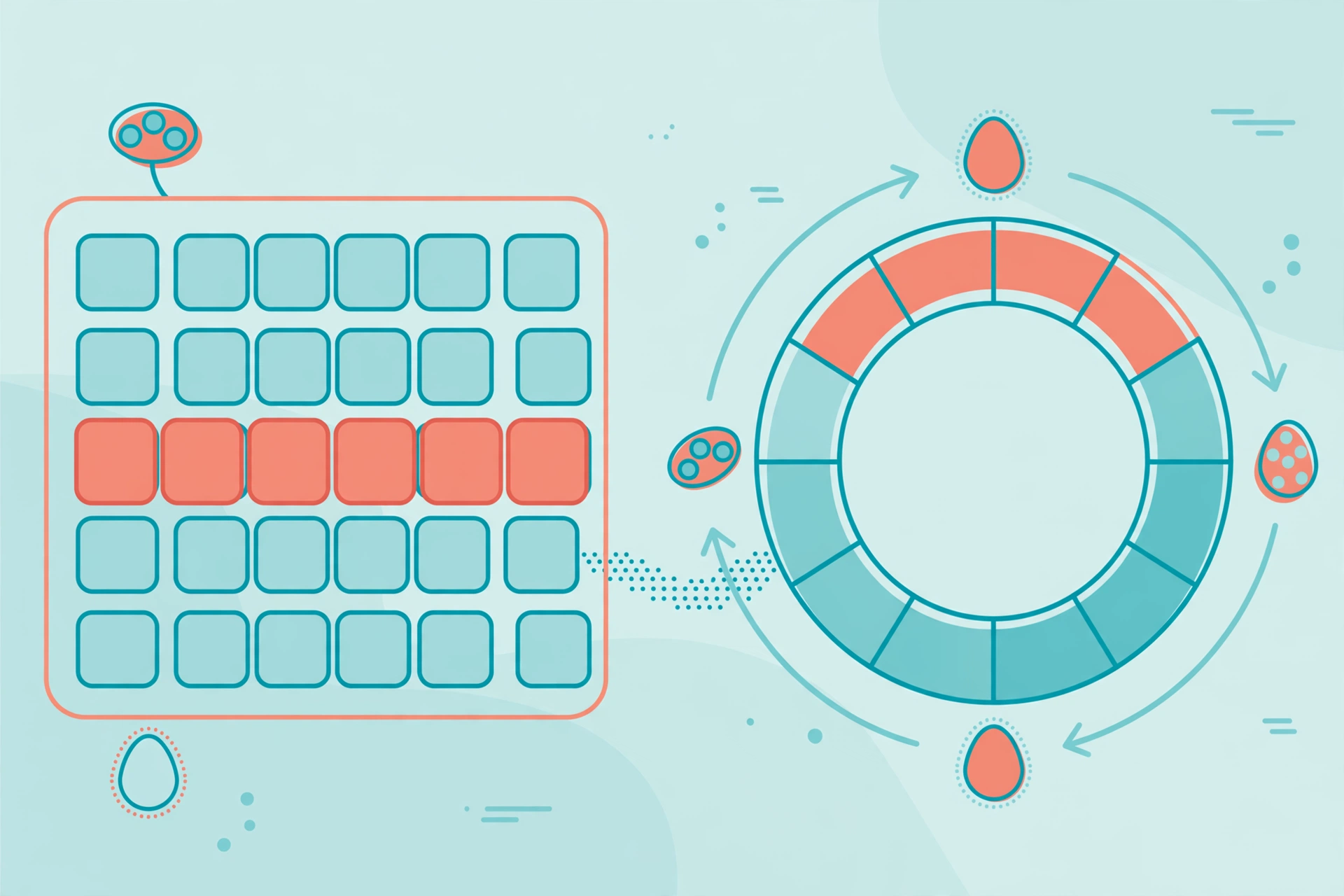
The fertile window is the six-day stretch in each cycle when intercourse can lead to conception: the five days before ovulation plus the day of ovulation itself. That window exists because sperm can survive in the reproductive tract for up to five days, while a released egg remains viable for only about 12 to 24 hours. Landmark research published in the New England Journal of Medicine (Wilcox et al.) showed that the highest probability of conception comes from the two to three days directly before ovulation — which is exactly why pinpointing it matters.
In a textbook 28-day cycle, ovulation lands around day 14, counted from the first day of menstrual bleeding — but textbook cycles are the exception. Healthy cycles range from 21 to 35 days, and ovulation can fall anywhere between days 11 and 21. The widely cited “subtract 14” rule estimates ovulation as 14 days before your next period, which works for regular cycles but fails when cycles vary. That variability is why tracking the window with body signals beats relying on a calendar alone.
How to Track Fertile Window Ovulation: 6 Clinically Backed Methods
Clinicians divide tracking methods into two jobs: prediction methods tell you the fertile window is approaching, so you can time intercourse in advance; confirmation methods tell you ovulation already happened. Here are the six most recommended, starting with the simplest.
1. The Calendar Method
The calendar method estimates ovulation from your menstrual history. Record the first day of bleeding (cycle day 1) for at least six months. A standard calculation taught by reproductive health educators: subtract 18 from the length of your shortest recorded cycle to find your first potentially fertile day, and subtract 11 from your longest cycle to find your last. If your cycles run 26 to 30 days, your fertile days fall roughly between days 8 and 19.
The calendar method is free and easy, but doctors consider it the least precise: up to half of all cycles can vary by seven days or more. Treat it as a starting framework — and always pair it with at least one body-signal method below when you track fertile window ovulation seriously.
2. Ovulation Predictor Kits (OPKs)
Ovulation predictor kits detect the surge of luteinizing hormone (LH) in urine that triggers the ovary to release an egg, usually 24 to 36 hours later. Used like a pregnancy test, a positive result — when the test line is as dark as or darker than the control line — signals that your most fertile days are now arriving.
Doctors recommend starting OPKs a few days before your estimated fertile window (for a 28-day cycle, around day 10), testing at the same time each day. One caution: an LH rise does not guarantee ovulation, and women with PCOS often have elevated baseline LH that produces false positives. With irregular cycles, discuss results with your doctor rather than trusting the strips alone.
3. Basal Body Temperature (BBT) Charting
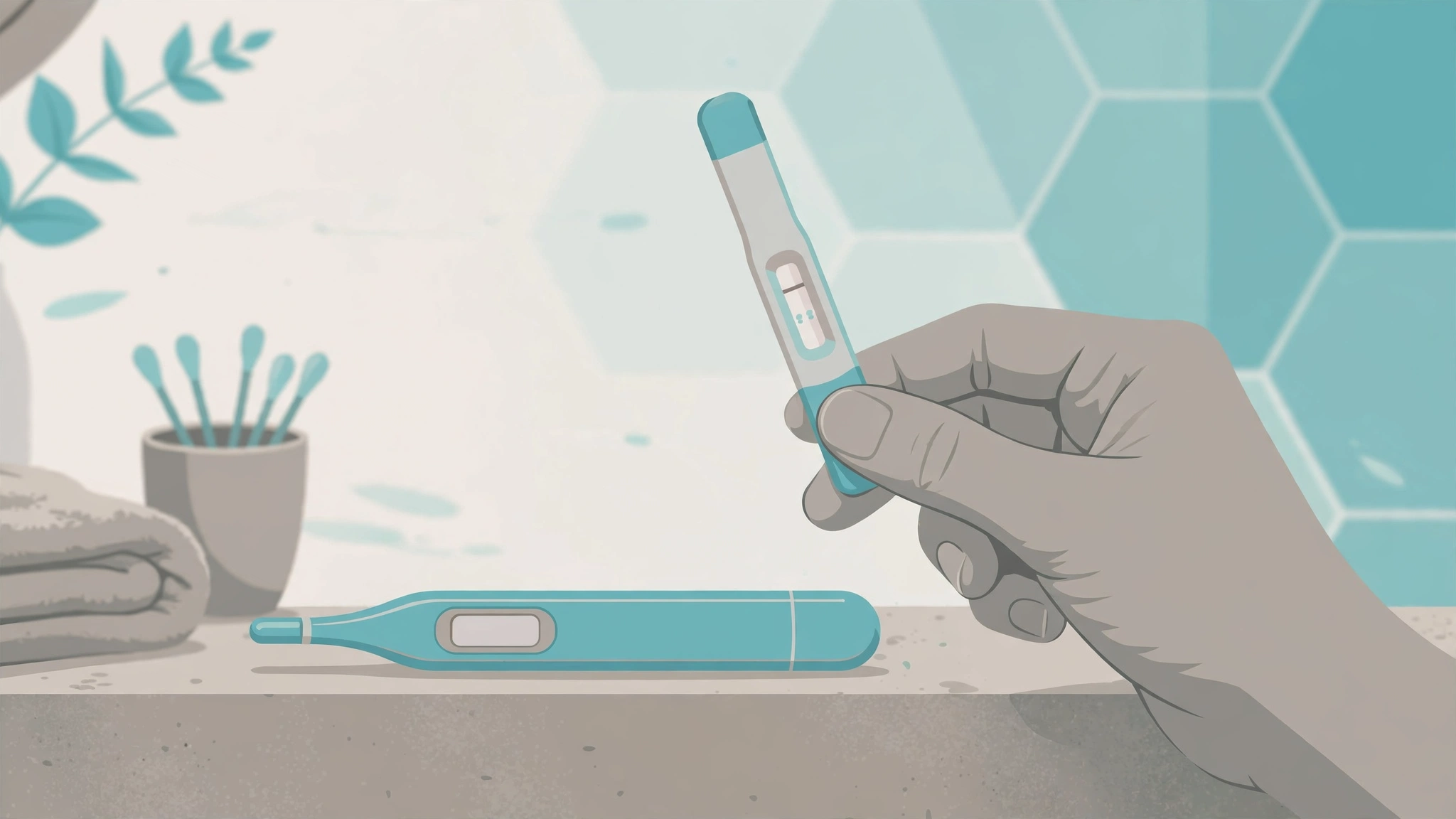
Basal body temperature is your resting temperature first thing in the morning, before you get up, speak, or drink anything. After ovulation, rising progesterone lifts BBT by roughly 0.3 to 0.5°C (about 0.5 to 1°F), and it stays elevated until your next period. A sustained three-day rise confirms that ovulation likely occurred — making BBT the simplest way to confirm, after the fact, that you did track fertile window ovulation correctly.
The catch: BBT confirms ovulation after the fact — it cannot predict the fertile window on its own. Its real value is pattern reading: charted over two to three cycles, it shows whether you ovulate at all and how long your luteal phase runs. Use a dedicated basal thermometer at the same time daily, and note disruptions such as poor sleep, alcohol, or illness, which can skew readings.
4. Cervical Mucus Monitoring
Throughout the cycle, cervical fluid changes in a predictable pattern driven by estrogen. After bleeding stops, days are typically dry; then mucus becomes sticky and cloudy, then creamy and wet, and finally — in the fertile window — clear, slippery, and stretchy like raw egg white. That egg-white mucus precedes ovulation by one to three days and makes sperm travel easier.
Research (Bigelow et al., Human Reproduction, 2004) found that cervical mucus observation predicted conception as well as or better than intercourse timing alone, making it one of the most informative low-cost signals. Check by observing discharge on toilet tissue or by gently collecting mucus from the vaginal opening. Stretch it between your fingers: the longer the strand, the closer ovulation likely is.
5. Fertility Monitors and Wearables
Digital fertility monitors read urinary hormones (estrogen, LH, and in some models progesterone metabolites) and translate them into low, high, and peak fertility readings. Wearables — rings, wristbands, and skin patches — track overnight skin temperature, resting heart rate, and heart rate variability, flagging the physiological shift around ovulation. Doctors advise viewing their predictions as estimates, not diagnoses: patterns repeating across several cycles matter far more than any single month’s output.
6. Clinical Confirmation: Ultrasound and Blood Tests
The gold standard is at a clinic: transvaginal ultrasound to watch follicle growth and the uterine lining, plus blood tests measuring LH, estradiol, and mid-luteal progesterone. Fertility specialists recommend this route if you have been trying to conceive for 12 months (6 months if over 35), have irregular or absent cycles, or suspect PCOS, thyroid disease, or endometriosis. If home tracking leaves you with more questions than answers, this is the appropriate next step.
The Sympto-Thermal Method: Combining Signals the Way Clinicians Teach
Here is the gap most online guides skip: fertility researchers consistently find that combining methods outperforms any single one, and the combination has a formal name — the sympto-thermal method. Endorsed by the World Health Organization as a fertility-awareness approach, it pairs daily BBT charting with cervical mucus observation, plus a calendar cross-check.
A practical way to use it:
- Each morning, record your BBT at the same time before rising. Watch for a sustained rise of at least 0.2°C (0.4°F) above the previous six days’ average, held for three consecutive days.
- Each evening, note your cervical mucus: dry, sticky, creamy, wet, or egg-white/stretchy. Your most fertile days are the last day of egg-white mucus and the two days before it.
- Apply the double-check rule: consider the fertile window closed only when both the temperature rise is confirmed and the mucus has dried up. If they disagree, trust the later signal.
- Keep a one-page monthly chart (date, cycle day, BBT, mucus, OPK result, notes on illness or travel). After three charts, most women can anticipate their window clearly.
This method also teaches you to read abnormal patterns worth raising with a doctor: a luteal phase shorter than 10 days, charts with no temperature rise (possible anovulatory cycles), or mucus that never turns egg-white.
Confirming Ovulation at Home With Progesterone (PdG) Tests
Another method competitors rarely mention: at-home urine tests for pregnanediol glucuronide (PdG), the main urinary metabolite of progesterone. While OPKs predict ovulation and BBT only implies it, PdG strips — taken on specific days after a positive OPK — confirm that progesterone actually rose, which means ovulation very likely occurred.
Doctors find this useful when charts are ambiguous (a wobbly temperature rise, unclear mucus) and for women with PCOS, whose LH strips give frequent false positives. A positive PdG result gives the one thing OPKs cannot — proof, not prediction. Persistent negative PdG results across several cycles are a reason to see a doctor, not to keep buying more strips.

Tracking Ovulation After Stopping Birth Control, Postpartum, or While Breastfeeding
This is the scenario most tracking guides overlook — yet it is one of the most common reasons people search for ovulation information. Three things clinicians want you to know when you track fertile window ovulation after hormonal disruption:
- After stopping hormonal birth control: ovulation can return within weeks, but cycles are often irregular for the first few months as your own hormones re-establish. Calendar estimates are unreliable during this reset; rely on OPKs and cervical mucus instead, and give your body two to three cycles before judging the pattern.
- Postpartum and breastfeeding: ovulation can return before your first postpartum period — meaning pregnancy is possible while periods are still absent. Any drop in nursing frequency (night weaning, introducing solids, returning to work) can restart it silently. Doctors strongly advise against treating “no period yet” as contraception; for natural family planning postpartum, the sympto-thermal method is the approach most clinicians recommend, since calendar math does not apply.
- After miscarriage or pregnancy loss: ovulation may resume within two to six weeks, often before bleeding patterns normalize. Your doctor can advise when it is safe to try again, and home tracking can help you understand when your cycle has truly reset.
Because hormonal contraception suppresses ovulation by design, a related consideration is which method you used and how it interacts with fertility afterward — our comparison of birth control options explains how different methods work and what to expect when you stop them.
Method Comparison at a Glance
| Method | Predicts or Confirms? | Reliability | Cost |
|---|---|---|---|
| Calendar tracking | Predicts | Low, especially with irregular cycles | Free |
| OPKs (LH strips) | Predicts (24–36 hrs ahead) | High for regular cycles; false positives in PCOS | Low–moderate |
| Cervical mucus | Predicts (1–3 days ahead) | Strong evidence as a real-time signal | Free |
| Sympto-thermal (combined) | Both | Among the best at-home approaches | Low |
| PdG progesterone strips | Confirms | Good confirmation of ovulation | Moderate |
| Ultrasound + blood tests | Both | Clinical gold standard | Clinic visit |
Ovulation Symptoms: What Your Body May Tell You
Beyond formal methods, many women notice mid-cycle signals — the Mayo Clinic’s overview of ovulation signs lists changes in vaginal discharge, abdominal pain, and temperature shifts among them. In practice, the signals include: mild one-sided pelvic ache (mittelschmerz), increased libido, breast tenderness, light spotting, or a cervix that feels higher, softer, and more open. These are real but inconsistent — some women feel nothing at all, which is also normal. Use symptoms as supporting clues, never as your only evidence.
When to See a Doctor About Ovulation
Tracking your cycle doubles as an early-warning system. The Mayo Clinic and the American College of Obstetricians and Gynecologists (ACOG) advise booking an appointment if you notice any of the following — and the Cleveland Clinic’s ovulation guide explains which symptoms are typical and which warrant evaluation:
- No signs of ovulation across several cycles, or cycles consistently shorter than 21 days or longer than 35 days.
- Trying to conceive for 12 months without success — or 6 months if you are over 35.
- Severe ovulation pain rather than the brief, mild ache of mittelschmerz.
- Very irregular or absent periods, which can signal PCOS, thyroid disorders, or endometriosis — see our guide to endometriosis and fertility for when cycle symptoms point to an underlying condition.
- Signs of excess androgens — acne, unwanted hair growth, hair thinning — alongside irregular ovulation, which merit a PCOS evaluation.
A doctor can order targeted hormone panels and ultrasound imaging, and for couples trying to conceive, a partner’s semen analysis matters too — male factors contribute to roughly half of infertility cases, and ovulation tracking cannot rule them out.
FAQs
How many days before ovulation is a woman most fertile?
The two to three days before ovulation are the most fertile, according to landmark fertility research. Sperm can survive up to five days in the reproductive tract, while the egg lasts only 12 to 24 hours, so intercourse in the days leading up to ovulation — not just on the day itself — carries the highest conception probability.
Can you ovulate without having a period?
Yes. Ovulation can occur without a subsequent period, most commonly postpartum while breastfeeding, after stopping hormonal contraception, or with conditions like PCOS. This is why doctors warn against treating “no period yet” as reliable contraception — ovulation can quietly return before bleeding does.
Are ovulation predictor kits accurate?
For women with regular cycles, OPKs are quite reliable at detecting the LH surge that precedes ovulation by 24 to 36 hours. However, they predict rather than confirm ovulation, and women with PCOS often get false positives from chronically elevated LH. Pairing OPKs with BBT or cervical mucus tracking gives a fuller picture.
Does a rise in basal body temperature mean I am ovulating right now?
No — the temperature rise happens after ovulation, driven by progesterone. BBT confirms that ovulation likely occurred but cannot predict it in advance. That is why clinicians recommend using it for pattern confirmation across cycles while relying on OPKs or cervical mucus to time the fertile window itself.
Why am I not ovulating even though my OPK is positive?
A positive OPK detects an LH surge, not the actual release of an egg; surges can occur without ovulation, a condition sometimes called luteinized unruptured follicle syndrome. PCOS, thyroid disorders, and high stress can also disrupt the process. If positive strips never lead to a BBT rise or conception, ask your doctor about PdG testing or clinical monitoring.
How long should I track before trying to conceive?
Doctors generally suggest you track fertile window ovulation for two to three full cycles before actively trying, which is enough to reveal your typical fertile window and confirm that you ovulate regularly. If tracking shows irregular ovulation or no ovulation, that information itself is valuable — bring your charts to your appointment, as they help your doctor diagnose faster.
Learning to track fertile window ovulation puts real data behind one of the most important rhythms in reproductive health — whether your goal is conception, natural family planning, or simply understanding your body. Start with one prediction method and one confirmation method to track fertile window ovulation reliably, chart consistently for three cycles, and talk to your doctor about anything that looks unusual.
Medical disclaimer: This article is for educational purposes only and is not medical advice. Menstrual cycles and ovulation patterns vary widely between individuals. Do not use this information to diagnose or treat any condition, and consult a qualified healthcare professional — such as your doctor or gynecologist — before making decisions about fertility, contraception, or treatment.