How Sleep Affects Sex Drive: What Research Shows
If you have been blaming your fading libido on age, stress, or relationship trouble, you may be missing a simpler suspect: your pillow. The connection between sleep and sex drive is one of the most consistent findings in sexual medicine, yet it is also one of the most overlooked. Doctors who treat low desire, erectile difficulties, and arousal problems increasingly ask one of their first questions: “How are you sleeping?” Here is what the research on sleep and sex drive actually shows, and what clinicians recommend when poor rest is quietly undermining your sex life.
What the Research Says About Sleep and Sex Drive
The most cited study on this topic comes from the Journal of Sexual Medicine, where researchers tracked 171 college-aged women over two weeks. Each morning the participants reported their previous night’s sleep and their sexual activity. The result was striking: each additional hour of sleep increased the likelihood of partnered sexual activity by 14%, and women who averaged longer sleep also reported greater next-day desire and better genital arousal — regardless of age, fatigue, menstruation, or sexual distress.
In men, the evidence centers on testosterone. A widely referenced study published in JAMA found that restricting young men to five hours of sleep per night for just one week reduced daytime testosterone levels by 10 to 15% — roughly equivalent to aging ten to fifteen years. Since most daily testosterone is released during deep sleep and REM cycles, consistently short nights directly cut hormone production, lowering desire and, in many men, contributing to erectile difficulties.
People with insomnia report sexual problems at significantly higher rates, and men with obstructive sleep apnea experience erectile dysfunction two to three times more often than average. The link between sleep and sex drive is not anecdotal — it is measurable, reproducible, and clinically actionable.
Why Sleep and Sex Drive Are Connected: The Biological Mechanisms
Understanding these mechanisms is the key to the whole sleep and sex drive connection.
Testosterone and the REM window
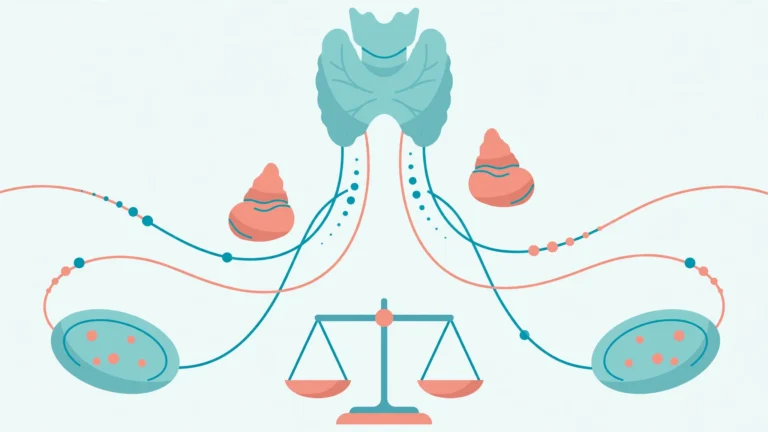
Most testosterone in men is secreted during the night, with peak levels tied to REM sleep. Cut sleep short and you cut the body’s manufacturing shift short too. Women are not exempt: women also produce testosterone in the ovaries and adrenal glands, and better sleep is linked to healthier androgen levels in women as well. When testosterone falls, desire falls first, often before any other symptom appears.
Cortisol and the stress loop
Poor sleep raises cortisol, the body’s primary stress hormone. Elevated cortisol suppresses the reproductive hormone axis and directly dampens arousal. The NHS notes that men and women who do not get enough quality sleep report lower libidos, and chronically high cortisol is one of the key reasons. This creates a vicious cycle: low sleep raises stress, stress lowers desire, and anxiety then makes sleep even harder. If chronic tension feels like the main culprit, see our guide to low testosterone symptoms in men and when to get tested for the hormonal side of this picture.
Blood flow, inflammation, and erectile function
Achieving and maintaining an erection requires healthy blood vessels and adequate nitric oxide. Sleep restriction promotes inflammation and oxidative stress, which reduce nitric oxide availability and impair penile blood flow — the same vascular mechanism involved in heart disease. Sleep apnea compounds the problem: repeated overnight drops in oxygen damage the blood-vessel lining and fragment the deep sleep needed for hormone release. Encouragingly, research shows that treating sleep apnea with CPAP therapy can reduce sexual dysfunction in both men and women.
Mood, fatigue, and the emotional side of desire
Even when hormones and blood flow are intact, exhaustion alone can kill desire. Sleep-deprived people experience lower mood, higher irritability, and reduced emotional resilience — research even shows they argue more with their partners. Desire requires psychological safety and mental energy, both of which evaporate after a bad night. Low libido after poor sleep is not a relationship verdict; it is often a physiological consequence. Our guide to low libido and the common causes worth ruling out first puts sleep in context alongside other contributors.
The Hormones Women Should Know About: Estrogen, Progesterone, and Sleep
Most articles on this topic focus on testosterone and move on, but the women’s side of the sleep and sex drive story deserves its own section. Estrogen and progesterone are both deeply intertwined with sleep quality, and their fluctuations explain why many women notice desire and rest changing together.
Across the menstrual cycle, poor sleep tends to cluster in the luteal phase (after ovulation, before menstruation), when rising progesterone and elevated core body temperature fragment sleep. Lower sleep quality in this window often coincides with lower desire — a paired drop many women recognize but few connect. The follicular phase after menstruation often brings the best sleep and a rebound in interest.
Menopause intensifies the loop. Falling estrogen causes night sweats and hot flashes that shatter sleep, while the same estrogen decline drives vaginal dryness and reduced arousal. Clinicians recommend addressing the sleep disruption directly, because restoring rest often lifts desire faster than expected. Both the Mayo Clinic and the Cleveland Clinic list sleep disruption as a core menopausal symptom to treat, not merely to endure.
The Two-Way Street: How a Healthy Sex Life Improves Sleep
Here is a mechanism that runs in the opposite direction and closes the sleep and sex drive loop: physical intimacy itself improves sleep quality. After orgasm, the body releases prolactin and oxytocin — hormones associated with bonding, relaxation, and drowsiness — while sympathetic (“fight or flight”) activity quiets down. This neurochemical shift is why people commonly feel deeply relaxed and fall asleep more easily after intimacy.
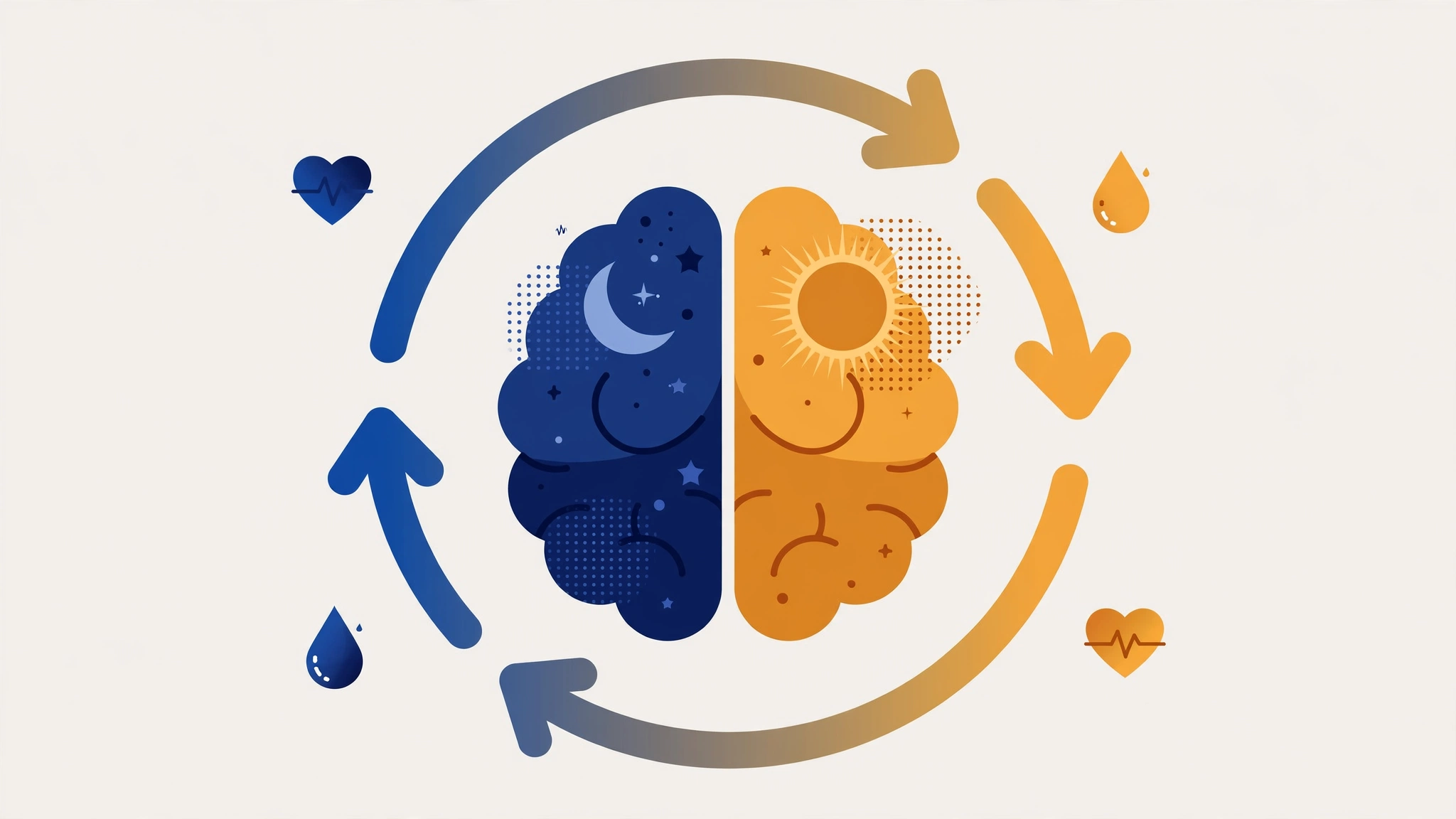
That creates a virtuous cycle: better sleep raises desire, satisfying intimacy releases calming hormones, and those hormones deepen the following night’s sleep, which raises desire again. The vicious cycle works the same way in reverse. This framing helps clinicians reposition intimacy not as an obligation on an exhausted couple, but as a lifestyle input — alongside exercise, light exposure, and consistent bedtimes — that actively improves rest.
Chronotype Mismatch: When Partners Keep Different Hours
Sleep researcher Dr. Michael Breus has popularized the concept of chronotypes — genetically influenced preferences for being a “morning person” or “night owl,” linked to the PER3 gene that governs the circadian system.
In couples, a morning-lark partner paired with a night-owl partner often experiences what looks like mismatched libidos but is actually mismatched schedules — a hidden sleep and sex drive problem that is about timing, not attraction. The night owl is at peak alertness at 11 p.m.; the lark is winding down at 9:30. Their windows of alertness, and therefore of desire, simply do not overlap. Sleep-deprived partners also misread social cues: one study in the journal Sleep found that after a night of sleep deprivation, men significantly overestimated women’s sexual interest, because fatigue impairs the frontal lobe’s judgment and inhibition.
The clinical advice is practical: find an overlapping window when both partners are reasonably rested, protect it from screens and late caffeine, and consider that scheduling intimacy is not unromantic — for couples with mismatched chronotypes, it is often the only way desire gets a fair chance. When mismatched schedules coexist with snoring or suspected apnea, a sleep evaluation is doubly worthwhile.
How Much Sleep Does Your Sex Life Need?
Most adults need seven to nine hours of sleep per night, according to the American Academy of Sleep Medicine and the Sleep Research Society. But quality and consistency matter as much as total: deep sleep and REM — the stages where testosterone surges and the brain processes emotional stress — concentrate in the second half of the night. A regular six-hour sleeper who cuts off the final cycle may lose the most hormonally valuable hours of all.
Shift workers deserve special attention: studies of men working nonstandard hours find higher rates of low-testosterone symptoms and sexual dysfunction when sleep is fragmented or chronically short. If your schedule forces irregular sleep, keep a consistent sleep window even on days off, get bright light at the start of your waking hours, and discuss the pattern with your doctor rather than accepting it as normal.
When Poor Sleep Points to a Medical Problem
Sometimes the real issue behind low sleep and sex drive is not lifestyle but an undiagnosed sleep disorder. Doctors recommend a professional evaluation when you notice any of the following alongside low desire:
- Loud snoring, gasping, or witnessed pauses in breathing — hallmarks of obstructive sleep apnea, which affects hormone levels, blood flow, and daytime desire.
- Daytime exhaustion despite spending enough hours in bed — a sign of fragmented or non-restorative sleep, common in apnea and restless legs syndrome.
- Difficulty falling or staying asleep three or more nights a week for three months — the clinical threshold for chronic insomnia, which responds well to CBT-I (cognitive behavioral therapy for insomnia), the first-line treatment clinicians prefer over sleeping pills.
- A new prescription that coincided with both poor sleep and low libido — several blood pressure drugs, some antidepressants, and hormonal contraceptives can affect both; never stop a medication without your doctor, but do raise the connection with them.
A primary-care doctor can order a home sleep study for suspected apnea, review medications, and check morning testosterone levels when indicated. Because sexual concerns are common, they are a routine part of clinical practice — raising them is not awkward for the doctor, and the threshold for asking should be low.
Your 7-Day Sleep-for-Desire Reset Plan
Clinicians generally advise trying a structured two-week sleep improvement window before assuming low desire needs other treatment. Here is a practical seven-day plan drawn from sleep-medicine guidelines; repeat it for a second week and note whether desire improves.
| Day | Morning | Evening |
|---|---|---|
| 1 | Wake at the same time you want every day (even weekends); get 10 minutes of daylight within an hour of waking | No caffeine after noon; screens off 60 minutes before bed; keep the room cool (18–20°C) |
| 2 | Exercise for 20–30 minutes (not within 3 hours of bedtime) | Wind-down routine: warm bath, reading, or meditation; write tomorrow’s to-dos to clear mental loops |
| 3 | Avoid alcohol as a sleep aid — it fragments the second half of the night | Keep the bed for sleep and intimacy only; leave the bed if awake more than 20 minutes |
| 4 | If you nap, keep it under 25 minutes and before 3 p.m. | Dim household lights in the final hour; try a consistent bedtime |
| 5 | Talk with your partner about chronotypes — pick one overlapping “rested window” together | Share one screen-free hour in that window; prioritize connection without pressure |
| 6 | Review medications and alcohol with a pharmacist or doctor if either affects your sleep | Keep the bedroom dark, quiet, and cool; consider earplugs or white noise |
| 7 | Compare your week’s sleep diary totals vs. your desire level each day | Repeat for week 2; if no improvement, book a primary-care visit to discuss sleep and hormones |
Small, consistent changes beat dramatic ones. Researchers emphasize that even an extra hour of sleep produced measurable changes in the 14% study — you do not need a perfect sleep schedule, just a better one.
FAQs
Can lack of sleep really lower my libido, or is it just tiredness?
It is both — and the hormonal part is real. One week of five-hour nights can drop testosterone by 10 to 15%, while research in women found each extra hour of sleep raised the likelihood of intimacy by 14%. Poor rest also raises cortisol and worsens mood, which independently suppress desire.
How much sleep do I need to keep my sex drive healthy?
Most adults need seven to nine hours nightly, per the American Academy of Sleep Medicine. Consistency matters as much as total: regular schedules protect deep sleep and REM, the stages where testosterone peaks. If you sleep enough hours but wake unrefreshed, talk to your doctor.
Does sleep apnea affect sex drive?
Yes. Obstructive sleep apnea fragments sleep, drops overnight oxygen, and lowers testosterone — men with apnea report erectile dysfunction two to three times more often than average, and women with apnea also report more sexual dysfunction. Loud snoring, gasping, or daytime exhaustion are warning signs, and studies show CPAP treatment can reduce these sexual problems.
Why do I have no desire for my partner even when I feel rested?
Sleep is only one piece of desire. Doctors also check relationship dynamics, depression and anxiety, medications, hormonal shifts such as menopause, and mismatched chronotypes between partners. If two weeks of better sleep does not improve things, see your primary-care doctor for a broader evaluation.
Can sleeping better fix erectile problems?
Sometimes. When erectile difficulties stem from poor sleep, low testosterone, or untreated apnea, improving rest or treating the disorder often improves function — CPAP therapy has documented benefits. But ED also has vascular, neurological, and psychological causes, so persistent problems warrant a medical evaluation rather than assuming sleep alone is the fix.
Should I take melatonin or sleeping pills to improve my libido?
Clinicians generally do not recommend sleeping pills as a libido strategy. For chronic insomnia, CBT-I (cognitive behavioral therapy for insomnia) is the first-line treatment with the best long-term results. Melatonin can help some people with timing issues, but do not use it long-term without medical guidance. Fix the underlying sleep problem first, and desire often follows.
If low desire persists after two weeks of better sleep, that is valuable information for your doctor — it points toward hormonal, medication-related, or psychological causes worth investigating. Bring your sleep notes to the appointment; clinicians take a two-week sleep diary seriously. You can also explore our related guides on ruling out common causes of low libido and low testosterone symptoms in men.
For more on the physiology behind sleep and sex drive, see the guidance from the NHS on sleep and tiredness and the Mayo Clinic’s overview of healthy sleep habits.
Medical disclaimer: This article is for educational purposes only and is not medical advice. Sexual health and sleep problems can have many causes, and only a qualified healthcare professional can diagnose your situation. Please consult your doctor, urologist, gynecologist, or a sleep specialist before making decisions about treatment, medication, or lifestyle changes affecting your health.