Maca Root for Libido: Evidence Review
Maca root is one of the few herbal supplements with actual randomized, placebo-controlled trials behind its libido claims. Marketed for centuries as a Peruvian aphrodisiac, it now sits at the center of a real scientific question: does the maca root libido evidence hold up under scrutiny, or is it mostly tradition and marketing?
This review of the maca root libido evidence looks at what clinical trials have actually found for men and women, how maca appears to work, where the research falls short, and how to think about it sensibly alongside a clinician. Every claim below is tied to published research — and the limitations are stated plainly.
What Is Maca Root, Exactly?
Maca (Lepidium meyenii) is a cruciferous plant — a relative of broccoli, cabbage, and kale — grown at 4,000 to 4,500 meters in the central Peruvian Andes. It has been cultivated there for up to 2,000 years as both food and traditional medicine, historically used for fertility, stamina, and vitality.
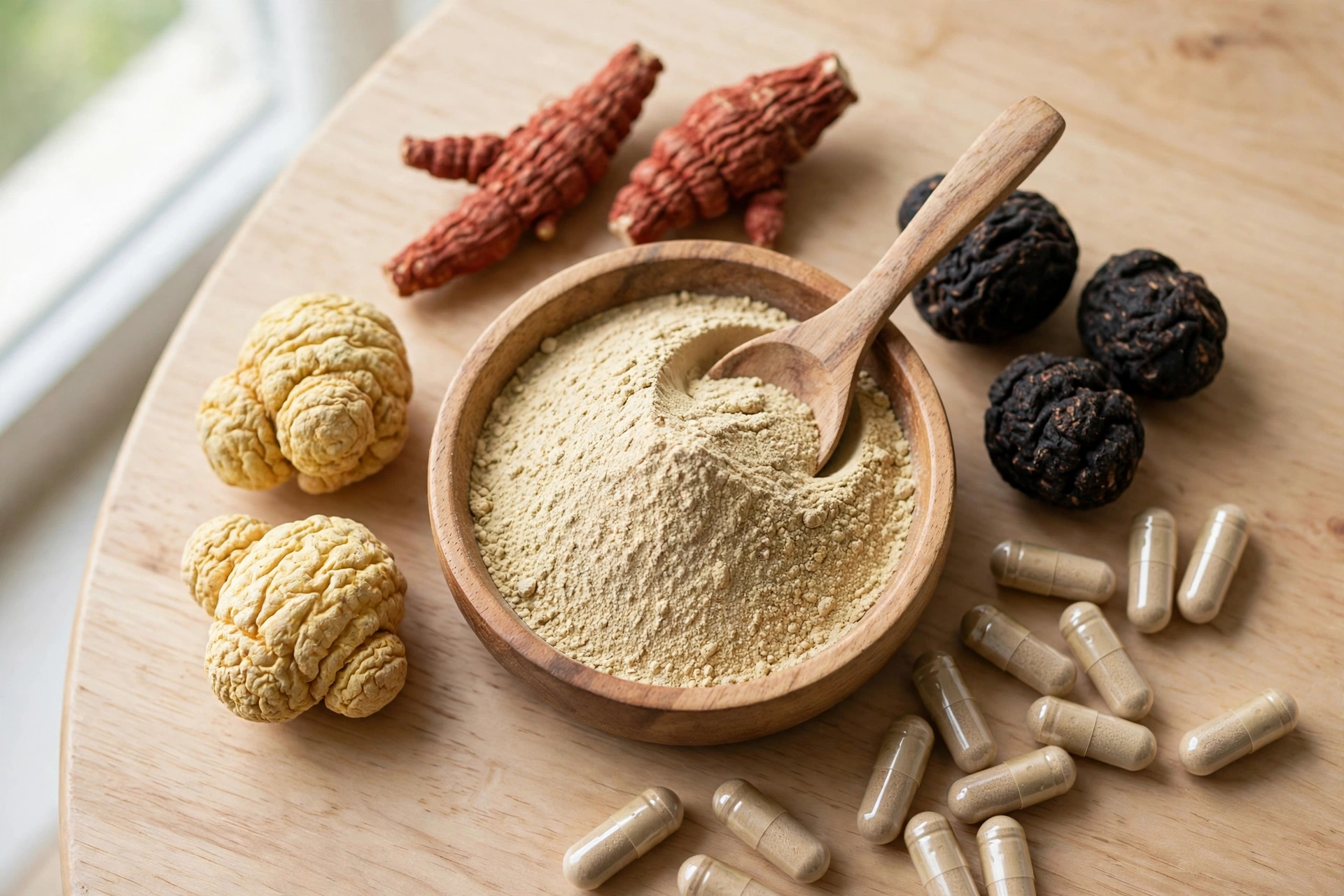
The usable part is the radish-sized root, which comes in three main color phenotypes: yellow (the most common), red, and black. Early research suggests the colors differ in their concentrations of bioactive compounds: black maca has been studied most for male fertility parameters, while red maca has been explored for prostate-related endpoints. For general libido support, all three varieties have shown benefit in at least some studies.
The form matters too. Traditionally, maca is dried and boiled before eating — raw maca contains starches and goitrogenic compounds that can cause digestive discomfort. Modern supplements come in three main forms:
- Raw maca powder — dried and ground; cheapest, but hardest to digest.
- Gelatinized maca — pressure-cooked to remove starch (no relation to gelatin); used in most clinical trials and easier on the stomach.
- Maca extracts — concentrated preparations; the most potent per gram, but the least studied in human trials.
This distinction matters because you cannot assume a trial using 3 grams of gelatinized maca powder tells you anything about a 500 mg extract capsule — yet product marketing routinely blurs that line.

What the Maca Root Libido Evidence Actually Shows
The honest summary: maca is one of the best-studied herbal options for sexual desire, the evidence is genuinely positive but modest, and it is far weaker than most supplement labels imply. Here is how the key findings break down.
The evidence for men
The most cited trial is a 12-week double-blind, placebo-controlled randomized study by Gonzales and colleagues, published in Andrologia in 2002. Fifty-six healthy men aged 21 to 56 received either placebo or maca at 1,500 mg or 3,000 mg per day. Self-reported sexual desire improved at 8 and 12 weeks in the maca groups — and, crucially, this improvement was statistically independent of testosterone levels, mood scores, and anxiety scores. In other words, desire rose without any change in circulating hormones — a pattern that has become central to the maca root libido evidence. The full study record is available at NIH PubMed (PMID 12472620).
A separate randomized trial in 50 men with mild erectile dysfunction found that 2,400 mg of maca extract daily for 12 weeks improved validated sexual function scores compared with placebo — modest gains, smaller than prescription medications, but statistically significant.
Perhaps the most clinically interesting male data comes from antidepressant users. In a placebo-controlled trial, 3 grams of maca daily improved sexual desire in adults experiencing antidepressant-related sexual dysfunction, with the higher dose outperforming a 1.5-gram dose that showed little benefit. A systematic review of maca and semen quality also concluded that several small trials showed improvements in sperm concentration and motility after several months of use, though the authors rated the overall evidence as low-to-moderate quality.
The evidence for women
Women’s libido has historically received less research attention, but several quality trials exist. In a double-blind, placebo-controlled study published in Menopause, postmenopausal women taking 3.5 grams of gelatinized maca daily for six weeks showed significant improvements in sexual function and reduced psychological symptoms, measured with the Greene Climacteric Scale — again without changes in hormone levels, adding to the maca root libido evidence in women.
Trials in women with SSRI-induced sexual dysfunction found that 3 grams daily improved sexual desire and function, with the strongest effects at 12 weeks, suggesting benefits build gradually. A study of healthy premenopausal women also reported improved desire after six weeks. If you are navigating desire changes in midlife, our guide on menopause and sex drive covers the broader picture.
The myth to retire: maca is not a testosterone booster
Product pages routinely market maca as a “testosterone booster.” The trials say otherwise. Studies measuring serum testosterone, estradiol, luteinizing hormone, follicle-stimulating hormone, prolactin, and sex-hormone-binding globulin have found no significant changes with maca supplementation — even when desire improved, one of the most consistent patterns in the maca root libido evidence. The Cleveland Clinic’s clinician-reviewed overview notes the same reality check among popular aphrodisiacs: many traditional claims have little evidence behind them. Read their review at Cleveland Clinic — What Are Aphrodisiacs?.
How Could Maca Influence Desire Without Changing Hormones?
Researchers have proposed several non-hormonal mechanisms, none yet proven:
- Macamides and macaenes. These fatty-acid amides are found only in maca. Animal research suggests they may interact with the endocannabinoid system, which plays a role in mood and reward — a plausible pathway for desire effects.
- HPA axis support. As a classified adaptogen, maca may help modulate the body’s stress-response system. Since chronic stress and elevated cortisol are well-known libido suppressors, any genuine adaptogenic effect could indirectly support desire.
- Nutritional density. Maca provides amino acids, iron, calcium, potassium, zinc, and glucosinolates. For people with marginal nutrition, these may support general vitality — and vitality underpins desire.
- Antioxidant effects. Some researchers link maca’s semen-parameter improvements to antioxidant and mitochondrial support rather than hormonal action.
The bottom line of the maca root libido evidence: maca appears to act on desire pathways rather than hormone levels. That is also why it cannot substitute for medical treatment when low hormones or another medical condition is the underlying cause.
Reading the Fine Print: Limits of the Evidence
Most ranking articles report the positive trials and stop. A fair review must also note the weaknesses. Here is what tempers the maca root libido evidence:
| Limitation | Why it matters |
|---|---|
| Small sample sizes | Key trials enrolled 14 to 175 people. Small trials are more prone to exaggerated or chance findings. |
| Short durations | Most studies ran 6 to 12 weeks. Long-term safety and sustained benefit are largely unstudied. |
| Preparation heterogeneity | Trials used raw powder, gelatinized powder, and extracts interchangeably — results from one form may not apply to another. |
| Subjective outcomes | Desire is measured by self-report questionnaires, which are vulnerable to placebo and expectation effects. |
| Publication bias | Negative trials are less likely to be published, so the published record may look better than reality. |
| No standardized product | Supplements vary widely in macamide content; there is no agreed “active dose” of the relevant compounds. |
A 2010 systematic review of maca for sexual function found only four randomized trials totaling 131 participants and concluded that while the results were positive, the overall evidence was limited by methodological quality. That is still roughly where the field stands: promising, not proven.
Maca vs. Other Popular “Libido” Botanicals
How does the maca root libido evidence compare with other frequently marketed options? A quick evidence-strength comparison helps set expectations:
| Botanical | Libido evidence | Key caveat |
|---|---|---|
| Maca root | Low-moderate: several small positive RCTs, mostly self-reported desire | No hormone effect; preparation matters |
| Ashwagandha | Low-moderate: benefits appear linked to stress/cortisol reduction rather than desire directly | Avoid with thyroid medication without guidance |
| Fenugreek | Low: a few small trials in men and women, mixed results | Evidence base thinner than maca’s |
| Tongkat ali | Low: small trials suggesting male sexual function benefits | Possible hormone interactions — discuss with a clinician |
The maca root libido evidence is the most consistent trial data of the group, and maca is one of the few options studied in both men and women. None of them, however, approaches the evidence base of prescription treatments for sexual dysfunction.
A Sensible Approach: What the Trials Used
Competitor articles often give dosing “recommendations” that outrun the maca root libido evidence. Because individual needs vary and supplements are not regulated like medications, the responsible framing is what research actually tested — and what quality markers separate reasonable products from hype:
- Doses studied in trials ranged from 1.5 to 3.5 grams of maca powder daily, taken for 6 to 12 weeks. The 3-gram dose outperformed 1.5 grams in the SSRI-dysfunction trial. Benefits, when seen, typically emerged around weeks 6 to 8 — not overnight.
- Prefer gelatinized maca if digestive tolerance matters; it is the form used in most positive trials.
- Read the label for grams, not capsules. A “1,000 mg maca” capsule taken once daily is a fraction of the studied amounts. Note whether the product lists dried powder weight or an extract ratio.
- Choose third-party tested brands (USP, NSF, or similar seals). A 2018 case report linked elevated blood lead to a maca supplement, underscoring why purity verification matters.
- Track your response. Before starting, note your baseline. Reassess after 8 to 12 weeks. If nothing has changed, continuing indefinitely is not evidence-based.
- Do not stack blindly. Combining multiple “libido” supplements multiplies interaction risks without evidence of added benefit. Discuss combinations with a pharmacist or clinician.
Foods can play a supporting role too — see our guide to diet and libido for the nutritional side of sexual health.
When to Skip Maca and See a Clinician First
Low libido is a symptom, not a diagnosis. Maca may support desire in otherwise healthy people, but it cannot address the many medical causes of low desire. Before reaching for a supplement, consider whether any of these apply — each is a reason to get evaluated rather than self-treat:
- Medications. Antidepressants, blood pressure drugs, hormonal contraceptives, and finasteride are among the most common libido-suppressing drugs. Our overview of common causes of low libido worth ruling out first covers the full list.
- Mood disorders. Depression and anxiety reduce desire directly; treating the underlying condition is the priority.
- Sleep apnea and poor sleep. Fragmented sleep lowers daytime testosterone and energy in both sexes.
- Thyroid disease. Both hypo- and hyperthyroidism affect sexual function — and thyroid conditions also matter for maca safety (see below).
- Hormone deficiency. If clinical hypogonadism or menopausal symptoms are suspected, hormone testing guides real treatment; maca does not replace it.
- Relationship and psychological factors. Stress, conflict, grief, and performance anxiety are leading desire suppressors that no capsule resolves.
- Pelvic pain, vaginal dryness, or erectile dysfunction. These often have treatable causes that deserve direct medical care.
Safety: Who Should Avoid Maca or Use Caution
In clinical trials, maca has been well tolerated, with the most common complaint being mild digestive discomfort — usually reduced by taking it with food. Still, certain groups should be cautious:
- Pregnancy and breastfeeding. There is insufficient safety data; maca is generally not recommended in these periods.
- Thyroid conditions. Maca contains goitrogens, which can theoretically interfere with thyroid function. People with thyroid disorders should discuss maca with their clinician before use.
- Hormone-sensitive conditions. Although trials show maca does not measurably change sex hormone levels, some sources advise caution with conditions such as breast or uterine cancer, endometriosis, or uterine fibroids. Clinician guidance is warranted.
- Elevated PSA or prostate concerns. Some clinicians advise caution here as well, given the limited data.
- Medication interactions. Anyone taking prescription medications — particularly for blood pressure, thyroid, or hormone-related conditions — should review supplement use with a pharmacist or physician.
Medical Disclaimer
This article is for educational purposes only and is not medical advice. It does not diagnose any condition or recommend any treatment for you personally. Supplements can interact with medications and medical conditions. Always consult a qualified clinician or pharmacist before starting maca root or any supplement, especially if you are pregnant, breastfeeding, managing a chronic condition, or taking prescription medication.
Frequently Asked Questions
Does maca root raise testosterone?
No. This is the most persistent myth about maca. Trials that measured testosterone, estradiol, LH, FSH, prolactin, and SHBG found no significant changes — even in studies where sexual desire improved. Maca’s libido effects appear to work through non-hormonal pathways.
How long does maca take to work for libido?
In clinical trials, improvements in self-reported desire typically emerged around 6 to 8 weeks of daily use and built through 12 weeks. Effects appear gradual and adaptive, not immediate. If no change is noticeable after 8 to 12 weeks of consistent use, the maca root libido evidence does not support continuing indefinitely.
Which type of maca is best for libido — black, red, or yellow?
All three colors have shown benefit for desire in at least some studies. Black maca has the strongest data for male fertility parameters, while red maca has been explored more for prostate-related endpoints. For general libido support, the maca root libido evidence shows no color is clearly superior, and most trials used yellow maca simply because it is the most common variety.
Can women take maca root for libido?
Yes — women are actually among the best-studied groups. Randomized trials in postmenopausal women and in women with antidepressant-related sexual dysfunction found improved desire and sexual function at around 3 grams daily. As with men, effects were not linked to changes in estrogen or other hormones.
Is it safe to take maca while on antidepressants?
Trials have specifically studied maca alongside SSRIs and found it well tolerated, with improved sexual function at 3 grams daily. However, “studied” is not the same as “safe for everyone” — antidepressant regimens are individualized, so discuss it with your prescribing clinician before adding any supplement.
Can I take maca if I have a thyroid condition?
Exercise caution. Maca contains goitrogens, compounds that can theoretically interfere with thyroid function. People with hypothyroidism, hyperthyroidism, or thyroid nodules should speak with their clinician first, and gelatinized maca (which reduces some of these compounds through cooking) is the form most trials used.
Are there side effects of maca root?
Maca is generally well tolerated in trials. The most commonly reported issues are mild digestive discomfort (reduced by taking it with food) and occasional jitteriness or altered menstrual cycles in some women. Long-term safety data beyond a few months is limited, which is another reason to reassess use periodically rather than taking it indefinitely.
The Bottom Line
The maca root libido evidence is genuinely encouraging — several randomized, placebo-controlled trials show modest improvements in sexual desire for both men and women, working through non-hormonal pathways. It is not a testosterone booster, not an instant fix, and not a substitute for medical evaluation when low desire has an underlying cause.
If you and your clinician decide a trial makes sense, the research-tested approach is straightforward: a quality gelatinized product, a dose in the range trials used, daily consistency for 8 to 12 weeks, and an honest reassessment at the end. Supplements are supporting actors in sexual health — sleep, stress, relationships, and medical care remain the leads.