Hematocele: Causes, Symptoms, and Treatment
A hematocele is a collection of blood inside the scrotum, usually trapped in the thin, double-layered sac (the tunica vaginalis) that normally cushions each testicle. It most often appears after an injury — a blow during sport, a fall, or an accident — but it can also develop after scrotal surgery, while taking blood-thinning medication, or, more rarely, without any clear trigger at all.
Understanding hematocele causes treatment, symptoms, and the warning signs that call for urgent care can make a real difference in how well you recover. This guide to hematocele causes treatment explains what a hematocele is, how doctors diagnose it, which treatments are used and when, what recovery looks like week by week, and how it may affect fertility and long-term testicular health.
What Is a Hematocele?
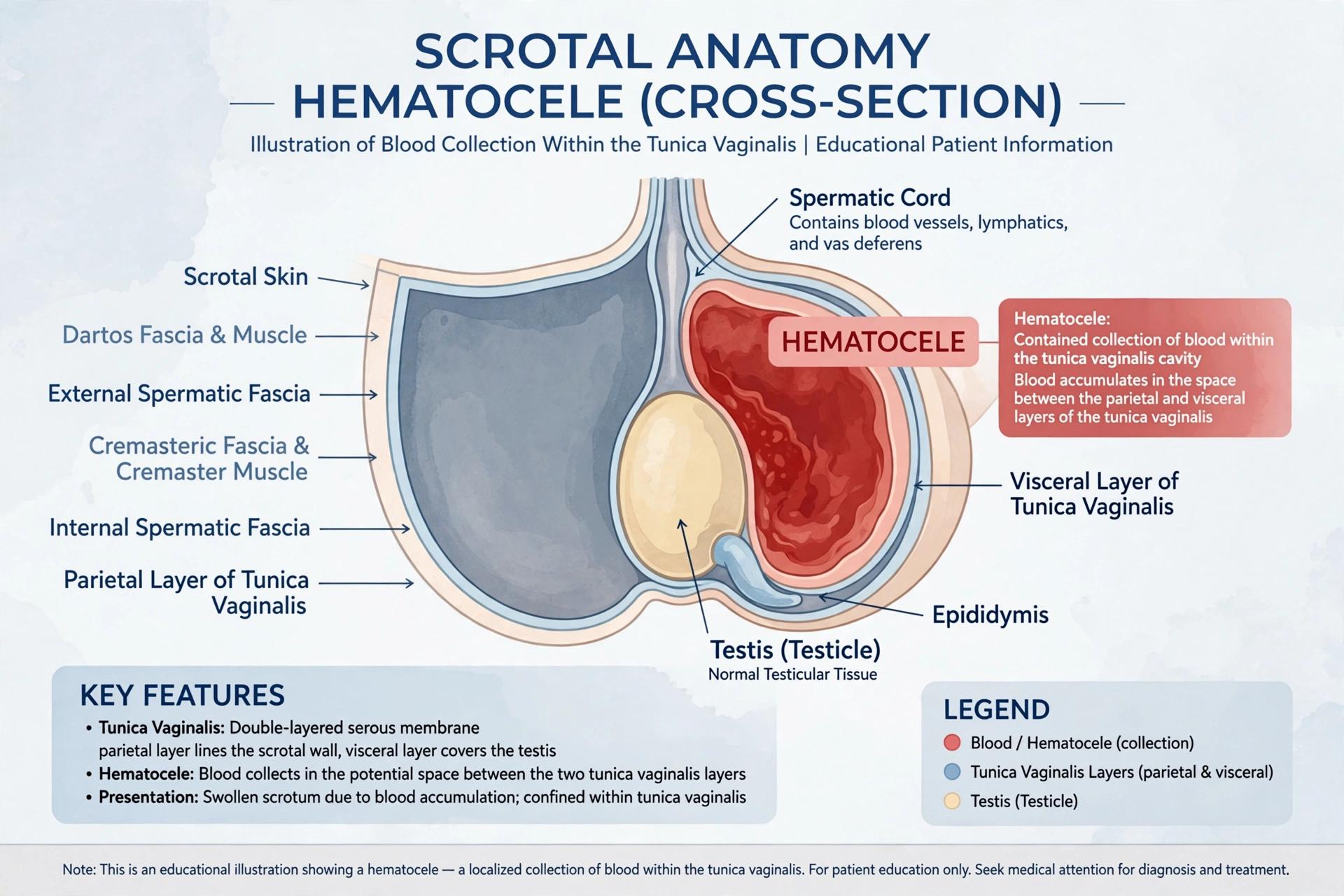
Each testicle sits inside the scrotum, wrapped in several protective layers. The innermost of these is the tunica vaginalis, a smooth, double-walled membrane that normally holds only a thin film of lubricating fluid so the testicle can glide freely.
A hematocele forms when blood accumulates in the potential space between the two layers of this membrane. Smaller amounts of blood may also collect in the scrotal wall tissues themselves, which clinicians sometimes describe as a scrotal hematoma or, in older medical writing, a “hematocele” of the scrotal wall. Either way, the result is the same: a swelling of the scrotum caused by trapped blood rather than by fluid (as in a hydrocele) or by a solid growth.
Doctors often classify hematoceles by how they begin. An acute hematocele develops quickly, usually within hours of an injury. A chronic hematocele builds up gradually or lingers for weeks to months — sometimes after a forgotten minor injury — and the blood may thicken, organize, or even develop small areas of calcification over time. A traumatic hematocele follows a direct blow, a surgical or “iatrogenic” hematocele follows a procedure, and a spontaneous hematocele appears with no identifiable injury, often in men with bleeding disorders or on anticoagulant medication.
Hematocele Causes Treatment: Key Facts at a Glance
If you want the short version of hematocele causes treatment: a hematocele is caused by bleeding into the scrotal sac — most commonly from trauma or recent surgery, less commonly from infection, tumors, blood-thinning drugs, or bleeding disorders. Small, uncomplicated hematoceles are usually treated conservatively with rest, ice, scrotal support, and time, and the body reabsorbs the blood over several weeks. Large, rapidly expanding, painful, or infected hematoceles — or those hiding a torn testicle — need prompt surgical drainage and repair. Any sudden, severe scrotal pain deserves same-day medical evaluation, because conditions such as testicular torsion can look similar and require emergency treatment.

Causes of a Hematocele
Blood reaches the scrotal sac through a surprisingly varied set of routes. Understanding the cause matters for hematocele causes treatment, because it shapes both the treatment plan and the search for anything more serious hiding underneath the swelling.
Blunt and penetrating trauma
Trauma is by far the most common cause. A direct blow — a ball striking the groin during sport, a bicycle handlebar, a fall astride an object, a motor vehicle collision, or a physical assault — can tear small vessels in the scrotal wall or in the testicle itself. The right testicle is injured slightly more often than the left, because it tends to get trapped against the pubic bone. Penetrating injuries such as cuts or stab wounds bleed directly into the sac and are almost always explored surgically, since the chance of associated testicular damage is high.
Surgery in the groin or scrotum
Bleeding after a procedure is the second major category. Vasectomy, hydrocele repair (hydrocelectomy), hernia repair, varicocele surgery, and biopsy of the testicle can all leave behind a collection of blood if small vessels ooze after the wound is closed. Most post-surgical hematoceles appear within the first few days of recovery and are managed by the operating surgeon.
Medications and bleeding disorders
Blood-thinning drugs — including warfarin, direct oral anticoagulants, and even high-dose aspirin in sensitive individuals — raise the risk that a minor bump or spontaneous vessel leak turns into a noticeable collection of blood. Inherited bleeding disorders such as hemophilia or von Willebrand disease, and acquired clotting problems from liver disease or severe infection, can produce hematoceles with little or no trauma.
Infection and inflammation
Severe infection of the epididymis or testicle (epididymo-orchitis) inflames and weakens local blood vessels. In rare cases the inflamed vessels leak or rupture, producing a hematocele on top of the infection. Because a collection of blood can itself become infected, these cases need particularly close follow-up.
Tumors and vascular abnormalities
A testicular tumor can bleed into the tunica vaginalis space, so a hematocele that appears without trauma or surgery deserves careful evaluation to rule out an underlying growth. This is one reason clinicians check tumor markers and examine the testicle itself on ultrasound rather than focusing only on the blood collection. Rare vascular malformations of the scrotum can also bleed spontaneously.
Idiopathic and chronic forms
In a small minority of cases, no cause is ever found — these are called idiopathic or spontaneous hematoceles. When blood sits in the scrotum for a long time without being reabsorbed, it can form a firm, sometimes painless lump that men mistake for a tumor. Over months, the wall of a chronic hematocele may thicken or calcify, and these late-presenting lumps are a classic reason doctors insist on imaging every new scrotal mass, even a painless one.
Symptoms of a Hematocele
The hallmark of an acute hematocele is swelling of one side of the scrotum that appears quickly after an injury or surgery, often accompanied by aching or sharp pain and tenderness to touch. The skin of the scrotum may look bruised, dusky, or discolored as blood tracks through the loose tissues, and the affected side typically feels heavy. Walking, climbing stairs, or sitting can become uncomfortable, and some men notice pain radiating into the groin or lower abdomen.
Not every hematocele announces itself dramatically. Small collections may cause only mild fullness or a vague heaviness, and chronic hematoceles can present simply as a firm, slowly enlarging lump with little or no pain. Fever, increasing redness, or worsening pain after the first day can signal infection or ongoing bleeding rather than a stable collection. Any new scrotal lump — painful or not — deserves a clinical examination, which is why learning a regular testicular self-exam routine is worthwhile for every man.
Red Flags: When to Get Emergency Care
Most hematoceles are not emergencies in themselves, but several situations require same-day or emergency evaluation:
- Sudden, severe testicular pain — especially in a teenager or young man, with nausea or vomiting. This is the classic picture of testicular torsion, in which the spermatic cord twists and cuts off blood flow. Torsion is a surgical emergency measured in hours, and a hematocele from earlier trauma does not protect against it.
- Rapidly enlarging swelling after an injury, suggesting active bleeding or a ruptured testicle that may need surgical exploration.
- Fever, spreading redness, or severe tenderness developing after the first day, which can indicate infection of the blood collection.
- Difficulty urinating, blood in the urine, or discharge, which point toward urethral or infectious complications.
- A hard, painless lump with no history of injury, which must be evaluated promptly to exclude a testicular tumor.
Scrotal pain has many possible sources, and clinicians emphasize that it should never be ignored — some causes need treatment within hours to avoid permanent damage. If you are unsure whether your symptoms are urgent, treat them as urgent. Guidance on the range of scrotal conditions and when to seek care is also summarized by Mayo Clinic’s overview of scrotal inflammation and pain.
How a Hematocele Is Diagnosed
Diagnosis — the foundation of hematocele causes treatment — begins with a focused history: what happened, when the swelling started, whether there was trauma or recent surgery, what medications you take, and whether there is fever, urinary symptoms, or prior scrotal problems — followed by a gentle physical examination. The clinician assesses the size and firmness of the swelling, checks whether the testicle itself can be felt through it, looks for bruising, and examines the groin lymph nodes.
The key imaging test is a scrotal ultrasound with color Doppler. Ultrasound shows the collection of blood around the testicle, reveals whether the testicle’s outline is intact (ruling a rupture in or out), and Doppler flow confirms that blood is still reaching the testicle normally — which also helps exclude torsion.
In complex cases, MRI can add detail, and CT is occasionally used when there are multiple injuries. A bedside transillumination test (shining a light through the scrotum) is sometimes mentioned in older texts, but modern practice relies on ultrasound because it distinguishes blood from simple fluid and solid masses far more reliably.
Laboratory tests are chosen based on the situation: a complete blood count and clotting studies when bleeding is excessive or a bleeding disorder is suspected, urine testing if infection is a concern, and testicular tumor markers (such as AFP, beta-hCG, and LDH) when there was no trauma or when the testicle looks abnormal on ultrasound. The anatomy and typical ultrasound appearance of scrotal blood collections are described in detail in the NIH’s peer-reviewed StatPearls review of scrotal anatomy and pathology.

Hematocele vs. Other Scrotal Conditions
Several scrotal conditions cause swelling, and telling them apart is central to safe care. This table summarizes the key differences that guide hematocele causes treatment:
| Condition | What it is | Typical onset | Pain | Key distinguishing feature |
|---|---|---|---|---|
| Hematocele | Blood collection around the testicle | Sudden, after trauma or surgery | Usually painful and tender | Bruising/discoloration; blood on ultrasound |
| Hydrocele | Clear fluid around the testicle | Gradual | Often painless | Transilluminates (light passes through); see our guide to hydrocele symptoms and treatment |
| Testicular torsion | Twisted spermatic cord cutting off blood flow | Sudden, often in teens/young men | Severe, sudden | Absent blood flow on Doppler; surgical emergency |
| Epididymitis | Infection/inflammation of the epididymis | Gradual over days | Aching, worse with touch | Often with urinary symptoms or discharge; increased flow on Doppler |
| Varicocele | Enlarged veins of the spermatic cord | Gradual | Dull ache, worse standing | “Bag of worms” texture that eases lying down |
| Testicular tumor | Abnormal growth in the testicle | Gradual | Often painless | Firm lump within the testicle itself; tumor markers may be raised |
Ultrasound is what settles the question in practice, because each of these looks distinctly different on imaging even when the physical examination is difficult due to swelling and tenderness.
Conservative Treatment: What Doctors Recommend First
In most hematocele causes treatment plans, conservative care comes first. Small, stable hematoceles without signs of testicular rupture, infection, or ongoing bleeding are usually managed without surgery. The body is capable of breaking down and reabsorbing collected blood over days to weeks, and conservative care focuses on comfort and protecting the area while that happens:
- Rest and activity limits: avoid strenuous exercise, heavy lifting, and contact sports until cleared. Walking as tolerated is fine; sitting for long periods with the area unsupported is not.
- Cold therapy: a cold pack wrapped in a cloth, applied for 15–20 minutes several times a day during the first 48 hours, reduces swelling and pain. Never place ice directly on the skin.
- Scrotal support and elevation: supportive briefs or an athletic supporter limit painful movement; lying with a folded towel under the scrotum helps drainage and eases the sensation of heaviness.
- Pain relief: clinicians typically advise simple analgesics for pain. Ask your doctor or pharmacist which option suits you, especially if you take blood thinners or have stomach, kidney, or liver conditions.
- Watchful follow-up: the clinician usually re-examines the scrotum within days and may repeat the ultrasound to confirm the collection is shrinking rather than growing.
During recovery, avoid hot tubs and saunas early on, skip sexual activity until pain and swelling have clearly improved, and keep the area clean and dry. Seek prompt re-evaluation if pain worsens after initially improving, the swelling grows, fever develops, or the skin becomes increasingly red or hot.
Surgical Treatment: When an Operation Is Needed
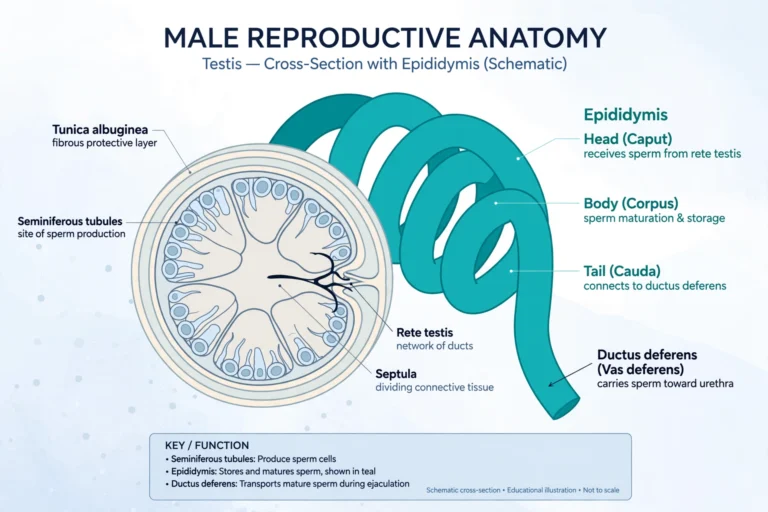
In hematocele causes treatment, surgery becomes necessary when the hematocele is large, continues to expand, causes severe or unrelenting pain, shows signs of infection, or — most importantly — when imaging or examination suggests the testicle itself is torn. A ruptured testicle (a tear in its tough outer capsule, the tunica albuginea) is one of the few scrotal injuries where the clock genuinely matters: surgical repair within the first few days gives the best chance of saving the testicle.
The typical operation is a scrotal exploration: through a small incision in the scrotum, the surgeon evacuates the clotted blood, inspects the testicle and surrounding structures, repairs any tear in the testicle’s capsule with fine sutures, removes nonviable tissue only if unavoidable, and places a small drain if needed. When a tumor is the suspected source of bleeding, the approach is different — the surgeon usually operates through the groin and may need to remove the testicle entirely to prevent any possible spread, which is why accurate pre-operative diagnosis matters so much.
Removal of the testicle (orchiectomy) is uncommon for a straightforward hematocele and is reserved for a testicle that cannot be salvaged or for confirmed malignancy. After surgery, most men go home the same day or after a short observation, wear scrotal support, keep the wound clean and dry, and return for a wound check within a week. Post-operative swelling is normal and typically peaks in the first few days before gradually settling over two to four weeks.
Recovery Timeline: What to Expect Week by Week
Patience is part of hematocele causes treatment: recovery varies with the size of the collection and whether surgery was needed, but the following pattern is typical for an uncomplicated hematocele managed conservatively:
- Days 1–3: pain and swelling are at their worst. Rest, ice, and support matter most here. Bruising may spread and change color — this looks alarming but is usually normal.
- Week 1–2: pain typically eases substantially and the swelling begins to soften as the body starts reabsorbing blood. Many men return to desk work within a few days to a week, depending on comfort.
- Weeks 3–6: the swelling continues to shrink; a small, firm area may linger where the clot is organizing. Light exercise is usually reintroduced gradually with medical clearance.
- Weeks 6–12: most hematoceles have resolved or shrunk to a negligible remnant. Contact sports and strenuous lifting are generally resumed only after the clinician confirms healing — protective gear is strongly advised going forward.
After surgical drainage, the timeline is similar but shifted: the first week centers on wound care and rest, stitches or wound checks occur around week one, and most men are back to normal daily activities within two to three weeks, with full clearance for sports typically at six weeks or as the surgeon advises. A firm ridge along the incision or mild intermittent aching for a few months is common and not usually a cause for concern, but new swelling, fever, or wound discharge should be reported promptly.
Hematocele in Children and Teenagers
Hematoceles occur in boys and adolescents too — most often from sports injuries, bicycle accidents, or rough play. The principles of hematocele causes treatment are the same, but a few points deserve emphasis. First, sudden severe scrotal pain in a teenager must always be treated as possible testicular torsion until proven otherwise; torsion peaks in adolescence, and the window to save the testicle is measured in hours. Parents should seek emergency care immediately rather than waiting to see if the pain settles.
Second, clinicians are especially cautious about imaging in young patients, and ultrasound is preferred because it involves no radiation. Third, recovery guidance for school sports needs to be explicit: no return to contact or straddle sports until the doctor clears it, and a protective cup becomes non-negotiable afterward. Finally, because fertility is a long-horizon concern in young patients, follow-up is used to confirm that the testicle remains normal in size and blood flow after the blood has resolved.
Fertility and Long-Term Outlook
The question most men eventually ask is whether a hematocele affects fertility or lasting testicular health. The reassuring answer is that an uncomplicated hematocele — blood sitting outside the testicle, with the testicle itself intact and well perfused — does not directly damage sperm production. The testicle’s hormone and sperm-producing functions live inside the tunica albuginea, and a collection of blood in the surrounding sac does not automatically compromise them.
The risks to long-term function come from complications rather than from the blood itself: an unrecognized testicular rupture, prolonged pressure from a very large collection, or infection can lead to shrinkage (atrophy) of the affected testicle. Because one healthy testicle is generally sufficient for normal fertility and testosterone levels, even these complications do not automatically mean infertility — but they are exactly why prompt evaluation and follow-up matter.
Men with concerns after recovery can discuss a semen analysis with their clinician; see our overview of semen analysis results for what the numbers mean, and our guide to varicocele and fertility for another common scrotal condition with fertility implications. A follow-up ultrasound weeks to months after the event, confirming a normal-sized testicle with normal blood flow, is the most reassuring endpoint.
Preventing a Hematocele
Not every hematocele is preventable — spontaneous and post-surgical cases happen despite best efforts — but the most common cause, trauma, responds well to simple precautions. Wear a protective cup or athletic supporter for contact sports, martial arts, cricket, baseball, and hockey; use a well-fitted saddle and padded shorts for cycling; and follow lifting and workplace safety guidance to avoid straddle and crush injuries. If you take anticoagulant medication, tell your doctor promptly about any groin injury, even a minor one, and never adjust the dose on your own. After scrotal or groin surgery, follow the surgeon’s activity restrictions to the letter — most post-surgical hematoceles trace back to doing too much too soon.
Frequently Asked Questions
What is a hematocele in simple terms?
A hematocele is a pocket of blood trapped inside the scrotum, usually in the thin sac surrounding the testicle. It most often follows an injury or surgery and shows up as a swollen, tender, sometimes bruised scrotum on one side.
Can a hematocele go away on its own?
Yes — small, uncomplicated hematoceles often resolve without surgery as the body gradually reabsorbs the blood over several weeks. However, every hematocele should still be evaluated by a clinician first, because only an examination and ultrasound can confirm that nothing more serious, such as a torn testicle or tumor, is hiding underneath.
How is a hematocele different from a hydrocele?
A hematocele contains blood, usually appears suddenly after trauma or surgery, and is typically painful with visible bruising. A hydrocele contains clear fluid, usually develops gradually, and is often painless. Ultrasound distinguishes the two reliably.
When does a hematocele need surgery?
In hematocele causes treatment, surgery is advised for large or expanding collections, severe or persistent pain, signs of infection, or any suspicion of testicular rupture. The operation drains the blood and repairs damaged tissue; suspected rupture is treated urgently because early repair offers the best chance of preserving the testicle.
Is a hematocele a sign of cancer?
Usually not — trauma and surgery account for the vast majority of cases. But a hematocele that appears without any injury or operation should be investigated carefully, because bleeding from a testicular tumor is a recognized, if uncommon, cause. Tumor marker blood tests and ultrasound help clinicians make this distinction.
How long does it take to recover from a hematocele?
With conservative care, pain usually improves within one to two weeks and the swelling resolves over three to six weeks, sometimes longer for large collections. After surgical drainage, most men return to normal daily activities within two to three weeks and to full sports by about six weeks, following their surgeon’s guidance.
Can I exercise or have sex with a hematocele?
Not until your clinician clears you. Strenuous exercise, contact sports, heavy lifting, and sexual activity should wait until pain and swelling have substantially improved — typically several weeks — to avoid re-bleeding or worsening the collection. Supportive underwear and a gradual return to activity are the standard advice.
Will a hematocele affect my fertility?
An uncomplicated hematocele with an intact, well-perfused testicle does not directly harm sperm production. Fertility risk comes from complications such as unrecognized rupture, severe infection, or testicular atrophy, which is why prompt diagnosis and follow-up — including a check that the testicle remains normal in size and blood flow — are important.
Medical Disclaimer
This article is for educational purposes only and is not medical advice. It cannot replace evaluation by a qualified clinician, and it does not establish a diagnosis for any reader. Scrotal pain and swelling have many possible causes, some of which require urgent treatment.
If you notice sudden or severe scrotal pain, rapidly increasing swelling, fever, or a new lump, seek medical care promptly — or emergency care if the pain is severe. Do not start, stop, or change any medication based on this article; discuss all treatment decisions with your doctor or pharmacist.
The Bottom Line
Hematocele causes treatment works best when the condition is recognized early and evaluated properly. Most cases stem from an identifiable injury or procedure, most small collections heal with rest and time, and surgery — when needed — is straightforward and effective. The critical steps are the same ones that protect testicular health in general: do not ignore sudden scrotal pain, get an ultrasound for any new swelling, follow through on recovery restrictions, and keep the follow-up appointment that confirms everything has healed. Handled that way, the long-term outlook for comfort, function, and fertility is excellent.