Sex After an STI Diagnosis: When It’s Safe Again
An STI diagnosis almost always raises the same urgent question: when can you safely have sex again? The answer matters, because resuming too early can mean passing the infection to a partner or getting reinfected yourself. This guide gives you a clear, medically grounded walkthrough of sex after STI treatment safe timelines — from the well-known 7-day rule to the retesting and partner steps that many articles skip entirely.
The short version: most clinicians advise waiting until you have finished the full course of treatment, your symptoms have completely resolved, and — for many bacterial infections — at least seven days have passed since treatment ended. But the exact timeline depends on the infection, and “feeling better” is not the same as being non-infectious. Below, you will find waiting times infection by infection, why retesting matters, how to avoid the classic “ping-pong” reinfection cycle, and how to rebuild intimacy with confidence once you are cleared.
When Is Sex After STI Treatment Safe? Waiting Times by Infection
Public health guidance converges on a consistent principle: do not resume sexual activity until you have completed treatment and your clinician’s clearance criteria are met. The U.S. Centers for Disease Control and Prevention (CDC) advises avoiding sex again until you and your sex partner(s) have all completed treatment. For the common curable bacterial STIs, that is generally expressed as a minimum of seven days after finishing the full course of medication, with all symptoms resolved and partners treated.
The following table summarizes typical sex after STI treatment guidance. Your clinician’s specific instructions always take precedence, because individual circumstances (pregnancy, drug resistance, co-infections, complications) can change the plan.
| Infection | When sex is generally considered safe again | Key conditions |
|---|---|---|
| Chlamydia | At least 7 days after completing the full course of treatment | Symptoms resolved; recent partners tested and treated; 3-month retest recommended |
| Gonorrhea | At least 7 days after completing treatment, with symptoms fully resolved | Partners treated; follow-up testing may be advised in some cases |
| Syphilis | Only after a clinician confirms cure | All sores fully healed; follow-up blood tests on schedule; partners evaluated |
| Trichomoniasis | After completing treatment and symptoms resolving, typically at least 7 days | Both partners treated before resuming; retest at 3 months is commonly recommended |
| Mycoplasma genitalium | After completing the prescribed regimen and symptom resolution, per clinician guidance | Follow-up testing as directed; partners evaluated and treated |
| Genital herpes (HSV) | Not curable — avoid sex during outbreaks and prodromal symptoms; condoms between outbreaks reduce but do not eliminate risk | Sores fully healed; discuss suppressive therapy with your clinician |
| HPV / genital warts | Not curable — avoid sex while warts are visible or under treatment | Condoms reduce transmission; discuss HPV vaccination with your clinician |
| HIV | Manageable, not curable — ongoing treatment and viral suppression change the picture entirely | Condoms; discuss undetectable = untransmittable (U=U) and partner prevention options with your clinician |
| Pubic lice / scabies | After completing treatment and confirming re-infestation is ruled out | Bedding and clothing laundered; close contacts treated |
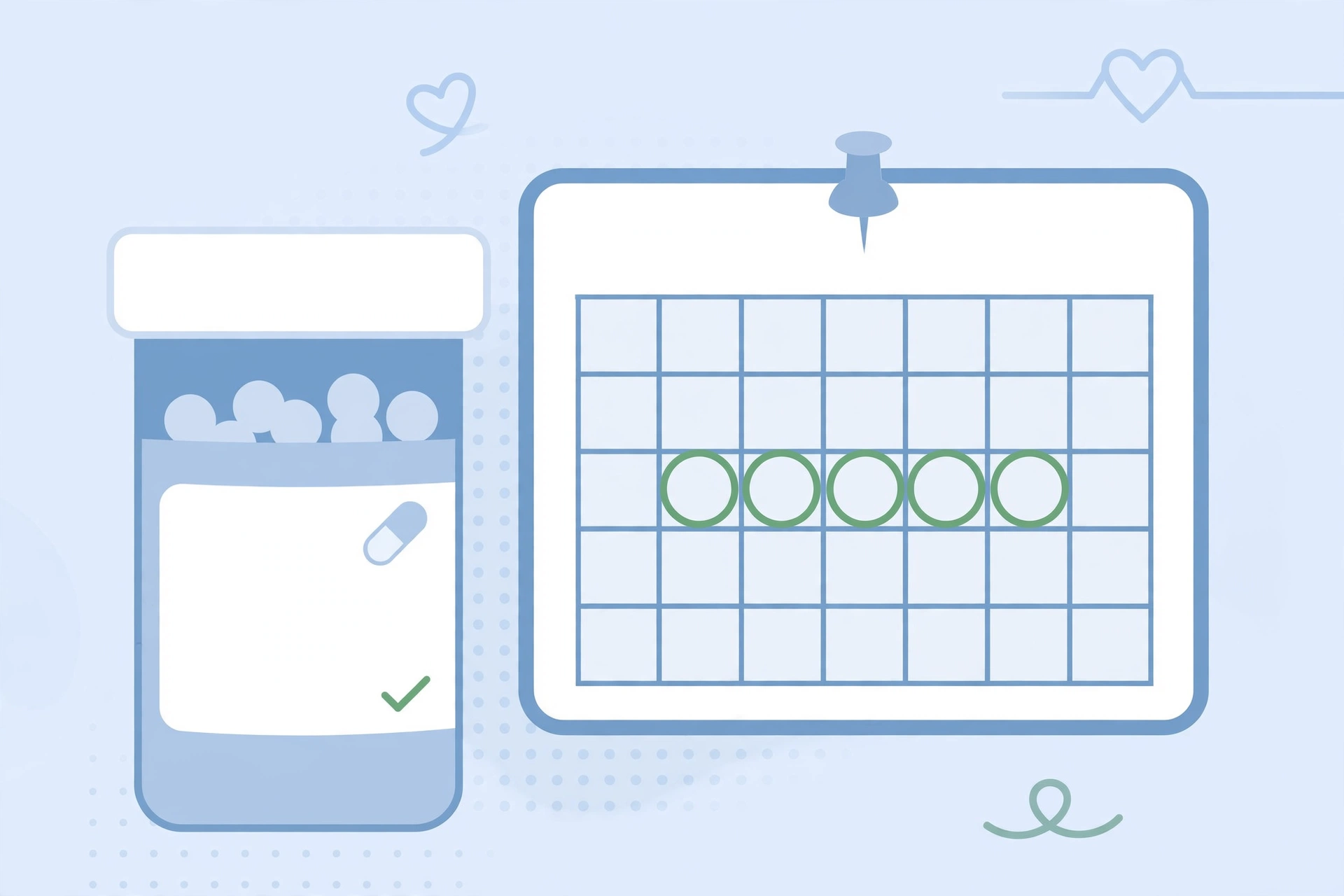
Where does the “7-day rule” come from? It reflects how long standard antibiotic courses need to reliably clear the bacteria after the last dose, plus a margin of safety. It is not a magic number that applies to every situation — it is a minimum floor for uncomplicated bacterial infections, not a substitute for your clinician’s clearance.
Why “Feeling Better” Is Not the Same as Being Safe
This sex after STI treatment guide states the rule plainly: fading symptoms are not the same as clearance.
One of the most common mistakes after an STI diagnosis is resuming sex the moment symptoms fade. Symptoms often improve well before the infection is fully cleared, and several STIs — chlamydia and gonorrhea in particular — frequently cause no symptoms at all while remaining transmissible. Feeling healthy again tells you very little about whether you can still pass the infection on.
Three rules protect you here. First, finish every dose of the prescribed medication, even if you start feeling better; stopping early is a known driver of treatment failure and antibiotic resistance. Second, wait until any sores, discharge, pain, or irritation have completely resolved, not merely improved. Third, never share your medication with a partner — each person needs their own evaluation and prescription, because the right treatment depends on the infection, and partners may need different care.
Test-of-Cure vs. the 3-Month Retest: Don’t Skip Either
Many sex after STI treatment guides mention “get retested” without explaining that there are two different kinds of follow-up testing, and they serve different purposes.
A test-of-cure is an early follow-up test to confirm the treatment actually worked. It is not routine for every infection — your clinician is more likely to order one if symptoms persist after treatment, if you were treated during pregnancy, if the infection was in the throat or rectum, or if drug resistance is a concern. One nuance worth knowing: highly sensitive molecular tests can detect fragments of dead organisms for a period after successful treatment, which is why the timing of a test-of-cure matters and should be directed by your clinician rather than self-scheduled.
The 3-month retest is a separate, equally important step. Public health guidelines commonly recommend retesting about three months after treatment for chlamydia, gonorrhea, and trichomoniasis — not because the first treatment usually fails, but because reinfection is so common. People often resume sex with a partner who was never treated, or acquire a new infection from a new partner. The 3-month visit catches that. If you are using at-home STI tests for follow-up, understand their accuracy limits and confirm any positive result through a clinician.
The Ping-Pong Problem: Why Both Partners Must Finish Treatment
This sex after STI treatment guide repeats the point because it matters: both partners must finish treatment, or the infection keeps coming back.
Reinfection between partners — sometimes called “ping-pong” infection — is the single most avoidable reason people end up back in the clinic. The pattern is familiar: one person completes treatment, the other never gets tested, and the infection passes straight back at the first unprotected encounter. The CDC’s guidance is explicit on this sex after STI treatment point: avoid sex until you and your partner(s) have all completed treatment.
Practically, this means telling recent sexual partners about the diagnosis so they can be tested and treated too. How far back to go depends on the infection and your clinician’s advice, but for common bacterial STIs it typically covers partners from the preceding weeks to months. In many places, clinicians can offer expedited partner therapy (EPT) — providing treatment for a partner without requiring them to come in for a separate visit — which removes one of the biggest barriers to getting both people treated. Ask your clinician whether EPT is available and appropriate in your situation.
Telling a partner is rarely easy, but framing it as shared health care rather than blame helps. If you want concrete language for the conversation, see our guide to telling a partner about an STI diagnosis.
Oral, Anal, and Shared Toys: What the General Guidance Often Misses
General sex after STI treatment guidance is usually written as if all sex were the same. It is not — and the details matter. The no-sex guidance during and after treatment applies to all sexual activity: vaginal, anal, and oral. Throat and rectal infections are real, can be harder to clear, and are frequently asymptomatic, which is why the same waiting rules apply regardless of the type of sex involved.
A few sex after STI treatment specifics that general guides tend to gloss over:
- Oral sex: Throat infections with gonorrhea or chlamydia may take longer to clear than genital infections. Use condoms for oral-penile contact and dental dams for oral-vaginal or oral-anal contact once you resume, and wait out the full recommended period before any unprotected oral contact.
- Anal sex: Rectal infections are common and often silent. Condoms remain essential after clearance, and any rectal symptoms (pain, discharge, bleeding) warrant prompt re-evaluation rather than waiting it out.
- Shared toys: Wash sex toys thoroughly with soap and water (following the manufacturer’s instructions) between uses and between partners, or use a fresh condom on shared toys. During the waiting period, avoid sharing toys with a partner who has not completed treatment.
- Herpes and visible symptoms: No sexual contact — including kissing, if oral herpes is involved — during an active outbreak or while prodromal tingling or itching is present. Wait until sores are fully healed and scabs have cleared.
After You’re Cleared: Prevention Tools Worth Knowing About
Sex after STI treatment clearance is the right moment to upgrade your prevention strategy so you are not back in the same situation in a few months. The fundamentals have not changed — correct, consistent condom use for every act, from start to finish, remains the most effective barrier method — but there are newer tools worth discussing with your clinician:
- Doxy PEP: For some people at higher risk of bacterial STIs, taking doxycycline shortly after condomless sex can reduce the chance of acquiring chlamydia, syphilis, and (to a lesser extent) gonorrhea. Learn how it works from your clinician (doxy PEP for STI prevention is usually discussed with people at higher risk of bacterial STIs), and ask whether you are a candidate.
- Vaccination: The HPV vaccine protects against the HPV types most likely to cause genital warts and HPV-related cancers, and the hepatitis B vaccine protects against a sexually transmissible virus. Both are worth discussing even after an unrelated STI diagnosis.
- Regular testing cadence: Many STIs cause no symptoms, so testing should be routine rather than symptom-driven — especially when you have a new partner or more than one partner. Ask your clinician what schedule fits your situation.
- Understanding symptom differences: Knowing how chlamydia and gonorrhea differ helps you recognize warning signs earlier next time and seek care faster.
Rebuilding Intimacy: The Emotional Side of Resuming Sex
Competitor articles often treat this topic as purely medical, but the emotional aftermath of an STI diagnosis is real and deserves attention in any sex after STI treatment guide. Shame, anxiety about infecting a partner, fear of rejection, and intrusive worry during sex are all common — and they can linger long after the infection is gone. An STI diagnosis says nothing about your character or worth; it is an extremely common health event, with hundreds of millions of new treatable STI cases worldwide each year according to the World Health Organization.
A graduated re-entry tends to work better than an abrupt return. Some couples find it helpful to start with non-penetrative intimacy — massage, extended foreplay, mutual exploration with barriers in place — while rebuilding trust in their bodies. Keep communicating: checking in about comfort levels, agreeing on condom use without making it a referendum on trust, and testing together before dropping barriers with a new partner all reduce anxiety because they replace uncertainty with shared facts. If worry is interfering with desire or function, a few sessions with a sex-positive counselor or therapist can help more than months of silent avoidance.

Frequently Asked Questions
Can I have sex while I am still taking antibiotics for an STI?
No. Treatment is not the same as cure, and you can still transmit the infection while medication is working. Wait until you have finished the entire course, the recommended waiting period has passed, symptoms have fully resolved, and your partner(s) have completed treatment too. This is one of the most common sex after STI treatment questions clinicians hear.
What if my symptoms are gone but I have not finished the medication?
Finish every dose. The sex after STI treatment timeline only starts once the full course is done: symptoms frequently resolve before the infection is fully cleared, and stopping early raises the risk of treatment failure and antibiotic resistance. Symptom relief is not a green light.
Do I need a negative test result before having sex again?
Not always, but follow-up testing is important. For uncomplicated bacterial STIs, clinicians generally rely on the completed treatment plus the waiting period. A test-of-cure may be ordered in specific situations (persistent symptoms, pregnancy, throat or rectal infection, resistance concerns), and a retest at about three months is commonly recommended to catch reinfection. Follow your clinician’s plan.
My partner has no symptoms. Do they still need treatment?
Yes. Most STIs are frequently asymptomatic while remaining transmissible, and an untreated partner is the most common route to reinfection. Your partner needs testing and, if positive, their own treatment — your medication cannot be shared. Ask your clinician about expedited partner therapy if getting your partner into care is difficult.
Can I get the same STI again right after treatment?
Yes — treatment cures the current infection but provides no lasting immunity against most STIs. You can be reinfected immediately by an untreated partner or acquire a new infection from someone else. This is why partner treatment, the waiting period, and the 3-month retest all matter.
Is oral sex okay during the waiting period?
No. The waiting guidance covers all sexual activity, including oral and anal sex. Throat and rectal infections are common, often silent, and can take longer to clear. Wait out the full recommended period, and use condoms or dental dams when you resume.
How do I tell a new partner about a past STI?
Honestly, briefly, and before sex — not in the moment. A simple factual framing works best: you were diagnosed, you completed treatment, you were retested, and here is what you do now to stay safe. Most people respond better to straightforward responsibility than to over-explanation or apology. Our guide to STI disclosure while dating walks through the conversation step by step.
Medical Disclaimer
This article is for educational purposes only and is not medical advice. It does not diagnose any condition or replace the judgment of a qualified clinician. STI treatment and clearance timelines vary by infection, individual health factors, pregnancy status, and local resistance patterns — always follow the specific instructions of your own healthcare provider. If you have symptoms, a positive test result, or questions about your situation, seek care promptly at a clinic or through your provider. For authoritative guidance, see the CDC’s Talk. Test. Treat. recommendations.
An STI diagnosis is a detour, not a destination. With a careful sex after STI treatment plan — complete your treatment, bring your partner(s) into the process, keep your follow-up appointments, and give intimacy the time it needs, medically and emotionally — most people return to a safe, confident, and satisfying sex life.