New Relationship Health Talk: When to Start It and How It Goes
You are a few dates in. The conversation flows easily, there is genuine chemistry, and both of you can feel things moving in a physical direction. That is exactly when the sexual health new relationship talk belongs on the agenda — before clothes start coming off, not after. Most couples wait too long, avoiding it until it is skipped entirely or raised in the worst possible moment. This guide is your complete playbook for the sexual health new relationship talk: precisely when to start it, what to cover, how it usually unfolds, and what to do when your partner resists.
Why the Sexual Health New Relationship Talk Matters So Much
The World Health Organization defines sexual health broadly — not just the absence of disease, but a state of physical, emotional, mental, and social well-being related to sexuality. Yet most people treat the “talk” as a narrow STI interrogation. Reframe it: this is a care conversation, the same way you would discuss food allergies before cooking someone dinner.
The CDC reported more than 2.2 million cases of chlamydia, gonorrhea, and syphilis in the U.S. in a single recent year, and many STIs cause no symptoms at all — people can transmit infections without knowing they have one. Testing, not guessing, is the only way to know your status, which is why clinicians recommend STI screening before sex with a new partner — a point worth raising in any sexual health new relationship talk.
Beyond infection, the talk sets the tone for how you will communicate about consent, pleasure, boundaries, and contraception for the rest of the relationship. Couples who communicate openly about sex report higher relationship and sexual satisfaction, according to the International Society for Sexual Medicine.
When to Start the Talk: A Milestone Framework for New Relationships
Every expert agrees on one rule: have the talk before you are about to have sex — in a private, nonsexual moment, not in the heat of it. Beyond that, use these milestones:
- By the time physical intimacy feels likely (often around date 3–5): Mention that sexual health matters to you and you’d like to talk before things go further — early enough to be respectful, late enough to be relevant.
- When you discuss exclusivity or labels: “Are we seeing other people?” and “What are we doing about testing and protection?” belong in the same conversation. Non-monogamy arrangements need this talk even more, not less.
- At least a week or two before you plan to have sex: Testing takes time — scheduling, lab turnaround, and the window period after exposure (more below). The sexual health new relationship talk needs breathing room before any physical decisions happen.
- Before dropping barrier protection: If you start out using condoms and later consider going without them, have the talk again, with fresh test results from both of you. This second talk is just as important as the first.
- When anything changes: A condom breaks, a new partner enters the picture, or symptoms appear — each event restarts the clock.
One timing warning: never open this conversation mid-intimacy, during an argument, or over text while tipsy. Choose a calm, private, sober setting — a walk, a quiet dinner, a drive — and keep the tone warm and matter-of-fact. A calm setting and a warm tone are the two ingredients of a successful sexual health new relationship talk.
How the Sexual Health New Relationship Talk Usually Goes: The 5-Stage Flow
Knowing the typical arc of the sexual health new relationship talk removes most of the anxiety. Here is how a healthy version usually unfolds:
Stage 1: Ask permission to raise the topic
Do not ambush — ask permission of your partner first. A simple opener sets a collaborative tone: “I really like where this is going, and before we get more physical, I’d like us to talk about sexual health. Is now a good time?”
Stage 2: Go first — share your own information
Leading with your own status transforms the talk from an interrogation into an exchange. Try: “I was last tested [when], and I was screened for [chlamydia, gonorrhea, syphilis, HIV]. Everything was negative / here’s what came up and how I handled it.” Honesty here is contagious — when you volunteer vulnerability, your partner almost always reciprocates.
Stage 3: Invite their history, gently
Ask open questions, not accusations: “When were you last tested, and do you know what was included?” Many people believe a Pap smear or a routine checkup included STI screening — it usually did not. If your partner has a known STI, the caring response is curiosity, not judgment: “Thanks for telling me. What does managing that look like for you?”
Stage 4: Agree on a testing plan
This is where the sexual health new relationship talk becomes concrete. Doctors recommend getting tested together before becoming intimate — a shared clinic visit, or testing separately and exchanging results. Decide who does what, and when: “How about we both get tested this week and compare notes before Friday?”
Stage 5: Set boundaries and a follow-up
Close with what each of you needs to feel safe and comfortable: condoms or dental dams as non-negotiables, contraception preferences, and what you will do if plans change. End with the door left open: “Can we keep checking in about this as things change?”
Not every sexual health new relationship talk follows these five stages in exact order — and that is fine. Cover the essentials in whatever order feels natural; the goal is shared information and shared decisions, not a perfect script.
What to Actually Cover: The 8-Item Checklist
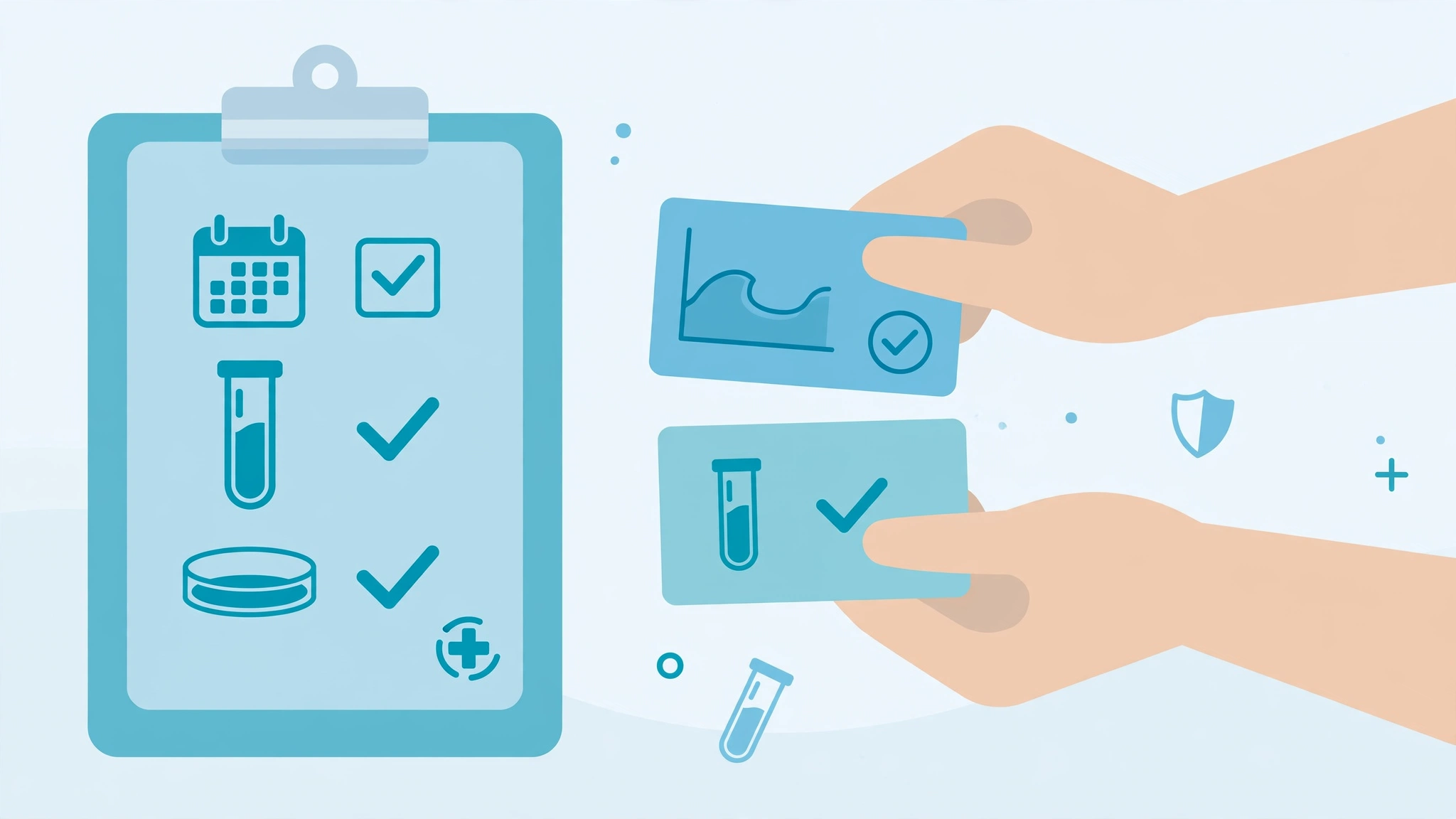
Use this as your agenda for the sexual health new relationship talk so nothing important slips through. You do not have to cover all eight in one sitting, but all eight deserve coverage before you stop using barriers:
- Last STI test: When was it, what infections were screened, and what were the results?
- New partners since that test: Any sexual contact after the last screening restarts the risk clock.
- Known STI status: Including herpes and HPV — disclosure is how a partner gets to make an informed choice.
- Barrier protection: Condoms, dental dams, and lube — who provides them, and is their use non-negotiable?
- Contraception and pregnancy intentions: Who is responsible for what, and do you both actually agree on the plan? (Expanded below — this is the item couples skip most.)
- Sexual boundaries and consent: What is on the table, what is off it, and how will you check in during intimacy?
- Pain, discomfort, or sexual difficulties: Pain during sex, erectile difficulties, or low desire are medical topics — naming them early normalizes getting help.
- Health history that affects sex: Past sexual trauma, anxiety, or medication side effects (for example, antidepressants can lower libido) that your partner should understand with compassion, not judgment.
STI Window Periods: Why “I Just Got Tested” Is Not the Whole Story
This is the detail the sexual health new relationship talk should never skip: a negative test only reflects the moment the sample was taken, and infections need time after exposure before tests can detect them. If your partner was tested the week after a new encounter, the result may not tell the full story.
Typical detection windows clinicians describe:
| Infection | Typical detection window after exposure |
|---|---|
| Chlamydia and gonorrhea (NAAT tests) | About 1–2 weeks |
| HIV (lab-based 4th-generation test) | About 2–6 weeks |
| Syphilis | About 3–6 weeks (up to 90 days) |
| Herpes (blood test, if used) | Up to about 12 weeks |
What this means for your sexual health new relationship talk: ask not only when someone was tested, but whether they have had any sexual contact since that test, and whether enough time has passed since their last potential exposure. If there was a recent exposure, doctors may recommend retesting after the window period closes. Confirm the right timing with your own clinician — test technology varies — but do not skip this question.
The Pregnancy and Contraception Conversation Couples Keep Skipping
Protection talk usually stops at condoms, but a complete sexual health new relationship talk goes further. If pregnancy is biologically possible between you, discuss it directly: Is pregnancy something either of you wants now, later, or never? What is the actual contraception plan — condoms alone, condoms plus a hormonal method, an IUD — and who owns each part of it?
Remember that hormonal methods and IUDs prevent pregnancy but do not protect against STIs, so “I’m on the pill” never ends the protection conversation. Also agree on a backup plan — a broken condom or missed pill — while you are calm, since emergency contraception works best the sooner it is used. The American College of Obstetricians and Gynecologists advises discussing contraception preferences with your clinician, and your partner deserves the same clarity you give your doctor.
Vaccines and Protection Tools Most New Couples Never Discuss
The sexual health new relationship talk is also the right place to cover prevention tools that go beyond condoms. The HPV vaccine is recommended through age 26 for everyone and can be given up to age 45 after a clinician discussion — ask your doctor whether you are covered. Hepatitis A and B vaccines are also worth discussing with your clinician if you have not had them.
If HIV prevention is relevant to your relationship, ask about PrEP (pre-exposure prophylaxis): a medication for people without HIV that substantially reduces the risk of acquiring it, started through a healthcare provider with testing and follow-up. Dental dams for oral sex and water- or silicone-based lubricants (which reduce condom breakage and discomfort) round out the toolkit. None of these replace the conversation — but naming them in your sexual health new relationship talk gives the conversation better options.

When Your Partner Will Not Talk About It: Scripts, Red Flags, and Boundaries
Sometimes you do everything right and your partner still shuts down. Respond with compassion first — embarrassment, past trauma, or fear of judgment may be behind the resistance. Try these:
- “I can tell this is uncomfortable. What part feels hardest to talk about?” — names the feeling instead of fighting it.
- “I’m not asking about your past to judge it. I just want us both to have current information.” — reframes the talk as care, not interrogation.
- “We don’t have to finish this tonight. Can we come back to it this weekend — maybe after we’ve both had a chance to get tested?” — gives space without dropping the subject.
But compassion has limits. Treat these as red flags: refusing testing or protection outright, mocking you for bringing it up, lying or getting caught in contradictions, pressuring you to skip protection “to prove trust,” or withdrawing affection every time health comes up. Someone who refuses to take the sexual health new relationship talk seriously is telling you how they will handle disagreements later. It is always acceptable to pause intimacy — or end the relationship — until you have the information you need. Walking away from someone who refuses this conversation is a health decision, not a failure.
After the Talk: Turning One Conversation Into an Ongoing Routine
The best outcome of the sexual health new relationship talk is that it stops being a one-time event. Build a light routine:
- Retest on a schedule: Clinicians generally recommend annual STI screening for sexually active adults, and testing every 3–6 months if you have new or multiple partners — your doctor will tailor this to you.
- Recheck after changes: New partners, broken condoms, or symptoms mean new tests, followed by a quick update conversation.
- Revisit contraception yearly: Bodies, medications, and plans change; confirm the plan still works at least once a year.
- Keep the door open: A periodic “How are you feeling about how we’re handling the health stuff?” — a mini sexual health new relationship talk — keeps small issues from becoming big ones.
For more detail on screening schedules, see our guide on STI testing: when and how often, and if disclosure feels especially difficult, read dating with an STI: how and when to disclose. If anything in this article raised a personal concern, talk to your doctor or visit a sexual health clinic — a ten-minute appointment can replace weeks of worry. You can learn what to expect from screening at the Mayo Clinic’s guide to STD testing.
FAQs
How soon is too soon to bring up sexual health in a new relationship?
There is no “too soon” once physical intimacy is on the horizon. The practical rule clinicians suggest: raise it as soon as sex feels likely, and always before it happens. A brief, warm mention around the third to fifth date works well for most couples, giving both people time to get tested first — the practical starting point of the sexual health new relationship talk.
What exactly should I ask a new partner about their sexual health?
Cover the essentials: when they were last tested and which infections were included, whether they have had new partners since, any known STI status, what barrier protection they use, and their contraception plan. Ease in by sharing your own answers first, and keep questions factual rather than digging into past details that do not change current risk.
Should we get STI tested together before having sex?
Yes — doctors frequently recommend it. Testing together (at the same clinic visit or separately with shared results) builds trust and removes guesswork. Remember window periods: if either of you had a recent exposure, ask your clinician about retesting after the detection window closes, since a too-early negative result may not be conclusive — a detail worth raising in your sexual health new relationship talk.
How do I bring up the topic without killing the mood?
Do not bring it up in the bedroom — bring it up on a walk, over coffee, or during a relaxed evening at home. Frame it positively: “Talking about this makes me feel more comfortable, and I think it will make things better for both of us.” Confidence and warmth matter far more than perfect wording.
What if my partner refuses to get tested or talk about sexual health?
First, respond with empathy — embarrassment or past experiences may be the cause — and offer to revisit it later. But a continued refusal to engage in the sexual health new relationship talk — to test, use protection, or discuss health at all — is a red flag. You are entitled to pause intimacy until you feel safe, and to walk away from a relationship that does not respect your well-being.
Do we need to keep having this conversation after the first talk?
Yes. Think of the first talk as opening a channel, not checking a box. Recheck testing if partners change, protection fails, or symptoms appear; revisit contraception at least yearly; and check in periodically about comfort and boundaries. Couples who keep the conversation ongoing report better communication and fewer misunderstandings than those who treat it as one awkward hurdle.
Soft next step: Explore our related guides on STI testing and disclosure — and consider booking a sexual health checkup this month. Walking into the talk knowing your own status makes everything easier.
Medical disclaimer: This article is for educational purposes only and is not medical advice. Sexual health decisions — including testing, contraception, and treatment — should be made with a qualified healthcare professional who knows your individual history. If you have symptoms or concerns, please consult your doctor or a sexual health clinic promptly.