At-Home STI Tests: Accuracy and How They Work
How At-Home STI Tests Actually Work
At home sti test accuracy is one of the most common questions people have before ordering a kit — and the short answer is reassuring. When a kit is well-designed and used correctly, at-home testing can be just as accurate as testing at a sexual health clinic. The reason is simple: most reputable kits use the exact same laboratory technology as clinics do. The “at home” part refers to where you collect the sample, not where the science happens.
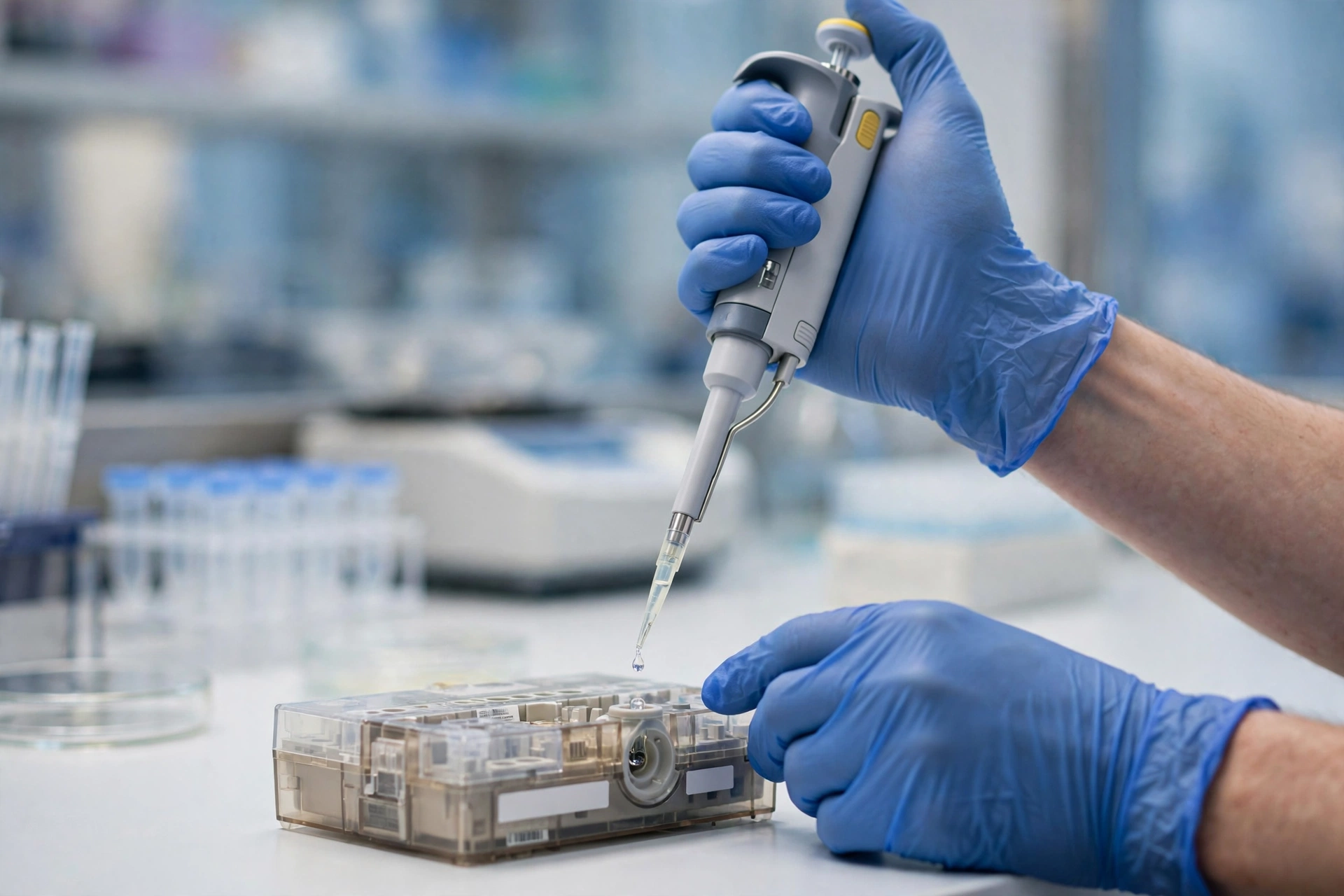
There are two fundamentally different models on the market today, and knowing which one you are buying matters for accuracy.
Understanding at home sti test accuracy starts with knowing which model you bought.
1. Mail-in lab kits (the most common type)
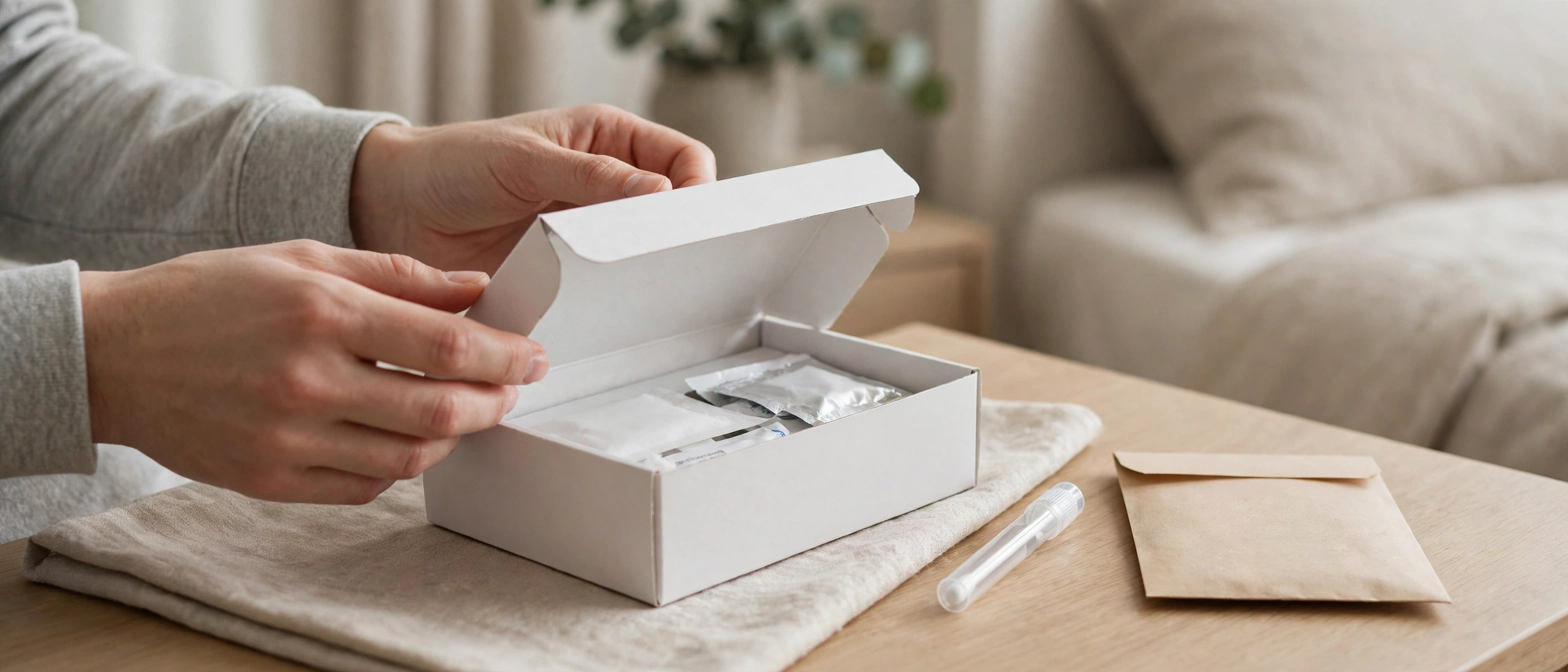
With a mail-in kit, you order online, receive a discreet package, and collect your own samples — usually a urine sample, a vaginal or penile swab, a throat or rectal swab, or a finger-prick blood sample, depending on what the panel covers. You mail the samples back in prepaid packaging, and they are analyzed at a clinical laboratory using the same methods a clinic would use. Results typically arrive through a secure online portal within two to seven days.
The accuracy story here is straightforward: because the analysis happens in a professional lab with nucleic acid amplification testing (NAAT) or PCR technology, the results are comparable to clinic-collected samples processed the same way. The weakest link is the collection step — you are doing it yourself without a clinician guiding you.
2. True point-of-care at-home tests
The newer category gives results at home in minutes rather than days. The best-known example is the FDA-authorized rapid HIV self-test, which detects antibodies from an oral fluid swab and returns a result in about 20 minutes. More recently, the FDA authorized a fully at-home molecular (PCR) test for chlamydia, gonorrhea, and trichomoniasis that delivers results in about 30 minutes using a self-collected vaginal swab and a powered testing device — the first test of its kind.
In clinical validation, that at-home PCR test correctly identified roughly 97–100% of positive and negative cases across the three infections — performance comparable to clinical settings. That said, point-of-care tests and mail-in kits have different strengths, and we will compare them in more detail below.
How Accurate Are At-Home STI Tests?
To answer this honestly, you need to understand two words: sensitivity and specificity.
Sensitivity is a test’s ability to correctly identify people who do have an infection. A test with 95% sensitivity catches 95 out of 100 infections and misses 5 (false negatives). Specificity is the ability to correctly identify people who don’t have an infection — a test with 96% specificity means 96 out of 100 uninfected people test negative, and 4 get a false positive.
No test — clinic or at-home — reaches 100% on both. What matters is that quality at-home kits perform in the same range as clinical tests: published data for NAAT-based home kits typically shows sensitivity around 90% or higher and specificity in the mid-to-high 90s. Because the laboratory analysis is identical to what a clinic sends off, the accuracy gap between home and clinic testing is small when instructions are followed carefully.
That last clause is doing real work. Studies consistently show that accuracy is contingent on proper use. When people follow collection instructions precisely, results are reliable; when samples are collected incorrectly, delayed in transit, or taken too soon after exposure, accuracy drops. This is a matter of technique, not of home testing being inherently inferior.
In short, at home sti test accuracy reflects how carefully the kit is used, not an inferior science.
Window Periods: Why Timing Matters More Than the Brand
The single biggest source of inaccurate at-home results has nothing to do with the kit. It is testing too early. Every STI has a window period — the time between exposure and when a test can reliably detect the infection. Test during the window period and you can get a false negative even with a perfect kit and perfect technique.
This is why most questions about at home sti test accuracy come down to timing rather than technology.
Typical window periods (approximate; confirm with your kit’s instructions):
- Chlamydia and gonorrhea: 7–21 days after exposure. Many guidelines suggest waiting at least 2 weeks.
- Trichomoniasis: 5–28 days.
- HIV (4th-generation lab test): 18–45 days. Oral-fluid rapid self-tests detect antibodies only, so they may need up to 3 months after exposure.
- Syphilis: about 3–6 weeks; a follow-up test at 3 months may be recommended after a risky exposure.
- Hepatitis B: roughly 6 weeks to 6 months; hepatitis C, about 8–11 weeks.
- Herpes (blood test for antibodies): up to 3 months — and note that antibody tests cannot tell you where the infection is located.
If you test negative but are still within the window period, retest after the full window has passed. If you have symptoms — discharge, sores, pain — do not wait out the window at home; see a clinician promptly.
What Can Make Your Results Less Reliable
Beyond timing, several practical factors affect at home sti test accuracy:
- Incorrect sample collection. Not swabbing for the full recommended time, collecting urine incorrectly, or contaminating the sample with other bodily fluids can all cause misleading results. Read and re-read the illustrated instructions before you start.
- Blood samples. Tests for HIV and syphilis require blood. Finger-prick collection at home is the step people struggle with most — insufficient blood volume leads to “inconclusive” rather than wrong results, but it is still frustrating. Some kits offer dried blood spot cards that are more forgiving than tubes.
- Shipping and storage. Samples degrade. Post them the same day if possible, store them as instructed, and avoid extreme heat. A sample that sits in a hot mailbox for days is the enemy of accuracy.
- Testing the wrong site. Chlamydia and gonorrhea can infect the throat and rectum as well as the genitals, and a urine test alone will miss those. If you have had oral or anal sex, choose a kit that includes throat and rectal swabs.
- Interpreting faint rapid-test lines. With instant tests, any visible line — however faint — generally counts as a reactive result and needs follow-up, not re-reading.
- Expired or poorly stored kits. Check the expiry date and storage instructions before collecting anything.
Controlling these variables is the most practical way to protect at home sti test accuracy.
What At-Home Kits Can’t Do Well
An honest article should say this plainly: at-home testing is excellent screening, but it does not replace a clinical exam in every situation.
Even so, at home sti test accuracy for screening purposes remains high when kits are used correctly.
- Herpes. The most accurate way to diagnose herpes is swabbing an active sore. If you have no symptoms, blood antibody tests exist, but they have limitations — including the inability to tell oral from genital infection, and a real (though small) false-positive rate.
- Visible symptoms. Sores, warts, pelvic pain, or unusual bleeding warrant a physical examination. A lab test cannot diagnose what it cannot see.
- Comprehensive assessment. A clinician takes a sexual history, considers which infections you are actually at risk for, and can do same-day treatment, vaccination, and prevention counseling (including HIV testing guidance tailored to your situation). No kit replicates that.
- Urgent situations. After sexual assault or a high-risk exposure where PEP (post-exposure prophylaxis for HIV) may be needed, seek care immediately — PEP must start within 72 hours, and an at-home kit cannot provide it.
How to Choose a Reliable Test Kit
Not all kits are created equal. Use this checklist before you buy:
- Regulatory status. Look for FDA clearance or authorization (in the US) or the appropriate national certification elsewhere. Claims like “99% accurate” mean little without independent validation data — look for published sensitivity and specificity figures.
- Accredited labs. Mail-in kits should be processed by CLIA-certified laboratories (or the equivalent in your country) that also run clinical samples.
- Transparent test menu. The kit should state clearly which infections it screens for and which sample type each requires. Be wary of kits that test for everything with one swab — that is rarely how the science works.
- Data privacy. Check how results are stored and whether data is sold or shared. Reputable providers describe HIPAA-compliant handling.
- Clinical support. The best kits include clinician review of results, telehealth consultations, and treatment or prescription pathways for positive results — not just a PDF of numbers.
- Discreet packaging and billing. If privacy is your reason for testing at home, confirm the packaging and credit card descriptor are neutral.
A kit that meets these criteria will deliver at home sti test accuracy comparable to clinic testing.
After Your Results: What to Do Next
If positive: contact a healthcare provider or the kit’s telehealth service promptly. Bacterial STIs like chlamydia, gonorrhea, and trichomoniasis are curable with antibiotics — but you need the right prescription, and partners from the past 60–90 days should be tested and treated too. Many providers offer expedited partner therapy, where your partner can receive treatment without a separate appointment. Our guide on STI partner notification walks through how to have that conversation respectfully.
If negative but you had a known exposure: check the window period. If you tested too early, schedule a retest. A negative result is only meaningful once the window has fully passed.
If inconclusive or invalid: this usually means a collection or processing problem, not an infection. Repeat the test, being careful with collection technique, or switch to a clinic visit.
If you test regularly: the CDC recommends annual chlamydia and gonorrhea screening for sexually active women under 25, annual HIV screening for people ages 13–64, and more frequent testing for men who have sex with men with multiple partners — see the CDC’s STI testing recommendations for the full schedule. At-home kits make it far easier to stick to that schedule, which is arguably their greatest public-health benefit.
Keeping up with the schedule is one of the simplest ways to make at home sti test accuracy work for your health.
Frequently Asked Questions
Here are the most common questions about at home sti test accuracy, answered.
Are at-home STI tests as accurate as clinic tests?
When they use the same laboratory methods (NAAT/PCR) and are used as directed, yes — accuracy is comparable. The main variable is you: correct sample collection and testing after the window period are what make home results reliable.
In other words, at home sti test accuracy is really about following the science already built into the kit.
Can I get a false positive from an at-home STI test?
It is uncommon but possible. Quality kits have high specificity, which keeps false positives low, but contamination or cross-reactivity can occur. If you get a positive result, get confirmatory testing through a clinician or the kit’s telehealth service before assuming a diagnosis — and see our guide on talking to your partner about STI testing.
How long do at-home STI test results take?
Mail-in lab kits typically return results in 2–7 business days after the lab receives your sample. Rapid point-of-care tests give results in 20–30 minutes at home.
Which is more accurate: a mail-in kit or a rapid at-home test?
Mail-in lab kits that use NAAT/PCR generally have the highest accuracy, comparable to clinical testing. Rapid tests (such as oral-fluid HIV self-tests) are highly reliable for what they detect but can have longer window periods and slightly lower sensitivity than lab tests. Choose based on what you need: speed or maximum accuracy.
Can at-home tests detect HIV?
Yes. Rapid oral-fluid HIV self-tests authorized by regulators are highly accurate for detecting HIV antibodies after the window period. Mail-in kits may offer 4th-generation lab tests that detect both antibodies and antigen, with a shorter window period.
Do I need to avoid anything before testing?
Follow your kit’s instructions, but common advice includes not urinating for at least an hour before a urine test, and collecting samples before taking antibiotics if possible. Avoid testing during menstruation for vaginal swabs if the instructions say so.
Will my at-home STI test results be private?
Results are typically delivered through a secure portal visible only to you. However, privacy practices vary — check the provider’s policy before buying. Note that positive results for certain infections are legally reportable to public health authorities in many jurisdictions, whether the test was done at home or in a clinic.
This article is for educational purposes only and is not medical advice. Understanding at home sti test accuracy helps you test wisely, but STI testing decisions should be made with a qualified healthcare professional. If you have symptoms or a known exposure, seek medical care promptly.