IUD for Heavy Periods: Does It Help?
If you soak through a pad or tampon every hour, wake up to stained sheets, pass large clots, or plan your life around your cycle, you are not just having a “bad period” — you may have heavy menstrual bleeding, a medical condition doctors call menorrhagia. It affects roughly 1 in 5 women of reproductive age, and it can drain your iron, your energy, and your confidence. The good news: an IUD for heavy periods is one of the most effective treatments available, and the research behind it is stronger than most women realize.
This guide explains exactly how it works, which IUDs actually treat heavy bleeding (not all of them do), what the clinical studies show, and what the first six months realistically feel like — so you can walk into your appointment informed and confident.

What Counts as a Heavy Period?
Doctors generally consider a period “heavy” when one or more of these apply:
- Needing to change a pad or tampon every 1–2 hours for several hours in a row
- Bleeding that lasts longer than 7 days
- Passing blood clots larger than a coin
- Needing double protection (pad plus tampon) or changing protection overnight
- Feeling exhausted, dizzy, or short of breath during your period — possible signs of anemia
- Regularly missing work, school, or social plans because of bleeding
Clinically, heavy menstrual bleeding is defined as blood loss exceeding about 80 milliliters per cycle — but nobody measures milliliters at home. The practical test is simpler: if your periods regularly interfere with your daily life, they are heavy enough to discuss with a clinician. Track two or three cycles before your appointment — note start and end dates, how often you change protection, clots, and symptoms like fatigue. That record helps your doctor take the complaint seriously and choose the right treatment.

How an IUD Helps With Heavy Periods
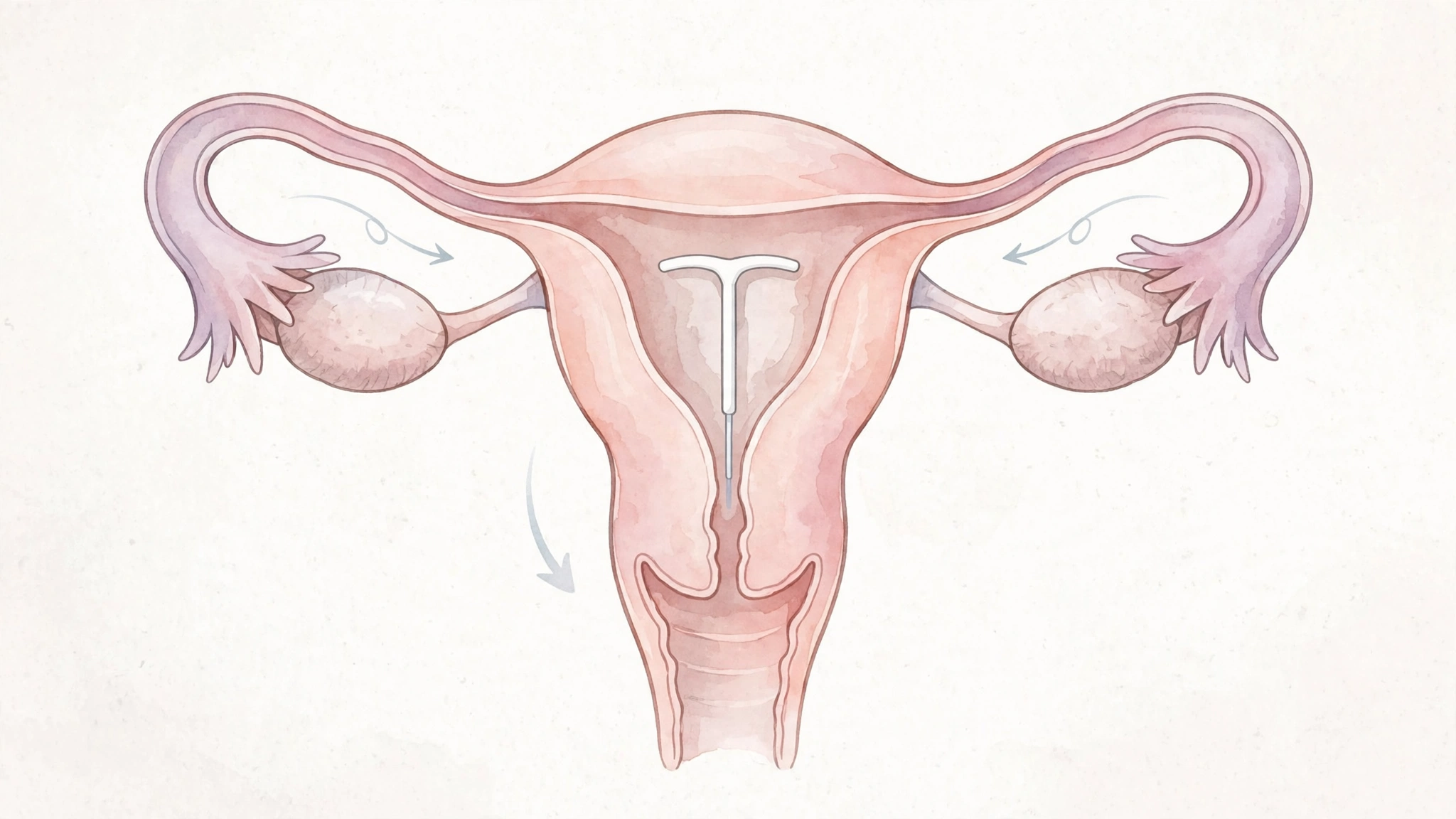
Only one type of IUD treats heavy periods: the hormonal IUD, which releases a small, steady dose of levonorgestrel — a synthetic progestin — directly into the uterus. It works on bleeding in three ways:
- It thins the uterine lining. Progestin keeps the endometrium (the lining that sheds each month) thin and stable. Less lining built up means less to shed — so periods get lighter, shorter, and eventually, for many women, disappear altogether.
- It acts locally. Because the hormone is delivered right where it is needed, only a tiny amount enters the bloodstream. That is why hormonal IUDs tend to cause fewer whole-body hormonal side effects than daily pills.
- It thickens cervical mucus and often suppresses ovulation, which is what makes it such reliable contraception at the same time.
Here is the critical distinction most articles gloss over: the copper IUD (sold as Paragard) contains no hormones at all and can actually make periods heavier and crampier — conventional copper IUDs have been shown to increase menstrual blood loss by roughly half. If heavy periods are your problem, a copper IUD is usually the wrong choice. Our detailed comparison walks through both types: hormonal vs copper IUD.
Which IUDs Are Actually Approved for Heavy Periods?
Not every hormonal IUD carries an official indication for heavy bleeding. The dose matters:
- Mirena (52 mg levonorgestrel): The only IUD explicitly approved by regulators for treating heavy menstrual bleeding. It is approved for up to 5 years when used for this purpose (and up to 8 years for contraception). This is the device with the longest track record for menorrhagia.
- Liletta (52 mg levonorgestrel): The same 52 mg dose as Mirena. A large phase 3 multicenter trial (described below) studied Liletta specifically for heavy menstrual bleeding, and its maker sought formal registration for this use.
- Kyleena and Skyla (lower doses): These smaller devices release less levonorgestrel and are not approved or well-studied for heavy-period treatment. Smaller does not mean gentler here — it means less effect on the lining.
When you ask your doctor about an IUD for heavy periods, name the goal explicitly: “I want the option with the best evidence for heavy bleeding.” That steers the conversation toward the 52 mg devices rather than whichever one happens to be in the clinic drawer.
What the Research Shows: How Much Lighter Do Periods Get?
The headline numbers are striking. In a large multicenter open-label phase 3 trial published in Obstetrics & Gynecology and reported by MDedge, researchers followed 105 women with severe heavy menstrual bleeding (not caused by fibroids or other pelvic pathology) at 29 U.S. centers after placement of a 52 mg levonorgestrel IUD:
- Median blood loss fell by 93.3% by the third cycle and 97.6% by the sixth cycle — a reduction of more than 90% overall.
- 81.8% of participants met the study’s definition of treatment success (final blood loss under 80 mL and at least a 50% reduction from baseline).
- Quality of life improved meaningfully: better sleep, less pain and cramping, and better daily functioning.
- Importantly, this was the first major trial to include women with obesity (44.8% of participants, including 42 with a BMI over 35) and women who had never given birth (27.6%) — and efficacy held up regardless of BMI or whether a woman had delivered a baby.
- The expulsion rate (the device slipping out) was 9%, somewhat higher than the 6% seen in an earlier study of a different device — something to be aware of, not alarmed by.
Other long-term data are consistent: studies of the 52 mg devices show blood loss reductions of up to 97% after a year, meaningful relief of period pain, and — for women whose biggest concern is simply stopping periods — up to 80% of users eventually stop menstruating altogether while the device is in place. That amenorrhea is safe: there is no buildup of lining to shed because the progestin prevents the lining from developing in the first place.
What to Expect in the First Six Months: A Realistic Timeline
The research numbers above come with an important footnote that patient guides do not always emphasize: the first three to six months are often messy. Knowing this in advance is the difference between giving up and getting the full benefit.
- Weeks 1–4: Cramping for a few days after insertion is common; over-the-counter pain relief usually handles it. Irregular spotting is very common in the first weeks.
- Months 2–3: Bleeding may still be unpredictable — lighter overall for most women, but spotting between periods is normal and expected.
- Months 3–6: This is when the dramatic thinning effect kicks in for most users. Spotting settles, periods become clearly lighter and shorter, and many women notice cramps fading too.
- Beyond 6 months: Periods are typically very light, infrequent, or absent. If bleeding begins increasing again after a long quiet stretch, that is easy to notice — and worth reporting, since it can signal the device has shifted.
Practical tips for the adjustment phase: keep backup protection and dark underwear or period underwear handy, keep tracking your cycle so you can show your doctor real progress, and schedule the follow-up your clinician recommends (often 4–6 weeks after insertion) to confirm placement. Wondering what the procedure itself feels like? Read our walkthrough: IUD insertion pain explained.
Before You Choose: Rule Out the Cause First
A hormonal IUD is an outstanding treatment for heavy bleeding — but only after your doctor has checked why the bleeding is heavy. An IUD cannot fix every cause, and some conditions need different treatment first:
- Uterine fibroids — benign muscle tumors that can distort the cavity; large or submucosal fibroids may make IUD placement difficult or less effective. (See also: fibroids and painful sex.)
- Adenomyosis — uterine lining growing into the muscle wall, often causing heavy, painful periods.
- Endometrial polyps — small growths on the lining that can usually be removed.
- Thyroid disorders and bleeding disorders (such as von Willebrand disease) — blood tests can reveal these.
- Certain medications, including blood thinners.
Expect a pelvic exam and usually an ultrasound before insertion, plus screening for infections — an active pelvic infection or untreated sexually transmitted infection must be treated before an IUD goes in. This evaluation is also your chance to ask every question on your list; write them down beforehand so nerves do not erase them.
Side Effects and Risks Worth Knowing
The hormonal IUD is well tolerated by most users, and most women never experience significant side effects. Still, informed consent means knowing the full picture:
- Irregular spotting — the most common complaint, concentrated in the first 3–6 months, and it usually improves on its own.
- Cramping — around insertion and occasionally in the early months.
- Expulsion — the device can slip out, most often in the first year (about 9% in the heavy-bleeding trial). You may not always feel it, which is why periodic string checks matter.
- Perforation — rare, but the device can puncture the uterine wall during insertion; this is why placement is done by a trained clinician.
- Hormonal effects — because so little hormone reaches the bloodstream, effects like acne, breast tenderness, headaches, or mood changes are uncommon and usually mild and temporary.
- Benign ovarian cysts and pelvic pain — reported in a minority of users.
You should not get a hormonal IUD if you are pregnant, have an active pelvic infection or untreated STI, have certain gynecologic cancers, or have advanced liver disease. Tell your care team about the device before any surgery or pelvic imaging, since it can show up on scans. Authoritative overviews of heavy-bleeding diagnosis and treatment are available from the Mayo Clinic.
IUD vs. Other Heavy-Period Options
The IUD is not the only answer. Here is how it stacks up against the main alternatives:
- Tranexamic acid (Lysteda): A non-hormonal pill taken only on heavy bleeding days; reduces blood loss by roughly half for many women. Good if you want to avoid hormones entirely, but it does nothing for contraception.
- Combined birth control pill, patch, or ring: Often the first-line treatment doctors suggest. Effective for many, but requires daily/weekly/monthly attention and contains estrogen, which not everyone can take.
- Progestin-only pill or injection: Hormonal options without estrogen; the injection can lighten periods but may cause irregular bleeding and bone-density concerns with long use.
- Endometrial ablation: A procedure that destroys the uterine lining, often dramatically reducing bleeding. Best suited to women who are done having children — pregnancy after ablation is dangerous.
- Hysterectomy: Definitive, but major surgery with permanent loss of fertility — a last resort, not a first step.
For a broader tour of contraceptive choices and how they compare, see birth control options compared. The IUD’s standout advantages are durability (years, not days), no daily effort, local rather than whole-body hormones, and reversibility — fertility typically returns within about a month of removal.
The Iron Connection: Heavy Periods and Anemia
This is the angle that gets the least attention and may matter most to how you actually feel. Every heavy cycle costs blood, and blood carries iron. Over months and years, heavy menstrual bleeding is one of the most common causes of iron deficiency in women — showing up as persistent fatigue, dizziness, pale skin, brittle nails, hair shedding, restless legs, and that foggy inability to concentrate that gets blamed on “just being tired.”
If your periods are heavy, ask your doctor to check your iron status (ferritin and hemoglobin), not just your bleeding. Many women discover they have been anemic for years without knowing it. An IUD that cuts blood loss by 90%+ does more than save pads — it can stop the monthly iron drain and let your levels recover, alongside iron-rich foods or supplements if your clinician recommends them. When bleeding lightens after insertion, a follow-up blood test a few months later can confirm the improvement objectively. It is one of the most satisfying “before and after” measurements in women’s health.
Who Is a Good Candidate?
You may be a strong candidate for a hormonal IUD for heavy periods if:
- Your periods are heavy enough to disrupt your life or have caused iron deficiency
- You want reliable, long-acting contraception at the same time (failure rate around 0.2%)
- You prefer to avoid daily pills or cannot take estrogen
- You are in perimenopause — the hormonal IUD is especially useful here: it lightens the often-heavier bleeding of the 40s, provides contraception while fertility is still possible, and the progestin protects the uterine lining, which is valuable if you ever use estrogen therapy
- You are breastfeeding — hormonal IUDs are considered safe during nursing
- You have never given birth — the heavy-bleeding trial specifically included nulliparous women with undiminished results
It may be less suitable if you have untreated fibroids that distort the uterine cavity, an active pelvic infection, unexplained abnormal bleeding that has not been evaluated, or certain cancers. A candid conversation with your clinician — ideally one experienced with IUD placement — sorts this out quickly.
Frequently Asked Questions
How fast does an IUD lighten heavy periods?
Most women notice a meaningful difference by the third cycle, with the full effect — blood loss reduced by more than 90% in clinical studies — typically reached by six months. The first few months often involve irregular spotting, so patience through the adjustment period matters.
Will my periods stop completely with the IUD?
Many women’s do — up to 80% of long-term users eventually stop menstruating with the 52 mg devices. This is safe: the progestin prevents the uterine lining from building up, so there is nothing unhealthy about having nothing to shed. It does not mean you are in menopause, and fertility returns quickly after removal.
Can I get an IUD for heavy periods if I’ve never given birth?
Yes. The major heavy-bleeding trial included women who had never delivered a baby, and the device worked just as well for them. Insertion can be slightly more uncomfortable without a prior vaginal delivery, so discuss pain-management options with your clinician beforehand.
Does the copper IUD help with heavy periods?
No — and this is an important distinction. The copper IUD contains no hormones and typically makes periods heavier and crampier, sometimes increasing blood loss substantially. For heavy menstrual bleeding, you want a hormonal (levonorgestrel) IUD, ideally a 52 mg device such as Mirena or Liletta.
Does IUD insertion hurt?
Most women feel cramping during and shortly after insertion, ranging from mild to intense, usually easing within a day or two. Pain experiences vary widely; talk to your clinician about options such as anti-inflammatory medication beforehand, and consider scheduling the appointment when you can rest afterward. Our detailed guide covers what to expect: IUD insertion pain explained.
Will I still need iron supplements after getting an IUD?
That depends on your labs. If you are iron-deficient now, your doctor may recommend supplements to rebuild your stores while the IUD reduces ongoing loss. Once bleeding lightens, many women can maintain healthy iron levels without continued supplementation — a follow-up blood test a few months after insertion will show where you stand.
What should I do if bleeding gets heavier again months later?
Call your clinician. After months of light or absent periods, a return of heavy bleeding can mean the device has shifted or been expelled — and the good news is that this change is easy for both you and your doctor to notice. An ultrasound can confirm placement, and repositioning or replacement usually resolves it.
This article is for educational purposes only and is not medical advice. Heavy menstrual bleeding can have many causes, and the right treatment depends on your individual health history. Always consult a qualified healthcare professional for diagnosis and treatment decisions tailored to you.