Antibiotic-Resistant Gonorrhea: What ‘Super Gonorrhea’ Really Means
Headlines call it “super gonorrhea,” and the phrase sounds like something from a disaster movie. But antibiotic resistant gonorrhea is not science fiction — it is a real, documented, and growing medical challenge that doctors and public health agencies around the world are tracking closely. Gonorrhea has outsmarted nearly every antibiotic ever thrown at it since the 1930s, and the last reliably effective first-line treatment is now under serious pressure. The good news? Understanding what is happening — and what to do about it — puts the power back in your hands.
This guide breaks down what antibiotic resistant gonorrhea really means, how the bacteria became so stubborn, what doctors recommend today, and the new treatments on the horizon — in plain, clinical, stigma-free language for couples and clinicians alike.
What “Super Gonorrhea” Really Means
Let’s start by clearing up the term itself. “Super gonorrhea” is a media nickname, not a medical diagnosis. Doctors use the term antibiotic resistant gonorrhea to describe infections caused by Neisseria gonorrhoeae, the bacterium behind gonorrhea, that no longer respond to one or more of the standard antibiotics normally used to treat them.
The symptoms of a resistant infection are essentially the same as any gonorrhea infection — painful or burning urination, unusual discharge from the genitals, pain or swelling, and in some cases rectal discomfort or a sore throat. Many people have no symptoms at all (NHS overview of gonorrhoea symptoms). The difference lies entirely in the resistance profile: ordinary lab tests (NAATs) detect the infection, but only a culture followed by antibiotic susceptibility testing reveals whether the strain is resistant. If the bacteria survive exposure to the recommended drug, the standard treatment fails and the infection persists.
It is important to keep perspective. A resistant infection is not necessarily more contagious than a regular one, and it is not a different disease — it is the same bacterium with a stronger suit of armor. It does mean, however, that treatment may take longer, require different or combination drugs, and that the infection can linger longer in the body while it is being sorted out, which is why quick follow-up matters so much.
Antibiotic Resistant Gonorrhea: A Century of Beaten Treatments
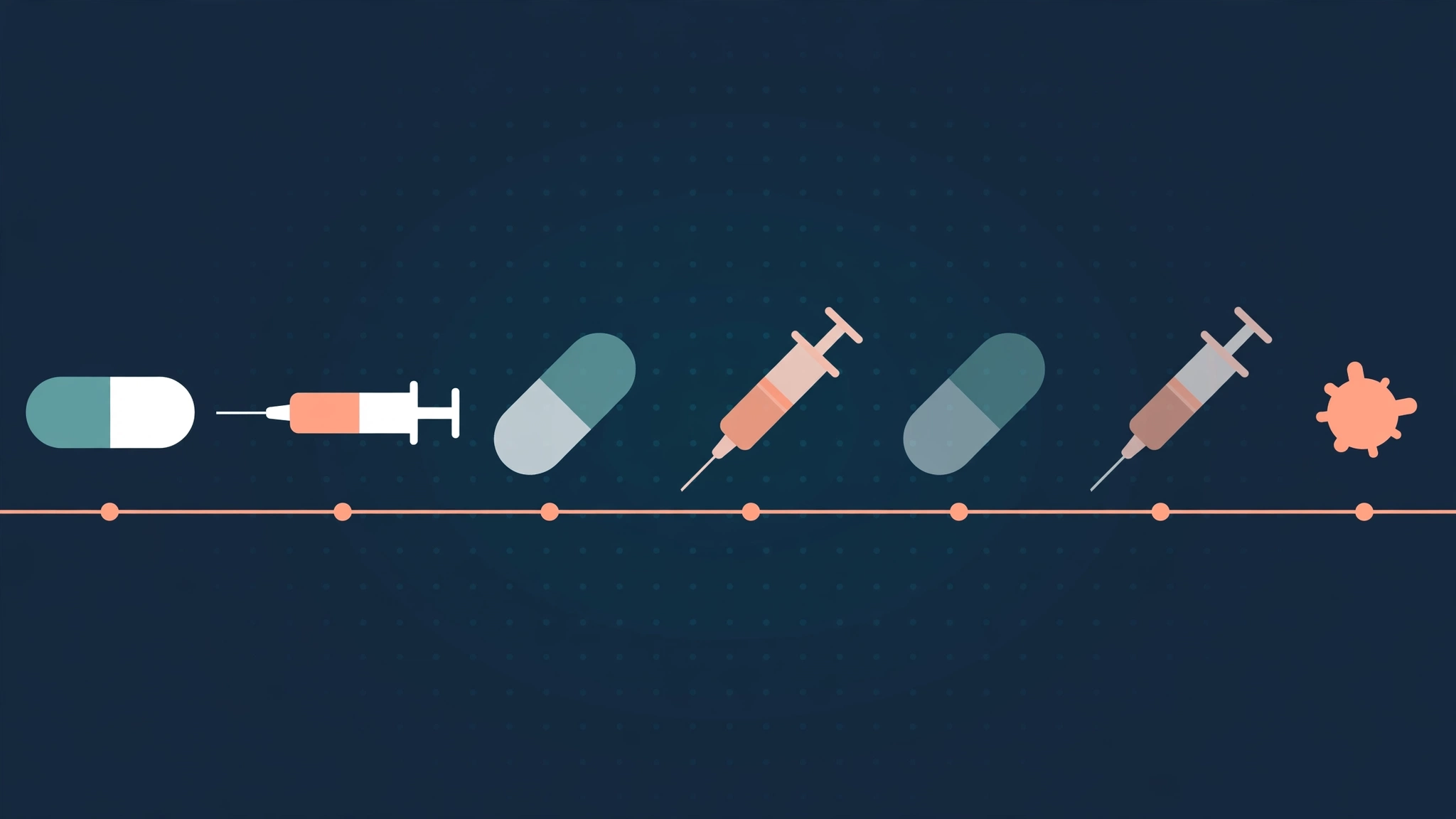
No other sexually transmitted bacterium has a resistance track record quite like this one. Every first-line antibiotic introduced against gonorrhea since the 1930s has eventually been rendered unreliable. Here is the timeline doctors learn about in training:
| Era | Standard Treatment | What Happened |
|---|---|---|
| 1930s–1940s | Sulfonamides, then penicillin | Penicillin-resistant strains predominated by the 1970s |
| 1970s–1990s | Tetracycline, spectinomycin | Widespread resistance through plasmid-acquired defenses |
| 1990s–2000s | Fluoroquinolones (e.g., ciprofloxacin) | Abandoned as first-line therapy after rapid resistance spread |
| 2010s–2020s | Ceftriaxone + azithromycin dual therapy | Azithromycin dropped from routine use as resistance surged |
| Today | Ceftriaxone alone (single clinic injection) | Last broadly effective first-line option; reduced-susceptibility strains now detected in multiple U.S. cities |
The World Health Organization’s 2026 surveillance data documented a sixfold global rise in azithromycin-resistant gonorrhea, with strains emerging first in South and Southeast Asia and then traveling internationally through sexual networks. The CDC’s sentinel surveillance network (GISP) has meanwhile detected gonorrhea isolates with reduced susceptibility to ceftriaxone in American cities. Gonorrhea is the second most commonly reported bacterial STI in the United States — roughly 1.6 million cases a year — which makes this trend a genuine public health concern.
Tracking antibiotic resistant gonorrhea globally helps doctors update treatment guidelines before resistant strains become widespread in their own communities.
If left undertreated, gonorrhea can cause serious complications: pelvic inflammatory disease, tubal scarring, ectopic pregnancy, and infertility in women; epididymitis and infertility in men; and a rare but potentially life-threatening spread through the bloodstream called disseminated gonococcal infection. Resistance makes these complications more likely simply because the infection is harder to clear.
How Does Antibiotic Resistant Gonorrhea Develop?
Neisseria gonorrhoeae is, in the words of infectious disease specialists, a textbook example of antibiotic resistance evolution. It fights back through every known mechanism:
- Enzyme production: Some strains make beta-lactamase, an enzyme that literally destroys penicillin-type drugs before they can work.
- Target modification: The bacterium rewrites the proteins antibiotics are designed to lock onto (like penicillin-binding protein PBP-2), so the drug no longer fits.
- Efflux pumps: Molecular pumps encoded by genes like mtr physically eject antibiotic molecules back out of the bacterial cell.
- Reduced influx: Mutations in porin channels narrow the entry doors, letting less drug inside in the first place.
- Horizontal gene transfer: This is the bacterium’s superpower. N. gonorrhoeae is “naturally competent,” meaning it can absorb stray DNA from its environment — including resistance genes from other bacteria — and plug them into its own genome. A resistance trait that appears in one strain can spread rapidly across the species.
Human behavior accelerates the process. Very high treatment volumes (millions of cases treated yearly), incomplete treatment courses, antibiotics prescribed for infections that did not need them, and the global movement of resistant strains through international travel and sexual networks all give the bacteria more chances to evolve. Antibiotic resistance is a population-level problem: every unnecessary antibiotic exposure anywhere helps select for resistance everywhere. This is why slowing antibiotic resistant gonorrhea requires careful stewardship from every prescriber and every patient.
The Throat: The Hidden Hotspot for Antibiotic Resistant Gonorrhea
Here is an angle most articles skip, and it matters enormously. Gonorrhea can infect the throat (pharyngeal gonorrhea), usually through oral sex, and throat infections are the engine room of resistance. Here’s why:
- Throat infections are almost always silent. Most people with pharyngeal gonorrhea feel nothing — no sore throat, no symptoms at all — so the infection persists undetected, giving the bacteria far more time to swap resistance genes.
- The throat is a gene-trading hub. The mouth and throat are crowded with other Neisseria species that already carry resistance genes. N. gonorrhoeae sitting in the throat has direct access to this genetic library through horizontal gene transfer.
- The throat is harder to cure. Antibiotics reach throat tissue at lower concentrations than genital tissue, so throat infections are cleared less reliably — creating the perfect conditions for surviving, partially-exposed bacteria to evolve resistance. The now-famous H041 strain, the first documented strain resistant to all available cephalosporins, was discovered in the throat of a patient in Japan.
The practical takeaway: if you are sexually active and receive oral sex, throat screening should be part of your STI testing — and a test of cure (follow-up testing to confirm the infection is gone) is especially important for pharyngeal gonorrhea. Doctors now recommend confirming clearance after treatment rather than simply assuming it worked, and this is a major shift in how antibiotic resistant gonorrhea is managed, since the throat is where these resistant strains most often take hold.
The New Weapons: Zoliflodacin and Gepotidacin
For the first time in decades, there is genuine good news in the treatment pipeline. In 2025, two entirely new oral antibiotics — zoliflodacin and gepotidacin — were approved after large clinical trials showed they could clear gonorrhea infections, including many resistant strains. Both work as DNA gyrase inhibitors: they jam the bacterial enzyme that untangles DNA during replication, stopping the bacterium from reproducing.
Why does this matter so much?
- They are pills, not injections. The current last-line treatment, ceftriaxone, must be given as a clinic injection. Oral drugs are easier to take, especially where clinic access is limited.
- They use a new mechanism. Because they attack a target no previous gonorrhea drug has used in this way, existing resistance mechanisms largely do not apply — at least for now.
- They give doctors a backup plan. If ceftriaxone susceptibility continues to erode, clinicians finally have next-generation options moving through the approval and guideline process.
That said, history urges humility: gonorrhea has defeated every drug class before, and researchers are already watching closely for any early signs of resistance to the new agents. New antibiotics buy time — they do not end the arms race against antibiotic resistant gonorrhea. Prevention and responsible antibiotic use remain just as important as treatment.
What Doctors Recommend Today
Doctors follow the CDC’s STI Treatment Guidelines for the latest recommended regimens. If you are diagnosed with gonorrhea, here is what current medical guidance looks like, in plain terms:
- Get the recommended treatment, in full, as prescribed. Today’s standard is a single ceftriaxone injection given in a clinic. Take it exactly as your doctor gives it — never save, share, or split antibiotics.
- Abstain from sexual activity for at least 7 days after treatment and until both you and your partner(s) have completed treatment and symptoms have resolved. This prevents reinfection and breaks the transmission chain.
- Make sure your recent partners get tested and treated. Partner notification is one of the most effective tools against resistant strains — an untreated partner can reinfect you with the same resistant strain you just cleared.
- Watch the 3-day rule. Public health experts advise looking out for suspected treatment failure: symptoms that do not resolve within three or more days after the recommended treatment, despite no new sexual contact. If that happens, return to your provider promptly.
- Ask about a test of cure. This is a follow-up test to confirm the infection is truly gone — now considered especially important for throat infections, suspected resistant cases, or any case not treated with the standard regimen.
- If treatment fails, don’t self-treat. Your doctor may order a culture with antibiotic susceptibility testing — growing the bacteria and testing which drugs actually kill it — and consult an infectious disease specialist or public health STI consultation service. A backup antibiotic (an injectable aminoglycoside, combined with another agent) exists for these rare cases, but it is a clinician-managed decision, not a home remedy.
What doctors warn against: never treat yourself with leftover antibiotics, your partner’s pills, or antibiotics obtained without a prescription. Partial, incorrect, or unnecessary antibiotic use is one of the main drivers of antibiotic resistant gonorrhea. Taking the wrong drug at the wrong dose doesn’t just fail to cure you — it actively trains the bacteria to resist the next treatment, fueling antibiotic resistant gonorrhea in the wider community.

How to Protect Yourself and Your Partner
Prevention is the single most powerful tool against antibiotic resistant gonorrhea — every infection avoided is one less chance for resistance to evolve:
- Use condoms consistently and correctly for vaginal, anal, and oral sex. They provide strong protection, though not absolute — gonorrhea can transmit through skin and mucous-membrane contact condoms don’t fully cover.
- Get screened regularly. Annual screening is recommended for sexually active women under 25, for gay and bisexual men (more frequently with multiple partners), for pregnant women at the first prenatal visit, and for anyone with new or multiple partners.
- Limit your number of sexual partners and maintain open, honest conversations about testing with new partners.
- Don’t skip treatment or follow-up. Complete every prescribed treatment and show up for follow-up testing when your doctor asks.
- Talk to your doctor about your whole STI picture. If you were recently diagnosed with gonorrhea, ask about testing for other STIs too — co-infections are common, and our guide on chlamydia vs gonorrhea symptoms can help you understand the differences while you wait for results.
If you found this guide useful, you may also want to read our guide to the common causes of low libido — sexual health is about more than infections, and understanding your body is the best foundation for a healthy sex life.
FAQs
What is the difference between “super gonorrhea” and regular gonorrhea?
“Super gonorrhea” is a media nickname for antibiotic resistant gonorrhea — infections that no longer respond to one or more standard antibiotics. Symptoms are identical to regular gonorrhea; only susceptibility testing reveals the difference. It is not a separate disease and is not necessarily more contagious — it is simply harder to treat, requiring different or combination regimens.
Can antibiotic resistant gonorrhea be cured?
Yes — it is treatable, though sometimes not with the first drug tried. Doctors use susceptibility testing to find which antibiotics still work, and may use combination or backup regimens under specialist guidance. The key is follow-up: return promptly if symptoms persist and complete a test of cure. No widely reported strain is considered untreatable today.
How long is gonorrhea contagious after treatment?
Gonorrhea is considered contagious until it has been successfully treated and enough time has passed. Medical guidance generally advises abstaining from sexual activity for at least seven days after completing treatment, and until symptoms have resolved for both partners. With resistant strains, a test of cure can confirm the infection is actually cleared before you resume sexual activity.
Can gonorrhea spread through oral sex, and why does it matter?
Yes — gonorrhea can infect the throat through oral sex, and throat infections are usually symptomless. This matters because the throat is where resistant strains are most likely to develop: antibiotics reach it at lower concentrations, and the bacteria can easily swap resistance genes with neighboring microbes. Throat screening and test-of-cure follow-up are increasingly important parts of modern gonorrhea care.
What should I do if my gonorrhea treatment didn’t work?
Return to your healthcare provider right away if symptoms persist more than three days after treatment without new sexual contact. Ask about a culture with susceptibility testing and a test of cure. Your provider may consult a specialist. Never use leftover antibiotics or someone else’s prescription — incorrect treatment worsens resistance and delays proper care.
Will the new antibiotics zoliflodacin and gepotidacin solve the problem?
They are a major breakthrough — the first new oral gonorrhea antibiotics in decades, approved in 2025 after successful clinical trials against resistant strains. However, doctors caution that gonorrhea has historically overcome every drug class eventually. The new drugs buy valuable time, but prevention, responsible antibiotic use, and continued surveillance remain essential to keeping them effective for as long as possible.
Talk to your doctor. If you are sexually active and due for screening, or if you have symptoms or a partner who tested positive, book an STI test this week. Early detection is the simplest way to protect yourself, your partner, and the effectiveness of the antibiotics we all depend on. Catching antibiotic resistant gonorrhea early gives doctors the best chance of curing it quickly.
Medical disclaimer: This article is for educational purposes only and is not medical advice. It does not replace professional diagnosis or treatment. If you think you may have gonorrhea or any sexually transmitted infection, consult a qualified healthcare professional promptly.