Female Orgasm Gap: What Research Shows and How Couples Close It
Picture a couple after a night of lovemaking. He is relaxed and satisfied. She feels close to him — but unfinished, quietly wondering whether something is wrong with her. Nothing is wrong with her. She has met the female orgasm gap explained by decades of research: in heterosexual encounters, men orgasm almost every time, while women do so far less often. The cause is not biology but how most couples have been taught to have sex — and that can change.
This guide breaks down what the studies say, clears up gap-keeping myths, and gives practical, research-backed steps to close it together.
Consider this your complete guide to the female orgasm gap explained in plain language.
The Female Orgasm Gap, Explained: Key Statistics
In a survey of more than 50,000 people, 95% of heterosexual men said they usually or always orgasm during partnered sex — compared with only 65% of heterosexual women. That 30-point difference is the female orgasm gap explained in a single statistic — documented in the scientific literature for over 20 years.
Other findings sharpen the picture:
- Context changes everything. In a study of 12,000+ college students, only 10% of women orgasmed during first-time hookups, but 68% did so in committed relationships.
- Partner gender matters. Around 64% of bisexual women said they usually or always orgasm with female partners — far higher than with male partners.
- Alone, women orgasm easily. At least 92% of women orgasm during masturbation, taking roughly the same time to climax alone as men take during intercourse: about four minutes.
- Penetration alone rarely does it. Researcher Laurie Mintz asked thousands of women about their most reliable route to orgasm — only 4% said penetration; 96% said clitoral stimulation, alone or combined with penetration.
Together, these numbers point away from anatomy and toward behavior: women are perfectly capable of orgasming. The gap appears when partnered sex centers on penetration and skips the stimulation women need.
What the Research Says Causes the Female Orgasm Gap
Researchers agree there is no single cause — several forces combine, and every one is addressable.
Understanding the female orgasm gap explained by researchers starts with these six factors.
1. Most couples underuse clitoral stimulation
The most consistent finding is also the simplest: most women need clitoral stimulation to orgasm, and most heterosexual encounters do not provide enough of it. The clitoris and the penis develop from the same tissue and are both packed with sensitive nerve endings. Yet mixed-sex couples tend to prioritize penetration, treating everything else as a warm-up rather than the main event.
2. Intercourse is treated as the “real” sex
Researchers call this the coital imperative — the cultural script that says sex equals penetration, begins with male initiation, and ends with male orgasm. When encounters are defined this way, the activities most likely to bring a woman to orgasm are downgraded to “foreplay,” given less time, and sometimes skipped. The language reinforces it: we say “sex” when we mean “intercourse,” as if they were the same thing. Questioning this definition is central to the female orgasm gap explained by modern sex researchers.
3. Media and pornography sell a misleading script
Films and adult videos routinely portray women climaxing from penetration alone, creating unrealistic expectations about what real bodies need. When both partners expect intercourse to “do the job,” neither adds the direct stimulation that would actually work — and disappointment gets misread as dysfunction. Media literacy is an underrated part of the female orgasm gap explained to couples in therapy.
4. Poor communication — and faked orgasms
Couples who struggle with orgasm report guarded sexual communication: many women find it hard to voice what they need, and many fake orgasms — especially during penetration — to protect a partner’s feelings. Faking backfires: it teaches the partner that their approach works, so the unsatisfying routine repeats. Researchers also describe spectating — worrying about appearance during sex instead of sensation — which makes orgasm less likely. Breaking this silence is a key step in the female orgasm gap explained across clinical studies.
5. Pressure to perform makes orgasm harder
Scholars describe an orgasm imperative — the belief that a “successful” encounter must end in orgasm. Ironically, pressure is one of the biggest orgasm blockers: anxiety rises, arousal drops, and the chased outcome moves further away. Relaxed, playful, pressure-free encounters consistently produce better results.
6. Sex education skipped the pleasure chapter
Most school sex education covers reproduction and infections — not how pleasure works. In one study, over 60% of university students wrongly believed the clitoris sits inside the vaginal canal. When neither partner learned the basics, the gap is almost guaranteed.
The Anatomy Lesson Most Couples Never Got
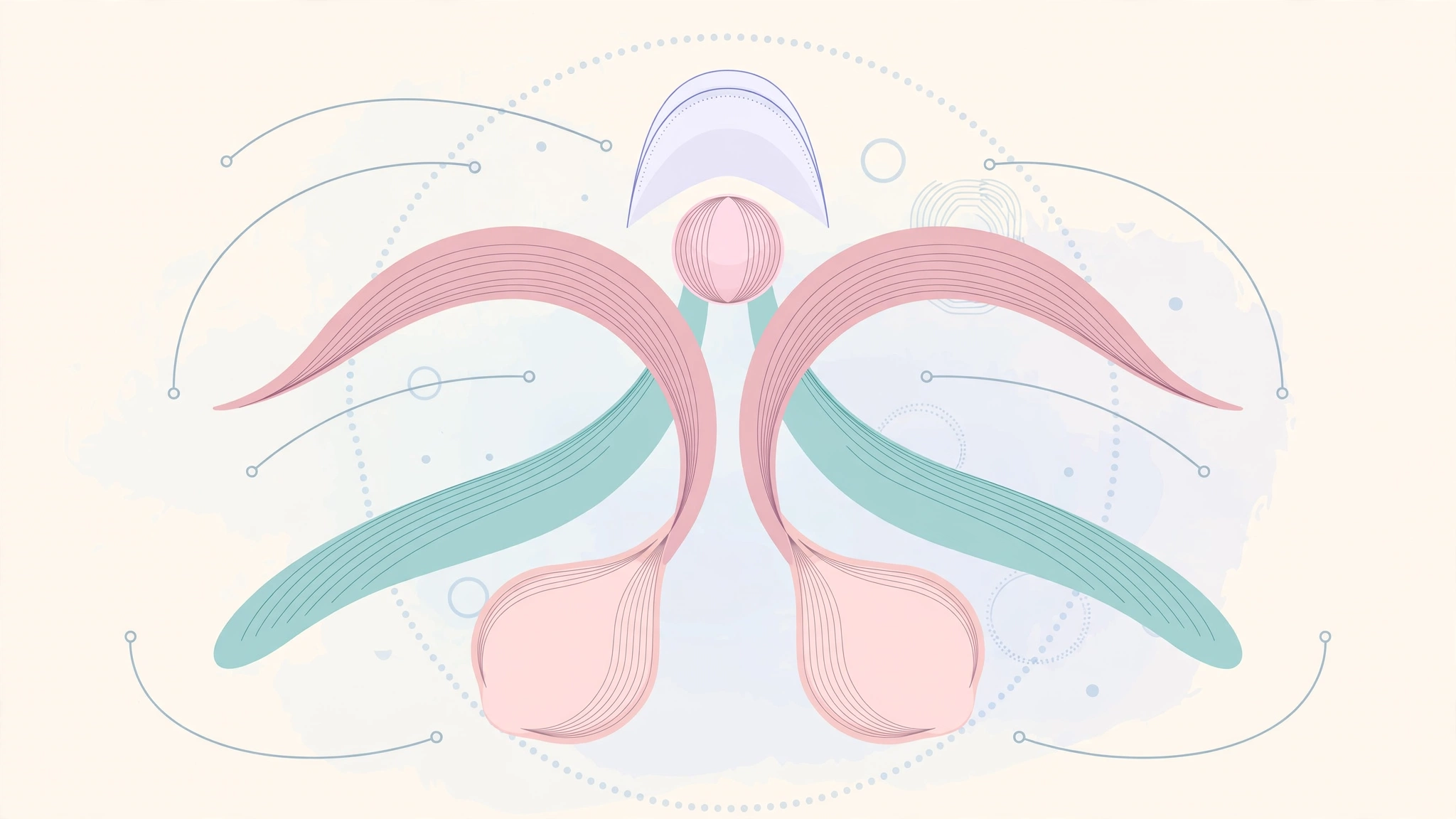
Here is one thing the female orgasm gap explained through anatomy research reveals: most people do not know what the clitoris actually is. The small visible tip is only the beginning. MRI research from 1998 showed the clitoris is a much larger internal organ, roughly 8–12 centimeters in total, with “legs” and bulbs of erectile tissue wrapping around the vaginal canal.
Why does this matter for couples? Three reasons:
- It explains the “vaginal orgasm” confusion. When women do climax during penetration, it is usually because internal clitoral structures are stimulated indirectly through the vaginal walls — the clitoris is involved either way.
- It explains why angle matters. Penetration pressing against the front vaginal wall, or allowing steady external contact, stimulates more of the clitoral complex than deep thrusting alone.
- It reframes “normal.” Needing direct clitoral touch is not a flaw — it is how the anatomy works for most women.
Simply learning this together lifts real pressure. Many couples report that once both partners understood the anatomy, their whole dynamic relaxed.
7 Proven Ways Couples Can Close the Female Orgasm Gap
With the female orgasm gap explained, the practical question is what to do differently. These strategies come from published research and clinical sex therapy — tasteful, and designed for real couples.
1. Make clitoral stimulation the main event, not the warm-up
The female orgasm gap explained in practical terms comes down to this change: stop treating clitoral touch as optional foreplay and start treating it as central to sex — before, during (with a hand), or after penetration. In one large Canadian survey, women who received oral sex in a given encounter were about 16 percentage points more likely to orgasm. Intercourse plus clitoral stimulation beats intercourse alone, every time.
2. Use the four techniques researchers finally named
In 2021, researchers surveyed 3,000+ US women about what makes partnered sex more pleasurable — and named the four techniques mentioned most (PLOS ONE):
- Angling (87.5%): rotating or raising the pelvis during penetration to find the angle with the best contact.
- Rocking (76%): keeping steady pressure so the base of the penis or a toy rubs the clitoris throughout, rather than thrusting in and out.
- Shallowing (84%): focusing touch — fingers, lips, or a toy — just inside the vaginal entrance, where sensitivity is highest.
- Pairing (69.7%): either partner stimulating the clitoris manually while penetration happens.
These are not exotic tricks; they are what real women already do. Now that they have names, couples can discuss and experiment deliberately. For position ideas with natural clitoral contact, see our beginner-friendly positions guide.
3. Try sensate focus “play sessions”
Sensate focus is a structured exercise from clinical sex therapy, and one of the most effective tools for couples in an orgasm rut:
- Set aside 15–20 relaxed minutes with no goal of orgasm or intercourse.
- Take turns: one partner gives, the other receives — then switch.
- The giver explores with slow, attentive touch; the receiver focuses only on sensation and gives gentle feedback (“slower,” “right there”).
With orgasm off the table, pressure evaporates — and pleasure often rises anyway. Weekly sessions rebuild the couple’s “pleasure vocabulary.”
4. Learn to say what you need — with actual scripts
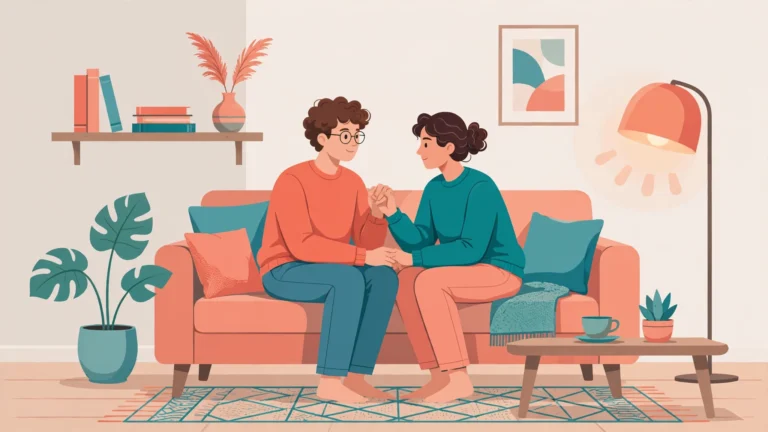
“Just communicate” is easy advice and hard practice. These concrete phrases help, and they work best when first used outside the bedroom, when nobody is pressured:
- Starting the conversation: “I’d love for us to try some new things together — it’s about more fun, not about anything being wrong.”
- During intimacy: “Slower feels better for me,” “Could you stay right there?”, “A little softer, please,” “Yes — like that.”
- Guiding with a hand: Gently placing your partner’s hand where you want it, or showing them on your own body first, often says more than words.
- Afterward: “I loved when you did X — more of that next time?” Positive reinforcement beats criticism every time.
One caution from the research: a barrage of mid-act questions can pull a partner out of the moment. Short, warm guidance works better than an interrogation.
5. Stop faking orgasms
Faking feels kind in the moment, but it is one of the most reliable ways to keep the gap open. When a partner believes their approach works, they repeat it — and the woman’s real needs stay invisible. Agree together that honesty is safe: it is always okay to say “I’m enjoying this but I don’t think I’ll climax tonight.”
6. Do not let the encounter end at his orgasm
The traditional script — intercourse, male orgasm, sex over — is the gap’s engine. A simple fix: treat his orgasm as a midpoint, not the finale. If he finishes first, continue with manual or oral stimulation for her. Most women need more build-up time than men, and that extra unhurried time is often all it takes. Planning for this in advance removes any awkwardness.
7. Explore toys and lubricants together
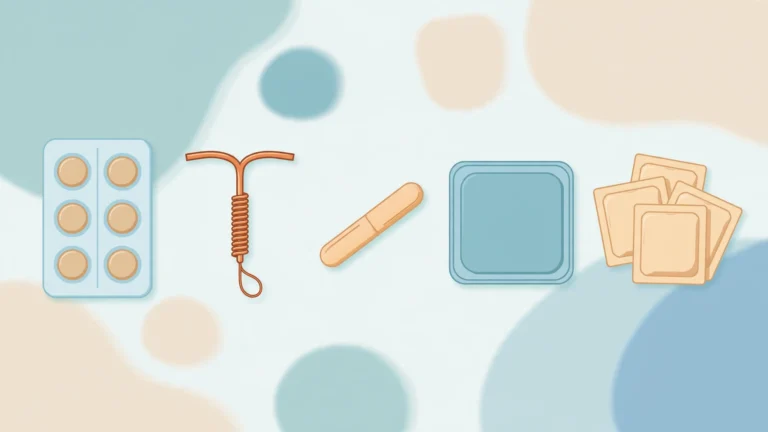
Couples’ vibrators and personal lubricants are mainstream wellness products. A small vibrator used during intercourse adds the consistent clitoral stimulation most women need, and quality lubricant increases comfort — which directly supports arousal and orgasm. Shopping for these together can itself be a fun, gap-closing conversation.
That is the female orgasm gap explained in action: better tools, better communication, better sex.

When the Gap Might Be Medical
Sometimes the female orgasm gap explained by behavior is only part of the story. Persistent difficulty reaching orgasm — including alone — has a clinical name, anorgasmia (female orgasmic disorder), and can have medical roots. The International Society for Sexual Medicine lists common contributors:
- Medications — especially SSRIs and some other antidepressants, blood pressure drugs, and antihistamines can blunt orgasmic response.
- Hormonal changes — lower estrogen after menopause or childbirth can reduce sensitivity and slow arousal; the Mayo Clinic notes this may mean needing more time and stimulation to climax.
- Health conditions — diabetes, multiple sclerosis, chronic pelvic pain, and pelvic floor dysfunction can all interfere with orgasm.
- Psychological factors — untreated anxiety or depression, past trauma, and high stress are strongly linked to orgasm difficulty.
When to see a doctor: if orgasm has always been difficult, if a previously reliable response disappears, or if the issue causes distress or relationship strain. A doctor can review medications, check hormones, and refer to pelvic floor therapy or a sex therapist. Never change a prescribed medication on your own.
Orgasm Gap Myths vs. Facts
A quick-reference version of the female orgasm gap explained above:
| Myth | What research actually shows |
|---|---|
| Women are biologically less able to orgasm | Women orgasm as reliably as men during masturbation (92%+) and take about the same time — the gap is behavioral and cultural |
| “Real” sex means penetration | Only ~4% of women reliably orgasm from penetration alone; clitoral stimulation is the essential ingredient for most |
| If she loved you, she would orgasm every time | Orgasm frequency varies with stress, fatigue, medication, and technique — not with love or attraction |
| Faking it spares his feelings | Faking trains the couple to repeat what does not work and keeps her real needs hidden |
| Good lovers just “know” what to do | Every woman’s preferences differ; even experienced partners need guidance and feedback |
FAQs
These answers build on the female orgasm gap explained throughout this guide:
What is the female orgasm gap?
The female orgasm gap explained simply is the consistent difference in how often men and women orgasm during heterosexual partnered sex: about 95% of heterosexual men but only about 65% of heterosexual women say they usually or always orgasm. Researchers blame insufficient clitoral stimulation, cultural sexual scripts, and communication gaps — not women’s biology.
Why do women orgasm less often than men with partners, but not alone?
Over 92% of women orgasm during masturbation, which proves the capacity is there. With a partner, orgasm depends on the right kind and duration of stimulation — usually direct clitoral touch — plus feeling relaxed and able to communicate. When sex centers on penetration and skips that stimulation, or when pressure and self-consciousness intrude, orgasm becomes much less likely.
Can women orgasm from penetration alone?
A small minority can — researcher Laurie Mintz found only about 4% of women name penetration as their most reliable route to orgasm. For the rest, intercourse orgasm typically involves indirect stimulation of the internal clitoral structures. Needing direct clitoral touch is normal; it reflects how the anatomy works for most women.
How can couples close the orgasm gap?
The most effective steps are making clitoral stimulation central rather than optional, trying research-named techniques like angling, rocking, and pairing, practicing sensate focus exercises, communicating openly with specific guidance, never faking orgasms, and not ending the encounter at the male partner’s orgasm. Patience matters too — most women need more build-up time than men.
Why do women fake orgasms?
Studies show women fake orgasms mainly to protect a partner’s ego, avoid awkwardness, or bring an unsatisfying encounter to a close. Cultural pressure — the idea that a “successful” sexual encounter must include her orgasm, delivered by him — makes faking feel easier than honesty. The cost is high: faking keeps ineffective routines in place and the real gap invisible.
When should a woman see a doctor about orgasm difficulty?
See a healthcare professional if orgasm has always been difficult, if a previously reliable response disappears, or if it causes distress. A doctor can review medications, check hormones, assess pelvic floor function, and refer to a sex therapist — the ISSM advises starting with a primary care provider or gynecologist.
Closing the female orgasm gap explained in this guide is not about performance or pressure — it is about curiosity, communication, and treating both partners’ pleasure as equally important. Start with one change from the list above, and give yourselves time to learn what works. For more guidance, explore our intimacy exercises guide — and if something feels medically off, talk to your doctor. That is the female orgasm gap explained — and closed.
Medical disclaimer: This article is for educational purposes only and is not medical advice. Sexual health concerns vary from person to person. If you experience persistent difficulties with orgasm, pain, or other sexual health issues, please consult a qualified healthcare professional for personalized guidance.