Fibroids and Fertility: What to Know
Learning you have uterine fibroids when you are thinking about having a baby can feel frightening. The words fibroids and fertility seem to appear together everywhere online, and much of what you read sounds alarming. Here is the reassuring truth that research consistently confirms: most women with fibroids conceive naturally and go on to have healthy pregnancies. Fibroids affect up to 70 to 80 percent of women by age 50, and only a small fraction of those cases have any meaningful impact on the ability to get pregnant.
Whether fibroids matter for your fertility depends far more on where they are growing than on the simple fact that you have them. A small fibroid in one location can be a real obstacle, while a much larger fibroid elsewhere may never cause a problem. This guide covers how fibroid types influence conception and pregnancy, when treatment is genuinely recommended, and which options protect future fertility.
What Fibroids Are and Why They Are So Common
Uterine fibroids, also called leiomyomas or myomas, are benign (noncancerous) growths of smooth muscle and connective tissue that develop in or around the uterus. They are the most common benign tumors in women of reproductive age. Many women never know they have them because fibroids frequently cause no symptoms at all. They are often discovered during a routine pelvic exam, an ultrasound done for another reason, or a fertility workup.
Fibroids can range in size from as small as a seed to as large as a grapefruit, and a woman can have just one or many at once. Their growth is influenced by estrogen and progesterone, which is why they tend to grow during the reproductive years and shrink after menopause. Fibroids are also more common and tend to appear earlier and grow larger in women of African descent.
Fibroids and Fertility: Why Location Matters Most
For a pregnancy to begin, sperm must reach the egg, fertilization must occur, and the fertilized egg must implant in the uterine lining. Fibroids can interfere with one or more of these steps, but only when their size, number, or position disrupts the normal anatomy. Researchers estimate that fibroids are found in roughly 5 to 10 percent of people experiencing infertility, and fibroids are the only identifiable cause of infertility in about 1 to 2 percent of cases. In other words, when conception is difficult, fibroids are rarely the whole story.
Fibroids may affect fertility through several mechanisms:
- Distorting the uterine cavity. A fibroid that pushes into the cavity changes the shape of the space where an embryo would implant, making implantation less likely to succeed.
- Blocking the fallopian tubes. A fibroid near the opening of a tube can slow or prevent sperm from traveling toward the egg, or prevent a fertilized egg from reaching the uterus.
- Altering blood flow. Large fibroids may redirect blood away from the uterine lining, making it harder for a pregnancy to establish.
- Changing the uterine environment. There is evidence that fibroids can alter hormone levels and inflammatory signals within the uterus, making the lining less receptive to implantation.
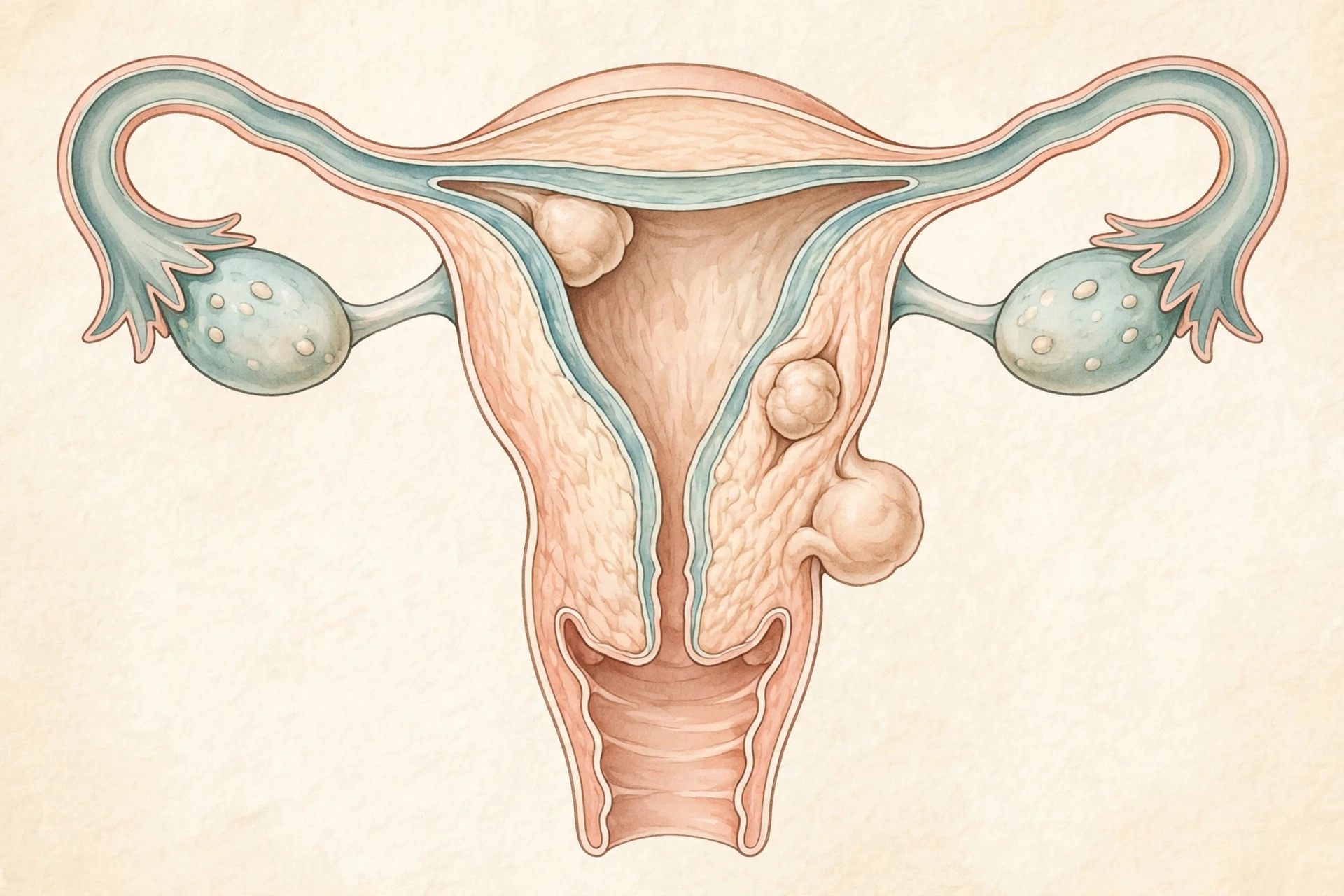
The type of fibroid you have is the strongest predictor of whether fertility will be affected:
- Submucosal fibroids grow just beneath the uterine lining and protrude into the cavity. They are the least common type but the most likely to interfere with fertility. Even small submucosal fibroids can lower implantation rates and raise miscarriage risk.
- Intramural fibroids grow within the muscular wall of the uterus. They are the most common type. Smaller ones that do not distort the cavity usually have little or no effect on fertility, while larger ones that push into the cavity can reduce implantation and pregnancy rates.
- Subserosal fibroids grow on the outer surface of the uterus, away from the cavity. There is no convincing evidence that they significantly affect fertility, so treatment for fertility reasons is rarely recommended for them.
Getting the Right Diagnosis Before You Try
If you have been diagnosed with fibroids and are planning a pregnancy, a focused preconception evaluation can save months of worry and guesswork. Ask your clinician these specific questions:
- Which type of fibroid do I have, and how close is it to the uterine cavity?
- Does my fibroid distort the shape of the cavity on imaging?
- Are my fallopian tubes open and unaffected?
- Given the size and location, do you recommend trying first and treating only if needed, or treating before we start?
A standard pelvic ultrasound is often the first step, but two more detailed tests are particularly useful for the fibroids-and-fertility question. A saline infusion sonogram fills the cavity with sterile fluid so the outline of the cavity and any distortion from submucosal fibroids becomes clearly visible. A pelvic MRI maps the exact number, size, and position of fibroids and is the best tool for surgical planning. If fibroids are distorting the cavity or sitting near the tubes, these tests help your team decide whether treatment should come before conception.
It is also worth completing the standard early infertility evaluation for both partners rather than assuming fibroids are the culprit. Ovulation, tubal health, semen quality, and age-related factors all shape your timeline, and overlooking them can delay the right care. Our guide on infertility causes and when couples should see a specialist explains which tests come first and when professional evaluation is warranted.
Fibroids During Pregnancy: What to Expect
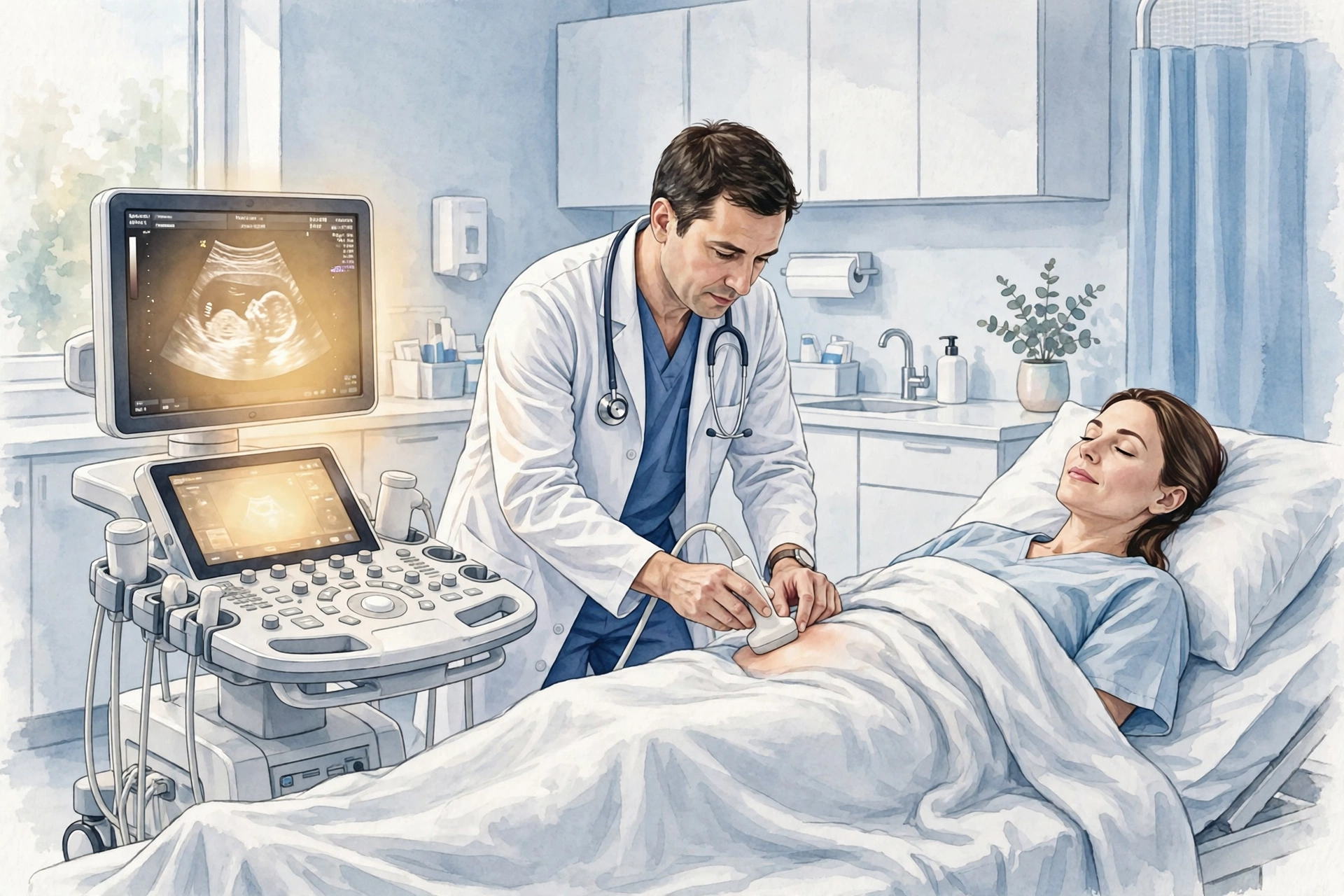
Most pregnancies in women with fibroids proceed without complications. Fibroids are frequently discovered incidentally during a routine prenatal scan and need no action beyond monitoring. That said, depending on size and location, fibroids can raise the risk of certain complications:
- Miscarriage. Fibroids that significantly distort the uterine cavity are associated with a higher risk of first-trimester loss.
- Preterm labor and birth. Large fibroids, especially multiple ones, are linked to a modestly higher chance of delivering early.
- Abnormal fetal position. A large fibroid can reduce the room available for the baby, increasing the chance of a breech or transverse position.
- Cesarean delivery. Women with fibroids are more likely to need a C-section, particularly if a fibroid blocks the birth canal or keeps the baby in an unfavorable position.
- Placental problems and postpartum bleeding. Fibroids near where the placenta attaches are associated with a higher risk of placental abruption and heavier bleeding after delivery.
Red degeneration: a painful but usually manageable event
Something most general guides skip is red degeneration, a painful episode that affects a minority of pregnant women with fibroids. When a fibroid grows quickly in the first half of pregnancy, it can outgrow its own blood supply. The resulting tissue breakdown causes sharp, localized abdominal pain, sometimes with a low-grade fever and nausea. It is frightening, but it is usually managed with rest and pain relief that is safe in pregnancy, and it rarely harms the baby. Seek prompt care for severe pain, fever, contractions, or bleeding, because those same symptoms can signal other emergencies.
About 20 to 30 percent of fibroids grow during the first trimester due to rising hormone levels, then typically return to their original size after delivery. Routine prenatal visits are usually sufficient for monitoring unless fibroids are large or causing symptoms, in which case your obstetrician may schedule additional growth scans.
Should You Treat Fibroids Before Trying to Conceive?
There is no universal answer, which is actually good news: many women never need treatment at all. If fibroids are small, symptom-free, and do not distort the cavity, most clinicians recommend simply monitoring them while you try to conceive. Treatment is more strongly advised when:
- A submucosal fibroid is distorting the uterine cavity.
- A large intramural fibroid is pushing into the cavity.
- A fibroid appears to be blocking a fallopian tube.
- You have a history of recurrent miscarriage linked to cavity distortion.
Here is a nuance most articles leave out: surgery does not always improve fertility. A recent meta-analysis found that while removing submucosal fibroids improves pregnancy and live birth rates, removing intramural fibroids that do not distort the cavity does not appear to offer a fertility benefit even though such fibroids are statistically associated with lower pregnancy rates. The takeaway is important: do not assume every fibroid needs removal before trying. Treatment decisions should weigh cavity distortion, symptoms, age, and any other fertility factors, not just the presence of fibroids.
Myomectomy: the fertility-preserving surgery
A myomectomy removes fibroids while leaving the uterus intact, and it remains the standard surgical option for women who want to become pregnant. The approach depends on fibroid type:
- Hysteroscopic myomectomy removes submucosal fibroids through the vagina with a camera and specialized instruments, with no incisions. Most women can try to conceive about two to three months later.
- Laparoscopic or robotic myomectomy removes fibroids through small abdominal incisions and is suited to intramural and subserosal fibroids. Recovery is faster than with open surgery.
- Open (abdominal) myomectomy uses an incision similar to a C-section scar and is reserved for very large, multiple, or awkwardly placed fibroids. Clinicians typically advise waiting six to twelve months before trying to conceive so the uterus can heal.
One point to discuss with your surgeon: a myomectomy that cuts deeply into the uterine wall can slightly weaken that area, and many obstetricians recommend a planned cesarean delivery for subsequent pregnancies after a deep myomectomy to minimize the small risk of uterine rupture during labor. Ask how the fibroid’s removal affects your delivery plan before you decide.
Fertility-friendly alternatives and procedures to avoid
Two newer options may preserve fertility but have less long-term pregnancy data than myomectomy:
- Radiofrequency ablation destroys fibroid tissue with heat delivered through a probe. It leaves no uterine scar in most cases, and short- and long-term outcomes look promising, though pregnancy data are still accumulating. A waiting period of three to six months before conceiving is generally advised.
- MRI-guided focused ultrasound uses sound waves to break down fibroids without incisions. It is an option for carefully selected patients, but fertility outcome data remain limited.
Conversely, two procedures are generally not recommended when future pregnancy is the goal. Uterine artery embolization, which shrinks fibroids by blocking their blood supply, has been associated with a higher risk of miscarriage and pregnancy complications, and endometrial ablation, which destroys the uterine lining to control bleeding, makes pregnancy dangerous and is considered a procedure for women who are done having children. The Mayo Clinic’s Q and A on fibroid treatments reviews these options and emphasizes choosing treatment based on symptoms, fibroid characteristics, and fertility goals.
Fibroids and IVF: Sequencing Treatment With Fertility Care
Women pursuing in vitro fertilization need a slightly different decision framework. Because IVF cycles are expensive, time-limited, and emotionally demanding, clinicians usually want the uterus in the best possible condition before an embryo transfer. The general principles are:
- Submucosal fibroids and fibroids that distort the cavity should generally be removed before starting IVF, since they lower implantation and pregnancy rates in assisted reproduction as well.
- Intramural fibroids without cavity distortion are a judgment call. They are associated with somewhat lower live birth rates in IVF, but surgical removal has not been shown to reliably fix that, so many clinics proceed with IVF first and reserve surgery for failed cycles.
- Subserosal fibroids do not affect IVF outcomes, and removal offers no fertility benefit.
Ideally, a gynecologic surgeon and a fertility specialist plan together so age, ovarian reserve, and other infertility factors are accounted for. One practical option: egg retrieval can happen before fibroid surgery, with embryos frozen and transferred after the uterus heals. Cleveland Clinic’s overview of fibroids and pregnancy explains how each fibroid type affects conception and pregnancy.
Living With Fibroids While Trying to Conceive
Beyond medical decisions, fibroids can quietly affect quality of life in ways that matter when you are trying for a baby. Heavy periods can leave you iron-deficient and fatigued, which makes everything feel harder. Large fibroids can cause pelvic pressure and pain during sex; if intimacy has become uncomfortable, our guide on fibroids and painful sex covers practical ways to stay comfortable and connected with your partner.
Conditions that share symptoms with fibroids, such as endometriosis, can also complicate fertility, and the two often coexist. If you have significant period pain alongside fibroids, read our guide on endometriosis and fertility to understand how the conditions are evaluated together.
The emotional weight deserves honest acknowledgment too. Months of trying, a diagnosis you did not expect, the pressure of deciding about surgery, and the fear that your body is working against you can strain even strong relationships. That stress is normal, not a character flaw, and it does not cause infertility. Consider counseling or a support group focused on fertility challenges; many people find that having a space to voice these worries makes the medical path feel far more manageable. If you do conceive, our article on safe sex positions during pregnancy offers practical guidance for staying intimate comfortably throughout pregnancy.
Frequently Asked Questions
Can I get pregnant if I have fibroids?
Yes, in most cases. The majority of women with fibroids conceive without fertility treatment. Fibroids are the sole cause of infertility in only about 1 to 2 percent of infertile women. Whether your fibroids matter depends mostly on their size and location, particularly whether they distort the uterine cavity.
Which type of fibroid is worst for fertility?
Submucosal fibroids, which grow just under the uterine lining and protrude into the cavity, are the most likely to reduce fertility because they interfere directly with embryo implantation. Large intramural fibroids that distort the cavity can also cause problems. Subserosal fibroids on the outer surface of the uterus generally do not affect fertility.
Do fibroids need to be removed before pregnancy?
Not always. Small, symptom-free fibroids that do not distort the cavity can usually be monitored while you try to conceive. Removal before pregnancy is typically recommended for submucosal fibroids, fibroids distorting the cavity, fibroids blocking a fallopian tube, or fibroids linked to recurrent miscarriage. Interestingly, removing intramural fibroids that do not distort the cavity has not been shown to improve fertility.
How long after fibroid surgery should I wait before trying to conceive?
It depends on the procedure. After a hysteroscopic myomectomy, most clinicians advise waiting two to three months. After a laparoscopic, robotic, or open myomectomy, the recommended wait is typically three to twelve months so the uterine wall can heal fully. Follow your surgeon’s specific guidance, since the depth of the incision matters.
Can fibroids cause miscarriage?
Fibroids that significantly distort the uterine cavity are associated with a higher risk of first-trimester miscarriage. Fibroids that do not distort the cavity carry much less risk. If you have experienced recurrent losses and have cavity-distorting fibroids, a specialist can help determine whether treatment is appropriate.
Is it safe to carry a pregnancy with fibroids?
Most women with fibroids have healthy pregnancies and healthy babies. Risks are elevated for miscarriage, preterm birth, abnormal fetal position, cesarean delivery, and postpartum bleeding, mainly with large or cavity-distorting fibroids. Your obstetrician will monitor growth and may schedule extra scans, but routine prenatal care is sufficient for most cases.
Will my fibroids go away after pregnancy?
Fibroids rarely disappear entirely, though they often shrink after menopause when estrogen levels fall. About 20 to 30 percent of fibroids grow during the first trimester of pregnancy and then return to their original size after delivery. Most do not change size during pregnancy at all.
This article is for educational purposes only and is not medical advice. Fibroids and fertility decisions are highly individual, so discuss your specific situation with a qualified healthcare professional before starting treatment or planning a pregnancy.