Trying to Conceive: How Often to Have Sex and When
The trying to conceive tips you find online range from evidence-based to pure folklore, and sorting one from the other matters: conception is a narrow biological window, not a mystery that rewards superstition. The good news is that doctors and researchers understand this window well. An egg survives roughly 24 hours after ovulation, sperm can live up to 5 days in the reproductive tract, and couples who time intercourse around ovulation conceive faster than those who leave it to chance.
This guide collects the trying to conceive tips clinicians actually recommend — how often to have sex, how to identify your fertile days, what to do in the months before you start trying, and when to bring a specialist into the conversation. Every recommendation below is grounded in guidance from organizations like ACOG, the CDC, and the Mayo Clinic.
Understanding Your Fertile Window
Each menstrual cycle, hormonal shifts cause an immature egg in the ovary to mature and release — a process called ovulation. The American College of Obstetricians and Gynecologists (ACOG) defines the fertile window as roughly the five days before ovulation through one day after it. Pregnancy chances are highest in the two to three days immediately before ovulation, because sperm need to already be waiting in the fallopian tubes when the egg arrives.
For regular 28-day cycles, ovulation typically occurs around day 14, counted from the first day of the last period — so the fertile window often lands around days 10–15. Cycles vary widely, though: stress, illness, and travel can shift ovulation month to month. Among the most practical trying to conceive tips for irregular cycles: track for two or three months before trying, so you learn your own pattern instead of assuming day 14. That simple habit is one of the most repeated trying to conceive tips in clinical guidance.
How Often to Have Sex: Trying to Conceive Tips That Follow the Evidence
The clinical answer is clear: doctors recommend intercourse every one to two days during the fertile window, or roughly every two to three days throughout the month if you prefer not to track. This keeps a steady supply of fresh sperm in the reproductive tract without military-grade scheduling. Following these trying to conceive tips consistently matters more than hitting any single day perfectly.
Here is a practical day-by-day schedule for the fertile window, assuming ovulation around day 14 of a 28-day cycle. Shift the days if your cycle is longer or shorter:
| Cycle Day | Phase | Recommended Frequency |
|---|---|---|
| Days 1–8 | Menstruation to early follicular phase | As desired; conception unlikely |
| Day 9 | Early fertile window opens | Intercourse |
| Day 10 | Fertile window | Rest day |
| Day 11 | Fertile window | Intercourse |
| Day 12 | High-fertility days begin | Intercourse |
| Day 13 | Peak fertility (likely day before ovulation) | Intercourse |
| Day 14 | Ovulation day (typical) | Intercourse |
| Day 15 | Day after ovulation | Intercourse (final chance this cycle) |
| Days 16+ | Luteal phase | As desired; the window has closed |
Notice the pattern: intercourse most days from day 11 through day 15, with a rest day earlier in the window. Every other night around ovulation is the minimum many specialists recommend; daily intercourse during the peak days is also evidence-backed.
Does having sex every day lower sperm count?
The evidence is reassuring: for men with normal sperm parameters, daily ejaculation does not reduce the chance of conception, and some studies find sperm quality actually improves with frequent release. If a semen analysis has shown low counts or poor motility, your doctor may specifically recommend every-other-day timing — but that is a personalized instruction, not a general rule. Unless a clinician says otherwise, there is no need to “save up” sperm by abstaining.
Keep it enjoyable, not mechanical
Another underappreciated entry on the trying to conceive tips list is protecting your relationship from the process itself. Turning every act of intimacy into a scheduled task creates pressure that research links to reduced frequency — the opposite of what you want. Couples who stay affectionate and spontaneous outside the fertile window sustain the every-other-day rhythm more consistently. If tracking starts to feel stressful, simplify: regular intercourse two to three times a week across the whole cycle still gives you excellent odds.

Four Ways to Pinpoint Ovulation
Timing is everything, so identifying ovulation accurately is worth some effort. Here are the four methods doctors recommend, in order of precision: learning at least one of these methods is one of the highest-impact trying to conceive tips, because timing drives everything else.
1. Ovulation predictor kits (OPKs)
These over-the-counter urine tests detect the luteinizing hormone (LH) surge that occurs 24–36 hours before ovulation. Start testing a few days before expected ovulation, once or twice daily, and plan intercourse on the positive-result day and the day after. They are the most practical home method for most couples.
2. Cervical mucus changes
As estrogen rises before ovulation, cervical mucus becomes clear, thin, and stretchy — like raw egg whites. That change signals your most fertile days have begun; after ovulation, mucus turns thick and cloudy. This method costs nothing and pairs well with OPKs.
3. Basal body temperature (BBT)
Taken with a sensitive thermometer each morning before getting out of bed, BBT rises by roughly half a degree after ovulation. The catch: it confirms ovulation after it happened, so it tells you the window closed, not when to have sex. Use it to learn your pattern over a few cycles, not to time intercourse in real time.
4. Cycle-tracking apps
Apps that combine calendar data with mucus and temperature inputs estimate the fertile window reasonably well after a few months of logging. Treat predictions as estimates and confirm with an OPK during your first trying cycles.
The 90-Day Preconception Timeline
One of the most useful trying to conceive tips — and one most guides gloss over — is to start preparing three months before you plan to conceive. Eggs and sperm take roughly 90 days to fully mature, so the health choices you make now shape the cells that will form your pregnancy. Building these trying to conceive tips into your routine now gives egg and sperm quality time to improve.
Coming off birth control
Return to fertility varies by method. Combined pills, the patch, the ring, the implant, and hormonal IUDs generally allow ovulation to resume within one to three months of stopping; copper IUDs restore fertility immediately after removal. The injectable contraceptive is the outlier — ovulation can take up to 10–12 months to return after the last shot. If family planning is on the horizon, our comparison of birth control options breaks down how each method works.
Vaccinations, screenings, and medications
At a preconception visit, your doctor will review immunizations — particularly rubella and varicella (chickenpox), which cannot be given during pregnancy — and may offer genetic carrier screening. STI screening is also commonly advised before trying, since some infections affect fertility or pregnancy outcomes; see our guide to STI testing.
Bring a complete medication and supplement list to that visit: some drugs, including certain blood pressure medicines and acne treatments, need switching before pregnancy. Never stop a needed medication on your own — your doctor will build a plan safe for both of you.
Fertility Nutrition Beyond Folic Acid
Most articles stop at “take folic acid,” but the evidence supports a broader nutritional picture. Among the best-documented trying to conceive tips for nutrition:
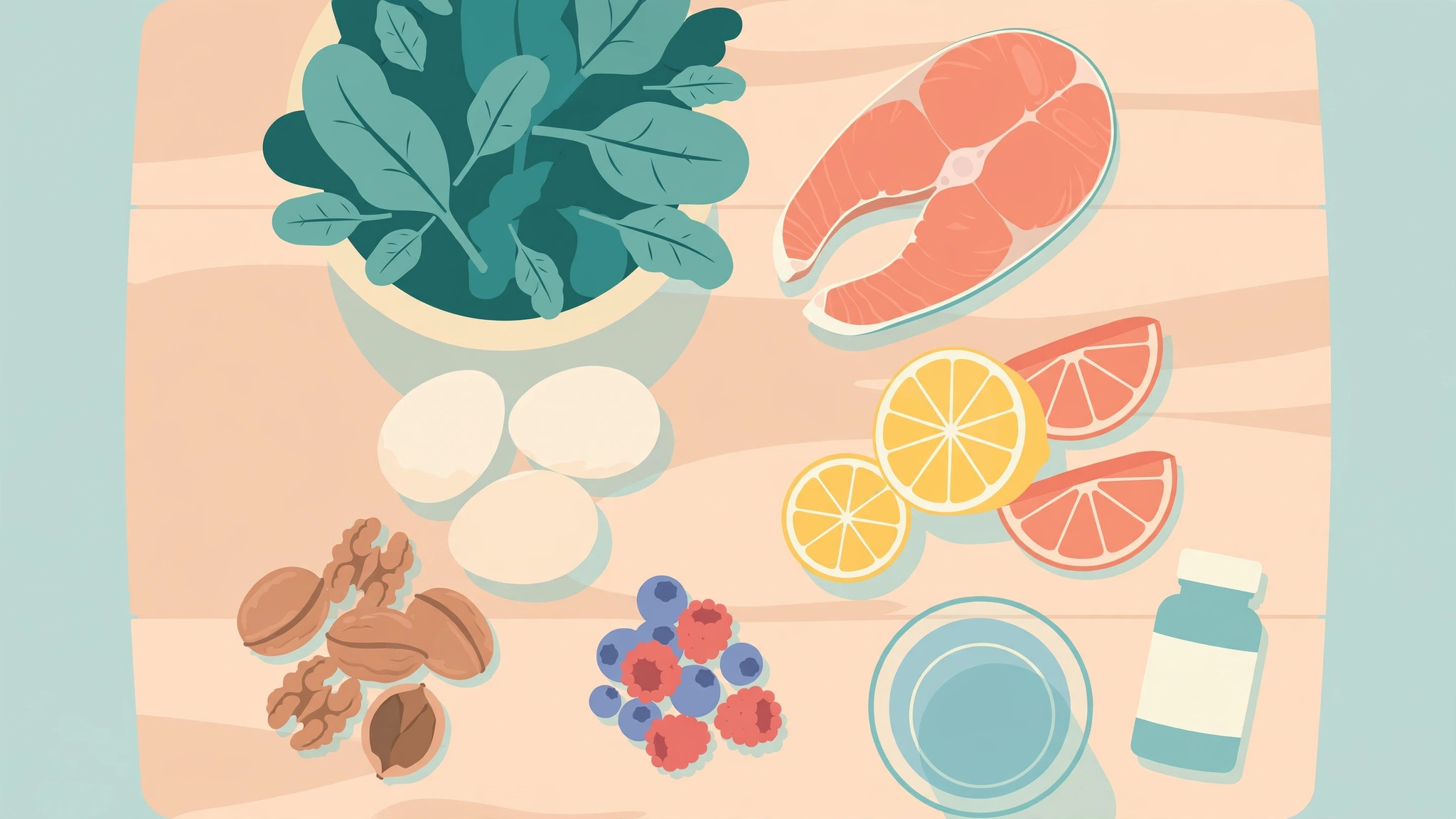
- Folate (400–800 mcg daily): Start at least one month before trying — ideally three. The CDC recommends a daily prenatal vitamin with at least 400 mcg of folic acid to reduce the risk of neural tube defects.
- Vitamin D: Deficiency is common and has been associated with reduced fertility in both sexes. Ask your doctor about checking your level at the preconception visit.
- Iron: Adequate iron stores support healthy ovulation; lentils, spinach, and beans are good plant-based sources.
- Zinc and selenium: Both partners need zinc for healthy reproductive function — try oysters, beef, pumpkin seeds, and chickpeas. Selenium supports sperm motility.
- Omega-3 fatty acids: Salmon, sardines, walnuts, and flaxseed support hormone production and are associated with better sperm quality.
The overall dietary pattern matters more than any single nutrient. Mediterranean-style eating — vegetables, fruits, whole grains, legumes, fish, olive oil — is associated in multiple studies with higher fertility rates and better outcomes. What to limit: excess alcohol, sugary drinks, trans fats, and very high mercury fish like swordfish and king mackerel. Small, steady upgrades like these are the trying to conceive tips nutritionists emphasize most.
Lifestyle Factors That Move the Needle
Beyond food, several habits belong on every trying to conceive tips list:
- Weight: Being significantly underweight or overweight disrupts hormone production and ovulation. Even a 5–10% shift toward a healthy range can restore regular cycles in some people.
- Smoking: Smoking reduces a woman’s ovarian reserve and a man’s sperm count and motility — and it makes fertility treatments less successful. Both partners quitting is one of the highest-impact changes available.
- Alcohol: Doctors advise minimizing or avoiding alcohol when trying to conceive. There is no established safe amount during pregnancy, so cutting back now builds the habit early.
- Caffeine: ACOG advises staying under 200 mg per day — roughly one to two cups of coffee. Heavy caffeine intake has been linked to longer times to conception.
- Exercise: Moderate exercise supports fertility; very intense training that disrupts periods can impair it. For men, regular moderate exercise supports healthy testosterone and sperm production.
- Heat exposure for men: The testicles function a few degrees below body temperature, so frequent hot tubs and saunas may reduce sperm production. New sperm take two to three months to mature, so changes now pay off later.
- Environmental chemicals: Frequent exposure to pesticides, solvents, and endocrine-disrupting chemicals has been linked to reduced fertility. Use protective equipment at work and ventilate well around strong household chemicals.
Of all the lifestyle trying to conceive tips above, quitting smoking and moving toward a healthy weight deliver the biggest measurable gains.
Myths Worth Ignoring
Clearing the folklore out of your trying to conceive tips list frees up energy for what works:
- Sexual positions do not affect conception odds. No position has been shown to improve the chance of pregnancy.
- You do not need to lie with your legs in the air. Sperm reach the cervix within minutes, and elevating your legs does not change pelvic anatomy. Resting briefly afterward is fine, but it has not been shown to raise conception rates.
- Orgasm is not required for conception. No study supports the claim that female orgasm affects the chance of pregnancy.
- Not all lubricants are fertility-friendly. Astroglide, K-Y jelly, saliva, and olive oil can reduce sperm motility. If you need a lubricant, fertility-friendly options like Pre-Seed, mineral oil, or canola oil are the evidence-backed choices.
- “Just relax and it will happen” is unhelpful advice. While chronic stress can interfere with ovulation, ordinary worry does not cause infertility — and telling a couple to relax adds pressure rather than removing it.
Clearing these myths from your trying to conceive tips list also lowers anxiety — you can stop worrying about positions and rituals that never mattered.
When to See a Fertility Specialist
Knowing when to seek help is one of the most important trying to conceive tips of all. General guidance from ACOG and the Mayo Clinic:
- Under 35: See a doctor after 12 months of well-timed trying without pregnancy.
- 35 and over: Seek evaluation after 6 months — fertility declines more steeply after this age.
- Over 40: Consider a preconception evaluation before you even start trying.
- Any age: See a doctor sooner if you have irregular or absent periods, known endometriosis or PCOS, a history of pelvic inflammatory disease, multiple miscarriages, or a known male-factor concern.
A first fertility workup is usually straightforward: cycle history, hormone blood tests, an ultrasound to confirm ovulation, and a semen analysis for the male partner. Remember that infertility is a couple’s issue, not a woman’s issue — roughly one-third of cases involve female factors, one-third involve male factors, and one-third involve both or remain unexplained. Evaluating both partners from the start saves months of delay.
For a deeper clinical overview, the Mayo Clinic Health System’s strategies to improve fertility and Healthline’s guide to increasing your chances of getting pregnant are excellent companion reads.
FAQs
How often should we have sex when trying to conceive?
Aim for intercourse every one to two days during the fertile window — roughly the five days before ovulation through ovulation day itself. If you are not tracking, sex every two to three days throughout the cycle keeps you covered. Daily intercourse during peak fertility days does not harm sperm count in men with normal parameters. This every-one-to-two-day rhythm is among the simplest trying to conceive tips to maintain.
When is the best time to take a pregnancy test?
Wait until the first day of your missed period for the most reliable result — about 14 days after ovulation. Testing earlier, during the “two-week wait,” often produces false negatives because hCG is still too low to detect. If the test is negative but your period has not arrived, retest in a few days.
Do I need to lie down after sex to get pregnant?
No special position or waiting ritual is required. Sperm reach the cervix within minutes of intercourse, and elevating the legs does not change pelvic anatomy. Lying still for 10–15 minutes afterward is a reasonable, low-effort habit if it gives you peace of mind, but it has not been shown to increase conception rates.
Can lubricants affect our chances of conceiving?
Yes — some can. Commercial lubricants such as Astroglide and K-Y jelly, along with saliva and olive oil, have been shown to reduce sperm motility and viability. If you need lubrication while trying to conceive, choose a fertility-friendly option such as Pre-Seed, mineral oil, or canola oil, which do not interfere with sperm.
How long does it usually take to get pregnant?
Most couples conceive within six months of well-timed trying, and about 85–90% within a year. Taking several months is normal and does not indicate a problem. See a doctor after 12 months of trying if you are under 35, or after 6 months if you are 35 or older — sooner if either partner has a known reproductive health condition.
Should we see a doctor before we start trying?
A preconception visit is recommended. Your doctor can review medications, update vaccinations like rubella and varicella, screen for genetic carrier status, check vitamin D and thyroid levels, and discuss chronic conditions such as diabetes or hypertension. It is a single appointment that can prevent months of preventable delay.
Your next step: track your cycle for a month or two, start a prenatal vitamin with folic acid, and book that preconception appointment. If you are coming off contraception, revisit our birth control comparison guide to understand what to expect. And if trying starts to weigh on either of you emotionally, talk to your doctor early — support is part of the process, not a sign of failure. Keep these trying to conceive tips somewhere visible — a note on the fridge or a bookmark — so the plan survives busy weeks.
Medical disclaimer: This article is for educational purposes only and is not medical advice. Fertility is individual, and nothing here replaces personalized guidance from a qualified healthcare professional. If you have concerns about conceiving, please consult your doctor or a fertility specialist.