Does Creatine Cause Erectile Dysfunction?
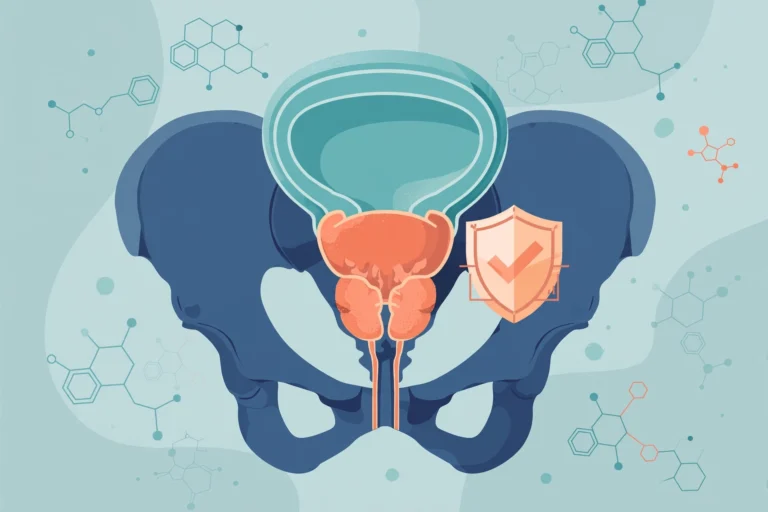
If you lift weights and your erections have changed recently, it is natural to wonder: does creatine cause erectile dysfunction? Creatine monohydrate is one of the most popular sports supplements in the world, and forums and comment sections are full of men asking whether it can harm their sexual health. The short answer is reassuring: no clinical study has shown that creatine causes erectile dysfunction (ED), and the rumor survives mostly because of a misunderstood hormone study, confusion with anabolic steroids, and guilt by association with kidney fears.
This article walks through exactly what the evidence says, why the myth persists, and — just as important — what is far more likely to be behind erection problems in active men. So does creatine cause erectile dysfunction? Let’s look at the evidence.
Short Answer: Does Creatine Cause Erectile Dysfunction?
No. There is no scientific evidence that creatine supplementation causes erectile dysfunction in healthy men. Across hundreds of clinical trials involving tens of thousands of participants, erectile dysfunction has never emerged as a reported effect of creatine. The International Society of Sports Nutrition (ISSN), after reviewing the full body of research, concluded that creatine is well tolerated at doses up to 30 g per day for five years in healthy adults. Just as importantly, researchers have not identified any plausible biological mechanism by which creatine could interfere with the vascular or hormonal systems that produce erections.
That said, “no evidence of harm” is not a blanket guarantee for every tub labeled “creatine” — as you will see below, when problems do appear, the real risk usually sits elsewhere.
What Creatine Actually Does in Your Body
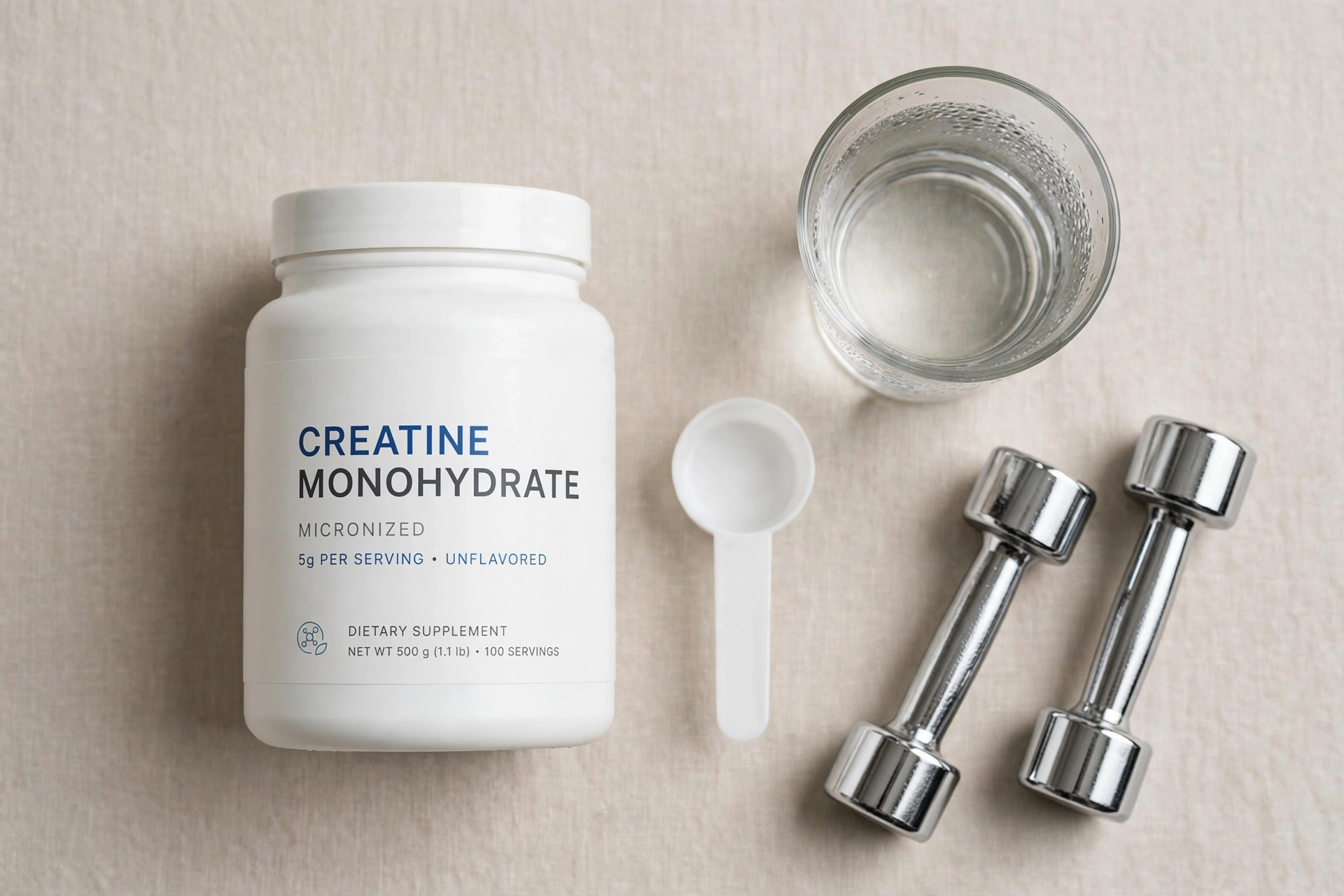
To understand why creatine is unlikely to cause ED, it helps to know what it does. Creatine is a naturally occurring compound your body makes every day in the liver, kidneys, and pancreas from amino acids, and you also get it from foods such as red meat and fish. Roughly 95% of your body’s creatine is stored in skeletal muscle, where it is converted into phosphocreatine — a rapid-access energy reserve that helps regenerate adenosine triphosphate (ATP), the fuel your muscle fibers use during short, explosive bursts of effort.
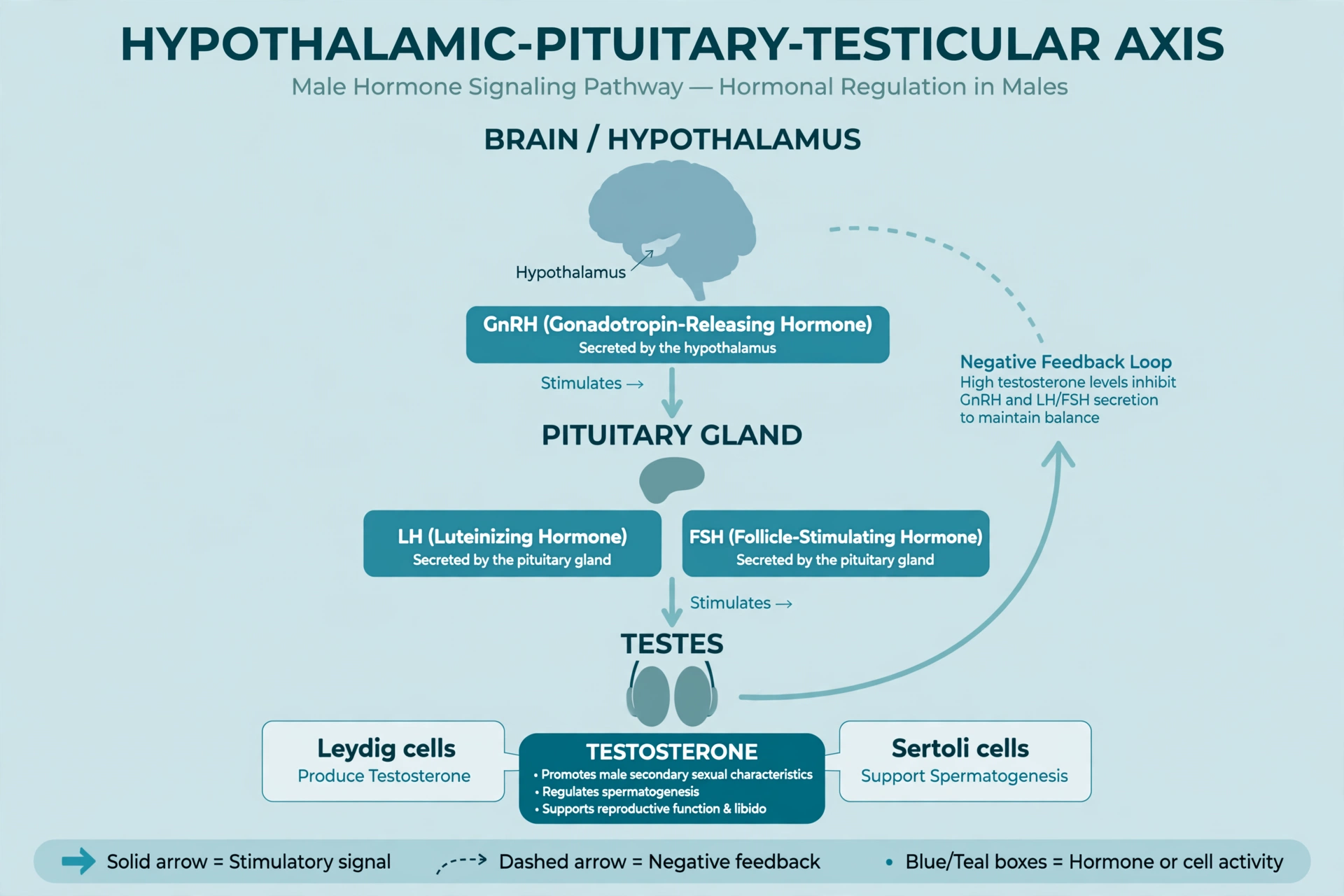
Supplementing with creatine monohydrate simply tops up those muscle stores. It does not act like a hormone, it does not bind to hormone receptors, and it does not feed back on the brain’s hormone-control centers. That last point matters, because the pathways that produce erections depend on healthy blood vessels, nerves, and a functioning hormone axis — and creatine interacts with none of them directly. That is a key reason the answer to “does creatine cause erectile dysfunction?” is no: there is no hormonal pathway for it to disrupt.
The DHT Study Everyone Quotes — and What It Really Showed
The single biggest source of the creatine-and-ED rumor is a study published in 2009 by van der Merwe and colleagues. They gave creatine to 20 college-aged rugby players and measured hormone levels over 21 days. After a seven-day loading phase, dihydrotestosterone (DHT) — a potent form of testosterone — rose by 56%. That headline number gets repeated constantly on forums and supplement blogs. The context almost never is.
- The participants’ DHT levels rose but stayed within the normal reference range for healthy men.
- The study lasted only three weeks and included just 20 participants.
- No research group has replicated the finding in more than 15 years of attempts.
- A 2021 review by Antonio and colleagues examined 12 studies on creatine and testosterone and found no meaningful change in testosterone levels in 10 of them.
Anyone typing “does creatine cause erectile dysfunction” into a search box is really asking about hormones. The hormone evidence, examined closely, points the other way.
DHT also deserves a separate note: it is a normal part of male physiology and plays a role in healthy sexual development and function. The modest DHT increase in the 2009 study is more often discussed in connection with male-pattern hair loss than with erections — and even that link remains unproven. Higher DHT, within normal ranges, is not associated with erectile dysfunction.
Creatine Is Not an Anabolic Steroid
One of the most common reasons men worry is simple confusion: creatine and anabolic steroids are both associated with the gym, so people assume they carry the same risks. They could hardly be more different.
| Feature | Creatine monohydrate | Anabolic steroids |
|---|---|---|
| What it is | A naturally occurring energy compound found in food and made by the body | Synthetic hormones designed to mimic testosterone |
| How it works | Tops up muscle phosphocreatine stores for short-burst energy | Binds to androgen receptors and suppresses the body’s own testosterone production |
| Effect on hormones | No clinically meaningful effect on testosterone | Suppresses natural testosterone, reducing testicular output |
| Link to ED | No evidence of any link | Well-documented link through testosterone suppression |
| Legal status | Legal and widely available | Controlled substances in many countries |
Anabolic steroids can absolutely cause erectile dysfunction, because they shut down the body’s own hormone production. Creatine does not do this. So if you are asking “does creatine cause erectile dysfunction?”, the honest answer is that the hormonal danger comes from hidden steroids, not from creatine itself.
The Kidney Confusion: Why Creatinine Numbers Scare Lifters
The second great source of the myth is a chain of guilt by association. Chronic kidney disease is a genuine cause of erectile dysfunction, and creatine breaks down into creatinine — the very marker doctors use to estimate kidney function. So the reasoning goes: creatine raises creatinine, creatinine signals kidney trouble, and kidney trouble causes ED. Therefore creatine causes ED. So does creatine cause erectile dysfunction through the kidneys? No — the logic breaks down at step one.
The logic breaks down at step one. A 2019 systematic review and meta-analysis of creatine and kidney outcomes found that creatine supplementation did not cause kidney damage at the doses and durations studied in healthy adults. Higher creatinine on a blood test while supplementing is an expected, harmless reflection of extra creatine turnover — not evidence of kidney injury. The Mayo Clinic’s overview of creatine similarly notes that studies in healthy people have not found kidney harm at recommended doses, while advising people with pre-existing kidney conditions to check with their healthcare team first.
A practical tip most articles skip: if you take creatine and your doctor orders kidney labs, tell the lab and your clinician that you are supplementing. A temporarily lowered eGFR driven by higher creatinine can trigger an unnecessary kidney scare. Some clinicians confirm kidney function with a cystatin C test, which is not affected by creatine intake, rather than relying on creatinine-based estimates alone.
The Real Risk in Your Shaker Bottle: Contaminated Supplements
Here is the gap in most coverage of this topic: the danger is not creatine itself, but what might be inside a cheap or carelessly manufactured “creatine” product. The U.S. National Center for Complementary and Integrative Health warns that dangerous hidden ingredients are an increasing problem in bodybuilding supplements, and that some products marketed to gym-goers are adulterated with anabolic steroids or stimulants not listed on the label.
This matters for ED because a creatine tub secretly spiked with prohormones or steroids could genuinely suppress a man’s natural testosterone — and then he would reasonably blame “creatine” for erection problems that were actually caused by hidden hormones. This is also why the question “does creatine cause erectile dysfunction?” deserves a careful answer: the pure supplement shows no link, but a contaminated product could behave very differently. Stimulant-heavy pre-workouts are another frequent culprit: high doses of stimulants can raise blood pressure, heighten anxiety, and constrict blood vessels, all of which work against normal erectile function.
Protect yourself with two simple rules:
- Choose creatine monohydrate — the form with by far the most research behind it — from a reputable brand.
- Look for independent third-party testing seals such as NSF Certified for Sport or Informed Sport, which verify that what is on the label is what is in the tub.
For more on this, see the National Center for Complementary and Integrative Health’s guidance on bodybuilding supplements.
What Actually Causes Erection Problems in Men Who Train
If you are asking “does creatine cause erectile dysfunction?” and the evidence says no, the next question is a better one: what actually causes erection problems in men who train? Erection problems are common — research suggests a substantial share of men under 40 have experienced them at some point — and the lifestyle of a dedicated lifter comes with its own set of genuine risk factors. The usual suspects include:
- Performance anxiety: one difficult experience can start a cycle of worry that makes the next attempt harder. This is among the most common causes of erectile dysfunction in young men generally.
- Overtraining and energy deficit: aggressive cutting diets, very low body-fat levels, and training volumes that outstrip recovery can suppress libido and hormone levels. The body deprioritizes reproduction when it is under-fueled.
- Poor sleep: consistently getting fewer than six hours a night is associated with lower testosterone and worse erectile function. Early-morning training sessions that steal sleep can quietly add up.
- Stimulant pre-workouts: heavy caffeine or exotic stimulant blends raise blood pressure and anxiety and can temporarily work against the blood flow that erections require.
- Alcohol and recreational substances: even moderate drinking can interfere with erections on a given night.
- Underlying health issues: high blood pressure, high cholesterol, diabetes, and cardiovascular problems restrict blood flow. Erection difficulties can be an early warning sign, which is why persistent symptoms deserve a medical check.
For a broader overview, see our guide to the common causes of erectile dysfunction.

How Much Creatine Is Considered Safe?
Research has tested creatine across a wide range of doses. The ISSN position paper found creatine well tolerated at up to 30 g per day for five years in healthy adults, and Mayo Clinic describes creatine as likely safe at recommended doses for up to five years. The dosing pattern studied most often looks like this:
| Phase | Typical research dose | Notes |
|---|---|---|
| Maintenance | 3–5 g per day | The standard long-term dose in most studies; no cycling required |
| Loading (optional) | ~20 g per day, split into doses, for 5–7 days | Saturates muscles faster; skipping it works too, just more slowly |
Higher doses do not mean better results — muscle stores saturate, and the excess is simply excreted. Staying hydrated is sensible while supplementing, and anyone with a kidney condition should speak with their clinician before starting. It is this depth of research that lets experts answer “does creatine cause erectile dysfunction?” with a confident no: creatine has been studied more than almost any other supplement, and an ED signal has never appeared. These are general research ranges, not personal medical advice.
Could Creatine Actually Help Your Sex Life?
There is no evidence that creatine treats erectile dysfunction, and it should never be viewed as an ED therapy. But the indirect picture is more positive than neutral. Consistent resistance training is one of the best things a man can do for erectile health: it improves cardiovascular fitness and blood flow, supports healthy body composition, and is linked to better mood and confidence — all of which feed into sexual function.
Regular exercise and sexual health are closely connected, and anything that helps a man train consistently supports that chain. Some research also suggests creatine may support mood and cognitive function, and mood disorders such as depression and anxiety are well-established contributors to ED. To be clear on the question “does creatine cause erectile dysfunction”: the evidence says it does not — but that does not make creatine a treatment for erection problems either.
What to Do If You Are Having Erection Problems
If you take creatine and have noticed changes, a practical approach is to pause the supplement for two to four weeks and observe whether anything changes. That will not prove anything either way on its own — symptoms that resolve may have improved for unrelated reasons, and symptoms that persist simply point toward another cause — but it can bring clarity. If you are still wondering “does creatine cause erectile dysfunction in my case?”, bring that question to your clinician along with your full supplement list. Beyond that:
- Review the factors above honestly: sleep, training load, diet phase, alcohol, stress, and any other supplements or medications.
- Seek medical advice if erection problems persist for more than a few weeks. A clinician can check blood pressure, blood sugar, cholesterol, and hormone levels and refer you to a specialist if needed.
- Treat persistent ED as potentially meaningful: it can be an early sign of cardiovascular or metabolic issues, so a checkup is worthwhile even if the cause turns out to be simple.
Myths vs. Facts: Creatine and Erectile Dysfunction
| Myth | Fact |
|---|---|
| Creatine works like a steroid and shuts down testosterone. | Creatine is not a hormone; studies show no meaningful effect on testosterone levels. |
| The 2009 study proved creatine disrupts male hormones. | It found a temporary DHT rise within the normal range in 20 men over three weeks — never replicated since. |
| Creatine dehydrates you and ruins blood flow. | Research does not show dehydration; creatine draws water into muscle cells, and normal hydration handles it. |
| Raised creatinine on a blood test means creatine damaged your kidneys. | Higher creatinine is an expected, harmless effect of creatine turnover; kidney-function reviews found no damage in healthy users. |
| All gym supplements are basically the same. | Contaminated or adulterated products — not pure creatine — are where hidden steroids and stimulants pose real risk. |
Frequently Asked Questions
Does creatine cause erectile dysfunction?
No clinical evidence links creatine to erectile dysfunction. Across hundreds of trials, ED has never been reported as an effect of creatine supplementation, and no biological mechanism for such an effect has been identified.
Does creatine lower testosterone?
No. A 2021 review of 12 studies found no meaningful change in testosterone in 10 of them. Creatine is not a hormone and does not suppress the body’s natural testosterone production the way anabolic steroids do. That is one more reason the answer to “does creatine cause erectile dysfunction?” is no.
Does creatine increase DHT, and does that harm erections?
One small 2009 study found a temporary DHT increase that stayed within the normal range and has never been replicated. DHT is a normal part of male physiology, and higher DHT within normal ranges is not associated with erectile dysfunction.
Can creatine damage the kidneys and indirectly cause ED?
In healthy adults, systematic reviews have found no kidney damage from creatine at studied doses. Creatine does raise creatinine levels on blood tests, which can look alarming but is not the same as kidney injury. People with existing kidney conditions should consult their clinician before using creatine.
Should I stop taking creatine if I develop erection problems?
Pausing for two to four weeks can help you observe whether anything changes, but creatine is an unlikely cause. The more productive step is reviewing sleep, stress, training load, alcohol, and other substances — and seeing a clinician if symptoms persist. Creatine is simply an unlikely culprit whenever someone asks “does creatine cause erectile dysfunction?”.
Do pre-workout supplements cause erectile dysfunction?
Pure creatine has no link to ED, but stimulant-heavy pre-workouts can temporarily raise blood pressure and anxiety, which work against normal erectile function. Adulterated products containing hidden steroids are a genuine hormonal risk. Again: does creatine cause erectile dysfunction? No — the risk sits with stimulants and hidden ingredients.
Does creatine affect sperm quality or fertility?
Current evidence does not suggest creatine harms sperm quality or fertility. Early research has even explored creatine as part of preconception nutrition, though more study is needed. If fertility is a concern, discuss it with your clinician.
Is it safe to take creatine every day?
Research supports daily use of 3–5 g in healthy adults, and the ISSN found creatine well tolerated at up to 30 g per day for five years. Choose a third-party tested product, stay hydrated, and check with your clinician if you have a medical condition.
Medical disclaimer: This article is for educational purposes only and is not medical advice. It does not diagnose any condition or replace guidance from a qualified clinician. If you are experiencing erectile dysfunction or have concerns about supplements, please consult your doctor or another qualified healthcare professional.