Breast Tenderness Before Your Period: Why It Happens
If your breasts feel sore, swollen, or heavy in the days leading up to your period, you are far from alone. Breast tenderness before period is one of the most common cyclical symptoms women report — and it is also one of the most misunderstood. Doctors call this type of pain cyclical mastalgia, meaning breast pain that follows the rhythm of the menstrual cycle. It usually arrives in the second half of the cycle, peaks just before bleeding starts, and then eases away as menstruation begins.
Understanding why this happens can turn a worrying monthly surprise into a predictable, manageable pattern. In this guide, we explain the hormonal mechanics behind premenstrual breast tenderness, what is happening inside the tissue itself, the typical timeline, how to tell cyclical soreness from pain that deserves a clinician’s attention, and — importantly — several practical angles most articles skip: a simple symptom-tracking method, how premenstrual tenderness compares with early-pregnancy breast changes, how medications and contraception reshape the pattern, and how to choose genuinely supportive bras. It is one of the classic physical markers of the premenstrual phase, alongside the mood and energy shifts explored in our guide to PMDD vs. PMS differences.
Why Breast Tenderness Happens Before Your Period
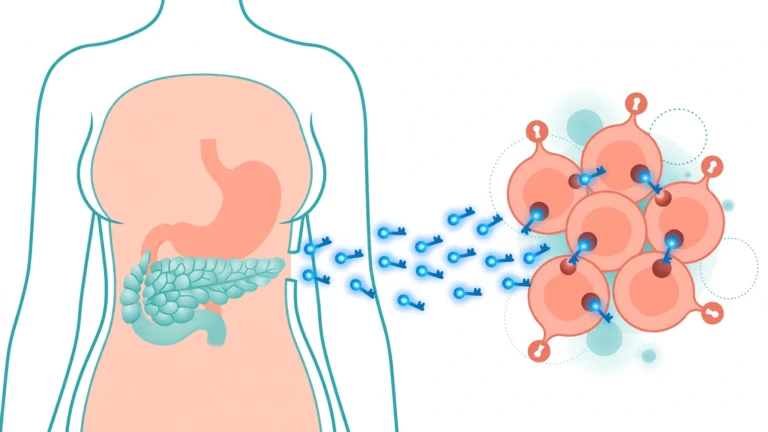
The short answer is hormones — specifically, the rise and fall of estrogen and progesterone across your menstrual cycle. Your breast tissue is exquisitely sensitive to these hormones because it is designed to prepare, every single month, for the possibility of pregnancy and breastfeeding.
Because breast tissue is so sensitive to these monthly signals, breast tenderness before period tends to follow the same hormonal curve cycle after cycle.
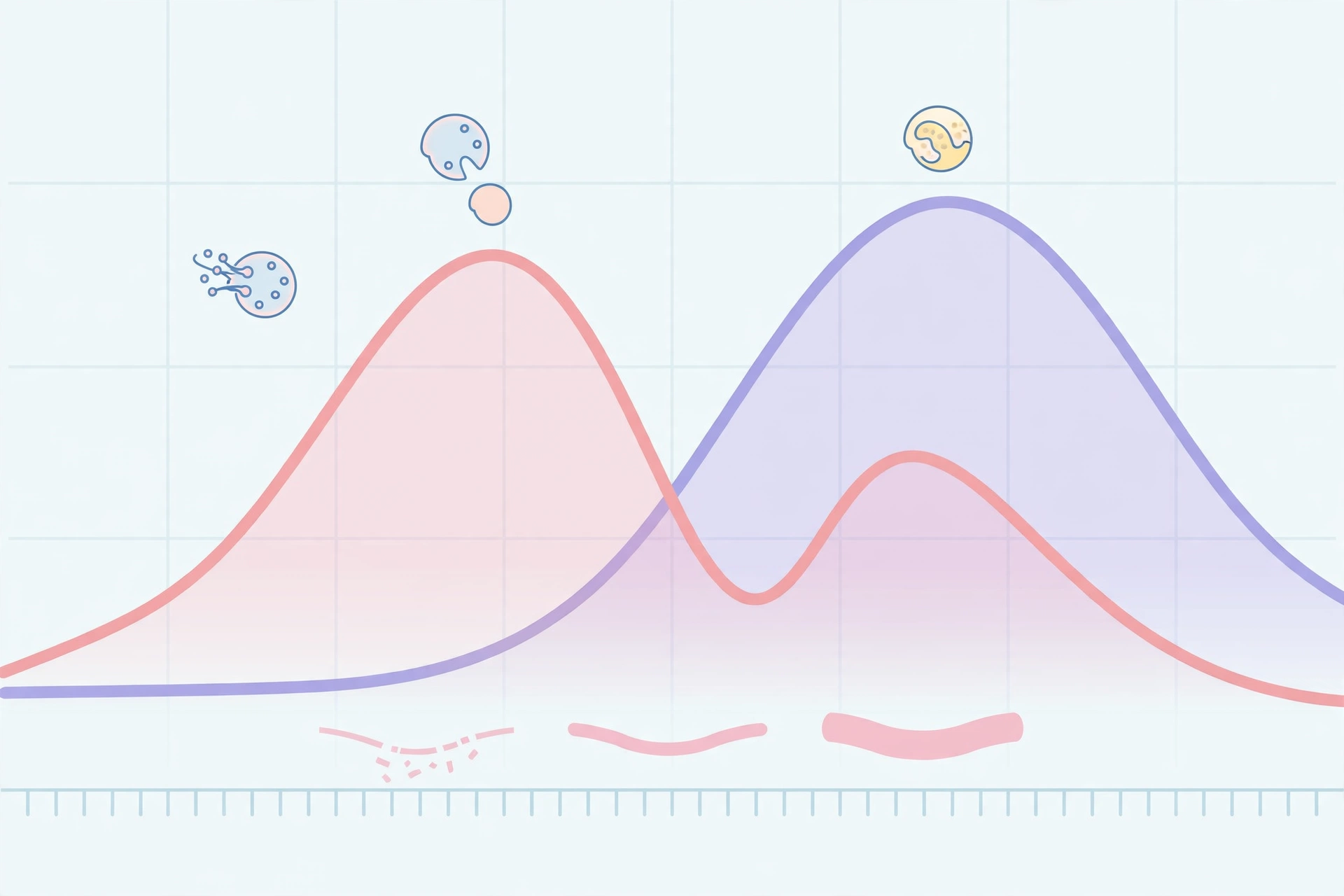
Here is how the cycle unfolds in a typical 28-day pattern:
- Days 1–14 (the follicular phase): After bleeding ends, estrogen gradually climbs. Estrogen stimulates the milk ducts inside the breast, causing them to enlarge and branch. Blood flow to breast tissue increases and cells multiply slightly. Most women feel little or no tenderness at this stage.
- Around day 14 (ovulation): Estrogen reaches its peak and an egg is released. Some women notice a brief flicker of fullness around this time.
- Days 15–28 (the luteal phase): After ovulation, progesterone surges and takes the lead. Progesterone acts on the milk-producing glands (lobules), causing them to swell, and encourages the tissue to retain water. Estrogen stays moderately elevated as well. This combined swelling is the main driver of the breast tenderness before period — the heaviness and swelling you feel in the week before bleeding starts.
- Days 27–28 onward (hormone withdrawal): If no pregnancy occurs, both hormones drop sharply just before menstruation. Breast tissue shrinks back toward its resting state, and the soreness typically fades during the first days of bleeding.
One interesting nuance, noted by researchers at Harvard Medical School: studies have not found any hormonal abnormality in women with cyclical breast pain. In other words, this is not caused by “too much” or “too little” hormone — it is a normal tissue response to normal hormonal rhythms. Some research suggests that an imbalance of fatty acids within breast cells may make the tissue more sensitive to these hormonal shifts, which could explain why some women feel it intensely while others barely notice it.
Medications that contain estrogen — including some contraceptives and hormone therapies — can also cause breast changes such as tenderness and swelling, because they add to the same hormonal signals.
What Is Happening Inside Your Breast Tissue
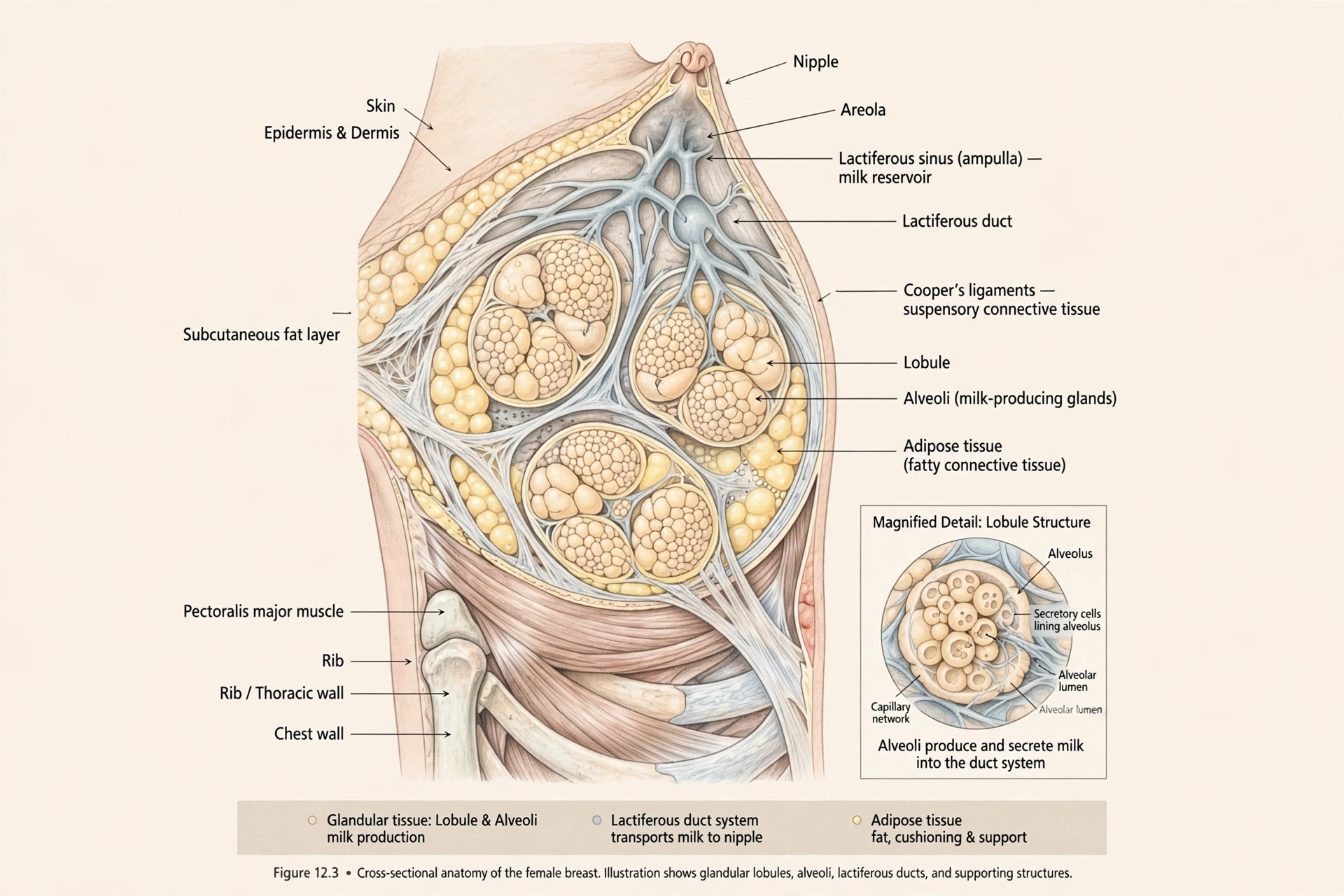
To understand why soreness feels the way it does, it helps to picture what is inside the breast. Each breast contains 15–20 lobes of glandular tissue, each made up of smaller lobules filled with tiny milk-producing sacs called alveoli. A network of milk ducts connects the lobules to the nipple. Around all of this lies supportive fat, connective tissue, and the suspensory Cooper’s ligaments that hold everything in place.
When estrogen rises in the first half of the cycle, the duct network enlarges. When progesterone rises after ovulation, the lobules and alveoli swell and the whole area retains extra fluid. That extra volume stretches the surrounding tissue and ligaments slightly — and stretched, fluid-filled tissue feels tender, heavy, and sometimes lumpy to the touch. The tissue may take on a dense or slightly coarse, “cobblestone” feel, most noticeable in the outer upper areas of the breast. This lumpy, ropey texture before a period is so common it has a clinical name: fibrocystic changes. These are benign, non-cancerous changes in the tissue, and they are the reason many women feel distinct lumps or thickened patches that then shrink or vanish once bleeding starts.
Put simply, the monthly cycle of swelling and fluid retention in ducts, glands, and tissue is the physical basis of breast tenderness before period.
Because this lumpiness is temporary and cyclical, it is worth getting to know what your own tissue feels like at different points in the month. A calm, methodical breast self-exam, done at the same point in your cycle each month, builds the baseline familiarity that makes genuinely new changes easier to spot.
The Timeline: When Soreness Starts and When It Fades
Most clinicians agree that breast tenderness before period beginning about 5–7 days before menstruation and resolving within the first few days of bleeding falls well within normal limits. The pattern below reflects a typical cycle, though individual timing varies:
| Days before period | What you may feel | Hormonal backdrop |
|---|---|---|
| 7 days | Mild heaviness or sensitivity begins | Progesterone rising; estrogen still elevated |
| 5 days | Tenderness becomes more noticeable; breasts feel fuller | Progesterone near peak; fluid retention increases |
| 3 days | Soreness at its peak; may extend into the armpit or upper arm | Hormones begin their premenstrual decline |
| 1 day | Soreness starts to ease as bleeding approaches | Sharp drop in estrogen and progesterone |
| Period days 1–3 | Tenderness usually resolves or greatly decreases | Hormone levels at their lowest |
Typical cyclical tenderness has a recognizable signature: it affects both breasts (often most strongly in the upper, outer portions), feels diffuse — like heaviness, aching, or fullness rather than a sharp stab in one spot — and it fades as bleeding begins. If your soreness consistently breaks this pattern, the tracking method in the next section is the most useful thing you can do before talking to a clinician.
Tracking Your Symptoms: The Three-Cycle Diary Method
Here is something most articles never spell out: the single most useful diagnostic tool for breast pain is not a scan or a blood test — it is a simple daily log kept for three cycles. Clinicians use symptom diaries to distinguish cyclical pain (hormonal, expected, reassuring) from noncyclical pain (pain with no relationship to the cycle, which follows a different evaluation path). A clear three-month record of breast tenderness before period can save you unnecessary worry and help your doctor help you faster.
Keep it simple. Each evening, record four things:
- Cycle day — count day 1 as the first day of bleeding.
- Pain score — rate breast tenderness from 0 (none) to 10 (severe).
- Location — both breasts, one breast, or a single spot; note if it radiates to the armpit or arm.
- Notes — new lumps, nipple changes, medication changes, unusual stress, illness.
A phone note, a paper calendar, or a period-tracking app all work. After three cycles, look at the pattern. Cyclical tenderness reveals itself clearly: pain scores rise in the luteal phase, peak just before bleeding, and fall to near zero within a few days of your period, repeating month after month. If instead the pain stays high through the whole month, is fixed in one spot, affects only one breast consistently, or does not reset with your period, that is the pattern to bring to a clinician — bring the diary itself. It turns a vague “my breasts hurt sometimes” into precise, actionable information.
Premenstrual Tenderness vs. Early Pregnancy: A Comparison
Because both breast tenderness before period and early-pregnancy breast changes are driven by rising progesterone, they can feel remarkably similar — which is why breast tenderness alone is never a reliable sign of pregnancy. The key difference is not how the breasts feel, but what happens next in the cycle:
| Feature | Premenstrual tenderness | Early-pregnancy breast changes |
|---|---|---|
| Timing | Starts 5–7 days before expected period, fades as bleeding begins | Begins around the missed period or just after, and typically persists or intensifies |
| Duration | Days; resolves within the first days of bleeding | Weeks to months; usually continues through the first trimester |
| Nipple/areola | Usually no visible change | Areolas may darken and widen; small bumps (Montgomery tubercles) may become more prominent |
| Other symptoms | Arrives with other PMS symptoms — cramps, bloating, mood shifts | May arrive with a missed period, nausea, unusual fatigue, frequent urination |
| The deciding test | Bleeding begins and tenderness resolves | Period does not arrive; a home pregnancy test (taken after the missed period) gives the answer |
The practical takeaway: if your period arrives and the soreness fades, it was cyclical tenderness. If your period is late and the tenderness is still there — or growing — take a pregnancy test rather than guessing from symptoms. Symptom-watching cannot substitute for testing, and the anxiety of the “is it PMS or pregnancy?” question is exactly what a timely test resolves.
Medications and Contraception That Can Change the Pattern
Your pattern of breast tenderness before period is not set in stone — several common medications and contraceptives reshape it. Knowing what to expect helps you tell a harmless adjustment effect from something worth discussing with your prescriber:
| Medication type | Typical effect on breast tenderness |
|---|---|
| Combined hormonal contraceptives (pill, patch, ring) | Often reduce cyclical tenderness by stabilizing hormone swings; some users notice new or increased tenderness during the first 1–3 months of adjustment, which usually settles |
| Progestin-only methods (mini-pill, implant, hormonal IUD, injection) | Effects vary widely: some users get relief, others develop new tenderness or irregular bleeding patterns |
| Emergency contraception | Can cause temporary breast tenderness as a short-term hormonal after-effect; should resolve within days |
| Menopause hormone therapy (HRT) | Can cause or prolong breast tenderness even after periods have stopped, because the added hormones recreate the same tissue effects |
| Certain antidepressants and cardiovascular drugs | Listed by clinicians among non-hormonal medications that can cause breast pain in some users |
If breast tenderness started or worsened within a few months of beginning a new medication, mention the timing to your prescriber — it is a routine, expected conversation, and dose or method adjustments are common. You can read more about the broader hormonal picture in our article on hormonal birth control and mood. Never stop a prescribed medication because of breast tenderness without medical guidance.
How the Pattern Changes With Age
The experience of breast tenderness before period is not the same at 17 as it is at 47. The pattern tends to evolve through the reproductive years:
- Teens and early twenties: Cycles are still maturing, so timing can be unpredictable — tenderness may appear earlier, later, or more intensely from month to month. This usually stabilizes as cycles become regular.
- Twenties and thirties: The classic, most predictable phase. Cyclical tenderness follows the 5–7-day premenstrual window closely and is most likely to affect women in this age range, according to clinical guidance.
- Forties: Fibrocystic changes become more common, so the premenstrual lumpiness and fullness may feel more pronounced even though the underlying mechanism is unchanged.
- Perimenopause: Hormone levels surge and drop erratically, so tenderness can become irregular — longer episodes, skipped months, sudden intensity. This is the stage where the three-cycle diary is most valuable, because it separates the new irregularity of perimenopause from a genuinely new, noncyclical pattern.
- After menopause: Cyclical tenderness usually stops — unless hormone therapy is being used, which can maintain it.
Practical Relief: What Actually Helps
For breast tenderness before period, most cases are managed at home. The strategies below are arranged from the most consistently useful to the worth-trying, with an honest note about the evidence where it matters.
Get the support right
A well-fitting, supportive bra is the single most recommended non-drug measure by breast clinicians, and it is also the one most women get wrong — studies of bra fitting repeatedly find a majority of women wear the wrong size. During the tender days, many women find relief in a supportive sports bra (including overnight), because limiting breast movement reduces the pulling on already-swollen tissue. A quick fitting checklist:
- The band should sit level around your ribcage and feel snug — it provides most of the support, not the straps.
- The center of the bra should rest against your breastbone, with each breast fully enclosed in its cup (no spilling over the top or sides).
- Straps should stay up without digging in; if you have to tighten them constantly, the band is too loose.
- For exercise during tender days, choose a medium- or high-impact sports bra; encapsulation styles (separate cups) generally control movement better than compression styles.
- Re-measure yearly and after weight changes, pregnancy, or breastfeeding — size drifts, and an old bra stops doing its job.
Warmth, cold, and gentle movement
A warm compress or warm shower can relax tense tissue, while some women prefer a cold pack wrapped in cloth for 10–15 minutes. Gentle exercise — walking, swimming, light stretching — is associated with reduced PMS symptoms overall, including breast soreness, though it works as general symptom relief rather than a cure. Avoid high-impact activity on peak-tenderness days if bouncing worsens the ache; that is what the supportive sports bra is for.
Sleep positioning
Night-time tenderness that disrupts sleep is one of the signs clinicians take seriously, so it deserves a practical answer: many women find that sleeping in a soft, supportive sleep bra plus lying on the back (or on the side with a pillow hugged to the chest to prevent compression) meaningfully reduces overnight aching. If soreness regularly wakes you or keeps you from falling asleep despite these measures, that is worth mentioning at your next appointment.
Diet and supplements — an honest note
You will read everywhere that cutting caffeine, alcohol, salt, and fatty foods relieves breast pain. Be aware of what the evidence actually says: NHS breast-pain guidance notes there is no solid proof that dietary changes reduce breast pain, though many women report feeling better — and these habits improve general health regardless. Reducing salt in the premenstrual week may modestly ease fluid retention, and cutting back on caffeine is a low-cost experiment worth trying for two or three cycles to see if your symptoms respond. Some women try evening primrose oil (a source of the fatty acid GLA) or vitamin and mineral supplements; evidence is mixed, and any supplement should be discussed with a clinician or pharmacist first, especially if you take other medications.
Over-the-counter and prescription options
For days when tenderness interferes with daily life, nonsteroidal anti-inflammatory medicines (NSAIDs) taken during the symptomatic days are the standard first step clinicians suggest. If symptoms are moderate to severe and persistent, doctors may discuss prescription options — including diuretics for pronounced swelling or hormonal contraception to smooth the cycle’s hormone swings. These are decisions for a clinician who knows your history; the diary you kept for three cycles will make that conversation far more productive.

Red Flags: When to Talk to a Clinician
Cyclical breast tenderness before period is common and usually benign — but not all breast pain follows the hormonal script. Contact your healthcare provider promptly if you notice any of the following:
- A new lump or thickened area that does not shrink or disappear after your period ends
- A lump that is only in one breast, or pain sharply localized to one spot
- Nipple discharge, especially if it is bloody, brown, or clear and unrelated to pregnancy or breastfeeding (see our guide on nipple discharge: what is normal and when to get checked)
- Changes to the skin over the breast — dimpling, puckering, redness, warmth, or swelling
- Changes to the nipple — new inversion, crusting, or a rash
- Breast pain that persists beyond one or two full cycles without easing, or appears for the first time after menopause
- Pain severe enough to interfere with sleep or daily activities despite home measures
It is worth stating plainly, because this is the fear behind most searches on this topic: breast pain is rarely a symptom of breast cancer. Still, a clinician will want to evaluate pain that breaks the cyclical pattern. A typical workup starts with a careful history (this is where your symptom diary shines) and a physical breast and chest-wall examination. If anything needs a closer look, the next steps are usually a mammogram, an ultrasound (often used first in women under 35–40), or — only if imaging finds something that needs identification — a small tissue sample (biopsy). Most evaluations end with reassurance and a management plan, not a diagnosis of anything serious. The Mayo Clinic’s overview of breast pain symptoms and causes describes this evaluation pathway in detail.
Frequently Asked Questions About Breast Tenderness Before Period
Is breast tenderness before my period normal?
Yes. Sore, swollen, or heavy breasts in the week before menstruation are among the most common cyclical symptoms, driven by the normal rise of estrogen and progesterone. It is considered normal when it affects both breasts, arrives in the days before your period, and fades as bleeding begins.
How many days before my period does breast tenderness usually start?
Most women notice it beginning about 5–7 days before their period, with soreness peaking in the 2–3 days just before bleeding starts. Some feel it for only a couple of days; others for up to ten. A consistent personal pattern matters more than the exact number of days.
Why are my breasts sore but my period hasn’t come?
Timing varies with cycle length, stress, illness, and hormonal contraception, so tenderness can arrive earlier or later than usual. If your period is late and tenderness persists or intensifies instead of fading, take a home pregnancy test rather than trying to interpret the symptoms.
Can birth control cause breast tenderness before a period?
It can change the pattern in either direction. Combined hormonal contraceptives often reduce cyclical tenderness by stabilizing hormones, but new or increased tenderness is common during the first few months of adjustment. Progestin-only methods vary more between individuals. Discuss persistent changes with your prescriber.
Does breast tenderness before a period mean I have a hormonal imbalance?
Not usually. Research has not found hormonal abnormalities in most women with cyclical breast pain — it is a normal tissue response to normal hormone rhythms, possibly amplified by individual tissue sensitivity. Persistent, noncyclical pain is a different matter and deserves clinical evaluation.
What helps breast tenderness before a period most effectively?
A well-fitting supportive bra (including a sports bra during tender days, sometimes overnight), warm or cold compresses, gentle exercise, and NSAIDs during symptomatic days are the most consistently useful measures. Reducing caffeine and salt is worth a personal trial for a few cycles, even though clinical evidence is limited.
When should I worry about breast pain before my period?
Seek prompt medical advice for a new lump that doesn’t resolve after your period, one-sided or single-spot pain, nipple discharge (especially bloody), skin or nipple changes, pain that persists through the whole cycle, new pain after menopause, or pain that disrupts sleep and daily life.
A Note on Medical Information
This article is for educational purposes only and is not a substitute for professional medical advice, diagnosis, or treatment. Breast symptoms vary widely between individuals, and only a qualified clinician who can examine you and review your history can evaluate your specific situation. If you are concerned about breast changes — especially any of the red flags listed above — speak with your doctor or another qualified healthcare provider. Guidance such as the NHS patient information on breast pain can supplement, but never replace, that conversation. Never disregard professional advice or delay seeking it because of something you have read here.
Breast tenderness before period is, for most women, simply the monthly evidence that their hormones are doing their job — ducts widening, glands swelling, tissue holding a little extra fluid, then quietly returning to normal as bleeding begins. Track your breast tenderness before period for three cycles, support it well, treat it sensibly, and you will know exactly what is normal for you — which is the best possible position for noticing, early, anything that is not.