Yoga for Better Sex: Poses That Support Intimacy
The idea that yoga for sexual health can be genuinely effective is not just wellness-marketing hype. A growing body of peer-reviewed research suggests that a regular yoga practice can improve several dimensions of sexual function — from desire and arousal to satisfaction and confidence — in both women and men.
Yoga is unusual among forms of exercise because it combines physical postures, controlled breathing, pelvic-floor engagement, and mindfulness in a single session. Each of those elements has a plausible, evidence-supported pathway to better sexual well-being: healthier blood flow, stronger pelvic muscles, lower stress, and a calmer, more present mind during intimate moments. Together, these elements make yoga for sexual health a uniquely holistic practice.
This guide takes a clinical, evidence-based look at the relationship between yoga and sexual health. You will learn what the research actually shows, which mechanisms are thought to be at work, the specific poses most often linked to sexual function (with step-by-step instructions), a lesser-known yogic technique for the pelvic floor, how partner practice can deepen emotional intimacy, a starter weekly routine, and the safety considerations everyone should know before beginning.
What the Science Says About Yoga and Sexual Function
Research on yoga for sexual health is still young, but the results published so far are encouraging. One of the most widely cited studies, published in The Journal of Sexual Medicine, followed 40 healthy women aged 22 to 55 through a 12-week yoga program built around 22 postures selected for their effects on abdominal and pelvic muscle tone, joint function, and mood. After the program, participants’ scores improved across all six measured domains of the Female Sexual Function Index: desire, arousal, lubrication, orgasm, pain, and overall satisfaction. Women over 45 showed the strongest improvements in arousal, lubrication, and pain. Nearly 75 percent of participants reported being more satisfied with their sex life after the training. The study’s limitations — a small sample and no control group — are worth noting, and larger controlled trials are still needed.
Men have been studied too. A study led by neurologist Dr. Vikas Dhikav at Dr. Ram Manohar Lohia Hospital in New Delhi examined a 12-week yoga program’s effect on male sexual satisfaction and found significant improvement across desire, intercourse satisfaction, performance, confidence, partner synchronization, erection, ejaculatory control, and orgasm. A related comparative trial by the same team found yoga to be a viable non-drug alternative to fluoxetine (Prozac) for managing premature ejaculation — suggesting that yogic control over breathing and pelvic musculature may translate into real functional gains.
Researchers at the University of British Columbia, led by Dr. Lori Brotto, reviewed the literature on yoga and sexual functioning and identified several plausible mechanisms: regulation of attention and breathing, reduced anxiety and stress, and activation of the parasympathetic nervous system — the “rest and digest” branch that, among other things, supports genital blood flow and relaxation. They also noted psychological mechanisms: female yoga practitioners were found to be less likely to objectify their bodies and more aware of their physical selves, a pattern associated with greater sexual assertiveness and desire. More recently, randomized controlled trials have shown yoga-related improvements in sexual function among women with metabolic syndrome and among women living with multiple sclerosis, populations at higher risk of sexual dysfunction.
How Yoga for Sexual Health Works: The Mechanisms
Why is yoga for sexual health particularly well suited to supporting sexual function, compared with other forms of exercise and sexual health? The answer lies in how the components of yoga for sexual health act on the body systems that underpin sexual response.
Improved circulation to the pelvic region
Healthy sexual response depends on robust blood flow to the genitals — this drives arousal and, in men, the ability to achieve and maintain erections. Many yoga postures, particularly hip-openers and poses that engage the pelvis, increase circulation to the pelvic region. Improved vascular health also supports cardiovascular fitness generally, which is itself strongly linked to sexual function.
Stronger, more aware pelvic-floor muscles
The pelvic floor — a sling of muscles supporting the bladder, bowel, and, in women, the uterus — plays a central role in sexual function for all genders. Strong, well-coordinated pelvic-floor muscles are associated with stronger orgasms and better erectile and ejaculatory control. Yoga postures such as Bridge and Garland pose actively engage these muscles, and the yogic “root lock” (described below) trains voluntary control that is directly relevant to sexual function.
Stress reduction and the cortisol connection
Chronic stress raises cortisol, the body’s primary stress hormone, and chronically elevated cortisol can suppress sex hormones and dampen libido in both men and women. Yoga lowers the body’s inflammatory response, counters stress-related genetic expression, and reduces cortisol levels. It also shifts the autonomic nervous system toward parasympathetic (“rest and digest”) activity — the branch associated with relaxation, lowered heart rate, and improved sexual response.
Mindfulness, body awareness, and presence
One of the most distinctive contributions of yoga to sexual health is psychological. Mindfulness practice — paying attention to the present moment without judgment — is associated with greater sexual satisfaction. Yoga cultivates interoception (awareness of internal body sensations), and practitioners tend to be more tuned in to their bodies and less likely to engage in distracting, anxious self-monitoring during intimate moments. Being mentally present is one of the strongest predictors of sexual satisfaction in couples.
Flexibility, stamina, and confidence
Greater flexibility and muscular endurance translate into physical comfort and less fatigue during intimacy. But the confidence effect matters too: people who feel stronger and more comfortable in their bodies tend to feel more confident about intimacy. Research consistently links positive body image to higher sexual satisfaction — and yoga practice is associated with improvements in both.
The Best Yoga Poses for Sexual Health
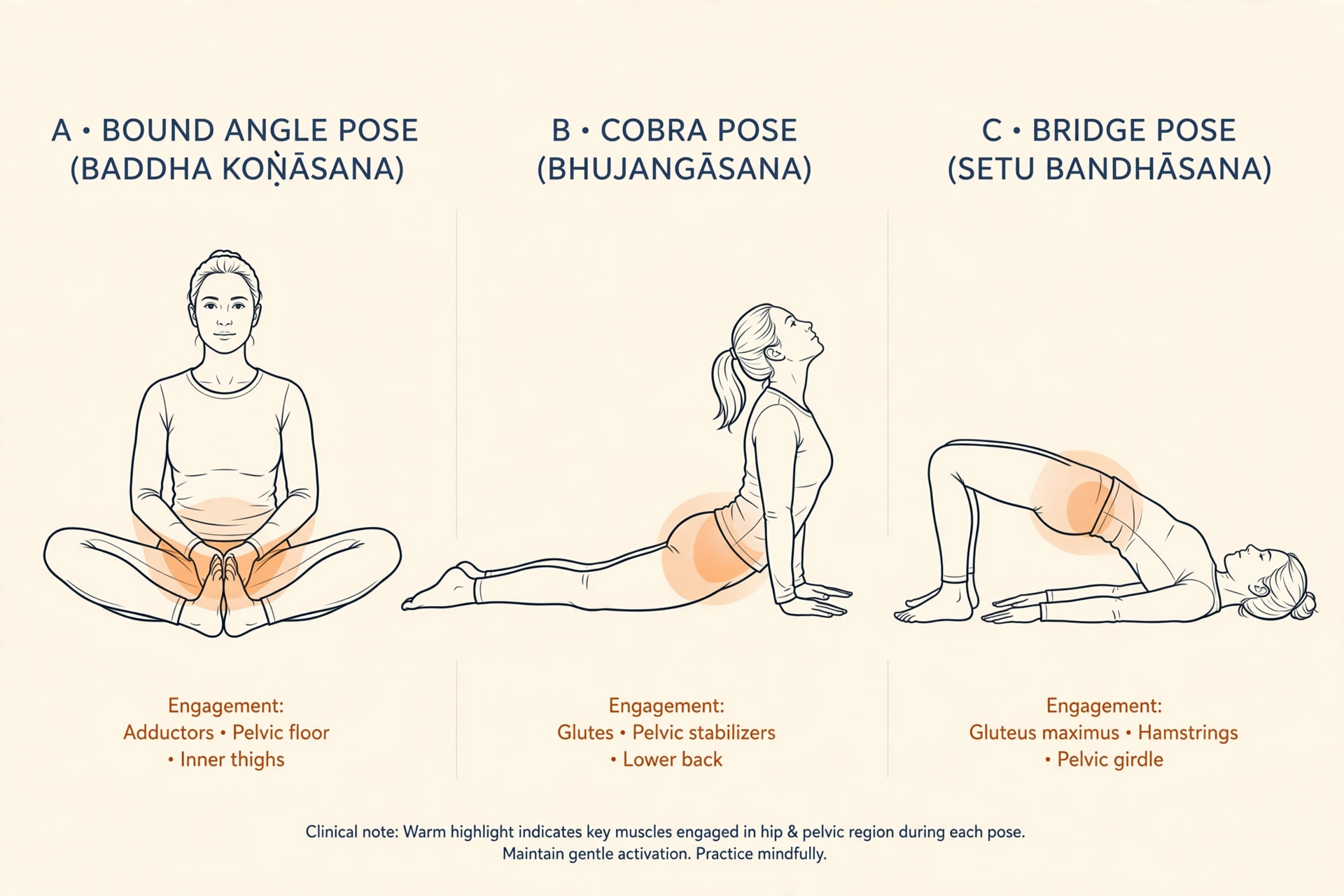
Below are the poses most frequently cited in the research literature and by clinicians for their potential benefit to sexual function. They target hip flexibility, pelvic blood flow, pelvic-floor engagement, spinal mobility, and relaxation. Practice each gently, breathing slowly and deeply throughout. Hold static poses for 5–10 slow breaths unless otherwise noted, and always work within your pain-free range.
1. Bound Angle Pose (Baddha Konasana)
This classic hip-opener is among the most recommended poses for pelvic health. Sit on the floor with legs extended, then bring the soles of your feet together and let your knees fall open. Hold your feet with your hands and sit tall; avoid forcing the knees toward the floor. This pose stretches the inner thighs and groin while increasing blood flow to the pelvic region. It is an excellent warm-up pose for any intimacy-supporting routine.
2. Cobra Pose (Bhujangasana)
Lie face down with hands under your shoulders. On an inhale, press gently into your hands and lift your chest, keeping elbows slightly bent and close to the body, and keeping the tops of the feet pressed down. Hold for a few breaths, engaging the glutes and lower back, then release. Cobra strengthens the pelvic-floor region, stretches the abdomen, improves circulation, and counteracts the fatigue that can sap sexual energy.
3. Bridge Pose (Setu Bandhasana)
Lie on your back with knees bent and feet flat, hip-width apart, arms at your sides. As you exhale, press through the feet and lift the hips toward the ceiling, squeezing the glutes and engaging the core. Hold for 5–10 breaths, then lower slowly. Among poses used in yoga for sexual health, Bridge is a powerhouse: it strengthens the glutes, hamstrings, and pelvic floor while improving blood flow to the genitals.
4. Cat-Cow Flow (Marjaryasana-Bitilasana)
Begin on hands and knees. Inhale as you arch the back (cow), lifting the head and tailbone; exhale as you round the spine (cat), tucking the chin and drawing the belly in. Repeat 8–10 cycles with the breath. This gentle spinal flow increases spine flexibility, stimulates the nervous system, improves pelvic circulation, and serves as a moving meditation that connects breath with body awareness.
5. Downward-Facing Dog (Adho Mukha Svanasana)
From hands and knees, tuck the toes and lift the hips to form an inverted V, with hands shoulder-width apart and feet hip-width apart. Pedal the feet gently. This full-body stretch improves circulation, relieves stress, builds upper-body and core stamina, and boosts overall energy — all relevant to a healthy, vigorous intimate life.
6. Garland Pose (Malasana)
Stand with feet slightly wider than hip-width, toes turned out, then lower into a deep squat, bringing the palms together at the chest and pressing the elbows against the inner knees. This pose deeply opens the hips and tones the pelvic muscles. Use a folded blanket under the heels or a block under the seat if a full squat is not yet accessible.
7. Frog Pose (Bhekasana)
From hands and knees, walk the knees wide apart and flex the feet so the inner edges rest on the floor. Sink the hips back and down while keeping the spine long. Frog pose intensely opens the inner groin and strengthens pelvic-floor awareness. Researchers have noted its potential relevance for pelvic discomfort conditions such as vulvodynia and vaginismus, which can interfere with comfortable intimacy — practice it gently and never push into sharp pain.
8. Triangle Pose (Trikonasana)
Stand with legs wide; turn the right foot out 90 degrees. Hinge at the hip and reach the right hand toward the shin or a block, extending the left arm to the ceiling. Triangle was one of the poses used in the landmark Journal of Sexual Medicine study. It builds leg and core strength, opens the hips, and improves balance and body control.
Moola Bandha: The Yogic “Root Lock” for the Pelvic Floor
Few yoga practices are as directly relevant to sexual function as moola bandha — the perineal or “root” contraction. Described in yogic texts for centuries, moola bandha is a gentle, sustained lifting and drawing inward of the pelvic-floor muscles, coordinated with the breath. Researchers reviewing yoga and sexual functioning have noted that it stimulates the sensory-motor and autonomic nervous system in the pelvic region and encourages parasympathetic activity; it is conceptually similar to the modern, medically recommended Kegel exercises for men and women.
Some studies suggest moola bandha practice is associated with relief of menstrual discomfort, reduced childbirth pain, improved sexual function in women, and better ejaculatory control and hormonal balance in men. Many sex therapy centers already recommend versions of this practice to help people become more aware of arousal sensations and strengthen pelvic control.
How to practice moola bandha
- Get comfortable. Sit in a chair or cross-legged on the floor with a tall spine. Breathe naturally for a minute.
- Locate the muscles. Imagine you are gently stopping the flow of urine, or lifting the pelvic floor as if picking up a blueberry with the muscles between the sit bones. The abdomen, buttocks, and thighs should stay relaxed — only the pelvic floor engages.
- Engage on the exhale. On a slow exhale, gently draw the pelvic floor upward and inward. Hold the light contraction for 3–5 seconds while continuing to breathe.
- Release fully. On the inhale, let the muscles relax completely. A full release is just as important as the contraction.
- Repeat. Do 8–10 repetitions, once or twice daily. Over weeks, you can gradually increase the hold to 8–10 seconds.
For a fuller breakdown of pelvic-floor training, see our guide to pelvic-floor exercises and their benefits. If you experience pelvic pain, leaking, or difficulty identifying these muscles, consider consulting a pelvic-floor physical therapist before progressing.
Partner Yoga and Intimacy: Deepening Connection Together
The contribution of yoga for sexual health is not only physical. Practicing with a partner can strengthen emotional intimacy — the sense of closeness and trust that underpins a satisfying sex life. Synchronized breathing, shared stillness, and cooperative postures require communication, patience, and mutual attention, all of which transfer naturally into the bedroom.
A simple partner practice
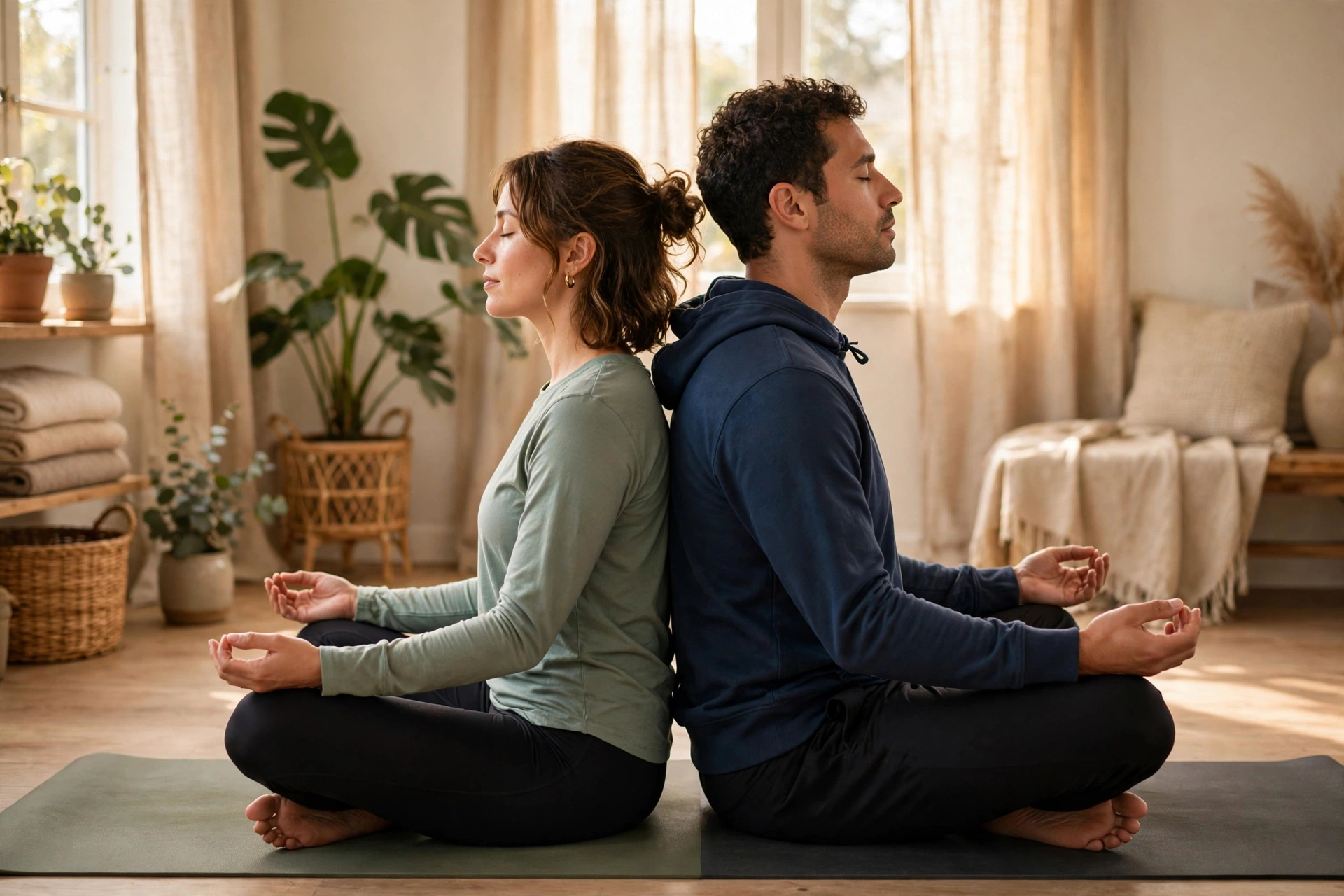
- Back-to-back breathing. Sit cross-legged with your backs touching. Close your eyes and breathe together for 5–10 minutes, letting your breathing rhythms synchronize. Notice how your partner’s breath moves against your back. This is a surprisingly powerful exercise in attunement and calm.
- Mirrored sun salutations. Face each other and move through a gentle sun salutation sequence in unison, maintaining soft eye contact. Moving together builds nonverbal communication and playfulness.
- Supported forward fold. Sit facing each other with legs extended and soles of the feet touching. Take turns folding forward while the partner provides a gentle counter-stretch by leaning back. Communicate about pressure and comfort throughout.
- Shared savasana. End side by side in corpse pose, holding hands. Allow several minutes of shared stillness — no talking, no phones, just rest together.
These practices also cultivate mindfulness and intimacy simultaneously: you are training yourself to stay present with your partner rather than drifting into performance anxiety or mental to-do lists.
A Simple 20-Minute Weekly Routine to Start With
One gap in much of the popular coverage of yoga and sexual health is practical structure: which poses, in what order, for how long? Here is a beginner-friendly 20-minute yoga for sexual health sequence that combines the most relevant elements — breathwork, hip-openers, pelvic engagement, and relaxation. Aim for 3 sessions per week.
| Minutes | Element | What to do |
|---|---|---|
| 0–3 | Centering breath | Seated, eyes closed; slow diaphragmatic breathing (inhale 4 counts, exhale 6 counts). |
| 3–6 | Cat-Cow flow | 8–10 breath-linked cycles to warm the spine and pelvis. |
| 6–9 | Downward-Facing Dog | Hold 5–8 breaths; pedal the feet to release calves and hamstrings. |
| 9–12 | Garland pose | Deep squat, 5–8 breaths; use support under heels if needed. |
| 12–14 | Bound Angle pose | Seated hip-opener, 8–10 breaths; gentle forward fold optional. |
| 14–17 | Bridge pose | 3 rounds of 5-breath holds, actively squeezing glutes. |
| 17–19 | Cobra pose | 2–3 gentle rounds of 3-breath holds. |
| 19–20 | Moola bandha + savasana | 5 root-lock repetitions, then rest flat on the back for the final minute. |
Progress gradually: add minutes, repetitions, or more challenging poses (such as Frog or Triangle) over 4–6 weeks. Consistency matters far more than intensity — the research benefits appeared after weeks of regular practice, not single sessions.
Yoga, Sleep, and Libido: An Underappreciated Link
Most articles on this topic skip the sleep connection, but it is one of the most practical reasons to practice yoga for sexual health. Poor sleep is strongly linked to lower libido: fatigued people report less desire, and sleep disruption affects testosterone and mood regulation in both sexes. Yoga is one of the best-studied behavioral interventions for sleep quality — the U.S. National Center for Complementary and Integrative Health notes that yoga may help people manage sleep problems, stress, and emotional well-being.
A gentle evening yoga routine — restorative poses like legs-up-the-wall, supported child’s pose, and slow breathing — can ease the transition into sleep. Better sleep means more energy, better mood, and typically a stronger appetite for intimacy the next day. If fatigue is dampening your desire, see our guide to sleep and sex drive for the broader picture.
When to Be Careful: Safety and Contraindications
The NCCIH notes that yoga is generally considered a safe form of physical activity for healthy people when practiced appropriately, but injuries can occur — especially when learning without qualified guidance. Keep these precautions in mind:
- Get medical clearance first if you are older, out of shape, have cardiovascular disease, uncontrolled blood pressure, glaucoma, or joint problems. Harvard Health specifically advises checking in with a clinician before starting yoga for sexual health if you have physical limitations.
- Pregnancy: many poses need modification during pregnancy (for example, avoid spending long periods flat on the back after the first trimester, and avoid deep twists, backbends, and heated yoga). Get your clinician’s approval first.
- Pelvic pain conditions: if you have conditions such as endometriosis, pelvic inflammatory disease, or chronic pelvic pain, intense hip-openers (like Frog pose) may aggravate symptoms. Start gently and consult a clinician or pelvic-floor therapist.
- High blood pressure: avoid prolonged inversions and forceful breath-holding techniques.
- Never push through sharp pain. Discomfort from a stretch is normal; sharp, shooting, or joint pain is a signal to stop and modify.
- Learn from a qualified instructor when possible — learning yoga without supervision has been associated with increased injury risk.
Frequently Asked Questions
How long does it take for yoga to improve sexual health?
In the published studies, measurable improvements appeared after about 12 weeks of regular practice (typically several sessions per week). However, many people report feeling calmer, more energized, and more body-aware within the first few weeks. Think of yoga as a long-term investment in sexual well-being rather than a quick fix.
Which yoga style is best for sexual health?
Research studies have used a mix of styles, with Hatha yoga being the most common. Gentle, breath-centered styles (Hatha, Iyengar, restorative) are ideal for beginners and for the relaxation and pelvic-floor benefits described here. More vigorous styles (Vinyasa, Ashtanga) add cardiovascular and strength benefits. If you have physical limitations, Iyengar yoga’s use of props makes poses accessible without strain.
Can yoga help with erectile dysfunction?
Yoga may support erectile function through several pathways: improved pelvic blood flow, reduced stress and anxiety (major psychological contributors to erectile difficulties), stronger pelvic-floor muscles, and better cardiovascular fitness. Some studies suggest benefits for erectile function and premature ejaculation, though the evidence is still preliminary and low in quality. Yoga should complement — not replace — medical evaluation and treatment for erectile dysfunction.
Can yoga improve libido in women?
The best evidence here comes from the Journal of Sexual Medicine study of 40 women, which found improvements in desire, arousal, lubrication, and satisfaction after 12 weeks of yoga, with the strongest gains in women over 45. Plausible mechanisms include better pelvic circulation, lower stress hormones, and improved body awareness and confidence. Later trials in women with metabolic syndrome also showed significant improvements in arousal and lubrication.
Is moola bandha the same as Kegel exercises?
They are closely related. Moola bandha is the traditional yogic practice of gently contracting and lifting the pelvic floor, coordinated with the breath, while Kegel exercises are the modern clinical version — repeated pelvic-floor contractions prescribed by clinicians. Both train the same muscle group, and both are associated with better sexual function. The yogic version adds breath coordination and mindful awareness, which some people find easier to sustain as a daily habit.
Can couples practice yoga together to improve intimacy?
Yes. Partner yoga — synchronized breathing, mirrored sequences, and supported stretches — builds nonverbal communication, trust, and physical attunement. The shared mindfulness of practicing together can reduce the mental distractions that interfere with intimacy. Many couples find that even 10–15 minutes of back-to-back breathing before bed noticeably improves their sense of closeness.
Are there any risks to practicing yoga for sexual health?
For healthy people, yoga is generally safe when practiced appropriately. Risks rise with unsupervised learning, pushing into pain, or practicing contraindicated poses during pregnancy or with conditions like uncontrolled hypertension or glaucoma. Start with beginner classes or a qualified instructor, modify poses as needed, and get medical clearance if you have a health condition.
How often should I practice to see benefits?
The research protocols that showed benefits typically involved practice several times per week for 8–12 weeks (the landmark women’s study used about an hour daily, but that is more than most beginners need). A realistic and effective target is 20–30 minutes, 3–4 times per week, including breathwork and pelvic-floor engagement. Consistency over months matters more than marathon sessions.
Medical Disclaimer
This article is for educational purposes only and is not medical advice. It is not intended to diagnose, treat, or prevent any condition. Yoga affects everyone differently, and certain poses may not be appropriate for people with specific health conditions. Consult a qualified clinician before beginning a new exercise program, especially if you have a cardiovascular condition, uncontrolled blood pressure, glaucoma, a musculoskeletal injury, chronic pelvic pain, or if you are pregnant. If you are experiencing persistent sexual difficulties, speak with a healthcare professional or a certified sex therapist rather than relying on self-help measures alone.
The Bottom Line
Yoga for sexual health is more than a wellness trend: it is a practice with plausible mechanisms — better circulation, a stronger and more responsive pelvic floor, lower stress, deeper body awareness — and early clinical evidence suggesting real benefits for desire, arousal, function, and satisfaction in both women and men. Its greatest strength may be that it addresses the physical and the psychological together, in one unhurried session.
Start your yoga for sexual health journey where you are: a few hip-openers, some conscious breathing, and a handful of gentle pelvic-floor contractions, three times a week. Give it a couple of months. Your body — and your intimate life — may thank you for it.