[Intimacy] Sex During Your Period: A Practical Guide
Whether you’re wondering if it’s safe, worried about the mess, or curious about the rumored benefits, practical sex during period tips can turn a week many couples instinctively skip into a comfortable, connected experience. Having sex while one partner is menstruating is medically safe — there is no health reason to put your intimate life on pause for several days every month. Still, real questions deserve real answers: the actual risks around STIs and pregnancy, which period products help and which must come out, and how to talk about it with your partner without awkwardness. This guide covers all of it, honestly and without the cringe.
Treat this as your complete collection of sex during period tips for staying close all month long.
Is It Safe to Have Sex During Your Period?
Yes. For most people, having sex during menstruation is completely safe, and it can even be more enjoyable for some couples. Menstrual blood is simply blood mixed with the lining of the uterus — it is not dirty, toxic, or harmful to a partner. There are, however, a few honest caveats worth knowing, which is exactly why the sex during period tips in this guide begin with the risks before moving to the good stuff.
The two risks that matter are STIs and pregnancy. Because menstrual fluid can carry bloodborne pathogens such as HIV, unprotected sex during your period can carry a slightly higher transmission risk than at other times in the cycle. Using condoms addresses both issues at once: they reduce STI transmission and prevent pregnancy. According to the CDC’s guidance on condom use, using them correctly and consistently every time is the single most effective barrier against both.
Pregnancy deserves its own callout because the myth “you can’t get pregnant on your period” is stubbornly persistent. Your odds are lower, but they are not zero. Sperm can survive inside the reproductive tract for up to five days, and people with short cycles can ovulate soon after bleeding ends — meaning sperm from period-week sex can still be alive when an egg arrives. The NHS explains how the fertile window relates to cycle length. If you are not trying to conceive, treat period week like any other week: use contraception.
6 Reasons Some Couples Actually Prefer Period Sex
Period sex isn’t just “sex, but messier.” These sex during period tips focus on the genuine upsides that the menstrual days offer:
- Cramp relief. Menstrual cramps happen when the uterus contracts to shed its lining. Orgasm causes the uterus to contract and then release — and that release can ease cramping afterward. On top of that, sexual activity triggers a flood of endorphins, the body’s natural painkillers.
- Natural lubrication. Menstrual flow can act as a lubricant, making intimacy feel smoother and more comfortable than usual.
- Heightened sensitivity and arousal. Hormonal shifts during menstruation mean some people feel noticeably more aroused on their period, and increased blood flow to the pelvic area can make touch feel more intense. Desire varies, of course — if yours tends to dip at certain cycle points, our guide to low libido in women explores common reasons and fixes.
- Possible headache or migraine relief. People who get menstrual migraines often avoid intimacy during an attack, but a 2013 study found that those who went ahead reported partial or complete relief of their symptoms. (Worth noting: this was self-reported by study participants, not a treatment recommendation.)
- Deeper emotional closeness. Being intimate during a time that feels vulnerable can actually strengthen a couple’s bond — it requires trust, communication, and a willingness to see each other at your most unfiltered.
- Less performance anxiety. Because many couples assume “we’re skipping this week,” removing that expectation entirely can make intimacy feel more relaxed and playful.

The Risks Worth Taking Seriously
None of these are reasons to avoid period sex — these sex during period tips simply ask you to do it thoughtfully:
- STI transmission. Blood can carry pathogens, and the slightly inflamed vaginal lining during menstruation may be more susceptible to infection. Barrier methods are your best friend here.
- Forgotten tampons and cups. A tampon left in during penetrative sex can be pushed deep into the vagina and become difficult — sometimes impossible — to remove without medical help. Always remove tampons and most menstrual cups before sex.
- A lower, more sensitive cervix. During menstruation the cervix tends to sit lower in the vagina and can be more tender, so deeper penetration may feel uncomfortable. Gentle pacing beats ambition on period days.
- Partner-side risk. If your partner has a cut, sore, or active herpes outbreak, blood exposure adds risk for both of you. This is a good week to be extra mindful — and if either of you is unsure about your STI status, see our guide on when and how often to get tested for STIs.
Practical Sex During Period Tips for Comfort and Less Mess
This is where preparation turns period sex from awkward to genuinely easy. Here are the sex during period tips that actually work:
1. Time it for your lighter days
If your flow follows a typical pattern — heavier on days one and two, lighter afterward — days three through five (or whenever your flow eases) are the low-mess sweet spot. Track your cycle for a month or two so you know your pattern; it also helps with planning everything else.
2. Know which period products can stay in — and which must come out
This is the tip most guides gloss over. Here’s the breakdown:
- Tampons: must come out. A tampon left in during sex can get lodged high in the vaginal canal. Remove it beforehand, every time.
- Most menstrual cups: must come out. Standard cups sit low in the vaginal canal and block it, so they need to be removed before penetrative sex (you can leave one in for other kinds of intimacy).
- Menstrual discs: usually can stay in. Discs sit around the cervix rather than in the canal, and several brands are specifically designed to be worn during penetrative sex. They catch flow above the area of activity and dramatically reduce mess. Check the product’s own guidance first — not every disc brand approves of this.
- Soft sponge tampons: designed to be worn during sex, absorbing blood during lighter-flow days. They are less common than discs but worth knowing about.
3. Assemble your cleanup kit in advance
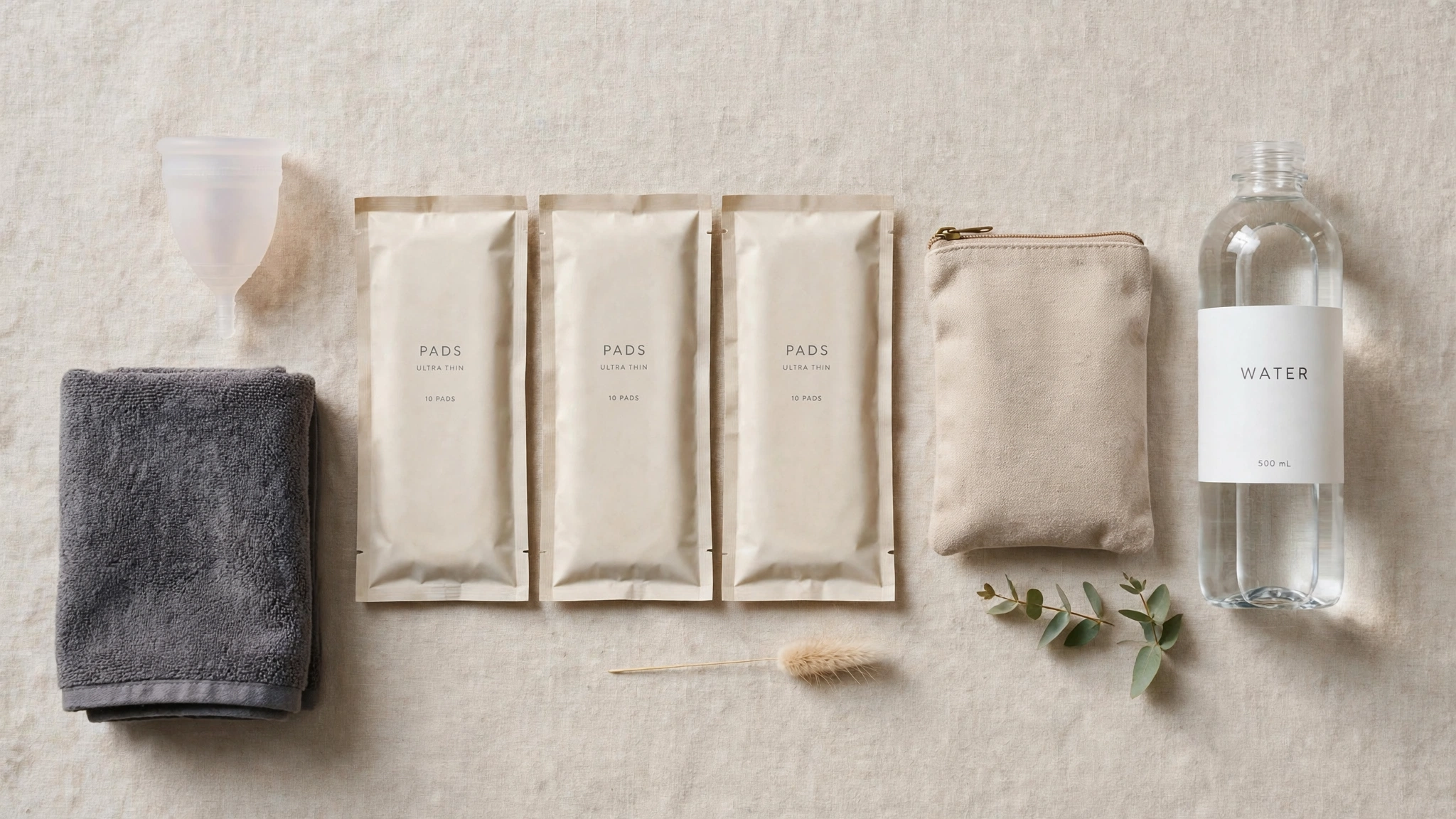
A dark-colored towel on the bed, a damp washcloth or wet wipes on the nightstand, and a shower afterward handles 95% of the mess anxiety. Many couples skip the bed entirely and have sex in the shower, where cleanup takes care of itself. A waterproof mattress protector is a cheap one-time investment that removes the last of the worry.
4. Choose comfort-first positions
There’s no magic position, but two principles help: positions where you lie down tend to mean less flow than standing ones (gravity works against you upright), and because the cervix sits lower during menstruation, shallower penetration tends to be more comfortable. Side-by-side and lying-on-your-back positions are the most commonly recommended starting points. Experiment gently and let comfort lead.
5. Don’t skip aftercare — hygiene and otherwise
After sex, rinse off or take a quick shower, use the bathroom (urinating after sex may help reduce UTI risk), and put a fresh period product in if you use one. Do not douche — it doesn’t prevent STIs or pregnancy, and it can push bacteria further into the reproductive tract and upset the natural balance of the vagina. The emotional aftercare matters too: cuddle, check in with each other, clean up together. It turns “managing a mess” into a moment of teamwork.
What About Oral Sex During Your Period?
Oral sex during menstruation is also safe with the right precautions. If the idea of blood is the issue, a dental dam — a thin latex or polyurethane sheet placed over the vulva — creates a barrier that reduces both mess and STI risk. Flavored dams make the experience more pleasant. These sex during period tips apply to oral sex too: remove any tampon or cup first for hygiene, and keep wipes nearby. If either partner isn’t comfortable with it, that’s completely fine — there are plenty of other ways to be intimate that week. Our guide to oral sex for couples covers communication and technique for any time of the month.
How to Talk to Your Partner About It
The biggest barrier to period sex usually isn’t physical — it’s the conversation. These sex during period tips include scripts that make it easy:
- Starting the conversation: “Hey, my period just started — I wanted to mention it in case you’re up for being close tonight. No pressure at all if you’re not feeling it, just so you know it’s on the table.”
- If they’re hesitant: Ask what the hesitation is about rather than assuming. “Is it the mess that bothers you, or the idea of it in general?” Practical concerns (mess, cleanup) have practical solutions; genuine discomfort deserves respect, not persuasion.
- Setting the terms: “If we do, I’d love to keep it gentle and use the dark towel — and if either of us isn’t feeling it, we stop, no big deal.”
Never pressure a partner who says no — consent has to be enthusiastic, and period sex is a great time to practice accepting “not tonight” gracefully. Be aware that some people hold religious or cultural beliefs that restrict sexual activity during menstruation; respect those without taking it as personal rejection. If your partner tends to withdraw sexually for other reasons too, our article on why a partner pulls away sexually may help you navigate that.
Solo Sex During Your Period
Period sex doesn’t have to involve a partner. Solo sex during menstruation comes with the same benefits — orgasms can ease cramps, boost your mood, and help you sleep better on nights when period symptoms are rough. One of the simplest sex during period tips for solo play: menstrual flow provides natural lubrication, though you can still add lube if you like. Wash your hands and any toys before and after, keep tissues or a towel nearby, and don’t feel you need to wait for your cycle to end to take care of yourself.
When to Skip Period Sex — and When to Call Your Doctor
Take a rain check when:
- Your flow is very heavy and you’re worried about mess or discomfort — comfort comes first, always.
- You have severe cramps, pelvic pain, or penetration hurts consistently. Occasional tenderness from a lower cervix is normal; sharp or recurring pain is worth investigating — our guide on painful sex and endometriosis explains when pain signals something more.
- You have an active vaginal infection, UTI symptoms, or an unusual discharge — see a doctor before being intimate.
- Either of you has an open cut, sore, or cold sore where contact is likely.
And see your doctor if you notice bleeding between periods (that’s different from period sex and should always be checked — see our guide to causes of spotting between periods), periods lasting longer than seven days, soaking through a pad or tampon every hour for several hours, or bleeding after sex on non-period days. Knowing these limits is part of using sex during period tips responsibly.
Frequently Asked Questions
Can you get pregnant from sex during your period?
Yes — the chance is lower than at other times in your cycle, but it is not zero. Sperm can survive in the reproductive tract for up to five days, and if you have a short cycle, you may ovulate soon after your period ends. That means sperm from period-week sex can still be alive when an egg is released. If pregnancy isn’t the goal, the most important of these sex during period tips is simple: use contraception every time.
Does having sex during your period make you bleed more?
No. There is no evidence that sex increases the total amount of menstrual blood you shed. Orgasm may help the uterus shed its lining a little more efficiently, which some people experience as their period wrapping up slightly sooner — but your overall flow won’t increase.
Can my partner get an infection from period blood?
Menstrual blood itself isn’t poisonous or inherently infectious — it’s blood. However, like any blood, it can carry bloodborne pathogens such as HIV or hepatitis if the person menstruating has one. That’s why one of the easiest sex during period tips to follow is using condoms or other barriers every time. If you are both in a monogamous relationship and have both tested negative, this concern is minimal. See our guide on STI testing for couples for how to have that conversation.
Can I have period sex with a tampon or menstrual cup in?
Tampons must be removed before penetrative sex — a forgotten tampon can get lodged and require medical removal. Most menstrual cups should also be removed because they sit in the vaginal canal. Menstrual discs are the exception: they sit around the cervix and several brands are specifically designed to be worn during sex. Always follow the product manufacturer’s guidance.
Is period sex actually common?
Yes, and more common than people assume. Surveys consistently find that a large share of couples — often a majority of those in long-term relationships — have sex during menstruation at least sometimes. It’s a normal, mainstream part of many couples’ intimate lives.
What if I feel self-conscious about the mess?
That’s the most common feeling, and the sex during period tips above are designed to solve exactly that. A menstrual disc, a dark towel, dim lighting, and the shower option together eliminate nearly all the mess. But if you simply don’t feel like it during your period, that’s equally valid — desire varies across the cycle, and if yours takes a dip, our article on low libido in women may help you understand why.
Is period sex allowed in all religions and cultures?
No — several religious traditions, including some interpretations within Islam, Judaism, and Orthodox Christianity, restrict sexual activity during menstruation. If this matters to either of you, respect it fully. Being apart that week doesn’t have to mean being distant: non-sexual closeness, affection, and care count as intimacy too.
Put together, these sex during period tips make period week just another normal, enjoyable part of your intimate life.
This article is for educational purposes only and is not medical advice. If you have concerns about menstrual symptoms, infections, or sexual health, please consult a qualified healthcare professional.