Pudendal Neuralgia: Chronic Pelvic Nerve Pain
Sitting down should be a restful act. But for people living with pudendal neuralgia symptoms, a chair can feel like the worst place on earth. This under-recognized condition causes chronic burning, stabbing, or tingling pain in the genitals, perineum (the area between the genitals and anus), and pelvis — pain that typically worsens when sitting and eases when standing or lying down.
Pudendal neuralgia happens when the pudendal nerve, a major nerve running from the lower spine through the pelvis to the genital and anal areas, becomes irritated, compressed, or damaged. It affects both men and women, though it is reported more often in women, and estimates suggest tens of thousands to hundreds of thousands of people in the United States live with it. Because pudendal neuralgia symptoms overlap with many other conditions, it is often misdiagnosed for months or even years.
This guide covers the full picture: what pudendal neuralgia symptoms feel like, what causes them, how doctors actually diagnose the condition, what else it might be, and the complete treatment ladder.

What Is the Pudendal Nerve?
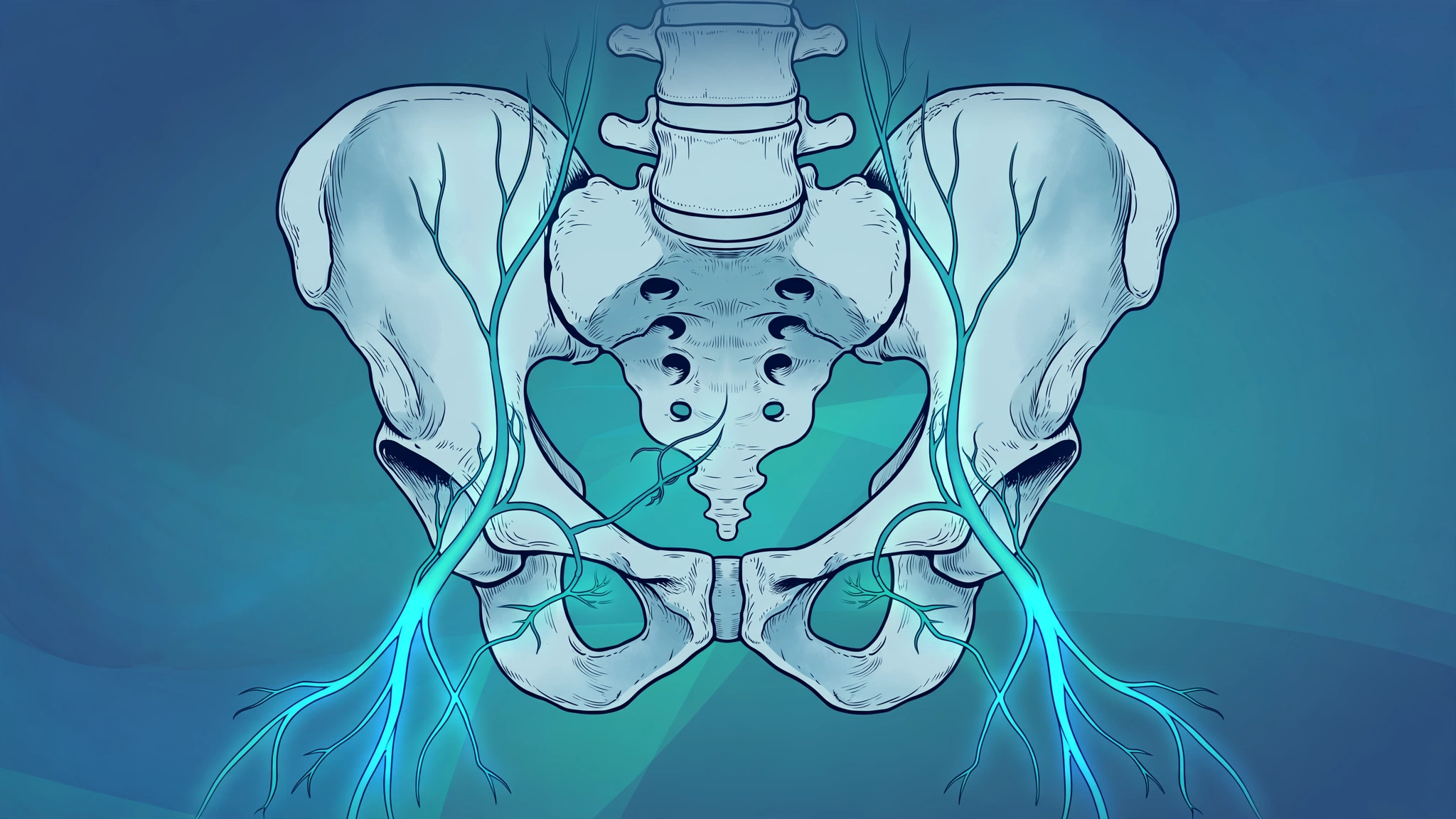
Before the symptoms make sense, it helps to know the wiring. The pudendal nerve is one of the main nerves of the pelvis. It exits the lower spine (nerve roots S2–S4), travels through the pelvis, and passes through a tight tunnel called Alcock’s canal, which lies between two ligaments — the sacrospinous and sacrotuberous ligaments. There it can be squeezed, much like a nerve can be pinched in a tight doorway.
The nerve then splits into three branches, and which branch is affected shapes the pudendal neuralgia symptoms you feel:
- The rectal branch — serves the anal area and external anal sphincter. When affected, symptoms center on anal burning, a “foreign body” sensation, or pain with bowel movements.
- The perineal branch — serves the perineum, labia, scrotum, and surrounding skin. Irritation here typically produces perineal burning or tingling.
- The clitoral or penile branch (dorsal branch) — serves the clitoris or penis. Problems in this branch can cause genital pain, altered sensation, difficulty reaching orgasm, or erectile difficulties.
The pudendal nerve also controls the sphincter muscles that open and close when you use the bathroom, which is why bladder and bowel symptoms are so common alongside the pain.
Recognizing Pudendal Neuralgia Symptoms
The defining feature of pudendal neuralgia symptoms is pain — but the pattern of that pain is what sets it apart. Most people describe burning, shooting, stabbing, aching, or electric-shock sensations, sometimes with tingling, prickling, or numbness. Several features are considered characteristic:
The hallmark pain pattern
Most people describe the pain as burning, shooting, stabbing, aching, or an electric-shock sensation. Tingling, prickling, or numbness can also occur. Several features are considered characteristic:
- Worse when sitting, better when standing or lying down. This is the single most telling clue. Sitting compresses the nerve in Alcock’s canal; standing or lying down releases it.
- Worsens as the day progresses. Mornings may be relatively comfortable, with pain building by evening.
- Not usually waking you at night. Interestingly, the pain generally does not wake people from sleep — a feature that helps distinguish it from some other chronic pain conditions.
- Sitting on a toilet seat feels better than a chair. The open seat removes pressure from the perineum — a strange but reliable tell.
- Symptom intensity varies. Some days are better than others; flare-ups can be triggered by activity.
Where the pain shows up
Depending on which branch of the nerve is involved, pudendal neuralgia symptoms can appear in any combination of these areas:
- Genitals — the vagina, vulva, labia, or clitoris in women; the penis or scrotum in men
- The perineum (between the genitals and anus)
- The anus and rectum, including a sensation of fullness or swelling “like there’s an object in the anus”
- The buttocks, pelvis, lower back, and sometimes the thighs or legs
Pain is often on one side, though it can be on both. Some people report heightened sensitivity — pain when putting on underwear or wearing tight trousers — while others experience numbness or coldness.
Associated bladder, bowel, and sexual symptoms
Many people also experience symptoms affecting the bladder, bowels, and sexual function:
- A frequent or sudden, urgent need to urinate
- Pain when urinating or having a bowel movement
- Constipation
- Pain during or after sex (dyspareunia) — see our guide to causes of painful sex in women
- Difficulty reaching orgasm
- Erectile dysfunction in men — learn about common causes of erectile dysfunction
- Reduced arousal or lubrication in women
These symptoms can take a real toll on daily life, work, relationships, and mental health — which is why getting a correct diagnosis matters so much.
What Causes Pudendal Neuralgia?
Pudendal neuralgia symptoms develop when the pudendal nerve is damaged, irritated, or compressed by:
- Prolonged sitting, especially on hard surfaces — a significant risk factor for office workers
- Cycling, particularly long-distance or intense cycling with a narrow saddle
- Horseback riding and activities with repeated squatting or heavy lifting
- Chronic constipation with repeated straining
- Tight or spasming pelvic floor muscles, which can compress the nerve
- Trauma during childbirth or pelvic injury, including a hard fall onto the buttocks
- Complications of pelvic surgery, such as prostate or gynecological procedures
- Infections, such as genital herpes, that inflame the nerve
- Medical conditions like diabetes (neuropathy) or autoimmune inflammation
- A growth or lesion pressing on the nerve
Sometimes no clear cause is found. Women are affected more often than men, most commonly in middle age, and researchers believe the condition is underdiagnosed.
The Nantes Criteria: How Doctors Actually Diagnose It
Pudendal neuralgia is not diagnosed by any single scan or blood test. Instead, clinicians use the Nantes diagnostic criteria (developed in Nantes, France), the clinical gold standard.
The five Nantes criteria are:
- 1. Pain in the area served by the pudendal nerve — from the anus forward to the penis or clitoris.
- 2. Pain that is predominantly experienced while sitting — and eased by standing or lying down.
- 3. The patient is not woken at night by the pain — this helps separate it from inflammatory or malignant pain.
- 4. No objective sensory loss on examination — meaning tests don’t find numb patches the way they would with some other nerve injuries.
- 5. Pain relief after a diagnostic pudendal nerve block — an injection that numbs the nerve; if the pain temporarily disappears, it strongly supports the diagnosis.
Meeting the first four criteria, confirmed by the fifth, makes the diagnosis very likely. To reach that point, your doctor will typically:
- Rule out other causes with an MRI or CT scan to exclude tumors, herniated discs, or structural problems
- Perform a vaginal or rectal examination to assess the pelvic floor muscles
- Use electromyography (EMG) to check how the nerves are functioning
- Refer you to a neurologist or a specialist pelvic pain clinic for a diagnostic nerve block
Because there is no definitive imaging test for pudendal neuralgia, diagnosis rests on careful clinical evaluation — and on a doctor who knows the Nantes criteria. If your pudendal neuralgia symptoms fit this pattern, it is worth asking your doctor whether the pudendal nerve could be the cause.
What Else Could It Be? Conditions That Mimic Pudendal Neuralgia
Several conditions produce overlapping symptoms, so a good clinician will rule these out before confirming pudendal neuralgia:
- Coccydynia (tailbone pain) — pain centered on the coccyx, often from sitting or a fall, without the genital or nerve-branch pattern
- Interstitial cystitis (bladder pain syndrome) — causes pelvic pain, urinary urgency, and frequency; learn more in our article on interstitial cystitis and painful sex
- Vulvodynia — chronic vulvar pain, often without the sitting-dependent pattern
- Chronic prostatitis / chronic pelvic pain syndrome (in men) — pelvic and genital pain that can look very similar
- Endometriosis — pelvic pain that typically follows a menstrual cycle pattern
- Hemorrhoids or anal fissure — anal pain linked to bowel movements rather than sitting
- Lumbar spine problems — herniated discs or spinal stenosis can refer pain to the pelvis
This overlap is precisely why the Nantes criteria and a targeted nerve block matter: they help separate a pudendal nerve problem from everything else on the list.
How Is Pudendal Neuralgia Treated?
Treatment usually follows a stepwise “ladder”: start with the simplest, least invasive options, and move up only if needed. Many people with pudendal neuralgia symptoms improve significantly with conservative care alone.
Step 1: Self-care and activity changes
The first line of treatment is reducing whatever is irritating the nerve:
- Limit prolonged sitting. Get up and move regularly; avoid sitting on hard surfaces for long stretches.
- Use a U-shaped or cut-out cushion that takes pressure off the perineum and pelvic floor when you must sit.
- Address constipation. Eat plenty of fiber, drink lots of water, and consider a stool softener so you can empty your bowels without straining.
- Modify cycling. Take a break, switch to a wider or noseless saddle, check your bike fit, and stand up on the pedals periodically. If cycling clearly triggers flare-ups, swap it for swimming or walking for a while.
- Avoid squatting with heavy weights, horseback riding, and other activities that worsen your pain.
- Wear loose underwear and trousers to reduce pressure and sensitivity.
Step 2: Pelvic floor physical therapy
A specialized pelvic floor physical therapist can teach exercises to relax and stretch the muscles compressing the nerve, retrain posture, and sometimes use techniques like transcutaneous electrical nerve stimulation (TENS). This is often the single most effective conservative treatment — and it carries essentially no risk. Our guide to pelvic floor exercise benefits explains how this works.
Step 3: Medications
When lifestyle changes and physiotherapy are not enough, doctors may prescribe:
- Nerve-stabilizing medications such as gabapentin or pregabalin, which calm overactive nerve signaling
- Tricyclic antidepressants such as amitriptyline, or related medications like duloxetine, used at doses for nerve pain
- Short-term pain relief while waiting to see a specialist; in some cases a strong painkiller for brief periods
These medications target nerve pain specifically and work differently from ordinary painkillers. Your doctor will start low and adjust based on your response and side effects.
Step 4: Nerve blocks and injections
If oral medications are insufficient, a pain specialist can inject local anesthetic (often with a corticosteroid) around the pudendal nerve — confirming the diagnosis (Nantes criterion 5) and providing relief that can last weeks to months. Botox injections may also relax the muscles around the nerve.
Step 5: Advanced options
For severe, treatment-resistant cases, specialists may consider pudendal nerve neuromodulation (a small implanted device that modulates nerve signals) or surgical decompression, where the surgeon frees the nerve from the surrounding tissue or ligaments through an incision in the gluteal or perineal area. Surgery is a last resort for carefully selected patients: relief can take months to develop and outcomes vary.
Many clinicians also recommend psychological support such as cognitive behavioral therapy (CBT), not because the pain is “in your head,” but because chronic pain takes a genuine psychological toll — and coping skills measurably improve outcomes. The NHS page on pudendal neuralgia summarizes the full range of recommended treatments.
Living With Pudendal Neuralgia: Practical Daily Strategies

Sitting smarter
Since sitting is the primary trigger of pudendal neuralgia symptoms, redesigning your sitting life pays the biggest dividends:
- Switch to a cut-out or U-shaped cushion at your desk, in your car, and anywhere you sit for long periods.
- Take a standing or walking break at least every 30–45 minutes.
- If your job allows, alternate between sitting, standing, and reclining positions.
- On long drives, plan stops and sit slightly reclined rather than upright.
Work and exercise adjustments
You do not have to give up movement — you just need movement that doesn’t compress the nerve. Walking, swimming, and gentle stretching are usually well tolerated. Avoid rowing machines, spin classes, and heavy squats during flare-ups. If your work involves sitting all day, talk to your employer about ergonomic accommodations; chronic nerve pain is a legitimate reason to request them.
Protecting your intimate life
Pain during or after sex is one of the hardest aspects of this condition, and it is nothing to be ashamed of. Open communication helps: explain that the pain is nerve-related, not a lack of desire, and work together on what feels manageable. Couples often find that exploring non-penetrative intimacy keeps closeness alive during flare-ups.
When to See a Doctor
See a doctor if you have persistent pudendal neuralgia symptoms — burning, tingling, or numbness in your genitals, perineum, anus, or pelvis that does not get better — especially if they are worse when sitting. The Cleveland Clinic’s overview of pudendal neuralgia notes the condition remains widely underrecognized, so don’t be discouraged if a first appointment doesn’t yield answers; ask for a referral to a neurologist or pelvic pain clinic.
Seek prompt medical attention if you develop new numbness in the “saddle area,” leg weakness, or loss of bladder or bowel control — these can signal a more serious problem that needs urgent evaluation.
Frequently Asked Questions
Is pudendal neuralgia permanent?
Not necessarily. Many people improve with conservative treatment — activity changes, pelvic floor physical therapy, and medication — and some cases resolve entirely. Even in long-standing cases, stepwise treatment can reduce pain significantly. The earlier it is diagnosed and treated, the better the outlook tends to be.
How is pudendal neuralgia different from pelvic floor dysfunction?
They often overlap: tight pelvic floor muscles can compress the pudendal nerve, and pudendal nerve irritation can make the pelvic floor tense up in response. Pudendal neuralgia is specifically a nerve condition diagnosed with the Nantes criteria, while pelvic floor dysfunction is a muscle problem. A pelvic floor therapist can often help with both — which is why physiotherapy is first-line treatment.
Can cycling cause pudendal neuralgia?
Yes — cycling is one of the best-recognized risk factors, especially long-distance riding on narrow saddles. Wider or noseless saddles, proper bike fit, and standing periodically all reduce the risk. You don’t necessarily have to quit, but modification during a flare is wise.
Does pudendal neuralgia affect fertility or pregnancy?
Pudendal neuralgia itself does not directly affect fertility. Pregnancy and vaginal childbirth, however, can aggravate symptoms because of pressure and nerve stretch during delivery. If you have pudendal neuralgia and are planning a pregnancy, discuss delivery planning with your obstetrician in advance — and pelvic floor physical therapy during pregnancy can help manage symptoms.
What kind of doctor treats pudendal neuralgia?
A GP can start the evaluation, but specialist care usually comes from a neurologist, a pelvic pain specialist, a urologist or urogynecologist experienced in chronic pelvic pain, or a pain-management clinic. Pelvic floor physical therapists with specific pelvic-pain training are also central to treatment.
Are there support resources for people with pudendal neuralgia?
Yes. Chronic pelvic pain can be isolating, and support organizations such as the Pelvic Pain Support Network and Action on Pain offer community, information, and coping resources. Your specialist pain clinic can also point you toward local support groups and counseling.
Can pudendal neuralgia be cured with surgery?
Surgery (pudendal nerve decompression) helps some people, but it is not a guaranteed cure and is considered only after all conservative and injection-based options have failed. Relief after surgery may take months to years to develop. Discuss the realistic benefits and risks thoroughly with a surgeon experienced in pudendal nerve procedures before considering this path.
This article is for educational purposes only and is not medical advice. Pelvic pain has many causes, and only a qualified healthcare professional who examines you can diagnose pudendal neuralgia or recommend treatment. If you are experiencing persistent pudendal neuralgia symptoms, please see your doctor or a pelvic pain specialist.