Can You Get an STI From Kissing? What Doctors Say
Can you get sti from kissing? It is one of the most common questions sexual-health doctors hear, and the honest answer is: yes, some infections can pass through kissing — but most cannot. Kissing is far safer than oral, vaginal, or anal sex, yet saliva and mouth-to-mouth contact can still transmit a handful of specific infections. This doctor-informed guide breaks down exactly which STIs can spread through kissing, which ones cannot, the emerging research most articles skip, and the concrete steps clinicians recommend to keep kissing safe.
Can You Get STI From Kissing? The Short Answer
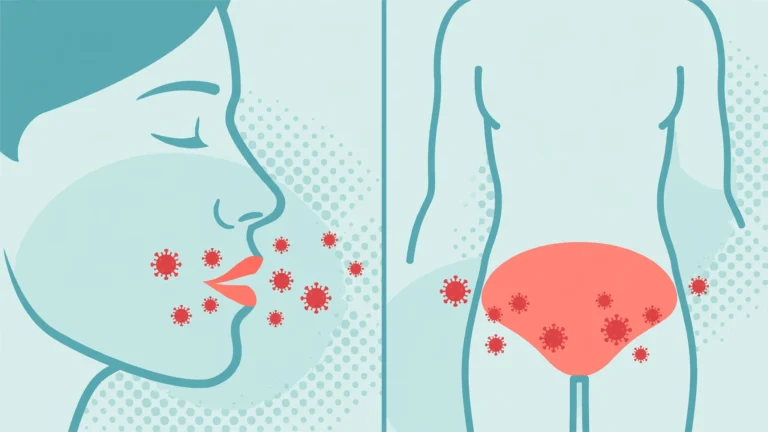
Doctors generally describe kissing — even deep, open-mouth “French” kissing — as a low-risk sexual activity compared with any form of intercourse. Saliva itself carries very few of the pathogens that cause the most common STIs. However, a small group of infections can travel through the mouth via cold sores, open cuts, gum bleeding, or direct contact with infectious sores and lesions. The infections doctors worry about most with kissing are oral herpes (HSV-1), syphilis, oral HPV, and, according to newer research, possibly throat gonorrhea.
Understanding the distinction matters because it prevents two opposite mistakes: ignoring a real exposure (a cold sore is highly contagious) or panicking over zero-risk situations (HIV, chlamydia, and trichomoniasis do not spread through kissing). Let us go through the evidence one infection at a time — the full, honest answer to “can you get sti from kissing.”
STIs You Can Get From Kissing
1. Oral herpes (HSV-1, and sometimes HSV-2)
Herpes simplex virus type 1 — the virus behind cold sores and fever blisters — is by far the most common infection transmitted through kissing. The World Health Organization estimates that about two-thirds of the global population under age 50 carries HSV-1. It spreads through direct contact with a cold sore, but also through saliva when no sore is visible, a phenomenon doctors call asymptomatic viral shedding — which is how many people acquire it in childhood from a relative’s kiss.
Once acquired, herpes stays in the nervous system for life, reactivating periodically. Doctors prescribe antivirals to shorten outbreaks, and daily suppressive therapy for people with frequent recurrences. The highest-risk window is an active outbreak: pause kissing and oral sex until it has fully healed. So can you get sti from kissing even when no sore is visible? With herpes, yes — the Mayo Clinic explains that infected people can spread the virus even without visible sores. Note that oral HSV-1 can also transmit to the genitals through oral sex, now one of the most common routes to genital herpes. It is the main reason clinicians answer “can you get sti from kissing” with a qualified yes.
2. Syphilis
Syphilis is caused by the bacterium Treponema pallidum and spreads through direct contact with an infectious sore — including sores inside the mouth or on the lips. In primary syphilis, painless ulcers called chancres can appear in the mouth up to three weeks after exposure, and kissing someone with an active oral chancre can transmit the infection.
This is also why doctors treat the question “can you get sti from kissing” as a syphilis question first: a painless oral chancre is easy to miss, yet highly infectious while it lasts. A simple blood test a few weeks after exposure can detect it. The CDC’s syphilis fact sheet confirms that sores can appear on the lips or in the mouth. Caught early, syphilis is fully curable with antibiotics — but untreated, it can eventually damage the heart, brain, eyes, and nervous system, so an unusual mouth sore after kissing a partner of unknown status deserves a prompt doctor visit.
3. Human papillomavirus (oral HPV)
HPV is best known as a genital and cervical cancer risk, but about 40 strains can infect the mouth and throat — nine of them linked to throat cancer, which is rising particularly in men. Oral HPV spreads through oral sex and mouth-to-mouth contact. The reassuring news: most oral infections clear on their own within one to two years without symptoms.
Many people who ask “can you get sti from kissing” are really worried about the infections they cannot see — and oral HPV is the classic example: no symptoms, no warning signs, and no way to screen a partner visually. Doctors therefore point to the HPV vaccine as the single most effective protection — recommended through age 26 for everyone, and up to age 45 for some adults after discussion with a clinician.

4. Gonorrhea of the throat — the emerging research
For decades, gonorrhea was assumed to spread only through oral, vaginal, or anal sex. But a 2019 Melbourne study found that men who kissed — with or without other sexual contact — had higher rates of throat gonorrhea than those who had sex without kissing. A 2022 follow-up linked kissing (but not fellatio alone) to throat gonorrhea, and a 2023 review found four more supporting studies.
Until recently, asking if you can get sti from kissing and meaning gonorrhea would have earned a flat no. These studies have reopened that question — though all focused on gay and bisexual men in Australia, so replication in other populations is still needed. Throat gonorrhea rarely causes symptoms, which is why doctors increasingly include throat swabs in STI testing for sexually active patients. In other words, the old flat answer to “can you get sti from kissing” no longer applies to gonorrhea.
5. Cytomegalovirus (CMV) and mononucleosis — are they “STIs”?
Two saliva-borne viruses are often left out of kissing-STI articles even though they spread readily through mouth contact — yet anyone asking “can you get sti from kissing” deserves to know about them. CMV (cytomegalovirus), a herpes-family virus, transmits through saliva and sexual fluids. In healthy adults it usually causes no symptoms or a brief mono-like illness. The under-discussed risk is pregnancy: acquiring CMV for the first time during pregnancy can harm the baby — doctors advise pregnant women to avoid deep kissing with young children, who shed CMV heavily.
Epstein-Barr virus (EBV), the main cause of infectious mononucleosis (“the kissing disease”), spreads through saliva and close quarters like college dorms, bringing weeks of exhaustion, sore throat, and swollen glands. Neither CMV nor mono is classified as an STI, but both travel through the same saliva exchange that kissing involves, so doctors counsel patients about them in the same conversation.
STIs You Cannot Get From Kissing
When you ask “can you get sti from kissing,” the longer and more clinically important list is what kissing does not transmit:
| Infection | Transmitted by kissing? | Why not |
|---|---|---|
| Chlamydia | No | Spreads through oral, vaginal, or anal sex and genital fluids — the bacterium does not survive in saliva in infectious amounts. |
| HIV | No | Saliva contains enzymes that inhibit HIV, and the virus is not present in saliva at levels that can cause infection. The CDC describes the risk as extremely low to negligible. |
| Hepatitis B and C | No | Spread through blood and sexual fluids; saliva is not an effective transmission route. |
| Trichomoniasis | No | Requires genital-to-genital contact or shared genital fluids; cannot survive the mouth environment. |
| Pubic lice / scabies | No | Spread through body hair and skin-to-skin contact of the pubic area, not through mouth contact. |
| Pelvic inflammatory disease (PID) | No | A complication of untreated chlamydia or gonorrhea of the reproductive tract, not something transmitted directly at all. |
The one exception doctors always note: blood changes the equation. If both partners have bleeding gums or open mouth sores, blood-to-blood contact is theoretically possible — vanishingly rare for infections like HIV, but the reason clinicians advise against deep kissing with significant oral bleeding. For most people, ordinary kissing with an intact mouth carries no HIV or hepatitis risk whatsoever.
Does the Type of Kiss Matter? What About Sharing Drinks?
When people ask “can you get sti from kissing,” they usually mean deep French kissing — and that is indeed the highest-risk type. Risk rises with the intensity and duration of saliva exchange. A closed-mouth peck carries essentially no risk for any infection. Deep French kissing, with tongue contact and substantial saliva exchange, is the scenario in which herpes, syphilis, oral HPV, and possibly throat gonorrhea become relevant.
People ask doctors about sharing drinks almost as often as they ask “can you get sti from kissing” — sharing drinks, utensils, lip balm, or toothbrushes can transmit herpes, CMV, and EBV/mono — but not chlamydia, gonorrhea, syphilis, trichomoniasis, or HIV. Do not share personal oral items during a cold-sore outbreak.
How to Lower Your Risk: A Doctor-Framed Checklist
The reassuring part of answering “can you get sti from kissing” is that most prevention comes down to simple habits rather than avoiding kissing altogether. Most kissing-risk articles stop at listing infections. Clinicians go further, giving patients concrete habits. Here is what sexual-health doctors actually advise:
- Do a quick visual check. Before kissing a new partner, look for cold sores, blisters, or unusual sores on or inside the mouth. This single habit prevents more transmission than anything else.
- Pause kissing during outbreaks. If you or your partner has an active cold sore, skip kissing and oral sex until it has completely healed. Ask a clinician about antivirals if outbreaks recur.
- Mind your mouth health. Bleeding gums, recent dental work, or a bitten cheek create entry points for blood-borne pathogens. Postpone deep kissing until the area heals.
- Get the HPV vaccine. If you are within the recommended age range (up to 26 routinely, up to 45 after discussion with a doctor), vaccination is the most effective protection against oral HPV and its cancer risks.
- Use barrier protection for oral sex. Kissing is low risk, but if the evening progresses to oral sex, the risk profile changes completely — condoms and dental dams become essential. Our guide on whether oral sex is safe explains the full picture.
- Talk about it. Disclosing a herpes diagnosis or recent exposure is awkward but prevents transmission. See our guide to disclosing an STI when dating for scripts that make the conversation easier.
When to See a Doctor and Get Tested
If you are asking “can you get sti from kissing” after one specific encounter, your next question is usually whether to get tested. Doctors recommend testing after a kissing exposure in specific situations, not as a blanket rule. Seek testing or a clinical evaluation if:
- You develop a sore, blister, rash, or persistent sore throat within a few weeks of kissing a partner whose STI status you did not know.
- You kissed someone who later told you they have syphilis, herpes, or throat gonorrhea — tell the clinic this explicitly, because throat swabs are not part of every standard STI panel.
- You notice cold sores recurring, which a clinician can diagnose and manage with antivirals.
- You are pregnant or planning pregnancy and had significant saliva exposure (CMV concern) — discuss CMV screening with your obstetrician.
Timing matters because every STI has a window period before tests turn positive. Syphilis typically becomes detectable by blood test 3 to 6 weeks after exposure; herpes blood tests can take up to 12 weeks; throat gonorrhea can be detected by swab within about a week. Doctors advise against testing the morning after an exposure — a test taken too early reflects infections from before the encounter, not the new one. When in doubt, describe the exposure to a sexual-health clinic and they will schedule you at the right interval — the right follow-up after asking “can you get sti from kissing.”
FAQs
Here are the exact questions doctors hear most when patients ask “can you get sti from kissing”:
Can you get an STI from a kiss on the cheek?
A peck on the cheek carries essentially no STI risk. Transmission requires contact between mucous membranes, saliva, or an infectious sore — none of which meaningfully occurs with a brief cheek kiss. Even for highly contagious herpes, doctors do not consider cheek pecks a realistic route.
Can cold sores spread through kissing after the sore has healed?
Once a cold sore has fully healed, the risk drops sharply — but not to zero. Herpes can shed silently from the skin around the mouth without any visible sore, which is why some transmissions happen between outbreaks. The risk is far lower than during an outbreak, which is why doctors recommend suppressive antiviral therapy for people with frequent recurrences.
Can you get HIV from deep kissing?
No. HIV is not present in saliva at infectious levels, and saliva contains enzymes that inhibit the virus. Decades of research have found no confirmed cases of HIV transmission through kissing alone. The only theoretical exception — both partners having significant open mouth bleeding with blood exchange — is considered vanishingly rare.
Can you get an STI from kissing if you have bleeding gums?
Bleeding gums or a bitten lip raise the theoretical risk slightly because blood, unlike saliva, can carry blood-borne infections. In practice, doctors still consider the risk from deep kissing very low — but they advise postponing deep kissing until the bleeding stops, as a precaution.
Should I get tested after kissing someone who has an STI?
It depends on the infection. For herpes, syphilis, or throat gonorrhea, yes — tell the clinician about the kissing exposure so they order the right tests (a throat swab, a syphilis blood test). For chlamydia, HIV, or hepatitis, kissing alone is not a recognized transmission route. Never test the day after exposure; wait for the window period your clinician advises.
Can sharing drinks or lip balm spread STIs?
Sharing drinks, utensils, or lip balm can spread saliva-borne viruses like herpes, CMV, and the mono virus — but not chlamydia, gonorrhea, syphilis, trichomoniasis, or HIV. Doctors advise against sharing oral items during a cold-sore outbreak and recommend keeping toothbrushes and lip products personal regardless.
The bottom line from doctors: can you get sti from kissing? The answer is a qualified yes for a small list — herpes most of all, plus syphilis, oral HPV, and possibly throat gonorrhea — and a confident no for chlamydia, HIV, hepatitis, and trichomoniasis. Kissing remains one of the safest forms of physical intimacy. A quick visual check for sores, a pause during outbreaks, the HPV vaccine, and an honest conversation with your partner cover nearly all of the real risk. If you are ever unsure after an exposure, a sexual-health clinic can advise you in minutes — and talking to your doctor is always the right call.
Medical disclaimer: This article is for educational purposes only and is not medical advice. It does not establish a doctor-patient relationship. STI symptoms and risks vary from person to person; only a qualified healthcare professional who evaluates you directly can diagnose an infection or recommend treatment. If you have symptoms or concerns after a possible exposure, consult a doctor or sexual-health clinic promptly.