Oral Herpes vs Genital Herpes: HSV-1 vs HSV-2 Differences Explained
Understanding oral vs genital herpes differences is harder than it should be, because the names are genuinely confusing. “Oral herpes” and “genital herpes” describe where on the body an infection shows up, while “HSV-1” and “HSV-2” describe which virus is responsible — and the two labels do not map onto each other as neatly as most people assume. The cold-sore virus (HSV-1) now causes a large share of genital infections, while the “genital herpes” virus (HSV-2) can occasionally appear around the mouth. This guide explains the real differences — transmission, symptoms, recurrence, testing, and treatment for couples — per CDC, NHS, Mayo Clinic, and Cleveland Clinic guidance.
What “Oral Herpes” and “Genital Herpes” Actually Mean
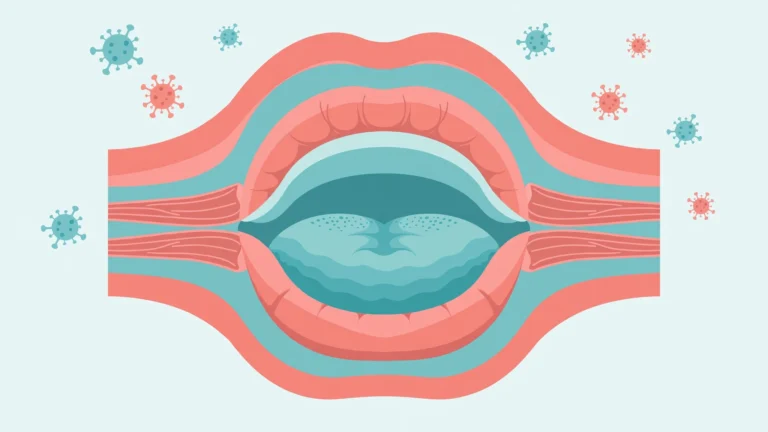
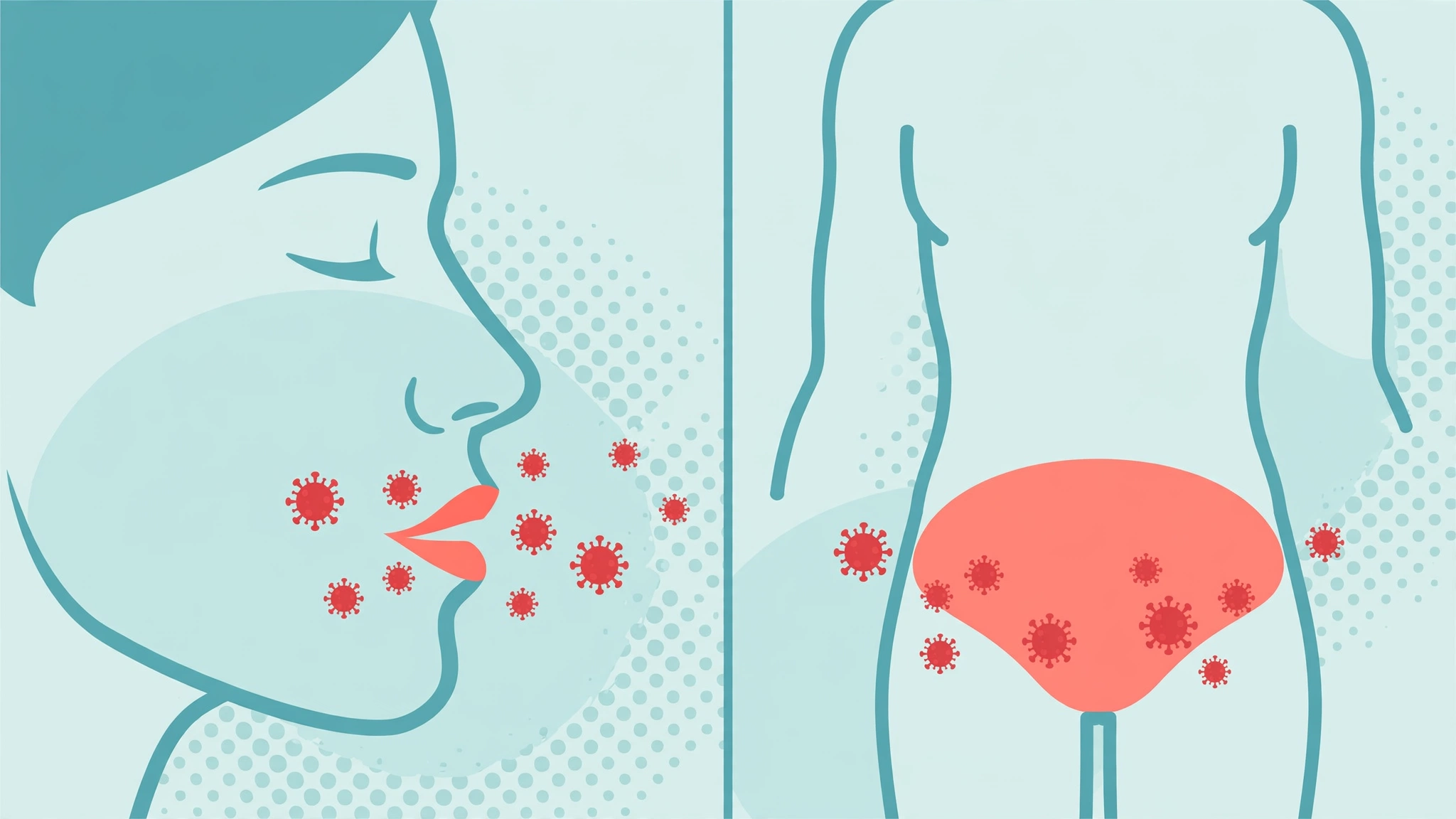
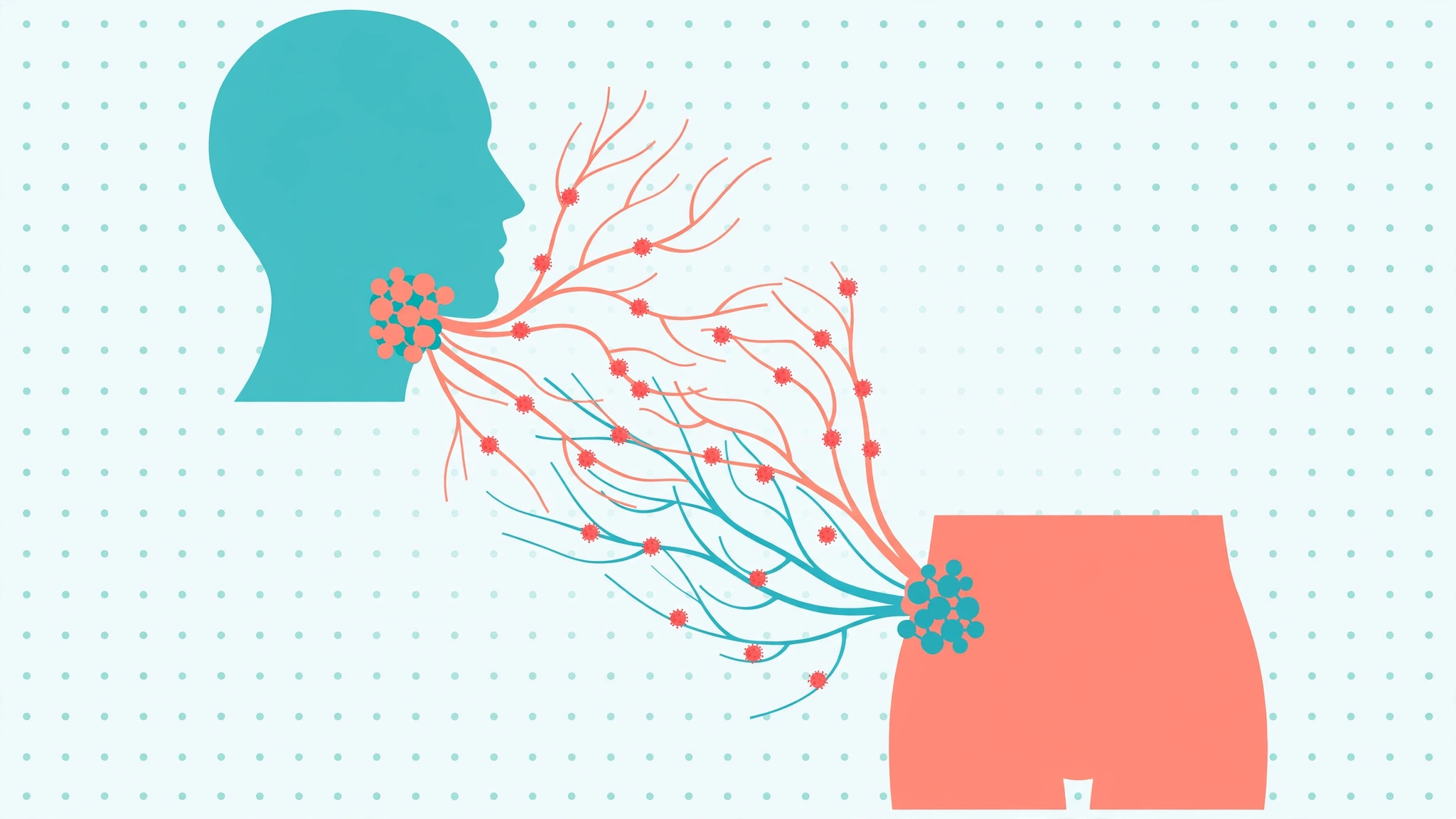
Oral herpes is HSV infection of the lips, mouth, or face — cold sores. Genital herpes is HSV infection of the genitals, anal area, thighs, or buttocks. These are location labels, not virus labels: HSV-1 and HSV-2 are two closely related strains of the same virus, and either strain can infect either location. In practice, HSV-1 prefers the oral region and HSV-2 the genital region, because each goes latent in the nerve cluster nearest its usual entry point — the trigeminal ganglia near the jaw for HSV-1, the sacral ganglia near the base of the spine for HSV-2.
The old shorthand — “HSV-1 is oral, HSV-2 is genital” — has become less accurate. HSV-1 now causes a large share of new genital herpes cases, especially among younger adults, mainly through oral sex. That shift is why the key oral vs genital herpes differences are less about the virus itself and more about location preference, recurrence patterns, and how each pairing spreads.
HSV-1 vs HSV-2: A Side-by-Side Comparison
| Feature | HSV-1 | HSV-2 |
|---|---|---|
| Usual infection site | Oral (lips, mouth, face) | Genital (genitals, anal area) |
| Global prevalence (WHO) | ~3.7 billion people under 50 | ~491 million people aged 15–49 |
| Typical transmission | Kissing, saliva, skin contact, oral sex | Vaginal, anal, and oral sex |
| Can infect the other site? | Yes — a leading cause of genital herpes today | Yes — but oral HSV-2 is rare and rarely recurs |
| Genital recurrence | Mild; often 0–1 outbreaks per year after the first year | More frequent; commonly 4–6 outbreaks in the first year, easing over time |
| Genital asymptomatic shedding | ~3–5% of days | ~10–15% of days |
| Oral asymptomatic shedding | ~9–25% of days | ~1% of days (very rare) |
| Treatment | Same antivirals as HSV-2 | Same antivirals as HSV-1 |
How Each Type Spreads: The Cross-Over That Confuses People
One of the most important oral vs genital herpes differences is transmission. HSV-1 is most often picked up in childhood through non-sexual contact — a kiss from a relative, a shared drink. HSV-2 is almost always sexually transmitted. But once either virus is present, it spreads through skin-to-skin contact with the infected area, regardless of strain. Here is the full cross-over picture most guides gloss over:
- Mouth to mouth: Oral HSV-1 spreads through kissing or shared utensils. Oral HSV-2 almost never spreads this way because it sheds so rarely from the mouth.
- Mouth to genitals: Oral sex is the main route by which oral HSV-1 reaches a partner’s genitals, producing genital HSV-1 — the fastest-growing form of genital herpes. This can happen even without a visible cold sore.
- Genitals to mouth: Receiving oral sex from a partner with genital HSV-2 can produce oral HSV-2, but this is uncommon, and oral HSV-2 recurs very rarely.
- Genitals to genitals: The standard route for genital HSV-2 during vaginal or anal sex, though genital HSV-1 can spread this way too — just less efficiently, because it sheds less often.
Herpes transmits most easily from the first tingle of an outbreak until sores fully heal, but asymptomatic shedding means it can pass without symptoms. And if one partner has oral HSV-1 and the other has genital HSV-2, people can carry both types at once — having HSV-1 first may make a later HSV-2 first outbreak milder. For more on safer oral sex generally, see our guide to oral sex and STI risks.
Symptoms: What Outbreaks Look Like at Each Site
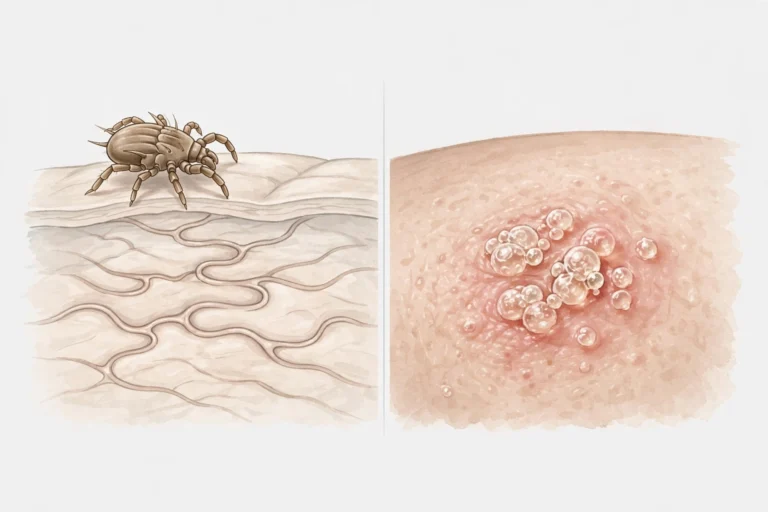
Outbreaks follow the same sequence at either site: tingling or burning (the prodrome), then small blisters that break open into sores, then scabbing and healing. A first outbreak can also bring fever, body aches, and swollen lymph nodes. That said, several oral vs genital herpes differences show up in practice:
- Location and count: Oral herpes usually appears as one or a few clustered cold sores on the lip border. Genital outbreaks, particularly from HSV-2, can involve more numerous, widespread blisters across the genitals, thighs, or buttocks.
- Urinary and vaginal symptoms: Genital first outbreaks can cause pain with urination and, in women, vaginal discharge — symptoms oral herpes never produces.
- First-outbreak severity: A first genital outbreak from HSV-1 can be just as intense as one from HSV-2 — but what happens afterward diverges sharply.
Oral vs Genital Herpes Differences in Recurrence
How often it comes back depends far more on where it lives than on which virus caused it. Oral HSV-1 recurs — some people get cold sores several times a year, others go years between episodes, with triggers like sun exposure, stress, and fatigue. But genital HSV-2 recurs far more often: an average of 4–6 outbreaks in the first year, decreasing over time, while genital HSV-1 typically causes 0–1 outbreaks per year after the first year, and many people never have a noticeable recurrence.
Knowing your type matters: a swab-typed diagnosis of genital HSV-1 vs genital HSV-2 changes the prognosis and the treatment plan. If a clinician says only “you have herpes,” ask for a type-specific test — the oral vs genital herpes differences in recurrence make this detail worth having.
Asymptomatic Shedding: Transmission Without Symptoms
Asymptomatic shedding — the virus becoming active on the skin without visible sores — is one of the least understood oral vs genital herpes differences, and it drives most silent transmission:
- Genital HSV-2: sheds on roughly 10–15% of days — the most frequent shedder, and the highest transmission risk.
- Oral HSV-1: sheds on roughly 9–25% of days; people with frequent cold sores shed more often.
- Genital HSV-1: sheds on roughly 3–5% of days, declining over time — after a couple of years, shedding drops to a few days per year.
- Oral HSV-2: sheds on roughly 1% of days — very rare.
Two takeaways: “my partner had no symptoms” is not evidence against transmission — most between-outbreak transmission is silent shedding. And oral HSV-1 sheds often enough that genital HSV-1 can pass even when no cold sore is visible.
Testing: How Doctors Tell the Two Apart
You cannot tell HSV-1 from HSV-2 by looking at an outbreak — symptoms at the same site are essentially identical. Only testing identifies the type, and the right test depends on whether sores are present:
- Swab of an active lesion (PCR): The gold standard for both oral and genital sores. Fluid from the blister is tested for viral genetic material and typed as HSV-1 or HSV-2. Accuracy is highest while the blister is fresh — get tested while the sore is present.
- Type-specific IgG blood test: Used when no sores are present. It detects antibodies to HSV-1 and HSV-2 separately, but it cannot tell you where on the body the infection lives, and it takes roughly 12 weeks after exposure for antibodies to become detectable.
- What to avoid: The IgM test cannot reliably distinguish between types and produces false positives often enough that most clinicians do not recommend it. If a clinic offers IgM, ask for IgG instead.
One gap in most patient guides: blood tests are weakest exactly where patients need them most. A positive HSV-1 blood test cannot tell you whether your infection is oral or genital — and since most adults carry oral HSV-1 unknowingly, an HSV-1 antibody result causes needless panic unless a clinician interprets it. For a broader look at when STI testing makes sense, read our STI testing guide.
Treatment: What Doctors Recommend for Both Types
Treatment is one area where oral vs genital herpes differences are minimal: both types respond to the same antiviral medications. There is no cure for HSV — after infection, the virus remains latent in nerve cells for life — but treatment can shorten outbreaks, reduce their frequency, and lower transmission risk.
- Cold sores: Over-the-counter antiviral creams can speed healing if applied at the first tingle, before blisters appear. If outbreaks are large, painful, or frequent, a doctor may prescribe antiviral tablets.
- Genital herpes: Doctors prescribe antiviral tablets, ideally started within a few days of symptoms appearing for a first outbreak. For recurrences, a short course started at the first sign of symptoms typically shortens each outbreak.
- Episodic vs suppressive therapy: Suppressive (daily) therapy is recommended for frequent outbreaks — generally more than six per year — and research shows it also reduces shedding and lowers the chance of passing genital herpes to a partner by roughly half.
For the authoritative clinical references behind this guide, see the CDC’s overview of genital herpes and the NHS guide to genital herpes.

Protecting Your Partner: Practical Steps for Couples
Because oral vs genital herpes differences in transmission risk are so asymmetric, prevention advice differs too — an angle most comparison articles skip:
- Avoid contact during outbreaks: No kissing or oral sex during a cold sore (from first tingle to complete healing), and no vaginal, anal, or oral sex during a genital outbreak.
- Barrier methods reduce but do not eliminate risk: Condoms cover only part of the skin where shedding occurs, so they reduce genital transmission by roughly a third to a half. Dental dams serve the same role for oral sex on a partner with genital herpes.
- Daily suppressive therapy helps partners too: For the partner with frequent genital outbreaks, daily antivirals reduce both outbreaks and shedding, lowering transmission risk. Discuss this option with a doctor together.
- Know the asymmetry: The highest transmission risk is genital HSV-2 → genital transmission during silent shedding; the most underestimated is oral HSV-1 → genital transmission during oral sex, because few people see a cold sore as an STI risk.
- Talk about it plainly: Disclosure feels harder for genital herpes than for cold sores, even though the virus family is the same. Our guide to disclosing an STI to a partner offers practical scripts.
Pregnancy: One of the Few Times Type Changes Care
Among the oral vs genital herpes differences, pregnancy management is one of the few where the type genuinely changes medical care. Women who already had genital herpes before pregnancy can usually expect a healthy baby and a vaginal delivery. The highest risk comes from catching genital herpes for the first time late in pregnancy, when the mother’s immune system has not yet built protective antibodies — a caesarean delivery may then be recommended. This risk applies to both types: about half of neonatal herpes cases are caused by HSV-1. Pregnant people with a history of genital herpes should tell their midwife or doctor early so antiviral suppression can be planned. And never kiss a newborn while you have a cold sore.
Common Myths Worth Retiring
Clearing up confusion is the point of comparing oral vs genital herpes differences, and these five myths cause the most of it:
- “Cold sores aren’t herpes.” They are — cold sores are oral herpes caused by HSV-1, the same virus family behind genital herpes. The distinction is cultural, not medical.
- “HSV-1 can turn into HSV-2.” No. The strains are genetically distinct and permanent. If oral HSV-1 spreads to a partner’s genitals, that partner has genital HSV-1 — the type never changes based on location.
- “Only HSV-2 is an STI.” Oral HSV-1 transmitted to the genitals through oral sex is a sexually transmitted infection in every meaningful sense.
- “You can tell the type by where the sores are.” You cannot. Only a swab or type-specific blood test identifies the strain.
- “Herpes spreads through towels and toilet seats.” It does not survive well off the body; transmission requires direct skin-to-skin contact.
Key Takeaways on Oral vs Genital Herpes Differences
If you remember only a few oral vs genital herpes differences, make them these: the location labels describe where on the body an infection appears, while the virus labels describe which strain caused it — and either strain can infect either site. The oral vs genital herpes differences that matter most for couples are recurrence frequency and asymptomatic shedding, since those drive silent transmission risk. Finally, the oral vs genital herpes differences around testing and treatment are smaller than many expect: both types respond to the same antivirals, and type-specific testing is what clarifies your prognosis. Review these oral vs genital herpes differences with your clinician when deciding on testing, suppressive therapy, and disclosure.
FAQs
Can my partner’s cold sore give me genital herpes?
Yes. Oral sex with a partner who has oral HSV-1 can transmit the virus to your genitals, producing genital HSV-1 — now one of the most common causes of new genital herpes, even without a visible cold sore. Avoid oral sex from the first tingle of a cold sore until it has fully healed.
Is oral herpes considered a sexually transmitted infection?
Oral HSV-1 acquired through kissing in childhood is not usually thought of as an STI. But when oral HSV-1 spreads to the genitals through oral sex, or when genital HSV-2 spreads to the mouth, the infection was sexually transmitted. The labels describe transmission history and location, not two fundamentally different diseases.
Which is worse, oral herpes or genital herpes?
Neither is inherently worse — medically, both are manageable, lifelong conditions treated with the same medications. Genital HSV-2 recurs more often, but severity varies widely. The far bigger difference is social: genital herpes carries stigma that cold sores do not, despite the viruses being close relatives.
Can you have both HSV-1 and HSV-2 at the same time?
Yes — for example, oral HSV-1 from childhood plus genital HSV-2 acquired later. Having HSV-1 first may make a first HSV-2 outbreak milder, but it does not prevent acquiring HSV-2. Type-specific testing identifies each strain separately, helping your doctor plan management.
How do I find out which type of herpes I have?
A swab (PCR) of an active sore is the most accurate and identifies the type directly. Without sores, a type-specific IgG blood test detects antibodies to each strain but needs roughly 12 weeks after exposure to be reliable, and cannot tell you where the infection lives. Avoid IgM tests.
Can oral herpes spread to the genitals within my own body?
Self-transmission to a new body site is uncommon in adults because established antibodies protect other sites; it happens mostly during a first outbreak, before antibodies have formed. This is why doctors advise washing hands after touching a sore during a first episode.
Medical Disclaimer
This article is for educational purposes only and is not medical advice. Herpes simplex virus infections vary between individuals, and only a qualified healthcare professional can diagnose HSV, determine the type, and recommend appropriate treatment. If you suspect you have oral or genital herpes, see a doctor or sexual health clinic while any sores are present.