Statins, Finasteride, and ED: Medications Men Don’t Suspect at All
When a man develops erection problems, he usually looks first at stress, age, or his relationship — the medicine cabinet is the last place he checks. Yet for a meaningful number of men, the answer sits in a prescription bottle taken every morning. The link between statins and erectile dysfunction is one of the most under-discussed side effect stories in men’s health — and statins aren’t even the most notorious offender. That distinction belongs to finasteride, whose sexual side effects have been debated for more than a decade.
This guide covers the evidence on both drugs: how they can interfere with erections, how often it happens, and how doctors separate a drug side effect from an underlying condition. It is written for couples — because partners who understand the full picture make better decisions together.
The Two Drugs Men Never Suspect
Most men know blood pressure pills can cause sexual problems — thiazide diuretics and older beta-blockers have carried that reputation for decades. Far fewer realize two other extremely common prescriptions have an evidence trail linking them to erection difficulties:
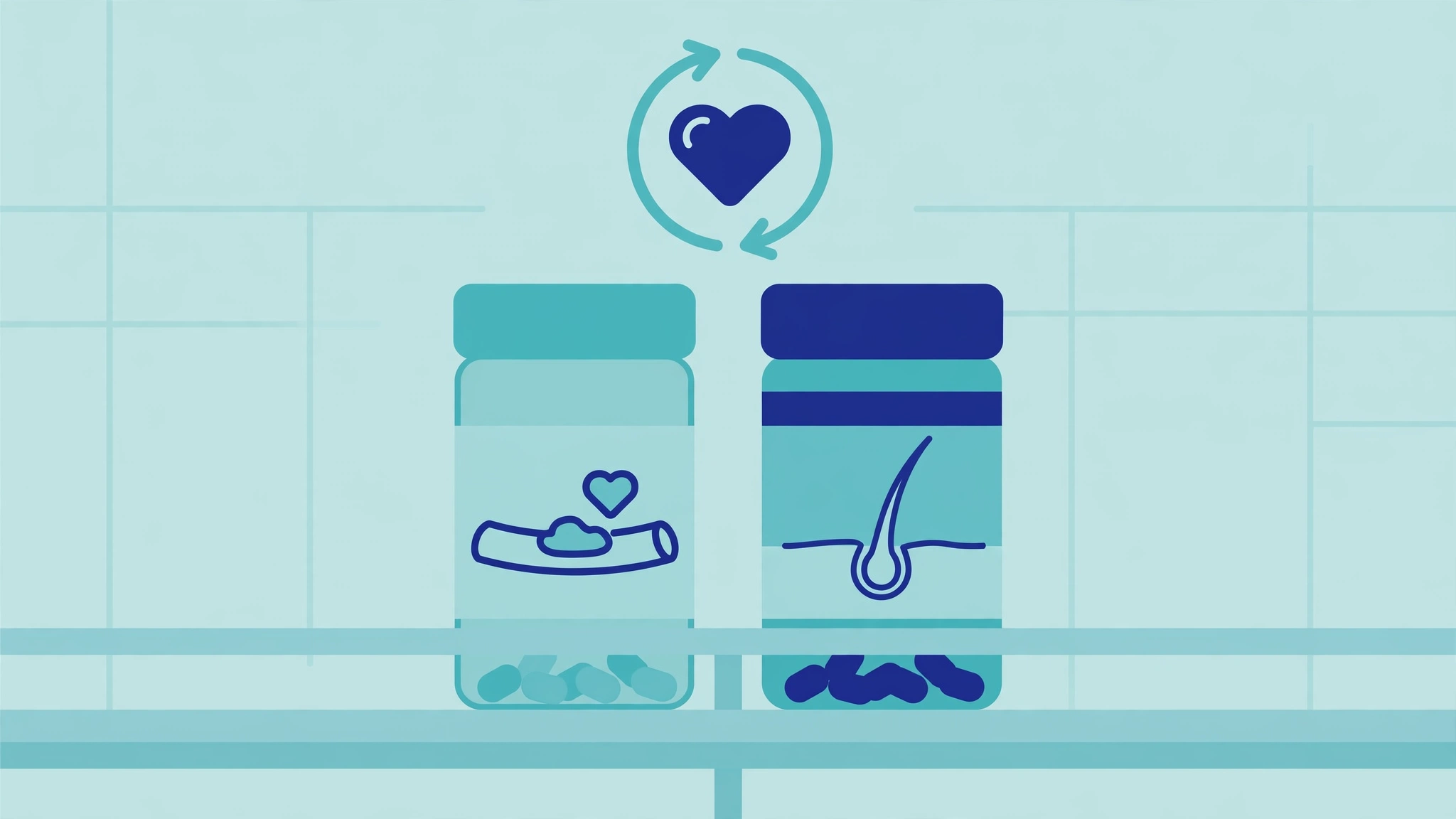
- Statins — cholesterol-lowering drugs taken by well over 200 million people worldwide, many of them men who feel otherwise healthy.
- Finasteride — prescribed in a low dose for male-pattern hair loss and a higher dose for enlarged prostate (BPH).
Neither drug is officially a “sexual dysfunction medication,” which is exactly why the connection surprises people. Understanding the statins erectile dysfunction risk alongside finasteride’s better-documented profile helps you ask sharper questions — and avoid the two most common mistakes: quitting a lifesaving drug without medical guidance, or suffering in silence through a side effect that had a fix.
In short, the statins erectile dysfunction risk deserves the same open conversation as any other medication side effect — neither silence nor panic.
Statins and Erectile Dysfunction: What the Evidence Actually Shows
The statins erectile dysfunction risk debate is genuinely complicated because the research points both ways — and both are plausible. Erections depend on healthy blood flow, which statins improve; but cholesterol is also the raw material the body uses to build testosterone. Both are true, which is why the literature looks contradictory at first glance.
How Statins Could Interfere With Erections
Clinicians who take the statins erectile dysfunction risk seriously generally cite three mechanisms:
- Testosterone substrate: Cholesterol is a precursor to testosterone, so aggressive cholesterol lowering could leave less building material for sex hormones in some men — reducing libido, energy, and morning erections.
- Direct effects: Safety databases show ED reported in a pattern suggesting a real drug effect — symptoms appearing within weeks of starting, improving after stopping, and occasionally returning on rechallenge.
- The reverse arrow — statins as helpers: Paradoxically, several analyses found statins improve erectile function, likely via better blood-vessel function and nitric oxide availability. Men whose ED stems from clogged arteries may perform better on a statin than off one.
Any one of these mechanisms could explain the statins erectile dysfunction risk in a susceptible man — and they are not mutually exclusive.
Reassuringly, a 2017 meta-analysis of nearly 70,000 men found no significant increase in new-onset ED among statin users overall, and a long-running randomized trial substudy (HOPE-3) found rosuvastatin neutral for erectile function over nearly six years of follow-up. These high-quality data points explain why most doctors do not list ED among the headline statin side effects.
Not All Statins Are Alike: The Lipophilic vs Hydrophilic Clue
Here is where this guide goes beyond standard coverage: statins are not a single uniform drug. They differ in chemistry, and that chemistry may matter for sexual function.
This is where the statins erectile dysfunction risk picture gets sharper. A 2026 Mendelian randomization study (UK Biobank and FinnGen genetic data) found the small overall risk was driven almost entirely by the lipophilic statins atorvastatin and simvastatin, while the hydrophilic statin rosuvastatin showed no causal association. The proposed explanation: lipophilic statins cross the blood-testis barrier more readily and may interfere with local hormone production, while rosuvastatin stays more selectively in the liver.
These are genetic, lifetime-exposure estimates — not a prediction of an individual patient’s months-long therapy. Still, the pattern matches older safety data flagging the same two statins. For men who develop ED after starting a lipophilic statin, this gives the prescribing doctor a concrete option to discuss: whether a switch to a different statin makes sense.
That nuance is exactly what modern research into the statins erectile dysfunction risk is trying to pin down.
Finasteride: The Hair-Loss Drug With a Real Sexual Side Effect Profile
Where the statins erectile dysfunction risk is still debated, the finasteride story is a documented warning label. Finasteride is a 5-alpha-reductase inhibitor: it blocks the enzyme converting testosterone into dihydrotestosterone (DHT), the hormone behind hair loss and prostate enlargement. But DHT is also active in sexual function, and blocking it has consequences acknowledged in clinical trials, FDA labels, and large adverse-event databases.
How Finasteride Affects Sexual Function
Finasteride comes in two relevant contexts, and the risk differs between them:
- Hair loss (1 mg): In the original trials, roughly 1.3% to 3.8% of men reported sexual side effects — decreased libido, erection difficulty, or reduced ejaculate volume — versus about 2.1% on placebo. Longer follow-up found the rate dropped below 0.3% among men who stayed on the drug for five years.
- Enlarged prostate (5 mg): The higher dose carries a clearly higher rate. A 2017 meta-analysis of nearly 18,000 men found significant increases in sexual side effects only in men taking these drugs for enlarged prostate, not for hair loss.
Real-world numbers run higher than trial numbers — user-reported data commonly lands in the 5% to 15% range. Trials tend to recruit healthier participants, and men notice changes in sexual function more than they admit on a questionnaire.
Does It Go Away? The Persistence Question
For most men, finasteride-related sexual side effects ease within weeks of starting the drug or after stopping it. The controversial minority experience is persistent symptoms after discontinuation — sometimes called post-finasteride syndrome. The FDA updated finasteride labeling to reflect such reports, and the condition remains an area of active research.
The practical takeaway: the risk is real but uncommon, and it scales with dose and indication. Timing matters too — sexual side effects that appear shortly after starting finasteride and persist past the first few months deserve a direct conversation with the prescriber, not a quiet decision to keep taking it or a panicked one to stop without a plan.
The Confounder Problem: When the Disease, Not the Drug, Causes ED
Here is the trap most articles gloss over. The conditions statins treat — high cholesterol, arterial plaque, diabetes, metabolic syndrome — are themselves major causes of erectile dysfunction. When a man notices erection problems a year after starting cholesterol medication, both explanations are sitting right there: the drug, or the vascular disease it was prescribed for.
Clinicians call this confounding by indication, and it is the main reason headline studies keep returning “neutral” verdicts on the statins erectile dysfunction risk. In the HOPE-3 trial, both the statin group and the placebo group saw erectile function decline slightly over six years — because aging and vascular disease march on regardless.
Disentangling the statins erectile dysfunction risk from background vascular decline is the central challenge of this entire debate.
This is also why ED itself is a cardiovascular early-warning sign: erections depend on small arteries, and small arteries show damage first. The Mayo Clinic emphasizes that ED in a man with cardiovascular risk factors should trigger a full cardiac evaluation — blood pressure, lipids, blood sugar. A man who assumes “it’s just the statin” may be missing the signal that his arteries need attention.
How Doctors Sort Out Whether a Drug Is the Culprit
When a man suspects his medication, physicians run through a structured review that any man can prepare for:
- Timeline: Did the problem begin within weeks to a few months of starting the new drug — or worsen when a dose increased? Drug-induced ED usually follows this pattern; if the difficulty started long before the prescription, the drug is less likely to be the cause.
- The full medication list: Statins and finasteride are rarely alone. The classic suspects include certain antidepressants, thiazide diuretics, older beta-blockers, antiandrogens, and some anti-anxiety medications. A doctor reviews everything before blaming one pill.
- Hormone and vascular screening: Morning testosterone, blood sugar, lipids, and blood pressure checks can reveal whether the real story is hormonal, metabolic, or vascular.
- The nocebo factor: Some ED after starting a new drug is driven by anxiety about the drug itself — performance anxiety is a well-documented trigger. Doctors factor this in; reassurance alone sometimes resolves the problem.
Tracking for two to four weeks before the appointment makes this far more productive: note morning erections, frequency of difficulty, stress, sleep, and alcohol intake (heavy drinking is an independent ED driver). A simple log turns a vague complaint into data the doctor can act on.
That log is also the strongest evidence you can bring when the specific question is the statins erectile dysfunction risk.
Other Medications Worth Knowing About
The statins erectile dysfunction risk belongs in a wider suspect list — shown below so couples can see the full picture at once:
| Medication class | Example | How it can affect sexual function |
| SSRIs / SNRIs (antidepressants) | sertraline, fluoxetine | Reduced desire, delayed orgasm, ED |
| Thiazide diuretics | hydrochlorothiazide | Reduced blood flow, lower zinc, ED |
| Older beta-blockers | propranolol, metoprolol | Reduced blood flow, fatigue-related ED |
| 5-alpha-reductase inhibitors | finasteride, dutasteride | Lower DHT; reduced libido, ED, ejaculate changes |
| Statins (some) | atorvastatin, simvastatin | Possible hormonal effects (debated) |
| Antiandrogens | spironolactone | Testosterone-blocking action; reduced desire, ED |

What Doctors Recommend When a Medication Is the Likely Culprit
If the review points toward the medication — whether the statins erectile dysfunction risk or finasteride is the leading suspect — doctors generally have a ladder of options, and stopping the medication on your own is not on it. Statins prevent heart attacks and strokes; their benefit is measured in years of life. Any change goes through the prescriber. The NHS similarly advises men to discuss erection problems with their doctor rather than adjusting heart medication themselves.
- Switch, don’t stop: For statin-related symptoms, doctors may discuss switching to a hydrophilic statin such as rosuvastatin or adjusting the dose. For finasteride-related symptoms, the conversation may involve stopping the drug and exploring alternatives such as alpha-blockers or non-drug hair-loss options.
- Add targeted ED treatment: PDE5 inhibitors — sildenafil, tadalafil, and similar medications — are first-line ED treatment and are generally safe alongside statins. One safety rule doctors stress: PDE5 inhibitors must never be combined with nitrate heart medications, because the combination can cause a dangerous blood pressure drop.
- Treat the underlying condition: Sometimes the smartest move is doubling down on the disease, not changing the drug. Better diabetes control, blood pressure management, weight loss, exercise, quitting smoking, and less alcohol can improve erections regardless of the medication involved — and may eventually allow a lower statin dose, decided by the doctor.
- Reassess mood and anxiety: Depression and anxiety both suppress sexual function directly and worsen performance anxiety. Because finasteride labeling also includes mood changes, doctors watch for the overlap: is the problem in the erection, the desire, or the mood behind both?
For men whose review points specifically at the statins erectile dysfunction risk, this ladder approach keeps heart protection intact while addressing the sexual side effect head-on.
The reassuring bottom line: when the statins erectile dysfunction risk materializes, it is usually reversible — in one analysis, more than half of cases improved after the medication was stopped or changed under medical supervision.
Talking About It as a Couple
Drug-related ED lands on the partner too: she may wonder if she is still desired, and he may withdraw to avoid the subject. Clinicians who treat couples recommend naming the medication possibility out loud early — framing it as a medical question, not a relationship verdict: “This started when the new prescription started — let’s find out together.” Attend the doctor visit together, keep the symptom log as a team effort, and protect non-penetrative intimacy while the medical side is being worked out.
When couples research the statins erectile dysfunction risk together, the mystery dissolves into a medical plan — and the plan replaces the worry.
FAQs
The questions below are the ones men and couples most often ask about the statins erectile dysfunction risk and finasteride.
Which statin is least likely to cause erectile dysfunction?
Current genetic evidence suggests rosuvastatin, a hydrophilic statin, has a neutral effect on erectile function — a large randomized trial substudy found the same over nearly six years. Lipophilic statins such as atorvastatin and simvastatin show the strongest (still debated) association, so any switch must be discussed with your prescribing doctor.
Can I just stop my statin if I notice ED?
No — never stop a statin on your own. Statins prevent heart attacks and strokes, and their benefit usually outweighs a manageable side effect. Tell your doctor exactly when symptoms started and whether they track the prescription timeline — doctors can discuss switching statins, adjusting the dose, or adding an ED treatment.
Does finasteride for hair loss really cause ED, and is it permanent?
Trials found sexual side effects in about 1.3% to 3.8% of men on the hair-loss dose (real-world estimates run higher, roughly 5% to 15%). For most men, symptoms resolve with continued use or after stopping. A smaller number report persistent symptoms — acknowledged in FDA labeling — so effects lasting past a few months deserve a talk with your prescriber.
How do I tell whether my ED is from the drug or from my health condition?
Timing is the biggest clue: ED that begins within weeks to a few months of starting a new medication suggests a drug effect. ED that predates the prescription, or that comes with diabetes, obesity, or hypertension, more likely reflects vascular or hormonal causes. Doctors confirm with blood work and a full medication review before assigning blame to one drug.
Are ED medications safe to take with statins or finasteride?
PDE5 inhibitors such as sildenafil and tadalafil are generally considered safe alongside statins and finasteride, and are first-line ED treatments. The critical exception is nitrate heart medications — combining nitrates with PDE5 inhibitors can cause a dangerous blood pressure drop. Always disclose every medication before starting an ED drug.
Should my partner come to the doctor’s appointment with me?
It often helps. Partners provide timeline details the patient forgets, hear the same guidance directly, and avoid misunderstandings that breed resentment. Medication-related ED is a medical issue, not a relationship failure — and couples who approach it as a team typically get faster, better outcomes.
Next step: If you take a statin or finasteride and have noticed changes in your erections, do not guess and do not quit — track your symptoms for a couple of weeks, bring that log to your doctor, and raise the statins erectile dysfunction risk question directly. You can also explore our related guides on medications and lifestyle. One straightforward conversation is usually all it takes to protect both your heart and your sex life.
Medical disclaimer: This article is for educational purposes only and is not medical advice. It does not diagnose or prescribe treatment, and does not replace professional medical judgment. Starting, stopping, or switching these medications should only be done in consultation with a qualified healthcare professional. If you experience sudden or severe changes in sexual or cardiovascular health, seek medical care promptly.