The Spooning Position: Intimacy Without Effort
If you want intimacy that feels effortless rather than athletic, this guide to the spooning position is your complete manual. The spooning position is the side-lying embrace where both partners face the same direction, one curled behind the other. It asks for no flexibility, no strength, and no performance — just two people choosing closeness. This guide to the spooning position starts with comfort rather than technique: how to get the position right, seven variations matched to different goals, practical fixes for common frustrations, and the medical reasons clinicians often recommend it.
What the Spooning Position Is (and Why Couples Love It)
Spooning gets its name from two spoons nesting together: both partners lie on their sides facing the same direction — the little spoon in front, the big spoon behind with their body curved around the other. Entry happens from behind, but the defining feature is full-body contact — chest to back, hips aligned, legs interlocked, one arm naturally wrapped around the other.
Unlike face-to-face positions, no body weight presses down on anyone, so both partners can relax completely — and relaxation is a genuine sexual advantage. When muscles are not bracing and joints are not straining, arousal builds more naturally and discomfort stays out of the picture. That is why therapists often recommend spooning as a starting point for couples rebuilding physical connection after illness, injury, childbirth, or a stressful season.
It also earns its “lazy lover” nickname — a compliment, not a criticism. Morning sex without repositioning, late-night intimacy when both partners are exhausted, and gentle encounters during pregnancy all work beautifully from this posture. Removing the performance pressure of athletic positions makes room for something deeper: slow attention, whispered words, and skin-to-skin contact that keeps both partners feeling held.
The Anatomy and Science of Why Spooning Works
There is real physiology behind spooning’s reputation. First, prolonged skin-to-skin contact triggers the release of oxytocin, the hormone researchers link to bonding, trust, and calm. Spooning maximizes skin contact in a way standing or straddling positions cannot, which is one reason couples consistently rate it among the most emotionally connecting positions.
Second, the rear-entry angle in side-lying positions naturally directs contact toward the front vaginal wall, where many people experience the most sensation. Because the angle is fixed by body position rather than by thrusting force, stimulation stays consistent and gentle — ideal when comfort matters as much as pleasure.
Third, the receiving partner controls depth almost entirely. In spooning, the partner in front regulates closeness, hip angle, and pace simply by shifting their own body. That built-in control is psychologically important: knowing you can slow or stop the encounter instantly lowers anxiety and lets arousal rise. Pelvic health therapists consider this sense of control one of the most underrated features of any sexual position.
Finally, side-lying is biomechanically kind. A well-known spine study by McGill and Sidorkewicz ranked side-lying among the least spinally demanding intimate positions — far gentler than kneeling or strenuous options. For anyone with back pain, hip sensitivity, or simply tired bodies, that makes spooning sustainable where other positions are not.
Your Spooning Position Guide: Step-by-Step
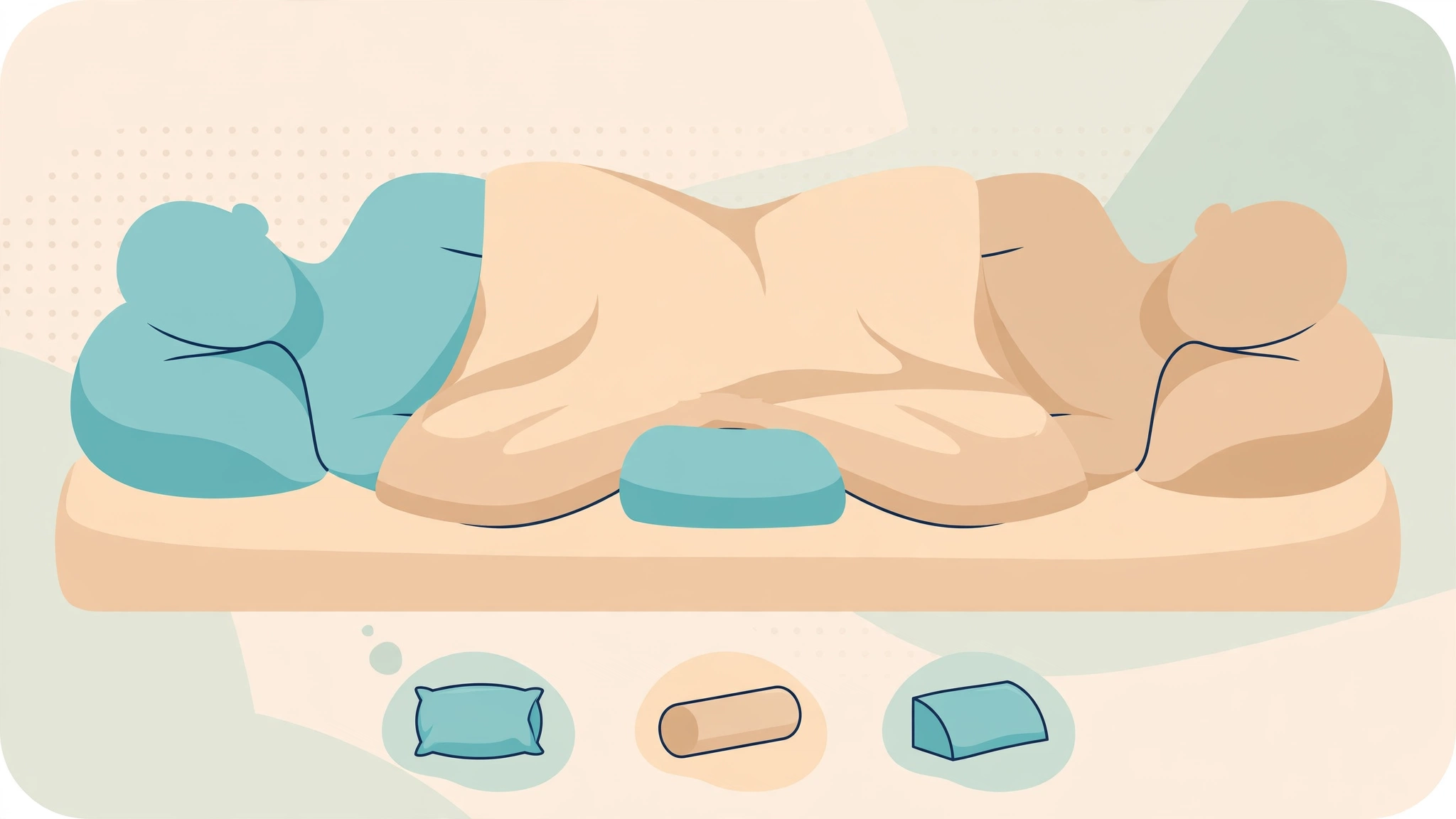
- Both partners lie on the same side. Either side works. The little spoon lies in front with knees gently bent.
- The big spoon nests behind. Chest to back, belly to hips — the bodies should feel like two pieces of one puzzle. The big spoon’s knees tuck slightly behind the little spoon’s knees.
- The little spoon draws the top knee forward. This is the single most important step for mastering the spooning position: bending the top leg forward and slightly up opens the entry angle. Without it, everything else feels awkward.
- Align the hips before entry: the big spoon scoots up until their hips sit just behind the little spoon’s hips. A folded towel or firm pillow under the shorter partner’s hips solves height differences.
- Enter slowly at a slight upward angle. Aim gently upward toward the little spoon’s navel. Slow matters — the receiving partner needs a moment to adjust, and patience at the start pays off in comfort.
- Move in small rocking motions. Forget deep thrusting. Short rhythmic rocks — hips swaying back and forth rather than driving in and out — produce more consistent sensation and last far longer.
- Use the free arm. The big spoon’s top arm stays completely free: reaching around for clitoral stimulation, holding a small vibrator steady, or simply holding the little spoon close. The bottom arm should never lie flat under the partner’s body — thread it under a pillow or along the little spoon’s arm to avoid numbness.
Seven Spooning Variations Matched to Your Goal
One position, many moods. Every guide to the spooning position worth its name should rank variations by goal, because each one emphasizes something different:
| Variation | How it works | Best for |
| Classic spoon | Standard side-by-side, both facing the same direction | Intimacy, beginners, pregnancy, tired evenings |
| Tilted spoon | Little spoon lifts the top leg, resting it on the big spoon’s knee | Deeper contact and stronger front-wall stimulation |
| Front spoon (face-to-face) | Both on their sides facing each other, entry from the front | Eye contact, kissing, clitoral access, emotional intensity |
| Weighted spoon | Big spoon drapes their upper body slightly over the little spoon | Sensation seekers who love full-body pressure |
| Seated spoon | Both sit upright on the bed’s edge or a chair, little spoon in front | Active depth control and novelty |
| Leg-lift spoon | Little spoon raises the top leg high over the big spoon’s hip | Precise angle adjustment, experienced couples |
| Non-penetrative spoon | Classic spooning with no entry — cuddling, caressing, kissing | Low-desire seasons, recovery, rebuilding touch, aftercare |
The tilted and leg-lift variations offer the most adjustable depth; front spooning wins for emotional intensity and easy clitoral reach. This guide to the spooning position also treats the non-penetrative version as a first-class option: pressure-free cuddling often rebuilds physical connection better than any technique upgrade.

Pleasure Tips: Getting More From Less Effort
The spooning position rewards finesse, not force. A few adjustments turn a cozy position into a genuinely satisfying one — and this section is where couples see the biggest gains:
- Think grinding, not thrusting. Long in-and-out strokes underperform in spooning because the side angle limits range. Short, rhythmic rocking keeps contact constant and builds sensation steadily.
- Put the free hand to work. The big spoon’s top arm is the position’s secret weapon — reach-around stimulation, holding a small vibrator steady, or tracing the neck and ears, all while penetration continues.
- Use pillows strategically. A pillow under the little spoon’s top hip changes depth; one between the knees protects hips and backs; a pregnancy pillow supports a growing belly.
- Add words and whispers. With the big spoon’s mouth naturally near the little spoon’s ear and neck, quiet words of affection land with unusual intensity.
- Vary the tempo deliberately. Slow rocking for several minutes, then slightly deeper movement, then back to slow — the contrast makes the return to gentle feel new, and tempo changes cost zero energy.
- Keep lubricant close. Side-lying reduces gravity-assisted natural lubrication, so a water-based lubricant makes every other tip here work better.
If you are new to exploring positions together, our beginner’s guide to comfortable sex positions covers the gentle fundamentals that pair well with everything here.
Fixing the Most Common Spooning Problems
Almost every couple hits one of these frustrations — which is why troubleshooting belongs at the heart of any useful spooning position guide:
| Problem | Why it happens | The fix |
| Penetration keeps slipping out | Entry angle too shallow; thrusting too large | Switch to small rocking; little spoon draws top knee further forward; pillow under the top hip stabilizes the angle |
| Big spoon’s arm goes numb | Arm trapped flat under the partner’s body | Thread it under a pillow or along the little spoon’s arm — never flat underneath |
| Height difference blocks alignment | Hip heights do not match | Firm pillow under the shorter partner’s hips; little spoon scoots slightly downward |
| Not enough clitoral contact | The geometry favors internal contact | Free-hand reach-around, a small vibrator, or front spooning for direct access |
| Penetration feels too shallow | The rear angle naturally limits depth | Tilted or leg-lift variation; pillow under the top hip; rock with more hip sway |
| It feels distant, not intimate | Both partners face away | Neck kisses, whispers, hand contact; try front spooning; slow everything down |
When Spooning Is the Doctor’s Pick: Pain, Pregnancy, and Aging
This is the section competing guides skip. While lifestyle websites treat spooning as a novelty, clinicians recommend it for specific situations. Pain specialists list side-lying among the gentlest options when penetration sometimes hurts: depth stays shallow, the receiving partner controls everything, and the slower pace reduces flare-ups — what sexologist Carol Queen has called a “safety spoon.” Positions that minimize pressure on the bladder and pelvic floor also ease anxiety about discomfort.
For endometriosis and pelvic sensitivity, intimacy coaches recommend side-by-side positions because the receiving partner controls speed and depth completely. The rule is non-negotiable: if it hurts, stop, adjust, and try again — or save intimacy for another day. See positions therapists recommend for endometriosis for specialist guidance on the same principles.
During pregnancy, spooning is among the safest and most comfortable options because no body weight bears down on the belly. Mayo Clinic’s guidance on sex during pregnancy advises experimenting with positions like lying sideways as the belly grows, keeping comfort and pleasure in mind; the March of Dimes lists side-lying among the preferred options across all three trimesters. Place a firm pillow under the belly for support, and follow your provider’s guidance on risk factors like preterm labor.
After childbirth — once a provider clears intimacy, usually at six weeks — gentle, shallow, receiver-controlled contact is the safest way to resume. For chronic back pain, hip replacements, or arthritis, the McGill and Sidorkewicz findings on side-lying positions matter even more: comfort-first intimacy is not lesser intimacy, and this guide to the spooning position exists partly to make that case for aging bodies too.
Spooning Beyond Sex: A Ritual for Rebuilding Intimacy
Almost no guide to the spooning position covers spooning’s greatest value: its role as a non-sexual ritual. Couples therapists frequently “prescribe” scheduled cuddling — ten minutes of spooning before sleep, with no expectation of anything further — for couples navigating low desire, recent conflict, or long dry spells. Scheduled closeness without pressure rebuilds the association between a partner’s body and safety rather than performance anxiety.
Regular affectionate touch is linked to lower stress, better sleep, and higher relationship satisfaction. Couples who spoon nightly as a habit effectively dose themselves with calm, trust chemistry on a nightly schedule.
After a disagreement, spooning works as a physical “repair ritual.” Facing each other can feel too vulnerable right after a fight; spooning allows closeness without confrontation. Many therapists observe that couples who physically reconnect before verbally resolving an issue resolve it faster — the body forgives before the mind does.
For more ways different postures shape closeness, see our guide to the most intimate sex positions for deeper connection.
When to Talk to a Doctor
Spooning solves comfort problems, not medical ones. See a qualified healthcare professional if you experience persistent or severe pain during any sexual activity, bleeding unrelated to menstruation, pelvic pain outside of intimacy, or symptoms of infection such as unusual discharge or fever. Pain during sex has many treatable causes — vaginal dryness, pelvic floor dysfunction, endometriosis — and adjusting positions is a coping strategy, not a diagnosis. A gynecologist, urologist, or pelvic floor physical therapist can identify the real cause and offer treatment.
FAQs
What if penetration keeps slipping out during spooning?
The most common spooning frustration is almost always an angle problem. Draw the top knee further forward, switch from thrusting to small rocking motions, and place a firm pillow under the top hip to stabilize the pelvis. A slight upward entry angle keeps everything connected more reliably.
Is the spooning position good for couples with lower desire?
Yes — it is one of the positions therapists recommend most for this situation. Spooning is low-pressure: no athletic demands, no expectation of intensity, and it can begin as simple cuddling that either leads somewhere or doesn’t. Many couples rebuilding desire start with scheduled non-penetrative spooning and let arousal return on its own timeline.
Can spooning help if sex sometimes hurts?
For many people, yes, because depth stays shallow and the receiving partner controls angle and pace completely. Pelvic health specialists list side-lying among the gentlest options for painful intercourse. Use plenty of lubricant and stop if anything hurts. If pain persists despite gentler positions, see a doctor — position changes manage comfort, but persistent pain deserves medical evaluation.
Is spooning safe during pregnancy?
Generally, yes — the Mayo Clinic and March of Dimes list side-lying among the most comfortable options during pregnancy, since no weight presses on the belly. Use a pillow under the belly for support later on. Avoid sex if your provider has restricted it for risk factors like preterm labor or placenta previa.
Does it matter who is the big spoon and who is the little spoon?
Not at all. Tradition often puts the taller partner behind, but there is no rule — couples of all sizes and genders switch roles freely, and many prefer taking turns. Whoever is in front gets more control over depth; whoever is behind gets the free hand. Try both and keep whichever feels better to each of you.
Is spooning only for slow, lazy sex?
No — it is simply easier to do slowly, which is why it earned the “lazy” label. Couples who enjoy faster or more vigorous intimacy can raise the tempo, try the seated spoon variation, or add a vibrator for intensity. But many couples keep spooning slow on purpose: unhurried, skin-to-skin intimacy is the whole point for them.
If you found this guide to the spooning position useful, explore our related guides for more comfort-first ways to stay close — and talk to your partner tonight about trying one small change together.
Medical disclaimer: This article is for educational purposes only and is not medical advice. Sexual health is individual — what works comfortably for one couple may not suit another. If you experience persistent pain, bleeding, or other concerning symptoms, consult a qualified healthcare professional such as a gynecologist, urologist, or pelvic floor physical therapist for personalized guidance.